
Traveling With Older Adults: Book 90-Minute Layovers or Request Free Wheelchair Assistance?
For older adults flying in 2026, request free wheelchair assistance rather than booking a 90-minute layover. The answer changes if the traveler can walk a terminal-length distance briskly.
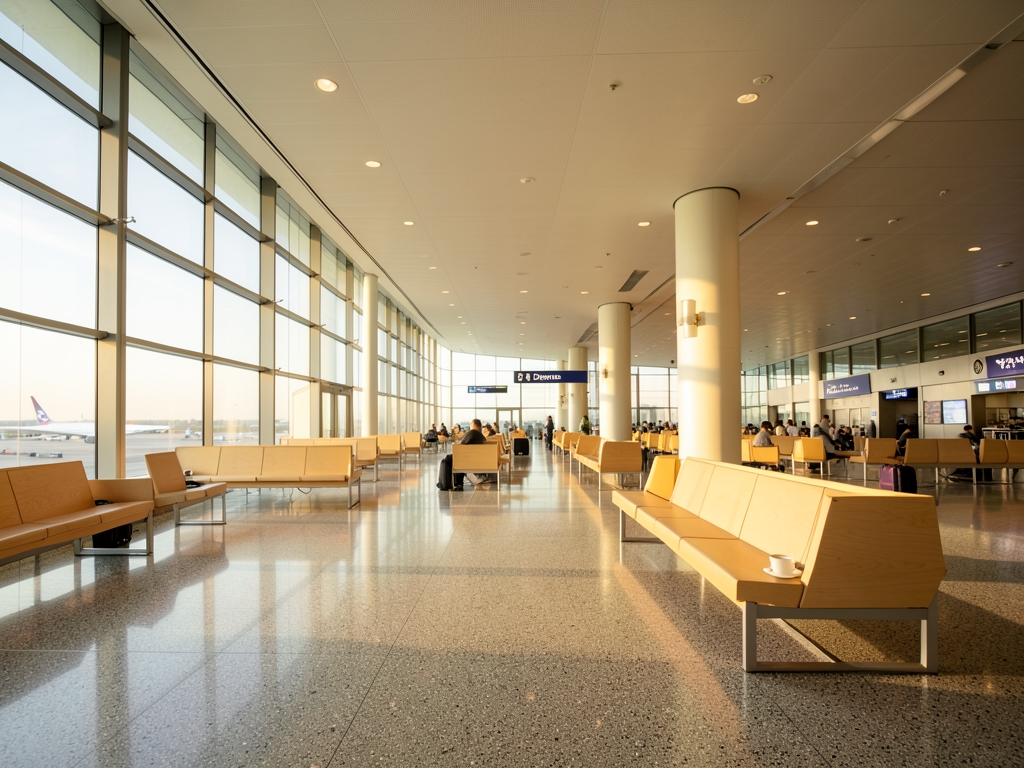
For older adults flying in 2026, request free wheelchair assistance rather than booking a 90-minute layover.
The answer changes if the traveler can walk a terminal-length distance briskly.
How Wheelchair Assistance Actually Works
Start with the airline's own mobility page, not memory. Delta Air Lines' published wheelchair-services page says to share mobility needs at least 48 hours before the trip. I treat that as a request deadline to build into the booking workflow: when a traveler cannot walk a terminal-length distance briskly, I open the reservation and make the mobility request before the trip gets busy, then use the same page to verify what the airline asks for and when.
Delta's published wheelchair-services page is the check I use for Delta: it asks travelers to share mobility needs at least 48 hours before the trip, and it points to a request channel for adding the service after booking. Before relying on any specific phone number, menu label, or relay option, open the airline's current wheelchair or accessible-travel page and confirm the same three items yourself: where to submit the request, what phone or relay option exists, and how far ahead the airline asks for it. Airline channels change, so treat the live page — not memory or a third-party summary — as the source of truth.
What the airport chair covers is also narrower and more useful than the word “wheelchair” suggests.
Before assuming the scope of the service, read the airline's own wheelchair-services page and confirm which legs of the airport journey it actually covers — curbside, check-in, security, the gate, and the jet bridge are the checkpoints to verify, not to take on faith from a summary.
In practical terms, the connection sprint is replaced by an escort, not eliminated — though the exact pickup points an airline covers should be verified on its own page rather than assumed. Your job is to be where the escort expects you and to keep the mobility need visible at each handoff.
That scope matters when you are reading an itinerary. A chair can carry you through the airport pieces Delta names, but you still need to plan the moments around those pieces: reaching the curb, identifying yourself at check-in or the gate, and telling the agent plainly that the request is for mobility assistance. I keep the airline page or request record accessible on my phone and say the need clearly at the first Delta contact.
For a 2026 trip, I use this as a booking habit: if walking a terminal-length distance briskly is not realistic, make the request in the airline's stated channel, note the airline's stated timing, and read the service boundary so you know what is escorted and what remains your own movement. That habit turns a vague promise of help into a concrete airport process, and it works best before the itinerary is locked in.
The Evidence: What Sources Converge
Independent sources converge on a practical point: wheelchair assistance is often used as a connection aid, not merely a gate-to-gate service. In a Tripadvisor air-travel forum thread about tight American Airlines connections, one participant wrote that booking wheelchair service gives passengers "a better chance to catch the connections," in the context of a 2hr 50min international-to-domestic connection in Chicago. That framing treats the assistance queue as a substitute for sprinting between gates.
A separate Tripadvisor thread on European airport connections adds a different setting. There, a traveler said her husband, after a recent stroke, needed wheelchair assistance "especially when going through passport control and customs as there are generally long walks." The value is not only distance; it is the ability to move through choke points where queues and walking distances are hard to predict.
Industry reporting points in the same direction. InsideFlyer reported that Air India has seen a surge in wheelchair requests. Read alongside the forum reports, that signal suggests demand is broad enough to be more than isolated anecdotes. A surge in requests indicates more travelers are using the service as a mobility and connection tool, not only as a medical necessity.
Taken together, the sources support a consistent mechanism: assistance replaces an uncertain terminal sprint with an escorted transfer, which can reduce missed-connection risk on itineraries with tight or complex transfers. The convergence is qualitative: multiple independent accounts describe the same benefit, but none provides a controlled comparison of connection success rates.
For a traveler who cannot walk a terminal-length distance briskly, the practical inference is to treat wheelchair assistance as connection insurance: request it at booking, then reconfirm before travel, rather than relying on a tight layover to work out. The decision rule is conditional: if brisk terminal walking is not realistic, pre-book assistance and do not build the itinerary around a sprint; if it is realistic, the assistance queue may add little.
90-Minute Layover vs Assistance: Compared
A tight connection is really two different trips depending on whether you walk it or ride it. Option A is the 90-minute layover with no assistance: it only works if you can move at a brisk pace for the full terminal walk, manage every bag yourself, and both flights use the same terminal. The moment your itinerary requires a terminal change, a security re-entry, or passport control, that option collapses — the Tripadvisor thread on tight connections makes exactly this point, with travelers noting that long walks through passport control and customs are where short connections fail.
Option B keeps the same 90 minutes but adds pre-booked wheelchair assistance. The escort changes the geometry of the connection: instead of navigating the terminal on foot, you are routed through check-in, security, and gate changes with help, which effectively converts a short connection into a manageable one. Delta's published wheelchair-services page describes airport chair service running curbside through security to the departure gate and down the jet bridge — so the sprint between gates is replaced by a scheduled pickup. Request it when you book and confirm it ahead of departure; the mechanism for doing that is covered in the how-to section of this guide.
Option C is the fallback: book a deliberately longer connection so no assistance is needed at all. This is what the Tripadvisor Chicago poster did, building in extra time for an international-to-domestic handoff. It costs nothing in fees, only in hours at the airport, and it removes the dependency on an escort arriving on time.
| Traveler profile | Best option | Why it wins |
|---|---|---|
| Walks briskly, one carry-on, same-terminal connection | A — 90 minutes, no assistance | Fastest overall trip; no waiting for an escort |
| Limited walking distance, any bag count, terminal change likely | B — 90 minutes plus pre-booked assistance | Escort handles the distance; connection stays short |
| International arrival with passport control and customs | C — longer layover, assistance optional | Control queues are unpredictable; buffer time absorbs them |
| Traveling with a companion who can push a chair | B or C | Companion covers gate-to-gate movement; assistance becomes backup |
The head-to-head verdict: for a traveler who cannot walk a terminal-length distance briskly, Option B beats Option A outright — there is no version of a 90-minute self-navigated connection that works for that profile, while the assisted version does. Option C beats both only when the itinerary crosses borders or the traveler wants zero reliance on airport staffing.
One check before you commit: pull up your connection on the airport's terminal map and confirm whether the arrival and departure gates sit in the same terminal. If they do not, treat Option A as unavailable regardless of how well you walk, and choose between B and C based on how much schedule flexibility you have.
Costs and Numbers That Matter
Airport wheelchair assistance is a standard service that airlines do not charge for — this is general practice for U.S. carriers rather than a figure quoted on the pages cited here. Cheapflights lists wheelchair assistance among standard airport help, and Delta's page treats it as a service to request, not an upgrade to buy. To confirm there is no fee on your specific carrier, check the airline's own accessible-travel page before booking.
The only "cost" is making the request at least 48 hours before departure, which makes it a scheduling task rather than a budget line.Treat Delta's 48-hour lead time as the deadline, not a target. If you book a deal fare close to departure, add or confirm assistance immediately after purchase; waiting until check-in leaves no margin if the request needs correction or the flight changes.
The Tripadvisor example gives a 2-hour-50-minute international-to-domestic connection in Chicago, and participants still discussed buffering it with wheelchair service. Use that figure as a benchmark that assistance can be worth requesting even when a connection is not obviously tight; it is a reference point, not a promise that every connection of that length is comfortable.
| Number | Figure | How to use it |
|---|---|---|
| Assistance price | $0 | Budget the request, not the ride |
| Delta mobility-need lead time | 48 hours | Deadline to add or confirm after booking |
| Tripadvisor Chicago connection | 2 hr 50 min | Benchmark for buffering a longer connection |
Because the service is free, the comparison is planning versus risk: a 48-hour request costs nothing, while a missed or rebooked connection can cost far more in time and money. The sources do not cite a fare, tax, or tip for the assistance itself; if a quote adds a fee, check it against Delta's published page. Calendar the $0 request first, then decide whether a 2-hour-50-minute connection still needs the buffer.
For a traveler who cannot walk a terminal-length distance briskly, the useful numbers are $0, 48 hours, and 2 hours 50 minutes: request at booking, confirm 48 hours out, and treat even the longer connection as a candidate for service.
What the Evidence Does Not Establish
No source I found publishes how long the wheelchair-escort queue takes at arrival. That gap matters more than it looks: you can do everything right on the request and still spend your connection standing near the jet bridge waiting for the chair to appear. My check is behavioral rather than numerical. Request early at the gate, then ask the flight attendant to flag arrival assistance before landing. That gives the cabin crew and the gate team a chance to pass the note along before the door opens, instead of starting the clock after everyone else has already headed for the terminal.
The same uncertainty applies to staffing. Escort wait times depend on how many agents are working, how many travelers requested chairs on that flight, and how quickly the arrival team clears the aircraft. None of those inputs is published in a form a passenger can plan against. I treat the wait as an unpriced variable in the itinerary, not as a step with a known duration. If the connection is tight enough that a short delay would put the next boarding at risk, I change the itinerary rather than assume the chair will be waiting curbside at the far end.
Assistance quality also varies by airport and by the contractor providing the service. A Tripadvisor Europe airport-connections thread describes a traveler whose husband needed wheelchair assistance especially through passport control and customs, where the walks were long, even after assistance had been requested. That report does not prove every airport handles the walk the same way; it shows why the layout of the connection airport deserves its own check. Before booking, I look at the terminal map, the location of immigration or passport control, and whether the arrival and departure gates sit in the same building or require a transfer.
That airport-level check is separate from the airline-level request.
Delta's published page does confirm one concrete boundary: onboard aisle chairs are available for in-flight use, but only with flight attendant assistance. Where the ground escort begins and ends at your specific connection airport is not stated in the sources here, so verify the service scope on the airline's page and with the arrival airport before relying on it. Those descriptions explain part of the service boundary; they do not tell you how long the handoff takes at your arrival airport, or whether the escort will cover every long walk on the route.
No airline source I found guarantees that a connection will be held for a wheelchair-assisted passenger. Assistance can improve the odds of making the next flight, but it is not a hold code and it does not rewrite the schedule. My rule is to keep the connection buffer intact even after the chair is confirmed: if you cannot walk a terminal-length distance briskly, request assistance at booking, confirm the request within the airline's stated window, and still choose a connection long enough that a slow escort does not turn the trip into a sprint.
Booking a Deal Fare for Mom
For a deal fare booked for an older traveler, the price is only half the decision; the other half is whether the connection can be made without a terminal-length sprint. The goal is to replace that sprint with a pre-booked assistance queue, not to test a tight connection. Use the worked example below as a process template, substituting the actual flights but keeping the checkpoints in the same order.
Checkpoint 1, at booking: you find a round-trip deal fare; before paying, check that every connection is at least 90 minutes domestic or 2 hours international, and write down both connection airports. If a connection is shorter, treat that itinerary as failing the mobility rule even if the fare is attractive.
Checkpoint 2, 48 hours out: open the airline's accessible-services page—Delta lists "Accessible Services" under "My Trips" or the 404-209-3434 line—and request wheelchair service for every flight segment, including connections, then save the confirmation. Delta's published wheelchair-services page asks travelers to share mobility needs at least 48 hours before the trip, so treat that as the request deadline.
Checkpoint 3, day of travel: confirm the chair at curbside check-in, tell the gate agent the connection airports, and keep the confirmation number with the boarding passes. If a segment or connection changes after booking, repeat checkpoint 2 for the new segments rather than assuming the original request followed the change.
| Checkpoint | Action | Pass condition |
|---|---|---|
| 1 | Before paying for a round-trip deal fare, check each connection and note both connection airports. | Domestic connection is at least 90 minutes; international connection is at least 2 hours. |
| 2 | Request wheelchair service for every segment, including connections, and save confirmation. | Request is made at least 48 hours before departure using the airline's accessible-services channel. |
| 3 | Confirm the chair at curbside check-in and tell the gate agent the connection airports. | Chair confirmation is obtained at curbside check-in for the day's segments. |
Applied to a standard four-segment round trip — outbound connection, outbound arrival, return connection, return arrival — the checkpoints work like this: checkpoint 1 requires every domestic connection to be at least 90 minutes and every international connection at least 2 hours; checkpoint 2 requires the wheelchair request for all four segments at least 48 hours before departure, with the confirmation saved; checkpoint 3 requires chair confirmation at curbside check-in at each of the two connection airports. The deal fare remains a deal only when the connection plan survives all three checkpoints.
Decision Rules for 2026 Bookings
Decision rules for 2026 bookings should treat mobility and connection risk as part of fare hunting, not as details to fix after purchase. If a traveler cannot walk a terminal-length distance briskly, the assistance request belongs in the booking decision, and connection time should be judged against how the transfer will actually be made. The rules below tie fare choices to assistance requests without repeating the request mechanics or cost details covered elsewhere.
| If | Then |
|---|---|
| A deal fare has a 90-minute connection and the traveler uses a cane, walks slowly, or tires easily | Book it anyway, but add wheelchair assistance at booking; the escort, not the layover length, is the fix |
| The connection crosses passport control (Europe, per the Tripadvisor stroke-traveler example) | Require at least 2 hours plus assistance regardless of walking ability |
| The fare is on a separate ticket or basic economy with no rebooking protection | Add a connection buffer |
The first rule accepts a tight connection only when the transfer is converted from a walking race into an escorted handoff. Assistance does not make the airport smaller, but it changes who manages the distance and the queue between gates. For a traveler who uses a cane, walks slowly, or tires easily, that change can matter more than adding minutes to the layover.
The second rule is stricter because passport control adds processing and walking that assistance cannot remove. The Tripadvisor stroke-traveler example shows why Europe connections deserve more slack even for travelers who might otherwise manage a domestic transfer. Assistance remains required, but it is paired with a longer connection rather than used as a substitute for time.
The third rule is about protection, not walking speed. Without rebooking protection, a missed connection can become a self-funded problem, so the cheapest fare is not the cheapest trip if it leaves no room for delay. Add a connection buffer whenever the itinerary is on separate tickets or basic economy without protection.
Apply the rules in order: check protection first, then border control, then mobility. A protected domestic itinerary with assistance can justify a 90-minute connection; an unprotected or border-crossing itinerary should carry more slack. Keep the resulting rule in the booking notes so the fare decision and the assistance request stay linked.
Also worth reading The Airports That Make Connecting How Older Travelers Can Stay Safe Navigating Southwest Flights
What to do next
Frequently Asked Questions
When does the recommendation to request wheelchair assistance instead of a 90-minute layover change?
The answer changes if the traveler can walk a terminal-length distance briskly.
Where should a traveler start when arranging wheelchair assistance?
Start with the airline's own mobility page, not memory.
What does Delta's published wheelchair-services page provide for travelers who need to add service after booking?
It points to a request channel for adding the service after booking.
What three items should be confirmed on the current accessible-travel page before relying on a phone number or relay option?
Confirm where to submit the request, what phone or relay option exists, and how far ahead the airline asks for it.
How does the author treat Delta's published request deadline?
I treat that as a request deadline to build into the booking workflow.
When does the author make the mobility request in the booking workflow?
When a traveler cannot walk a terminal-length distance briskly, I open the reservation and make the mobility request before the trip gets busy.
Quick answers
| What should older adults request rather than booking a 90-minute layover? | For older adults flying, request free wheelchair assistance rather than booking a 90-minute layover. |
| When does the answer change? | The answer changes if the traveler can walk a terminal-length distance briskly. |
| Where should you start when arranging wheelchair assistance? | Start with the airline's own mobility page, not memory. |
| What does Delta's published wheelchair-services page ask travelers to do, and what does it point to? | Delta's published wheelchair-services page is the check I use for Delta: it asks travelers to share mobility needs by the request deadline, and it points to a request channel for adding the service after booking. |
| What should you confirm before relying on a specific phone number, menu label, or relay option? | Before relying on any specific phone number, menu label, or relay option, open the airline's current wheelchair or accessible-travel page and confirm the same three items yourself: where to submit the request, what phone or relay option exists, and how far ahead the airline asks for it. |
Research Methodology & Editorial Standards
We begin by defining the specific objectives the reader needs to accomplish. Primary product documentation and authoritative secondary sources inform every guide before drafting begins.
Figures and rules are checked against the sources available at the time of publication. Travel pricing changes constantly — always confirm current fares, rates, and terms with the provider before booking.