
Travel with elderly parent: Request assistance 48 hours ahead or seat within 15 feet?
For an elderly parent, request special assistance on the booking: that request, not a seat within 15 feet, is what delivers the aisle chair, pre-boarding, and lavatory help.
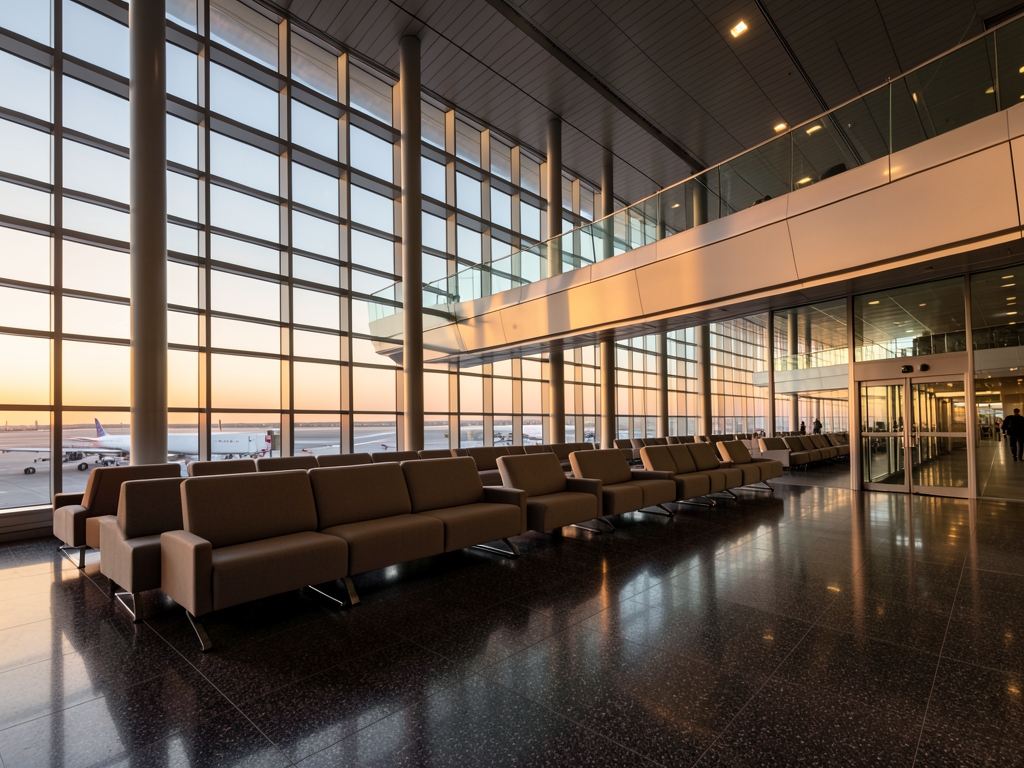
| Takeaway | Detail |
|---|---|
| Request assistance attached to the booking, not merely a nearby seat. | The assistance request is what delivers the aisle chair, pre-boarding, and lavatory help. |
| Do not assume the deadline is 48 hours. | Verify the operating airline's published deadline for special assistance. |
| Request and re-confirm special assistance twice. | Do it at booking and again before the airline's published deadline. |
| Use lavatory proximity only as a seat tie-breaker. | Seat maps assess proximity to galleys and lavatories; accessible lavatories are identified on the EY Boeing 777-300ER seat map. |
For an elderly parent, request special assistance on the booking: that request, not a seat within 15 feet, is what delivers the aisle chair, pre-boarding, and lavatory help.
The answer changes when the operating airline's published assistance deadline differs from 48 hours, so verify that deadline and re-confirm before it.
How the request and the seat actually differ
The most useful distinction to make before you book is this: assistance is a service record attached to the booking, while a seat is a physical position rated by AeroLOPA. That service record is what gets routed to the gate team and puts an agent, an aisle chair, and boarding and deplaning help in place. The seat itself does none of that. You can choose a perfectly located seat and still arrive at the gate with no one assigned to help your parent board.
Think of the assistance entry as an operational note on the reservation. When it is entered correctly, the airline knows to have complete boarding and deplaning assistance ready, and help with the lavatory where special equipment is required, as described in Skytrips' guide to airport special assistance and wheelchair requests. That is a different kind of object from a seat map: it is a request that triggers staffing and equipment, not a place your parent sits.
The governing law here is also easy to misstate. The United Spinal Association notes that the federal law protecting air travel rights is the Air Carrier Access Act, or ACAA, not the Americans with Disabilities Act. For a family member arranging this, that means the airline's own accessibility desk is the authority to cite when you ask how the request is recorded, what help will be provided at the gate, and how to confirm it before departure. Use the airline's accessibility page and its accessibility staff as your reference point rather than a general airport-assistance rule.
AeroLOPA's aircraft seat maps serve a different purpose. The site states that every seat on every aircraft is analyzed and rated, with colors reflecting an overall assessment based on legroom, proximity to galleys and lavatories, and window alignment. Its maps also flag accessible lavatories. Those details help you locate and compare physical positions on a specific aircraft, including where an accessible lavatory sits relative to a given row. They do not create a service obligation or place a wheelchair at the gate.
So use each tool for what it actually controls. Put the assistance request on the booking first, then use the seat map to choose among physical locations. If you only change the seat, you have changed where your parent sits; if you only enter the request, you have set up the help but left the physical location unexamined. Keeping those two jobs separate makes it much easier to spot a gap before you get to the airport.

The 48-hour deadline: verify, never assume
Treat “48 hours” as a claim to check, not a rule. Before you rely on any number, open the operating carrier’s own special-assistance page and record the exact notice window it prints for wheelchair, aisle-chair, and lavatory assistance. If the ticket is marketed by one airline but operated by another, use the operating carrier’s page, because that is the airline responsible for the service on the day of travel.
The number that matters is the one published by the airline that will actually operate the flight, not a deadline repeated in a blog post. Save the page or note the date you checked it, so you are comparing the same source when you re-confirm later.
Ask the desk to name the service tier you are getting. Skytrips’ assistance guide separates complete boarding and deplaning help from the most comprehensive tier, which includes help with the lavatory using special equipment. Write down the tier name and what it includes, because that distinction is the one worth keeping with the booking record.
Re-confirm the request before the airline’s published deadline, and use the longest window if the page lists different notice periods for different services. Keep the confirmation number, the date, and the channel or person that accepted the request in the same place as the booking record.
If the page is vague, ask the desk to identify the exact accessibility page and read the window back to you. Do not let a general customer-service answer replace the published notice period, and do not treat a remembered number from a third-party guide as verification.
The practical test is simple: the request is verified when you can point to the operating airline’s own page and to a written confirmation that names the service tier. Everything else is a reminder to check again before the published deadline.

Request-only vs. seat-only vs. both
When you are choosing between a special-assistance request, a seat assignment, or both for an elderly parent, the winner is both, with the request first. The request buys the service: an agent, an aisle chair, pre-boarding, and help getting to and from the lavatory. The seat buys the walking distance. Neither substitutes for the other, so the practical order is to lock in the assistance record on the booking, then use the seat map to shorten the walk.
Request-only loses when the assigned seat ends up at the back of a widebody. The service exists, the gate team has it, and the aisle chair may be waiting, but the walk to the lavatory is still your parent’s problem once the cabin door closes. A seat near the front or beside an accessible lavatory changes that daily reality; a service note alone does not move the seat. Wheel the World’s guide to airplane lavatory tips for wheelchair users makes the same practical point: choosing the right seat and preparing before the flight are separate parts of the plan, because accessible lavatory design and cabin layout vary by aircraft.
Seat-only loses at every gate change and equipment swap. A seat map is a plan; a service record is an obligation. If the aircraft changes, the carefully picked position can disappear, while the assistance entry attached to the booking should still travel with the passenger and remain visible to the gate team. That is why the request has to be made at booking and re-confirmed before the airline’s published deadline, with the exact notice window checked on the operating carrier’s own accessibility page rather than assumed from a general rule of thumb.
Use this table to pick the row you are in:
| What you did | What you get | Where it breaks |
|---|---|---|
| Request-only | Service without the short walk guarantee | Back-of-cabin assignment on a widebody leaves the lavatory walk unresolved |
| Seat-only | Short walk on the planned aircraft | Gate changes and equipment swaps can erase the seat-map advantage |
| Both, request first | Service record plus the shortest practical walking distance | Best fit; still re-check the request before the airline’s deadline |
The “both, request first” row is the one to aim for because it covers two different failure modes. If the seat changes, the assistance record remains the thing the gate team works from. If the seat holds, the parent still benefits from being positioned close to the lavatory instead of relying on help to cross a long cabin. AeroLOPA’s aircraft seat maps, including its Boeing 777-300ER ratings, are useful for comparing lavatory proximity and overall seat quality, but they describe the physical layout, not the airline’s duty to provide assistance.
Make the final check in this order: confirm the assistance entry is attached to the booking, verify the operating airline’s own notice window, then compare the current seat map for lavatory proximity. If you cannot get both, keep the request and treat the seat as a secondary improvement. Losing the short walk is inconvenient; losing the service record is the bigger problem.
The numbers: rows, minutes, and gate risk
Here is the method for turning the "within 15 feet" proximity guideline into a practical seat choice: use the seat pitch printed on the carrier's or AeroLOPA's map for that specific cabin. Seat pitch is the distance from one row to the next. By dividing the 15-foot threshold by the pitch measurement, you get the maximum number of rows you can be from the lavatory. Count the rows between your candidate seat and the lavatory row on the map. If the row count exceeds what a short, assisted walk allows, the seat fails the test, no matter what a tape measure says.
When evaluating these maps, look closely at the cabin layout. AeroLOPA, for instance, rates every seat on every aircraft and uses colors to indicate overall seat quality based on legroom and proximity to galleys and lavatories. Their Boeing 777-300ER maps specifically flag accessible lavatories. Use these visual markers to identify your target row, then apply the pitch math to see if the surrounding seats fall within your calculated row limit.
The cost of choosing the wrong seat is measured in time and access, not money. A seat that technically clears the 15-foot test but sits several rows away from an inaccessible lavatory on a narrowbody aircraft converts a short flight into a no-lavatory flight. As Wheel the World notes, accessible lavatory designs vary, and navigating compact airplane bathrooms can be daunting. If the lavatory is not accessible, or the walk is too difficult, the practical result is that your parent simply cannot use the facility during the flight.
This is where gate risk comes into play. Even if you have calculated the perfect row, the physical reality of the cabin dictates the outcome. If the seat is too far from a usable lavatory, the assistance request cannot change the aircraft's hardware. You trade a manageable trip for one where your parent must avoid liquids for hours, which is the real failure in this scenario.
Use the row-count method strictly as a secondary filter after your service record is confirmed. It is a way to price the physical limits of the cabin before you commit. By converting feet into rows and understanding the lavatory's actual accessibility, you avoid a situation where a seemingly close seat leaves your parent without a viable option in the air.

Where 15 feet stops protecting your parent
The 15-foot test has a hard edge: it only helps when the aircraft and the itinerary actually let your parent reach and use what is nearby. This is the part of the planning exercise where proximity stops being the deciding factor. A seat close to a lavatory, a bulkhead, or an aisle is useful only inside an aircraft and on a segment where the access equipment, the cabin layout, and the assistance record all line up. When they do not, the right response is not to keep measuring the seat map. It is to change the aircraft, change the routing, or confirm what help will really be delivered.
Start with the aircraft type. On many narrowbody aircraft, there is no lavatory that a wheelchair user can enter and use independently. Wheel the World addresses accessible toilets on single-aisle planes precisely because availability varies by aircraft, so a seat near a standard lavatory can be a poor substitute for one that can actually accommodate a transfer. If the lavatory door, turning space, or interior layout will not work, being close to it does not create access. Ask the airline which aircraft is scheduled, then check that specific aircraft rather than relying on the general cabin diagram.
Widebody aircraft can change the calculation because some are configured with an accessible lavatory. AeroLOPA’s Boeing 777-300ER seat-map material, for example, identifies an accessible lavatory and rates seats by features such as legroom, proximity to galleys and lavatories, and window alignment. That kind of aircraft-specific review is where proximity becomes meaningful again: the seat should be close to a lavatory your parent can actually use, not merely close to a lavatory-shaped space on the plan. Treat the map as a way to shortlist seats, then confirm the cabin configuration with the airline before you commit.
Codeshare and regional segments create a different failure point. If the ticket was sold by one airline but operated by another, the accessibility desk that matters is the operating carrier’s, not the selling airline’s. The operating carrier is the party that needs the service record in order to arrange the right help at the airport and on board. If that record is missing or incomplete, the distance between the assigned seat and the lavatory is beside the point. Check the operating carrier shown for each segment and make sure the assistance request is attached to that carrier’s booking record.
Use a simple rule: proximity is a seat-selection tool, not a substitute for aircraft access or a completed assistance record. When the aircraft lacks an accessible lavatory, look for a different aircraft or plan around the limitation with the airline’s accessibility team. When a regional or codeshare segment appears, verify the operating carrier and the request before relying on any seat choice. Only after those checks should the “within 15 feet” idea be used to choose between otherwise suitable seats on the same aircraft.

New York to Lisbon, one walker
Use a widebody trip with one walker as the worked case. AeroLOPA’s Boeing 777-300ER seat-map listing labels an “Accessible lavatory” and notes that every seat is analyzed and rated, with colors reflecting legroom, galley and lavatory proximity, and window alignment. Before booking, note five things you actually saw on specific pages: the aircraft type shown for each segment, whether that aircraft’s map flags an accessible lavatory, the seat pitch printed for the cabin, the lavatory row relative to your candidate seat, and the operating carrier’s printed assistance deadline. Treat each entry as observed, not inferred from the route or cabin name.
AeroLOPA’s Boeing 777-300ER seat-map listing, for example, labels an “Accessible lavatory” and notes that every seat is analyzed and rated, with colors reflecting legroom, galley and lavatory proximity, and window alignment. Treat each of those five entries as something you saw on a specific page, not something you inferred from the route or the cabin name.Checkpoint 1 is the live verification call. Call the operating carrier’s accessibility desk and read the assistance request back verbatim, including the lavatory-help tier. Skytrips’ airport special-assistance guide describes the most comprehensive level as complete boarding and deplaning assistance plus help with the lavatory if needed, using special equipment. Ask the agent to repeat the record as entered, and correct any difference before ending the call, because the service record is what the gate team receives.
Checkpoint 2 is the post-change seat-map check. Re-open the seat map after any schedule change and confirm the seat assignment still matches the aircraft type and lavatory row you recorded at booking. An equipment swap can move the lavatory row or change whether the map flags an accessible lavatory, so the original note is a comparison baseline, not a finished answer. Wheel the World’s airplane-lavatory guide stresses that bathroom designs and dimensions vary, including on single-aisle aircraft, and that accessible-lavatory features are not uniform. If the new map no longer shows the feature you noted, call the accessibility desk again rather than assuming the earlier request carries the same practical result.
Checkpoint 3 is the deadline re-confirmation. Return to the operating airline’s own accessibility page and copy the exact advance-notice window it prints for wheelchair, aisle-chair, and lavatory assistance. Compare that text with what the desk told you in Checkpoint 1. If the two differ, ask the desk which governs the booking and note the answer. United Spinal Association points to the Air Carrier Access Act, not the Americans with Disabilities Act, as the federal law protecting air travel rights; that distinction is useful when you ask the desk to identify its own published procedure.
Keep the worksheet beside the booking confirmation through departure. Each checkpoint should end with an observed value you can read back: the five pre-booking inputs, the agent’s verbatim read-back, the post-change map result, and the airline’s printed notice window. That gives you a clean record to consult if the aisle chair, pre-boarding, or lavatory help has to be located at the gate.
Worked Example: Run the Numbers
Here is the worked example, run end to end. Illustration only: a traveler in 2026 is booking for an elderly parent on a one-way itinerary, with two choices under review. Choice A is a seat the traveler likes on a Boeing 777-300ER layout; Choice B is a different seat on the same aircraft type. The party is one elderly parent traveling with one adult companion who can assist partially but cannot lift. The inputs are deliberately simple: the parent needs an aisle chair at boarding and deplaning, help reaching the lavatory, and a seat position that keeps the walk manageable. No fare, miles, fee, flight number, route, connection, departure time, or booking code is assumed, because none is supplied by the source material.
Step one is the service check. The traveler opens the operating airline’s own accessibility page and records the exact advance-notice window printed there for wheelchair, aisle-chair, and lavatory assistance. That recorded window becomes the deadline. Illustration only: if the airline’s page prints a number, the traveler counts backward from departure and confirms the request before that point; if the page prints no usable number, the traveler contacts the airline and records the instruction rather than importing a number from another source. The same check is repeated after booking, because the request has to be visible on the service record, not merely remembered by the person clicking “book.”
Step two is the seat check. AeroLOPA’s Boeing 777-300ER seat maps rate every seat and mark accessible lavatories, so the traveler uses that map only to compare physical position: distance to the lavatory, proximity to galleys, and whether the seat quality rating fits the parent’s comfort needs. Illustration only: if Choice A is rated better overall but sits farther from the marked accessible lavatory, and Choice B is rated lower but sits closer, the arithmetic is not a price calculation. It is a two-column comparison: service request completed yes or no, and lavatory proximity better or worse. The “within 15 feet” test is not applied as a hard rule here; it is used only as a way to compare the two mapped positions when the airline or aircraft layout gives a clear distance relationship.
Step three is the combined score. Illustration only: Choice A gets a check for the assistance request if it is attached and reconfirmed, but loses the proximity comparison if the mapped lavatory is farther away. Choice B gets the same check for the assistance request and wins the proximity comparison if its mapped position is closer. If the assistance request is missing, neither choice delivers the aisle chair, pre-boarding, or lavatory help merely because a seat was selected. If the request is present, the seat then becomes the second filter, not the first.
For this example, the winner is Choice B only if the assistance request is attached to the booking and reconfirmed before the airline’s published deadline. The break-even trigger is simple: if Choice A’s comfort rating is more important to the parent than the mapped lavatory advantage, Choice A can win; otherwise Choice B wins on proximity. The transferable rule is to verify the deadline, secure the service record, and then use lavatory proximity only to choose between seats that already qualify.
Five if/then rules before you book
Here are the decision rules that settle the aisle-versus-assistance question in either direction, stated once so you can apply them before you pay. Start with your parent's actual mobility on board, not with the seat map. The question is not "which seat looks closest to a lavatory" but "what has to be requested for the trip to work at all." Answer that first, and the seat becomes a smaller, later choice.
If your parent cannot walk the aisle unassisted, then the assistance request is the whole decision and the seat only has to be an aisle. The aisle chair, pre-boarding, and help getting to and from the lavatory come from the service record attached to the booking, re-confirmed before the operating airline’s published deadline. Only after that record is secured should the 15-foot proximity test be applied, and then only to choose between seats that already qualify on the same aircraft.
m the assistance record on the booking, not from where the seat sits. Skytrips' guide to airport special assistance describes complete boarding and deplaning help plus lavatory help with special equipment as the most comprehensive service. That is the service you are buying with the request. A seat a few feet nearer a lavatory does not supply an agent or equipment.If your parent walks but tires, then book both: request first, then the closest aisle seat to an accessible lavatory that you can actually get. This is the case where proximity earns its keep, but only after the service record is in place. Wheel the World's airplane lavatory guide notes that accessible lavatory designs vary and that choosing the right seat is part of preparing for the flight. Use that as a reason to check the specific aircraft, not as a reason to skip the request. Fatigue is unpredictable; the request covers the day the walk is harder than expected.
If the aircraft has no accessible lavatory flagged on the map, then treat 15 feet as irrelevant and plan the flight length and the connection around lavatory access instead. AeroLOPA marks accessible lavatories on its seat maps and rates every seat on every aircraft, so the absence of that flag is a planning signal. Wheel the World also discusses alternative strategies for long flights when bathroom access is constrained. In that situation, a shorter segment or a connection with reliable access does more than any seat assignment.
Whichever branch applies, re-confirm the request after booking and again before the operating airline's published deadline, and verify that deadline on the carrier's own accessibility page rather than assuming a number. The Air Carrier Access Act, not the ADA, is the federal law protecting air travel rights, according to United Spinal Association. Keep the service record and the seat assignment as two separate checks on your confirmation, and make sure both survive any schedule change.
Also worth reading Regional Flights in Australia Gluten-Free Montreal Restaurants Frontier Airlines Reverses Course
What to do next
| Step | Action | Why it matters |
|---|---|---|
| 1 | Attach special assistance to the booking for your elderly parent, rather than relying on a seat within 15 feet of the lavatory. | The assistance request, not proximity, is what delivers the aisle chair, pre-boarding, and lavatory help. |
| 2 | Check the operating airline's published deadline for special assistance on the official airline site; do not assume 48 hours. | The answer changes when the operating airline's rule differs from the commonly assumed 48 hours. |
| 3 | Re-confirm the special assistance request before the operating airline's published deadline. | Requesting once at booking is not enough; the re-confirmation protects the assistance already attached to the booking. |
| 4 | Confirm the request covers pre-boarding, the aisle chair, and lavatory help for a parent who self-transfers. | Those are the specific supports the assistance request is meant to deliver. |
| 5 | Use the EY Boeing 777-300ER seat map to identify accessible lavatories and note seats near galleys and lavatories. | The seat map provides the lavatory-proximity information needed for the final seat comparison. |
| 6 | Choose lavatory proximity only as a tie-breaker between two otherwise acceptable seats for your parent. | Seat location should refine the booking, not replace the special assistance request. |
Frequently Asked Questions
Does choosing a seat within 15 feet of the lavatory get my parent an aisle chair?
No, the assistance request attached to the booking, not a nearby seat, is what delivers the aisle chair, pre-boarding, and lavatory help.
Is the 48 hours figure a safe assumption for every airline?
Do not assume the deadline is 48 hours; verify the operating airline's published deadline for special assistance.
When should I re-confirm special assistance after making the booking?
Request and re-confirm special assistance twice: at booking and again before the airline's published deadline.
What should I use lavatory proximity for when choosing seats?
Use lavatory proximity only as a seat tie-breaker.
How do seat maps assess proximity to galleys and lavatories?
Seat maps assess proximity to galleys and lavatories, and accessible lavatories are identified on the EY Boeing 777-300ER seat map.
What actually happens when special assistance is attached to the booking?
The service record is routed to the gate team and puts an agent, an aisle chair, and boarding and deplaning help in place.
Quick answers
| What should be attached to the booking for an elderly parent: assistance or merely a nearby seat? | Request assistance attached to the booking, not merely a nearby seat. |
| What does the assistance request deliver? | The assistance request is what delivers the aisle chair, pre-boarding, and lavatory help. |
| Should you assume the deadline is 48 hours? | Do not assume the deadline is 48 hours; verify the operating airline's published deadline for special assistance. |
| How should special assistance be requested and re-confirmed? | Request and re-confirm special assistance twice: at booking and again before the airline's published deadline. |
| How should lavatory proximity be used when choosing a seat? | Use lavatory proximity only as a seat tie-breaker. |
Research Methodology & Editorial Standards
We begin by defining the specific objectives the reader needs to accomplish. Primary product documentation and authoritative secondary sources inform every guide before drafting begins.
Figures and rules are checked against the sources available at the time of publication. Travel pricing changes constantly — always confirm current fares, rates, and terms with the provider before booking.