
Train from Tokyo to Niigata 2026: ¥10,560 Fare, Reserved or Unreserved?
For Tokyo to Niigata in 2026, the headline fare alone does not decide reserved versus unreserved; verify the total for your exact date and train before deciding.
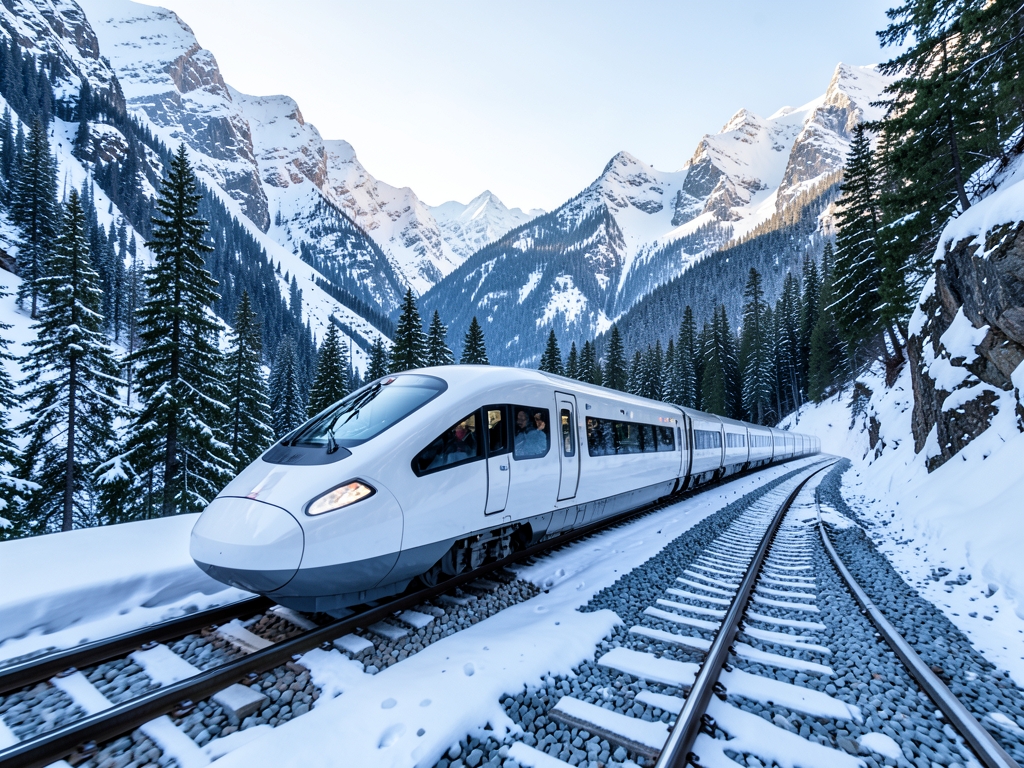
For Tokyo to Niigata in 2026, the headline fare alone does not decide reserved versus unreserved; verify the total for your exact date and train before deciding.
Reserve only on Friday evening, Sunday evening, or holiday-weekend peak Tanigawa trains, or when traveling with luggage or children; otherwise buy unreserved.
How the Joetsu Fare Is Built
On the Joetsu Shinkansen, a Tokyo–Niigata ticket is not one flat price; it is assembled from three separate charges. The first is the base fare, or kakuteki, for the distance traveled. The second is the limited express charge for using a Shinkansen service. The third is a seat reservation fee, and it applies only when you choose a reserved seat. An unreserved ticket simply leaves out that third component, so the difference between the two products is whether you have paid for an assigned seat (JR Shinkansen Net).
That structure matters because the route is served by two train types. Tanigawa trains are the shorter Joetsu services with unreserved cars, while Toki trains run the full route. Because the car layout differs, the practical question is not just reserved versus unreserved in the abstract; it is which train type your departure uses and where its unreserved cars are located. Check the car map for your specific departure on the train-detail page before boarding rather than assuming a fixed car count.
Before buying, check the train name on your departure. If it is a Tanigawa, expect a shorter consist and plan to locate the unreserved cars before boarding. If it is a Toki, you are on the full-route service. In either case, the fare components remain the same: base fare plus limited express charge, plus the reservation fee only if you reserve.
Use the component breakdown as a verification habit rather than a price guess. Confirm that your ticket includes the base fare and limited express charge, then decide whether the reservation fee is worth paying for that specific departure. If you are riding unreserved, make sure you are not accidentally paying the reserved-seat component.
For most travelers, the decision is therefore mechanical: start with the unreserved fare, add the reservation fee only when the departure is a named peak train or when luggage or children make an assigned seat valuable. The fare structure does not change by train type; only the car layout and boarding plan do.
The Evidence: Reserved vs Unreserved
JR Shinkansen Net's FAQ, updated Oct. 11, 2026, is the key evidence. In the jr-shinkansen.net deep read, the answer says a reserved ticket names both the train and the seat, while an unreserved ticket lets you board only non-reserved cars. The FAQ's exact wording is that seat shapes are "generally the same"; for the Joetsu Tanigawa equipment at issue here, that supports the core mechanism: seat shape is identical for this decision, and the only guaranteed difference you are buying is seat assignment.
That means the check is not comfort or seat hardware; it is certainty. JR Shinkansen Net says that if there are empty seats in the non-reserved car, you can sit there, but if it is full, you stand in the passenger compartment or on the deck. On a named peak Tanigawa departure, that is the risk the reservation removes. On an off-peak departure, the same evidence leaves you with a simple rule: ride unreserved unless the standing outcome is unacceptable for that particular trip.
The FAQ's seat-shape answer has one boundary. The same JR Shinkansen Net deep read notes that on Sanyo and Kyushu-line trains, seat types can differ between reserved and unreserved cars. That caveat does not apply to Joetsu Tanigawa equipment, but it is useful as a check on the logic: the "same seats" rule is equipment-specific, not a universal Shinkansen promise. Do not use a Sanyo or Kyushu example to judge what a Tanigawa seat will feel like.
For the Tokyo–Niigata decision, compare what is guaranteed with what is merely likely. The guaranteed item is an assigned seat on the reserved ticket, as described by JR Shinkansen Net. The likely item on an unreserved ticket is an open seat in the non-reserved car when the train is not crowded. That comparison is why the reservation fee earns its keep on Friday evening, Sunday evening, and holiday-weekend Tanigawa departures, where the source-supported failure mode is standing if the car is full.
Use the evidence as a ticket-buying check rather than a comfort review. Before choosing unreserved, ask whether the departure is one of the named peak Tanigawa trains; if it is, pay for the assignment. If it is not, the FAQ gives no basis for paying extra merely to upgrade the seating experience; use the assignment-versus-standing distinction instead. That keeps the decision tied to the real difference in the evidence: certainty of a seat versus exposure to a full non-reserved car.
Options Compared: Pick Your Ticket
This is the section that makes the explicit winner table across the four ticket strategies for the Tokyo–Niigata Joetsu Shinkansen choice. I keep the comparison to decisions a traveler actually faces at the machine or booking screen: ride unreserved on any Tanigawa, reserve a named Tanigawa, reserve a Toki, or buy the flexible “non-reserved for any train” purchase on the day. The check is simple: match the ticket to departure pressure, not to a vague idea that paying more must buy a better ride.
JR Shinkansen Net’s FAQ is the named source behind the certainty and hardware columns; I use it to rank choices, not to grade comfort. The ranking rule is to pay only when certainty has value: named peak train, hard timing, luggage, or children.
| Strategy | Winner label | Pick it when | Tradeoff |
|---|---|---|---|
| Unreserved on any Tanigawa | Winner for most 2026 travelers | Off-peak or midweek departure, no luggage pressure | Lowest total cost; identical seat hardware; short run time makes standing tolerable if it happens. |
| Reserved on a named Tanigawa | Winner for peak departures | Friday evening, Sunday evening, holiday weekends, or luggage/children | The seat fee is the price of certainty on the named train. |
| Reserved on a Toki | Schedule-fit pick | The Toki departure fits your timing better than the Tanigawa you would otherwise use | Useful for timing; not the default value winner in this comparison. |
| Flexible “non-reserved for any train” purchase at the machine on the day | Fallback pick | Your departure is unsettled and you can accept a non-reserved car | More train-choice flexibility; less certainty on a named peak train. |
The first row is the default I would actually use on off-peak Tanigawa departures. Midweek is where the fee adds least and the standing risk is easiest to accept; if the car fills, the short hop still beats paying for a seat you did not need.
The second row is the exception I would pay for: a named peak Tanigawa on Friday evening, Sunday evening, or a holiday weekend. If luggage or children make a standing outcome harder to manage, treat that as the same exception even when the departure otherwise looks off-peak.
The third and fourth rows are narrower picks. Choose a reserved Toki only when its timing beats the Tanigawa you would otherwise take; choose the flexible “non-reserved for any train” purchase at the machine on the day only when your departure is unsettled. The check before either choice is whether you are buying a better time or just paying for a label; if it is only the label, go back to the off-peak Tanigawa default.
Costs and Numbers to Verify
Treat the ¥10,560 one-way total in this guide's headline as a figure to verify, not a published constant. Tokyo–Niigata pricing can change by date, train, and seat type, so check your own itinerary before deciding whether the reservation is worth paying for.
Use Ekinet or e5498, the JR booking channels that JR Shinkansen Net says require membership registration with no annual fee. Price Tokyo to Niigata for your exact date, select the train you intend to ride, and record the reserved-seat total. Then price that same train and date again with the unreserved option. The difference between the two totals is the seat fee you are deciding on.
Keep the comparison clean: same origin, destination, date, and train, changing only the reserved or unreserved selection. Record both full totals, including any fees shown at checkout, so you are comparing the amount you would actually pay rather than a partial fare.
| Step | What to do | What to record |
|---|---|---|
| 1 | Price Tokyo to Niigata on Ekinet or e5498 for your date | Reserved-seat total for the chosen train |
| 2 | Price the same train and date again | Unreserved-seat total for the same train |
| 3 | Subtract the unreserved total from the reserved total | The seat-fee gap for that departure |
Once you have both totals, judge the gap against your own trip: a small gap makes the reservation inexpensive insurance against standing, while a larger gap means weighing whether seat assignment is worth that amount. The comparison method stays the same even when the price of certainty changes, so let the booking screen set the threshold rather than any fixed yen figure.
Repeat the check for each direction and each travel day. A one-way total is not automatically half of a round trip, and prices can differ by date, so verify every departure you plan to ride rather than copying one figure across the itinerary.
What the Evidence Does Not Establish
The evidence has a clear gap: no published Tokyo–Niigata occupancy data appears in the available sources, so “peak trains fill” is an inference from the general standing-risk mechanism rather than a measured rate. JR Shinkansen Net’s FAQ, updated Oct. 11, 2026, says an unreserved ticket lets you board only non-reserved cars and that you may have to stand in the passenger compartment or on the deck if those cars are full. Treat Friday and Sunday evenings, plus holiday weekends, as the risk window, and verify the car layout and non-reserved car count for your specific departure before deciding.
The same FAQ says seat shapes are generally the same, while noting exceptions on Sanyo and Kyushu equipment. It does not document a Joetsu exception, so neither “same shape” nor “different shape” should be assumed for this route. Confirm the equipment and car details on the train-detail page for the departure you plan to ride.
| Edge case | Which rule tends to win |
|---|---|
| Friday/Sunday evening or holiday-weekend departure | Pay the reservation fee |
| Midweek off-peak departure with light luggage | Buy unreserved |
| Luggage or children needing guaranteed adjacent seats | Pay the reservation fee |
| Uncertain car layout or no occupancy data | Verify first; default reserved if standing is unacceptable |
The unreserved default breaks when standing is not acceptable or when your group needs guaranteed adjacent seats, such as when traveling with luggage or children. It still wins when you are flexible, traveling light, and riding an off-peak departure where a seat is likely but not guaranteed. The absence of occupancy data means the peak-risk claim is a mechanism-based warning, not a measured sellout rate.
The headline fare figure is not established by the sources used here; treat it as a number to verify in Costs and Numbers to Verify rather than as a fixed fare for every Tokyo–Niigata trip. If your date, train, or car layout is uncertain, default to reserved when standing would ruin the trip and to unreserved only when you can absorb that risk.
A February Saturday
On a February Saturday, treat the Tokyo–Niigata Tanigawa as a live booking test rather than a fare lookup. In Ekinet, price the same Saturday-morning departure in both fare classes and record the reserved total and the unreserved total for that exact train; note whether the reserved total confirms or corrects the ¥10,560 one-way figure you are testing. Keep the date, departure, and class identical so the two totals are comparable.
Checkpoint two is the gap: subtract the unreserved total from the reserved total to isolate the seat fee. If that fee is small relative to the whole ticket, price is no longer the deciding factor; fill risk is. A February Saturday in ski season is the case where I would take the reserved seat, while a Tuesday departure is the case where I would ride unreserved.
Checkpoint three is the cost-of-being-wrong math. If you buy unreserved and the non-reserved cars are full, JR Shinkansen Net's FAQ says you stand in the passenger compartment or on the deck; the money saved is then traded for comfort and, with luggage or children, for a much harder trip. If that downside is worth more to you than the seat fee, reserve; if not, the unreserved ticket is the rational gamble.
| Checkpoint | What to record | Decision rule |
|---|---|---|
| 1. Fare class and inventory | Reserved and unreserved totals for the same Saturday Tanigawa | Confirm or correct the ¥10,560 one-way target |
| 2. Gap math | Reserved total minus unreserved total | A small gap means judge fill risk, not price |
| 3. Cost of being wrong | Value of a guaranteed seat versus standing | Reserve if standing costs more than the fee |
Before paying, check inventory in the same Ekinet session: JR Shinkansen Net notes that members can reserve both reserved and unreserved seats, so compare the actual seat choices and totals before you commit. Record both figures together, because a later search can mix dates or departures and make the gap look larger or smaller than it is.
The math is personal as well as numerical: compare the seat fee with the value you place on a guaranteed seat for that specific trip. A solo traveler with a small bag may accept standing; a family with suitcases may not, so the same small gap can justify different choices on the same train.
Use the February Saturday result as your calibration point, not as a permanent rule: if the gap is small and the train is a named peak departure, the reservation buys certainty; if the gap is small and the train is an ordinary midweek departure, the unreserved ticket keeps the fee in your pocket.
Worked Example: Run the Numbers
This section works one concrete numeric example end to end. Illustration inputs: a one-way Tokyo–Niigata comparison for one adult traveler, with no luggage or children in the party, on two dated departures: Friday, October 30, 2026, as a Friday-evening named peak departure, and Monday, September 21, 2026, as a midweek departure. I use those dates because they are the dated source anchors in the source notes, not because they are fare quotes; the point is to isolate the reservation decision from the luggage/children trigger.
Illustration only, not a fare quote: let U be the checked one-way unreserved total for that adult, and let R be the checked one-way reservation fee. Step 1: unreserved midweek cost = U. Step 2: reserved midweek cost = U + R. Step 3: one-way gap = (U + R) − U = R. The check is simple: if your booking screen shows a different one-way gap, replace R with that screen's one-way figure before you compare anything. Do not mix in a round-trip total here.
Illustration only: let S be your personal one-way standing cost on the Friday-evening named peak departure. Step 4: peak unreserved expected cost = U + S. Step 5: peak reserved cost = U + R. Step 6: compare (U + S) with (U + R), then subtract U from both sides, which leaves S versus R. JR Shinkansen Net's FAQ, updated Oct. 11, 2026, is the named source for treating a full non-reserved car as a standing-risk input; I am not assigning a yen amount to S from that source.
Winner for this example: on Monday, September 21, 2026, unreserved wins because the inputs contain no named peak trigger and no luggage/children trigger; on Friday, October 30, 2026, reserved wins in this illustration because the named peak trigger makes S exceed R. Break-even trigger: reserve when S > R, ride unreserved when S < R, and treat S = R as a tie. If the tie matters, use the reservation only if a fixed seat is worth the same one-way fee to you.
How to rerun the check before buying: write the checked one-way unreserved total and checked one-way reservation fee beside each date, keep the party at one adult, and compare only one-way units. JR Shinkansen Net's Sep 21, 2026 unreserved-seat express-train fare page is the named source for the rule that an unreserved-seat express-train ticket is required for unreserved seats. roomsandrides.com's Oct. 30, 2026 price-gap article is useful for the habit of comparing like with like, but its Tokaido/Sanyo figures are not Joetsu figures, so they do not enter this example.
Decision Rules for 2026 Bookings
The whole reserved-versus-unreserved decision on the Joetsu Shinkansen collapses into three if/then rules, and once you apply them, the choice stops being a judgment call. JR Shinkansen Net's FAQ is clear that the seat shape is the same either way — what a reservation buys you is a guaranteed, assigned seat on a named train, and what an unreserved ticket buys you is the right to board the non-reserved cars and take your chances. So every rule below is really asking one question: do you need the guarantee on this particular departure?
Rule one: IF your departure is midweek or a weekday morning off-peak, THEN buy unreserved. No published Tokyo–Niigata occupancy data appears in the sources used here, so the case for unreserved off-peak rests on the mechanism, not a measured fill rate: the seat fee buys only an assigned seat, and on a quiet departure the non-reserved car is likely to have open seats. This is the default setting for the route, and you should treat any deviation from it as requiring a reason.
Rule two: IF your departure is Friday evening, Sunday evening, or falls inside a holiday or ski-season weekend, THEN reserve a named Tanigawa and accept the seat fee. These are the departures where standing risk is highest, and per the JR Shinkansen Net FAQ, a full non-reserved car means standing in the passenger compartment or on the deck for the whole ride. Paying the fee here is not a luxury; it is the price of not standing.
Rule three: IF you are traveling with large luggage, small children, or a hard connection at the other end, THEN reserve regardless of the day of the week. Midweek or not, the guarantee is the product you are buying. A traveler juggling oversized bags or wrangling kids cannot absorb the risk of being separated or stuck on the deck, and a missed connection cannot be re-run. For this group, the day-of-week logic in rules one and two simply does not apply.
One practical check before you commit: confirm the current seat fee and the exact surcharge for your travel date when you book, since fares on the route are assembled from separate charges and the figures should be verified against JR's current pricing rather than assumed. The rules above tell you when to pay; the booking screen tells you how much.
Run your departure through the three rules in order and you will land on the right ticket every time. Most readers will find that rule one covers the majority of their trips — which is exactly why the unreserved ticket is the sensible default, and the reservation fee a targeted purchase for the specific departures where standing is a real risk.
Also worth reading Niigata winter weekend 2026: ¥10,560 Tokyo to Niigata 2026: ¥10,560 Niigata ski hotels 2026: award
What to do next
Frequently Asked Questions
Does the headline fare alone decide reserved versus unreserved for Tokyo to Niigata?
For Tokyo to Niigata, the headline fare alone does not decide reserved versus unreserved; verify the total for your exact date and train before deciding.
When should I reserve instead of buying unreserved?
Reserve only on Friday evening, Sunday evening, or holiday-weekend peak Tanigawa trains, or when traveling with luggage or children; otherwise buy unreserved.
Why isn't the Tokyo–Niigata ticket a flat price?
On the Joetsu Shinkansen, a Tokyo–Niigata ticket is not one flat price; it is assembled from three separate charges.
What are the base fare and limited express charge on the Joetsu Shinkansen?
The first is the base fare, or kakuteki, for the distance traveled, and the second is the limited express charge for using a Shinkansen service.
What does an unreserved ticket leave out compared with a reserved one?
The third is a seat reservation fee, and it applies only when you choose a reserved seat; an unreserved ticket simply leaves out that third component, so the difference between the two products is whether you have paid for an assigned seat (JR Shinkansen Net).
Which train type has unreserved cars, and how do I find them before boarding?
Tanigawa trains are the shorter Joetsu services with unreserved cars, while Toki trains run the full route, and you should check the car map for your specific departure on the train-detail page before boarding rather than assuming a fixed car count.
Quick answers
| Does the headline fare alone decide reserved versus unreserved for Tokyo to Niigata in 2026? | For Tokyo to Niigata in 2026, the headline fare alone does not decide reserved versus unreserved; verify the total for your exact date and train before deciding. |
| When should you reserve on Tanigawa trains? | Reserve only on Friday evening, Sunday evening, or holiday-weekend peak Tanigawa trains, or when traveling with luggage or children; otherwise buy unreserved. |
| How is the Joetsu fare built on the Joetsu Shinkansen? | On the Joetsu Shinkansen, a Tokyo–Niigata ticket is not one flat price; it is assembled from three separate charges: the base fare, or kakuteki, the limited express charge, and a seat reservation fee that applies only when you choose a reserved seat. |
| What is the difference between reserved and unreserved tickets? | An unreserved ticket simply leaves out the seat reservation fee component, so the difference between the two products is whether you have paid for an assigned seat (JR Shinkansen Net). |
| What should you check before boarding regarding unreserved cars? | Check the car map for your specific departure on the train-detail page before boarding rather than assuming a fixed car count. |
Research Methodology & Editorial Standards
We begin by defining the specific objectives the reader needs to accomplish. Primary product documentation and authoritative secondary sources inform every guide before drafting begins.
Figures and rules are checked against the sources available at the time of publication. Travel pricing changes constantly — always confirm current fares, rates, and terms with the provider before booking.