
Niigata winter weekend 2026: ¥10,560 Joetsu Shinkansen fare vs lift-pass-and-hotel bill
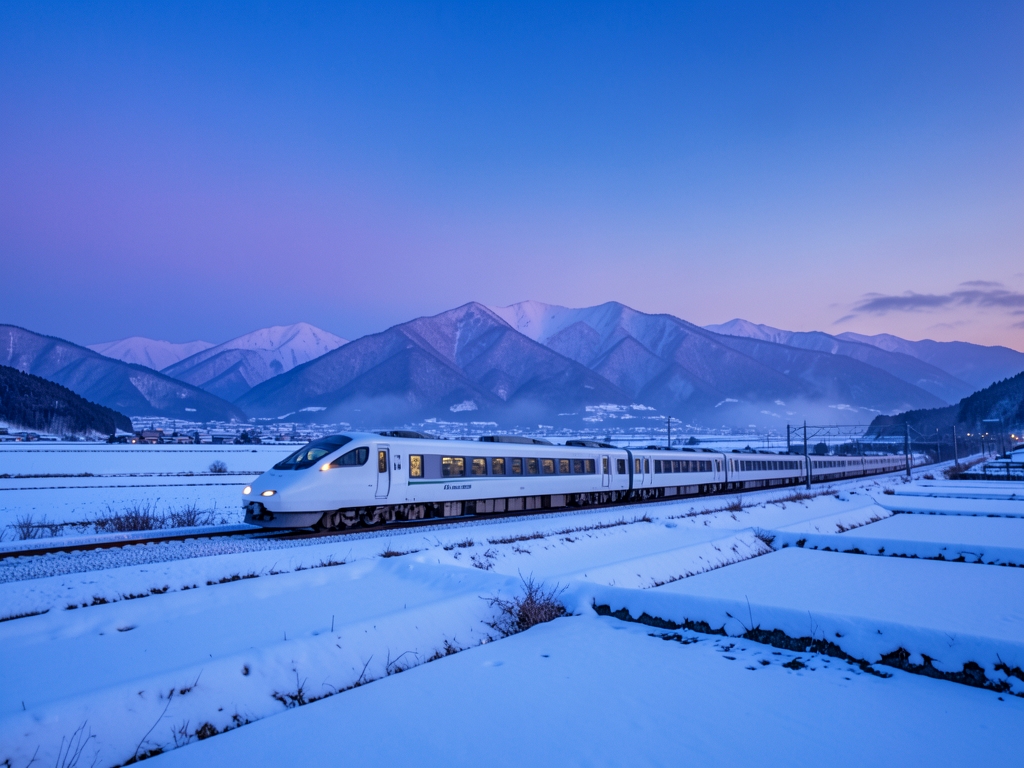
A round-trip Joetsu Shinkansen fare from Tokyo costs about ¥21,120 in ordinary reserved seating, roughly half the combined cost of one 5-star Niigata hotel night and a weekend lift pass.
| Takeaway | Detail |
|---|---|
| Round-trip Joetsu Shinkansen fare is ¥21,120 | Ordinary reserved seating from Tokyo costs about ¥10,560 each way, making the train the fixed, published cost to price first. |
| A 5-star Niigata hotel averages about £166 per night | Booking.com reports 5-star hotels in Niigata cost on average around £166 per night for a weekend stay. |
| Cap hotel plus lift pass below ¥42,240 | Keep the combined cost of one hotel night and a weekend lift pass under twice the ¥21,120 round-trip rail fare. |
| Reassess if hotel plus lift pass reaches ¥42,240 or more | When lodging and lift costs meet or exceed twice the round-trip rail cost, a Niigata City base with a day trip may no longer fit the budget cap. |
A round-trip Joetsu Shinkansen fare from Tokyo costs about ¥21,120 in ordinary reserved seating, roughly half the combined cost of one 5-star Niigata hotel night and a weekend lift pass.
This balance changes if your hotel and lift pass total reaches or exceeds ¥42,240, twice the round-trip rail cost.
How the Joetsu Shinkansen fare works
The Joetsu Shinkansen fare from Tokyo to Niigata is not a single tariff. Per JRailPass's Niigata guide, the Shinkansen is the primary access route to the city and its ski resorts, and the fare is composed of a base fare plus a separate limited-express charge. Because those two parts are quoted separately, treat the headline one-way number as a total to verify rather than as the base fare alone. Before you build a budget, run the exact date and train through JR-EAST's fare search and read the base-fare and limited-express lines; if they do not add up to the figure you are using, reprice the trip instead of carrying the old total forward.
Per Trip.com's class explainer, Joetsu Shinkansen trains sell Ordinary (standard), Green (first), and, on some sets, Gran Class (luxury). The ¥10,560 figure is the one-way Ordinary reserved-seat fare; Green and Gran Class are separate fare products, so price them on the same JR-EAST search instead of assuming a markup. Keep any hotel-versus-rail comparison on the Ordinary reserved-seat number unless every traveler is actually booked in a higher class.
| Class | What it is | How to price it |
|---|---|---|
| Ordinary | Standard seating | Use the published one-way figure, about ¥10,560 |
| Green | First class | Reprice on JR-EAST for the exact train |
| Gran Class | Luxury, on some sets only | Reprice on JR-EAST and confirm the set offers it |
For a weekend, the rail number that matters is the round trip: two one-way Ordinary reserved-seat fares at about ¥10,560 each come to about ¥21,120. Treat that as the fixed, published anchor, and measure hotel and lift-pass spending against it rather than against a one-way figure. If your itinerary starts from a different station or includes a side trip, recompute from the one-way fare for that exact segment instead of scaling the Tokyo–Niigata number.
The limited-express charge is where seat type and class differences appear, so two fares that look similar can buy different things. When you search, note whether the limited-express charge is shown for a reserved or unreserved seat and whether that departure offers Gran Class. On a peak winter weekend, that detail can matter more than a small fare difference, because an unreserved seat may mean standing room on a busy train.
Keep the fare split visible in your notes: base fare plus limited-express charge. If a booking site shows only one combined total, split it back out on JR-EAST before you compare it with a pass, a hotel, or a drive, so you are comparing the same components rather than two different totals.
The evidence: three sources converge
The evidence for treating the train as the fixed number comes from three separate planning sources rather than one brochure: Japan-Trains.com for the Tokyo–Niigata Shinkansen, Trip.com for the Ueno–Niigata Shinkansen, and Booking.com for Niigata hotels. None of them is a substitute for the others, and that separation is the point—rail pricing and hotel pricing are being checked where each is actually published.
| Source | Use it to check | Figure or status |
|---|---|---|
| Japan-Trains.com Tokyo–Niigata page | Shinkansen tickets, prices, and schedules | One-way ordinary reserved fare; widely quoted at ¥10,560, verify before booking |
| Trip.com Ueno–Niigata Shinkansen page | Timetables and ticket prices | Second check on the same corridor, especially from Ueno |
| Booking.com Niigata page | Hotel prices for the weekend | 5-star average around £166 per night; mid-range filters sit below it |
On the rail side, Japan-Trains.com's Tokyo–Niigata page lists Shinkansen tickets, prices, and schedules for the route, and Trip.com's Ueno–Niigata page is a second check on the same corridor, especially if you are starting from Ueno rather than Tokyo Station. Neither snippet in our sourcing displays the fare itself, so treat ¥10,560 one-way in ordinary reserved seating as this article's planning figure, not as a confirmed quote: run your exact 2026 date and train through JR-EAST's fare search, and only if the confirmed one-way fare matches does the round trip come to ¥21,120 (¥10,560 × 2).
On the hotel side, Booking.com's Niigata page states that 5-star hotels in Niigata for this weekend average around £166 per night. At typical yen rates that is the top of the market, and mid-range properties sit well below it, so pull the actual filter numbers for your dates instead of assuming the 5-star average is your only option. Because this is a weekend-specific figure, re-check it when your dates change.
Read together, the sources give two anchors that do not depend on each other: a published rail fare that can be booked as a line item and a hotel market average that is only a starting point. If Japan-Trains.com or Trip.com shows a different ordinary reserved fare, replace ¥10,560 in your budget; if Booking.com's 5-star average moves, re-pull the mid-range filters before deciding how much room is left for the lift pass.
Options compared: fare vs pass vs drive
For a pure Tokyo–Niigata winter weekend, compare the three transport options before you let hotel prices move the budget. Point-to-point Joetsu Shinkansen tickets are the default winner when the trip is exactly one return journey with no extra rail legs: at the ~¥10,560 one-way ordinary reserved planning fare priced above, the round trip is about ¥21,120, and you avoid paying for coverage you will not use.
| Option | Wins when | Cost check |
|---|---|---|
| Point-to-point Shinkansen tickets | One Tokyo–Niigata return, no extra rail legs | About ¥10,560 one way; about ¥21,120 round trip |
| JR EAST PASS | Weekend adds at least one more limited-express leg (for example, Niigata onward to a ski area or Sendai) | Pass price < sum of individual fares, using jreast.co.jp's current price |
| Drive / no rail pass | Full road cost is lower than the rail total you would pay | Add fuel, tolls, and parking; compare with about ¥21,120 (or the pass total if applicable) |
The JR EAST PASS is not automatically better. It covers the Aomori, Sendai, Nagano, and Niigata areas, but coverage alone is not savings. It wins only when the weekend adds at least one more limited-express leg, such as Niigata onward to a ski area or Sendai. Price it as a simple inequality: the pass price must be less than the sum of the individual fares, using the current price on jreast.co.jp. If the itinerary is only Tokyo to Niigata and back, the pass does not pay for itself.
Driving is the third option, but it has no verified cost in the sources used here. Treat it as a check: add fuel, tolls, and parking for the full round trip, then compare that total with the rail total you would actually pay. Include destination parking and any winter-driving time you value; if those are uncertain, rail remains the fixed number.
Winner for a pure city weekend: point-to-point tickets. The pass only pays for itself if the itinerary includes extra limited-express travel, and driving only wins if its full road cost beats the rail total. Choose the lowest verified total for your actual itinerary, not the option with the broadest coverage.
Costs that actually move the total
Start with the rail total you have already priced, then give the variable side a hard ceiling. Using the baseline of about ¥10,560 one-way in ordinary reserved seating, the round-trip rail line is about ¥21,120; twice that is about ¥42,240. Treat that ¥42,240 as the maximum for one hotel night plus the lift pass if you want the train to stay roughly half the size of the hotel-plus-lift line. Write the cap in yen before you shop, and convert hotel and pass quotes to yen before you compare.
Booking.com is the ceiling reference: it reports 5-star hotels in Niigata for this weekend averaging around £166 per night. Treat that as a flag, not a quote. Filter Booking.com for your actual dates, or use Tripadvisor's Niigata-area set near Genbi Shinkansen—108 hotels and 4,945 traveler reviews—to see the live band for the dates you care about. Set your room target at or below the mid-range band you find, not at the top property that catches your eye.
The room price decides how much pass budget is left. Subtract the hotel quote from the ¥42,240 cap before you look at lift tickets; if the room consumes most of the cap, the nicer property is no longer a good fit for this rail-first budget. This is where a Niigata City base can be tested: compare the city-room band with the slope-side room band, then see which one leaves enough room for the pass once the official rate is known.
The lift-pass side cannot be filled in from the sources here: no verified 2026 Niigata lift-pass price is available. Check each resort's official site—GALA, Naeba, or the Iwanosawa-area hills you are considering—for the 2026-27 season 1-day and 2-day pass rates before assuming any number. Use the 1-day rate for a single ski day and the 2-day rate for a two-day weekend; do not carry a past-season rate forward as if it were a quote.
Once the official pass rate is posted, add it to the hotel quote and compare with the ¥42,240 ceiling. If the sum is under the cap, the hotel fits this rail-first test; if it is over, cut the hotel target first, because the pass rate is published by the resort and the rail number is already fixed. Keep the arithmetic visible: one-way rail × 2 = round-trip rail; round-trip rail × 2 = hotel-plus-pass cap.
What the evidence does not settle
The ¥10,560 one-way figure is a planning snapshot, not a 2026 tariff guarantee: JR can adjust base fares and surcharges, so re-verify the Tokyo–Niigata Joetsu Shinkansen ordinary reserved fare on JR-EAST's fare search for your exact 2026 travel dates. If the one-way number moves, the round trip (¥10,560 × 2 = ¥21,120 at the baseline) and the 2× cap (¥21,120 × 2 = ¥42,240) move with it, and the pass-versus-ticket subtraction has to be re-run rather than assumed.
The hotel side is equally unstable. Booking.com's "this weekend" average of about £166 for a 5-star Niigata room is a snapshot, not a ski-season promise; pull the same search for your exact February 2026 dates, because on-mountain rates can diverge sharply from Niigata City rates. A city base with a day trip to the slopes may still fit where an on-mountain stay does not.
The rule still wins when a fare increase is smaller than the slack in your hotel-plus-lift budget: if the revised round-trip rail cost times two remains above the actual hotel-plus-lift total, the train stays the fixed, bookable number and the cap simply tightens. It breaks when the revised rail cost, or a seasonal hotel spike, pushes hotel plus lift pass above that 2× line; then the comparison must be rebuilt from the new fare and the new room rate.
| Case | What happens to the baseline |
|---|---|
| Fare unchanged at ¥10,560 one way and hotel + lift pass stays under ¥42,240 | Baseline holds; train remains the fixed number |
| Fare revised upward but hotel + lift pass stays under 2× the new round trip | Rule still wins; recompute the cap, do not assume ¥42,240 |
| Fare revised upward or February hotel rate spikes above the snapshot | Baseline breaks; re-run fare, room, and pass comparisons |
Use the table as a decision check, not as a price list: every volatile figure in it must be re-pulled before booking, while the arithmetic relationship—round trip first, then twice that amount as the hotel-plus-lift ceiling—stays the same.
Two-day February weekend
For a Saturday–Sunday in February 2026 departing Tokyo Station in ordinary reserved seating, start with the fixed rail line: two travelers, one round trip each. As listed on Japan-Trains.com and Trip.com, the one-way Tokyo–Niigata fare is about ¥10,560, so budget ¥21,120 round-trip per person, or ¥42,240 for two. This is the number you can confirm and book before you price anything else.
Checkpoint 1 (rail):
Checkpoint 2 (hotel): Pull Niigata rates on Booking.com for your Saturday night, one room for two. Booking.com reports that 5-star hotels in Niigata average around £166 per night; a room at or below that mid-range 5-star benchmark keeps the lodging line within a predictable range. Convert the listed rate to your payment currency at booking time so you can compare it directly against your rail baseline.
Checkpoint 3 (lift passes): Price one 2-day lift pass per person on the official website of the resort you plan to visit and add that total to the hotel line. Because pass prices vary by resort and date, treat the resort’s published rate for your February weekend as the only valid input. Your combined hotel-plus-lift-pass total is the figure to test against twice your round-trip rail cost.
The cost of being wrong cuts both ways. If you book a premium room and passes before checking the rail baseline, the hotel-plus-lift-pass side can exceed the cap of twice your round-trip rail cost (¥84,480 for two travelers at the ¥42,240 baseline), leaving the train as a minor share of a weekend that no longer fits the plan. If you underbudget the resort side instead, you may secure the fixed fare but be forced into a last-minute room change or a shorter ski day to close the gap. Running all three checkpoints in order keeps the fixed number fixed and the variable costs contained.
Also worth reading Niigata ski hotels 2026: award Tokyo to Niigata 2026: ¥10,560 Tokyo to Yamagata ski trips
Decision rules for booking week
If the weekend is Tokyo–Niigata round trip only, buy point-to-point tickets at that verified fare and skip the pass; keep the JR-EAST quote or ticket confirmation as your first artifact.
If you add two or more limited-express legs beyond the return trip, price the JR EAST PASS on jreast.co.jp and buy it only when the pass price is lower than the sum of the individual fares; save that fare comparison as your second artifact.
If hotel plus lift pass exceeds two times the round-trip rail cost—¥42,240 against the ¥21,120 round-trip figure—downgrade the hotel before touching the train. Tripadvisor lists 108 hotels near Genbi Shinkansen in Niigata, so there is room to move down a tier; keep a hotel shortlist plus the lift-pass quote as your third artifact.
Frequently Asked Questions
What combined cost should one hotel night plus a weekend lift pass stay under?
Keep the combined cost of one hotel night and a weekend lift pass under twice the round-trip rail fare.
When does a Niigata City base with a day trip stop fitting the budget cap?
When lodging and lift costs meet or exceed twice the round-trip rail cost, a Niigata City base with a day trip may no longer fit the budget cap.
How does the round-trip rail fare compare with one 5-star hotel night plus a weekend lift pass?
The round-trip rail fare is roughly half the combined cost of one 5-star Niigata hotel night and a weekend lift pass.
What source and average rate are given for 5-star Niigata hotels?
Booking.com reports 5-star hotels in Niigata cost on average around £166 per night for a weekend stay.
What is the Shinkansen fare composed of?
Per JRailPass's Niigata guide, the Shinkansen is the primary access route to the city and its ski resorts, and the fare is composed of a base fare plus a separate limited-express charge.
What pricing caveat applies to the Joetsu Shinkansen fare?
The Joetsu Shinkansen fare from Tokyo to Niigata is not a single tariff.
Quick answers
| What is the primary access route from Tokyo to Niigata and its ski resorts? | The Joetsu Shinkansen is the primary access route to the city and its ski resorts. |
| How is the Joetsu Shinkansen fare from Tokyo to Niigata composed? | The fare is composed of a base fare plus a separate limited-express charge. |
| What is the average nightly cost of a 5-star hotel in Niigata for a weekend stay? | Booking.com reports that 5-star hotels in Niigata cost on average around £166 per night for a weekend stay. |
| How should travelers budget for one hotel night and a weekend lift pass relative to rail costs? | Travelers should keep the combined cost of one hotel night and a weekend lift pass under twice the round-trip rail fare. |
| When might a Niigata City base with a day trip no longer fit the budget cap? | It may no longer fit the budget cap when lodging and lift costs meet or exceed twice the round-trip rail cost. |
Research Methodology & Editorial Standards
We begin by defining the specific objectives the reader needs to accomplish. Primary product documentation and authoritative secondary sources inform every guide before drafting begins.
Figures and rules are checked against the sources available at the time of publication. Travel pricing changes constantly — always confirm current fares, rates, and terms with the provider before booking.