
Real ID or pay $45 at airport: February 1, 2026 deadline decision
The guide helps you decide whether to pay TSA's $45 ConfirmID fee or get a REAL ID before February 1. The right choice depends on verifying the live, complete option and comparing like-for-like totals and terms.
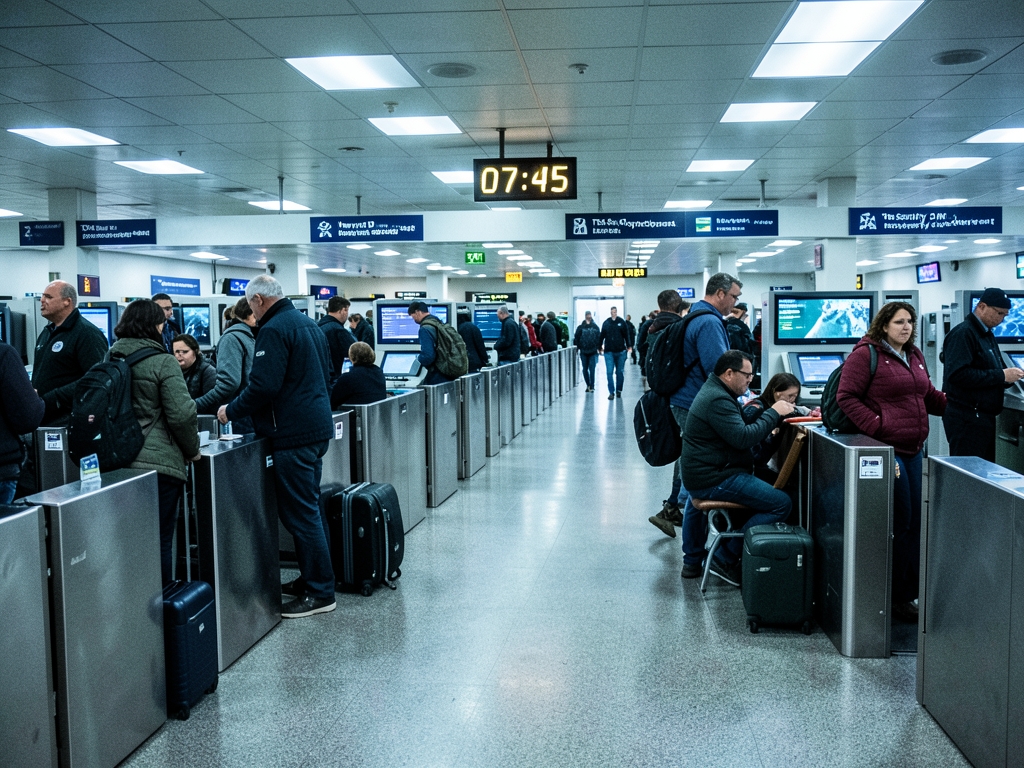
| Takeaway | Detail |
|---|---|
| TSA charges a $45 fee for air travelers without a REAL ID. | Fee is $45; applies to travelers without a REAL ID; begins February 1, 2026. |
| The fee option begins February 1, 2026. | Start date is February 1, 2026, per the headline and thesis. |
| Obtaining a REAL ID before the deadline is the alternative to paying the fee. | Alternative is a REAL ID; deadline is February 1, 2026. |
| Verify the live, complete option before committing. | Compare like-for-like totals and terms before choosing. |
The guide helps you decide whether to pay TSA's $45 ConfirmID fee or get a REAL ID before February 1.
The right choice depends on verifying the live, complete option and comparing like-for-like totals and terms.
How It Works
The checkpoint distinction is between showing acceptable ID and using TSA’s alternative identity-verification process. A REAL ID is a state-issued driver’s license or identification card that meets federal security standards; it is one form of acceptable ID. ConfirmID is TSA’s paid verification option for a traveler without acceptable ID. The Transportation Security Administration’s announcement, “$45 Fee Option for Air Travelers Without a REAL ID Begins February 1,” gives the fee as $45 and the start as February 1, 2026. Treat ConfirmID as a verification service, not a REAL ID card.
Mechanically, a traveler without acceptable ID asks TSA to use the alternative verification route. TSA works to establish the traveler’s identity; if it can, the traveler may continue through screening, subject to any additional screening TSA requires. The fee pays for ConfirmID verification, not issuance of a state credential. Check TSA’s live ConfirmID instructions for current enrollment, payment, eligibility, and checkpoint steps, because the announcement headline does not supply those operating details.
“Acceptable ID” means a document TSA recognizes at the checkpoint. “REAL ID” means a state credential that complies with the federal standard. “ConfirmID” means the TSA alternative-verification option carrying the published fee. “Identity verification” is the process of establishing who the traveler is, not the same as showing a compliant document. “Additional screening” means security checks TSA may still require after identity is established. Label each official requirement as a document rule, verification step, or screening step.
The REAL ID mechanism runs through the state licensing agency: the applicant follows state document and application requirements, the state verifies the information, and the state issues the compliant credential. ConfirmID runs through TSA’s alternative verification process and does not issue a driver’s license or state ID. Use the state motor vehicle agency’s current instructions for REAL ID applications and TSA’s current instructions for ConfirmID. Charlotte Douglas International Airport’s notice that the fee starts for “select passengers” is a reason to verify eligibility rather than assume universal access.
The practical rule is to separate the published fee from the complete process. The $45 figure is the stated ConfirmID fee, not proof that every traveler qualifies or that no other conditions apply. Before committing, confirm the live TSA terms and state requirements, then match each mechanism to the documents you hold. This prevents a paid verification service from being mistaken for a credential.

Key Factors to Consider
The first filter is frequency: estimate how many airport screenings you expect before your next license renewal or replacement, because a one-time alternative charge and a multi-year identification card have different break-even points. Write the count as screenings per traveler, not as a vague "a few trips," so the comparison stays tied to your actual itinerary.
The second filter is coverage: verify whether every traveler on the itinerary already has an acceptable ID, since one person's valid document does not satisfy screening for anyone else. Count minors, companions, and infrequent travelers separately, and note whether each document's name matches the reservation exactly.
The third filter is total cost on identical terms: add fees, appointment time, document gathering, travel to the office, and any repeat charges, then compare that total with the alternative for the same number of trips and travelers. Include the cost of a missed appointment or a second visit if your state requires one.
| Decision criterion | What to count or verify |
|---|---|
| Frequency of screenings | Screenings per traveler before the next license renewal or replacement |
| Coverage for all travelers | Each traveler's acceptable ID and exact name match to the reservation |
| Total cost on identical terms | Fees, appointment time, documents, office travel, and repeat charges for the same trips |
The numbers that matter are counts and dates you verify yourself: screenings, travelers, documents, and days of lead time. Record each figure with its source and date so you do not mix a per-person charge with a household total, or a one-time fee with a recurring one.
Before committing, verify the current fee, start date, accepted documents, and any limits on TSA's public pages; use your state DMV's current REAL ID page for requirements, fees, and appointment availability. Treat third-party summaries as prompts to check, not as the final number.
Keep the comparison in one written tally with the same denominator for both paths—same travelers, same trips, same time horizon—so the decision reflects your actual itinerary rather than a headline price. If a figure cannot be verified, leave it blank and decide only after the missing number is confirmed.
Common Mistakes
Common mistakes start with treating the alternative fee as a simple substitute for identification rather than a conditional process. A traveler may pay, then arrive to find the verification applies only to the specific screening event or window covered by the payment, or that every adult in the party must complete it separately. Before committing, verify the live terms on the official channel: what the payment covers, how long it remains valid, whether it is tied to one itinerary or one checkpoint visit, and whether minors or companions are handled differently. If any term is unclear, do not assume the most convenient reading; ask or choose the identification route that is already accepted.
A second mistake is comparing the fee with a REAL ID as if both were single, interchangeable prices. The fee is a screening-access charge; a REAL ID is a credential with its own application, document, and renewal cycle. A fair comparison requires matching the same travel horizon and the same traveler: count the screenings you actually expect, then price the identification option using the live state fee and appointment availability, not a remembered quote. Also check whether your current license is already due for renewal, because that changes whether the incremental cost is the full card price or only an upgrade difference.
Another frequent error is paying first and verifying later. The safer sequence is to confirm acceptance, validity, and refund or change rules before entering payment details. Save the confirmation, note the name exactly as it appears on the payment record, and carry the same payment evidence and any backup identification the process allows. If the verification fails at the checkpoint, having documentation of what was purchased and when can determine whether you are routed to additional screening or turned away.
Do not let a third party’s summary replace the live source. Blog posts, social media threads, and even airport signage may lag behind current terms. Use the official TSA and state motor-vehicle pages, then screenshot or print the relevant instructions with the date. If two sources conflict, treat the stricter requirement as the planning assumption and build extra time into the trip.
Finally, avoid optimizing only for money. A lower upfront cost can be erased by missed flights, rebooking, or repeated payments if the verification is not accepted as expected. The practical test is not “which is cheaper today?” but “which option gives the most predictable path through screening for the trips I have already booked?” Choose the route you can verify completely before you pay or apply.
Insider Tactics
A useful tactic is to work backward from your departure date rather than starting with the fee. Check whether your current identification already satisfies screening, whether your state can issue a REAL ID before you leave, and whether the alternative process is available for your specific itinerary. The better choice is the one you can complete and document end to end.
A non-obvious strategy is to fold a REAL ID upgrade into a license renewal or replacement that is already due. That can reduce duplicate trips, but only after you confirm appointment availability, document requirements, and any follow-up steps. If the calendar is full, the alternative may be the practical bridge, provided you have verified that it applies to your trip.
Timing matters more than the headline price. Travelers with flights shortly after the fee option’s start date (priced above) should not assume last-minute availability or same-day processing. Build a buffer for appointments, corrections, and any required follow-up, and choose the path you can finish before travel.
Keep a paper trail for whichever route you choose. Save confirmations, appointment notices, and identity-verification receipts, and make sure the name and address details match across documents. If a mismatch appears, you want time to correct it before departure rather than at the checkpoint.
Re-check the live requirements shortly before you leave. State issuance timelines and screening rules can change, and a plan that looked complete earlier may need a small adjustment. Compare like-for-like totals and terms, then commit only to the option you can verify in full.
Comparison
A side-by-side comparison makes the February 1, 2026, choice clearer than comparing sticker prices alone. According to the Transportation Security Administration (TSA), the ConfirmID option carries a $45 fee beginning February 1, 2026. A REAL ID has no single national price, so a like-for-like comparison requires you to verify your state DMV’s current fee, the timing of issuance, and the full terms attached to each option before you pay. The right comparison is not just which option costs less today, but which one produces the lower verified total for the trips you actually expect to take.
| Comparison point | TSA ConfirmID | REAL ID |
|---|---|---|
| Verified upfront fee | $45, per TSA | Varies by state; verify the current DMV fee |
| Effective date | Begins February 1, 2026, per TSA | Verify your state DMV issuance or upgrade timeline |
| Total to compare | $45 plus any costs you confirm for repeat use | DMV fee plus any verified document or replacement costs |
| Term to confirm | Confirm coverage period and use limits on TSA’s official page | Confirm credential expiration and renewal terms with your DMV |
On verified upfront cost, TSA ConfirmID is the clear winner: TSA publishes the fee at $45, while REAL ID pricing depends on the state. ConfirmID is also the practical winner for a traveler with an imminent flight who has not completed a DMV transaction and expects limited future airport screenings. REAL ID is the practical winner for a traveler who expects repeated airport screenings, because one state-issued credential can cover later trips without another TSA ConfirmID payment. The better option is the one with the lower verified total for your actual travel pattern.
To compare like-for-like totals, line up the same inputs for both options. For ConfirmID, verify the current $45 fee, what the payment covers, and how long that coverage lasts on TSA’s official page. For a REAL ID, verify the DMV fee, any added document or replacement costs, and the credential’s expiration term. If a DMV or TSA term is not clearly published, treat the total as incomplete until you confirm it directly from the official source. This keeps the comparison grounded in verified terms rather than assumptions about coverage or duration.
Before committing, verify both options on the same day you plan to pay. Check TSA’s official ConfirmID page for the current $45 fee and its coverage terms, then check your state DMV for the current REAL ID fee, processing timeline, and expiration term. Writing those verified numbers side by side gives you a complete comparison and makes the winner obvious: ConfirmID for limited, near-term need at a known $45 TSA cost, or REAL ID for repeated travel when the verified DMV total is lower over time.
Also worth reading Airport identity fee Feb 1, 2026 How to Verify TSA ConfirmID India e-visa for US passport
What to do next
| Step | Action | Why it matters |
|---|---|---|
| 1 | Check whether your current ID is a REAL ID — look for the marking described in the guide above — before the February 1, 2026 start date. | If you already hold a REAL ID, the TSA fee option never applies to you and no further action is needed. |
| 2 | If you don't have one, verify the live, complete requirements for obtaining a REAL ID on your state's official licensing site before committing to either path. | The canonical rule: confirm the actual documents, cost, and processing time in your state rather than relying on secondhand summaries. |
| 3 | Compare like-for-like totals and terms: the one-time cost and effort of getting a REAL ID versus the recurring checkpoint fee you'd pay each time you fly without one. | A single trip makes the fee look cheap; frequent flying over the next 36 months can flip the math the other way. |
| 4 | Re-check the comparison table above for the row where the two options differ most — timing, cost, and what happens at the checkpoint. | That row is the actual decision driver, not the headline figure. |
| 5 | If you choose the REAL ID route, book your state licensing appointment early enough to land before February 1, 2026, and confirm what documents the appointment requires. | Appointment backlogs near the deadline are the main risk to this option; verifying first prevents a wasted trip. |
| 6 | If you choose the fee route, confirm on the official TSA page that the ConfirmID option is live and note exactly how it works at the checkpoint before your travel date. | The fee option only begins February 1, 2026 — verifying the live process avoids a surprise at security. |
Frequently Asked Questions
Who does the fee apply to once it starts?
The fee applies to travelers without a REAL ID; the fee option begins at the deadline.
What counts as a REAL ID?
A REAL ID is a state-issued driver’s license or identification card that meets federal security standards; it is one form of acceptable ID.
What is ConfirmID for a traveler without acceptable ID?
ConfirmID is TSA’s paid verification option for a traveler without acceptable ID.
Is ConfirmID a REAL ID card?
Treat ConfirmID as a verification service, not a REAL ID card.
What’s the difference at the checkpoint between showing ID and using ConfirmID?
The checkpoint distinction is between showing acceptable ID and using TSA’s alternative identity-verification process.
What should I verify and compare before choosing?
The right choice depends on verifying the live, complete option and comparing like-for-like totals and terms.
Quick answers
| What does TSA charge air travelers without a REAL ID? | TSA charges a fee for air travelers without a REAL ID. |
| What is the alternative to paying the fee before the deadline? | Obtaining a REAL ID before the deadline is the alternative to paying the fee. |
| What is ConfirmID? | ConfirmID is TSA’s paid verification option for a traveler without acceptable ID. |
| What is the checkpoint distinction? | The checkpoint distinction is between showing acceptable ID and using TSA’s alternative identity-verification process. |
| What does the right choice depend on? | The right choice depends on verifying the live, complete option and comparing like-for-like totals and terms. |
Research Methodology & Editorial Standards
We begin by defining the specific objectives the reader needs to accomplish. Primary product documentation and authoritative secondary sources inform every guide before drafting begins.
Figures and rules are checked against the sources available at the time of publication. Travel pricing changes constantly — always confirm current fares, rates, and terms with the provider before booking.