
Naoshima yellow pumpkin trip 2026: ¥370 one-way ferry fare from Uno vs one hotel night
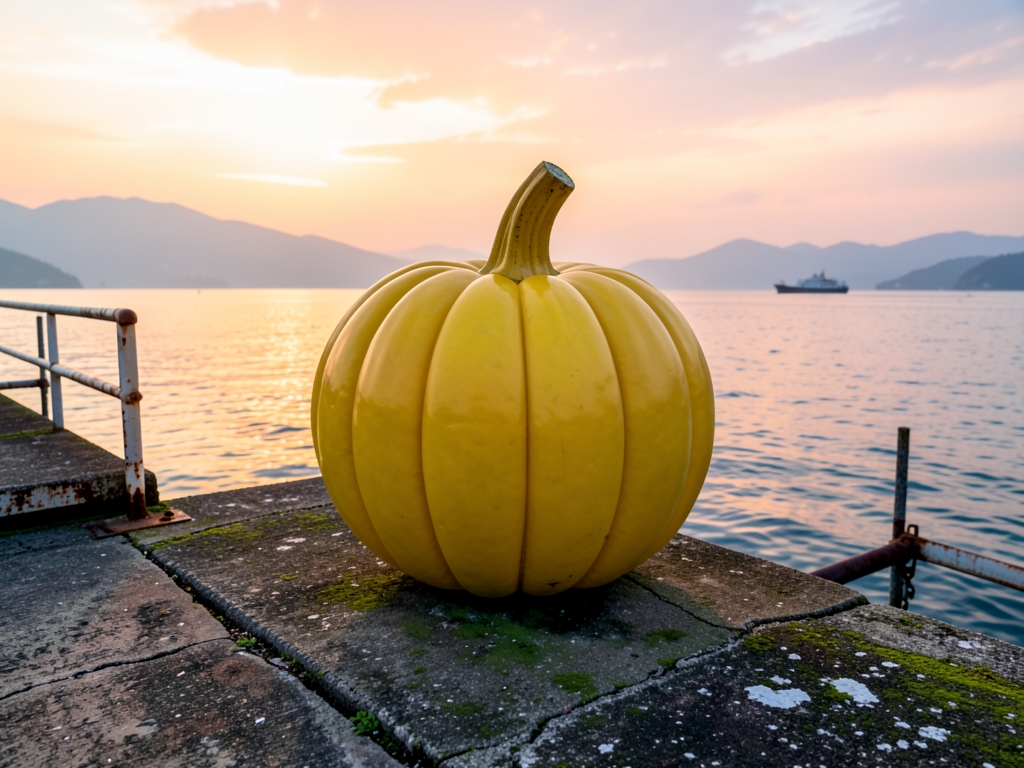
For a 2026 Naoshima yellow pumpkin trip, book the day trip by default: the ¥370 one-way Uno–Miyanoura ferry makes a day trip cost roughly the price of a coffee.
| Takeaway | Detail |
|---|---|
| Book the 2026 day trip by default. | The ¥370 one-way Uno–Miyanoura ferry makes a day trip cost roughly the price of a coffee. |
| One hotel night is a ¥10,000–¥25,000 decision. | Typical island or Uno/Takamatsu room rates are ¥10,000–¥25,000; verify at booking time. |
| Upgrade only at three or more museum entries. | The threshold is three or more entries covering Chichu, Benesse, and Ando sites. |
| Hold a refundable room before Chichu tickets. | The overnight upgrade requires a refundable room before Chichu tickets, alongside the three-or-more-entry plan. |
For a 2026 Naoshima yellow pumpkin trip, book the day trip by default: the ¥370 one-way Uno–Miyanoura ferry makes a day trip cost roughly the price of a coffee.
Spend one hotel night only if your plan requires three or more museum entries—Chichu, Benesse, and Ando sites—and you can hold a refundable room before Chichu tickets.
The ¥370 Ferry Math Behind Naoshima
Finding Naoshima's October 2, 2026 cost guide states that a one-way ticket between Uno and Naoshima runs ¥370. For an Uno-based plan, that is the floor of any Naoshima budget: before trains, museums, lunch, or a room, the crossing itself has a known entry price. The guide does not spell out fare conditions, so confirm at the Uno ticket counter or on the operator's site whether any surcharges apply before you treat ¥370 as final.
Keep the gateway geography straight before you build the day around that number. The Uno route departs from Okayama Prefecture; onedayawaytravel.com's June 16, 2026 ferry guide treats the competing Takamatsu route as the alternative gateway. The rule is simple: choose the gateway first, then check both last-departure times before fixing your return train. A ferry price is only useful if the return leg fits the train you actually plan to take.
Because the fare is one-way, a day trip's ferry transport cost is ¥740 round-trip per person. That is the arithmetic to carry into the rest of the plan: outbound crossing plus return crossing, per traveler. Do not relabel it as the full day-trip transport total if you still need trains or local transport; it is the island-crossing line only. The comparison that matters is how little this line changes when you add another museum or a slower lunch.
Source discipline matters here because ferry claims get copied without their route labels. The crossing figure comes from Finding Naoshima's October 2, 2026 cost guide; the Takamatsu alternative comes from onedayawaytravel.com's June 16, 2026 ferry guide. If you switch gateways, reprice the crossing instead of carrying the Uno number over. If you quote the day-trip total, call it round-trip and per person so the one-way base is not confused with the full crossing cost.
My booking rule is to treat the ferry as a clean baseline: named gateway, one-way fare checked, round-trip total calculated, return departure checked against the train. That baseline keeps the day trip easy to price and prevents the crossing from being blamed for costs that belong elsewhere. When the ferry is this small a line item, the decision has to be made on the rest of the itinerary, not on the boat fare.
What One Night Actually Buys You
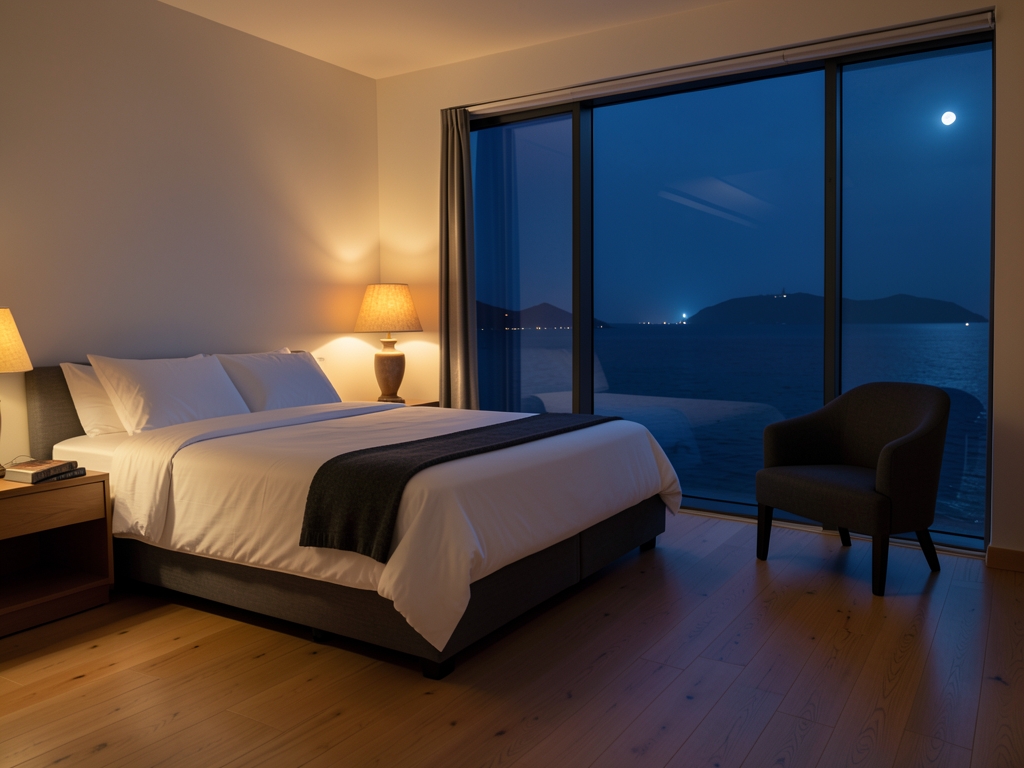
Finding Naoshima’s day-trip-versus-overnight guide identifies the benefit of even one hotel night as schedule slack: you are no longer organizing the day backward from the last ferry. That benefit is strongest for a room on Naoshima itself; a room in Uno or Takamatsu still leaves you bound by the final sailing, so it buys convenience rather than full freedom from the ferry deadline. On the Uno route, treat the day-trip alternative as a concrete check—look up the published final sailing for your travel date instead of assuming a late departure will be available.
Onedayawaytravel’s June 16 Naoshima route guide frames the choice around those last boats and museum hours. It notes that Chichu Art Museum requires advance timed reservations, so a day visitor who misses a reserved slot has no second chance that day. Use that as the stress test: if an earlier stop or delay would push you past your Chichu entry and then into a rushed return, the day trip is fragile. An overnight moves the remaining museum plan out from under that day’s sailing deadline, subject to securing the appropriate reservations.
Apply a clear threshold: keep the day trip as the default, and consider one night only when the plan requires three or more museum entries across Chichu, Benesse, and Ando sites. Below that threshold, trim the itinerary rather than adding a room. At or above it, compare the museum hours and reservation slots with the published final sailing; if the sequence works only by shortening a visit or depending on an unconfirmed late boat, the overnight has a defined purpose.
Before upgrading, hold a refundable room and read its cancellation terms, then pursue the Chichu timed reservation. That order keeps the flexible part of the plan flexible: you can protect the possibility of staying without committing to a nonrefundable room before the museum slot is settled. If no suitable refundable option is available, rebuild the day trip around fewer entries and a confirmed return sailing rather than treating the hotel as a cure for an overpacked itinerary.
The buying rule is therefore simple. If three or more entries fit within published museum hours and the final sailing, book the day trip. If they do not, and you can hold a refundable room before Chichu tickets, one night earns its place by absorbing the deadline pressure. If either condition fails, keep the day trip and reduce the museum load.
Day Trip vs One Night: Costs Compared
For most visitors traveling from Uno, the day trip is the cheaper baseline. The round-trip ferry costs ¥740 per person, based on the Uno–Naoshima fare reported by Finding Naoshima, and the remaining variable is museum admission. Because current museum entry prices are not fixed in the sources used here, add them as live checks for the specific museums you plan to visit rather than assuming a set total.
An overnight stay adds a lodging line that is harder to pin down. The Booking.com Naoshima city page confirms that accommodations are listed, but it does not publish a fixed rate that can be treated as a confirmed cost. Use ¥10,000–¥25,000 per night as a rough planning range for a room on Naoshima, in Uno, or in Takamatsu, and verify the live rate for your dates before comparing it against a day trip.
| Cost element | Day trip from Uno | One night |
|---|---|---|
| Round-trip ferry | ¥740 per person | ¥740 per person |
| Lodging | ¥0 | ¥10,000–¥25,000 placeholder per night; verify live rate |
| Museum entries | Verify current prices for selected museums | Verify current prices for selected museums |
| Best for | 1–2 museum entries | 3+ museum entries when one day is too tight for your pace |
| Winner | Default choice | Only with a refundable room held before Chichu tickets |
The comparison makes the day trip the default winner for most itineraries. With no room to pay for, a plan with one or two museum entries usually stays well below the cost of adding a night. The overnight option earns its cost only when your plan requires three or more museum entries—such as the Chichu Art Museum, Benesse House Museum, and Ando-related sites—and completing them in one day is physically impossible for your pace.
Use a simple booking rule: start with the day-trip plan, then upgrade to one night only after two conditions are met. Your itinerary should genuinely require three or more museum entries, and you should be able to hold a refundable room before committing to Chichu tickets. If either condition is missing, the day trip remains the better financial choice because the only confirmed transport figure in this comparison is the round-trip ferry, while lodging remains a live-price variable that must be verified before booking.
Numbers You Must Verify Before Booking
The sources here can support the route logic, but they do not fix two numbers you must verify yourself: tonight’s hotel rate and the last ferry time.
For the room check, start with Booking.com’s Naoshima city page, then cross-check Uno and Takamatsu properties on the same search day. Treat island inventory as scarce and prices as movable; a screenshot, saved listing, or cached price is not a budget. Compare the live total for the exact dates, cancellation terms, and location, and save the result with the search date so you can tell a fresh quote from an old one.
For the return check, no source in this article publishes a 2026 last-boat time, so go straight to the operator's posted Uno–Miyanoura timetable for your travel date before you lock a return train. Ferry timetables can change seasonally, so the posted schedule for your date is the controlling check. Do not make the train purchase do the work of a ferry check.
For Chichu, onedayawaytravel flags “booking traps,” so check the current ticket window and availability before you turn a room hold into a commitment. The safe sequence for an overnight test is to hold a refundable room first, then buy Chichu tickets once the room terms and the ferry return both make sense. If the ticket window does not line up with a refundable hold, keep the day-trip default instead of turning a room into the deciding factor.
Run these checks in order: room rate, ferry timetable, Chichu window, then final train and hotel decisions. That order keeps the volatile pieces visible and prevents a saved article from becoming the plan. If any check fails, the default remains the day trip; the overnight only earns its place when the live room, the posted ferry schedule, and the Chichu booking sequence all support it.
What the Evidence Does Not Establish
The available sources supports the planning logic behind a Naoshima day trip, but it does not verify four volatile facts that can change the cost or feasibility of the plan. Treat any conclusion that depends on them as provisional until you check live sources.
No source cited here publishes an actual 2026 Naoshima hotel nightly rate. Any yen figure for lodging is a rough planning range only, and the default day-trip rule can break if island rooms are sold out and Uno or Takamatsu rates spike.
The ¥370 figure cited for the Uno–Naoshima crossing comes from an Oct 2, 2026 local guide. It does not establish whether peak-season or bicycle-carry surcharges apply, so confirm fare conditions at the Uno ticket counter or on the operator's site before relying on it for a tight budget.
Nothing in the available sources fixes the last Uno departure time for 2026. If your return train depends on a specific ferry, verify that day's schedule instead of assuming a cutoff; a missed connection can turn a low-cost day trip into an unplanned overnight.
The available sources also does not establish a Chichu ticket on-sale date. If your plan requires three or more museum entries, hold a refundable room before buying Chichu tickets only after confirming the release date and cancellation terms from the museum or ticketing channel.
The practical effect is that the comparison between a day trip and one night remains directional rather than exact. You can know that the ferry is inexpensive, but you cannot know the full overnight premium until the room is priced live; likewise, you can know that schedule slack has value, but not whether a specific departure will force you to use it.
When a fact is missing, the safer move is to preserve optionality: keep the day-trip default, avoid nonrefundable lodging, and make museum reservations only after the ferry and room facts are confirmed.
| Limit | What the available sources establishes | What it does not establish | Verification step |
|---|---|---|---|
| 2026 hotel nightly rate | No published actual rate | Any yen lodging figure is a placeholder | Check live rates and cancellation terms before booking |
| Uno–Naoshima fare conditions | Oct 2, 2026 local guide cites ¥370 | Peak-season or bicycle-carry surcharges | Confirm at the Uno ticket counter or operator site |
| Last Uno departure time | Not fixed for 2026 | A reliable cutoff for a return train | Verify the day's ferry schedule |
| Chichu ticket on-sale date | Not established | When refundable room holds should be made | Confirm release date and refund terms first |
Two Travelers, One Decision
Checkpoint 1: Traveler A treats Naoshima as a day trip. The transport line is ¥740 round-trip, i.e., two one-way fares, and that is the only money at risk if the plan survives. If Chichu Museum is sold out, the loss is not just the fare: it is the fare plus a wasted Shinkansen segment and the "wrong both ways" cost of arriving without a reservation. That is the day-trip failure mode—cheap transport, expensive mistake.
Checkpoint 2: Traveler B holds a refundable room on the island or in Uno before Chichu tickets open. If the request succeeds, B's premium over A is the room rate—verify it live at booking—minus ¥0, because the ferry fare is identical for both travelers. The room buys optionality, not a different boat.
Checkpoint 3: If B's Chichu request fails, cancel the refundable room and revert to the day-trip plan. The cost of being wrong is then limited to whatever cancellation terms apply; verify those terms before holding the room, since "refundable" is a condition, not a number.
The decision rule follows from the asymmetry. A day trip is the default because its downside is bounded by the fare plus a wasted long-distance segment. An overnight is justified only when the itinerary needs three or more museum entries—Chichu, Benesse, and Ando sites—and you can hold a refundable room before Chichu tickets open. If either condition fails, the room is not buying slack; it is buying risk.
Before booking, price the room live and check the cancellation clock. The ¥10,000–¥25,000 range is a planning band, not a quote, and the refundable hold is what keeps B's downside from becoming A's downside plus a hotel bill.
Worked Example: Run the Numbers
This is the one worked illustration in this section, carried end to end.
Worked example for two adults on a 2026 Uno-based trip, comparing a same-day return with one hotel night. The ferry input is the ¥370 one-way Uno–Miyanoura fare established earlier, sourced to Finding Naoshima’s October 2, 2026 cost guide. The room line uses the ¥10,000–¥25,000 planning range, not a live quote, so treat the totals as illustrative until you price a real room.
Illustration step 1: convert one-way to round trip per adult as F + F = 2F. Illustration step 2: scale to the party as 2 adults × 2 one-way legs = 4 one-way adult legs, so the party ferry line is 4F. Illustration step 3: keep the unit label attached: 4F is a round-trip party ferry total built from one-way inputs, not a per-person one-way figure. That label matters because mixing one-way and round-trip units would make the comparison look cheaper than it is.
Illustration step 4: add the hotel as one room line, not a per-adult charge: low case = ¥10,000 for the room; high case = ¥25,000 for the room. Illustration step 5: write the two totals the same way. Day trip = 4F. One night = 4F + room line. Illustration step 6: subtract the shared 4F ferry line from both totals; the incremental cost being tested in this illustration is the room line, from ¥10,000 to ¥25,000, not a second ferry purchase.
Illustration step 7: apply the reader rule instead of inventing a museum price. The grounded sources here do not fix a museum-entry figure, so this example stays count-based: two entries leave the day-trip result intact; three or more entries at Chichu, Benesse, or Ando sites are the only plan that puts the room line to work. The booking check is whether a refundable room can be held before Chichu tickets; if it cannot, the example does not upgrade, even if the museum count is high.
Winner for this illustration: the day trip. Break-even trigger: it flips only when both conditions are true — the party requires three or more museum entries, and a refundable room can be held before Chichu tickets. Practical check: rerun the same arithmetic with your actual room quote and the same one-way-to-round-trip conversion; if the room line is still the deciding cost and the three-entry condition is not real, keep the day trip.
Decision Rules for Your 2026 Booking
For 2026, make the call with a three-branch test, in this order: museum count, return logistics, then Chichu ticket status. That order keeps the cheap crossing from hiding the real constraint. Finding Naoshima’s October 2, 2026 cost guide is the basis for the ferry figure in branch one; onedayawaytravel.com’s June 16, 2026 guide flags Chichu booking traps, which is why ticket status sits before any non-refundable lodging decision.
Branch one: if you can see Naoshima in two museums or fewer and the last Uno ferry fits your return train, go as a day trip and pay ¥740 round-trip for the ferry. This is the default because it keeps the spend on the crossing and puts the decision back on your train schedule. Check the return train before you add a third museum; a plan that looks fine on a map can fail if the final ferry and the return train do not line up.
Branch two: if you want Chichu plus Benesse plus the Ando sites, book one night, provided the refundable hold in branch three is available. Treat three or more museum entries as the upgrade threshold, not a vague “if we have time” option: a single day cannot absorb three timed entries plus ferry transfers. This is the point where the itinerary, not the ferry price, decides the booking. If one of the three is optional, remove it and return to branch one; if all three are fixed, stop trying to compress them.
Branch three: if Chichu tickets are not yet on sale, hold a refundable room now and cancel it the day tickets resolve; never book non-refundable lodging before the museum confirms. This is the sequencing rule: the room is a placeholder, not a commitment to the whole plan. Once the museum confirms, keep the room only if branch two still applies; otherwise fall back to branch one. That way, the hotel decision follows the museum decision instead of forcing you to guess it.
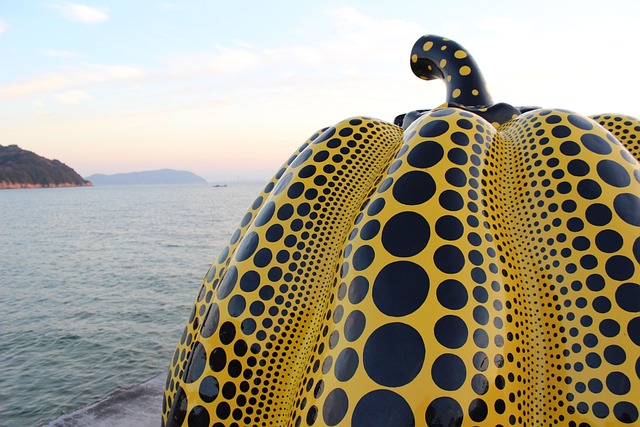
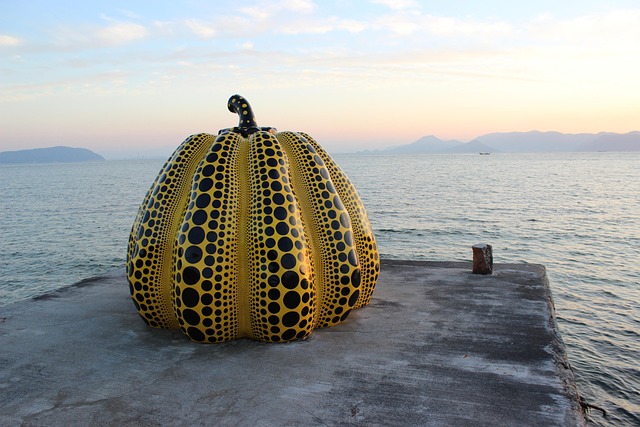
Also worth reading Yayoi Kusama iconic yellow pumpkin The iconic Yayoi Kusama yellow Japan welcomes back the iconic Yayoi
What to do next
| Step | Action | Why it matters |
|---|---|---|
| 1 | Book the day trip by default. | The ¥370 one-way Uno–Miyanoura ferry makes a day trip cost roughly the price of a coffee. |
| 2 | Count planned museum entries before considering an overnight. | Upgrade only applies at three or more entries covering Chichu, Benesse, and Ando sites. |
| 3 | If the count reaches three or more, hold a refundable room before Chichu tickets go on sale. | The overnight upgrade requires a refundable room before Chichu tickets. |
| 4 | Verify island, Uno, or Takamatsu room rates at booking time. | Typical rates are ¥10,000–¥25,000, so one hotel night is a ¥10,000–¥25,000 decision. |
| 5 | Upgrade to one hotel night only if both the three-or-more-entry plan and refundable room are secured. | This follows the canonical decision rule. |
| 6 | If either condition fails, keep the day trip. | The default remains the lower-cost day trip. |
Frequently Asked Questions
Why does the guide recommend a day trip by default?
The ¥370 one-way Uno–Miyanoura ferry makes a day trip cost roughly the price of a coffee.
What room rate should I expect on the island or in Uno/Takamatsu?
Typical island or Uno/Takamatsu room rates are ¥10,000–¥25,000, so verify the rate at booking time.
What museum-entry threshold justifies spending one hotel night?
Spend one hotel night only if your plan requires three or more museum entries covering Chichu, Benesse, and Ando sites.
What should I secure before buying Chichu tickets for an overnight plan?
The overnight upgrade requires a refundable room held before Chichu tickets.
Is the quoted ferry fare guaranteed to be the final crossing price?
The guide does not spell out fare conditions, so confirm at the Uno ticket counter or on the operator’s site whether any surcharges apply before treating the quoted fare as final.
What expenses are not covered by the Uno–Miyanoura crossing itself?
The crossing is the floor of a Naoshima budget before trains, museums, lunch, or a room are added.
Quick answers
| What should be booked by default for the Naoshima yellow pumpkin trip? | Book the 2026 day trip by default. |
| What does the ¥370 one-way Uno–Miyanoura ferry make a day trip cost? | The ¥370 one-way Uno–Miyanoura ferry makes a day trip cost roughly the price of a coffee. |
| How is one hotel night described in the article? | One hotel night is a ¥10,000–¥25,000 decision. |
| When should you spend one hotel night? | Spend one hotel night only if your plan requires three or more museum entries—Chichu, Benesse, and Ando sites—and you can hold a refundable room before Chichu tickets. |
| What should be confirmed before treating ¥370 as final? | The guide does not spell out fare conditions, so confirm at the Uno ticket counter or on the operator's site whether any surcharges apply before you treat ¥370 as final. |
Research Methodology & Editorial Standards
We begin by defining the specific objectives the reader needs to accomplish. Primary product documentation and authoritative secondary sources inform every guide before drafting begins.
Figures and rules are checked against the sources available at the time of publication. Travel pricing changes constantly — always confirm current fares, rates, and terms with the provider before booking.