
New York to London Upper Class Awards 2026: Pay Cash or Points at 1.2 Cents?
For 2026 New York–London Upper Class awards, pay points only when miles required × $0.012, plus actual checkout taxes and surcharges, is at least 40% below the live round-trip cash fare for the same itinerary.
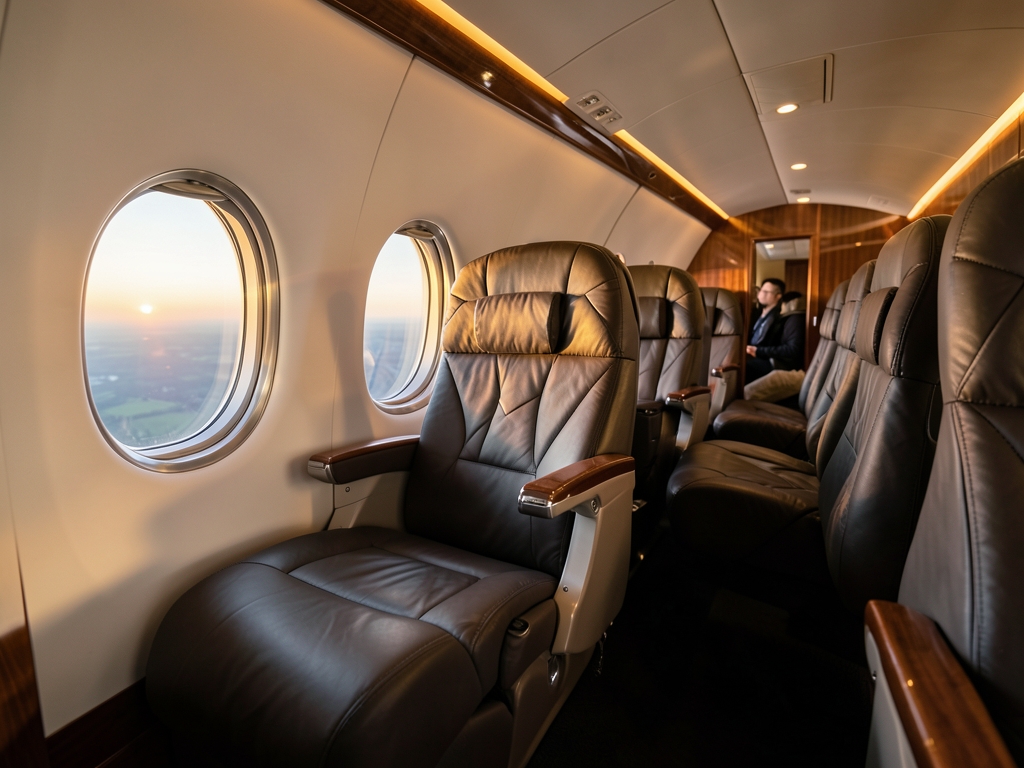
For 2026 New York–London Upper Class awards, pay points only when miles required × $0.012, plus actual checkout taxes and surcharges, is at least 40% below the live round-trip cash fare for the same itinerary.
Virgin's reported £1,200 round-trip surcharge is the condition that can flip the answer toward paying cash.
How Virgin Upper Class awards price
A Virgin Atlantic Flying Club Upper Class award from the U.S. to London is priced in two parts, not miles alone. The miles requirement comes from the Flying Club award chart, while the cash due at checkout covers carrier-imposed surcharges and government taxes and fees. Because those two components are set by different rules, the mileage figure you see in a reward search is only half of the award’s total cost.
The miles side is controlled by Flying Club pricing for the route, cabin, and date you select. Before transferring points from a bank or hotel program, confirm the live mileage requirement in Virgin Atlantic’s reward search for the exact flights you want. A mileage figure from an older guide or screenshot can be stale, so the booking screen should be your source of record for the miles component.
The cash side is often the larger surprise. Virgin Atlantic has raised carrier-imposed surcharges on award tickets repeatedly in 2026, according to Upgraded Points. Head for Points reports that Virgin now wants roughly £1,200 in surcharges on top of your miles for an Upper Class transatlantic redemption. Treat that as a reported figure to verify, not a universal quote: check the exact GBP amount in your own search, because carrier-imposed surcharges can vary by routing and travel date.
| Award price component | What sets it | What to verify at checkout |
|---|---|---|
| Miles | Flying Club award chart for the selected route, cabin, and date | Live mileage requirement for the exact flights before transferring points |
| Cash due | Carrier-imposed surcharges plus government taxes and fees | Exact cash total shown on the final award booking screen for your routing and dates |
When you review an award quote, read the cash breakdown line by line rather than assuming the surcharge is a minor tax line. The carrier-imposed surcharge is the airline’s own fee, separate from government-imposed taxes and airport charges, and it is the part Virgin Atlantic has been adjusting upward. If you compare two routings or dates, pull the final booking screen for each one, because a change in itinerary can change the cash component even when the cabin looks the same. The checkout total is the actual cash outlay attached to your specific Upper Class redemption.

The evidence: surcharge math converges
Two outlets quote fee levels in different currencies: Head for Points reports £1,200 on top of miles for an Upper Class redemption, and The Points Guy reports an award cost pushed to over $1,200 by the added fee. These are similar magnitudes but not the same number, and Upgraded Points confirms only that surcharges have increased again, without a figure. Do not average them into a single band; use the exact cash total shown at checkout for your own search as the component you add to the miles price.
Head for Points reports that British Airways and Virgin Atlantic have increased surcharges on redemption tickets, with Virgin now wanting £1,200 on top of your miles for an Upper Class flight. That is the most direct published figure for the JFK–LHR award cash component.
The Points Guy corroborates the level from a second outlet: by adding the fee, the cost of an award ticket on Virgin Atlantic Upper Class shot up to over $1,200, alongside the previously inflated partner redemption price of 170,000 SkyMiles. The currencies and booking paths differ, but both point to the same fee neighborhood.
Upgraded Points supplies the direction of travel rather than a new headline number: Virgin Atlantic has increased award surcharges again this year. That makes older surcharge quotes a weak planning input and argues for using the checkout figure, not an earlier-season post.
| Source | Reported fee | Use in planning |
|---|---|---|
| Head for Points | £1,200 | Most direct Upper Class surcharge figure |
| The Points Guy | Over $1,200 | Corroborating fee level; 170,000 SkyMiles partner price |
| Upgraded Points | Increase again this year | Confirms older quotes are stale |
The band is not a promise of an exact checkout total. It is a convergence signal: two outlets quote headline fees around £1,200 and over $1,200, while the third confirms the fee trend is still moving upward. Use it to sanity-check a quote, not to replace the live checkout number.
Practical check: pull the live taxes and surcharges shown at checkout and compare that cash amount with the current reported band. If checkout is materially above the band, re-run the comparison with the live number; if it sits inside the band, the published convergence figure is a reasonable placeholder.

Cash vs points: the comparison table
For a round-trip JFK–LHR Upper Class seat, four booking paths compete for the same flights. The conditional winner depends on the live cash fare on your dates, so the most useful comparison is not miles versus cash in the abstract, but the full out-of-pocket cost of each path you can actually book.
| Path | What you pay | When it wins | Check before booking |
|---|---|---|---|
| 1. Virgin Flying Club award (own miles) | Flying Club miles for your dates plus the cash surcharges shown at checkout; Head for Points reports Virgin asking £1,200 on top of miles for an Upper Class redemption | Only when live round-trip Upper Class cash fares are at peak-season highs | Price the same round-trip flights in cash and compare the full award total, not just the miles |
| 2. Delta SkyMiles partner award | 170,000 SkyMiles one-way, per The Points Guy, plus more than $1,200 in fees | Nearly never; it usually loses to Path 1 | Verify the current Delta mileage requirement and cash fees on the exact itinerary before transferring points |
| 3. Cash Upper Class fare | The live round-trip cash fare shown by the airline | Whenever the live fare is below the miles-plus-fees total from the reader-rule calculation | Use the same flights and cabin as the award search so you are comparing like for like |
| 4. Fixed-value travel portal redemption | Points charged at your card portal's displayed rate for the cash ticket | Situationally, when you want a simple booking and do not hold airline miles | Compare the portal point total with Path 3 and confirm the ticket includes the fare conditions you need |
Path 1 is the main award baseline, but its cash component means it earns the win only when peak-season pricing pushes the paid round-trip fare far above the award's full cost. Path 3 is the cash baseline: it avoids award surcharge exposure and takes the win when the live fare comes in below the threshold produced by the reader-rule check for those same flights.
Path 2 deserves the most caution. The one-way mileage price and heavy fees reported by The Points Guy make it difficult to justify against a Virgin Flying Club award in nearly every case. Treat any partner quote as a live checkout check, not a standing value, because mileage requirements and cash charges can change before you book.
The conditional winner is Path 3 on low or moderate cash fares, Path 1 when peak-season cash fares clear the reader-rule threshold, and almost never Path 2. Path 4 is a convenience option rather than a value leader. Before booking, price the same round-trip itinerary across every available path and pay with points only when the total award cost is at least 40% below the live round-trip Upper Class cash fare.

Numbers that decide the call
Start with the valuation rule, not the headline miles requirement. For any round-trip award, calculate the economic cost as (miles required × $0.012) + the actual taxes and surcharges shown at checkout, converted to dollars. If your Virgin search shows a round-trip Upper Class redemption at 100,000 Flying Club miles—verify the current chart level there—those miles represent $1,200 of avoided cash fare before surcharges: 100,000 × $0.012 = $1,200.
Head for Points reports that Virgin wants £1,200 on top of miles for an Upper Class flight. For this round-trip calculation, use that reported £1,200 as the cash component and convert it to dollars at the exchange rate shown when you book; the dollar equivalent will move with the rate, so no fixed dollar figure is given here. Add that converted amount to the $1,200 mile value from the 100,000-mile illustration to get the award's all-in economic cost, then treat the result as a planning estimate only, because the exact checkout amount controls the final calculation.
That $2,700–$2,800 is the simple breakeven against a live round-trip Upper Class cash fare. Below it, cash is the better value under this valuation; above it, the award saves value before applying any extra margin. Compare the same round-trip cabin, route, and dates, using the fare actually available when you book.
The booking rule is stricter than simple breakeven: pay with points only when the economic cost is at least 40% below the live round-trip cash fare. Algebraically, the cash fare must be at least the economic cost divided by 0.60. The $2,700–$2,800 estimate therefore implies a cash-fare threshold of roughly $4,500–$4,667, depending on the converted surcharge. At the lower end, $2,700 is exactly 40% below $4,500; at the upper end, $2,800 is about 40% below $4,667.
Before booking, replace both estimates with live figures: use the round-trip miles shown in your Virgin search and the exact dollar taxes and surcharges at checkout. Recompute the economic cost and its 0.60 threshold, then compare that result with the live round-trip cash fare. If the fare does not reach the threshold, choose cash under this rule; if it does, the points redemption clears the required margin. Recheck both screens immediately before purchase because the fare and checkout charges can change.
What the evidence does not settle
This section catalogs the edge cases where the 1.2-cent rule breaks versus still wins; it does not replace the base comparison, but shows when a live fare or fee shape changes the answer for a specific booking.
Off-peak cash sales are the first break point. If a live round-trip Upper Class cash fare drops near $2,500, the award can lose because its total is not at least 40% below that fare; if the same cabin is selling at $6,000 or more, the award can still win decisively because the same total sits far below the 40% threshold. Apply the 40% test to the fare you actually see, not a typical fare.
One-way awards are the second. Where Virgin prices a one-way at half the round-trip miles, surcharges do not halve neatly, so a one-way award is not automatically half the round-trip cash outlay. Check the one-way fee quote before assuming symmetry, and compare it with the round-trip fee on the same dates.
Partner bookings are the third. The Points Guy reported a Virgin Atlantic Upper Class combination of 170,000 SkyMiles plus a fee over $1,200; that combination may have changed, so reprice the partner itinerary before applying the rule. Do not carry an old partner quote into a new booking.
Checkpoint 1: Pull the live cash fare. Search your exact June dates for a round-trip Upper Class cash ticket on the same JFK–LHR itinerary you would book with miles. Record the live round-trip total, the fare basis, and the change or cancellation rules. In the example, the round-trip cash fare is $5,200. Writing down the fare rules matters because flexibility can differ between a paid ticket and an award, and that difference belongs in your decision, not in a footnote.
Checkpoint 2: Price the same dates as an award. Run the identical search through Virgin Atlantic Flying Club and record the miles required round-trip and the exact taxes and surcharges shown at checkout. The example uses 95,000 miles round-trip plus $1,550 in taxes and surcharges. Use the checkout total as your source of record, not a cached quote or blog estimate; Upgraded Points reported that Virgin Atlantic increased surcharges on award tickets again, so the live figure is the only one that counts.
Checkpoint 3: Compute and decide. Apply the test: (miles required × $0.012) + actual taxes/surcharges shown at checkout. For the example, (95,000 × $0.012) + $1,550 = $1,140 + $1,550 = $2,690. Compared with the $5,200 round-trip cash fare, the award wins by $2,510, which works out to 2.6¢ per point. Because $2,690 is 48.3% below $5,200, it clears the 40% threshold, so the award is the better booking in this case.
Before you book, confirm that both quotes cover the same passengers, cabin, and travel dates, and save a screenshot of the checkout page showing the taxes and surcharges. If either the cash fare or the award surcharge changes, rerun Checkpoint 3; the decision can flip when the gap narrows.
Also worth reading Points value 2026: JFK-LHR business JFK–LHR Delta One 2026: verify Flying Club vs SkyMiles: JFK–LHR
Worked Example: Run the Numbers
Illustration only; verify live miles, surcharges, and cash fares at checkout before you book. This example uses two adults booking round-trip New York–London Upper Class travel on the same flights, with an illustrative departure of June 10, 2026, and an illustrative return of June 17, 2026. For the award side, it uses figures from a comparable case reported by The Points Guy: 170,000 SkyMiles and more than $1,200 in fees for a Virgin Atlantic Upper Class award ticket. To keep the math simple, the illustration treats that as 170,000 miles and $1,200 in carrier-imposed surcharges per adult, round-trip.
Apply the reader rule to one adult first. Multiply 170,000 round-trip miles by $0.012, which equals $2,040, then add the $1,200 round-trip surcharge illustration for a total of $3,240 per adult. For two adults, the same calculation gives $6,480. These totals are illustrations; replace both inputs with the live miles and the actual surcharge shown at checkout for your dates.
Frequently Asked Questions
When does paying points make sense for a New York–London Upper Class award?
Use points only when the miles required at the headline cents-per-mile valuation, plus actual checkout taxes and surcharges, is at least 40% below the live round-trip cash fare for the same itinerary.
What can make paying cash the better choice despite an attractive mileage requirement?
Virgin's reported round-trip surcharge can be large enough to flip the answer toward paying cash.
Where should I verify the mileage requirement before transferring bank or hotel points?
Use Virgin Atlantic's live reward search for the exact flights, because older guides or screenshots can be stale and the booking screen is the source of record for the miles component.
What controls how many miles a Virgin Upper Class award requires?
Flying Club pricing for the route, cabin, and date you select controls the miles requirement.
What does the cash portion of an award booking cover?
It covers carrier-imposed surcharges and government taxes and fees.
Have carrier-imposed surcharges on award tickets been stable?
Virgin Atlantic has repeatedly raised carrier-imposed surcharges on award tickets, according to Upgraded Points.
Quick answers
| When should you pay points for a New York–London Upper Class award? | Pay points only when the miles required multiplied by the stated per-mile value, plus actual checkout taxes and surcharges, is at least 40% below the live round-trip cash fare for the same itinerary. |
| What two components make up a Virgin Atlantic Flying Club Upper Class award price? | The miles requirement comes from the Flying Club award chart, while the cash due at checkout covers carrier-imposed surcharges and government taxes and fees. |
| What can flip the decision toward paying cash? | Virgin's reported round-trip surcharge is the condition that can flip the answer toward paying cash. |
| Where should you confirm the mileage requirement before transferring points? | Confirm it in Virgin Atlantic's reward search for the exact flights you want, because an older guide or screenshot may be stale. |
| Why is the mileage figure in a reward search only half of the award's total cost? | Because the miles and cash components are set by different rules, and the checkout cash also covers carrier-imposed surcharges and government taxes and fees. |
Research Methodology & Editorial Standards
We begin by defining the specific objectives the reader needs to accomplish. Primary product documentation and authoritative secondary sources inform every guide before drafting begins.
Figures and rules are checked against the sources available at the time of publication. Travel pricing changes constantly — always confirm current fares, rates, and terms with the provider before booking.