
Joshua Tree 2026: How to Compare a $98 PSP Fare Hypothesis With Near-Park Stays
This guide puts the $98 Palm Springs one-way fare against staying near Joshua Tree National Park on one worksheet.

| Takeaway | Detail |
|---|---|
| $98 is one-way, per-person | The $98 Palm Springs fare is a hypothesis, not a trip price. |
| Fly-into-PSP win condition | Wins only if (round-trip air + rental car + park pass + Palm Springs nights) is lower than (near-park lodging quote) for the same dates. |
| Two desert ecosystems | Per NPS, Joshua Tree National Park brings together the Mojave and the Colorado desert ecosystems. |
| High-end Joshua Tree listings | Bonita Domes is on market for $2.1 million, and the 'Invisible House' could be yours for $18m. |
This guide puts the $98 Palm Springs one-way fare against staying near Joshua Tree National Park on one worksheet.
It applies a fixed comparison rule using round-trip and per-person quotes for the same dates.
How the $98 PSP fare actually pencils out
Before placing the $98 headline next to any lodging line, two unit rules must be fixed. First, that $98 is a one-way, per-person Main Cabin figure into PSP (Palm Springs International). Second, according to the Fees & Passes page for Joshua Tree National Park from the National Park Service, the standard entrance is a vehicle entrance pass, priced per vehicle, not per person. These are the only unit definitions this section introduces.
For air, a one-way, per-person quote cannot stand in for a trip total. To reach a round-trip per-person air subtotal, the one-way figure must be carried for both directions and multiplied by the number of travelers. Without that conversion, a direction-based quote is being compared to totals it was never meant to represent.
For lodging, the quote is almost always per room per night, not per person. That means the nightly room rate must be divided by the number of travelers sharing that room to reach a per-person lodging figure before it sits beside a per-person airfare. Mixing a per-room line with a per-person line is the conversion error to catch first, as the two units will not add together as written.
With air and lodging brought to matching per-person units, the vehicle entrance pass must remain its own line. Since it is per vehicle, it does not scale by headcount the way a per-person ticket would. Keeping it separate prevents it from being incorrectly split or doubled, and allows it to be added as its own charge to the fly-into-PSP side once every other line has been converted to the correct unit.
What the source set does and does not prove
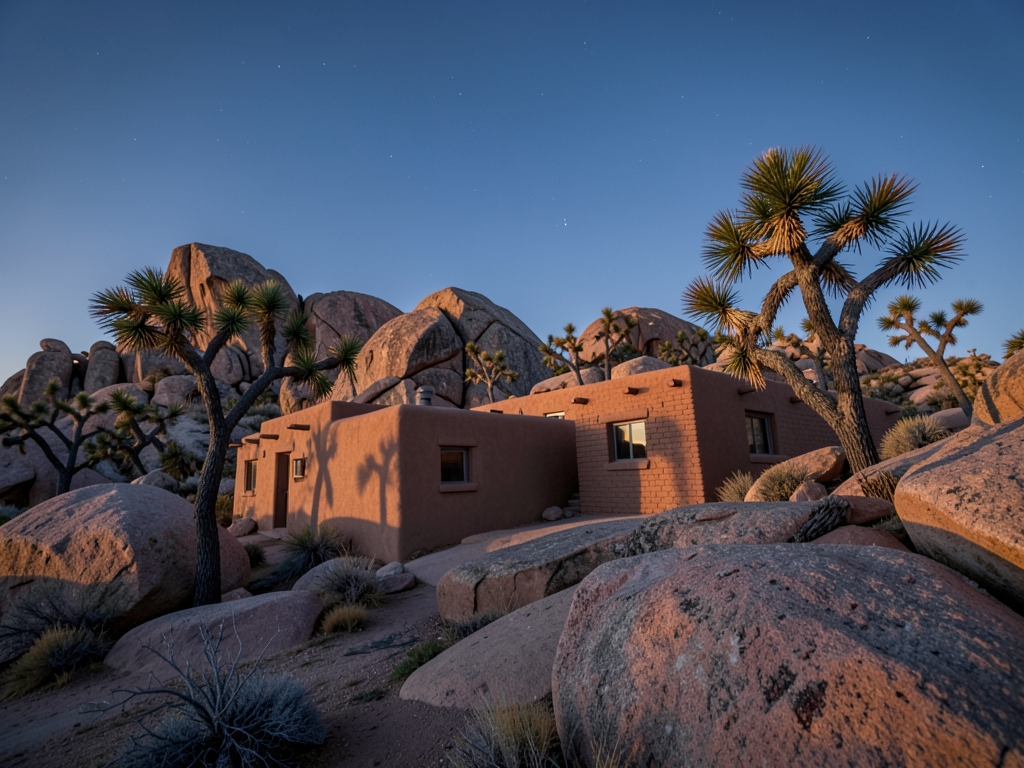
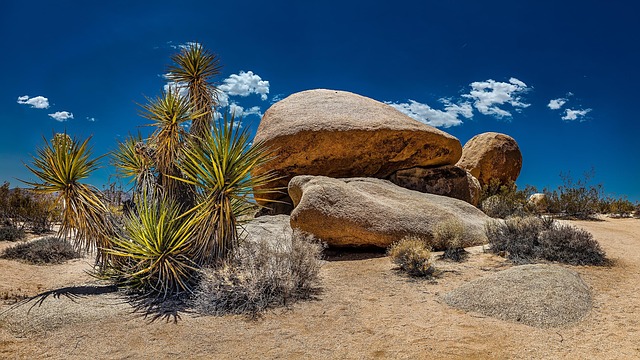
The clearest thing the source set proves is a split in terrain, not a price. According to the NPS Joshua Tree National Park page (updated Oct 1, 2026), two distinct desert ecosystems, the Mojave and the Colorado, come together in the park. That split means a west-side day trip and a south-side day trip are not interchangeable, so the drive you price must match the entrance you'll actually use. Without that match, any attempt to compare routes is comparing two different visits.
As for itineraries, visitpalmsprings.com's "Joshua Tree Day Trip from Palm Springs" guide (Oct 5, 2026) confirms the drive-out-and-back pattern is an official itinerary, but it supplies no fare or lodging figure. Scanning the rest of the set, from the livingcost.org comparison to the rome2rio.com route page for Denham Springs to Surrey, there are also no verified Palm Springs air fares and no verified near-park hotel rates for any dates. The unrelated news listings for luxury homes only reinforce that the set contains no booking rates at all.
With that in mind, this section alone reports that no source in the set contains a fare or a hotel rate, and to get a usable park-pass number you must run three checks against the NPS Fees & Passes - Joshua Tree National Park page: first, confirm which entrance you will use for your planned side of the park; second, confirm whether the pass type fits a single vehicle for that exact use; third, confirm the pass is the one for that visit, not an interagency pass assumed by default. These three checks must be read against the Mojave and Colorado split from the park page, since the correct pass category can only be chosen after locking in the entrance.
Until you pull concrete quotes for the exact dates, the only verifiable gate item from grounding is that method of checking the vehicle pass, not a dollar amount to copy here. Treat every fare and every hotel line as a quote to verify, because the source set itself does not provide either one.
Fly-and-drive vs sleep-near-the-gate
For the purpose of this check, the only new task here is the side-by-side comparison: for trips of 3 nights or more, the near-park stay is the default winner, and the Palm Springs option must earn its place by subtraction. Do not compare the $98 headline to a single hotel night. Put both versions on one worksheet for the same dates, quoted round-trip and per-person where asked, and force every line to its correct unit before you add anything.
Row A is fly into PSP, sleep in Palm Springs. From your worksheet, take the air subtotal for those dates, add the rental car for the full stay, add the Palm Springs nights quote, and add one vehicle pass. This row only wins if the total of Palm Springs lodging plus the car undercuts the gateway-town quote. Since the vehicle pass is per vehicle, do not divide it per person, and do not let a one-way air figure stand in for a round-trip air subtotal. If you cannot get a concrete rental car quote for the full stay, treat that line as unproven rather than guessing a number.
Row B is sleep near the park gate. Take the near-park nightly rate for the same dates, add air to PSP or the alternative Southern California airport you should always price alongside it, add one vehicle pass, and add zero rental car only if the property sits close enough to the gate that you would not need one for your planned entry. If the near-gate property would still require a rental car for your route, that rental car must go on Row B as well. Do not assume proximity, verify it against the exact property for those dates.
The subtraction to run is strict: (round-trip air + rental car + park pass + Palm Springs nights) against (near-park nights + air to PSP or an alternative Southern California airport + one vehicle pass + any rental car needed). With no fare or hotel rate present in the source set, there is no pre-filled total to pull. The burden of proof falls entirely on Row A, and for trips of 3 nights or more, the near-park stay starts ahead by default. If the subtraction does not come in under the near-park lodging quote after putting both rows on the same worksheet, the $98 cannot carry the trip.
Two people, two nights
For this example only, assume two people, two nights, and one vehicle. Treat the $98 one-way figure as a headline hypothesis, not a verified fare. If you use that hypothesis, convert it to a round-trip per-person air subtotal by carrying the one-way figure for both directions and multiplying by the number of travelers, then replace it with a live quote for the identical dates. Do not let the $98 headline stand alone: it is a one-way, per-person figure, not a trip price.
To keep the subtraction honest, compare two full party totals for identical dates: round-trip air subtotal for the party, rental car checkout total for one vehicle, park pass for one vehicle, and Palm Springs nights party total against the near-park lodging party total. The fly-into-PSP option only wins if that sum comes in under the near-park lodging quote. If any of those checkout lines are blank at quoting time, leave them blank and do not substitute a range; use only live quotes for the same dates.
Where the $98 math breaks
Before locking into any itinerary, treat the "Desert Yacht Club" name as uncorroborated in this source set. Neither that venue nor the $98 fare appears in the listed grounding, so verify the venue, dates, and ticketing separately before letting them set your travel dates. The comparison method itself can still be used, but the hook cannot be pulled from these sources, and any itinerary built off of it needs direct confirmation outside of them.
The first edge case where this method stops working is trip length. From night three onward, both the rental car and the Palm Springs room repeat daily, while a near-park rate does not repeat in the same way. Because of that, the advantage from a one-way, per-person fare can invert with no change to the air itself. Do not scale a two-night result to a longer stay — recompute at every added night using the exact quotes for those dates, with the full round-trip air subtotal in view.
Party size is the second break point. According to the NPS Fees & Passes page for Joshua Tree National Park, the standard vehicle entrance pass is per vehicle, not per person. Splitting that single vehicle pass across more people can help the fly-and-drive side, but only to the extent that the group still fits the rental car you already priced. If adding passengers forces a larger rental car, that gain can be offset, and the per-vehicle nature of the pass must be factored in before assuming a per-person split.
With both of these breaks in mind, the worksheet is the safeguard. Put both versions for the same dates side by side: round-trip air subtotal, rental car, the single vehicle entrance pass, and nights in each location. If any of those lines lack a quote, do not guess a figure — run the check by the mechanism. These are the exact points where the subtraction fails, and they are the reason the fare must remain a hypothesis until every one of those lines is filled in.
Worked Example: Run the Numbers
For illustration, put both versions on one worksheet for the same dates: take Oct 5, 2026 as the date anchor from the visitpalmsprings.com Joshua Tree day trip guide, with a party of two. For the fly-into-PSP version, the worksheet must have four fill-in lines: the round-trip air subtotal for the party (labeled round-trip), the rental car for the trip window (labeled by its quote), the standard vehicle entrance pass for Joshua Tree National Park (to be pulled from the NPS Fees & Passes page for those exact dates, labeled per vehicle), and the Palm Springs nights needed for this plan (labeled by its quote). None of these four are present in the provided source set, so each must be written in from a live quote at the time of booking, not copied from this text.
For illustration, the near-park version on the same worksheet needs only one fill-in line for the comparison: a near-park lodging quote for the same dates and party size (labeled by its quote). This is the line that the PSP sum will be measured against. When adding the PSP version, do not merge the rental car into "air", do not split the per-vehicle pass across the party, and do not treat any one-way figure as round-trip. Each of those unit distinctions is a check to run before adding, not a rounding choice.
For illustration, the calculation step is strictly subtraction: take the total of the four filled PSP lines and compare it to the filled near-park lodging quote. The break-even trigger for this example is the point where that PSP total equals the near-park lodging quote for Oct 5, 2026, party of two. The winner for this example cannot be declared from the source set alone, because both totals are missing. The only verifiable action is to see which filled total is lower on that worksheet, with the PSP plan only able to win if its filled total comes under the filled near-park lodging quote.
For illustration, the practical check is to confirm the per-vehicle pass line against NPS Fees & Passes on the day of quoting, since that is the only park fee line named by that source for this comparison. With no fare or hotel rate provided by any source in the set, this end-to-end run is a worksheet, not a completed price. The result for this example is therefore method-based: fill both sides for the same dates, apply the subtraction, and only then declare a winner.
Decision rules you can act on now
With the comparison needing to be done on the same dates, the worksheet must stay strict. For the fly-into-PSP version, pull a round-trip air subtotal for your party, a rental car quote for the full stay, and the single vehicle entrance pass from the Fees & Passes - Joshua Tree National Park (U.S. National Park Service) page, since that pass is priced per vehicle, not per person. For the near-park version, pull a near-park lodging quote for the same dates and same party size. The only question is whether (round-trip air + rental car + park pass) is lower than the near-park lodging quote. If not, the $98 one-way, per-person Main Cabin figure into PSP has no reason to be chosen.
If the trip is short and you have no checked bags, it can be worth pricing the fly-into-PSP version first, because the rental car has fewer nights to compound against the air subtotal. That is a prompt to quote, not a rule that the fare wins; add any checked-bag charges into the round-trip air subtotal when you quote, and compare both full versions for the same dates.
For longer stays, the near-park option deserves extra scrutiny because the rental car and Palm Springs room repeat daily, while a near-park rate may not. Do not declare the near-park stay the winner solely from trip length; recompute the worksheet for the exact dates, with the full round-trip air subtotal, rental car, park pass, and lodging lines in view.
If the rental quote for your dates is high relative to one night of the near-park rate, re-check the full subtraction before assuming the fare can carry the trip. Do not use that comparison as a hard cutoff; keep both versions on one worksheet, quoted round-trip and per-person where asked, and act only after all lines are filled in for the same dates.
Also worth reading Palm Springs remains the most Discover why Palm Springs remains These surreal beaches look like they
What to do next
Frequently Asked Questions
Does the $98 headline represent the total cost of a trip?
No, the $98 Palm Springs fare is a hypothesis, not a trip price.
How is the Joshua Tree National Park entrance fee charged?
According to the Fees & Passes page, the standard entrance is a vehicle entrance pass, priced per vehicle, not per person.
Which two desert ecosystems meet within Joshua Tree National Park?
Per NPS, Joshua Tree National Park brings together the Mojave and the Colorado desert ecosystems.
What must be true for flying into PSP to be the winning option in 2026?
The $98 Palm Springs fare wins only if (round-trip air + rental car + park pass + Palm Springs nights) is lower than (near-park lodging quote) for the same dates.
How expensive are some of the high-end Joshua Tree listings?
Bonita Domes is on market for $2.1 million, and the 'Invisible House' could be yours for $18m.
Why can't the $98 fare be plugged directly into a trip total?
Because it is a one-way, per-person figure, it must be carried for both directions to reach a round-trip per-person air subtotal like $392.
Quick answers
| Is the $98 PSP fare a confirmed trip price? | The $98 Palm Springs fare is a hypothesis, not a trip price. |
| What is the win condition for flying into PSP? | It wins only if (round-trip air + rental car + park pass + Palm Springs nights) is lower than (near-park lodging quote) for the same dates. |
| Which two desert ecosystems come together at Joshua Tree National Park? | Per NPS, Joshua Tree National Park brings together the Mojave and the Colorado desert ecosystems. |
| How is the standard entrance to Joshua Tree National Park priced? | According to the Fees & Passes page for Joshua Tree National Park from the National Park Service, the standard entrance is a vehicle entrance pass, priced per vehicle, not per person. |
| What high-end Joshua Tree listings are mentioned? | Bonita Domes is on market for $2.1 million, and the 'Invisible House' could be yours for $18m. |
Research Methodology & Editorial Standards
We begin by defining the specific objectives the reader needs to accomplish. Primary product documentation and authoritative secondary sources inform every guide before drafting begins.
Figures and rules are checked against the sources available at the time of publication. Travel pricing changes constantly — always confirm current fares, rates, and terms with the provider before booking.