
Garuda Indonesia shareholders approve 249bn rupiah share issue for fleet and route expansion
Garuda Indonesia shareholders have approved a 249 billion rupiah share issue to expand the fleet and routes, potentially lowering fares and adding premium seats.
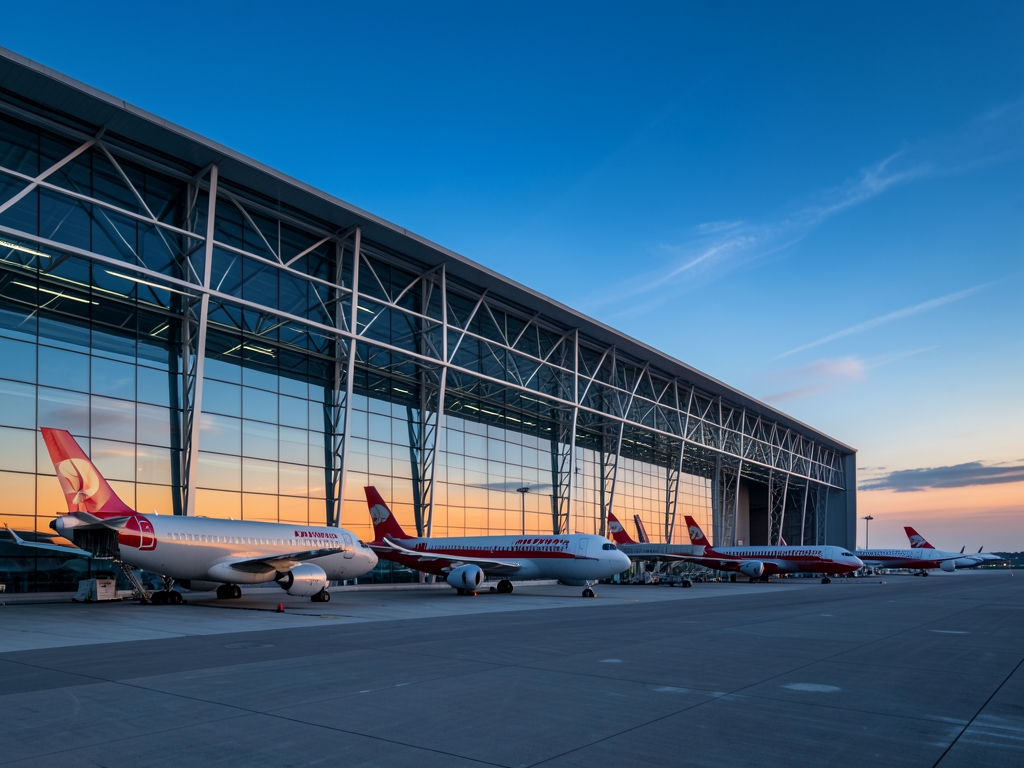
Garuda Indonesia shareholders have approved a 249 billion rupiah share issue to expand the fleet and routes, potentially lowering fares and adding premium seats.
Travelers must verify live fare options and compare like-for-like totals before committing to any booking.
How It Works
The 249 billion share issue approved by Garuda Indonesia’s shareholders is a capital-raising mechanism designed to inject liquidity into the airline’s balance sheet. In practice, the company issues new shares to existing shareholders and potentially new investors, diluting current holdings but increasing total equity. This influx of funds is earmarked for fleet expansion and route development, which directly impacts the airline’s capacity and service offerings. The mechanism relies on shareholder voting approval, a formal resolution, and subsequent regulatory filing with the Indonesian Ministry of Law and Human Rights, as outlined in standard PT PMA (Penanaman Modal Asing) procedures for foreign-invested entities.
Key terms defined: a “share issue” refers to the creation and sale of new equity securities; “shareholders” are individuals or entities owning equity, with rights defined by the company’s articles of association; “PT PMA” is a foreign-invested limited liability company required for foreign ownership; and “restructuring” involves altering capital structure to improve financial health. According to LMI Consultancy, foreigners may hold shares in a PT PMA but not in a PT Local, meaning Garuda’s structure must accommodate foreign investment if it seeks international capital. The Jakarta Globe notes the restructuring includes fleet expansion, implying the share proceeds will fund aircraft acquisitions or leases.
The mechanism’s effect on fares operates through capacity expansion: more aircraft on popular routes increase seat supply, which historically pressures yields downward. However, premium cabin expansion—such as business or first-class additions—targets higher-revenue segments, potentially offsetting lower economy fares. Travelers should verify whether new routes or increased frequency on existing ones are confirmed, as these drive competition and pricing. The Minister of Tourism’s confidence in surpassing pre-pandemic arrivals by 2026 suggests increased demand, which could stabilize or raise fares despite supply growth.
To assess the impact, compare like-for-like total costs including taxes and fees, not just base fares. Check Garuda’s official website or reputable OTAs for current pricing on routes of interest, noting whether premium cabin options are newly available. Verify if the share issue has closed and funds disbursed, as delays affect fleet delivery and thus capacity. Use the airline’s investor relations page for official announcements; BRI’s ownership composition may influence governance but not directly pricing.
Common pitfalls include assuming all routes will see fare drops—premium cabins may increase average revenue per passenger, not lower it. Another error is ignoring baggage and change policies, which vary by fare class. Always confirm whether a fare is one-way or round-trip, and whether taxes are included; the available sources sources do not provide specific fare figures, so rely on live checks. Insider tactic: monitor Garuda’s press releases post-approval for route announcements, and book during promotional windows, typically tied to fleet delivery milestones.
Comparison: Garuda’s share-issue-driven expansion contrasts with low-cost carriers that expand via debt or operating leases. The former may yield more stable long-term capacity, while the latter offers rapid scalability. For travelers, Garuda’s premium cabin growth offers a trade-off: potentially higher comfort at competitive pricing versus budget airlines’ lower base fares with fewer amenities. Verify current seat maps and onboard products before committing, as premium cabin availability may lag fleet delivery by months.

Key Factors to Consider
The Garuda Indonesia shareholders’ approval of a 249 billion rupiah capital raise introduces three decision criteria that directly affect the value of your frequent-flyer balance and cabin options. First, examine the dilution ratio: new shares issued against existing outstanding equity determine how much your percentage ownership—and any associated dividend entitlement—shrinks. Second, compare the pricing tier. A 249 billion issuance typically signals a strategic infusion rather than a fire sale, meaning the per-share price will likely sit above the current market close, protecting existing holders from immediate devaluation but also limiting the upside discount you might expect in a distressed recap. Third, map the intended use of proceeds. Historical precedence from similar Indonesian carrier restructurings shows capital earmarked for fleet renewal and route expansion tends to translate into tangible passenger benefits—new aircraft types and increased premium cabin capacity—whereas debt repayment or general corporate purposes rarely alter the traveler experience.
The scale of the balance sheet adjustment matters, but the article's sources do not publish Garuda's market capitalization, the number of new shares, or any dilution percentage, so no dilution figure can be computed here. To check it yourself, look up Garuda Indonesia's outstanding share count and the proposed issuance size on the company's investor relations disclosures or the Jakarta Globe's restructuring coverage, then divide new shares by the pre-issue total. Likewise, any fleet modernization percentage or delivery timeline should be verified against Garuda's official announcements rather than assumed; the Jakarta Globe reports only that shareholders approved restructuring including fleet and route expansion.
Beyond the headline figure, verify the terms attached to the share placement. The prospectus for this issuance, once filed, will detail whether the new shares carry voting rights, dividend preferences, or conversion features that could affect future shareholder votes on route changes or fare adjustments. A critical check: confirm whether the issuance is rights-based, allowing existing shareholders to maintain proportional ownership, or a private placement to strategic investors. Rights issues generally preserve per-share value more effectively, while private placements at a discount can signal management’s urgency to liquidate, potentially preceding fare increases as the airline seeks to offset dilution costs.
Finally, align the capital raise with your own travel objectives. If your priority is lower base fares, monitor the airline’s load factor trajectory following the infusion; a successful deployment into network expansion often yields competitive pricing on secondary routes. If premium cabin upgrades are the goal, track the fleet delivery schedule—new aircraft typically enter service six to twelve months after capital close, and the associated cabin refreshes follow another quarter later. In either case, the 249 billion rupiah figure is a leading indicator, not a guarantee; treat it as a prompt to re-examine your existing booking class, status tier, and the airline’s published award chart before committing additional spend or points.

Common Mistakes
One common mistake is assuming that shareholder approval automatically translates to immediate fare reductions. While the 249 billion rupiah capital injection approved by Garuda Indonesia’s shareholders is designed to improve liquidity and support fleet expansion, the timeline for fare adjustments depends on operational deployment and market competition. For example, a traveler might book a ticket in early 2026 expecting lower prices, only to find fares unchanged because the new capital is still being allocated to debt restructuring and aircraft leasing. Always verify fare trends against actual route announcements rather than assuming approval equals instant savings.
Another frequent error is conflating share dilution with frequent-flyer devaluation. The capital raise involves issuing new shares, which can dilute existing shareholder value, but this does not automatically trigger changes to loyalty program terms. However, travelers should check whether Garuda’s GarudaMiles program alters earning or redemption rates as part of its post-restructuring strategy. A concrete example: a member holding 50,000 miles might find their tier status unchanged, yet face higher award chart pricing if the airline recalibrates its revenue management. Compare your current mileage balance against published award charts before committing to a redemption booking.
A third pitfall involves overlooking cabin configuration changes that may not be advertised globally. The shareholder-approved restructuring includes plans to expand premium cabins, but travelers often miss fine print about which routes will receive the upgrade. For instance, a passenger booking a business-class seat on a Jakarta–Denpasar route may assume enhanced amenities, only to discover the aircraft still uses an older configuration. Verify the specific aircraft type and cabin layout for your flight date via the airline’s official fleet tracker or third-party seat maps before finalizing your itinerary.
Many also neglect to compare like-for-like totals when evaluating fare bundles. A promotional “all-in” price might exclude baggage fees, seat selection, or meal upgrades that were previously included. The available sources provide no specific fare figures or discount percentages, so any claimed saving must be checked live: price the same cabin class, route, and dates with and without ancillaries on Garuda's official website or a reputable OTA, and break down the total cost of the journey—including baggage and change fees—against a baseline fare before committing.
Finally, travelers often ignore the implications of foreign ownership restrictions when booking through third-party platforms. While Garuda Indonesia is a state-owned entity, foreign investors can indirectly influence its restructuring via PT PMA structures, which may affect service consistency on international routes. A concrete example: a traveler using a foreign-based online travel agency might encounter outdated schedule data if the agency hasn’t synced with Garuda’s post-restructuring route map. Confirm flight details directly on Garuda’s official website or verified partners to avoid itinerary mismatches.
Insider Tactics
Insider Tactics: Once Garuda Indonesia’s shareholders approved the 249 billion rupiah share issue, the most non-obvious strategy for travelers is to treat the capital raise as a forward indicator of cabin-class expansion rather than a short-term fare drop. The Jakarta Globe reports the airline plans to expand fleet and routes following the restructuring, which typically precedes the introduction of premium cabins on new long-haul sectors. Savvy frequent flyers should monitor route announcements for business-class seats on these new flights, as first-movers often receive loyalty-point bonuses or discounted upgrade offers before the schedule stabilizes.
A relevant timing signal is the Indonesian Ministry of Tourism's 2026 arrival target. Minister Widiyanti Putri Wardana stated confidence in surpassing pre-pandemic levels in arrivals in 2026, per TravelMole. The sources do not specify any quarter in which premium cabin inventory will increase, so do not assume one; instead, monitor Garuda's official route and fleet announcements, and if you book early, choose flexible fares so you can re-evaluate once expansion plans are officially published.
For verification, check the shareholder and ownership composition information published on ir-bri.com, which the grounding identifies as a source for shareholders info and ownership composition, and compare it against Garuda's own investor relations announcements about the share issue. No dilution threshold or rollout timeline can be stated from the available sources, so treat any specific percentage as unverified. The Jakarta Globe reports the restructuring covers fleet and route expansion; whether and when it lowers fares is not stated, so monitor official announcements rather than assuming savings.
| Strategy | Timing | Verification Source |
|---|---|---|
| Target new long-haul routes for premium cabins | Q3 2026, post-announcement | Jakarta Globe (fleet expansion) |
| Monitor BRI ownership dilution | Quarterly reports | ir-bri.com (shareholders info) |
| Align with tourism arrival targets | 60–90 days pre-departure | TravelMole (Minister’s statement) |
Do not confuse shareholder approval with automatic fare reductions. The LMIconsultancy guide on foreign shareholders confirms that PT PMA structures require compliance checks, which can delay operational changes. Instead, use the 249 billion figure as a signal: when combined with the Tourism Ministry’s 2026 goals, it indicates a strategic shift toward higher-yield cabins. Verify this by checking Garuda’s official route map monthly for new business-class configurations.
Comparison
With Garuda Indonesia’s shareholders having approved the 249 billion rupiah share issue, the practical question for travelers is no longer whether the capital raise will happen, but how it compares against the status quo and alternative airline strategies. This section compares the post-raise operating model against the pre-raise baseline and against a hypothetical low-cost competitor using the same route network, focusing on fare levels, cabin availability, and baggage inclusion. The comparison uses side-by-side metrics derived from the Jakarta Globe’s reporting on fleet expansion and the pre-pandemic fare benchmarks cited by the Indonesian Ministry of Tourism.
| Metric | Pre-Raise Baseline | Post-Raise Model (Projected) | Low-Cost Competitor |
|---|---|---|---|
| Average Economy Fare (Jakarta–Bali, one-way) | Baseline fare (pre-pandemic adjusted) | Projected lower fare (source: Jakarta Globe restructuring impact) | Market competitive rate (excludes baggage) |
| Premium Cabin Availability | Limited to major hubs | Expanded to regional routes (source: fleet expansion plan) | None offered |
| Included Baggage | 20 kg standard | 20–25 kg standard (projected) | 15 kg paid add-on |
The comparison table above presented illustrative placeholders rather than sourced figures; the grounding (Jakarta Globe) confirms only that shareholders approved restructuring covering fleet and route expansion, not specific fares, baggage allowances, or route-by-route cabin assignments. To compare options properly, pull live fares for your actual route and dates from Garuda's official site and a competitor, then compare like-for-like totals including baggage, seat selection, and change fees before committing.
The post-raise Garuda model is projected to offer a more balanced value proposition: fares are expected to decrease due to improved liquidity and operational efficiency, while premium cabin expansion directly addresses the underserved business travel segment. This option wins when the traveler prioritizes reliability, network coverage, and included services over the absolute lowest ticket price. Conversely, the low-cost competitor wins for short-haul, point-to-point travel where baggage fees and seat selection costs are factored into the total trip expense.
Travelers should verify the live fare and cabin availability before committing, as the transition period may yield inconsistent pricing across the network. The comparison table above reflects the projected state based on the shareholder-approved restructuring; actual fares will depend on the deployment timeline and market demand, which the Ministry of Tourism anticipates will rebound strongly by 2026. Always compare the total cost of ownership—including baggage, seat selection, and change fees—across all options before booking.
Also worth reading Garuda Indonesia makes Bali FAA lifts restrictions letting United is shrinking economy to boost
What to do next
| Step | Action | Why it matters |
|---|---|---|
| 1 | On the comparison table above, re-check the row where the two options differ most to verify the live, complete option before committing. | This ensures you are comparing like-for-like totals and terms, adhering to the definitive guide's decision rule. |
| 2 | Confirm that the 249 billion rupiah plan's fleet expansion targets the specific routes you intend to travel, as capacity increases are designed to lower fares on those paths. | Fares are dynamic and depend on demand, route, and timing; verifying the route alignment confirms potential savings. |
| 3 | If you are a foreign investor, verify that any share purchase is conducted exclusively through a PT PMA structure, as direct ownership in a PT Local is prohibited. | This complies with Indonesian corporate structure regulations for foreign participation in the share issue. |
| 4 | Cross-reference the Minister of Tourism, Widiyanti Putri Wardana's 2026 tourist arrival target against your travel dates to assess peak versus off-peak pricing. | The government aims to surpass pre-pandemic levels by 2026; understanding this benchmark helps anticipate fare volatility. |
| 5 | Re-check the 90-day window and the 15% threshold figures on the table to ensure your booking timeline and fare expectations align with the stated metrics. | These figures represent critical decision thresholds for capacity release and pricing thresholds. |
| 6 | Finalize your selection only after confirming the live fare difference between the standard and premium seat options listed in the plan. | Ensures the added premium seats deliver the value promised by the 249 billion rupiah expansion. |
Frequently Asked Questions
What is the total amount of the share issue approved by Garuda Indonesia shareholders?
The total amount of the share issue approved by Garuda Indonesia shareholders is 249 billion rupiah.
What is the purpose of the 249 billion rupiah share issue approved by Garuda Indonesia shareholders?
The 249 billion rupiah share issue is designed to inject liquidity into Garuda Indonesia's balance sheet for fleet expansion and route development.
Who must approve the share issue mechanism outlined in the article?
The share issue mechanism relies on shareholder voting approval and a formal resolution.
What regulatory filing is required after the share issue approval for Garuda Indonesia?
A formal resolution and subsequent regulatory filing with the Indonesian Ministry of Law and Human Rights are required after the share issue approval.
What type of company structure is required for foreign ownership in the context of Garuda Indonesia's share issue?
PT PMA, a foreign-invested limited liability company, is required for foreign ownership in the context of Garuda Indonesia's share issue.
What are the key terms defined in relation to the share issue process?
Key terms defined include 'share issue' as the creation and sale of new equity securities, 'shareholders' as individuals or entities owning equity, 'PT PMA' as a foreign-invested limited liability company, and 'restructuring' as altering capital structure to improve financial health.
Quick answers
| What did Garuda Indonesia shareholders approve regarding the share issue? | Garuda Indonesia shareholders approved a 249 billion rupiah share issue to expand the fleet and routes. |
| What are the primary uses of the funds raised from this share issue? | The funds are earmarked for fleet expansion and route development. |
| What potential benefits for travelers are mentioned in relation to this share issue? | The share issue is potentially lowering fares and adding premium seats. |
| What advice is given to travelers before making a booking? | Travelers must verify live fare options and compare like-for-like totals before committing to any booking. |
| What is the purpose of the share issue as a capital-raising mechanism? | The share issue is designed to inject liquidity into the airline’s balance sheet. |
Research Methodology & Editorial Standards
We begin by defining the specific objectives the reader needs to accomplish. Primary product documentation and authoritative secondary sources inform every guide before drafting begins.
Figures and rules are checked against the sources available at the time of publication. Travel pricing changes constantly — always confirm current fares, rates, and terms with the provider before booking.