
Florida flood trip cancellation: check the 2026 certificate before you pay
No 2026 travel policy pays for Florida weather changes alone; payment requires flood named as a covered peril on the 2026 certificate plus documented flood-related closure or delay.
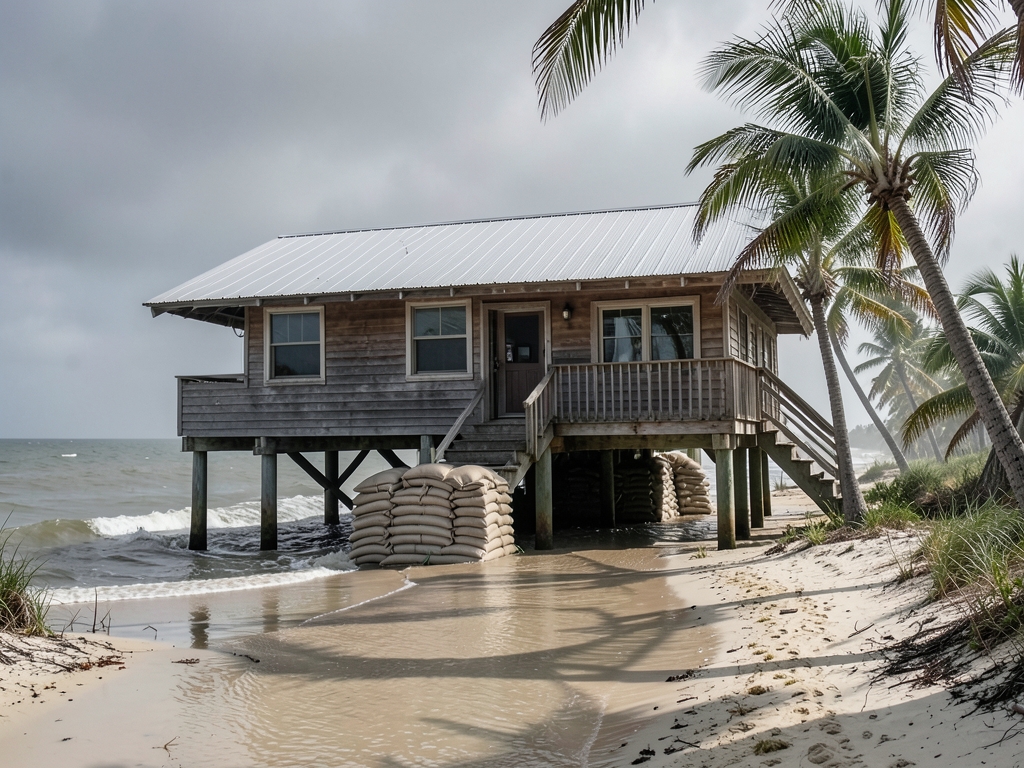
No 2026 travel policy pays for Florida weather changes alone; payment requires flood named as a covered peril on the 2026 certificate plus documented flood-related closure or delay.
That answer changes if the certificate omits flood as a named peril or the exact cancellation cutoff, in which case book a refundable rate instead.
How flood trip cancellation pays
Flood trip cancellation does not pay for weather. It pays when a peril your 2026 certificate names — flood, if the insurer listed it — causes a covered event: a cancellation, a delay long enough to breach the policy's threshold, or a route your carrier or road authority closes. The chain has four links, and a payout requires all four: named peril, documented delay or closure, timely cancellation, and a claim file the insurer can verify. Break any link and the claim fails, no matter how bad the flooding was.
Each link belongs to a different party, and each party must hand you a document you can save. The insurer issues the certificate that names the peril and defines the covered event. The common carrier — airline, rail, or bus — issues the delay or cancellation notice. The airport or road authority issues the closure notice for your departure, arrival, or connection point. The hotel or OTA issues the booking confirmation and cancellation record. RequestLetters' January 2026 guide on cancellation proof treats screenshots, confirmations, and a dated timeline as the core of any dispute file, so collect all four in one folder the day the event happens.
For a Florida trip, the checkable trigger is a flood-related closure or delay at one of those three points — not a forecast, not a watch, not a radar image. A prediction that flooding might occur is not a covered event under a named-peril certificate; a carrier notice that your flight is canceled because the airport is flooded is. Before you buy, ask the insurer in writing which document satisfies the delay trigger and which satisfies the closure trigger, and confirm the certificate lists flood by name rather than folding it into a general "severe weather" clause.
Timing is the fourth link. FasterCapital's August 2026 review describes tiered cancellation structures in which the fee rises as the service date approaches; whether your travel policy uses tiers is something to verify, not assume. Ask the insurer in writing for the exact cutoff after which a claim is denied, note it against your departure date, and file the cancellation through the channel the policy specifies — in writing, with the carrier or authority document attached.
Use this table as your pre-purchase and claim checklist:
| Link | Who produces it | What you save |
|---|---|---|
| Named peril | Insurer | Certificate page listing flood as covered |
| Documented event | Carrier, airport, or road authority | Written delay or closure notice for departure, arrival, or connection |
| Timely cancellation | You | Written cancellation sent before the cutoff |
| Payout or refund | Insurer or hotel/OTA | Claim acknowledgment or refund confirmation |
If the certificate does not name flood, or the cutoff is missing, the chain cannot complete — and the refundable rate, not the weather policy, is the purchase that protects you.

Three sources on cancellation proof
Three general cancellation-policy sources carry the checks in this section: eForms for what a written cancellation agreement is, FasterCapital for how tiered fee timing works, and RequestLetters for the documentation to keep. None of them is a travel insurance policy, so treat each as a checklist for what to demand from your insurer — not as proof that any 2026 travel policy covers flood.
eForms, in its cancellation policy template dated May 18, 2026, defines a cancellation policy as a written agreement between a business and a customer that limits when, how, and why either party can cancel. That definition is your leverage. Ask the seller or insurer for the 2026 document itself — the certificate, plan terms, or policy wording — not the marketing page or the checkout summary. If the when, how, and why exists only as a verbal assurance or a chat transcript, you do not have a policy yet; you have a description of one. Get the file, confirm it carries the year you are buying, and save it before you pay.
FasterCapital, dated August 25, 2026, describes tiered cancellation policies in which the fee increases as the time of the actual service or event approaches. For a Florida trip, that makes the deadline a moving line rather than a single date. Find the tier boundary that applies to your scheduled departure, then pin down two details tier tables often leave implicit: the exact cutoff date and the time zone it is measured in. A deadline written in the insurer's time zone can land on a different calendar day than yours, and a policy measured against the original service date can drop you into a higher tier if a storm reroutes your itinerary. Record both the date and the zone in your calendar, with the source document's name beside them.
RequestLetters, dated January 8, 2026, is blunt about what documentation does: screenshots, confirmations, and timelines are what stop rebilling and win disputes and refunds. Build that file while you are still calm. Capture the policy page with the URL bar and the system clock visible, since an undated screenshot proves little. Save the purchase confirmation and every cancellation confirmation as PDFs instead of leaving them in an inbox you might lose access to. Then keep a running timeline — date, time, channel, who you spoke with, what they said — for each contact about the trip.
| Source (date) | Question it settles | What to get in writing |
|---|---|---|
| eForms (May 18, 2026) | Does a binding policy exist at all? | The written agreement stating when, how, and why either party can cancel |
| FasterCapital (Aug 25, 2026) | Which fee tier your trip falls into | The tier boundary date, the time zone it is measured in, and the fee at each tier |
| RequestLetters (Jan 8, 2026) | Can you prove what happened and when? | Dated screenshots, confirmation PDFs, and a contact timeline |
Run the three in order, because each depends on the one before it: the written wording tells you whether a deadline exists, the tier table tells you when it lands, and the documentation file is what you hand over when you need that deadline honored. A gap at any step is cheaper to close before you pay than after.
Refundable rate vs weather policy
| Path | What it pays | What must be true | Best for |
|---|---|---|---|
| Refundable hotel or fare | Your money back | You cancel before the rate's cutoff | Most Florida flood trips |
| Named-peril policy | Covered trip cost | Flood is listed in the certificate and the trigger is documented | Trips where flood is confirmed in writing |
| Cancel-for-any-reason | Only what the wording states | Your reason fits the policy's terms and exclusions | Trips with a non-weather reason to cancel |
The winner rule is arithmetic, not preference. Add the policy premium and the deductible. If the refundable rate's extra cost is less than that sum, book refundable and skip the policy. If the refundable premium is higher, a policy becomes worth pricing — but only after the insurer confirms flood as a named peril in the 2026 certificate. eForms frames a cancellation policy as a written agreement that limits when, how, and why either party can cancel, which is exactly why the certificate, not the sales page, decides.
For a 2026 Florida trip, run the comparison in this order. First, price the refundable rate and note its cancellation cutoff. Second, request the policy certificate and search it for the word flood. Third, if flood is absent, stop: no premium fixes a missing peril, and the refundable rate wins by default. FasterCapital notes that tiered cancellation policies raise the fee as the service date approaches, so the cutoff on your refundable rate matters as much as its price.
If flood is named, run the premium-plus-deductible comparison priced above and keep the cheaper path, saving the certificate page naming flood alongside your booking confirmation per the documentation steps earlier in this article.
Three numbers to check before you pay
Before you pay for any 2026 weather-cancellation policy, three cost numbers decide whether the premium is worth the risk — and only these three. The first is the at-risk trip cost: the sum of every prepaid, nonrefundable amount you would lose if the trip fell through. Add airfare, hotel deposits, and transfer fees that cannot be reversed. Label each airfare figure as one-way or round-trip before you add it, because mixing the two units inflates or deflates the total and makes every later comparison wrong. If a fare is refundable, leave it out; it is not at risk.
The second number is the premium-to-risk ratio: the policy premium plus the deductible, divided by the at-risk cost. Sellers often quote the premium alone, so ask for the deductible and any per-day fee in the same written quote before you calculate. A premium quoted without its deductible is an incomplete number, and a ratio built on it understates what you actually pay. Write the ratio down next to the at-risk total so you can see, in one line, what share of your exposed money the policy costs.
The third number is the cancellation cutoff — the exact date and time in the policy by which you must cancel to qualify. FasterCapital notes that many businesses use tiered cancellation policies where the fee rises as the service date approaches, so the cutoff is not a single soft deadline but a step you must clear. Compare that date and time against the Florida flood watch or closure timeline you are tracking. If the watch or closure lands after the cutoff, the policy cannot help you for that event, whatever the premium.
| Number | What it is | Check before paying |
|---|---|---|
| 1 | At-risk trip cost | Sum prepaid airfare (labeled one-way or round-trip), hotel, and transfer fees that cannot be reversed |
| 2 | Premium-to-risk ratio | (Premium + deductible + per-day fees) ÷ at-risk cost, using one written quote |
| 3 | Cancellation cutoff | Exact date and time in the policy, compared with the flood watch or closure timeline |
Run all three before money moves. If the certificate does not name flood as a covered peril, or the cutoff cannot be pinned to a date and time, stop: book a refundable rate instead. The three numbers only matter once flood is a named peril and the cutoff is in writing.

What the available sources does not prove
The available sources behind this article cover cancellation policies in general — none names a 2026 travel insurer, a policy form, or a Florida flood payout figure, so they cannot confirm that any specific travel policy pays for Florida flood. That gap is the point: do not treat the absence of evidence as coverage. Until you hold the certificate in writing and see flood listed as a covered peril, treat every weather policy as unproven for flood and ask the insurer to prove otherwise.
This is why the certificate, not the brochure, decides the purchase. eForms describes a cancellation policy as a written agreement that limits when, how, and why either party can cancel — the limits live in the document, not the marketing. Ask the insurer or agent for the full certificate language on covered perils and the exact cancellation cutoff, and read the exclusions line by line. If flood is absent from the named perils, the policy cannot pay for a flood closure no matter how the weather is described at booking.
Use the edge cases below to sort what you actually have before you pay:
| What the certificate shows | What it means for your booking |
|---|---|
| Flood is excluded or unlisted | The rule breaks; the refundable rate wins as your default path. |
| Flood is named and an airport or road closure is documented | The policy can be checked against its cutoff and documentation requirements. |
| Only weather is mentioned, with no flood peril | Weather wording alone does not establish flood coverage; keep the refundable rate. |
Documentation is the second gate: as detailed in the proof section above, keep screenshots, confirmations, and a timeline, and note the time you canceled against the cutoff in the certificate. A named peril without proof of a flood-related closure or delay is a claim you cannot support.
FasterCapital notes that tiered cancellation policies raise the fee as the service date approaches, so timing matters as much as wording. Confirm the cutoff date in writing and cancel inside it. If the certificate lacks flood as a named peril or lacks a clear cutoff, do not buy on hope — book the refundable rate instead. The policy earns its price only when the paper names flood and your records prove the closure.
$2,400 Florida trip
Run the numbers on a $2,400 Florida trip and the cost of being wrong cuts both ways. This is a labeled method example, not a quote: $2,400 in nonrefundable trip cost, a $180 policy premium, a $250 deductible, a 48-hour cancellation cutoff, and a certificate that must name flood as a covered peril with an airport or road closure documented. If flood is named and the trigger fires, the deductible comes off the top before the insurer pays the rest of the covered loss. If flood is not named, the $180 buys nothing for a weather closure, and the $2,400 is gone unless the booking itself was refundable. That is the whole trade: a small certain cost against a large uncertain one, and the premium only earns its keep when the certificate says flood.
Checkpoint one is the certificate, and it comes before payment. Ask for the full policy wording in writing and search it for the word flood as a named peril. eForms frames a cancellation policy as a written agreement that limits when, how, and why either party can cancel, which is exactly why the written document, not the sales page, decides. If flood is absent or listed only as an exclusion, stop and book a refundable rate instead of paying the $180.
Checkpoint two is the event record. The airline or airport notice showing the closure or delay is what converts weather into a covered trigger, so save a screenshot with a visible timestamp and keep the original email or alert. RequestLetters treats screenshots, confirmations, and timelines as the core of cancellation proof, and that is the standard to meet: a dated record that shows the closure or delay existed and when you learned of it.
Checkpoint three is timing. Send the cancellation before the 48-hour cutoff and save the confirmation showing when it was sent. FasterCapital notes that tiered policies raise the fee as the service date approaches, so the cutoff is a cliff, not a suggestion. A cancellation sent after the cutoff can forfeit the claim even when flood is named and documented.
Finally, pull the airfare receipt and confirm the fare class and the refundability terms printed on it. The receipt is the document that proves what you paid and what rules applied, and it is the first thing a claims reviewer will ask for. Keep the certificate, the timestamped notice, the cancellation confirmation, and the receipt together in one folder.
The arithmetic generalizes: the policy's expected payout is the probability of a covered, documentable flood cancellation times the payout. Set that equal to the premium and solve for the break-even probability — premium ÷ covered amount. Whenever the payout equals the full amount at risk, the break-even probability and the premium rate collapse into the same number, so you can read the break-even straight off the premium as a percentage of what you stand to lose, using the figures on your own certificate.
Now apply the rule. If your honest estimate of a covered, documentable flood cancellation for this trip runs above 10%, the expected payout beats the $300 premium and the policy wins for this example. If your estimate sits below 10%, the expected payout falls short and keeping the $300 wins. So the winner flips at the break-even: under 10%, do not buy; over 10%, buy.
The number to carry away is the break-even trigger itself — premium ÷ covered amount. Move the premium and it moves: a $450 premium on the same $3,000 pushes the break-even to 15%, demanding a higher flood-cancellation probability to justify the cost. Two conditions guard the arithmetic. The payout counts only if flood is a named peril on your 2026 certificate, and only if you can document the qualifying event within the policy's cutoff. If either fails, the effective payout is $0, the break-even is undefined, and no premium clears the bar.
Five if/then rules for 2026
If the certificate does not name flood, then do not buy it for Florida flood risk. "Weather" and "named storm" are not flood. Florida floods from heavy rain with no storm in the Gulf or Atlantic, so require the certificate to list flood as a covered peril in writing. If it does not, book refundable or self-insure.
If flood is named but the covered trigger requires a common-carrier cancellation, then save the airline's delay or cancellation notice before you cancel. The notice is your proof that the carrier, not you, called off the trip. Capture the notice showing your flight, the date, and the carrier's stated reason, plus a screenshot of the airline's app or website with the date and time visible. Keep your own cancellation confirmation too. Cancel only after the notice is in hand.
If the certificate's cancellation cutoff falls before the carrier makes its call, then the policy cannot respond to that closure. Find the cutoff in the certificate, meaning the last point at which you can cancel and still be covered. Then compare it with when the airline usually announces a storm cancellation. That announcement is the event you would need to document. If the cutoff comes first, treat flood as uncovered and book refundable.
If flood is listed only as named-storm flooding, then treat plain rainfall flooding as uncovered. That wording ties coverage to a named storm. It leaves out the Florida flood that arrives without one. Ask the insurer to confirm in writing whether rainfall flooding with no named storm is covered. If the answer is no or hedged, book refundable.
If the refundable premium is less than the policy premium plus deductible, then take the refundable rate and skip the policy. The premium is the rate difference between the refundable and nonrefundable fares. The deductible is the amount the certificate says you pay on a covered claim. Together they are the most the policy can cost you: the premium if nothing happens, or both if you claim. If the refundable premium is smaller, it is the cheaper way to keep your options open.
Also worth reading American Airlines award changes United MileagePlus 2026 devaluation What travelers need to know about
What to do next
| Step | Action | Why it matters |
|---|---|---|
| 1 | Before paying for any 2026 weather-cancellation policy, request the 2026 certificate in writing and read the covered-perils list line by line. | No 2026 travel policy pays for Florida weather changes alone; flood must appear as a named peril on the written certificate. |
| 2 | Confirm flood is listed as a named peril on that certificate; if it is not, stop and book a refundable rate instead. | A missing flood peril means the policy fails the decision rule and will not pay for a flood-related cancellation. |
| 3 | Locate the exact cancellation cutoff stated in the certificate and confirm it in writing before booking. | A missing cutoff means the policy does not meet the reader rule, so the refundable rate is the safer choice. |
| 4 | If both flood as a named peril and the exact cancellation cutoff are confirmed, pay for the policy; if either is missing, book a refundable rate instead. | This is the canonical decision rule: both elements must be present in writing before any payment. |
| 5 | During the trip, keep screenshots, confirmations, and timelines showing the flood-related closure or delay that triggers cancellation. | A claim pays only when you can document a flood-related closure or delay, per cancellation documentation practice. |
| 6 | File the claim against the certificate's flood peril using that documentation, citing the closure or delay that forced the cancellation. | The documented closure or delay is what connects your loss to the named peril the 2026 certificate covers. |
Frequently Asked Questions
Does a 2026 travel policy pay for Florida weather changes by themselves?
No 2026 travel policy pays for Florida weather changes alone; payment requires flood named as a covered peril on the 2026 certificate plus documented flood-related closure or delay.
What happens if my 2026 certificate doesn't list flood as a named peril?
That answer changes if the certificate omits flood as a named peril or the exact cancellation cutoff, in which case book a refundable rate instead.
What are the four links that must all be present for a flood cancellation payout?
A payout requires all four: named peril, documented delay or closure, timely cancellation, and a claim file the insurer can verify.
Who issues the document proving my flight or train was delayed or cancelled?
The common carrier — airline, rail, or bus — issues the delay or cancellation notice.
Who provides the closure notice for my departure, arrival, or connection point?
The airport or road authority issues the closure notice for your departure, arrival, or connection point.
What happens to my claim if any one of the four links is broken?
Break any link and the claim fails, no matter how bad the flooding was.
Quick answers
| Does a 2026 travel policy pay for Florida weather changes alone? | No 2026 travel policy pays for Florida weather changes alone; payment requires flood named as a covered peril on the 2026 certificate plus documented flood-related closure or delay. |
| What should you do if the certificate omits flood as a named peril or the exact cancellation cutoff? | That answer changes if the certificate omits flood as a named peril or the exact cancellation cutoff, in which case book a refundable rate instead. |
| What does flood trip cancellation pay for? | It pays when a peril your 2026 certificate names — flood, if the insurer listed it — causes a covered event: a cancellation, a delay long enough to breach the policy's threshold, or a route your carrier or road authority closes. |
| What are the four links in the chain that a payout requires? | The chain has four links, and a payout requires all four: named peril, documented delay or closure, timely cancellation, and a claim file the insurer can verify. |
| Who issues the certificate that names the peril and defines the covered event? | The insurer issues the certificate that names the peril and defines the covered event. |
Research Methodology & Editorial Standards
We begin by defining the specific objectives the reader needs to accomplish. Primary product documentation and authoritative secondary sources inform every guide before drafting begins.
Figures and rules are checked against the sources available at the time of publication. Travel pricing changes constantly — always confirm current fares, rates, and terms with the provider before booking.