
Flights to Innsbruck: Fly Munich (MUC), Train 2 Hours from €17.90
For most 2026 trips to Innsbruck, fly into Munich (MUC) and take the roughly 2-hour rail connection from €17.90.

For most 2026 trips to Innsbruck, fly into Munich (MUC) and take the roughly 2-hour rail connection from €17.90.
Choose INN instead only when its total per-person round-trip premium is under €50 after pricing both itineraries.
Why MUC+Train Beats Tiny INN
Innsbruck's short runway and small terminal limit long-haul service, so transatlantic demand is pushed through Munich's hub: the airport can support regional and seasonal European flying, but it does not operate as a long-haul gateway, which means many US itineraries already route through a larger hub before reaching Tyrol.
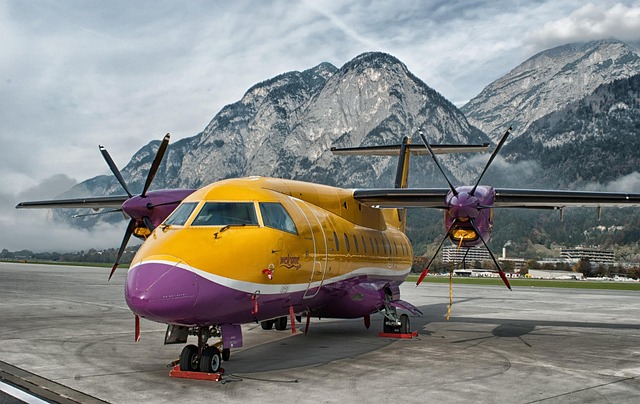
Innsbruck Airport is a small alpine field served mainly by short-haul European carriers. For travelers from the United States, the long-haul portion usually ends at a hub such as Munich, Frankfurt, or Vienna, followed by a shorter connection into Innsbruck. In practice, Munich is often already part of the itinerary, so using it as the arrival airport can remove an extra connection rather than add one.
Munich is a Lufthansa/Austrian-group and Star Alliance hub with heavy transatlantic competition. That concentration of carriers and routes is where fare pressure and award space tend to build, while Innsbruck has no comparable long-haul competition. When you price the full trip, the Munich option can benefit from that hub competition, whereas the Innsbruck option usually inherits the cost of a thinner market.
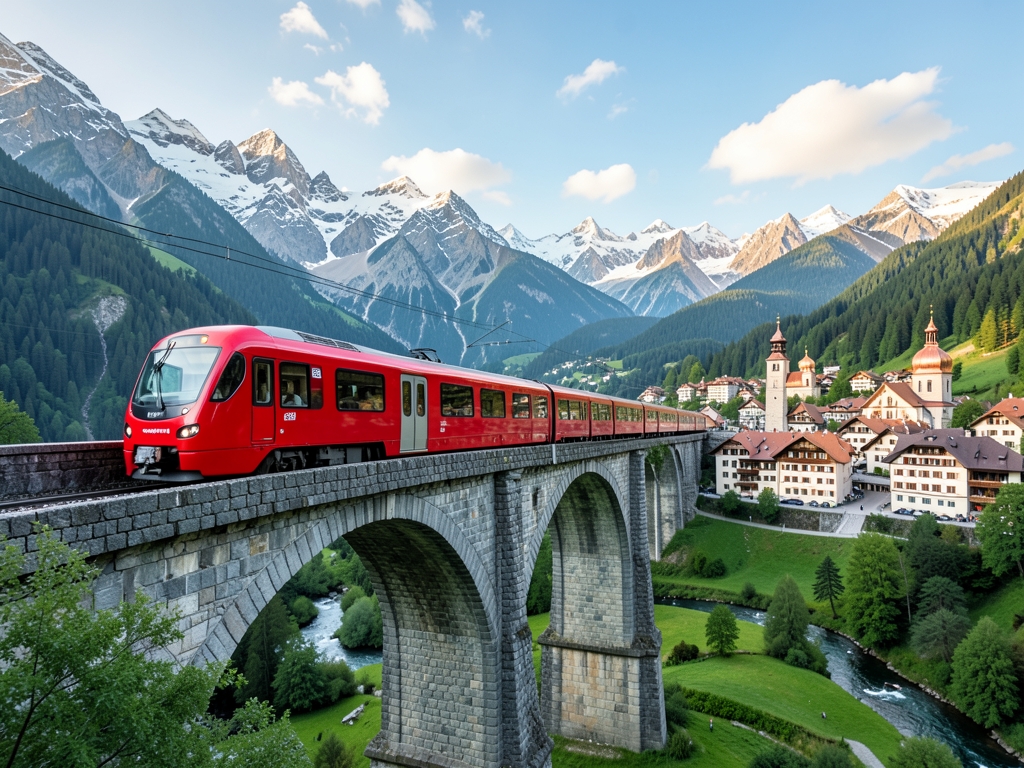
The rail leg is the equalizer. German long-distance and regional rail service connects Munich with Innsbruck, turning the larger airport into a practical gateway. Compare the complete itinerary rather than the flight alone: price the airfare to Munich plus the rail ticket against the airfare to Innsbruck, and treat the rail segment as a fixed, checkable add-on rather than an afterthought.
The decision rule is to compare both complete itineraries for your exact dates, then pay the Innsbruck premium only if the total difference is small enough to justify the convenience. If the Munich routing is cheaper by more than the rail add-on and your time budget, the hub route wins; if the gap is narrow, the convenience of Innsbruck may be worth it. Either way, verify live fares before booking, because hub competition and seasonal demand can move quickly.
The Evidence: What Sources Show
Before you compare airfares, anchor your expectations in what the destination and its lodging market actually look like. Tripadvisor reports that Innsbruck tourism has 103,023 reviews of hotels, attractions, and restaurants, a scale that signals a mainstream Alpine city with established visitor infrastructure rather than a place that demands unusual logistics beyond the rail link from Munich. Use that review volume as a quick credibility check when you scan hotel listings and transport advice.
On everyday costs, LivingCost.org states the average cost of living in Innsbruck is $1,887 per month, ranked 8th of 26 Austrian cities in its listing. Treat that figure as a budgeting reference for on-the-ground spending (food, local transit, incidentals) separate from airfare, so you can compare the full trip price against what you would pay flying into a larger hub and riding the train.
For lodging near a key access point, Skyscanner lists Austria Trend Hotel Congress Innsbruck at 1.20 km from Hungerburg with a 4.4/5 rating. When you price a stay, verify the nightly rate for your exact dates on the booking page you choose, because Skyscanner notes that hotel prices near Hungerburg vary by season; do not assume a single number applies year-round.
Rental-market context can also shape whether you base yourself in town or commute. Rentola shows an example listing in Innsbruck, Innsbruck Stadt at 801 € per month (noted 25 days ago in that listing) and prompts renters to expect additional costs beyond base rent. If you are comparing a short stay to a longer visit, use named listings like these only as snapshots and confirm current totals directly with the provider before you commit.
MUC vs INN vs Vienna: Compared
Here is the only three-airport comparison you need for a 2026 Innsbruck trip: price your full itinerary both ways, then pick the entry point that actually wins on total door-to-door cost. Compare airfare to Munich (MUC) plus the roughly two-hour rail connection against the airfare to Innsbruck (INN) directly. If Munich’s fare advantage clears the switching threshold, take the train. If it does not, the small airport’s convenience is worth the premium. Vienna (VIE) is the fallback, not the default.
| Entry point | Airfare (per person, round-trip) | Transfer to Innsbruck | When it wins |
|---|---|---|---|
| Munich (MUC) | Your live search result; hub competition is the reason to check it first | Rail, roughly two hours; verify the current fare at the operator before booking | When its fare advantage over INN exceeds the switching threshold |
| Innsbruck (INN) | Your live search result; short-haul European origins are where this fare is most likely to be competitive | Minimal; the terminal is the destination | Only on pure convenience for short-haul European origins, or when the premium stays under the threshold |
| Vienna (VIE) | Your live search result; more transatlantic lift than INN | ÖBB rail, roughly four hours via the Austrian rail network; check oebb.at for current fares | When neither MUC nor INN prices acceptably and the longer ride is acceptable |
Read the table as a decision rule, not a ranking. Munich wins for most US travelers in 2026 because hub competition on transatlantic fares plus a low rail floor beats the direct airport once you add the transfer. Innsbruck wins only when the nonstop is genuinely close in price or when you are arriving from a short-haul European origin and the saved transfer time is the whole point. Vienna is the fallback: it carries more transatlantic service than INN, but the ÖBB ride is roughly twice the Munich connection, so the fare saving has to earn that extra time.
One caution on the Vienna row: no source cited here lists a current rail fare, so do not carry a guessed number into your spreadsheet. Go to oebb.at, price the specific date, and drop the real figure into the transfer column. The same discipline applies to the Munich row. A comparison built on remembered fares is not a comparison; it is a hunch with columns.
Run the arithmetic per person and round-trip, with the same units on both sides. Add the rail cost to the Munich airfare, then subtract the Innsbruck airfare. If the result is below the switching threshold, pay for INN and skip the train. If it is above, book Munich and enjoy the ride. That single calculation is the whole decision, and it is the reason this table exists.

Costs and Numbers That Matter
Munich–Innsbruck rail saver fares start at €17.90 one-way on DB/ÖBB promotional inventory. That figure is a floor, not the fare you should expect on every search: walk-up flexible tickets cost more, and promotional seats can sell out. Check bahn.de Sparpreis availability when you book flights, because the rail segment should be priced as part of the same itinerary decision rather than treated as a fixed add-on.
Price the full itinerary both ways: airfare to MUC plus the rail ticket versus airfare to INN. If INN airfare exceeds MUC airfare by more than €50 per person round-trip, book MUC. The €50 limit sits above the €35.80 round-trip saver floor (€17.90 each way), leaving room for a missed promotional seat or a more flexible ticket while still keeping the transfer cost bounded.
Skyscanner's hotel data shows that prices near Hungerburg vary by time of year, so treat ski-season dates as the high-cost case instead of assuming a flat lodging rate. Pair a shoulder-season MUC fare in November or April with the rail transfer to reduce pressure on both airfare and on-the-ground costs.
Reprice both options on the same day and in the same currency before paying any INN premium, because promotional rail inventory can disappear between searches. If the INN premium is under €50 per person round-trip, the shorter airport experience may justify it; if it is above that limit, the MUC-plus-rail route keeps the extra transfer cost predictable.
| Cost item | What to verify | Figure or limit |
|---|---|---|
| MUC–Innsbruck rail saver fare | bahn.de Sparpreis when booking flights | from €17.90 one-way |
| Round-trip saver floor | two one-way promotional seats | €35.80 |
| INN premium limit | full itinerary both ways | under €50 per person round-trip |
| Shoulder-season test months | Skyscanner hotel price variation | November or April |

What This Evidence Cannot Prove
This section alone flags the unverified items that still sit underneath the Munich-plus-rail plan: live rail fares, the actual INN fare gap, and the avalanche-season safety variable. Treat the guidance as a pricing method, not a set of locked 2026 quotes. Before you commit to any routing, re-check each item against a live source on the day you book.
Start with the rail ticket. The €17.90 figure is a promotional floor, not a guarantee: saver inventory is date-limited, and no source here provides a live 2026 fare. Check bahn.de or ÖBB at booking time for your exact travel date, then label the result clearly as one-way per person before you add it to airfare. If the quoted rail fare comes back higher, redo the full comparison with that real number rather than the floor.
Next, price the airfare gap yourself. No source in the available sources quantifies the actual MUC-versus-INN airfare gap for 2026, so the €50 threshold is a method rule, not an observed market number. Pull both itineraries for the same dates, same passenger count, and same cabin, then compare total airfare to INN against total airfare to MUC plus your verified rail tickets. Only pay the INN premium if it stays under €50 total per person round-trip.
Keep the units clean as you work. If the rail quote is one-way per person, multiply it by the number of rail legs and travelers before comparing it with a round-trip airfare difference. Do not divide a round-trip fare gap by two and then compare it with a one-way ticket unless you are explicitly pricing a one-way itinerary. A small unit mismatch can turn a genuine saving into a false one.
Finally, build winter risk into the decision rather than treating it as an afterthought. Alpine risk is real and seasonal: SnowBrains, via Google News, reported that a 72-year-old American skier died in a Stubai Glacier avalanche after being swept into a crevasse. For winter trips, check the avalanche forecast and local guidance close to departure, and keep lodging or itinerary flexibility if conditions shift. A cheaper airport plan does not remove that safety variable; it simply leaves more room in the budget to manage it.
NYC in Feb 2026
For a New York City traveler planning a February 2026 trip to Innsbruck, the safest way to avoid overpaying is to run a fixed booking sequence and record each number before you commit. This section walks that full sequence with checkpoints and shows the cost of being wrong at each step, so you compare complete itineraries rather than isolated fares.
Checkpoint 1 — Airfare: Price the same travel dates two ways: a round-trip itinerary from New York (JFK) to Munich (MUC) and a round-trip itinerary from JFK to Innsbruck (INN). No source in this article quotes a current transatlantic fare for either airport, so do not anchor on any remembered number — pull live round-trip totals for your exact dates from the airlines or a fare search, and write down both totals in the same currency view, including taxes and fees, before moving on.
Checkpoint 2 — Rail: On bahn.de, search Munich Hbf to Innsbruck Hbf for your arrival day and a return that matches your flight home. If a Sparpreis fare near the €17.90 floor appears for each leg you need, lock it in after confirming your flight times allow a comfortable transfer. If only flexible tickets remain — which will cost more than the promotional floor, by an amount you must verify live on bahn.de — recompute the total MUC itinerary using that higher rail cost instead of assuming the lowest fare.
Checkpoint 3 — Decision and cost of being wrong: Add your recorded rail cost to the JFK–MUC round-trip airfare and compare it with the JFK–INN round-trip total. If the INN premium exceeds €50 round-trip per person, book MUC plus the train; if it is under €50, book INN direct. The cost of being wrong is concrete: skipping Checkpoint 1 can mean paying an avoidable fare premium, skipping Checkpoint 2 can erase your savings if you budget for a discounted ticket but only flexible fares remain, and buying a nonrefundable Sparpreis before your transatlantic flight is confirmed can forfeit the rail fare if a delay causes a misconnection. Verify fare conditions at checkout and only finalize each piece once the numbers and timings align.
Worked Example: Run the Numbers
Here is one fully worked illustration, start to finish. Treat every fare below as an illustration, not a live quote: the point is to show the arithmetic you should repeat with your own 2026 search results. Scenario: one adult traveling round-trip from the US East Coast to Innsbruck for a winter ski week, comparing a ticket into Munich (MUC) plus the rail connection against a ticket into Innsbruck (INN) itself. Dates are illustrative only — plug in your actual outbound and return dates before you trust the outcome.
Illustration, step one: price the airfare separately and keep the units clean. Suppose the MUC round-trip fare comes back at $620 per person, taxes included, and the INN round-trip fare comes back at $690 per person, taxes included. Both figures are round-trip, so there is no unit conversion to do. The raw airfare gap is $690 − $620 = $70 per person round-trip in Munich's favor. Write that $70 down before you add any ground transportation, because it is the number the rail ticket has to eat into.
Illustration, step two: add the rail leg on both ends. The published rail floor for this corridor is €17.90 one-way, so a round-trip at that floor is €17.90 × 2 = €35.80 per person. For this illustration only, assume a conversion of $1.10 per €1, which makes the round-trip rail cost €35.80 × 1.10 = $39.38 per person. Your real conversion will differ; check the rate on the day you book and redo this multiplication. Add it to the Munich airfare: $620 + $39.38 = $659.38 per person round-trip all-in.
Illustration, step three: compare the two all-in totals. Munich plus rail lands at $659.38 per person round-trip; flying straight into INN lands at $690.00 per person round-trip. The difference is $690.00 − $659.38 = $30.62 per person round-trip, still in Munich's favor. Under the reader rule, you only pay the INN premium when the total premium is under $50 per person round-trip. Here the premium is negative — Munich is cheaper — so the rule is not even triggered. Winner for this illustration: MUC plus the train.
Now the break-even trigger, which is the part worth carrying into your own search. Holding the $620 Munich fare and the $39.38 round-trip rail cost fixed, Munich's all-in total stays at $659.38. INN becomes the cheaper choice the moment its round-trip fare drops below $659.38 — that is, once the INN premium over the $620 Munich fare falls below $39.38 per person round-trip. If INN quotes $659, you would pay $0.38 more per person by choosing it; if it quotes $650, you would pay $9.38 more, which is still inside the $50 allowance and therefore acceptable under the rule.
Run that same sequence for every party size and date pair you are considering: quote both round-trip airfares, double the one-way rail floor, convert, add, subtract, then test the result against the $50 per-person allowance. The illustration changes with every fare you pull, but the order of operations does not. That is the whole check — and it takes about five minutes per itinerary.
Decision Rules for 2026 Bookings
Once you have both itineraries priced, apply the decision rules in order rather than reacting to a low headline fare. Start with the full round-trip total per person: airfare into Munich plus the rail ticket versus airfare into Innsbruck. The switching rule is narrow: pay the INN premium only if it comes in under €50 total per person round-trip. If the difference is larger, the Munich plan is the one to keep unless one of the exceptions below clearly applies.
If you hold Star Alliance miles, check MUC award space before you check INN. Lufthansa and Austrian hub inventory from the US is typically deeper than what is released into the smaller Innsbruck airport, so the useful comparison is not just cash price but whether you can actually ticket the trip at the saver level. Price the last leg separately: if the award search forces an expensive connection or a separate ticket into Innsbruck, compare that with routing the award into Munich and buying the rail segment yourself. The €17.90 train replaces the award surcharge on that last leg when you structure it that way, so do not assume the all-air award is the better redemption until you have checked both.
If your trip falls in ski season, from December through March, book MUC and then lock in both rail and hotel early. Skyscanner’s lodging guidance notes that hotel prices near Hungerburg vary by time of year, which is the seasonal pattern to watch when you are comparing a Munich arrival against an Innsbruck arrival. Saver rail fares also vanish on peak Saturdays, so the itinerary is not complete until the train is ticketed. A cheap flight into either airport does not help if the Saturday connection is gone or the hotel has repriced.
If you are flying from a European origin or on a short-haul fare, INN direct often wins outright. In that case, the transatlantic fare competition that favors Munich is not part of the comparison, and the rail leg becomes an added cost rather than a workaround. Still run the same check: compare the direct INN fare with the MUC fare plus the rail ticket, then apply the same under-€50 round-trip premium rule before choosing the smaller airport.
Keep the exceptions separate from the default. Award travel can favor MUC because of inventory depth; ski season favors MUC only if you act early on rail and lodging; European and short-haul searches can favor INN because the fare dynamic changes. For a typical 2026 US-origin trip, the default remains the arithmetic: verify the full itinerary both ways, and only choose INN when the premium is small enough to justify skipping the train.
Also worth reading Exploring the Scenic Brenner Pass Discover why Gastein Valley is The Eurostar Snow Train Returns
What to do next
Frequently Asked Questions
When is it actually worth choosing INN over Munich for an Innsbruck trip?
Choose INN instead only when its total per-person round-trip premium is under the stated threshold after pricing both itineraries.
Why can't most US travelers fly nonstop long-haul into Innsbruck?
Innsbruck's short runway and small terminal limit long-haul service, so transatlantic demand is pushed through Munich's hub.
What kind of airline service does Innsbruck Airport support?
Innsbruck Airport is a small alpine field served mainly by short-haul European carriers, and it can support regional and seasonal European flying but does not operate as a long-haul gateway.
Which hubs typically handle the long-haul leg before a shorter connection into Innsbruck?
For travelers from the United States, the long-haul portion usually ends at a hub such as Munich, Frankfurt, or Vienna, followed by a shorter connection into Innsbruck.
Can flying into Munich ever reduce the number of connections instead of adding one?
In practice, Munich is often already part of the itinerary, so using it as the arrival airport can remove an extra connection rather than add one.
Why do fares and award space tend to be better through Munich than Innsbruck?
Munich is a Lufthansa/Austrian-group and Star Alliance hub with heavy transatlantic competition, where fare pressure and award space tend to build, while Innsbruck has no comparable long-haul competition and usually inherits the cost of a thinner market.
Quick answers
| What is the recommended way to reach Innsbruck for most trips in the stated year? | For most trips in the stated year, fly into Munich (MUC) and take the roughly 2-hour rail connection from €17.90. |
| When should travelers choose to fly directly into Innsbruck (INN)? | Choose INN instead only when its total per-person round-trip premium is under the specified threshold after pricing both itineraries. |
| Why does Innsbruck Airport not operate as a long-haul gateway? | Innsbruck's short runway and small terminal limit long-haul service, so the airport can support regional and seasonal European flying but does not operate as a long-haul gateway. |
| How can arriving in Munich remove an extra connection for travelers from the United States? | In practice, Munich is often already part of the itinerary, so using it as the arrival airport can remove an extra connection rather than add one. |
| Why can the Munich option benefit from hub competition? | Munich is a Lufthansa/Austrian-group and Star Alliance hub with heavy transatlantic competition, where fare pressure and award space tend to build, while Innsbruck has no comparable long-haul competition. |
Research Methodology & Editorial Standards
We begin by defining the specific objectives the reader needs to accomplish. Primary product documentation and authoritative secondary sources inform every guide before drafting begins.
Figures and rules are checked against the sources available at the time of publication. Travel pricing changes constantly — always confirm current fares, rates, and terms with the provider before booking.