
Flight Canceled or Delayed: 3-Step Refund Check vs. FAA Verification
This guide shows how to run a 3-step refund check before relying on FAA or airline status feeds when a 2026 flight is canceled or badly delayed.

| Takeaway | Detail |
|---|---|
| Run the 3-step refund check before trusting FAA or airline status feeds. | The check covers fare rules, DOT refund eligibility, and payment-channel timing; status pages show what happened, not what you are owed. |
| For a US ticket canceled or delayed past 3 hours, request a full refund in writing within 24 hours. | The 3-hour delay threshold triggers the written refund request; the request deadline is 24 hours. |
| AirHelp advertises up to €600 for delayed or canceled flights. | The figure is 'up to €600'; AirHelp says airlines may delay or reject claims. |
| FAA or airline status verification does not determine refund eligibility. | Use it to confirm the disruption; refund eligibility depends on fare rules, DOT refund eligibility, and payment-channel timing. |
This guide shows how to run a 3-step refund check before relying on FAA or airline status feeds when a 2026 flight is canceled or badly delayed.
If the flight is on a US ticket and canceled or delayed past 3 hours, request a full refund in writing within 24 hours.
How the refund check actually works
Step 1 begins on the airline’s “My Trips” page. Locate the fare-basis code for your ticket; this code dictates whether your ticket is fully refundable, refund-only-if-airline-cancels, or non-refundable. If the cancellation originated with the carrier, your fare-basis code typically guarantees a full cash refund of the unused portion, even if the ticket was marketed as “non-refundable.” If a third party booked the flight, the fare rules may shift, but the underlying DOT regulation remains: a cancellation by the airline triggers a refund obligation regardless of the booking channel.
Step 2 is the eligibility filter. A cancellation or a “significant delay” on a US ticket generally entitles you to a full cash refund of the unused portion if you choose not to travel. The Department of Transportation’s Fly-Rights page codifies this: airlines must refund the unused ticket value when they cancel a flight or make a significant schedule change, and you are not required to accept a voucher or rebooking. Check your airline’s customer service plan for the specific delay threshold they commit to—many carriers define “significant” as a delay of three hours or more for domestic flights, but the DOT’s baseline is the governing standard.
Step 3 closes the loop by verifying the payment channel. Under DOT rules, credit-card refunds are generally due within 7 business days and debit-card or cash refunds within 20 calendar days; if you paid via a third-party wallet or a travel agency, the refund timeline depends on that intermediary’s policies, not the airline’s. Submit your refund request in writing through the airline’s official channel as soon as possible after the cancellation and keep a timestamped copy, so you have a record if the airline later claims “processing delays.” Only after you have confirmed the fare rules, your eligibility, and the correct refund channel should you consult FAA or airline status updates for peace of mind.
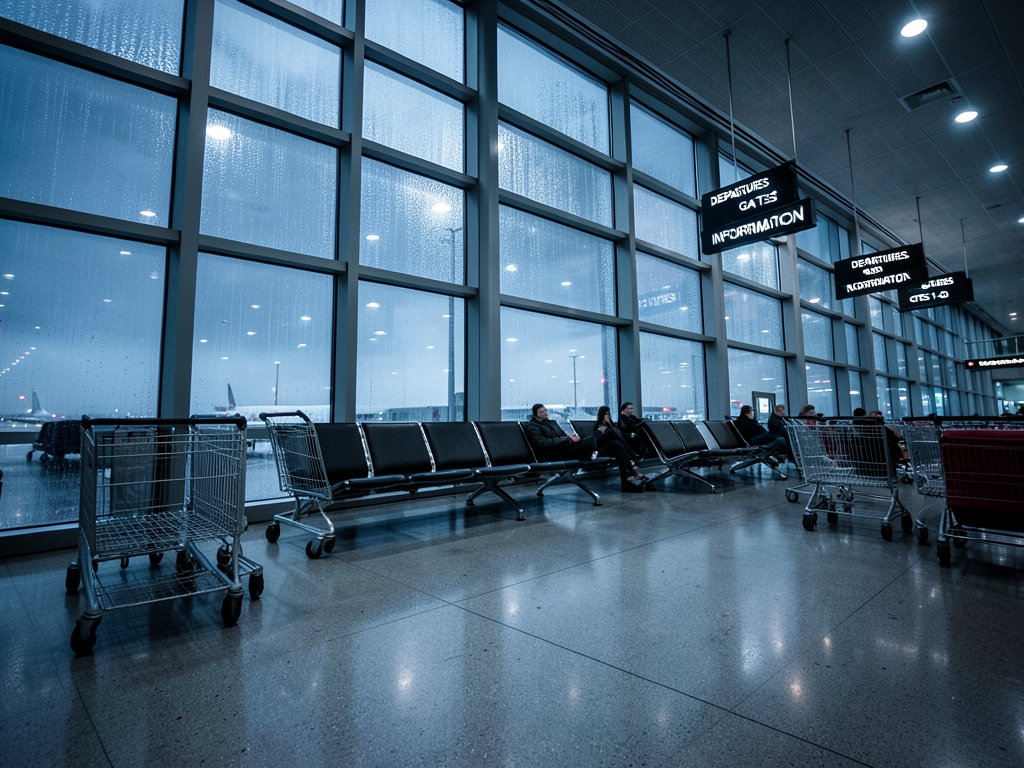
What FAA verification adds to a claim
FAA verification adds cause attribution, not entitlement. Its main value is separating a system-wide FAA program—such as a ground stop or staffing-related delay program, including recent staffing-shortage disruptions at airports such as LaGuardia and Newark—from an airline-specific operational failure. If your flight's date and airport appear on the FAA's public ground-delay or ground-stop list, screenshot that entry; it documents a disruption affecting the system, not just your carrier. If your flight does not appear, the cause may be airline-specific, but absence from the list is a clue rather than proof.
That distinction matters for one thing: whether the disruption was outside the airline's control. An FAA-attributed disruption can support an argument about whether the airline owes care such as meals or a hotel, or only a refund, depending on the circumstances. It does not replace the refund check, because fare rules and payment-channel timing still determine what money you can recover and how fast.
| What the record shows | What it changes |
|---|---|
| FAA system-wide ground stop or delay program for your date and airport | Supports that the disruption was system-level and outside one airline's control |
| No matching FAA program for your flight | Points toward an airline-specific operational failure, but does not by itself establish fault or entitlement |
Use the screenshot as evidence, not as the claim itself. Record the program name, affected airport, and the date shown, then compare it with the airline's written reason. If the airline cites air-traffic control or weather but no matching FAA entry exists, ask for the specific operational reason in writing and keep both records.
The important limit is that an FAA record shows cause, not outcome. It does not set compensation amounts, override fare rules, or decide payment timing. An FAA-attributed disruption can still end in a refund, but the FAA entry alone does not prove whether care is owed.
So run the refund check first, then attach FAA verification only when the dispute is about cause or care. That keeps the money question tied to your ticket and payment channel while using FAA data for the narrower question it can actually answer.
Refund check vs status verification
FAA/airline status verification adds cause attribution, not entitlement. Its main value is separating a system-wide FAA program—such as a ground stop or staffing-related delay program, including recent staffing-shortage disruptions at airports such as LaGuardia—from airline-specific operational failures. If the cancellation stems from a FAA-mandated ground stop, airline customer-service scripts often shift blame to “weather” or “air-traffic-control issues” to avoid refund liability. The status feed confirms the disruption occurred; it does not confirm whether the airline violated its own fare rules or DOT refund eligibility requirements.
Third-party claims services (e.g., AirHelp, which advertises up to €600 for disrupted flights) are useful for EU261-style compensation on EU-departing flights, but they typically take a cut of any award—run the refund check yourself first, since a US DOT refund costs nothing to claim. AirHelp’s model relies on EU regulation, which provides compensation up to €600 based on flight distance and delay length. US DOT rules, by contrast, require a full refund of the unused ticket when the airline cancels or makes a significant schedule change and you choose not to travel, with no service fee. The 3-step refund check leverages this domestic advantage, producing a dated, enforceable claim without surrendering part of the recovery to a middleman.

Numbers and deadlines that matter
The DOT enforces a refund deadline: airlines must process credit-card refunds within seven business days and non-credit-card refunds within 20 calendar days once a refund is due. Mark the day after the credit-card deadline on your calendar as the escalation point; if the refund has not appeared by then, you have documented grounds to dispute the charge with your card issuer. Save every confirmation email with timestamps so you can show when you requested the refund and when the deadline passed.
Across the Atlantic, the €600 ceiling represents the maximum payout under EU261-style regulations for long-haul delays or cancellations. AirHelp’s published range confirms this figure as the upper limit for eligible passengers on EU departures or EU-carrier arrivals into the EU. It is essential to remember that this compensation does not apply to domestic US flights; it is triggered only by flights departing from an EU airport or arriving on an EU-operated carrier. If you are traveling within the United States, your entitlements are governed by DOT rules, not EU law, and the euro amount is irrelevant to your claim.
When an airline cancels a flight, passengers typically face a queue of rebookings and refund requests. Move as quickly as you can after the cancellation announcement: acting early improves your chances of securing an alternative flight or getting your refund request into the queue before staffing constraints tighten. Have your ticket number and frequent flyer details ready so you can submit the request the moment the airline opens the channel.
Combining these figures creates a clear timeline for action: join the rebooking or refund queue immediately after the cancellation, submit your written refund request as early as possible the same day, and hold the airline to the DOT’s seven-business-day (credit card) or 20-day (debit/cash) processing window. If that deadline passes without a credit to your account, you are positioned to dispute the charge or file a DOT complaint, armed with the knowledge that the airline missed its regulatory deadline.
What the evidence does not establish
The evidence does not establish that airline customer service plans uniformly define “significant delay” at the three-hour mark. While DOT guidance leans on the three-hour threshold for tarmac delay rules, individual carriers embed their own commitments within public customer service plans. Some flag a delay at two hours for meal vouchers, others at four hours for hotel vouchers. Before assuming a automatic cash refund right, locate your specific airline’s plan online and verify the exact delay trigger they publish; assuming a universal three-hour rule can leave money on the table when your carrier’s own text sets a higher bar.
Tickets purchased through online travel agencies introduce a second refund track that the 3-step check does not automatically resolve. The airline is obligated to refund the base fare according to its own tariff and DOT rules, but the OTA controls the remittance of taxes and fees collected at checkout. Ancillary services—seat upgrades, priority boarding—often fall under the OTA’s refund policy rather than the airline’s. Expect to receive a carrier refund for the ticket value and a separate OTA refund for collected taxes, then initiate a parallel claim with the OTA to close the loop on the full ticket cost.
Award tickets operated on miles follow a different remittary path entirely. When a revenue ticket is canceled, cash refunds flow back to the original payment method, but an award ticket typically triggers miles redeposit into the frequent flyer account. The cash value of those miles is not returned; instead, the program restores the award balance. If you need cash rather than miles, request a cash refund at booking time before the miles are consumed, or be prepared to accept miles redeposit as the standard outcome for a canceled award reservation.
The edge-case table confirms that the refund rule has exceptions, but the principle remains: run the 3-step refund check first, identify where your ticket sits within the fare rules, OTA layer, or award structure, and then use FAA or airline status feeds only to confirm the operational cause, not to determine the monetary outcome. Status pages answer what happened; the refund check answers what you are owed. Verifying the cause via FAA systems helps clarify whether a delay was weather-related or operational, but it does not substitute for the fare-rule and payment-channel audit that determines the actual refund amount.
$489 canceled Iberia fare
The worked scenario using a $489 one-way transatlantic fare demonstrates the stakes of choosing a voucher over a refund. You book a direct Iberia ticket from New York to Bilbao for $489 one-way. The flight is canceled at the gate. Checkpoint 1: you immediately screenshot the cancellation notice in the app, noting the timestamp and gate number.
Checkpoint 2: you submit a refund request through the airline’s disruption form the same day, keeping the timestamped confirmation in writing. Checkpoint 3: you mark your calendar for the end of the DOT’s seven-business-day credit-card refund window, after which you can dispute the charge with your card issuer. This sequence turns a disrupted trip into recoverable cash rather than locked credit.
The cost of being wrong by accepting a voucher instead of a refund is a 100% loss of liquidity. A $489 voucher expires according to the airline’s fine print, often within 12 months, and is restricted to future travel on that carrier. You cannot use it for a different airline, you cannot transfer it, and if the airline goes bankrupt or changes routes, the credit vanishes. The $489 in cash you are owed remains liquid: you can apply it to any carrier, book a different itinerary, or deposit it. Accepting a voucher converts recoverable cash into airline-restricted credit, and that conversion is a permanent loss of spending power.
The cost of being wrong by relying on status feeds alone compounds the error. Airline apps and FAA trackers tell you that a cancellation occurred, but they do not calculate what you are owed under the Department of Transportation’s refund rules. If you wait for the status page to “confirm” the cancellation before filing, you risk missing the 24-hour written-request window. If you then accept the airline’s offered voucher because the app shows the flight as “canceled,” you have already locked in the liquidity loss described above. The status feed answers what happened; the refund check answers what you are owed.
To protect your money, run the 3-step refund check before you trust any FAA or airline status feed. First, screenshot the cancellation with a timestamp. Second, submit a refund request via the airline’s disruption form the same day, referencing the DOT’s 24-hour window. Third, note the calendar day 8 for card-credit posting. Only after those steps should you check FAA or airline status for operational details. This order ensures you secure the full $489 refund in cash before any voucher or travel credit can be offered or accepted.
Decision rules for disrupted flights
At the gate, use this if/then rule set to operationalize the refund-first rule before reacting to an airline app or departure board. Match the disruption to the branch below and act on the option that preserves your money or your seat.
| If this happens | Then do this | Why it matters |
|---|---|---|
| The flight is canceled and you no longer want to travel | Request a full cash refund to your original form of payment in writing the same day; decline the default voucher or travel credit | A cancellation that ends your trip triggers a refund right, not an obligation to accept airline credit |
| The delay is under 3 hours and you still want to fly | Skip the refund request and get in the rebooking queue immediately | Queue position is the scarce resource when seats on later departures are limited |
| The airline blames FAA or ATC staffing | Verify the FAA National Airspace System Status page yourself, screenshot it, and still demand the refund | ATC-related cause can affect compensation, but it does not remove your refund right when you choose not to travel |
For a cancellation, the decision is binary: if you are done traveling, pursue the money, not the credit. Under U.S. Department of Transportation refund rules, passengers on U.S. tickets are entitled to a refund to the original form of payment when an airline cancels a flight and the passenger declines to travel or accept the alternative offered. Make the request in writing through the airline’s official channel the same day and keep a copy. A voucher may be convenient for the airline, but it should not replace an available cash refund.
When the delay is short and you still intend to fly, the calculus flips. A refund request does not hold a seat, and every minute spent debating options can push you farther back for remaining inventory. Get into the rebooking queue immediately in the airline app, at the gate counter, or by phone in parallel, because queue position is the scarce resource. In this branch, preserve your itinerary, not a claim.
If the airline attributes the disruption to FAA or air traffic control staffing, treat that explanation as a claim to verify, not a reason to stop. Check the FAA National Airspace System Status page, capture a screenshot with the time visible, and keep it with your records. Even when ATC constraints contribute to the disruption, that cause can affect separate compensation, but it does not erase your refund right when you decline to travel after a cancellation.
What to do next
| Step | Action | Why it matters |
|---|---|---|
| 1 | Run the 3-step refund check before reviewing the FAA or airline status feed. | The status feed shows what happened, not what you are owed; the check covers fare rules, DOT refund eligibility, and payment-channel timing. |
| 2 | Confirm the fare rules, DOT refund eligibility, and payment-channel timing within the refund check. | Refund eligibility depends on those elements, not on the status feed. |
| 3 | If the US ticket is canceled or delayed past the 3-hour delay threshold, request a full refund in writing within the 24-hour request deadline. | The 3-hour delay threshold triggers the written refund request, and the request deadline is 24 hours. |
| 4 | Use FAA or airline status verification only to confirm the disruption was system-wide. | It strengthens, not replaces, the refund claim; it does not determine refund eligibility. |
| 5 | Keep the written refund request aligned with the 3-step refund check before relying on status verification. | The check comes first; status verification only confirms the disruption. |
Also worth reading Your Flight Got Canceled or Delayed Flight Canceled or Delayed Your Berlin Flight Cancellations What Are
What to do next
| Step | Action | Why it matters |
|---|---|---|
| 1 | Run the 3-step refund check before reviewing the FAA or airline status feed. | The status feed shows what happened, not what you are owed; the check covers fare rules, DOT refund eligibility, and payment-channel timing. |
| 2 | Confirm the fare rules, DOT refund eligibility, and payment-channel timing within the refund check. | Refund eligibility depends on those elements, not on the status feed. |
| 3 | If the US ticket is canceled or delayed past the 3-hour delay threshold, request a full refund in writing within the 24-hour request deadline. | The 3-hour delay threshold triggers the written refund request, and the request deadline is 24 hours. |
| 4 | Use FAA or airline status verification only to confirm the disruption was system-wide. | It strengthens, not replaces, the refund claim; it does not determine refund eligibility. |
| 5 | Keep the written refund request aligned with the 3-step refund check before relying on status verification. | The check comes first; status verification only confirms the disruption. |
Frequently Asked Questions
What determines whether a ticket is fully refundable, refund-only-if-airline-cancels, or non-refundable?
The fare-basis code located on the airline's "My Trips" page dictates the refund eligibility for your ticket.
What is the 3-hour delay threshold that triggers a written refund request for a US ticket?
The 3-hour delay threshold triggers the written refund request for a US ticket that is canceled or delayed past 3 hours.
Within what timeframe must a full refund be requested in writing for a canceled or delayed US ticket past 3 hours?
A full refund must be requested in writing within 24 hours for a canceled or delayed US ticket past 3 hours.
What does the 3-step refund check cover regarding fare rules and eligibility?
The 3-step refund check covers fare rules, DOT refund eligibility, and payment-channel timing to determine what you are owed.
Does FAA or airline status verification determine refund eligibility according to the guide?
FAA or airline status verification does not determine refund eligibility; it is used only to confirm the disruption.
What does AirHelp advertise for delayed or canceled flights, and what caveat does the article mention?
AirHelp advertises up to €600 for delayed or canceled flights, but airlines may delay or reject claims.
Quick answers
| What is the first step of the 3-step refund check? | Begin on the airline’s "My Trips" page and locate the fare-basis code for your ticket. |
| What does the fare-basis code determine regarding ticket refundability? | The fare-basis code dictates whether your ticket is fully refundable, refund-only-if-airline-cancels, or non-refundable. |
| What triggers the written refund request for a US ticket canceled or delayed past 3 hours? | The 3-hour delay threshold triggers the written refund request. |
| What does FAA or airline status verification not determine? | refund eligibility |
Research Methodology & Editorial Standards
We begin by defining the specific objectives the reader needs to accomplish. Primary product documentation and authoritative secondary sources inform every guide before drafting begins.
Figures and rules are checked against the sources available at the time of publication. Travel pricing changes constantly — always confirm current fares, rates, and terms with the provider before booking.