
Cruise suite vs standard cabin 2026: compare all-in per person-night
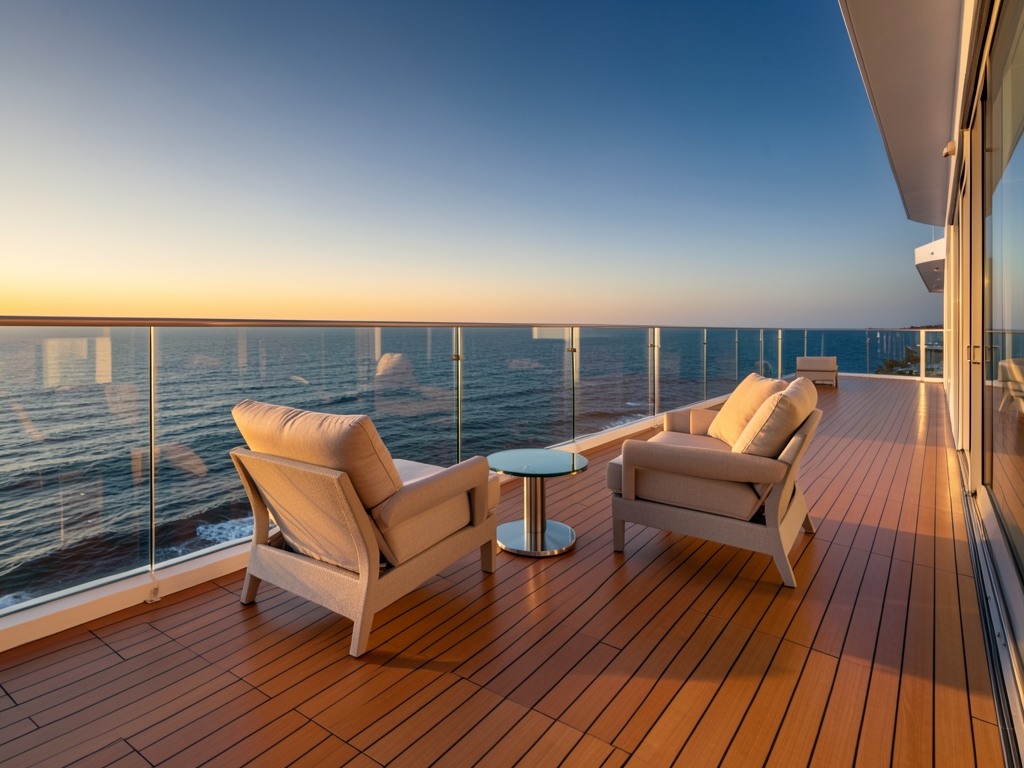
A $25,000 nightly luxury cruise suite can cost far more than a standard cabin on a quoted-rate basis, but the true 2026 value gap depends on the all-in total.
| Takeaway | Detail |
|---|---|
| Compare only on an all-in, per-person-per-night basis | At the final booking page for the same sailing and occupancy, divide each option's total cost by (guests × nights). |
| A $25,000 nightly suite quote is not directly comparable to a standard cabin | Taxes, fees, gratuities, and inclusions must be normalized before any price comparison. |
| Hold sailing and occupancy constant | The 2026 luxury-suite decision is falsifiable only when both options are priced for the same sailing and the same number of guests. |
| Book the suite only within a pre-set premium cap | Choose the suite only if its all-in premium per person-night is at or below your pre-set cap; otherwise book the standard cabin. |
A $25,000 nightly luxury cruise suite can cost far more than a standard cabin on a quoted-rate basis, but the true 2026 value gap depends on the all-in total.
That answer changes only when taxes, fees, gratuities, inclusions, and occupancy are normalized to a per-person-per-night cost for the same sailing.
How a suite quote becomes per person-night
Pull the final total-price screen for the exact sailing, cabin grade, and occupancy, not the search-card nightly rate. The search card can omit taxes, fees, gratuities, or currency differences, so record the currency shown and whether port taxes and fees are already inside the total. If two options are not on the same currency basis, convert both to USD before any comparison.
Normalize both options with the same formula: final booking-page total ÷ (number of guests × number of nights). The result is all-in USD per person-night. Never compare a per-cabin figure with a per-person figure; if one quote is per cabin and the other is per person, convert both to the same unit first. Use the occupancy you will actually sail with, not the cabin's maximum capacity, because an unused berth does not reduce the price you pay.
Keep the normalization in one unit: final booking-page total ÷ (guests × nights) = all-in USD per person-night, checked against the same sailing, cabin grade, occupancy, and currency.
Keep taxes, fees, gratuities, and inclusions in that same unit. If one option includes a mandatory charge and the other adds it later, add the same charge to the option that excludes it before dividing. A suite credit, beverage package, or other inclusion only offsets the suite if you would buy it separately; list each suite-only inclusion, mark it "would use" or "would not buy," and value only the ones you would use.
If the line does not publish an inclusion value, price it at your own replacement cost or assign it zero if you would not purchase it. Then divide any lump-sum inclusion by the same guests × nights before netting it against the suite total, so the offset stays in all-in USD per person-night rather than becoming a separate per-cabin credit.
Before booking, write down both final totals, both currencies, both occupancy counts, and the inclusion list with your use marks. The suite passes only when its normalized all-in premium per person-night is at or below your pre-set cap after those offsets.
Three independent checks kill sticker rate
A sticker nightly rate can look comparable while hiding mandatory charges. Three independent checks show why the comparison fails unless every add-on is normalized into the same per-person-per-night unit: a nightly visitor fee, a calculator that adds tax and cleaning before dividing, and audits showing fee application is not static. The point is not the destination; it is that a rate quoted before mandatory add-ons is not the rate paid.
| Source | Figure | Unit | Check |
|---|---|---|---|
| deeparrival.com | US$100 SDF | per night | Mandatory visitor fee can sit outside the room rate. |
| tooldune.com | 12% tax + cleaning fee | added before per-person-per-night output | Normalize taxes and fees before dividing. |
| Mighty Travels | Q3 2026 live-rebooking audits | audit period | Standard model assumes static fee application. |
| GSA | Oct 29, 2026 | publication date | Method check: separates lodging from meals and incidentals. |
| engine.com | Oct 12, 2026; FY2027 rates effective Oct 1, 2026 | publication/effective dates | Method check: lodging cap excludes meals and incidentals. |
deeparrival.com lists Bhutan's US$100 SDF as a nightly visitor fee. That is a mandatory nightly charge separate from the room rate, so a quote that omits it understates the nightly cost by the full fee. The check is simple: ask whether any nightly visitor, port, or service fee is excluded from the displayed rate.
tooldune.com's hotel-vs-rental calculator uses 12% tax plus a cleaning fee before outputting cost per person per night. The order matters: tax and cleaning are added to the stay total before division, not treated as after-the-fact adjustments. If a suite quote is compared before that step, the comparison is not on the same basis.
Mighty Travels' Q3 2026 live-rebooking audits found the standard cost-per-night model assumes static fee application. That is a structural blind spot: fees may not stay fixed across rebooking, occupancy, or stay-length changes. A sticker rate captured once can therefore misstate the cost that actually posts at final booking.
Use GSA and engine.com only as method checks, not cruise facts. GSA (Oct 29, 2026) separates lodging from meals and incidental expenses; engine.com (Oct 12, 2026) looks only at the lodging nightly per diem cap and leaves out meals and incidentals, with FY2027 rates taking effect Oct 1, 2026. The transferable lesson is component separation: a cap or quote that covers only one category cannot be compared with one that bundles others.
Suite vs standard: the all-in winner
The winner is not the lowest sticker rate; it is the option whose all-in premium per person-night clears both of your limits. Start with the standard cabin as the default winner. An entry or top suite becomes the winner only when its all-in premium per person-night is at or below your pre-set cap and at or below the retail value of suite-only inclusions you would actually consume. If either test fails, the standard cabin remains the winner, even if the suite's headline rate looks close.
Use the table as a same-sailing, same-occupancy scorecard. Keep each column in one unit: final booking-page totals stay as totals, guests × nights stays as the denominator, and all-in per person-night stays as a per-person figure. Do not mix a per-cabin total with a per-person rate in the same column. The suite premium is the suite's all-in per person-night minus the standard cabin's all-in per person-night; compare that single premium to your cap and to the retail value of inclusions you would use.
Worked example using the article's own figures: for a 7-night sailing with 2 guests in one suite quoted at $25,000 per suite-night, the pre-fee total is $25,000 × 7 = $175,000 and the denominator is 2 × 7 = 14 person-nights, giving $175,000 ÷ 14 = $12,500 per person-night before mandatory fees. Price the standard cabin on the same final booking page the same way; its normalized figure is the baseline. The suite premium is $12,500 minus the standard cabin's all-in per person-night, and the suite wins only if that premium is at or below your pre-set cap and at or below the retail value of suite-only inclusions you would actually use. If either test fails, the standard cabin remains the winner, and the cost of the wrong choice is the gap between the two normalized figures.
Count inclusions narrowly. Only suite-only items you would actually consume at retail value belong in the comparison, and only at the value you would have paid for them outside the suite. Aspirational perks, unused credits, or benefits you would not buy separately do not offset the premium. A suite can pass the cap test and still lose if its premium exceeds the retail value of inclusions you would use.
The cost-of-wrong-choice row records what happens when the rule is ignored: booking the suite when its premium exceeds your cap or the value of inclusions you would use means paying the gap for value you do not receive; rejecting the suite when its premium is within both limits means forgoing value you could have captured. Either error is measured against the same normalized premium, not against a headline nightly rate.
Before booking, rerun the table if sailing, occupancy, cabin grade, or inclusions change. The winner call is valid only for the exact final booking-page combination you tested.
Worked $25,000 audit and edge cases
Treat the headline $25,000 figure as a method example, not a market quote. For a 7-night sailing in one suite, the cabin total is $25,000 per suite-night × 7 nights = $175,000. With 2 guests, the denominator is 2 guests × 7 nights = 14 person-nights. Dividing the cabin total by person-nights yields $175,000 ÷ 14 = $12,500 per person-night before mandatory fees. Recompute every step from the final checkout screen for your exact sailing, because the number that matters is the all-in amount you actually authorize, not the rate shown on a search card.
Run the same audit on the standard cabin you are considering for the same sailing and occupancy, then compare each result to the per-person-per-night cap you set before you shop. Mighty Travels’ 2025 hidden-fee analysis underscores why a headline nightly rate can mislead: fixed and variable add-ons change the real trip cost. In a cruise checkout, that means taxes, port charges, gratuities, and any paid extras belong in the total you audit, while the comparison stays valid only when both options share the same sailing dates and guest count.
| Edge case | What changes in the audit | Decision check |
|---|---|---|
| Solo traveler | The denominator collapses to nights × 1, so the per-person-night figure rises sharply. | Re-run the audit with solo occupancy; do not reuse a double-occupancy result. |
| One-night sailing | Fixed fees have fewer nights to spread across, so they can dominate the total. | Compare all-in totals for the same one-night itinerary before judging the suite premium. |
| Nonrefundable deposit | The deposit is a separate cancellation cost, not part of the nightly stay value. | Add the forfeiture risk to your decision; a lower per-person-night result does not offset a loss you cannot absorb. |
| Unused inclusions | Any inclusion you will not use is valued at $0 in your personal audit. | Count only benefits you will actually consume on that sailing. |
| Rule still wins | Both options are measured on the same all-in, per-person-per-night basis. | Use the result when the sailing, occupancy, and trip length are identical and the stay is multi-night. |
Solo occupancy and one-night itineraries are the most common ways travelers misread a suite quote. When only one guest occupies the cabin, the same cabin total is spread over half as many person-nights as a double-occupancy booking, so the suite can look far less efficient even if the sticker rate is unchanged. On a one-night sailing, fixed checkout charges do not have several nights to dilute them, which makes the all-in gap more sensitive to fees than to the headline room rate.
Two edge cases sit outside the nightly math but still control the decision. A nonrefundable deposit creates a separate cancellation exposure: if your plans change, the money at risk is a sunk cost, not a benefit delivered during the sailing. Unused inclusions deserve the same discipline. If you will not drink the beverage package, book the specialty dining, or use the private transfer, assign those items a $0 value in your audit. The per-person-per-night check remains reliable when you hold the sailing, occupancy, and trip length constant across options and verify the final checkout total before paying.
Five if/then rules for 2026 suite booking
Use these five if/then rules only after both options have been normalized to the same sailing, occupancy, and per-person-night unit. Keep the checklist cells in one row per comparison: sailing date, cabin grade, guests, nights, final suite total, final standard total, mandatory fees, refundability, inclusions you would use at retail, suite per-person-night, standard per-person-night, verdict. The verdict cell should hold only one of three outcomes: book standard, suite can win, or pause for recheck.
Worked checklist row from the article's own figures: guests = 2; nights = 7; final suite total = $175,000 before mandatory fees; suite per-person-night = $12,500 before fees; final standard total = the same final booking page's total for the standard cabin on that sailing; standard per-person-night = that total ÷ 14; verdict = book standard unless the suite premium over the standard figure is at or below your pre-set cap and at or below the retail value of inclusions you would use.
If the final checkout total is missing for either cabin grade, or if the two totals are not for the same sailing and occupancy, then stop and do not compare; if the suite all-in premium per person-night is above your cap, book standard. The cap is a pre-set personal limit, so record it in the verdict cell before opening the booking page.
If the suite premium is at or below the retail value of inclusions you would actually use, the suite can win, but only for those inclusions you would buy anyway; if occupancy is solo, recompute both options before comparing, because the denominator and the value of included services can change the result.
If final checkout adds undisclosed fees, pause, update the mandatory-fees cell, and rerun the comparison from the first rule; do not carry an old verdict into a changed total. A pause is not a rejection, but it prevents a fee surprise from being treated as an inclusion.
Keep the checklist as a working record rather than a one-time note: copy the cells into your booking notes, fill them only from the final price screen, and let the verdict follow the arithmetic instead of the headline nightly rate.
Also worth reading Experience the most spectacular Cruise lines increase mandatory Delta upgrades the luxury experience
What to do next
As priced above, the next steps follow directly from the normalization rule: pull both final booking-page totals for the same 2026 sailing and occupancy, add taxes, fees, gratuities, and only the inclusions you would buy, divide each total by (guests × nights), then book the suite only if its all-in premium per person-night is at or below your pre-set cap and at or below the retail value of suite-only inclusions you would actually use; otherwise book the standard cabin on the same sailing and occupancy.
Frequently Asked Questions
Which price screen should I use to compare a cruise suite and a standard cabin?
Use the final total-price screen for the exact sailing, cabin grade, and occupancy rather than the search-card nightly rate.
What costs can be missing from a search-card nightly rate?
A search-card nightly rate can omit taxes, fees, gratuities, or currency differences.
How do you calculate the all-in per-person-per-night cost for each option?
Divide each option's total cost by the number of guests multiplied by the number of nights.
What should I verify about port taxes and fees before comparing prices?
Record the currency shown and whether port taxes and fees are already included in the total.
When should I choose a standard cabin instead of upgrading to a suite?
Book the standard cabin if the suite's all-in premium per person-night exceeds your pre-set cap.
What conditions must be held constant to make a suite-versus-cabin comparison valid?
Both options must be priced for the same sailing and the same number of guests, with taxes, fees, gratuities, and inclusions normalized.
Quick answers
| On what basis should a cruise suite and standard cabin be compared? | They should be compared only on an all-in, per-person-per-night basis. |
| How is the per-person-per-night cost calculated? | At the final booking page for the same sailing and occupancy, divide each option's total cost by (guests × nights). |
| What must be normalized before any price comparison? | Taxes, fees, gratuities, and inclusions must be normalized before any price comparison. |
| When is the 2026 luxury-suite decision falsifiable? | The 2026 luxury-suite decision is falsifiable only when both options are priced for the same sailing and the same number of guests. |
| When should the suite be booked instead of the standard cabin? | Choose the suite only if its all-in premium per person-night is at or below your pre-set cap; otherwise book the standard cabin. |
Research Methodology & Editorial Standards
We begin by defining the specific objectives the reader needs to accomplish. Primary product documentation and authoritative secondary sources inform every guide before drafting begins.
Figures and rules are checked against the sources available at the time of publication. Travel pricing changes constantly — always confirm current fares, rates, and terms with the provider before booking.