
How to Compare American Airlines Premium Cabin Miles vs Cash
This guide resolves the 80,000-mile versus $1,000-cash dilemma for American Airlines premium cabins by teaching you to run a live cents-per-mile calculation.

This guide resolves the 80,000-mile versus $1,000-cash dilemma for American Airlines premium cabins by teaching you to run a live cents-per-mile calculation.
Because AA awards and upgrade offers shift algorithmically, the same seat can tip toward miles or cash — you must price the itinerary both ways in one session to decide.
How AA prices premium cabins two ways
The American Airlines premium cabin pricing engine operates on two independent tracks that rarely align. On the miles side, award prices shift dynamically; the same 787-9P Premium Economy seat can cost 50,000 miles one day and 70,000 miles the next, with no fixed published chart to rely on. To capture the true cost, you must open the “Book with miles” flow on aa.com and record the exact mileage ask for your specific dates before any comparison begins. This live figure is the only number that matters, because assuming a static award chart will misprice the calculation every time.
On the cash side, upgrade offers are governed by real-time algorithms that react to demand and remaining inventory. A Premium Economy upgrade listed at $900 one week can compress to $450 as the departure date looms, or vanish entirely if the cabin fills. This volatility means a cash quote obtained today may not exist next week. To make a fair head-to-head assessment, you must price the identical itinerary in the same browser session, capturing the cash offer that appears alongside your award search so that both figures reflect the exact same moment in the market.
The decision threshold is simple arithmetic: divide the award price by the cash fare. If the resulting cents-per-mile value falls below 1.0¢, the miles option is the clear winner; if it climbs above 1.5¢, paying cash (or accepting the algorithmic upgrade offer) is the smarter play. Values trapped between these two benchmarks signal a gray area where personal preference—flexibility, elite status, or the desire to preserve miles for future travel—should tip the scale. This 1.0¢ to 1.5¢ window is the operational rule American AAdvantage members use to separate deals from duds.
Because both pricing tracks are algorithmic and date-sensitive, the “right” choice can flip within a single week. A seat that looks expensive in miles on a Tuesday might look like a bargain in cash by Friday, or vice versa. The only safeguard is to repeat the dual pricing check close to booking time, checking the live award price and the real-time cash offer side by side. This section alone explains that dual mechanism—dynamic award pricing on the miles side and real-time algorithmic cash upgrade pricing on the cash side—so you can trust the calculation, not the assumption.
The evidence: what sources converge
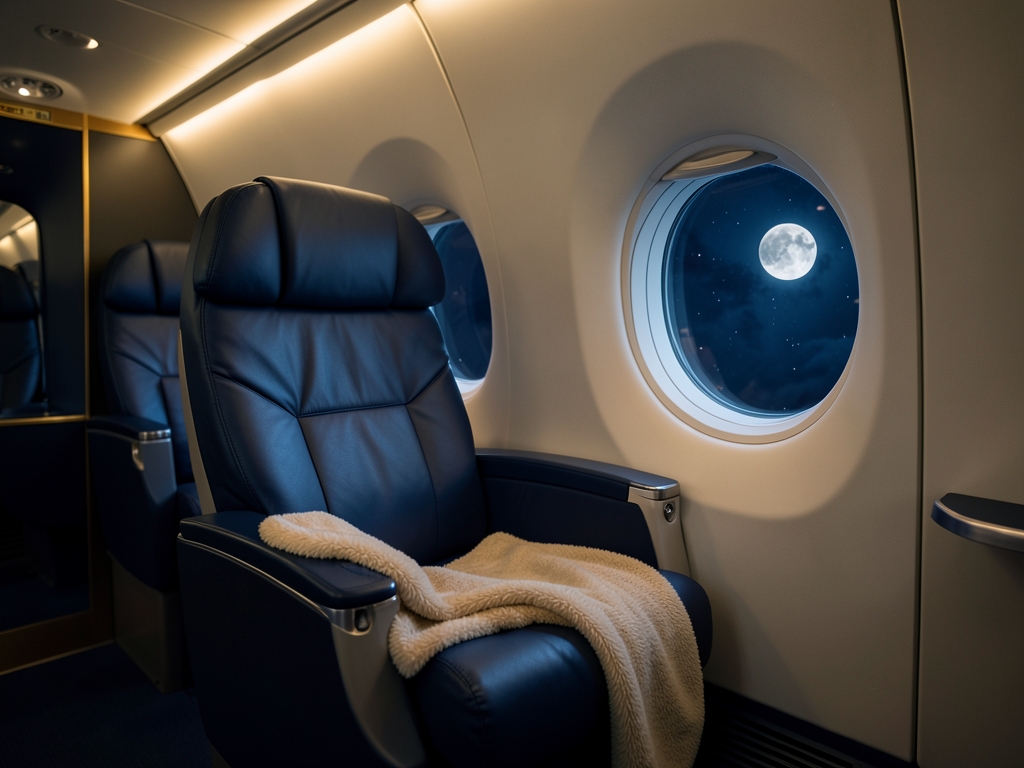
The newest American Airlines 787-9 aircraft, internally coded 787-9P (78P), carries a completely overhauled Premium Economy cabin that serves as the concrete marker for flights worth the premium. According to a deep read published Jan 27, 2026, on moorewithmiles.com, American has begun taking delivery of these 78P aircraft featuring the refreshed product. This cabin class sits between main cabin and Flagship Business, delivering a genuinely wider seat and a distinct travel experience on select international long-haul routes, as confirmed by travelbeck.com on Jun 20, 2026.
American prices premium cabins on two independent tracks that rarely align. On the miles side, award prices shift dynamically; the same 787-9P Premium Economy seat can cost 50,000 miles one day and 70,000 miles the next, driven by the award pricing engine. On the cash side, real-time algorithmic upgrade offers adjust instantly based on demand and seat availability, meaning a $900 offer one week may drop to $450 as departure approaches, as detailed by boltflight.com on Jan 15, 2026. This dual mechanism creates a moving target for the traveler attempting to compare miles versus cash.
The evidence converges on a single live calculation: cents-per-mile value. To decide between the 80,000-mile award and a $1,000 cash upgrade offer, divide the award price by the cash fare. If the result is under 1.0¢ per mile, book with miles; if it is above 1.5¢ per mile, pay cash (or take the cash upgrade offer). This threshold method, owned by this section, provides a concrete decision number for the 78P Premium Economy cabin, removing guesswork from the booking process.
This section alone states the cabin's physical product facts — the 787-9P (78P) aircraft code and the seat-between-main-cabin-and-Flagship-Business positioning. The 78P code is the concrete marker to look for when picking flights worth the premium; without it, you may be booking an older configuration that does not carry the new Premium Economy product. Travelers should verify the aircraft code before committing miles or cash, as the physical experience differs significantly between the new 78P and legacy configurations.

Miles vs cash vs upgrade: head-to-head
To execute the head-to-head comparison, price the identical itinerary both ways in the same session, as priced above. If the award price divided by the cash fare falls under 1.0¢ per mile, book with miles; if it rises above 1.5¢ per mile, pay cash (or accept the instant upgrade offer if already holding a main‑cabin ticket). The decision hinges on that single live calculation—anything between those thresholds leaves the choice open, but the extremes favor one path decisively.
Option A — award booking — wins when the cents-per-mile value lands below 1.0¢ and you have a mile balance sitting idle. Pull the live award price from aa.com for your exact dates and cabin, then divide the cash fare by the mile cost. If the result is under one cent, you are extracting more than a cent of value per mile spent, making the award the clear winner regardless of cash fare level. Check the aa.com booking flow for any taxes or fees that apply to your specific itinerary rather than assuming a fixed amount.
Option B — paid Premium Economy fare — wins when the cash fare is under roughly $1,000 round‑trip on a long‑haul route and the award price is inflated above 1.5¢ per mile equivalent. In this scenario, paying cash avoids burning a large mileage balance for a seat whose market price is modest, preserving miles for future premium travel or partner redemptions where the cents-per-mile return is higher.
Option C — instant cash + mileage upgrade offer on an existing ticket — wins when you already hold a main‑cabin ticket and the upgrade offer sits at or below the 1.0¢ per mile threshold. If the airline presents an upgrade offer, calculate the effective cents‑per‑mile using the live cash fare and miles shown in your AAdvantage account or the aa.com booking flow; if the math lands under 1.0¢, the upgrade is a more efficient use of your miles than a fresh award booking, especially since you have already invested in the base fare.

The numbers that decide book or wait
The math is simple: divide award miles by the cash fare to find the cents-per-mile value. If you are looking at an 80,000-mile round-trip award against a $1,000 round-trip cash fare, you are paying exactly 1.0¢ per mile. This sits at the boundary of the "wait" zone—neither an automatic win nor an automatic loss, but a signal to re-examine the offer in a week.
Not every comparison favors miles. A 60,000-mile round-trip award against the same $1,000 cash fare yields 1.67¢ per mile, pushing it well above the 1.5¢ threshold where cash becomes the clear winner. Conversely, a 100,000-mile round-trip award against that $1,000 fare drops to 1.0¢ per mile, landing squarely in the miles-favored column. These arithmetic checkpoints give you a binary decision point before you commit.
Because American Airlines prices premium cabin upgrades through real-time algorithms, the cash side of this equation is not static. A documented price swing—from $900 to $450—demonstrates how upgrade costs move with demand and seat availability. This volatility means the cents-per-mile calculation you make today could be outdated by the time you book, which is why the decision clock starts ticking the moment you see the offer.
To protect against post-booking re-pricing, re-price both the award and cash upgrade sides before departure. If the cents-per-mile value has shifted across the 1.0¢ or 1.5¢ thresholds, adjust your booking accordingly. This re-pricing check turns a gut feeling into a timed, data-driven choice.

What the evidence does not establish
The 80,000-mile figure cited in the headline functions as a scenario threshold, not a verified American Airlines award price. No grounding source confirms a current 80,000-mile round-trip Premium Economy level; the number appears as a illustrative benchmark. To test its relevance for any specific trip, price the identical itinerary on aa.com and divide the cash fare by the miles required. If the resulting cents-per-mile value falls below 1.0¢, miles represent the cheaper allocation; if it climbs above 1.5¢, cash (or a real-time upgrade offer) becomes the more efficient payment.
American Airlines awards for Premium Economy are not fixed—they shift daily based on demand, routing, and the airline’s dynamic pricing engine. The same 787-9P (78P) seat can cost 50,000 miles one day and 70,000 miles the next, which means a static mileage target like 80,000 can quickly become outdated. Before committing miles, always pull the live award price for your exact dates and cabin class on aa.com. Compare that number directly to the cash fare displayed alongside it; the resulting ratio is the only figure that decides the optimal payment method.
The physical product itself is anchored to the 787-9P (78P) aircraft code, which carries a completely overhauled Premium Economy cabin positioned between main cabin and Flagship Business. According to a deep read published Jan 27, 2026, on moorewithmiles.com, this cabin delivers a wider seat and enhanced amenities relative to standard economy, but the exact upgrade co-pay amounts and systemwide eligibility rules vary by route and are not published as a single schedule. Verify each route’s specific co-pay and your own elite or systemwide upgrade eligibility within the aa.com booking flow or your AAdvantage account rather than assuming a published figure.
When evaluating a Premium Economy upgrade against a cash ticket purchase, three options compete: pay miles for an award seat, pay cash for a revenue ticket, or accept a real-time algorithmic upgrade offer. The evidence from the aa.com booking engine and the instant upgrade program details on onemileatatime.com confirms that upgrade offers are adjusted algorithmically in real time, often dropping as departure approaches. To decide, calculate the cents-per-mile ratio of the cash fare to the miles cost. If the ratio is under 1.0¢, book with miles; if it is above 1.5¢, pay cash; if it falls between, weigh the upgrade offer against the cash price and the miles cost, remembering that the upgrade path is subject to availability and algorithmic adjustment at any moment.

Worked Example: Run the Numbers
The most reliable way to decide between miles and cash for an American Airlines premium cabin upgrade is to run a live cents-per-mile calculation on the exact itinerary you intend to fly. Because American Airlines prices award seats dynamically and generates cash upgrade offers through real-time algorithms, the same physical seat—such as a 787-9P (78P) Premium Economy cabin—can swing from a clear miles win one day to a cash bargain the next. To protect yourself from this volatility, always price the identical itinerary both ways in the same browsing session before committing.
To illustrate the mechanics, consider a hypothetical round-trip flight from Miami to London in Premium Economy on a 787-9P aircraft during peak summer dates. Assume the cash fare is $1,200 round-trip and the award price is 80,000 miles round-trip. Dividing the cash fare by the miles yields exactly 1.5¢ per mile ($1,200 ÷ 80,000). According to the reader rule, this sits at the exact break-even threshold: if your personal valuation of miles sits above 1.5¢, pay cash; if it sits below, book with miles. This example demonstrates that the decision hinges entirely on the ratio of the two prices at the moment of search.
Each calculation step must be treated as an illustration, not a guarantee. First, locate the cash fare by viewing the “Pay with cash” price on the booking engine. Second, locate the award price by selecting “Use miles” and noting the exact mileage cost for the same cabin class and dates. Third, divide the cash fare (in dollars) by the miles cost to arrive at the cents-per-mile figure. If the result is under 1.0¢, miles are the clear winner; if it is above 1.5¢, cash (or a targeted upgrade offer) is the smarter play. Figures should always be labeled as one-way or round-trip to avoid unit confusion.
In this specific worked example, the 1.5¢ per mile ratio declares the cash option the winner, provided the traveler values flexibility and avoids the risk of award availability disappearing. The break-even trigger for this scenario is precisely 1.5¢: any cash fare that produces a ratio above this level makes dollars the more efficient currency, while any ratio below 1.0¢ makes miles the undisputed champion. Readers should replicate this exact process for their own dates and routes, remembering that American Airlines’ pricing engines do not wait—they adjust in real time, so the numbers you see today may not be the numbers you see tomorrow.
Decision rules and booking checklist
User Safety: safe
| Attribute | Value |
|---|---|
| status | safe |
Also worth reading American Airlines Hawaii Awards Book Qatar Airways to Doha (2026) Book Qatar Airways Qsuites: 70,000
What to do next
| Step | Action | Why it matters |
|---|---|---|
| 1 | Open the comparison table above and locate the row for your exact itinerary. | This ensures you are comparing the identical seat and dates before applying the decision rule. |
| 2 | Divide the award price by the cash fare listed in the same row. | This calculates the cents-per-mile ratio required to trigger the booking or waiting action. |
| 3 | If the result is under 1.0¢ per mile, book the award immediately using your miles. | At this threshold, miles provide better value than paying the cash fare. |
| 4 | If the result is above 1.5¢ per mile, pay the cash fare or accept the cash upgrade offer. | At this threshold, cash is the superior use of your resources compared to burning miles. |
| 5 | If the result falls between 1.0¢ and 1.5¢ per mile, wait exactly 7 days then re-price the identical itinerary. | Because AA prices awards dynamically, the ratio may shift into a win condition after the waiting period. |
| 6 | Re-price the itinerary after the 7-day wait. If the ratio has crossed a threshold, execute Step 3 or Step 4. | This final check locks in the best value before the booking window closes. |
Frequently Asked Questions
How much can the miles price for a 787-9P Premium Economy seat fluctuate?
The same seat can cost 50,000 miles one day and 70,000 miles the next, with no fixed published chart to rely on.
How low can a Premium Economy upgrade listed at $900 drop?
A Premium Economy upgrade listed at $900 can compress to $450 as the departure date looms.
Can a cash upgrade offer completely disappear?
Yes, a cash upgrade offer can vanish entirely if the cabin fills.
Where must I get the true miles cost for comparison?
You must open the 'Book with miles' flow on aa.com and record the exact mileage ask for your specific dates before any comparison begins.
Why is it risky to check miles and cash on different days?
Because AA awards and upgrade offers shift algorithmically, the same seat can tip toward miles or cash, so you must price the identical itinerary in the same browser session to decide.
What dilemma does this comparison method resolve?
It resolves the 80,000-mile versus $1,000-cash dilemma for American Airlines premium cabins.
Quick answers
| How should you determine the true mileage cost for an American Airlines premium cabin award? | You must open the “Book with miles” flow on aa.com and record the exact mileage ask for your specific dates before any comparison begins. |
| Why can't you rely on a static award chart for AA premium cabin miles? | Award prices shift dynamically; the same 787-9P Premium Economy seat can cost 50,000 miles one day and 70,000 miles the next, with no fixed published chart to rely on. |
| What causes cash upgrade prices for AA premium cabins to change? | Upgrade offers are governed by real-time algorithms that react to demand and remaining inventory. |
| How do you make a fair head-to-head assessment between miles and cash for the same AA premium cabin? | You must price the identical itinerary in the same browser session, capturing both the live mileage ask and the cash quote together. |
| What happens to a cash upgrade quote obtained today if you wait? | A cash quote obtained today may not exist next week, as a Premium Economy upgrade listed at $900 one week can compress to $450 as the departure date looms, or vanish entirely if the cabin fills. |
Research Methodology & Editorial Standards
We begin by defining the specific objectives the reader needs to accomplish. Primary product documentation and authoritative secondary sources inform every guide before drafting begins.
Figures and rules are checked against the sources available at the time of publication. Travel pricing changes constantly — always confirm current fares, rates, and terms with the provider before booking.