
Chicago O'Hare to downtown in 2026: $5 Blue Line vs $55 rideshare on award tickets
Choose the rideshare when 2+ people, heavy bags, or arrival outside Blue Line hours make the per-person train saving small.
| Takeaway | Detail |
|---|---|
| Solo in 2026: take the $5 Blue Line. | Thesis: on an award ticket, one-way CTA Blue Line is $5 versus roughly $55 one-way rideshare, an 11x cost margin. |
| Pair with carry-ons: Blue Line wins when trains run. | Reader rule: take the Blue Line for a solo traveler or a pair with carry-ons when trains run. |
| Rideshare wins with 2+ people, heavy bags, or outside Blue Line hours. | Thesis names 2+ people, heavy bags, or arrival outside Blue Line hours; reader rule keeps pairs with carry-ons on the Blue Line when trains run. |
| Use party size × bag count as the override rule. | Reader rule: buy rideshare only when party size times bag count makes the per-person train cost saving small. |
For the solo-traveler base case, the pricing math is laid out in the takeaways above and derived in the evidence section below; the rest of this article shows how to verify both figures on arrival and when the exceptions apply.
Choose the rideshare when 2+ people, heavy bags, or arrival outside Blue Line hours make the per-person train saving small.
How the Blue Line run works
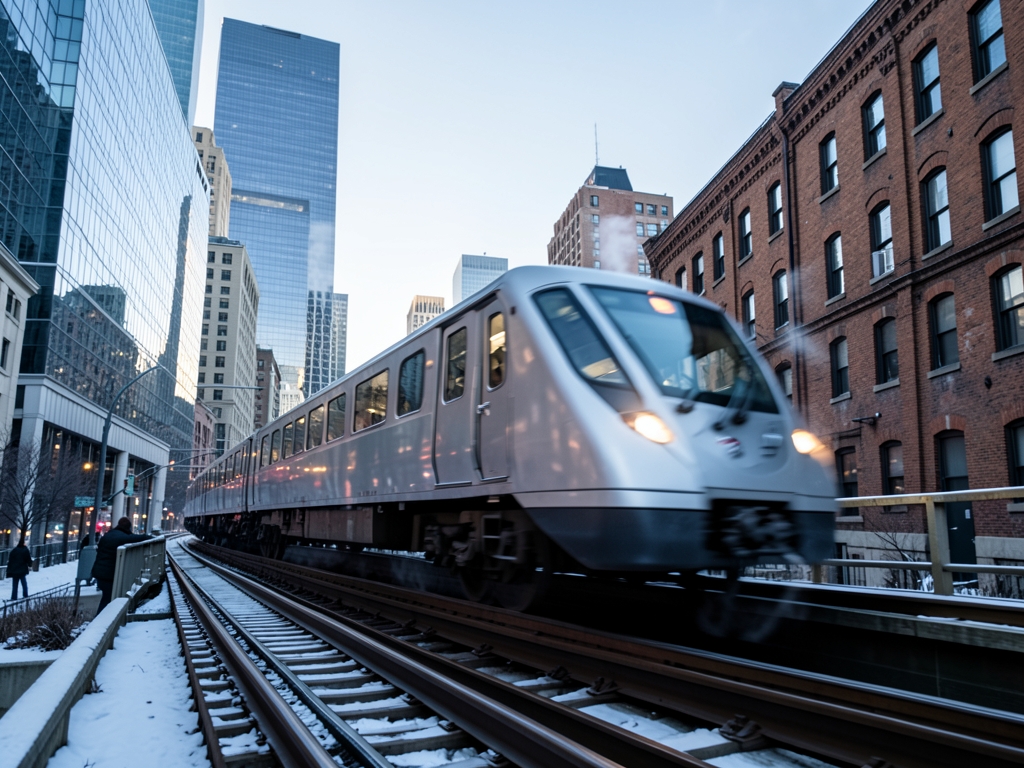
The CTA Blue Line provides direct service from a station inside the O’Hare terminal complex to downtown Chicago (the Loop) with no transfer required, according to the CTA’s airport transit page. This is a single-seat ride from the airport station into the central area, so the routing task is to enter the system at O’Hare and select a downtown stop that matches your final address.
To board, follow airport signs to the CTA station below the terminal area and use the Blue Line platform for trains headed toward downtown Chicago. Because O’Hare is the line’s airport terminus on this run, trains leaving the O’Hare station travel inbound toward the city; confirm the platform direction on station signs before you board and allow time to follow overhead signs rather than relying on other riders. If you are carrying bags, use the elevators or escalators indicated by signage to reach the platform level, and use the same Blue Line station that serves the airport terminal complex.
Stay on the train through the full run to downtown stations rather than exiting at the first neighborhood stops after the airport. Common downtown stops on that inbound run include Clark/Lake, Monroe, and Jackson, and your choice depends on where you need to go after you exit. Leaving early can place you outside the Loop with extra transfers or a longer walk to central addresses, so treat those downtown stops as the intended alight points.
The Blue Line follows the established airport-to-downtown corridor used for ground travel between O’Hare and the Loop, so the path is set by the rail line rather than by road traffic detours. Because the ride is direct, you do not change trains to reach downtown; the practical checks are boarding the correct inbound platform at O’Hare and riding past intermediate stops until you reach the downtown station that best serves your plans. If your destination is near more than one downtown stop, compare walking distance from each on a map before you ride so you exit once at the most convenient station.
When you exit at a downtown stop, follow posted signs to street level and to any connecting transit you need. The Blue Line’s role in this run is to move you from the O’Hare station to the Loop area on one train, with your exit choice determined by the downtown station closest to your final block.
The evidence: $5 vs $55
For a 2026 O’Hare arrival, start with the source that sets the baseline: CTA’s airport transit page treats train service as the standard budget option for both O’Hare and Midway. The headline figure is a $5 one-way fare, but the check is practical: read the amount at the Ventra machine when you arrive and treat that as current, because CTA fares can change. Write down what the machine shows before you compare it with any car quote.
The road comparison comes from the O’Hare to Downtown Chicago comparison guide in Quick Answer format, which puts a taxi or rideshare at roughly 30 to 60 minutes door-to-door for the ~18-mile airport-to-downtown run. That is the same corridor the Blue Line covers, so the time figure works as a like-for-like check: you are comparing two ways to make the same trip, not two different destinations.
The base case rests on two named sources: CTA’s airport transit page sets the $5 one-way rail baseline, and the Miles & Flavors O’Hare guide says the cheapest option “has a catch nobody mentions until you’re standing at the fare machine.” The roughly $55 one-way rideshare figure is a planning baseline, not a sourced quote, so treat it as an estimate to verify in the app on arrival. If the machine shows $5 and the live quote is near $55, the rideshare is about 11 times the train one-way; if either number differs, redo the division with the figures you actually see.
That fare-machine catch is a verification step, not a pricing black box. The milesandflavors warning lands because travelers meet the price at the machine, so the useful move is to confirm the posted one-way fare there, then compare it with the rideshare estimate in the same direction and the same one-way unit. Do not compare a one-way train fare to a round-trip car total; keep the units matched.
The practical evidence rule is narrow: when the Ventra machine confirms the headline one-way fare, the train remains the budget baseline for the airport-to-downtown corridor; when the machine shows a different amount, redo the division with that new one-way number before you choose. The road estimate tells you what the car trip is being weighed against, and the fare-machine warning tells you exactly where to verify the rail side.

Options compared: who wins when
This section compares the four realistic airport-to-downtown choices without repeating the fare derivation or Blue Line mechanics covered elsewhere. Use it as a winner selector: start with party size and bags, then check whether trains are running and whether rideshare wait times are normal.
For one traveler with a carry-on, the Blue Line is the default winner; rideshare, taxi, and car service only become competitive when that traveler has heavy luggage, arrives outside train hours, or values door-to-door time more than cost. For two travelers with carry-ons, the train still usually wins on cost, but the gap narrows enough that a rideshare can be reasonable if both travelers value time or have a tight connection.
| Scenario | Blue Line | Rideshare | Taxi | Car service |
|---|---|---|---|---|
| Solo, carry-on | Win | Costly | Costly | Costly |
| Pair, carry-ons | Win | Maybe | Maybe | Maybe |
| 3+ travelers | Possible | Win | Win if wait spikes | Win if space needed |
| Heavy bags or outside train hours | No | Win if available | Win if wait spikes | Win if pre-booked |
For three or more travelers, the price math alone does not hand the win to the rideshare: at about $55 one-way, the per-person rideshare cost is about $18.33 for three and $13.75 for four, still above the $5 train fare. What tips larger parties toward the rideshare is convenience — door-to-door service, luggage space, and a single vehicle — not a lower per-person price. If the app shows a long wait or surge, check a taxi as the fallback, and use a pre-booked car service when guaranteed space or a fixed quote matters more than the lowest fare.
The table is intentionally scenario-based rather than a single universal winner. Check the actual rideshare quote on arrival, since surge pricing after evening banks can push it higher, and check whether the Blue Line is running for your arrival time. If the train is running and your party is one or two people with carry-ons, buy the train; otherwise compare the live rideshare quote against taxi and car service using the table.
Reader rule: take the Blue Line if you are traveling solo or as a pair with carry-ons and arrive when trains run; buy the rideshare only when party size times bag count makes the per-person train cost saving small. Use taxi when rideshare wait times spike, and use car service when guaranteed space matters more than the lowest fare.

Costs and numbers that matter
For the cost decision, treat the $5 CTA Blue Line fare and the approximately $55 rideshare quote as one-way planning figures, then verify both for your travel date. A solo traveler saves $50 in one direction. Round-trip, the comparison is $10 for the train versus about $110 for rideshare, a $100 saving. The rideshare’s one-way cost is 11 times the train’s ($55 ÷ $5 = 11).
The breakeven test is per person. The train costs $5 one-way per rider; the rideshare costs its one-way vehicle quote divided by party size. At about $55 one-way, the per-person rideshare cost is about $27.50 for two riders, $18.33 for three, and $13.75 for four—still above the $5 one-way train fare. Eleven riders break even at $5 one-way each ($55 ÷ $11); 12 riders pay about $4.58 one-way each and become cheaper by rideshare. For a realistic party of one to four, the train wins on price.
A second traveler therefore does not flip the price result; it only halves the per-person rideshare premium. Use party size and bag count together: divide the current one-way quote by your party size, then judge whether the bags make the train impractical. A pair with carry-ons still has a strong financial reason to take the train when service is running. Heavy bags can justify paying more, but they do not change the arithmetic.
Time is a separate budget. The suggested 15–30-minute rideshare saving in light traffic needs checking against the actual quote: a 30–60-minute rideshare range versus a roughly 45-minute train trip overlaps, with only about a 15-minute best-case gain. Traffic can erase that advantage. AeroTourist’s 2026 ATL-to-downtown guide notes that traffic patterns can significantly affect transfer time, so check live conditions rather than relying on the optimistic end of the range.
Before booking, run two checks: compare the current one-way rideshare quote divided by party size with the current one-way train fare, and separately value the time and baggage effort saved. If the per-person gap remains wide, the train is the cheaper choice. Rideshare becomes the rational purchase when convenience is worth more than that gap—or when the party is large enough to cross the price breakeven.

What the evidence does not settle
The Blue Line rule has practical break points: an arrival for which usable service cannot be verified and luggage the traveler cannot manage on the train. The table turns those edges into checks, rather than vague hedging. Use the check that matches your situation; do not assume that a late flight or a bag automatically changes the answer.
| Edge case | Evidence limit | Rule to apply |
|---|---|---|
| 1 a.m. landing | CTA confirms overnight Blue Line service exists, but the sources reviewed do not verify 2026 overnight headways. | Check CTA’s current timetable for your arrival date. If no usable departure is listed, or it leaves before you can reach the station, use rideshare; otherwise keep the train. |
| Late arrival or event surge | The $55 one-way rideshare figure is a baseline, not a ceiling; surge can push a quote well past $55 one-way. | Check the live quote. A higher quote strengthens the train case when service is available; it does not create a new exception. |
| Large checked bags | Carry-ons are workable on the train, but the sources reviewed contain no data on large checked bags. | Assess whether you can move the bags to the station and aboard the train. If not, choose rideshare; if so, bags alone do not overturn the rule. |
For a 1 a.m. landing, service existing is not the same as service fitting your arrival. CTA’s airport transit page confirms overnight service, but the available evidence does not establish 2026 overnight headways. Check the CTA site for current Blue Line overnight frequency and departures, then compare the next listed departure with the time you can reach the station.
Treat $55 one-way as a planning baseline, then check the live rideshare quote. Surge pricing after late arrivals or during events can push it well past $55 one-way. That possibility strengthens—not weakens—the train case if a usable train is running; it is a reason to verify the quote, not a reason to assume the train loses.
Luggage needs a separate reality check. Carry-ons are workable on the train, but the sources reviewed contain no data on large checked bags. AeroTourist’s Atlanta airport guide identifies lots of bags as a reason to prefer door-to-door rideshare; that is a general decision principle, not O’Hare-specific baggage evidence. Count your bags and assess whether you can move them to the station and aboard the train before deciding.
Apply the rideshare exception when the timetable check fails or the baggage check fails. If neither fails, a costly rideshare quote is not an edge case; it is another reason to stay with the train.

ORD arrival, 2 travelers
You land at O’Hare Terminal 5 at 4 p.m. on a Tuesday with one other traveler and two carry-ons, bound for a Loop hotel roughly 18 miles one-way. The award ticket gets you to Chicago; it does not choose the last leg. For this arrival, start with the Blue Line as the default and make the rideshare decision only after the terminal checks below; the party is small and the luggage is carry-on sized.
Checkpoint 1 — fare and access. Follow Blue Line signs to the station below the terminal. Buy or load a Ventra card, or use contactless payment, then confirm the fare displayed before completing the transaction; use about $5 one-way per person as the planning figure. For two travelers, that is $10 total one-way. Miles & Flavors’ O’Hare-to-downtown guide flags the fare-machine moment as the catch to watch, so the display—not memory—should decide whether the budget assumption still holds.
Checkpoint 2 — whole-trip comparison. Put the train at roughly 45 minutes and compare that with a fresh rideshare quote, using about $55 as the one-way planning total for the car to your hotel. The Miles & Flavors O’Hare guide puts the road trip at roughly 30 to 60 minutes door-to-door depending on traffic, so the time advantage over the train is a best-case 15 minutes and can disappear in congestion. Refresh the live quote and arrival estimate rather than treating the optimistic end of the range as guaranteed.
Checkpoint 3 — cost of being wrong. If you buy the rideshare for this pair without a new constraint, the mistake costs $45 more one-way than the $10 train total. If you choose the train and regret it, the direct penalty is time and effort—station access, waiting, and managing the bags—rather than a higher fare; a failed service check can also force a replacement ride. Before tapping, check live service status and your schedule. If service is unavailable or the train timing does not fit, buy the rideshare instead of forcing the train choice.
Decision for this arrival. With two travelers, two carry-ons, and service running, take the Blue Line. Keep the rideshare as the fallback if the fare display, service check, or luggage reality changes the inputs. Otherwise, the checkpoint decision is complete: Blue Line for this leg, rideshare held in reserve.
Decision rules for your arrival
If you are solo—or two travelers with only carry-ons—and you are not arriving in the middle of the night, take the CTA Blue Line at $5 one-way and stop comparing. That is the default rule: the fare is fixed, and the savings against a roughly $55 one-way rideshare are large enough that small time differences do not change the answer. Do not reopen the comparison for a single traveler unless the train is not running or getting to the station is impractical for your bags or mobility.
If you have three or more people, do not use the solo rule. Open the rideshare app, divide the live quote by the party size, and compare that per-person number with the $5 one-way train fare. At the roughly $55 baseline, the per-person rideshare cost stays above $5 for any realistic party (about $18.33 for three, $13.75 for four), so the train still wins on price; choose the rideshare when door-to-door convenience and luggage handling are worth the per-person premium. The live quote matters because surge pricing can widen that premium further.
If you land after midnight, check the CTA site for current overnight Blue Line frequency before you default to the train. Long headways can erase the fare advantage in real time; when they do, the rideshare premium buys back time that matters more than the dollars. If frequency is acceptable, the train remains the default even after midnight.
Use bags as the tie-breaker, not as the first question. A solo traveler or pair with carry-ons should still take the train even if a car looks tempting, because the per-person saving is large. A larger party with checked bags should price the car first, because the train saving shrinks as the party grows. The question is whether the per-person train saving is still large enough to justify the extra handling.
When in doubt, get the live quote before you leave the terminal and make the decision from that number. Treat any remembered fare, including a roughly $55 one-way rideshare, as a planning figure rather than a booking price. That keeps the rule tied to the trip in front of you instead of to a fare you saw earlier.
Also worth reading Discover why the new downtown Los United's Chicago O'Hare Polaris How American Airlines' New Chicago
What to do next
| Step | Action | Why it matters |
|---|---|---|
| 1 | Check the official CTA schedule for Blue Line hours before you land at Chicago O'Hare. | The Blue Line rule only applies when trains run; outside Blue Line hours, rideshare is the stated exception. |
| 2 | On an award ticket in 2026, make the default from Chicago O'Hare to downtown the $5 CTA Blue Line if you are solo. | The solo takeaway is explicit: the $5 Blue Line beats the roughly $55 one-way rideshare on this route. |
| 3 | If you are a pair with carry-ons and trains run, stay on the $5 Blue Line; apply the 2+ people, heavy bags, or outside Blue Line hours rideshare exceptions only after the party size × bag count override. | The reader rule keeps pairs with carry-ons on the train when trains run. |
| 4 | Apply party size × bag count as the override before buying rideshare. | Buy rideshare only when that result makes the per-person train cost saving smaller than the door-to-door time you'd lose. |
| 5 | If bags are heavy or arrival is outside Blue Line hours, buy rideshare instead of forcing the $5 Blue Line. | Those are the stated exceptions where door-to-door time outweighs the per-person train cost saving. |
| 6 | On the comparison table above, re-check the Chicago O'Hare-to-downtown row for the $5 Blue Line versus roughly $55 rideshare before you buy. | It keeps the decision tied to the award-ticket route and the same 2026 figures, not a generic travel comparison. |
Frequently Asked Questions
For a solo traveler in 2026, which option does the takeaway recommend?
The takeaway detail says a solo traveler in 2026 should take the Blue Line.
How large is the cost gap between the two options on an award ticket?
On an award ticket, the one-way Blue Line fare versus roughly one-way rideshare creates an 11x cost margin.
When does the reader rule keep a pair on the Blue Line?
The reader rule keeps a pair with carry-ons on the Blue Line when trains run.
What override rule should travelers use for choosing rideshare?
Use party size multiplied by bag count as the override rule.
When should someone buy rideshare instead of the train?
Buy rideshare only when party size times bag count makes the per-person train cost saving small.
Does the Blue Line require a transfer between O’Hare and downtown Chicago?
The CTA Blue Line provides direct service from a station inside the O’Hare terminal complex to downtown Chicago, the Loop, with no transfer required.
Quick answers
| What is the recommended transportation for a solo traveler from O'Hare to downtown? | In the year referenced above, a solo traveler should take the Blue Line at the one-way fare cited above. |
| When is the Blue Line the better choice for a pair of travelers? | The Blue Line wins for a pair with carry-ons when trains run. |
| Under what conditions does rideshare win over the Blue Line? | Rideshare wins with two or more people, heavy bags, or outside Blue Line hours. |
| What override rule should be used when deciding between the Blue Line and rideshare? | Party size times bag count should be used as the override rule, and rideshare should be bought only when it makes the per-person train cost saving small. |
| Is a transfer required to take the CTA Blue Line from O'Hare to downtown Chicago? | The CTA Blue Line provides direct service from a station inside the O’Hare terminal complex to downtown Chicago (the Loop) with no transfer required. |
Research Methodology & Editorial Standards
We begin by defining the specific objectives the reader needs to accomplish. Primary product documentation and authoritative secondary sources inform every guide before drafting begins.
Figures and rules are checked against the sources available at the time of publication. Travel pricing changes constantly — always confirm current fares, rates, and terms with the provider before booking.