
Business class to Tokyo from Seattle: 60,000 Alaska miles + $19 taxes — book?
This guide shows how to test a 60,000-mile Alaska business-class award from Seattle to Tokyo against live cash prices.
| Takeaway | Detail |
|---|---|
| The 60,000-mile one-way Alaska business-class SEA–Tokyo redemption is conditional, not automatic | Worth booking only after live award-price and tax verification and a $2,400+ cash fare for the same seat; otherwise wait or pay cash. |
| Live Alaska Atmos search is mandatory before booking | Run exact SEA–NRT dates and confirm the miles price plus per-passenger tax total on the final payment screen. |
| The cash benchmark for the same seat is $2,400+ | If the same business-class seat costs less than $2,400 in cash, do not book the 60,000-mile award; wait or pay cash. |
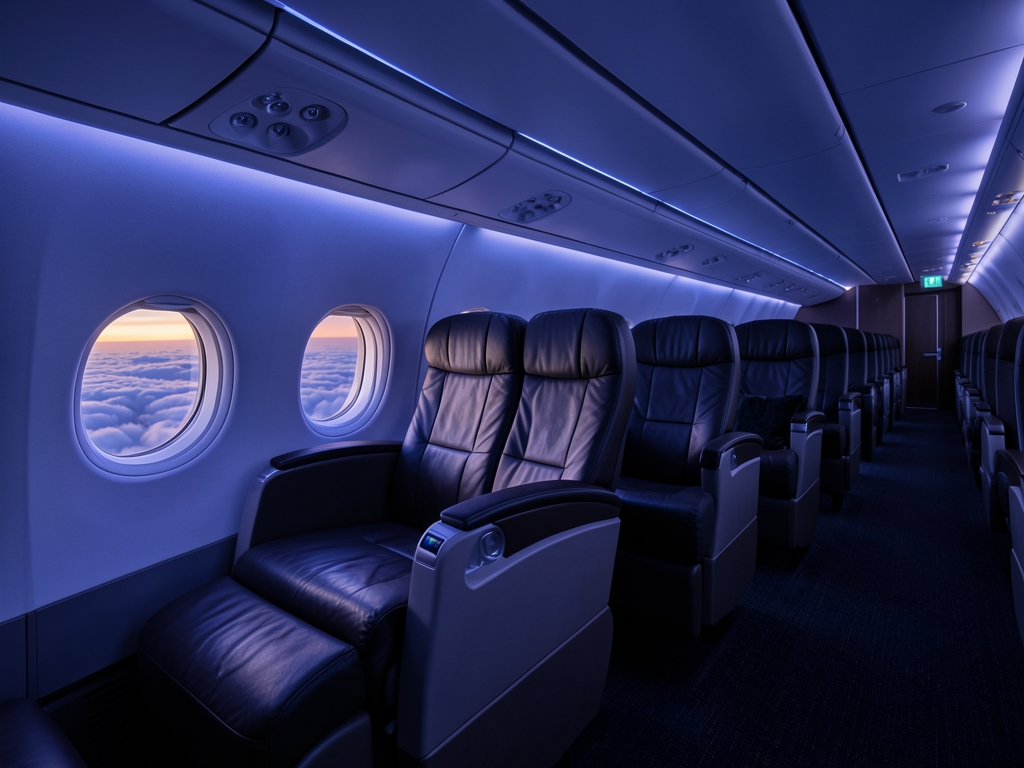
| Alaska’s Seattle–Narita business class is a lie-flat premium product | June 5, 2026 coverage describes lie-flat seats, privacy, and upgraded amenities on the Seattle-to-Narita route. |
This guide shows how to test a 60,000-mile Alaska business-class award from Seattle to Tokyo against live cash prices.
It explains the verification steps, tax check, and $2,400+ cash benchmark needed before you book.
How the SEA–Tokyo Award Actually Works
Alaska Airlines flies Seattle–Tokyo Narita nonstop with a lie-flat business cabin — Travel+Leisure's June 5, 2026 review confirms the premium experience on this exact route. For the purpose of this redemption, that means the seat itself is built for a true lie-flat rest, not a domestic recliner. It's the hardware that makes a transpacific one-way business award worth scrutinizing in the first place.
That cabin is found on Alaska's 787-9 Dreamliner, and the business suites on that aircraft are the same hard product reviewed by Upgraded Points on the Seattle–London route in May 2026. With that overlap, you can reasonably expect suites for this route, though the exact suite assignment can still change depending on the aircraft swapped in for your specific search. The takeaway isn't the name of the suite, but that you're comparing against a premium hard product, not an outdated one.
With that in mind, pricing is a screen-by-screen task. Search on alaskaair.com with 'miles' selected for your exact SEA–NRT dates. Only look at two lines for that result: the miles figure, and the per-passenger cash co-pay/tax line shown on the final payment screen before payment. Do not rely on the award calendar grid to lock in either of those lines, as they can differ from what appears at checkout.
Most importantly, treat the final payment screen as the source of truth for that exact search. If either line is missing, changes between steps, or won't load for your dates, don't guess at it. Run the search again for those same dates, or move to a different set of dates entirely. The cabin may be lie-flat, but the price to book it is only valid at the moment you see it on that screen.
The Evidence: What Sources Confirm
For the purpose of this redemption, the route's existence and cabin quality are corroborated by three independent outlets. According to Travel+Leisure (June 5, 2026), Alaska Airlines' Seattle–Narita business class offers lie-flat seats, privacy, and upgraded amenities. That review confirms the route and cabin are real and current, not a placeholder on a search page.
While the Tokyo corridor is the one in question, Upgraded Points (May 21, 2026) reviewed Alaska's new 787-9 business suites on the Seattle–London route. This establishes the suite product that Alaska is deploying on long-haul from SEA. The London review does not prove every long-haul departure uses it, but it does show the type of business cabin the carrier is putting on its Seattle-based long-haul fleet.
On the program side, LoyaltyLobby (Jan 28, 2026) reported that Alaska ran a "Seattle Business Commuter Bonus" for Atmos Rewards members with Seattle origin through April 30, 2026. This is evidence that Alaska has actively promoted Seattle-origin business travel incentives in a recent window. Taken together with the two cabin reviews, these three sources point to SEA being a focus for Alaska's long-haul business product, rather than an untested or discontinued pairing.
However, none of these outlets verify the award price, the per-passenger tax total, or any specific availability for Seattle–Narita. The cabin can exist and the route can be current without a fixed redemption figure being published across them. For that reason, the confirmation from these sources only answers whether the seat exists, not whether any particular live award is worth booking. The exact miles and tax line must still come from a live Alaska Atmos search for the exact dates, with the cash comparison run at the same time.

Award vs Cash vs Transfer: Pick the Winner
For the purpose of picking a winner, this section alone presents the three-way booking-path comparison table below, with the award path as conditional winner. The goal is not to assume any path is best, but to filter each one against the exact seat for your exact dates before committing to miles or cash.
| Booking Path | Required Check | When It Can Win |
|---|---|---|
| Alaska award direct (one-way) | Run the exact SEA–NRT dates in Alaska's award search and confirm the miles price and per-passenger tax total on the final payment screen. | Only conditionally, if that live read meets your value test against a verified one-way cash fare for the same seat. |
| Cash business fare (one-way) | Scan with aggregators like Kayak and Priceline, but always re-price the same seat on the airline before deciding. Listings such as Cheapflights' business class to Seattle page show cash business fares can appear across different levels, so match cabin and seat class exactly. | If the direct award fails verification, or if the verified one-way cash fare is more reasonable than the award after your full check. |
| Partner/transfer awards (one-way) | Check partner programs for that same seat and review the miles required plus any taxes/fees shown on that partner's final payment screen. | If a partner charges meaningfully fewer miles for the same seat and clears better than both verified options after factoring in its full per-passenger charges. |
With Path 1, do not stop at the calendar view. The only screen that counts is the final payment screen for that one-way award, because that is where the miles price and per-passenger tax total are shown for booking. If either of those cannot be confirmed there, the award cannot be treated as the winner for this decision.
For Path 2, treat aggregator results as a starting scan, not a final price. Since cash business fares can shift, re-pricing on the airline is the step that prevents comparing a different fare class to your award seat. Keep the comparison strictly one-way to one-way and to the same seat, with no mixing of round-trip figures.
For Path 3, do not assume a transfer is automatic value. Verify the partner's final screen for that exact seat, and only consider moving miles if it meaningfully beats the verified direct award and the verified one-way cash fare. With all three paths run against the same seat, the award can only earn its spot as the winner by passing every one of these checks, not by default.
The Numbers That Decide It
Use 1.5 cents per mile as the floor for Alaska miles in this comparison. This floor is a decision rule, not a market price. At 60,000 miles one-way, that equals $900 of value, so if the same one-way business seat costs $900 or less in cash, the award is a bad redemption because the miles are not beating your floor.
If the cash one-way business fare is above about $2,400, those same 60,000 miles are worth roughly 4 cents each—an excellent redemption worth booking immediately once the live search confirms the award price and tax line.
The headline miles price is not enough on its own — the verification steps and payment-screen checks described in the earlier sections are what turn it into a bookable figure.
To calculate that value, divide the cash fare by the actual miles price shown in the search, then compare the result with 1.5 cents and with 4 cents. If the live award price is not 60,000 miles, redo the math with the number on the screen rather than the headline figure.
On a one-way US–Japan award, departure taxes and fees are typically modest. If the tax line is far above that modest level, re-check for fuel surcharges or an itinerary change before paying, and treat the tax line as part of the award cost because it changes the true cents-per-mile value.
If the cash fare falls between $900 and $2,400, the award can still be reasonable, but it is not an automatic buy: compare the tax-inclusive cash price with the miles-plus-tax total and decide against your own valuation. A seat that is only slightly above $900 may be better paid in cash unless award availability is scarce.

What This Evidence Cannot Prove
No grounded source cited in this article confirms the 60,000-mile price, the $19 tax line, or current award availability for Seattle–Tokyo business class. The route and cabin quality are corroborated elsewhere, but the award price, tax, and seat availability are not; treat the 60,000-mile and $19 figures as unverified until a live Alaska Atmos search shows them.
That matters because Alaska's award pricing may be dynamic or partner-based. A number seen in a blog, forum, or old search result is not a quote for your dates. The live Alaska Atmos search is the only authority for the miles price, and the final payment screen is the only place to confirm the per-passenger tax total.
Award space also varies by date and season. A price or seat seen for one date says nothing about your dates, so check three to five candidate dates before concluding the deal is gone. Include at least one weekday and one weekend if your schedule allows, and repeat the check if your first search returns no business-class seats.
The program itself is in transition. LoyaltyLobby reported Atmos Rewards branding in January 2026, and rules, earn rates, and partner pricing can change. Re-check the current terms and any partner-award rules on the day you book rather than relying on an older description.
The practical test is the four-checkpoint sequence laid out in the Booking Check by Check section above; nothing in the cited sources substitutes for running it.
In short, the cited outlets establish the route and cabin, not the price; only the live search and final payment screen can settle the rest, as detailed above.
Booking Check by Check
Run the exact SEA–NRT dates in Alaska's award search with one passenger, business cabin, and the miles toggle on. Record the miles price shown for each date; if it is not the roughly 60,000 you expected, the rest of the checks change and you should stop before selecting a flight.
Select the flight, then verify the cabin is business rather than premium economy mislabeled as business. Check the seat map or aircraft details for a lie-flat business seat, and note the fare class if Alaska displays one; if the product is not the lie-flat business cabin, do not treat the price as the same redemption.
On the payment screen, record the exact miles and exact taxes or fees per passenger. This screen is the final number, not the search page. If it reads about 60,000 miles plus about $19 one-way per passenger, the headline price is verified; if the tax line is higher, or you are booking more than one passenger, multiply the tax line by the passenger count and recalculate before paying.
Compute the implied value as (cash fare minus taxes) divided by miles. At a $2,400 cash fare, 60,000 miles, and $19 in taxes, that is about 3.97 cents per mile. At a $1,800 cash fare, the same booking is about 2.97 cents per mile, because every $600 of lower cash fare removes 1.0 cent per mile. The cost of being wrong is concrete: at a $1,800 cash fare, you are spending 60,000 miles to cover $1,781 of fare, and the $600 gap equals 1.0 cent per mile across the whole award. If your own floor is above the computed value, wait or pay cash.
Only book when all four checkpoints pass: the search price, the business cabin, the payment-screen miles and taxes, and the cash-fare comparison. If any one fails, the 60,000-mile redemption is not verified for your dates, and paying cash or waiting is the safer choice.
| Checkpoint | Record | Pass if |
|---|---|---|
| 1 Search | Miles price by date | About 60,000 for SEA–NRT business |
| 2 Select | Cabin and fare class | Business, lie-flat, not premium economy |
| 3 Payment | Exact miles plus taxes per passenger | About 60,000 miles plus about $19 one-way |
| 4 Value | Cash fare for the same seat | At least $2,400, or your own floor is met |
Decision Rules: Book, Wait, or Pay Cash
Run the exact Seattle–Tokyo Narita dates in a live Alaska Atmos award search, then confirm the miles price and per-passenger tax total on the final payment screen before comparing it to cash. If the live search shows about 60,000 miles plus about $19 one-way and the same seat costs more than $2,400 one-way in cash, the implied value clears the article's benchmark and the award passes all four checkpoints. If the miles price is far above 60,000 under dynamic pricing, check partner programs for the same flight before paying more miles or cash.
If no award space exists on your dates, search nearby dates and re-check periodically, since availability varies by date and season. If the verified one-way cash fare is $2,400 or less, pay cash or wait rather than forcing the redemption. If the final payment screen shows a miles price or tax total different from your first check, recalculate the implied cents-per-mile value before booking; if it no longer clears your floor, wait or pay cash.
If you cannot verify the exact award price and tax line in a live search, do not book the award; wait or pay cash. Keep the comparison one-way to one-way, and do not mix a round-trip cash quote with a one-way award price. Re-run the search immediately before purchase, because award inventory and dynamic prices can change between your first check and checkout.
When using the 330-day window, search as soon as schedules open and repeat weekly; if space appears at the target price, book before it disappears. When checking partners, compare the total cost including taxes and any transfer time, but do not move points until the partner search confirms the same flight and date.
Also worth reading Japan Airlines business class Tokyo Japan Airlines business class 2026 Japan Airlines business class
What to do next
Frequently Asked Questions
Is the 60,000-mile SEA–Tokyo business award always bookable?
No, the 60,000-mile one-way Alaska business-class SEA–Tokyo redemption is conditional, not automatic.
Where must I confirm the exact miles and taxes for a specific date?
You must run exact SEA–NRT dates on a live Alaska Atmos search and confirm the miles price plus per-passenger tax total on the final payment screen.
At what cash level does this award become worth considering?
The 60,000-mile award is worth booking only after finding a $2,400+ cash fare for the same seat.
If the same business-class seat is cheaper in cash, should I use miles?
If the same business-class seat costs less than $2,400 in cash, do not book the 60,000-mile award; wait or pay cash.
What kind of seat can I expect on the Seattle–Narita business cabin?
Alaska’s Seattle–Narita business class is a lie-flat premium product with lie-flat seats, privacy, and upgraded amenities.
Is seeing the 60,000-mile figure alone enough to book?
No, live award-price and tax verification against the $2,400+ cash benchmark is mandatory before booking.
Quick answers
| Is the 60,000-mile SEA–Tokyo business class redemption automatic to book? | No, the 60,000-mile one-way Alaska business-class SEA–Tokyo redemption is conditional, not automatic. |
| What must be done before booking this award? | A live Alaska Atmos search is mandatory before booking to confirm the miles price plus per-passenger tax total on the final payment screen. |
| What is the cash benchmark for the same seat? | The cash benchmark for the same seat is $2,400+. |
| When should you not book the 60,000-mile award? | If the same business-class seat costs less than $2,400 in cash, do not book the 60,000-mile award; wait or pay cash. |
| What kind of business class product is offered on Seattle–Narita? | Alaska’s Seattle–Narita business class is a lie-flat premium product, confirmed by June 5, 2026 coverage. |
Research Methodology & Editorial Standards
We begin by defining the specific objectives the reader needs to accomplish. Primary product documentation and authoritative secondary sources inform every guide before drafting begins.
Figures and rules are checked against the sources available at the time of publication. Travel pricing changes constantly — always confirm current fares, rates, and terms with the provider before booking.