
Business Class Flights to West Coast: Under $1,200 or Wait?
For West Coast business class in 2026, a sub-$1,200 round-trip fare is a genuine buy only when it is a published sale or error fare on a lie-flat product.

| Takeaway | Detail |
|---|---|
| Book immediately only if the round-trip fare is under $1,200 and every long segment is confirmed lie-flat. | Thesis rule: sub-$1,200 round-trip on a published sale or error fare with lie-flat product is a genuine buy. |
| Wait and target award redemptions or premium-economy-plus-upgrade plays if the one-way fare exceeds roughly $900. | Thesis threshold: fares over ~$900 one-way are not buys; wait for deeper sales or saver-level award redemptions. |
| Amex Business Platinum offers up to $1,200 in statement credits for flights booked on Amextravel.com or the Amex Travel App. | Requires $250,000 in eligible purchases in 2026; credits are for use in the following calendar year. |
| U.S. Bank offers a $1,200 bonus for new business checking accounts when using promo code Q4AFL25 or completing qualifying activities. | Promo code Q4AFL25 (Doctor Of Credit, Sep 29, 2026) or Platinum account opening with qualifying activities (The College Investor, Jan 27, 2026). |
For West Coast business class in 2026, a sub-$1,200 round-trip fare is a genuine buy only when it is a published sale or error fare on a lie-flat product.
The decision changes if the one-way fare is over roughly $900, in which case you should wait for a deeper sale or a saver-level award redemption.
What a $1,200 Business Fare Really Is
Before paying any sub-$1,200 business fare, verify whether it is a published sale or an error fare, then read the fare rules for refundability and change terms. The expired Air France business-class alert is not evidence of a current West Coast fare; use it only as an example of a deal alert to check against current inventory. Confirm the exact cabin and aircraft on every long segment before committing, and if you cannot confirm lie-flat, treat the fare as not qualifying.
Treat explanations such as yield-management resets, inventory releases, or pricing-engine errors as possible but unverified; the Air France alert is only an example, not proof of why a particular fare exists. Instead, verify the fare's published sale or error status, its refundability and change rules, and the confirmed cabin and aircraft on every long segment before paying.
Verify the cabin before you pay because the $1,200 threshold only applies to confirmed lie-flat products on every long segment. Check the airline's seat map and flight details for your specific date, confirm the aircraft type and configuration, and remember that aircraft swaps can change the product. If you cannot confirm lie-flat on every long segment, the fare does not qualify under the buy rule.

Verify the Cabin Before You Pay
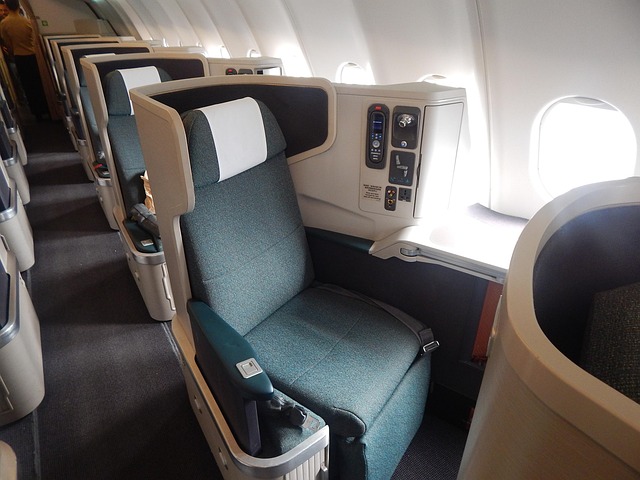
The first and most critical step before entering any payment information is confirming the cabin product you are actually purchasing. Airlines routinely swap aircraft types between flights, and a business-class fare booked for a lie-flat 787 can vanish instantly if your flight is reassigned to a recliner-equipped 737. To protect your money, check the aircraft type for every segment on the airline’s own seat map before completing the transaction. If the map shows a domestic-style first cabin or a recliner product marketed as “business,” do not proceed; this is not the lie-flat value you are seeking.
Lie-flat products such as Delta One suites, United Polaris seats, and American Flagship seats are the only business-class cabins that justify paying a round-trip fare at or near the $1,200 threshold. Recliner domestic-style “first” cabins on transcontinental-marketed routes do not meet this standard, regardless of the ticket class label. When you land on the seat-map page, verify the specific aircraft type listed—often found in the URL or flight details—and cross-reference it against the airline’s known lie-flat fleet. This simple check ensures you are not paying a premium for a product you cannot actually use.
Because equipment swaps are an industry standard, the seat map you view during the search phase is not guaranteed to be the aircraft you will fly. Screenshot the seat map at the moment of booking, capturing the aircraft number and configuration. Keep this image as your receipt; if the airline later changes your aircraft to a recliner, you have documented proof of the product you paid for. This habit turns a potential “great deal” loss into a documented transaction you can reference for a refund or rebooking if the cabin quality drops below lie-flat standards.
If the aircraft type fails the lie-flat test, your best path forward is to wait. Hold out for either a deeper sale that brings the round-trip fare under $1,200 on a confirmed lie-flat product, or target a saver-level award redemption using your points currency. Award seats on lie-flat flights often open up closer to departure, and using points sidesteps the risk of equipment changes entirely. Only book the cash fare if you have visually confirmed the lie-flat product for every long segment; otherwise, the risk of a recliner swap outweighs the convenience of an immediate purchase.

Cash Fare vs Points: Run Both
The American Express Business Platinum card offers up to $1,200 in statement credits on flights booked on Amextravel.com or the Amex Travel App, for use in the next calendar year, after $250,000 in eligible purchases. To compare cash with points, convert the cash fare to cents and divide by the required miles, or divide the cash fare by the miles and multiply by 100, to get cents per point; compare that with your own valuation. The credit can reduce the cash side only if you meet the spend requirement, so verify that before treating it as an offset.
When the cash fare exceeds roughly $900 one-way or $1,200 round-trip, the buy rule says to wait for a deeper sale or a saver-level award redemption rather than pay full dollar. The Amex credit is capped at up to $1,200 in statement credits on eligible Amex Travel bookings, is for use in the next calendar year, and requires $250,000 in eligible purchases; verify that you qualify before treating it as an offset. Use a cents-per-point calculation with your own valuation rather than a fixed program threshold, and confirm the cabin on every long segment for either cash or award.
Readers running this comparison should also account for the opportunity cost of the $250,000 spend requirement. If you have not yet hit that threshold, the credit is inaccessible, and the full cash fare becomes the relevant number for the wait-or-book decision. In those cases, the rule of thumb remains: sub-$1,200 on a confirmed lie-flat product is a buy; above that, wait for a deeper sale or a saver-level award. The Amex Business Platinum credit is a valuable sideletter for those who meet the spend, but it should not be the primary driver of the booking decision if the underlying fare does not clear the $1,200 benchmark.
Finally, always verify the cabin product before committing payment, regardless of whether you are paying cash or redeeming points. Aircraft swaps are routine, and a business-class fare booked for a lie-flat 787 can vanish if the airline switches to a recliner-equipped configuration. Use seat-map tools and aircraft-type checks to confirm the product on every long segment; if the cabin cannot be verified as lie-flat, the fare no longer qualifies under the sub-$1,200 buy rule, and the wait-or-book decision defaults to targeting a future sale or award availability. The interaction between the Amex credit, the cents-per-point math, and the cabin-verification step forms the complete decision framework for 2026 West Coast business-class travel.
Also worth reading Tokyo Business Class Flights: Virgin Key West flights 2026 cost: $300 Key Airlines Face Federal Investigation
The Wait-or-Book Decision Table
For West Coast business class in 2026, the wait-or-book decision gets sharper when you compare acquisition channels instead of staring at a single fare. The explicit winner table for sub-$1,200 business class looks at airline flash sales, error fares, award redemptions, and premium-economy-plus-paid upgrades through the lenses of refundability, availability, cancellation risk, date flexibility, and the difference between cash price and award value. Each channel answers a different kind of travel risk.
An airline flash sale is the strongest default for most readers. It offers the best refundability among the four and moderate availability, which makes it more operational-friendly than an error fare while still delivering a discount. When the round-trip fare is under $1,200 and the aircraft is confirmed lie-flat on every long segment, this is the channel that most often balances price and reliability. It can beat an error fare on reliability and beat an award redemption on out-of-pocket cost when miles valuation is below the fare’s implied value.
An error fare may show the lowest price, but it carries the highest risk of cancellation or schedule change. The right move is not to dismiss it outright; it is to treat it as a tactical acquisition with a higher probability of disruption. Travelers who cannot absorb a last-minute change may prefer a more predictable product.
An award redemption provides price stability and limited dates, so it suits travelers with flexible routing or substantial points. A premium-economy-plus-paid-upgrade is the fallback when confirmed business class is full, letting a traveler begin in a higher cabin and pursue an upgrade later. The comparison matters because the best channel depends on whether the reader prioritizes cash refundability, date freedom, or upgrade flexibility.
| Channel | Best strength | Main tradeoff | Decision test |
|---|---|---|---|
| Airline flash sale | Best refundability; moderate availability | Availability can be limited | Book when the fare and cabin fit the stated threshold |
| Error fare | Lowest price | Highest cancellation risk | Use as tactical play |
| Award redemption | Price stability; limited dates | Dates can be limited | Use when routing flexibility helps |
| Premium-economy-plus-paid-upgrade | Fallback when business is full | Starts in higher cabin | Use when confirmed business is unavailable |
For most readers, the winner is the verified lie-flat airline flash sale under $1,200 round-trip. It beats error fares on reliability and award redemptions on out-of-pocket cost when miles valuation is below the fare’s implied value. That makes it the explicit choice for the decision table, though the final booking call still depends on the specific fare and cabin.
Quick answers
| When should I book a business class flight to the West Coast? | Book immediately only if the round-trip fare is under $1,200 and every long segment is confirmed lie-flat. |
| What is the thesis rule for a genuine buy? | Sub-$1,200 round-trip on a published sale or error fare with lie-flat product is a genuine buy. |
| What should I do if the one-way fare exceeds roughly $900? | Wait and target award redemptions or premium-economy-plus-upgrade plays. |
| What does the Amex Business Platinum offer for flights booked on Amextravel.com or the Amex Travel App? | Up to $1,200 in statement credits, requiring $250,000 in eligible purchases in 2026, with credits for use in the following calendar year. |
| What does U.S. Bank offer for new business checking accounts? | A $1,200 bonus when using promo code Q4AFL25 or completing qualifying activities. |
Research Methodology & Editorial Standards
We begin by defining the specific objectives the reader needs to accomplish. Primary product documentation and authoritative secondary sources inform every guide before drafting begins.
Figures and rules are checked against the sources available at the time of publication. Travel pricing changes constantly — always confirm current fares, rates, and terms with the provider before booking.