
New York to Paris business class: 50,000 miles beat $2,100 cash in 2026
For a 2026 New York–Paris business class round trip, compare a 96,000-mile Flying Blue round-trip award (48,000 miles each way) plus taxes with about $2,100 cash round trip when saver space is available.
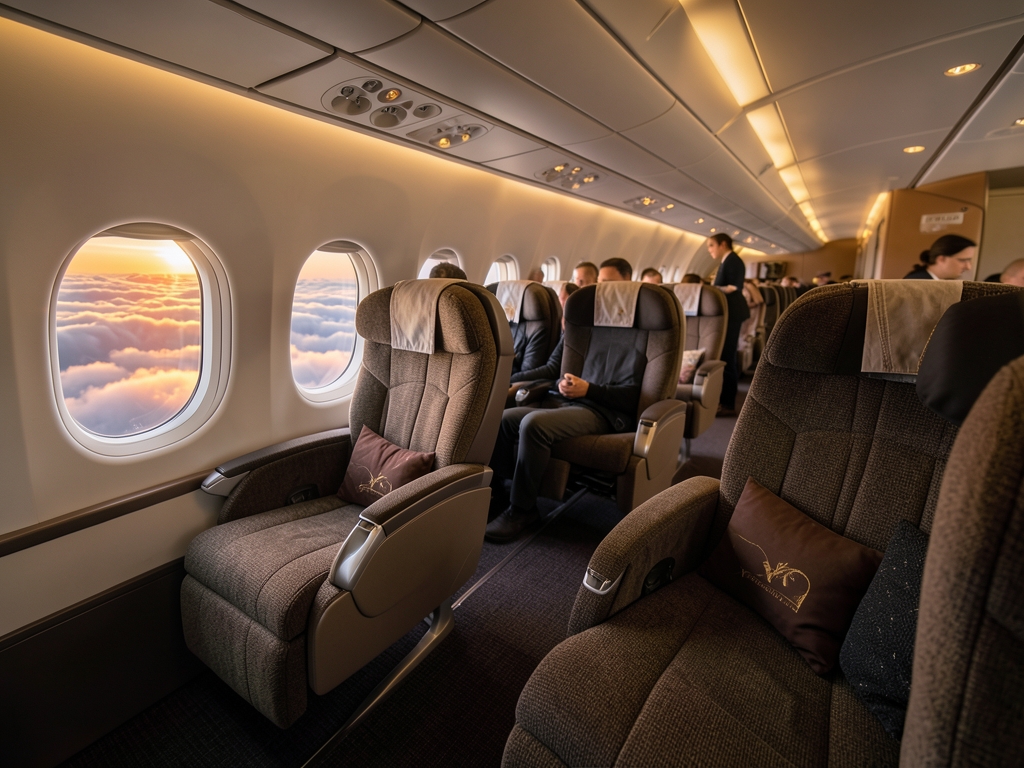
For a 2026 New York–Paris business class round trip, compare a 96,000-mile Flying Blue round-trip award (48,000 miles each way) plus taxes with about $2,100 cash round trip when saver space is available.
The answer changes if no 48,000-mile one-way saver seat exists, in which case the fallback is roughly $2,100 cash.
How the 48K Flying Blue award works
Flying Blue prices Air France and KLM awards dynamically, so the same New York–Paris business-class seat can cost 48,000 miles one way on one date and far more on another. The 48,000-mile figure is an alert level from an Upgraded Points award alert flagging Air France business-class availability to Paris from 48,000 miles; it is a possible low point, not a fixed published saver price.
Use that number as a search target rather than an assumption. Check your exact travel dates in Flying Blue before moving any points; if a 48,000-mile one-way business seat appears, that is the opportunity to book with transferred points. If every date prices higher, the low-level award is not available for your trip, and you should not transfer points speculatively. Remember that an award still carries taxes and fees, so verify the full cash component before confirming.
Check Flying Blue and your credit-card program directly for current airline partners, transfer ratios, and posting time before moving points; points transfers are generally irreversible, so only transfer after award space is visible.
Because the pricing is dynamic, check a range of dates and be ready for the low price to disappear quickly. The Upgraded Points alert that flagged the 48,000-mile level is marked expired, so it should be treated as evidence that such pricing can occur, not as a live guarantee for 2026. If no 48,000-mile one-way business seat appears for your dates, fall back to the cash fare instead of forcing a higher-priced award.
The practical rule is simple: award space first, transfer second. A 48,000-mile one-way business seat is worth pursuing only when it is actually bookable for your dates; otherwise the comparison with cash is moot.

The evidence: 48K miles vs $2,100 cash
Upgraded Points published an award alert showing Air France business class availability to Paris from 48,000 miles one way, plus taxes and fees. The useful takeaway is not the headline number alone: it is an alert level to verify for your exact date, with the taxes and fees priced at airfrance.us before you move points. Because the source record marks that alert as expired, treat it as evidence that such space has appeared, not as a live guarantee.
Winghoppers reports recent business class fares to France started around $2,009 round trip, and says season and booking lead time matter more than airline choice. That ~$2,009 round-trip figure is the cash benchmark behind the roughly $2,100 headline threshold; read it as a recently observed starting point, not as the fare you will see for a 2026 New York–Paris trip.
Air France's own US site, airfrance.us, is the authoritative place to confirm both the cash fare and the award taxes and fees for the exact itinerary. Third-party alerts and fare trackers can lag, expire, or generalize across routes, so use them to decide what to check, not to book.
| Figure | Unit | Source |
|---|---|---|
| 48,000 | miles, one way, business class to Paris | Upgraded Points award alert |
| ~$2,009 | round trip, business class to France | Winghoppers |
| ~$2,100 | round-trip headline threshold | Comparison benchmark built on Winghoppers |
The figures converge on a comparison, but they are not interchangeable: 48,000 miles is one way, while ~$2,009 and ~$2,100 are round-trip cash amounts. Before deciding, put both paths on the same trip basis and add the award's taxes and fees from airfrance.us; otherwise the mileage price and the cash price are being compared in different units.
Winghoppers' emphasis on season and lead time means the cash benchmark should be rechecked for your booking window, and the award alert should be rechecked for your date. If a 48,000-mile one-way seat exists, price that award first; if not, use the ~$2,009 starting point and the ~$2,100 headline threshold as the cash fallback. In both cases, let airfrance.us settle the final number.

Options compared: award vs cash vs La Compagnie
The three paths are not interchangeable: each wins on a different constraint—miles cost, cash certainty, or airport fit—so the right choice depends on which inventory is open for your dates and which New York airport you can use.
| Option | Cost signal | Best when | Main trade-off |
|---|---|---|---|
| A: Air France/KLM Flying Blue award | 48,000 miles one way plus taxes | Saver business space is open | Inventory risk; taxes remain |
| B: Cash business class | About $2,009–$2,100 round trip (Winghoppers benchmark) | No saver seat is available | Full cash outlay; no award upside |
| C: La Compagnie A321neo business | No verified fare in sources; check directly | AF/KLM saver space is sold out | Newark-only; boutique all-business cabin |
Option A wins on cost per flight when saver space exists. The 48,000-mile one-way level is the trigger to check first; if it is open, transferred points can cover the gap, and the cash you avoid paying is the main gain. The trade-off is that award space is not guaranteed.
Option B wins on flexibility, earnable miles, and no award-inventory risk. The Winghoppers benchmark of about $2,009–$2,100 round trip is the cash number to beat; it is most useful as a fallback or when your dates are fixed and award space is gone. Its weakness is that you pay the full fare and forgo the miles-value upside.
Option C is worth pricing as a boutique all-business alternative when AF/KLM saver space is sold out. One Mile at a Time's look at La Compagnie's A321neo service between Paris and Newark highlights the product angle, but the airport constraint is decisive: it only suits travelers who can use Newark, and its price must be checked against the cash benchmark.
For a New York-based traveler, Option A is the winner whenever a 48,000-mile one-way business seat is open. If not, use the roughly $2,100 round-trip cash fallback; check La Compagnie only as an additional alternative if Newark works and its price is competitive.
Use the table as a decision order, not a price quote: check A first, then C, then B.

Costs and numbers that matter
A 48,000-mile one-way business award prices at roughly 96,000 miles round trip before taxes and fees; because Flying Blue taxes on transatlantic awards vary by routing and date, the cash surcharge must be priced on airfrance.us for the exact itinerary rather than estimated from a headline.
The cash benchmark is about $2,009 round trip per Winghoppers, with about $2,100 as the comparison threshold used here; that is roughly $1,004.50 each way at the source figure and $1,050 at the threshold. Unlike an award, a cash ticket may earn redeemable miles and status, so check the fare rules for the specific ticket.
If you are using transferable points, compare each program's transfer ratio and posting time to Flying Blue before moving anything; a ratio below 1:1 or a delay in posting can change whether the 96,000-mile round trip is actually available at the moment saver space appears.
The practical unit check is one-way: 48,000 miles plus that date's taxes against half of the round-trip cash fare, with the round-trip totals then compared at 96,000 miles plus taxes versus the full cash quote.
Because the surcharge is date- and routing-specific, treat the airfrance.us price as the only valid tax figure; do not carry a tax estimate from one itinerary to another.

What the evidence does not establish
The evidence supports a price level and a decision rule, but it does not establish three variables that can change the answer: whether a 48,000-mile saver seat exists on your dates, the exact taxes and fees on that award, and La Compagnie's current pricing. Treat each as a live check rather than an assumption.
The 48,000-mile figure comes from an expired Upgraded Points award alert for Air France business class to Paris from 48,000 miles one way, plus taxes and fees. Because the alert is expired, it shows that the level has appeared; it does not show that it is available on your 2026 dates. Run a live Flying Blue search for your exact outbound and return dates before you transfer points.
The sources used here do not state the exact surcharges on a 48,000-mile New York–Paris award. Price the award to ticket on airfrance.us and read the total cash component before confirming. Compare that total with the cash fare you would otherwise pay; if the award's cash component is large enough to erase the miles' value, the cash fare may be the better buy.
One Mile at a Time notes La Compagnie's A321neo business class between Paris and Newark, but the sources do not provide its current fares or award levels. Check La Compagnie's site or a paid search tool directly for your dates, and do not assume it matches either the 48,000-mile award or the cash benchmark. If your itinerary depends on a specific New York airport, confirm that Newark works before pricing it.
| Unverified variable | What the evidence shows | How to check |
|---|---|---|
| 48,000-mile saver availability | An expired Upgraded Points alert shows the level has appeared | Live Flying Blue search for your exact dates |
| Award taxes and fees | Not stated in the sources used here | Price to ticket on airfrance.us and read the total |
| La Compagnie pricing | A321neo service noted; fares and awards not provided | La Compagnie site or a paid search tool for your dates |
The safe rule is to complete all three checks before moving points or buying a ticket. If any check fails, fall back to the cash fare rather than relying on an expired alert or an unstated surcharge.

JFK–CDG in May 2026
For a 2026 New York–Paris business-class trip, begin with the award search, not the cash fare. Search Flying Blue business availability for your exact dates; if it prices at 48,000 miles one way plus taxes, book immediately with transferred points. Dynamic pricing means the same seat can reprice higher at any time, so the cost of waiting is losing the saver level and facing a higher mileage price or a cash fallback later.
Then price the same dates in cash on airfrance.us. If the round trip is near the $2,009 Winghoppers benchmark, the award saves the cash fare minus taxes and fees; if cash has dropped well below ~$2,100, re-run the math before transferring points. The cost of booking the award when cash is unusually low is spending miles you could have kept; the cost of ignoring a low cash fare is overpaying in miles.
If no saver space exists, do not force a higher award price. Check La Compagnie from EWR and KLM via its own booking channels for the same May dates, then compare total cost, schedule, and airport access before choosing. The cost of forcing a non-saver award is paying a dynamic premium; the cost of skipping alternatives is missing a cheaper or better-timed option.
Keep the comparison on the same day and in the same units: a 96,000-mile round-trip award (48,000 miles each way) plus taxes against the full round-trip cash fare, or 48,000 miles one way plus taxes against half the round-trip cash fare. That comparison can favor the award only if the saver space is actually available for your dates and the total cash component is acceptable.
The two mistakes to avoid are mirror images: transferring points before checking cash, and waiting for a better award after a 48,000-mile seat appears. In May, either error can turn a saver win into a higher-cost trip, so verify both prices on the same day and book the lower total cost.
Decision rules for booking
Start every 2026 New York–Paris business-class booking decision with one check: look up your exact dates in Flying Blue before you compare cash fares. The result gives you a clear next move, and each move has a stop condition so you do not overpay, keep searching past the point where the decision is clear, or settle for a worse option just because it is available.
If Flying Blue shows 48,000 miles one way in business for your date, plus taxes and fees, book the award the same day. Do not wait for a better level. The myth this kills is that you should hold out for a fixed “sweet spot” chart; Flying Blue pricing is dynamic, and the 48,000-mile one-way level is already the deal. When you see it, transfer the points you need and lock it in instead of gambling on a lower price that may never appear.
If no saver award space appears and the round-trip cash fare is at or under about $2,100, buy the cash ticket. This is the clean fallback because it ends the search at a defined price ceiling while preserving flexibility and earning miles back on the trip. You are not losing value by paying cash at that level; you are choosing a known price over uncertain award availability. The stop condition is simple: at or under that round-trip threshold, cash is the practical move.
If the round-trip cash fare is above about $2,100 and no award exists, do not force the purchase. Shift your dates and run the same award-first check again. If your dates are fixed, check La Compagnie’s business-class service from Newark before paying more; One Mile at a Time reports that the carrier flies its A321neo between Paris and Newark. Treat a higher cash fare as a signal to change the inputs, not to stretch your budget.
These rules keep the decision tight: check award space first, book immediately at 48,000 miles one way when it appears, buy cash only at or under about $2,100 round trip, and change dates or airports when neither condition is met. The best booking follows current availability on your screen, not a fixed chart that no longer controls the price.
Also worth reading Paris to New York business class Flying Blue award chart 2026 Flying Blue business to Rome
What to do next
| Step | Action | Why it matters |
|---|---|---|
| 1 | Check Flying Blue saver availability for your New York–Paris dates first, looking specifically for the 48,000-mile one-way business seat. | That is the award threshold that makes the headline miles-vs-cash comparison work. |
| 2 | If that Flying Blue saver seat appears within your booking window, book it with transferred points. | It preserves the rule: use points when saver space exists instead of the headline cash fare. |
| 3 | If no Flying Blue saver business seat appears within your booking window, fall back to the headline cash fare for New York–Paris. | The cash option is the stated fallback only when saver space is absent. |
| 4 | Use Winghoppers' season-and-booking-lead-time point to choose the dates you check before committing to either option. | The article says season and booking lead time matter more than airline for this fare decision. |
| 5 | Compare the cash fallback with the recent France business-class fare context above before treating it as the default. | The recent France fare context explains why the headline cash fare is the fallback, not the first buy. |
| 6 | After the Flying Blue check, review One Mile at a Time's route-specific note on La Compagnie's A321neo Paris–Newark business class if you are considering that alternative. | It offers a much better experience on that route, but it is not the New York–Paris saver rule. |
Frequently Asked Questions
How many miles does a low-level Flying Blue round-trip business class award from New York to Paris require?
A low-level Flying Blue round-trip business class award from New York to Paris requires 96,000 miles, or 48,000 miles each way, plus taxes and fees.
Is the 48,000-mile Flying Blue business class price a fixed published saver rate?
The 48,000-mile figure is an alert level from an Upgraded Points award alert flagging Air France business-class availability to Paris from 48,000 miles and is a possible low point, not a fixed published saver price.
Why might the same New York–Paris business class award seat cost different mileage amounts on different dates?
Flying Blue prices Air France and KLM awards dynamically, so the same New York–Paris business-class seat can cost 48,000 miles one way on one date and far more on another.
Should I transfer credit card points to Flying Blue before confirming award availability?
You should check your exact travel dates in Flying Blue before moving any points and should not transfer points speculatively if every date prices higher than the low-level award.
Do Flying Blue award tickets have additional cash costs beyond the miles?
An award still carries taxes and fees, so you should verify the full cash component before confirming the booking.
What should I verify with my credit card program before transferring points to Flying Blue?
Before moving points, you should check Flying Blue and your credit-card program directly for current airline partners, transfer ratios, and posting time.
Quick answers
| What award is compared with the cash fare for New York–Paris business class in the stated travel year? | A 96,000-mile Flying Blue round-trip award at 48,000 miles each way plus taxes is compared with roughly the cash fare when saver space is available. |
| What is the fallback if no 48,000-mile one-way saver seat exists? | If no 48,000-mile one-way saver seat exists, the fallback is roughly the cash fare. |
| Why can the same New York–Paris business-class seat cost different mile amounts? | Flying Blue prices Air France and KLM awards dynamically, so the same seat can cost 48,000 miles one way on one date and far more on another. |
| What does the 48,000-mile figure represent? | The 48,000-mile figure is an alert level from an Upgraded Points award alert flagging Air France business-class availability to Paris from 48,000 miles, a possible low point to use as a search target rather than an assumption. |
| What should you do before moving points for the award? | Check your exact travel dates in Flying Blue, verify the full cash component because an award still carries taxes and fees, and check your credit-card program directly for current airline partners, transfer ratios, and posting time before moving points. |
Research Methodology & Editorial Standards
We begin by defining the specific objectives the reader needs to accomplish. Primary product documentation and authoritative secondary sources inform every guide before drafting begins.
Figures and rules are checked against the sources available at the time of publication. Travel pricing changes constantly — always confirm current fares, rates, and terms with the provider before booking.