
Bikes on LA Metro: verify fares, racks, and transfer rules first
Bikes on LA Metro in 2026 can be free-to-cheap and mechanically simple, with a 20-minute transfer figure treated as a planning threshold rather than a promise.
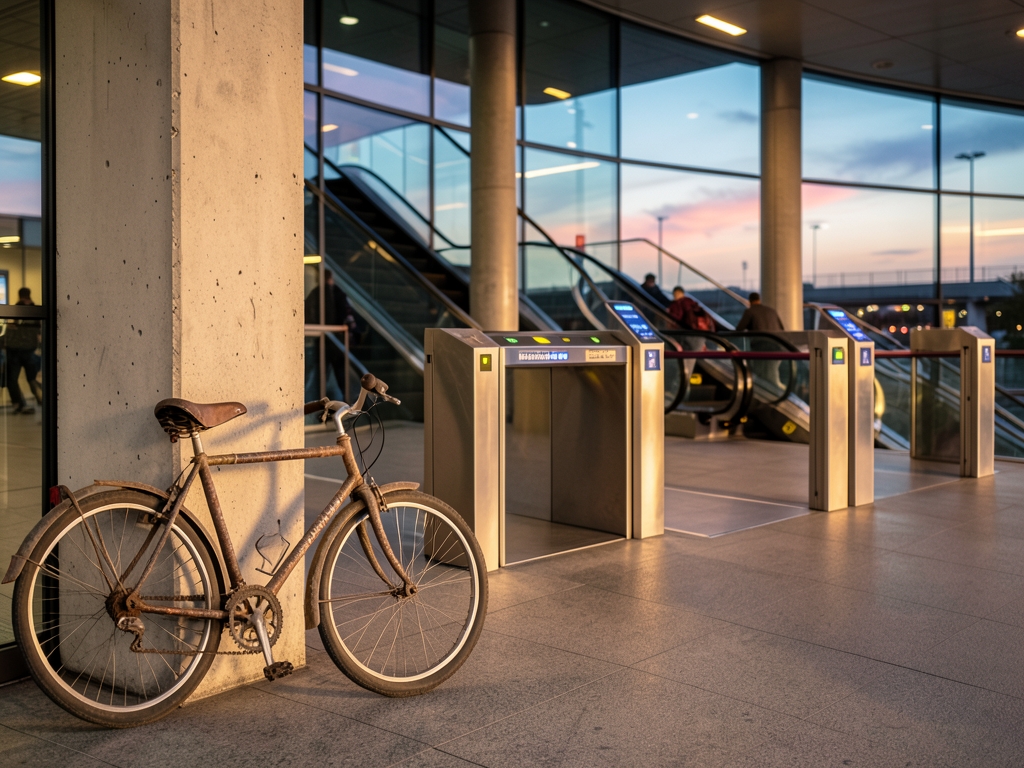
Bikes on LA Metro in 2026 can be free-to-cheap and mechanically simple, with a 20-minute transfer figure treated as a planning threshold rather than a promise.
That answer changes if the current TAP fare, rail-line bike rule for that hour, or bus front-rack capacity differs on lametro.org or in the TAP app.
How bikes on Metro actually work
LA Metro's Biking with Metro page states that all Metro buses have two or more racks located on the outside front of the bus, and Metro's bike policy page permits bikes on rail vehicles. That is the core mechanism: bus carriage is rack-based and self-service, while rail carriage is onboard and policy-based.
On a bus, you load your own bike onto the front rack; the driver does not assist. Because rack space is the limiting factor on that mode, an occupied rack means waiting for the next bus rather than solving the problem with a different fare. Check the rack count on the specific bus before you commit to that trip.
Which rail lines accept onboard bikes, and at which hours, is not established by anything in this article's sources. Metro's bike policy may permit bikes on rail vehicles in general, but line-by-line rules and peak-period or event restrictions can change. Before relying on onboard carriage, check the line-specific bike rule for your travel date and time on lametro.org, and only roll aboard if the current page confirms your line and hour are allowed.
The practical workflow is to check three things before you ride: the current fare in the TAP app, whether your rail line allows onboard bikes at that hour, and the bus rack count. Treat Metro's own pages as the authority for those checks, and only commit to the trip after all three are confirmed.
Bus and rail have different failure points: rack occupancy at the curb versus posted restrictions at the platform. Neither is resolved by assuming the bike will be accommodated, so the plan should be tied to verified capacity and current rules.
| Check | Where | Why it matters |
|---|---|---|
| Current fare | TAP app | Cost is separate from bike accommodation |
| Rail bike hours or restrictions | lametro.org | Event-day and peak rules change |
| Bus rack count | Front of the bus | Rack space is the binding constraint |
Verify the 20-minute transfer claim
Start by treating the “20-minute transfer” in the headline as a claim to verify, not a confirmed Metro rule. Before you build a bike-plus-rail itinerary, open the TAP app and Metro's official fare and transfer pages on lametro.org. Look for the current transfer structure: does one tap buy a timed transfer window, such as a set period of continuous rides, or does it buy a fixed number of transfers? The answer determines whether a short connection is merely tight or actually breaks your fare.
Do not assume the number from a general travel article applies to LA Metro. The available sources here includes a Last Minute Transfer page with approximate resort-transfer times in Lanzarote, and those figures describe a completely different trip type. They are not evidence of a Metro transfer window, a TAP rule, or a bike-connection allowance in Los Angeles. If a source is not describing TAP or Metro, it cannot settle the fare question.
There is, however, a useful planning floor from a named source. Interrail’s knowledge base recommends allowing at least 20 minutes for transfers, and more if you have heavy luggage, children, or are in a large group. That is not a Metro fare rule. It is a practical buffer for the physical act of connecting, and it is especially relevant when you are managing a bike, bags, platform changes, and a second vehicle. Use it as a minimum planning cushion, then verify the fare window separately.
The method is simple: time your own connection from the moment your first vehicle’s doors open to the moment you tap onto the next service. Include walking, waiting for elevators or gates, re-racking or re-positioning the bike, and any queue at the boarding point. Then compare that elapsed time with the live transfer rule shown in TAP. If your measured connection is longer than the allowed window, change the trip rather than relying on a hopeful transfer.
Also check the clock and the specific line before you commit. A transfer that works at one hour may not work at another if bike access is restricted, and a fare window does not override vehicle rules. Confirm the current fare, the rail line’s bike allowance for that hour, and the bus rack count on Metro’s own pages first. Only after those checks should you treat the itinerary as rideable.
Options compared: bus rack vs rail
When you compare the two ways to carry a bike on Metro, the practical split is simple: buses use exterior racks, while rail lets you roll the bike aboard and hold it. That difference decides which option is dependable. This section makes the comparison directly: rail wins for station-to-station trips because there is no rack-capacity gamble, while the bus rack is best treated as a first/last-mile tool with a backup plan.
On the bus side, LA Metro’s Biking with Metro page states that Metro buses have two or more front-mounted exterior bike racks. Those racks are first-come, first-served. If the available slots are already occupied when your bus arrives, Metro’s policy is that you wait for the next bus rather than load inside the bus or take the bike aboard through a passenger door. Before committing to a bus segment, check the rack setup on lametro.org and identify a later departure you could take if the racks are full.
That means a bus rack is usable, but it is not something to build a tight itinerary around. If your trip depends on catching one specific bus, a full rack can turn a short bike-and-bus connection into an unplanned wait. The useful rule is to treat the rack as conditional capacity: confirm the current rack rule on Metro’s own page, then keep a fallback departure in mind before you leave.
On rail, the mechanism is different. Metro’s bike policy permits bikes on rail vehicles, so you wheel the bike on and hold it during the ride. There is no front-rack count to beat other riders to, which is why rail is the stronger choice when both your origin and destination are near stations. For a station-to-station trip, the reliability advantage is not about speed; it is about avoiding the bus rack’s capacity limit entirely.
The winner, then, is rail for the core of the trip. Use the bus only where it solves the first or last mile between your home, work, or final stop and the nearest station, and only if you are willing to wait for the next bus when the racks are occupied. Before you ride, verify the current fare in the TAP app, confirm that your rail line allows bikes at that hour on lametro.org, and check the bus rack count and loading rule on Metro’s site. Once those checks are done, the bus-versus-rail choice becomes much easier: rail for reliability, bus for access, with a fallback plan attached.
Costs and numbers that matter
Treat the cost of taking a bike on LA Metro in 2026 as a verification task, not a number you can safely carry over from an old trip. The available sources here contains no current 2026 base TAP fare and no verified bike-specific fee, so the first check before your ride is the live fare table at lametro.org/fares. Open it on your own phone, read the figure shown for the date you are traveling, and do not rely on a cached screenshot, a blog post, or what the TAP app displayed on a previous trip. If a bike surcharge is listed, record it separately from the base fare so you know exactly what you are paying for.
The same verification habit applies to connections. If you assume a transfer is free and that assumption turns out to be wrong for your fare type or timing, a mis-timed connection can cost an additional fare per leg — the exact penalty depends on the transfer rule TAP currently applies, which this article's sources do not establish. Before you commit, check the current transfer rules in the TAP app and on Metro’s own pages, then compare what the app actually posts against the itinerary you plan to ride.
That is why the “20-minute transfer” idea needs to be handled as a claim to confirm, not a built-in cushion. Interrail’s knowledge base recommends allowing at least 20 minutes for transfers, with more time for heavy luggage, children, or a large group, but that is rail-transfer advice, not a Metro fare rule. LayoverGuard’s 2026 self-transfer guide makes the same broader point: when no carrier coordinates the connection, every step takes time you must budget yourself. For a bike-plus-Metro trip, the practical rule is to verify the transfer window in TAP before you count on it, then leave room for the physical act of moving a bike between vehicles.
Once you have the verified fare in hand, compare it with the realistic alternative. This article's sources do not supply rideshare pricing, so get a live quote for the same bike-carrying trip from your preferred app before deciding. The point is not to guess the exact 2026 fare; it is to make the check before you leave. Pull the current fare from lametro.org/fares, confirm the transfer treatment in TAP, and only then decide whether the bike-on-Metro option still beats the rideshare math for your trip.
Keep the numbers you gather in one place: the base fare shown for your travel date, any bike-specific fee Metro lists, the transfer rule TAP applies to your fare, and the number of legs in your commute. With those four items verified, you can calculate the cost of a clean trip and the cost of a missed connection before you board. Without them, “free-to-cheap” is only a slogan, and the first surprise fare is the one that erases the savings.
What the evidence does not establish
This section is where the 2026 specifics stop being assumptions. Nothing here supplies a fare amount, a confirmed transfer window, or a line-by-line bike schedule; those are checks you perform on lametro.org and in the TAP app on the day you travel. The evidence supports a method, not a promise. If you want the trip to stay free-to-cheap and mechanically simple, you have to treat each volatile detail as unverified until Metro's own pages and TAP's current rules say otherwise.
Start with what is not established. The exact 2026 fare amount is not fixed by anything in the material here, so do not carry a remembered price into the trip. Open the TAP app and Metro's official fare pages on your travel date, then read the amount shown for the rider category and trip you are actually making. The same applies to the transfer question: a 20-minute figure, or a two-hour alternative, is not confirmed here as a bike-on-Metro entitlement. Treat it as a claim to test against TAP's current transfer rules before you rely on it to connect a bus rack to a rail boarding.
Peak-hour bike access on rail is another open item. Metro's bike policy may permit bikes on rail vehicles in general, but that does not establish that your line accepts bikes at the hour you plan to ride. Check the line-specific guidance on lametro.org for your travel date and time, especially if your trip falls in a commute window. If the page does not clearly answer the question for that line and hour, do not build an itinerary that depends on rolling a bike aboard.
The bus side has its own edge case. The published rack figure is a minimum on the vehicle, not a reservation for you. If other cyclists board first and fill the available spaces, the plan breaks at the curb: you cannot assume there will be an open front rack when your bus arrives. The practical rule is to have a fallback before you commit, such as waiting for the next bus with space or changing the trip so the bike is not forced onto that particular vehicle.
Special events can also interrupt the simple version of the rule. Stadium games, CicLAvia, and other large events can temporarily restrict bikes on rail, so a normal weekday check is not enough if your trip coincides with one. Read Metro's service alerts and event notices on lametro.org before leaving, then recheck close to departure. The working pre-ride checklist is narrow: current fare, rail bike permission for that line and hour, and bus rack availability. Only after those three checks should you commit to the trip.
And pre-ride checklist
Here is the copy-usable pre-ride checklist with three timed checkpoints. Run it before you commit to any bike-on-Metro trip in 2026, and keep it beside you from the night before through the final leg. It turns the fare question and the rack question into actions you can actually perform, in order, at moments when you still have a choice.
Checkpoint 1 — T-1 day. Open the TAP app and confirm the current fare and the transfer rule before you build the itinerary. Write down the base fare and, specifically, whether a second tap inside your window deducts again. That second-tap answer is the one that decides whether the trip is free-to-cheap for you; do not infer it from an older blog post or from a remembered window. The “20-minute transfer” figure is a claim to verify against TAP’s current rules, not a confirmed fact, so treat the app and the official TAP information pages as the controlling source. If the app is ambiguous, check lametro.org before you leave the house rather than at the platform.
Checkpoint 2 — at the bus stop. As the bus approaches, count occupied bike racks on the front of the vehicle. If two or more of the racks are full, let that departure pass and take the next bus instead of loading slowly and delaying the line. This is a capacity rule you can verify with your eyes in the seconds before the doors open, and it is the practical limit on the “front-rack capacity” claim. A bike that does not fit is not a maybe — it is a no-board for that bus, and holding the curb to sort it out pushes the delay onto everyone behind you.
Checkpoint 3 — at the transfer point. Tap and watch the validator, not just the gate or the driver’s nod. A free ride means your transfer window is live and the deduction you wrote down at T-1 day did not repeat. A fare deduction means re-budget every remaining leg from that moment: the transfer you assumed is not the transfer TAP is giving you, and the rest of the trip should be priced again before you roll toward the next vehicle. This is the same self-transfer discipline LayoverGuard describes for separate tickets — no system is coordinating the connection for you, so every step has to be budgeted by you.
The three checkpoints are deliberately timed to the moments when you can still change course: the night before, at the curb, and at the validator. Miss the first and you ride on a guessed fare. Miss the second and you gamble a rack. Miss the third and you discover the cost only after you have already committed to the remaining legs. Keep the sequence intact and the trip stays simple.
Decision rules for bike-plus-Metro trips
Once you have checked the current fare, the hour-specific rail rule, and the bus rack count on lametro.org and in the TAP app, turn those checks into if/then decisions. These are the operating rules for a bike-plus-Metro trip: each one tells you what to do with the answer you just verified, so you are not guessing at the platform or the curb.
If both endpoints are within walking distance of rail stations, then take rail with the bike onboard and skip the rack question entirely. That is the cleanest branch because the rack limit is a bus-side constraint; when your trip stays on rail, there is no front-rack slot to win or lose. Confirm on Metro's own bike policy page that bikes are permitted on the rail vehicles you plan to use at that hour, then roll aboard and go.
If a bus leg is required, then arrive one departure early enough to take the following bus in case the racks are full. The exact rack count on Metro buses is not established by this article's sources, so confirm the current rack setup on lametro.org before you ride; whatever the count, it is a floor, not a reservation. The buffer gives you a fallback if every slot is already taken when your bus pulls up. Do not build a trip that depends on the first available bus having an open slot.
If the TAP app shows a transfer window covering your elapsed connection time, then tap once and ride through. If it does not, then budget one fare per leg. This is where the widely repeated "20-minute transfer" needs to stay a claim you verify rather than a number you assume: open the TAP app and the official TAP information pages before you commit, and let the displayed window decide whether your connection is a single tap or a second fare. The app is the authority here, not a remembered figure.
Apply the rules in order: rail-eligible endpoints first, then bus-rack buffer, then fare-window check. A trip that clears all three is the one to commit to; a trip that fails any one of them needs a different departure, a different endpoint, or a separate fare budget. That sequence is the whole decision rule — verify first, then ride.
Also worth reading Bikes on LA Metro buses and trains LA Metro bike share cost: $5 day Swiss scenic rail: Glacier Express
What to do next
| Step | Action | Why it matters |
|---|---|---|
| 1 | Check the current fare on lametro.org and in the TAP app. | Confirms your bike-on-LA Metro trip remains free-to-cheap under the latest rules before you travel. |
| 2 | Verify on lametro.org whether your specific rail line allows onboard bikes at your planned travel hour. | Ensures you can bring your bike aboard at the time you intend to ride and avoid being turned away. |
| 3 | Confirm the bus rack count for every bus segment in your itinerary. | Helps you plan around limited rack capacity and reduce the risk of missed connections. |
| 4 | Plan connections using the transfer buffer recommended above, adding extra time if traveling with heavy luggage, children, or a large group. | Accounts for the fact that the recommended buffer is guidance, not an LA Metro guarantee. |
| 5 | Recheck fare, onboard bike permissions, and bus rack availability on lametro.org and in the TAP app shortly before departure. | Catches last-minute changes that could affect your bike-plus-transit plan. |
| 6 | Commit to your bike-plus-transit itinerary only after all three checks are confirmed. | Keeps your trip mechanically simple by verifying current conditions before you go. |
Frequently Asked Questions
How much should I budget for a bike-and-Metro trip in 2026?
Bikes on LA Metro in 2026 can be free-to-cheap and mechanically simple.
Can I rely on a 20-minute transfer when planning with a bike?
The 20-minute transfer figure is treated as a planning threshold rather than a promise.
Where should I check whether the fare I expect is still current?
The answer changes if the current TAP fare differs on lametro.org or in the TAP app.
How many bike racks are on a Metro bus, and where are they?
All Metro buses have two or more racks located on the outside front of the bus.
What happens if the front rack is already occupied when my bus arrives?
An occupied rack means waiting for the next bus rather than solving the problem with a different fare.
Can I assume my rail line allows onboard bikes during rush hour?
Which rail lines accept onboard bikes, and at which hours, is not established by anything in this article's sources.
Quick answers
| How much can bikes on LA Metro in 2026 cost? | Bikes on LA Metro in 2026 can be free-to-cheap and mechanically simple. |
| What should the 20-minute transfer figure be treated as? | The 20-minute transfer figure is treated as a planning threshold rather than a promise. |
| What could change the answer about bikes on Metro? | That answer changes if the current TAP fare, rail-line bike rule for that hour, or bus front-rack capacity differs on lametro.org or in the TAP app. |
| How do bikes work on Metro buses? | All Metro buses have two or more racks located on the outside front of the bus, and on a bus, you load your own bike onto the front rack; the driver does not assist. |
| What should you check before relying on onboard rail carriage? | Before relying on onboard carriage, check the line-specific bike rule for your travel date and time on lametro.org, and only roll aboard if the current page confirms your line and. |
Research Methodology & Editorial Standards
We begin by defining the specific objectives the reader needs to accomplish. Primary product documentation and authoritative secondary sources inform every guide before drafting begins.
Figures and rules are checked against the sources available at the time of publication. Travel pricing changes constantly — always confirm current fares, rates, and terms with the provider before booking.