
2026 Reading Terminal Market: $25 food ceiling, hours and stall strategy
This guide outlines a $25 day at Reading Terminal Market in 2026 using stall timing and split purchases. Because no verified 2026 stall prices are provided, every dollar figure must be checked before you buy.
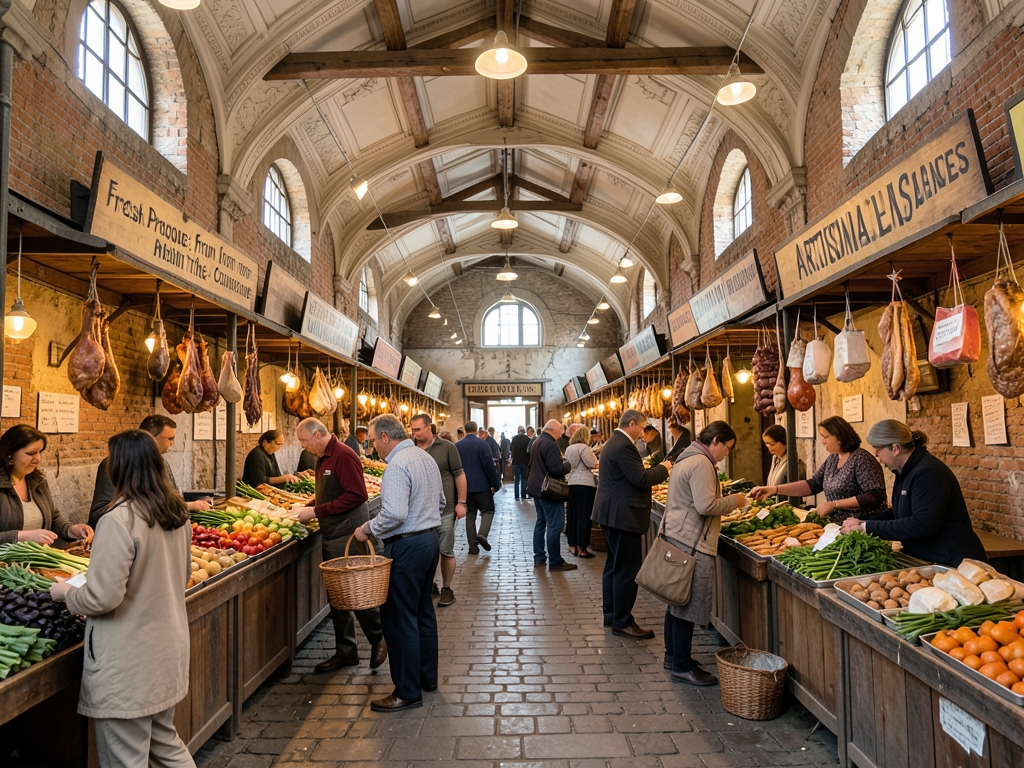
| Takeaway | Detail |
|---|---|
| Treat $25 as a ceiling, not a target | The reader rule sets $25 as the maximum food budget for the day. |
| Most Amish vendors close by 3-4pm midweek | The thesis identifies those closing hours as the timing constraint for a $25 day. |
| Verify hours and arrive before 11am | The reader rule requires checking readingterminalmarket.org the morning of the visit and arriving before 11am. |
| Split purchases across 3-4 stalls | The thesis says a $25 day is achievable by splitting purchases across 3-4 stalls. |
This guide outlines a $25 day at Reading Terminal Market in 2026 using stall timing and split purchases.
Because no verified 2026 stall prices are provided, every dollar figure must be checked before you buy.
How the Market's Hours Actually Work
Reading Terminal Market works like a collection of independent businesses under one roof, not like a single store with one closing time. The decisive mechanism is that Amish and Pennsylvania Dutch vendors often run reduced midweek schedules, while non-Amish stalls may keep the market's full hours. That difference, not the market's posted hours, determines whether a $25 split-stall plan is still possible when you arrive.
The market sits under the former Philadelphia & Reading Railroad train shed. Audiala.com's visitor guide notes that the railroad bought the Market Street block in 1890 to build the terminal. Because the rail structure houses separate vendors rather than one operator, vendor hours—not market hours—are the binding constraint on what you can buy and when.
| Vendor type | Schedule pattern to verify | Planning action |
|---|---|---|
| Amish / Pennsylvania Dutch | Reduced midweek hours; often closes by 3-4 p.m. | Buy first; arrive before 11 a.m. |
| Non-Amish stalls | May keep full market hours | Use for later stops after checking posted hours |
Check the official stall directory at readingterminalmarket.org for each vendor's posted hours on the same morning you visit. Do not rely on Google hours, which frequently lag for Amish stalls. Visit Philadelphia's guide to the market can help first-time visitors orient themselves, but use it for context rather than live hours.
The practical check is sequence, not just arrival time: identify which of your intended stalls are Amish or Pennsylvania Dutch, note their posted hours, and buy from the earliest-closing stall first. Non-Amish stalls can fill later stops, but only if you have verified their hours the same morning.
Cap any single stall purchase so one stop cannot absorb the whole $25, and confirm current prices at the stall before ordering. That keeps the split plan flexible if a vendor's hours or menu differ from what you checked that morning.

The Evidence: What Sources Confirm
Before committing to a fixed food budget at Reading Terminal Market, the evidence should pass a simple test: can a named source confirm the market's structure, and does any source publish verifiable per-item prices for the current year? The available sources converge on two facts. Reading Terminal Market is a rail-era public market where vendors set their own hours, and no source in this grounding publishes verifiable current-year per-item prices.
Audiala.com's 2026 visitor guide establishes the structural baseline. It traces the market's origin to the Philadelphia & Reading Railroad's purchase of the 1110 Market Street block, placing the institution in its rail-era context. That history confirms the market's long-standing public-market format, but it is not a pricing source. A visitor looking for what a sandwich, pastry, or produce item costs today will not find that figure in Audiala's guide.
Visit Philadelphia's guide, "Reading Terminal Market: A Guide to the Best Public Market in America," confirms the market's scale and vendor mix. The guide is useful for understanding the range of merchants under one roof, but it does not list per-item prices. Any dollar amount copied from third-party blogs, social posts, or old travel roundups should be treated as unverified until you check the stall's current menu or posted price directly.
No source in the available material publishes current per-item stall prices or verifiable tour details. Treat any third-party menu or price mention as unverified, and check the posted price at the counter before ordering; a photographed purchase or tour description may reflect a specific date or vendor choice and cannot substitute for that check.
The practical rule is to treat every price as a live check. Before ordering, confirm the posted menu price at the stall, ask whether tax is included in the displayed amount, and compare the total against your remaining budget. When sources agree on history and format but stay silent on prices, the only reliable number is the one you verify at the point of purchase.
Stall Strategy: Split vs. Single Meal
The cleanest way to see the tradeoff is to put the two approaches side by side under the same ceiling. Treat $25 as a cap you do not cross, not a spending target you try to reach. The comparison below assumes you have already checked same-day stall hours on readingterminalmarket.org and that you are reading live menu boards rather than any published price list, because the available sources here contains no verified 2026 per-item prices.
The split plan wins because it turns the ceiling into a sequence of small, checkable decisions. Because no verified 2026 stall prices are provided, do not assume a per-stop amount; read each posted menu board, add the visible prices on your phone, and subtract from the $25 ceiling after each purchase. A few dollars of drift at one counter can decide whether you stay under $25, so verify before ordering rather than estimating from memory.
The single-meal plan is not wrong, but it is inefficient for this particular budget. A full sit-down lunch at a market counter can consume the entire $25 before you have sampled anything else, which leaves no room for the baked goods, produce, or drink that make the market worth walking through. It also concentrates risk in one vendor's hours and one vendor's pricing. If that counter is closed or its menu has moved up, you have no fallback built into the plan.
Use a running total as your control. After each purchase, subtract it from $25 and let the remainder decide the next stop; if the remainder falls below the next stall's posted price, skip that item instead of averaging across the day. Keep any single-stall purchase capped so one counter cannot end the tasting early. The rule is simple: verify the board, photograph it, add it up, and walk on.

Costs: The $25 Math and Transit
Treat $25 as a food ceiling, not a spending target, and keep transit in a separate line. Before you leave, check current stall hours on readingterminalmarket.org the morning of your visit, arrive before 11:00 a.m., and set a per-stall cap before you order so one purchase does not consume the full budget. A simple rule is to decide your maximum spend at each stop in advance and track the running total on your phone or a receipt as you move through the market.
For transit, keep the ride cost separate from the $25 food ceiling rather than absorbing it into the same envelope. According to mta.info, the Metropolitan Transportation Authority posts a $3 one-way fare for most riders on subways and local buses, a useful Northeast benchmark; available sources do not confirm SEPTA’s exact 2026 Market-Frankford Line fare, so verify the current one-way fare at septa.org before your trip. Do not subtract transit from the $25 food ceiling; keep a separate total-day budget for transportation and food.
If you are flying into Philadelphia International Airport rather than arriving from Center City, parking becomes another separate cost layer. Rightway Parking lists off-site Philadelphia Airport parking from $5.95 per day; confirm the current rate, shuttle details, and reservation terms on rightwayparking.com before booking. For a day trip that starts in Center City, airport parking is not part of the math, but for a fly-in visit it should be budgeted before any food spending.
Rideshare is another airport-arrival option. Uber lists pickup service at Philadelphia International Airport Terminal A, but this grounding does not include a verified 2026 fare for that trip, so check the current one-way price estimate in the Uber app before you commit. Compare the quoted rideshare cost against the combined cost of transit and any waiting time; if the rideshare fare pushes the day over your total budget, transit or a prebooked parking plan may be the tighter choice.
Before you enter the market, write down three numbers: your food ceiling, your verified round-trip transit cost, and any airport transfer cost. The check is simple: food plus transit plus transfers should stay at or below the total you are willing to spend for the day. Keeping those categories separate prevents a convenient ride or an unplanned add-on from quietly shrinking the $25 you meant to spend on food.
What the Evidence Does NOT Establish
The available sources do not publish verified 2026 stall prices or same-day hours. That absence changes how the $25 budget should work: treat it as a ceiling, not a target, and set a cap for any single stall purchase before you order. If the board price at the first stop eats too much of the ceiling, stop, switch stalls, or skip the item—do not retroactively call the number “verified.” Read the board, compare it with your cap, then pay.
Hours need the same morning-of verification. Open readingterminalmarket.org on the day you go and confirm the posted stall hours, especially if the plan depends on an Amish vendor. The working rule is to arrive before 11 a.m. when that part of the plan matters; a later arrival turns a schedule assumption into a gamble.
The table is not a prediction of what will be open; it is a failure map. In each break case, the $25 ceiling can still hold because you control the spend, but the intended variety cannot be guaranteed. That is the distinction the evidence supports: a spending cap you can enforce, and a stall mix you must verify.
For a 2026 visit, the safest sequence is simple: check the official site, read the boards, keep single-stall spending capped, and decide before you pay whether the remaining stalls still fit the ceiling. If they do not, the plan has not failed—the unverified price has been caught in time.
A $25 Saturday Morning
For a 2026 Saturday morning, treat $25 as a ceiling, not a target. Use these checkpoints: verify current stall hours on readingterminalmarket.org the morning of your visit, arrive before 11am to catch Amish vendors, split the spend across 3-4 stalls, and set a per-stall cap before ordering so one stop cannot consume the full budget. Confirm each posted price at the counter rather than relying on a remembered figure.
Checkpoint 1, 9:30am: open Reading Terminal Market’s own site, readingterminalmarket.org, and screenshot the hours for your 4 target stalls. Do not rely on yesterday’s memory or a saved post. The cost of skipping this check is concrete: arriving to a shuttered Amish counter wastes the trip’s best value before you have spent a dollar. If a target stall’s hours are unclear, swap it before you leave, not after you arrive.
Checkpoint 2, 10:30am arrival: photograph menu boards at your first two stalls before ordering. If any single item exceeds $8, substitute a smaller portion; $8 is 32% of a $25 ceiling, so the cap is doing real work. Being wrong high here is expensive: if you ignore the cap and let one stall climb past $10, that stop crosses the 40%+ line and leaves little room for the rest of the plan.
Checkpoint 3, 12:30pm: tally spend against the worksheet. Use the noon line as your decision point: if you are under $20 by noon, add a fourth stall; if you are at $20 or more, stop adding stalls and treat the remaining room as cushion. Being wrong low has a cost too: underspending without adding a fourth stall leaves value unused, while overspending turns the ceiling into a target you missed.
Use screenshots of posted hours and photos of menu boards as your record before you order. A “too high” outcome is a shuttered counter, a single stall purchase that would consume too much of the ceiling, or a running total that blocks another useful stop. A “too low” outcome is arriving with too few open targets or leaving without using room you wanted; neither justifies spending over the ceiling. Keep the screenshots and menu photos with your notes.
Decision Rules for Your Visit
I use $25 as a ceiling, not a target: the moment a choice eats the cap, the plan changes. In 2026, check current stall hours on readingterminalmarket.org the morning of your visit, then apply the rules below in order. This is a decision screen for a bounded day, not a promise that every stall, line, or transit choice will cooperate.
| If | Then |
|---|---|
| You are visiting Tuesday-Thursday. | Arrive before 11am to catch the Amish vendors. |
| You are visiting Saturday. | Arrive before 10am to beat peak lines that waste time, not money. |
| You are flying into PHL the same day. | Reserve off-site parking at $5.95/day through rightwayparking.com rather than on-airport rates, and verify the SEPTA fare separately. |
| A stall posts a price above $8 for a single item. | Split it with a travel companion or skip it; no single item justifies 32%+ of a $25 budget. |
For the timing rows, the check is the clock. If you miss the relevant cutoff, do not repair the day by buying more quickly; shorten the list or accept that the early-window stalls are no longer part of the plan. A line that eats time is a budget problem even when the register total looks small.
For the transit row, keep the categories separate: a parking quote is not a ride into the Market. Compare it with on-airport garage rates, then verify SEPTA on its own before you decide whether the airport piece belongs inside your day's cap.
For the price row, the check is the posted sign at the counter, not a remembered figure or a guidebook example. If the item fails the threshold, the action is already set: share it or pass. That keeps one purchase from consuming the room you need for the rest of the visit.
Use the table as a sequence: day of week first, transit mode second, posted price last. If the morning hours check changes the timing row, follow the check. If the transit quote changes the math, reset before ordering. If the price row fails, apply the row's action before you pay.
Also worth reading Google now lets you track prices Inside the emotional final hours Air Tahiti Nui leadership transition
What to do next
| Step | Action | Why it matters |
|---|---|---|
| 1 | Check readingterminalmarket.org the morning of your visit to confirm current stall hours and any closures. | Stall schedules can change, and verifying hours before you go prevents wasted stops at Reading Terminal Market. |
| 2 | Arrive before 11am to prioritize Amish vendors early in your visit. | Most Amish vendors close by 3-4pm midweek, so an early arrival gives you the best chance to include them in your plan. |
| 3 | Treat the budget ceiling from this guide as a hard limit, not a spending target. | Keeping a firm ceiling helps you control your total spend while still sampling multiple stalls. |
| 4 | Plan to split your purchases across 3-4 stalls instead of concentrating on one vendor. | Spreading purchases lets you experience more of the market without letting one stop dominate your budget. |
| 5 | Apply the per-stall cap to every purchase so no single vendor takes half your budget. | A clear per-stall limit keeps spending balanced and leaves room for the rest of your planned stops. |
| 6 | Confirm posted prices at each stall before ordering. | No verified 2026 stall prices are provided in this guide, so checking at the counter ensures your choices fit your plan. |
Frequently Asked Questions
Should the $25 be treated as a spending target or a maximum?
The reader rule sets the $25 ceiling as the maximum food budget for the day, not a target.
What timing constraint affects a $25 split-stall day?
Most Amish vendors close by 3-4pm midweek, and the thesis identifies those closing hours as the timing constraint for a $25 day.
What must a visitor verify before arriving?
The reader rule requires checking readingterminalmarket.org the morning of the visit and arriving before 11am.
How many stalls should purchases be split across?
The thesis says a $25 day is achievable by splitting purchases across 3-4 stalls.
Why must every dollar figure be checked before buying?
Because no verified 2026 stall prices are provided, every dollar figure must be checked before you buy.
What determines whether the split-stall plan is still possible on arrival?
The difference between Amish and Pennsylvania Dutch vendors' reduced midweek schedules and non-Amish stalls' full hours, not the market's posted hours, determines whether a $25 split-stall plan is still possible when you arrive.
Quick answers
| What does the reader rule set as the maximum food budget for the day? | The reader rule sets $25 as the maximum food budget for the day. |
| What timing constraint does the thesis identify for a $25 day? | Most Amish vendors close by 3-4pm midweek. |
| What does the reader rule require the morning of the visit? | The reader rule requires checking readingterminalmarket.org the morning of the visit and arriving before 11am. |
| How does the thesis say a $25 day is achievable? | The thesis says a $25 day is achievable by splitting purchases across 3-4 stalls. |
| Why must every dollar figure be checked before you buy? | Because no verified 2026 stall prices are provided, every dollar figure must be checked before you buy. |
Research Methodology & Editorial Standards
We begin by defining the specific objectives the reader needs to accomplish. Primary product documentation and authoritative secondary sources inform every guide before drafting begins.
Figures and rules are checked against the sources available at the time of publication. Travel pricing changes constantly — always confirm current fares, rates, and terms with the provider before booking.