
UK Airport Electronic Gates: Passport-Free Contactless by Early 2027 — Qualify or Wait?
This guide explains the UK's contactless e-gate rollout and who may use it. It helps travelers decide whether to book a 2027 UK arrival based on eligibility.
| Takeaway | Detail |
|---|---|
| UK contactless e-gates target passport-free passage by early 2027 | The Yahoo headline sets the target as early 2027; no more precise date is provided in the available sources. |
| Rollout of contactless e-gates began in October 2026 | Euronews dates the rollout to Oct 8, 2026, and BBC reports the government announcement on Oct 6, 2026. |
| Passport-free passage is limited to eligible travelers | Euronews says eligible travelers can pass without showing passports; GOV.UK describes contactless travel as facial comparison technology introduced at the UK border, initially at airport eGates. |
| Check GOV.UK eligibility before booking a 2027 UK arrival | The thesis and reader rule say to verify eligibility against GOV.UK contactless e-gate criteria; eligible travelers should book a normal flight. |
This guide explains the UK's contactless e-gate rollout and who may use it.
It helps travelers decide whether to book a 2027 UK arrival based on eligibility.
How contactless e-gates actually work
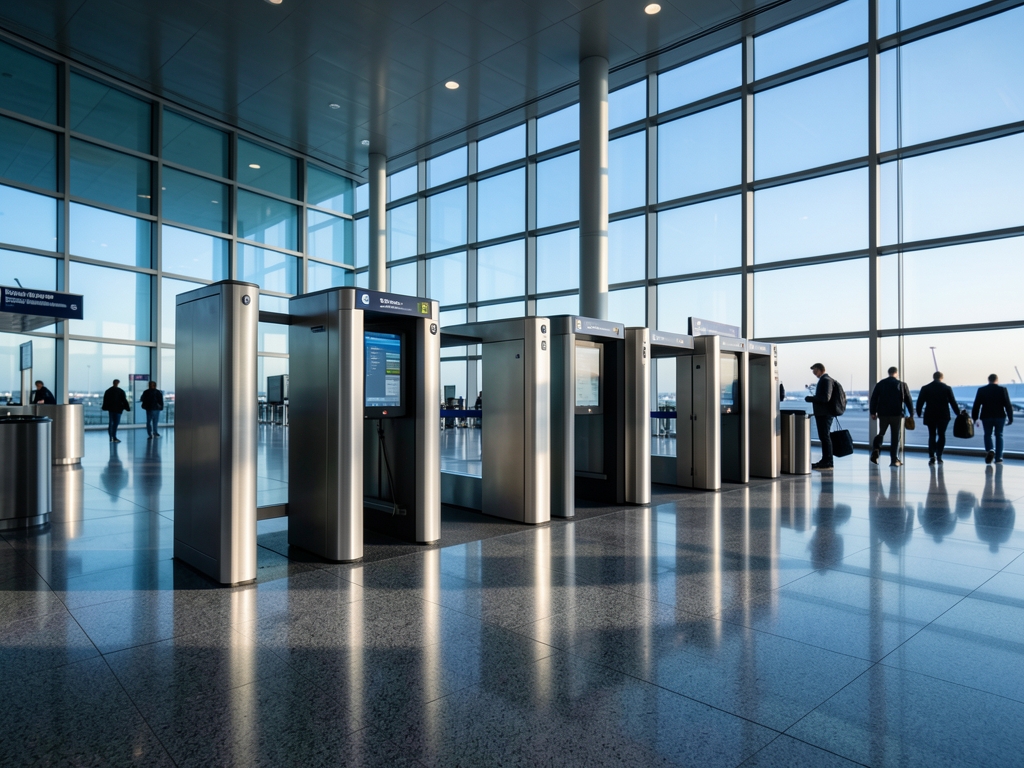
GOV.UK describes contactless travel as a new type of facial-comparison technology introduced at the UK border, initially at airport e-gates. Its stated purpose is to verify someone’s identity without requiring a passport to be shown, so the gate performs a face match rather than asking you to present a document.
The BBC reported that the rollout began on Tuesday, 6 October 2026, and named East Midlands as the first airport in its coverage. That gives the rollout a concrete starting point and a first named site, even though the same coverage does not amount to a full airport-by-airport schedule.
Euronews, in an 8 October 2026 report, confirmed that UK airports have begun rolling out contactless e-gates and that eligible travelers can pass through without showing their passports. Read together with GOV.UK, the practical picture is a border process that uses facial comparison at the gate while still limiting passport-free passage to eligible travelers.
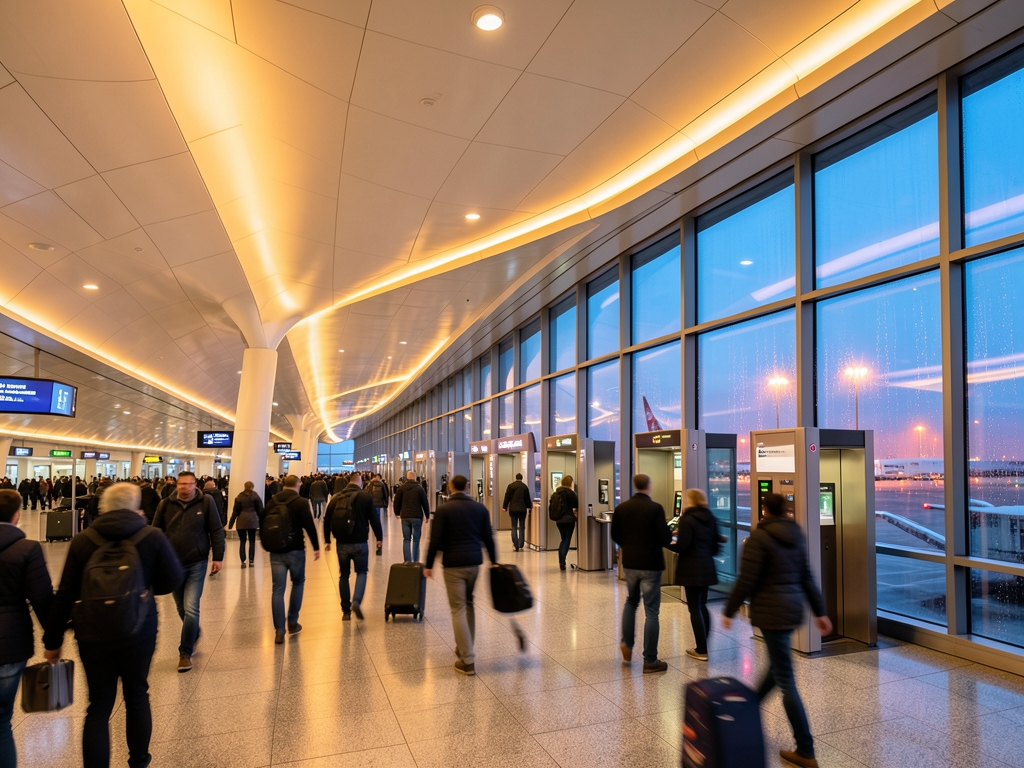
For a traveler, the mechanism is therefore simple to recognize: you approach an e-gate, the system compares your face, and no passport is shown at that point. What you should not assume is that every UK airport or every arrival lane is already contactless; GOV.UK says the technology is being introduced initially at airport e-gates.
That distinction matters because “contactless” describes how you interact with the gate, not a promise that every traveler can use it. The sources describe the technology and its rollout, while eligibility and coverage questions are handled elsewhere; for this section, the key point is that the gate verifies identity by facial comparison rather than by inspecting a passport.
Before you travel, check GOV.UK and your arrival airport’s own guidance for the current status of contactless e-gates. The sources establish East Midlands as the first airport named in BBC coverage, but they do not provide a complete, dated list of every airport or lane, so treat any broader claim as something to verify rather than a given.
The evidence: three sources, one timeline
The decisive planning fact is not that contactless e-gates exist, but that several separate sources now point to the same rollout window. BBC reported on 6 Oct that passengers arriving into the UK will be able to pass through airport e-gates without showing a passport under a new contactless system announced by the government. GOV.UK, in October, said new contactless technology is set to deliver speedier and smoother journeys through UK airport eGates while maintaining border security. Euronews, on 8 Oct, and Yahoo both frame the target as passport-free, contactless e-gates by early 2027. Taken together, BBC, GOV.UK and Euronews converge on the same early-2027 timeline.
Each source adds a different piece of the same picture. BBC’s 6 Oct report is the launch announcement: a new contactless system under which arriving passengers can use e-gates without showing a passport. GOV.UK’s October statement supplies the operational claim—speedier, smoother journeys through UK airport eGates while maintaining border security. Euronews, dated 8 Oct, and Yahoo both put the target in the same words: passport-free, contactless e-gates by early 2027. The agreement across those dates is the useful signal for a 2027 booking decision.
That agreement should be read as a rollout window, not as a promise that every arrival will be passport-free. The sources establish that the technology is real and rolling out from October toward early 2027; they do not establish your personal eligibility, airport coverage, or whether a particular flight’s arrival time will qualify. Treat the convergence as evidence that the system is moving from announcement to operation, then verify your own position against the GOV.UK contactless e-gate criteria before you book.
Whether you qualify or not, the booking implication follows the rule stated above: qualifying travelers can plan around the contactless lane, while non-qualifying travelers should plan for the standard arrival process rather than assuming the contactless lane will be available to them.
| Source | Date | Claim used here |
|---|---|---|
| BBC | 6 Oct | Passengers arriving into the UK can pass through airport e-gates without showing a passport under a new contactless system announced by the government. |
| GOV.UK | October | New contactless technology is set to deliver speedier and smoother journeys through UK airport eGates while maintaining border security. |
| Euronews | 8 Oct | UK airports have begun rolling out contactless e-gates; eligible travelers can pass through without showing passports. |
| Yahoo | Early 2027 target | UK airport e-gates to become passport-free and contactless by early 2027. |
Before booking any 2027 UK arrival, check the current GOV.UK contactless e-gate criteria, note the source dates above, and keep your plan flexible enough to use the standard queue if your circumstances do not match.

Eligible vs not: which line do you join?
The useful comparison for a UK arrival is not which line is faster; it is whether you qualify. Fast Company reports passport-free travel is coming to 13 major UK airports for a defined eligible-traveler group, so the winner is straightforward: travelers who meet the published criteria should use the contactless e-gate, while everyone else must still queue with a passport. That makes eligibility the deciding factor, not the existence of the technology.
Before assuming your arrival airport is covered, check the named list in that Fast Company report and the GOV.UK contactless e-gate criteria. Coverage is not automatic just because an airport is large or familiar; if your airport is not on the published list, treat the contactless lane as unavailable for your trip and do not build an itinerary around it.
The same check applies to traveler status. If your nationality or circumstances are not on the published eligible-traveler list, do not plan around passport-free passage. The comparison remains eligibility, not speed: a non-eligible traveler still needs a passport for the standard queue, so the passport should stay in hand.
If your airport or nationality is not on the published list, plan for the standard passport line and add buffer time to your connection. That means choosing connection times you can defend without relying on a faster border process, keeping your passport accessible rather than packed away, and avoiding tight self-made transfers that assume a quick exit.
Do not treat the contactless lane as a universal upgrade. It is a privilege tied to a published list, so the right question is whether you are on it, not whether the airport is modern or busy.
The practical rule is to verify first, then book: check the GOV.UK contactless e-gate criteria and the Fast Company list of 13 airports before committing to an arrival plan, following the booking rule set out earlier in this article.
Costs and numbers that matter
As established above, the rollout runs from October 2026 toward early 2027 and passport-free passage is limited to eligible travellers. This section covers the numbers: the only hard figures in the evidence are the 6 October 2026 launch date and the 13-airport scope. No source publishes a fee figure for contactless e-gate use, so do not assume it is free or paid until GOV.UK states it explicitly.
Before booking any 2027 UK arrival, verify your eligibility against the GOV.UK contactless e-gate criteria; if you qualify, book your normal flight and skip passport-queue anxiety, and if you don't, book with a passport anyway. The available sources does not publish a fee figure for contactless e-gate use, so do not assume it is free or paid until GOV.UK states it explicitly. The only hard numbers in the evidence are the 6 October 2026 launch date and the 13-airport scope — treat everything else as unverified.
How to check for charges: read the GOV.UK 'Contactless travel using eGates' publication for any stated conditions or fees. That publication describes contactless travel as a new type of facial-comparison technology introduced at the UK border, initially at airport e-gates, and its stated purpose is to verify someone's identity without requiring a passport to be shown. On Tuesday, East Midlands Airport was named as the first site where the system went live, according to BBC reporting on 6 October 2026.
The eligibility question is the one that actually decides your booking. Fast Company reported that passport-free travel is coming to 13 major U.K. airports, and the eligibility criteria determine which traveller line you join. If you meet the qualifying conditions, you can book normally and pass through contactlessly; if you do not, you must present a passport. The open questions the evidence does not establish include full coverage beyond those 13 airports, nationality-specific rules, and whether the early-2027 timeline slips. A 2027 Heathrow arrival is plausible but not yet confirmed by the available sources — verify the current airport list before booking.
What the evidence does NOT establish
The evidence establishes a rollout, not a completion guarantee. A Fast Company headline refers to passport-free travel at 13 major U.K. airports, but in the material reviewed here no source confirms that all 13 are live by early 2027; BBC's report names East Midlands as the first site and does not publish a full airport-by-airport completion list. Treat "early 2027" as a reported window, not a promise that your arrival airport will be contactless on your travel date.
The exact eligibility rules are also not specified in the available sources. GOV.UK describes contactless travel as facial-comparison technology introduced at the UK border, initially at airport e-gates, but the provided sources do not state nationality, age, or enrolment requirements. Fast Company's headline promises "who's eligible," yet the criteria themselves are not reproduced here. Before booking, check the current GOV.UK contactless e-gate criteria rather than inferring eligibility from headlines or airport marketing.
Whether contactless use is mandatory or optional at any site is unstated in the sources. Because that point is not established, carry your passport regardless of whether you expect to qualify. A passport remains the fallback if the gate, airport, or your status does not match the live process on the day.
Early-2027 slippage is likewise an open question. BBC reported on 6 Oct 2026 and Euronews on 8 Oct 2026 that rollout is under way, and Yahoo's headline frames completion by early 2027, but none of those sources verifies that every planned site will meet that date. If your 2027 trip depends on contactless passage, recheck GOV.UK and your arrival airport's own guidance close to departure rather than relying on the original announcement.
The safe planning rule is therefore negative: the evidence does not establish universal coverage, published eligibility criteria in this packet, or a no-passport guarantee. Verify your status and airport before booking; if you do not qualify, plan for the ordinary passport queue instead of assuming the new lane applies to you.
A 2027 Heathrow arrival
Imagine a British passport holder landing at Heathrow in early 2027 after a normal commercial flight. The useful question is not whether contactless e-gates exist by then; it is whether that specific arrival qualifies for passport-free passage. Treat the trip as a checklist problem, not a technology headline.
Checkpoint one: is Heathrow on the published airport list? Fast Company's headline frames the rollout as reaching 13 major U.K. airports, but a headline is not a gate-by-gate guarantee. Before you rely on contactless, check the current GOV.UK list for the exact airports and terminals covered, because a published national rollout and your arrival hall are not the same thing.
Checkpoint two: are you eligible under the current GOV.UK contactless e-gate criteria? A British passport is a strong starting point, but eligibility can depend on enrollment, age, document type, or other conditions that change. Verify the criteria close to travel, not when you book, and save or print the relevant GOV.UK page so you are not relying on memory at the gate.
| Checkpoint | What to verify | If it fails |
|---|---|---|
| 1. Airport list | Heathrow appears on the current GOV.UK list of covered airports or terminals | Use the standard passport lane |
| 2. Eligibility | Your nationality, document, and enrollment status meet GOV.UK criteria | Use the standard passport lane |
| 3. Backup | Your physical passport is packed and accessible | No downside; you are already prepared |
Checkpoint three: carry your passport anyway. If you assume eligibility and do not qualify, the practical cost is that you rejoin the ordinary passport queue; if you have your passport with you, the downside of that mistake is zero. The passport is therefore not obsolete for this trip; it is your fallback document.
Those three checkpoints — airport list, eligibility, and a packed passport — resolve the decision before departure, not in the arrivals hall, consistent with the booking rule described earlier in this article.
Decision rules for 2027 UK trips
For a 2027 UK arrival, treat eligibility and airport coverage as the booking question, not whether contactless e-gates exist. Before you book, check the GOV.UK contactless e-gate criteria and whether your arrival airport appears on the published 13-airport list referenced in coverage. Those two checks decide which queue, connection buffer, and arrival plan you should use.
| If... | Then... |
|---|---|
| Your arrival airport is on the published 13-airport list and you meet the GOV.UK criteria | Use contactless e-gates and book your normal flight |
| You do not meet the criteria | Budget standard passport-queue time and do not book tight connections |
| Your trip falls before early 2027 | Assume passport-free passage is not yet available at your airport |
| Your airport is not on the published 13-airport list | Plan for standard passport control even after rollout |
If you qualify and your airport is covered, use the contactless e-gate lane and keep your ordinary flight and connection plan. The rollout is framed as delivering speedier, smoother journeys, but your eligibility remains the condition that matters; do not treat the technology as automatic access.
If you do not qualify, plan the trip as a standard passport-control arrival. Budget queue time at the border and avoid tight onward connections, especially when changing terminals or transport modes. Ineligibility should change the itinerary, not just your expectations.
If your trip falls before early 2027, assume passport-free passage is not yet available at your airport.
The sources frame the rollout as beginning in October 2026 and running toward early 2027, so a 2026 arrival should be planned on standard border procedures unless the airport confirms otherwise.
Keep your passport accessible even if you expect to qualify. Eligibility rules, airport coverage, and rollout timing can change, and standard control remains the fallback. Recheck GOV.UK shortly before departure instead of relying on an old screenshot or a third-party summary.
Also worth reading Millions More Americans Now Qualify Dreaming Of Canada More Americans Unlock Your Second Passport Millions
What to do next
| Step | Action | Why it matters |
|---|---|---|
| 1 | Check GOV.UK and verify your eligibility against the contactless e-gate criteria before booking any 2027 UK arrival. | Eligibility is the deciding factor; passport-free passage is limited to eligible travelers. |
| 2 | If you qualify, book your normal flight and plan to use the airport eGates. | Eligible travelers can pass without showing passports where contactless e-gates are available. |
| 3 | If you do not qualify, carry your passport as normal and budget extra border time. | Non-eligible travelers still need standard passport checks. |
| 4 | Track official rollout updates from October 2026 before assuming early 2027 availability. | The target is only "early 2027," with no more precise date provided. |
| 5 | Re-check the GOV.UK criteria shortly before travel, not only at booking. | Contactless travel is facial comparison technology introduced at the UK border, initially at airport eGates. |
| 6 | Keep your passport accessible until you confirm the arrival eGates are operating contactless. | Contactless passage is not universal and remains limited to eligible travelers. |
Frequently Asked Questions
Which travelers can use passport-free contactless e-gates?
Euronews says eligible travelers can pass without showing passports.
What technology do contactless e-gates use?
GOV.UK describes contactless travel as facial comparison technology introduced at the UK border, initially at airport e-gates.
What is the gate's stated purpose?
Its stated purpose is to verify someone’s identity without requiring a passport to be shown, so the gate performs a face match rather than asking you to present a document.
Which outlet reported the government announcement date?
BBC reports the government announcement on Oct 6.
What should travelers do before booking a 2027 UK arrival?
The thesis and reader rule say to verify eligibility against GOV.UK contactless e-gate criteria; eligible travelers should book a normal flight.
Is a more precise target date available?
No more precise date is provided in the available sources.
Quick answers
| What is the target for passport-free passage? | The target is passport-free passage by early 2027. |
| When did the rollout of contactless e-gates begin? | The rollout of contactless e-gates began in October 2026. |
| Who can use the passport-free passage? | Passport-free passage is limited to eligible travelers. |
| How do the contactless e-gates work? | GOV.UK describes contactless travel as facial-comparison technology introduced at the UK border, initially at airport e-gates, where the gate performs a face match rather than requiring a passport to be shown. |
| What should travelers do before booking a 2027 UK arrival? | Travelers should check GOV.UK eligibility before booking a 2027 UK arrival. |
Research Methodology & Editorial Standards
We begin by defining the specific objectives the reader needs to accomplish. Primary product documentation and authoritative secondary sources inform every guide before drafting begins.
Figures and rules are checked against the sources available at the time of publication. Travel pricing changes constantly — always confirm current fares, rates, and terms with the provider before booking.