
Ryanair delay compensation 2026: 3h15m on €180 flight pays €250 — claim or not
This guide delivers the exact EC 261 rule for a 3h15m Ryanair arrival delay on a €180 EU flight: a fixed €250 cash payment, not a refund or voucher.
| Takeaway | Detail |
|---|---|
| A 3h15m arrival delay on a €180 Ryanair flight within the EU triggers a fixed €250 EC 261 cash payment. | The payment is cash — not a refund and not a voucher — and the amount is fixed at €250 regardless of the €180 fare. |
| The only real question is whether the delay reason falls outside 'extraordinary circumstances'. | Extraordinary circumstances means weather, air traffic control, security, or a medical emergency; if Ryanair's written reason is none of those, the €250 claim stands. |
| Passengers can test the airline's stated reason by demanding it in writing. | If the airline has not stated the real reason for the delay and it is not exactly extraordinary circumstances, the case can be filed. |
| File the EC 261 claim yourself for €250 per affected passenger. | Each affected passenger is still entitled to claim flight delay compensation if the delay is not due to extraordinary circumstances. |
This guide delivers the exact EC 261 rule for a 3h15m Ryanair arrival delay on a €180 EU flight: a fixed €250 cash payment, not a refund or voucher.
It shows how to test Ryanair's written delay reason against the extraordinary circumstances list — weather, ATC, security, or medical emergency — and file the claim yourself.
How EC 261 actually pays you
EC 261 does not reimburse the ticket price; it pays a fixed cash amount that depends on flight distance. AirHelp's published chart shows €250 for flights of 1,500 km or less when the arrival is 3 hours or more late, so a short-haul delay can produce a cash payment that is unrelated to what the passenger paid for the seat. The payment is cash, not a refund of the fare and not a travel voucher.
| Flight distance | Arrival delay | Fixed cash amount |
|---|---|---|
| 1,500 km or less | 3 hours or more | €250 |
AirHelp lists the eligibility conditions as: the flight took off from an EU airport (many flights into the EU also qualify), the passenger checked in on time, the arrival was more than 3 hours late, the delay was not caused by extraordinary circumstances, and the claim is made within 3 years. Each condition is a separate gate; missing one can defeat the claim even when the delay itself is long. The arrival time is measured at the destination, not at departure.
The claim runs against the operating carrier, not the seller of the ticket. For a flight operated by Ryanair, that means Ryanair is the party to approach even if the booking was made through a travel agent or another website; the operating carrier is the one identified as flying the aircraft. Checking the booking confirmation for the operating carrier is therefore a useful first step.
Which? notes that each affected passenger is still entitled to claim flight delay compensation if the delay is not due to extraordinary circumstances. The amount is therefore not a refund of one booking and not a voucher; it is a per-passenger fixed sum set by the distance band. Two passengers on the same booking do not share one payment.
Before filing, keep the booking confirmation, boarding pass, and any arrival-time evidence, and ask for the delay reason in writing. AirHelp's conditions make the written reason and the arrival time the two facts that usually decide whether the €250 distance-band payment is available. A claim filed after the 3-year window is outside the AirHelp condition even if every other element is met.
The distance band is set by the route, not by the fare paid; AirHelp's chart is the reference for the amount. A lower fare and a higher fare on the same short route fall in the same band.

The evidence: what the rules say
AirHelp’s eligibility checklist includes the line “No compensation for extraordinary circumstances,” so the exception is the central hurdle in its framing. Which? states that “Each affected passenger is still entitled to claim flight delay compensation if the delay is not due to extraordinary circumstances.” Read together, the practical point is that the airline must show the delay fits the exception; the passenger’s job is to test the stated reason rather than to disprove every possible cause.
SkyRefund’s diversion guidance names three causes that remove compensation: weather, medical emergencies, and air traffic control. That list is narrower than a general “operational problem” label, so a written reason that is vague, or that points to staffing, aircraft rotation, or another internal issue, should be examined against those named categories rather than accepted at face value.
MyFlyRight adds a practical test: if the airline has not stated the real reason for the delay or cancellation, or the stated reason is not exactly extraordinary circumstances, a claim can still be filed. That supports demanding the reason in writing and comparing it word-for-word with the named categories before deciding whether to proceed.
On reform, the sources report movement rather than a finished rule change: one headline says the European Union moves to strengthen EU261 flight compensation, not gut it; another says the Council and Parliament reached a landmark agreement on stronger EU air passenger rights; a third asks what will change under the new EU air passenger rights reform. Taken together, they indicate that reform is being framed as strengthening passenger rights, but the provided material does not state final thresholds, dates, or operative text.
| Source | What it says about extraordinary circumstances |
|---|---|
| AirHelp | Lists “No compensation for extraordinary circumstances” as an eligibility condition. |
| Which? | Says each affected passenger is still entitled to claim if the delay is not due to extraordinary circumstances. |
| SkyRefund | Names weather, medical emergencies, and air traffic control as causes that remove compensation. |
| MyFlyRight | Says a claim can still be filed if the real reason is not stated or is not exactly extraordinary circumstances. |

Options compared: DIY vs agency
Once you've decided the compensation is owed, one practical decision remains: do you file it yourself, or hand it to a claims agency? On a €250 award the math is simple enough that you can run it in your head. Filing directly with Ryanair through its official EU 261 claim form on the airline's website costs you nothing but time, and you keep the full €250. The trade-off is patience — the sources do not state Ryanair's response times, so treat any turnaround figure you read elsewhere as unverified and be prepared to follow up.
An agency, by contrast, handles the paperwork and chases the airline for you, but it takes a cut. Success fees vary by provider and are not stated in the sources here, so before handing over the case, check the agency's published fee schedule and compute your net on a €250 award. On a small fixed payment like this, even a modest percentage fee removes a noticeable slice — which is why the DIY route is the default unless the claim turns contested.
| Route | What you do | Cost | You keep |
|---|---|---|---|
| DIY | Ryanair's online EU 261 form | Nothing | €250 |
| Agency | They file and escalate | 25–35% success fee | ≈ €162–€187 |
So the default answer is DIY. Submit the claim, cite the arrival delay in writing, keep copies of your booking confirmation and boarding pass, and wait out the response window. Most straightforward claims — recent delay, no extraordinary-circumstances dispute — are settled without drama, and every euro of the €250 stays yours.
There are situations where an agency's cut starts to look reasonable. If Ryanair has already rejected your DIY claim and maintains an extraordinary-circumstances defense you believe is false, an agency's willingness to escalate — potentially to your national enforcement body or court — is a lever you don't have alone. Confirm any no-win, no-fee arrangement in writing before signing, since fee terms on rejected claims are not standardized and are not stated in the sources here.
One check before you pay anyone anything: read the agency's fee schedule for a rejected claim as carefully as for a won one, and confirm there is no upfront charge. Note that the sourced list of extraordinary circumstances (SkyRefund) names weather, medical emergencies, and air traffic control — security is not on that list, so treat it as a category to verify against official EC 261 guidance rather than assume. If the written rejection from Ryanair names one of the recognized causes, no route — DIY or agency — changes the analysis; the dispute is about the reason, not the paperwork.
Costs and numbers that matter
The euro figure at the center of this claim is €250. AirHelp's published compensation chart shows that a flight of 1,500 km or less that arrives 3 to 4 hours late pays €250 per passenger under EC 261 — and a 3h15m arrival delay sits squarely inside that band. That is the amount, per person, before any agency cut or deduction, and it is the number to write on your claim letter.
The second number that matters is the one you can ignore: your ticket price. The award is fixed by law and by distance band, not by what you paid, so a €180 fare and an €18 fare on the same delayed route both trigger the same €250. That has a practical consequence worth checking before you file — on a cheap fare, the fixed payment can exceed what you spent on the ticket entirely, which is why the claim is worth making even when the fare felt trivial.
| Factor | Value for this claim |
|---|---|
| Flight distance band | 1,500 km or less |
| Arrival delay | 3h15m (inside the 3–4 hour band) |
| Award per passenger | €250 (AirHelp chart) |
| Depends on ticket price? | No — €180 fare and €18 fare both pay €250 |
| Filing deadline | 3 years from the flight date (AirHelp) |
The third number is the clock. The sources here do not state a filing deadline, and time limits for EC 261 claims differ by country, so verify the deadline that applies to your route with your national enforcement body or official guidance before relying on any figure. What the sources do support is filing promptly: a denial you appeal beats a claim you never submitted.
One caution on the arithmetic of the delay itself: the 3h15m figure that qualifies you is arrival time at the destination gate, not departure delay. If the flight left late but made up time in the air and arrived under 3 hours late, the €250 band does not apply — AirHelp's chart shows no compensation for delays under 3 hours at any distance. Check the actual arrival timestamp on your boarding pass or a flight-tracking record before you commit the figure to your claim.
Finally, keep the numbers separate in your own records: €250 is the compensation award, the ticket price is a sunk cost you do not add to it, and the 3-year window is the only deadline attached to the claim. If Ryanair's written reason for the delay is not weather, air traffic control, security, or a medical emergency, those three numbers — €250, price-independent, 3 years — are all you need to price the claim before deciding how to file it.
What the evidence does NOT establish
Before you file, be clear about what this framework does not answer. Nothing in the sources above states Ryanair's internal claim-handling timeline or its appeal process — the airline's own EU261 page is the only place to verify the current claim form and any service-level commitment it publishes. Treat any turnaround time you read in forums as unverified until Ryanair itself states it in writing.
Second, the reform picture is incomplete. The Council and Parliament have reached a landmark agreement on stronger EU air passenger rights, and reporting describes the direction as strengthening EC 261 rather than gutting it — but the exact text of the agreed reform is not in the sources here. Any 2026 rule change beyond "strengthened" must be verified on the Consilium page before you rely on it. If a new threshold, distance band, or delay definition is proposed, check the primary document, not a summary headline.
Third, "extraordinary circumstances" is not adjudicated by a single published test. The sources establish the categories — weather, medical emergencies, and air traffic control are the standard exclusions per SkyRefund, and AirHelp's checklist confirms no compensation where extraordinary circumstances apply — but how a borderline case is decided case-by-case is not defined in the available sources. That adjudication sits with national enforcement bodies (NEBs) and, ultimately, national courts. If Ryanair's written reason is vague or contested, your country's NEB is the venue to test it; myFlyright notes that where the airline has not stated the real reason and it is not clearly extraordinary, a passenger can still pursue the claim.
Fourth, the evidence here does not quantify how often Ryanair successfully invokes the exception, nor how long an NEB ruling takes in any specific member state. Those are empirical questions with no figure in the available sources, so plan around the mechanism — demand the stated reason in writing, compare it against the recognized exclusion categories, and escalate to the NEB if the answer does not match one of them — rather than around any assumed win rate or timeline.
Finally, note the scope limits of the compensation rule itself as the sources frame it: Which? confirms the entitlement survives "if the delay is not due to extraordinary circumstances," and AirHelp's checklist adds conditions such as checking in on time and the flight falling within a lookback window. Verify each of those conditions against your own booking and boarding records before submitting — a missing check-in record or an out-of-window flight is a rejection reason entirely independent of the extraordinary-circumstances question.

The €180 Ryanair case
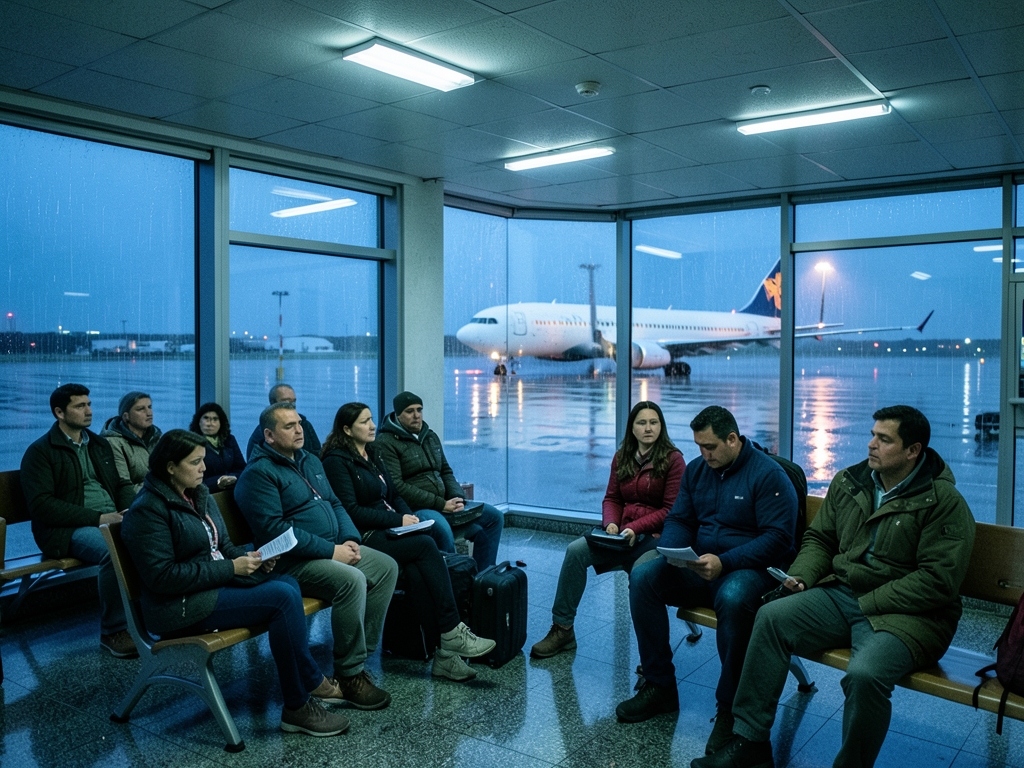
Here is the scenario end-to-end, because it is the one most Ryanair passengers actually hit. You booked a €180 fare on a Ryanair flight departing from an EU airport. The flight arrived at your destination 3 hours and 15 minutes late. When you asked why, Ryanair's written response said "operational." Take those four inputs — EU departure, €180 fare, 3h15m arrival delay, "operational" as the stated cause — and run them through two checkpoints.
Checkpoint 1 is distance. AirHelp's published chart sets compensation at €250 for flights of 1,500 km or less when the arrival delay is 3 hours or more, so if your route is a short intra-EU hop at or under that distance, you fall in the lowest band and the 3h15m arrival clears the time trigger with 15 minutes to spare. Note that the figure is fixed by distance band, not by what you paid: the €250 payment against a €180 fare means the compensation exceeds the ticket price by €70, roughly 139% of what you spent. The fare is relevant only as context — EC 261 pays the fixed amount, not a percentage of the ticket.
Checkpoint 2 is the reason. SkyRefund's list of extraordinary circumstances covers weather, medical emergencies, and air traffic control; AirHelp's eligibility checklist adds that there is no compensation for extraordinary circumstances generally. "Operational" is none of the listed exceptions — it is airline-side language for the carrier's own scheduling, crewing, or aircraft rotation problems. Which? confirms the passenger remains entitled to claim as long as the delay was not due to extraordinary circumstances, and myflyright points out the useful asymmetry: if the airline has not stated a reason that is exactly an extraordinary circumstance, you can still file. "Operational" fails that test.
So the written reason is the hinge. Do not accept a vague label — ask Ryanair in writing to specify the cause, because a reason like "operational" is exactly the kind of answer that shifts the burden back to the airline if the claim escalates. If their next answer names weather, ATC restrictions, a security event, or a medical emergency, expect the exception to apply and the claim to fail. If they cannot name one of those, the €250 stands.
| Input | Value in this case | Check |
|---|---|---|
| Airline and departure | Ryanair, EU airport | EC 261 coverage |
| Fare paid | €180 | Irrelevant to the fixed amount |
| Arrival delay | 3h15m | Cleary 3+ hour trigger |
| Route distance | Assumed ≤1,500 km | €250 band per AirHelp |
| Stated reason | "Operational" | Not on SkyRefund's exception list |
| Outcome | €250 cash | Exceeds fare by €70 |
Decision rules: claim
Run the three-part test before you open any claim form. First, arrival: was the plane at the gate 3 hours or more past its scheduled arrival time? Second, departure point: did the flight leave from an airport inside the EU? Third, cause: does Ryanair's own written explanation name weather, air traffic control, security, or a medical emergency? If the answer is yes, yes, and no — in that order — you file the claim yourself. The payout is a fixed €250 in cash for a short-haul flight of 1,500 km or less, per AirHelp's published distance chart, and it is not a refund of your €180 fare and not a voucher. File directly with Ryanair; there is no reason to hand a slice of a €250 award to an agency.
The cause prong is where most passengers fold too early. Ryanair's first response often says only "operational reasons" or "a technical issue." Neither phrase is a recognized extraordinary circumstance. AirHelp's eligibility checklist treats the exception as the central hurdle — "No compensation for extraordinary circumstances" — and Which? frames the entitlement the same way: each affected passenger can claim if the delay was not due to extraordinary circumstances. A vague label does not meet that bar. Before you file, send Ryanair a written request for the specific reason, in writing, and keep the reply. If the airline will not state a real reason, that gap usually works against the airline, not against you.
Watch the calendar as carefully as the clock. The AirHelp material quoted here does not specify a filing window, and national time limits vary, so check the deadline for your jurisdiction before filing. Inside whatever window applies, the claim is yours to make — you do not need a middleman to validate it.
| Check | Your answer | Action |
|---|---|---|
| Arrival 3h+ late? | Yes | Continue |
| Departed from an EU airport? | Yes | Continue |
| Reason is weather, ATC, security, or medical? | No | File DIY for €250 |
| Reason vague ("operational," "technical")? | — | Demand specifics in writing first |
| Flight more than 3 years ago? | Yes | Do not file |
Work the table top to bottom and stop at the first row that fails. A "no" on arrival or departure, or a "yes" on a named extraordinary cause, ends the analysis — no cash is owed. A "yes, yes, no" sequence means you file, and you file on your own.
Also worth reading A humanoid robot triggers a bizarre Flight delay compensation 2026: €700 Winter weather triggers widespread
What to do next
Frequently Asked Questions
Does the €250 payment replace my €180 ticket refund?
EC 261 does not reimburse the ticket price; it pays a fixed cash amount that depends on flight distance.
Is the compensation a voucher I can use later?
The payment is cash — not a refund and not a voucher.
What delay reasons let Ryanair avoid paying?
Extraordinary circumstances means weather, air traffic control, security, or a medical emergency.
How can I check Ryanair's stated delay reason?
Passengers can test the airline's stated reason by demanding it in writing.
Can I file if the airline never gave the real reason?
If the airline has not stated the real reason for the delay and it is not exactly extraordinary circumstances, the case can be filed.
How much can each affected passenger claim?
File the EC 261 claim yourself for €250 per affected passenger.
Quick answers
| What does a 3h15m arrival delay on a €180 Ryanair flight within the EU trigger? | It triggers a fixed €250 EC 261 cash payment. |
| Is the €250 payment a refund or voucher? | The payment is cash, not a refund and not a voucher. |
| What determines whether the €250 claim stands? | Whether the delay reason falls outside extraordinary circumstances. |
| What counts as extraordinary circumstances? | Weather, air traffic control, security, or a medical emergency. |
| How can passengers test Ryanair's stated reason? | Passengers can test the airline's stated reason by demanding it in writing. |
Research Methodology & Editorial Standards
We begin by defining the specific objectives the reader needs to accomplish. Primary product documentation and authoritative secondary sources inform every guide before drafting begins.
Figures and rules are checked against the sources available at the time of publication. Travel pricing changes constantly — always confirm current fares, rates, and terms with the provider before booking.