
2026 Flight Delay Refund: 3-Hour Domestic Delay Cash vs Rebook
This guide explains when to take a cash refund for a 3-hour-plus domestic US delay and when to decline a rebook.

| Takeaway | Detail |
|---|---|
| Default to the cash/refund path for 3-hour-plus domestic US delays. | Applies at 3 hours or more on a domestic US itinerary; the refund is verifiable in minutes. |
| Decline a rebook that arrives more than 2 hours after the original arrival. | Threshold is more than 2 hours later than the original arrival; request the cash refund to the original form. |
| Rebook separately after taking the refund. | The refund path is verifiable in minutes, while a rebooked alternative's value depends on its arrival. |
| Compare any offered rebook by arrival time, not departure convenience. | A rebook arriving more than 2 hours later than the original arrival should be declined. |
This guide explains when to take a cash refund for a 3-hour-plus domestic US delay and when to decline a rebook.
It gives a verifiable refund check and a 2-hour arrival threshold for comparing alternatives.
How the 3-Hour Refund Mechanism Works
At the moment a delay is announced, before you interact with any airline counter, start by capturing the cause. Ask the gate agent for the delay reason in writing, or screenshot the app status while it is still visible, because whether the cause is airline-controllable or weather/ATC determines what you may be entitled to beyond rebooking. Then check the carrier-specific rules through the airline's own Customer Service Plan posted on its website, which is the required disclosure document for those rules. A screenshot also preserves the timestamp and wording you may need later.
Next, confirm whether your situation is in refund-first territory by checking whether the delay exceeds your tolerance threshold. For this decision framework, three hours is the working benchmark for a domestic delay. If the delay has not crossed that benchmark, stay in the ordinary rebooking flow; if it has crossed, move to the refund-first evaluation before accepting any alternative itinerary. The point of the threshold is to separate a routine delay from one that changes the value of the trip.
Keep the two checks in order and do not let them blur together. The written cause is not replaced by a verbal summary at the counter, and the threshold is measured against your original arrival time, not against any proposed replacement flight. Treat the original itinerary as the fixed reference point for both checks, and remember that a rebooking offer does not reset the clock on either one.
Only after you have both the cause and the threshold in hand should you apply the arrival-gap rule: if the delay crosses three hours on a domestic itinerary and the rebooking the airline offers arrives more than two hours later than your original arrival, decline that rebook and request the cash refund to the original form of payment. That sequence keeps the refund decision tied to verifiable facts rather than to the convenience of the first available seat.
If either the cause or the original arrival time is unclear, pause before accepting vouchers, credits, or a new itinerary. Ask for the delay reason in writing and the original arrival time, then run the same sequence. If the agent cannot provide the cause in writing, note the time, the flight number, and the status shown, then continue the sequence with those facts. When the two conditions are met, the default is the cash refund path and a separate rebooking decision.
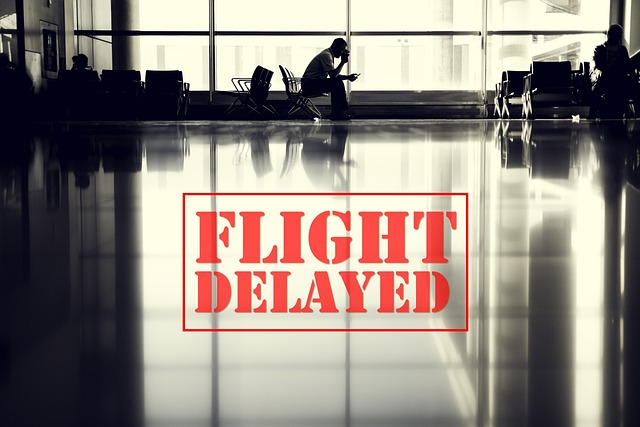
The Evidence You Can Verify Today
When a long delay hits, the fastest way to separate a real refund right from an airline promise is to check the primary documents, not the agent's script. I start with the carrier's Contract of Carriage and Customer Service Plan, usually linked in the site footer. Those pages state the airline's own commitments on refunds and delay handling; I search the PDF for "refund" and write down the stated turnaround commitment, because plans differ carrier by carrier. That note becomes my benchmark for whether the refund is late.
| Document | Where to check | Figure it yields |
|---|---|---|
| Customer Service Plan / Contract of Carriage | Carrier site footer; search the PDF for "refund" | Stated refund turnaround commitment |
| Fare rules in the booking record | "My Trips" or by calling and asking for the fare basis | Fare basis code and its restrictions |
| DOT complaint portal | Official complaint submission page | Complaint number for follow-up |
Next I open the booking record through "My Trips" or call and ask for the fare basis. The fare basis code tells me which fare family I bought and which restrictions apply to refunds and changes; it is the figure that explains why passengers on the same flight can have different rights. I do not assume basic and flexible fares are treated alike.
Finally, if the carrier's answer does not match its own plan, I use the DOT complaint portal and keep the complaint number it returns. That number is the figure I cite in follow-up, because it creates a dated record outside the airline's own system. I also save screenshots of the plan page, fare rules, and portal confirmation in a folder so the evidence is timestamped and portable.
The check is simple: compare the carrier's stated turnaround commitment against the complaint record and the fare basis. If the airline's offer conflicts with its own Customer Service Plan or with the fare rules shown in my record, I treat the conflict as a documentation issue, not a negotiation. The portal complaint number then gives me a neutral reference point while I wait for the refund to post to the original form of payment.

Cash Refund vs Airline Rebook Compared
For a domestic delay that has already crossed three hours, compare the two paths by the proposed arrival time, not by how the delay feels. If the airline's replacement itinerary lands within about two hours of your original arrival, accept the rebook: it costs you nothing out of pocket and keeps your ticket intact. If the replacement arrives two or more hours later, or pushes you to the next day, decline it and take the cash refund to your original form of payment, then buy the replacement separately. That arrival-time gap is the deciding variable.
| Proposed arrival vs. original arrival | Winner | Why |
|---|---|---|
| Within about 2 hours | Airline rebook | No out-of-pocket cost; ticket and fare rules stay in place. |
| 2+ hours later, or next day | Cash refund + self-rebook | Refund is verifiable and returnable to original payment; you control the replacement itinerary. |
The cash path is clean but not free of risk. The refund goes back to the original form of payment and you owe no change fee, yet you now bear the price risk of the replacement fare. Before you decline the rebook, check the live replacement fare on Google Flights so you know what the new ticket will cost while the airline's offer is still on the table. If that fare is unacceptable, the late rebook may be the cheaper way to get home even though it arrives later.
The rebook path wins on convenience when the arrival gap is small. A replacement that lands within roughly two hours of your original arrival preserves the value of the ticket you already bought and avoids forcing you to fund a new fare today. The tradeoff only turns against it when the new arrival is materially later, because then you are paying with time rather than money.
Make the comparison using final arrival times, not departure times, and use the same time zone for both. A proposed itinerary that departs sooner but lands much later, or lands on the next calendar day, should be treated as the late-arrival case. If the airline's offer is unclear, ask for the proposed arrival time in writing before you choose.

Costs and Numbers That Matter
The only arithmetic this section adds is the cost of being wrong in either direction: one mistake is an out-of-pocket overnight, and the other is a fare gap. Put both on paper before you commit, because the cheaper error is not obvious from the delay alone.
Wrong choice A is accepting a next-day rebook you did not need. Its measurable cost is a hotel night plus ground transport, and you should price both for your specific connecting city before deciding. No universal overnight figure applies here, so check current hotel rates near the connecting airport and the cost of ground transport at the time of the delay, and add the ride to and from the airport or hotel, parking changes, and any meal you would not otherwise buy, because those are part of the same error.
Wrong choice B is refunding when the rebook was fine. Its cost is (replacement fare) minus (original fare paid). If the replacement one-way domestic fare prices above your original fare, you pay that difference; if it prices below, the mistake costs less or nothing. Compare only one-way domestic fares, and do not mix taxes, fees, or round-trip prices into the same subtraction.
| Wrong choice | Cost to compute |
|---|---|
| Accept an unneeded next-day rebook | Hotel night + ground transport in the connecting city |
| Refund when the rebook was acceptable | Replacement one-way domestic fare − original fare paid |
Use the two formulas as downside estimates, not as a decision rule by themselves: the first is mostly cash you can see today, while the second depends on what the replacement itinerary actually costs at the moment you shop it. If you cannot price either item in the connecting city or in the fare market, treat that path as unpriced risk rather than as free.
Before choosing, write down the overnight total and the fare difference, then keep the smaller downside in view while you handle the airline's offer. That is the whole numerical discipline here: no invented thresholds, just your own two numbers.

3-Hour Delay Playbook
This playbook uses one illustrative method, not a real booking: a $280 one-way Chicago–Denver ticket. At T-2h, the app shows a 3.5-hour delay, and the airline offers rebooking that arrives 5 hours later than the original arrival. Because the delay is over 3 hours domestic and the offered arrival is more than 2 hours later, the stated rule points to declining the rebook and requesting the cash refund to the original form of payment, then rebooking separately if you still need to travel.
Checkpoint 1 is the screenshot. Capture the delay status with a visible timestamp before the screen changes, and note both the delay length and the arrival gap in the offered rebooking. That image is your first record of what the airline presented at that moment; keep it with the original itinerary details so the sequence is easy to reconstruct later.
Checkpoint 2 is a live market check, not a promise. Search Google Flights for the cheapest replacement one-way, filter by your arrival deadline, and record the fare and fare class. The point is to measure the alternative's value against the refund you are requesting, not to assume the refund will cover it. If the replacement costs more, that gap is part of your decision; if it costs less, you still keep the refund path as the default.
Checkpoint 3 is the refund record. Decline the offered rebook, request the cash refund to the original form of payment, and save the refund confirmation number from the airline. Do not treat a verbal assurance or a pending status as complete until you have that number and can match it to the original ticket and payment method.
| Checkpoint | Action | Record |
|---|---|---|
| 1 | Screenshot delay status with timestamp | Delay length and offered arrival gap |
| 2 | Google Flights cheapest replacement one-way filtered by arrival deadline | Fare and fare class |
| 3 | Decline rebook; request cash refund to original form | Refund confirmation number |
Reusable checklist: confirm the delay and offered arrival gap; screenshot the status with timestamp; price one replacement one-way by arrival deadline and note fare and fare class; decline the rebook if the rule's conditions are met; request cash refund to the original form; save the confirmation number; rebook separately only after the refund request is documented. Run the steps in order, and keep each record in the same timestamped folder or email thread.
Also worth reading A humanoid robot triggers a bizarre What happens when a plane toilet United saver awards 2026: which
What to do next
Frequently Asked Questions
What should I do first when a delay is announced?
At the moment a delay is announced, before you interact with any airline counter, start by capturing the cause.
How can I document the delay reason for possible entitlements beyond rebooking?
Ask the gate agent for the delay reason in writing, or screenshot the app status while it is still visible.
Where should I check carrier-specific rules for a delayed flight?
Check the carrier-specific rules through the airline's own Customer Service Plan posted on its website.
What determines what I may be entitled to beyond rebooking?
Whether the cause is airline-controllable or weather/ATC determines what you may be entitled to beyond rebooking.
To what should the cash refund be requested?
Request the cash refund to the original form.
How should an offered rebook be compared?
Compare any offered rebook by arrival time, not departure convenience.
Quick answers
| What path should you default to for 3-hour-plus domestic US delays? | Default to the cash/refund path for 3-hour-plus domestic US delays. |
| When does the refund apply on a domestic US itinerary? | Applies at 3 hours or more on a domestic US itinerary; the refund is verifiable in minutes. |
| What rebook should be declined? | Decline a rebook that arrives more than 2 hours after the original arrival. |
| What threshold is used before requesting the cash refund to the original form? | Threshold is more than 2 hours later than the original arrival; request the cash refund to the original form. |
| What should you do after taking the refund? | Rebook separately after taking the refund. |
Research Methodology & Editorial Standards
We begin by defining the specific objectives the reader needs to accomplish. Primary product documentation and authoritative secondary sources inform every guide before drafting begins.
Figures and rules are checked against the sources available at the time of publication. Travel pricing changes constantly — always confirm current fares, rates, and terms with the provider before booking.