
Overbooked Flight Compensation 2026: Volunteer or Hold Out for $1,550?
This guide breaks down US DOT and EU261 payouts for overbooked flights in 2026. It shows when to volunteer for a voucher versus holding out for cash.
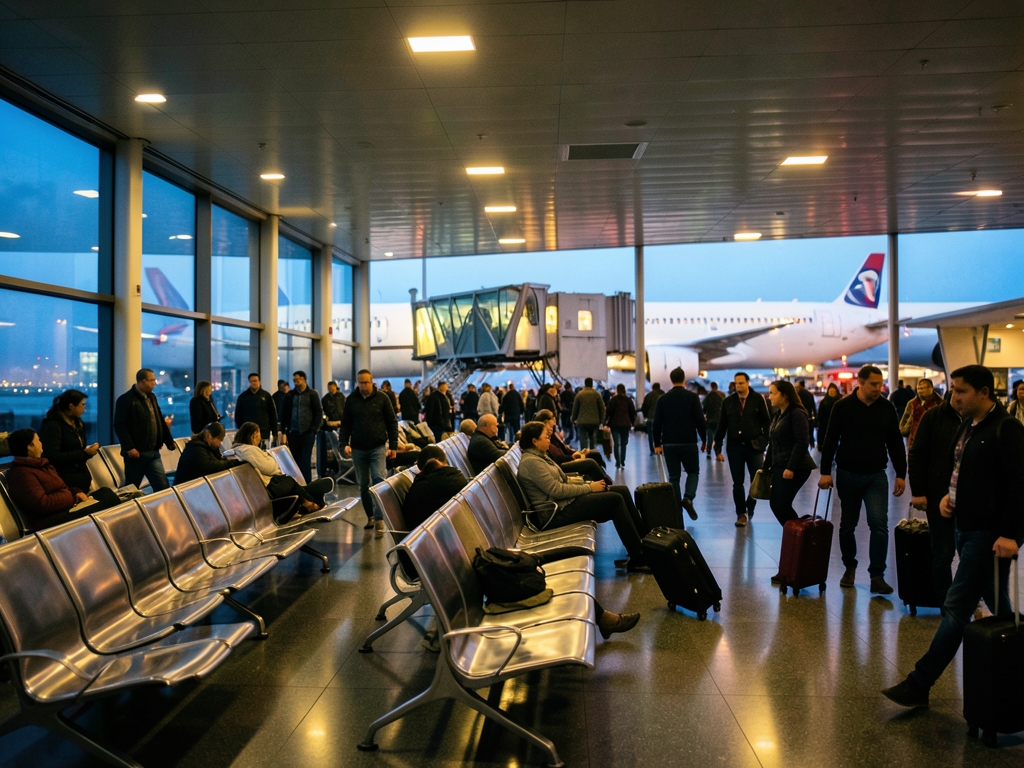
This guide breaks down US DOT and EU261 payouts for overbooked flights in 2026.
It shows when to volunteer for a voucher versus holding out for cash.
How Overbooking and Bumping Actually Work
Overbooking is legal and routine: an airline sells more tickets than the aircraft has seats, betting that some passengers will not show up. If everyone does show up, the airline must deny boarding to some travelers. Under the rules described by Flightright and AirHelp, gate staff must first ask for volunteers before anyone is involuntarily denied boarding. That volunteer-first step is the hinge of the whole process: it gives the airline a chance to solve the seat shortage by agreement before the statutory bumping rules are triggered.
The compensation ladder then splits into two tracks. Volunteers negotiate whatever the airline offers, and that offer is often a travel voucher rather than cash; in some cases, United now makes such offers through its app before you even reach the airport, according to The Points Guy. Involuntary denied boarding, by contrast, triggers a fixed statutory formula rather than a negotiated deal. AirHelp notes that the gate offer can look like an easy win—a voucher for taking a later flight—while the airline may owe more if it actually bumps you.
Airlines have an incentive to move that volunteer ask earlier and make it frictionless. Which? describes airlines using one-click style offers to reduce payouts to passengers on overbooked flights, and the broader point is simple: a volunteer who accepts before the gate is not an involuntary bumping case. That is why app-based and pre-gate offers appear before anyone is forced off the flight: they convert a possible statutory obligation into a negotiated voucher deal.
The gate ask is deliberately presented as a quick, low-friction choice, not as a comparison with the cash you could legally force. AirHelp's description of the typical gate announcement—an offer of a voucher to anyone not in a hurry—shows why passengers may accept before doing the math. The practical check is to treat the volunteer offer as a bid against your involuntary ceiling, not as a favor or a bonus, and to volunteer only if the offer beats what the involuntary formula would produce.
If no one volunteers, or not enough do, the airline moves to involuntary denied boarding and the fixed formula applies. At that point the negotiation is over; the issue becomes documentation, timing, and the carrier's compliance with the rules. Keeping your ticket, boarding pass, and any written offer lets you compare what was proposed with what the statute requires, without having to reconstruct the sequence later.
The Evidence: What Each Regime Actually Pays
On a US overbooked flight in 2026, involuntary denied boarding can pay up to $2,150 in cash, according to myjet24.com; that ceiling is 400% of the one-way fare shown on your ticket. The widely repeated $1,550 figure is the older 400% cap, so treat it as outdated and verify the current ceiling on the DOT website before your trip. If an agent quotes $1,550, ask which regulation and date support it.
Under EU261, involuntary denied boarding pays €250, €400, or €600 in cash by distance band, per myjet24.com, and AirHelp cites the top band as €600, roughly $650. The airline still owes rebooking and care in addition to that cash amount, so compare the total recovery, not just the headline cash.
Volunteer payouts are different: AirHelp notes that airlines usually offer a travel voucher, and the amount is negotiated at the gate rather than set by the statutory involuntary figures. A voucher can be worth more than the cash you could force, but only if the offer actually exceeds that amount; otherwise the statutory benchmark remains the better floor.
Because caps and program rules can change, verify the current ceiling on the DOT website before your trip and compare any gate offer with the cash you could legally force. If the offer is lower than that computed ceiling, the cited 2026 figures favor holding out for involuntary denied boarding. Keep the comparison in the same currency and on a one-way basis.
Keep the source labels with the numbers: myjet24.com for the US and EU ranges, AirHelp for the top EU band and voucher practice, and the DOT website for the current US ceiling. That habit prevents an outdated quote from becoming your benchmark.

Volunteer Offer vs Hold Out: The Winner Table
The gate decision is a side-by-side comparison, not a reflex. Put the offer's usable cash value next to the cash you could force if you are involuntarily denied boarding, then choose the larger and more certain amount. The comparison should be made before you raise your hand, because a volunteer commitment can remove your leverage.
| Option | What you receive | When it wins |
|---|---|---|
| Volunteer for voucher | Airline travel credit or voucher | Only if its usable value exceeds your involuntary ceiling and you can use it before restrictions reduce it |
| Volunteer for cash | Cash offered at the gate | If the amount is above your involuntary ceiling |
| Hold out involuntarily (US DOT) | Statutory cash compensation | If the volunteer offer is voucher-only or below your ceiling |
| Hold out under EU261 | Statutory cash by distance band | Same hold-out rule on EU-covered flights |
Volunteer for cash wins when it is above your involuntary ceiling. For example, an $800 cash offer beats a $350 involuntary payout on a cheap one-way fare, because the extra $450 is immediate and does not depend on later travel. The same logic applies if the cash offer is only slightly above the ceiling, provided it is unconditional.
Volunteer for a voucher wins only in a narrower case: the voucher's usable value must exceed your ceiling and you must be able to use it before restrictions, blackout dates, or expiry reduce it. If you cannot confidently use it, the headline value is not real value, and the voucher should be discounted accordingly.
Hold out wins when the offer is voucher-only or below your ceiling. Statutory cash is not a voucher, does not expire, and is the amount you can force under DOT or EU261 rules; a voucher can be worth less even when its face value looks larger. This is why a voucher-only offer should be compared to zero cash, not to its printed value.
The same framework applies regardless of airline: compute your ceiling once, compare the offer's cash value to it, and treat loyalty perks or branding as secondary. If two options are close, prefer cash that is unconditional, because conditions convert a headline number into a smaller realized number.
The winner is therefore the option with the highest certain, usable cash value, not the first offer the gate presents. Re-run the comparison if the gate improves the offer, but do not volunteer merely because the line is moving.

The Three Numbers That Decide Your Gate Math
Your gate math rests on three numbers, not on the voucher amount: the one-way fare shown on your ticket, the cap or distance band that applies to your flight, and the costs you would personally absorb if you volunteer. Read each from a document or your own itinerary before the gate agent asks for a decision.
Start with the one-way fare as ticketed. The DOT's 200% and 400% tiers both key off that one-way base, so a round-trip total is not the base for those percentage tiers; if your receipt shows only a combined fare, get the one-way figure before doing any percentage math. Label the currency beside the number so you do not compare a dollar fare with a euro cap or a round-trip total with a one-way percentage.
Next, identify the jurisdiction and, for EU261, the distance band. AirHelp lists EU261 denied-boarding amounts of €250, €400, or €600 depending on distance band. For a US flight, myjet24.com cites a $2,150 DOT cap for 2026, but because caps can change, check the current DOT denied-boarding cap directly rather than trusting a cached blog figure.
Third, add the costs you would eat by volunteering: a hotel night, a missed tour, a rebooking gap, or any other expense the volunteer arrangement does not cover. These costs are not part of the legal involuntary payment, but they belong in your comparison because a voucher that merely equals the involuntary ceiling can still leave you out of pocket.
Your comparison number is the involuntary ceiling for your route plus those personal costs. Compute the percentage tier against the one-way fare, apply the cap or distance-band amount that governs the flight, then add your out-of-pocket costs. Compare a volunteer offer only against that total, and only in the same currency and unit.
Keep the three numbers separate until the final comparison. Mixing the fare base with the cap, or folding personal costs into the legal ceiling, is the common gate-math error; the fare determines the percentage, the regime determines the cap, and your itinerary determines the add-on.
| Input | Where to read it | How to use it |
|---|---|---|
| One-way fare as ticketed | Ticket receipt or fare breakdown; ask the agent if only a round-trip total is shown | Base for the DOT 200% and 400% tiers; label currency before comparing |
| Applicable cap or distance band | Jurisdiction and route: EU261 distance band or current DOT cap page | EU261 sets €250, €400, or €600 by distance band (AirHelp); US DOT cap is $2,150 in 2026 per myjet24.com, but verify the current cap |
| Out-of-pocket costs of volunteering | Your own itinerary: hotel, missed tour, rebooking gap | Add to the involuntary ceiling before comparing a voucher |

Where the Rule Breaks Down
The 400%-of-fare cap is a ceiling, not a promise: holding out only wins when the cash you could legally force is larger than the volunteer offer, and two common edge cases can shrink that cash side of the comparison.
On an award or redemption ticket, the two regimes treat the fare differently. EU261 compensation is tied to the route, so a redemption booking can still carry the route-based amount regardless of how you booked. Under the US DOT percentage-of-fare tier, a partner award ticket with a $5.60 fare basis can calculate to almost nothing, so the involuntary cash may be far below the headline cap. Before holding out on an award seat, check how your carrier calculates the fare basis and verify the carrier's denied-boarding contract on its website.
A voucher can also lose to cash even when the headline number looks generous. A $1,200 voucher with blackout dates and a 12-month expiry can be worth less than a $700 cash entitlement once you account for dates you cannot use, expiry risk, and the value of unrestricted money. which.co.uk's consumer advice on denied boarding warns that airlines push volunteer offers and that one-click prompts can reduce payouts, so treat the voucher's restrictions as part of its price.
So the practical test is not "is the offer below the cap?" but "is the offer below the cash I could actually force on this ticket, in this currency, with these restrictions?" If the fare basis is tiny or the voucher is heavily restricted, volunteering can be the better deal even when the naive 400% rule says hold out.
Keep the comparison in the same units: compare a voucher's usable value to the cash you could force, not to the maximum possible payout. If you cannot verify the fare basis or voucher terms before the gate closes, ask for the terms in writing and compare them to your involuntary ceiling rather than assuming the cap applies.

Worked Gate Example and Your Pocket Checklist
Worked example: on a US domestic coach ticket with a $310 one-way fare, a $500 gate voucher faces an involuntary ceiling of 400% × $310 = $1,240, which is below the $2,150 US cap cited by myjet24.com for 2026. If you are bumped, holding out is worth $740 more than the voucher; if your seat survives boarding, holding out is worth $0 while the voucher would have been $500.
The cost of being wrong runs both ways. Volunteer on a flight that did not need volunteers and you can be left holding a $500 voucher you did not need. Take the voucher on a flight that would have bumped you and you may give up $740 of cash you could have forced. Hold out on a flight that boards with your seat intact and you give up $500 you could have taken. The voucher wins only when it exceeds the ceiling you could legally force; in this example it does not.
Two refinements matter at the gate. First, a voucher's headline value is not always its usable value: restrictions, expiry, or blackout dates can make a $500 voucher worth less than $500 cash. Second, if the gate raises the offer, rerun the same comparison; your ceiling does not change, but the winner can.
| Check | What to do |
|---|---|
| 1 | Read the one-way fare on your ticket, not the round-trip total. |
| 2 | Multiply that fare by 4; for a US flight, cap the result at $2,150. |
| 3 | For an EU flight, use the EU261 distance band that applies to your route. |
| 4 | Compare the gate offer to that ceiling; volunteer only if the offer is larger. |
| 5 | Ask whether volunteers are actually needed before giving up your seat. |
| 6 | If you hold out, stay at the gate, keep your boarding pass, and document the offer. |
If you volunteer, get the replacement flight, seat assignment, and voucher terms in writing before you surrender your boarding pass. If you are involuntarily denied boarding, ask for the reason and compensation in writing, keep receipts and screenshots, and do not let a voucher replace cash unless it beats your ceiling. In the example, the decision is $1,240 of possible cash against $500 of voucher value, with $2,150 as the outer US limit.
Five Gate-Side Decision Rules
Before you answer the gate, compute your involuntary ceiling: use the one-way fare shown on your ticket, not a round-trip or taxes-only figure, multiply it by four, and apply the US cap of $2,150 under the rules cited by myjet24.com or the EU261 distance band that applies to your route (€250–€600); write that number down. If the gate's cash offer is higher, accept it before boarding starts, because a better cash offer beats every involuntary outcome you could force later.
If the offer is a voucher, gift card, or travel credit, haircut it before comparing: check expiry, blackout dates, route restrictions, and whether you actually need a replacement ticket; face value is not usable value. Accept only if the discounted, usable value still clears the ceiling you just calculated.
If the gate shifts from asking for volunteers to calling names or assigning denied boarding, stop negotiating immediately and assert involuntary denied boarding in writing; request the statutory cash—up to $2,150 in the US or €600 in the EU's highest distance band—plus rebooking and any care the carrier owes, and keep your boarding pass, ticket, and any written refusal.
If an agent says the volunteer offer is final or tries to move you to a voucher after names are called, escalate in writing: ask for a supervisor, request the denied-boarding compensation in cash, and if unresolved, document names, times, screenshots, and the final response, then file with the airline and the relevant regulator; do not surrender your boarding pass until the remedy is stated.
If no offer clears your ceiling, or if you are not selected for denied boarding, decline or do nothing and let the process run; volunteering is optional, and a low or restricted offer does not beat a statutory cash claim you have not yet surrendered.
Also worth reading How to Claim Compensation for Denied How to Claim Denied Boarding Los Angeles to Manila Flights: Book
What to do next
| Step | Action | Why it matters |
|---|---|---|
| 1 | Confirm whether you are being asked to volunteer or are being involuntarily denied boarding. | Compensation is tied to involuntary denied boarding, not a voluntary seat give-up. |
| 2 | Compute your involuntary ceiling as 400% of the one-way fare shown on your ticket, capped at $2,150 under US DOT rules or set by the EU261 €250/€400/€600 distance band. | This is the amount you can hold out for before volunteering. |
| 3 | Convert the gate offer to cash-equivalent terms after any voucher haircut, then compare it with the ceiling. | Volunteer only if the adjusted offer beats the ceiling. |
| 4 | If the adjusted offer does not beat the ceiling, decline the volunteer request and remain available for involuntary processing. | Preserves your claim to the higher involuntary amount. |
| 5 | If you are involuntarily denied boarding, request cash compensation up to the $2,150 US cap or the applicable EU261 band amount. | Cash is the benchmark; vouchers may carry restrictions. |
| 6 | Get the fare basis, offer terms, voucher haircut, and denial status in writing before leaving the gate. | Documentation supports the compensation claim and comparison. |
Frequently Asked Questions
Do airlines have to ask for volunteers before involuntarily denying boarding?
Under the rules described by Flightright and AirHelp, gate staff must first ask for volunteers before anyone is involuntarily denied boarding.
What form does compensation usually take for volunteers?
Volunteers negotiate whatever the airline offers, and that offer is often a travel voucher rather than cash.
Can an airline ask for volunteers before I reach the airport?
In some cases, United now makes such offers through its app before you even reach the airport, according to The Points Guy.
What happens if I am involuntarily denied boarding?
Involuntary denied boarding, by contrast, triggers a fixed statutory formula rather than a negotiated deal.
Why might a gate voucher offer be misleading?
AirHelp notes that the gate offer can look like an easy win—a voucher for taking a later flight—while the airline may owe more if it actually bumps you.
Is overbooking legal?
Overbooking is legal and routine: an airline sells more tickets than the aircraft has seats, betting that some passengers will not show up.
Quick answers
| What payouts does this guide break down for overbooked flights in 2026? | It breaks down US DOT and EU261 payouts for overbooked flights in 2026. |
| What must gate staff do before anyone is involuntarily denied boarding? | Gate staff must first ask for volunteers before anyone is involuntarily denied boarding. |
| What do volunteers often receive instead of cash? | Volunteers negotiate whatever the airline offers, and that offer is often a travel voucher rather than cash. |
| What triggers a fixed statutory formula rather than a negotiated deal? | Involuntary denied boarding triggers a fixed statutory formula rather than a negotiated deal. |
| What does AirHelp note about a gate offer that looks like an easy win? | AirHelp notes that the gate offer can look like an easy win—a voucher for taking a later flight—while the airline may owe more if it actually bumps you. |
Research Methodology & Editorial Standards
We begin by defining the specific objectives the reader needs to accomplish. Primary product documentation and authoritative secondary sources inform every guide before drafting begins.
Figures and rules are checked against the sources available at the time of publication. Travel pricing changes constantly — always confirm current fares, rates, and terms with the provider before booking.