
JetBlue BlueFirst introductory fares 2026: book 14 days before reset or wait?
This guide covers JetBlue's BlueFirst introductory fares arriving late 2026 on non-Mint aircraft, and whether a 14-day-before-departure reset exists.

This guide covers JetBlue's BlueFirst introductory fares arriving late 2026 on non-Mint aircraft, and whether a 14-day-before-departure reset exists.
It states the booking rule plainly: book the day the fare class you want first appears, because no 14-day reset is documented.
How BlueFirst fares actually work
JetBlue announced BlueFirst as its first domestic first-class product, with rollout starting later in 2026 across the airline's non-Mint aircraft and routes (Morningstar / Business Wire). That makes BlueFirst a new cabin on aircraft and routes that do not have Mint, rather than a renamed version of an existing premium product. To confirm the announcement date yourself, check JetBlue's own press materials and the BlueFirst page rather than relying on a secondhand date.
The announcement says JetBlue is replacing the Core fare-brand shopping model with a more intuitive comparison flow, so customers can compare onboard experiences rather than starting with fare brands (Morningstar). For a buyer, the check is to read the flow as cabin-first: confirm the flight is a non-Mint aircraft with BlueFirst, then compare the BlueFirst offer with the other cabins shown for that exact flight.
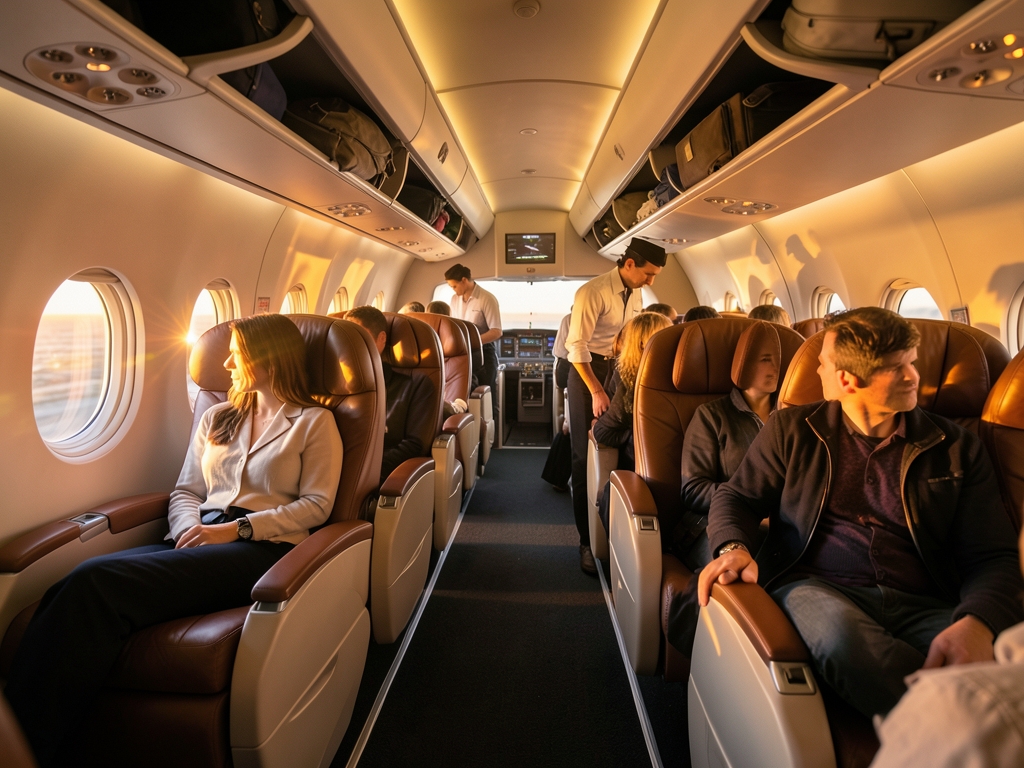
JetBlue's BlueFirst page describes the cabin as wide recliner seats with up to 7 inches of extra legroom and up to 5 inches of recline, located in the first few rows for faster boarding and deplaning (JetBlue.com BlueFirst page). Those details describe comfort and boarding position; they do not establish which routes will have the cabin or how any fare will be priced.
Because the rollout is across non-Mint aircraft and routes, BlueFirst availability is flight-specific. Check the operating aircraft, seat map, and inclusions shown for the exact flight before purchase. JetBlue's BlueFirst page also lists a complimentary bento-inspired FirstFare box on select flights, so meal inclusion should be confirmed for the specific flight rather than assumed from the cabin name.
The booking flow is therefore the working source of truth for what is actually for sale on a given flight. If BlueFirst appears for the aircraft, route, and cabin you want, verify the seat, inclusions, and flight details shown there before paying, and do not assume a later fare reset or standard booking window applies unless JetBlue publishes one for BlueFirst.
One simple rule follows from the product and shopping changes described above: use the new comparison flow to confirm the exact flight's cabin, seat, and inclusions, then decide from the offer in front of you rather than from an expected future price change.
The evidence on BlueFirst pricing
The evidence test is simple: a fare rule must be published somewhere a customer can cite. JetBlue's BlueFirst page describes the cabin experience—wide recliner seats, a complimentary meal, and priority service—but publishes no fare chart, no booking window, and no 14-day rule (JetBlue, BlueFirst page). That absence is the finding: the product is documented as an experience, not as a fare product with published booking conditions.
The Business Wire release carried by Morningstar describes the shopping overhaul and BlueFirst launch timing, but contains no introductory fare amounts and no booking-window language (Morningstar / Business Wire). It is a product-and-shopping announcement, not a fare filing or rule page, so it cannot support a claim that BlueFirst introductory fares reset at any specific pre-departure point.
Live and Let's Fly reports BlueFirst will add seats to A320s and begin rolling out later in 2026, with no fare-window detail (Live and Let's Fly). Its focus is cabin capacity and rollout timing, not fare availability, so it does not establish a 14-day-before-departure reset either.
Taken together, the verifiable BlueFirst facts are product facts—cabin, meal, and priority service—not pricing rules. No source in the available sources publishes a BlueFirst fare chart, a booking window, or a 14-day reset. Therefore, any strategy that waits for a documented 14-day reset is waiting for a rule that has not been published; the only evidence-based trigger is the appearance of the desired fare class in the booking flow.
A useful check before booking: open the fare details and terms on the specific itinerary, save a screenshot of the fare class and price shown, and compare it with later searches. If a later search shows a different fare class or price, the change is observable; if no 14-day rule appears in JetBlue's published terms, treat that absence as absence rather than as a hidden schedule.
Options compared: book early vs wait
Once BlueFirst inventory is live, the booking decision comes down to three realistic paths: buy the moment your target fare class appears, wait for a 14-day-before-departure reset that supposedly reopens cheaper inventory, or hold out for a mistake fare. Only the first one rests on anything JetBlue has actually published. The other two are bets against a rulebook nobody has seen.
Option A — book on first sighting — wins because there is nothing to wait for. JetBlue's BlueFirst page (jetblue.com/flying-with-us/bluefirst) describes the seat, the meal, and the priority service, but publishes no fare chart, no booking window, and no inventory-release schedule. The announcement (Morningstar / Business Wire) covers the fare-shopping overhaul and the cabin's rollout on non-Mint aircraft, not a pricing calendar. When a fare class first appears in the booking flow, that appearance is the only documented signal you will get. Treat it as the trigger, not as an early look at something better coming.
Option B — wait for a 14-day reset — loses on evidence. A fare rule has to be citable somewhere a customer can point to. Across the available sources, there is zero corroboration of any JetBlue rule that resets, reopens, or discounts BlueFirst inventory at 14 days before departure. That absence matters more than usual here, because BlueFirst is a brand-new cabin: it has no historical pricing pattern to extrapolate from, and no published structure that would make a 14-day mechanism plausible. Waiting on an undocumented reset means surrendering a seat you could have held in exchange for a discount that no source promises.
Option C — wait for a mistake fare — is speculative by definition. Error fares surface from pricing glitches, and BlueFirst inventory is not yet live at scale, so there is no fare history to glitch against. You cannot schedule a mistake fare, and you cannot verify one in advance. If one appears, it is a windfall, not a plan.
| Strategy | What you are waiting for | Documented basis | Verdict |
|---|---|---|---|
| A: Book on first sighting | The fare class you want appearing in the booking flow | JetBlue's own booking flow; BlueFirst page and July 27, 2026 announcement describe the product, not a pricing calendar | Winner |
| B: Wait for a 14-day reset | A hypothetical inventory reset two weeks out | None found in the available sources | Loses |
| C: Wait for a mistake fare | A pricing error on BlueFirst | None; inventory not yet live at scale | Speculative |
The practical rule follows from the table: set a fare alert or check the booking flow on your route, and when the BlueFirst fare class you want shows up, buy it. Do not build a calendar reminder for 14 days out, because no JetBlue source supports that deadline. And do not treat a mistake fare as a strategy — treat it as a bonus if it ever lands.
Costs and numbers that matter
The table below is the product-spec sheet for BlueFirst, not a fare sheet. Use it to judge what the seat actually adds: extra legroom, recline, a small cabin, and a meal that depends on distance and flight selection. Those figures describe the hardware and service; they do not price the seat. The booking flow does that.
| Spec | Figure | Source |
|---|---|---|
| Extra legroom | Up to 7 inches | JetBlue.com |
| Recline | Up to 5 inches | JetBlue.com |
| BlueFirst seats per A320 | 12 | Live and Let's Fly |
| FirstFare bento meal box | Select flights of 899+ miles | JetBlue.com |
Check the seat count first. Live and Let’s Fly reports 12 BlueFirst seats per A320. That is the supply cap on an A320 departure, so the BlueFirst cabin is a small inventory block. Before you assume a seat will be there later, open the seat map and count the BlueFirst rows. If several seats are already assigned, the remaining inventory is what you are shopping. That is a concrete check you can run before you buy.
Check the meal threshold second. JetBlue.com says the complimentary FirstFare bento meal box is available on select flights of 899+ miles. That is two conditions, not one: the route distance and the flight selection. A route can clear 899 miles and still not be a select flight for the meal. Confirm the specific flight shows the FirstFare service before you count the meal in your value calculation. If either condition is missing, treat the meal as absent from the product you are buying.
Check the comfort specs third. Up to 7 inches of extra legroom and up to 5 inches of recline are measurements, not price anchors. Compare them against the Main cabin seat you would otherwise buy. If the extra recline and legroom are the reason you are moving up, those are the numbers to weigh. If you are moving up only for the meal, the 899+ mile and select-flight conditions may remove that reason.
Use the specs as a checklist at the moment the fare class appears. The product bundle is: up to 7 inches extra legroom, up to 5 inches recline, one of 12 seats on an A320, and a meal only on select 899+ mile flights. If that bundle is worth the fare shown, the trigger is the fare class appearing in the booking flow. The specs do not set the fare; they give you the product side of the comparison so you can act on the fare side.
What the evidence does NOT establish
Before you build any booking strategy around BlueFirst, it is worth being blunt about what the published evidence does and does not establish. Three assumptions travelers commonly make about new premium fares have no support in JetBlue's own materials, and each one can be checked directly.
First, no 14-day-before-departure reset rule appears anywhere in JetBlue's announcement or on the BlueFirst page. Nothing in the Morningstar press release or on jetblue.com's BlueFirst section describes any pricing change tied to a departure-date countdown. To verify this yourself, search JetBlue's fare rules and the BlueFirst page for any language about advance purchase or timed fare adjustments. If the phrase does not appear there, waiting for a hypothetical reset two weeks out is speculation, not strategy.
Second, no introductory BlueFirst fare amount is published. JetBlue's BlueFirst page describes the cabin experience—wide recliner seats, a complimentary FirstFare meal box, priority service—but lists no prices. The only way to see what BlueFirst actually costs is to run a live booking on a non-Mint route after the rollout begins later in 2026 and read the fare off the screen. Any dollar figure you see quoted before that inventory loads is a guess.
Third, no BlueFirst booking window or advance-purchase requirement is stated in any of the source material. To confirm this, open JetBlue's fare-options comparison page once BlueFirst inventory appears and look for any minimum-purchase or availability-window language. Until that page says otherwise, the honest answer is that nobody outside JetBlue knows how far out these fares open or whether they behave like traditional first-class inventory.
None of this means the cabin is a mystery. JetBlue has published plenty about the product itself, from the Tuft & Needle foam cushions to seatback ordering. What remains unpublished is the commercial logic: how the fares are priced, when they load, and whether they fluctuate with departure proximity. Those are the three unknowns, and they are the only three that matter for deciding when to book.
The practical takeaway is procedural. Run the checks above—fare rules page, live booking flow, fare-options comparison—rather than anchoring to a booking deadline that no source supports. If JetBlue later publishes a booking window or a pricing rule, that changes the calculus; until then, the published record is silent, and your strategy should be built on what the booking flow shows you, not on rules that have not been written.
Verifying BlueFirst yourself
Because no published fare chart or booking-window rule exists anywhere in JetBlue's BlueFirst materials, the only way to know how these fares behave is to watch them yourself. Here is a three-checkpoint worksheet you can run in a live booking flow, start to finish, without trusting anyone's word—including mine.
Checkpoint 1 — Route. Open JetBlue's booking page and pick a domestic route on a non-Mint aircraft; the airline has said BlueFirst is rolling out across its non-Mint aircraft and routes, and Live and Let's Fly reports 12 BlueFirst seats being added to A320s. Confirm that BlueFirst appears as a bookable cabin option alongside the standard Main fares. If it does not appear on your route yet, note that and try another city pair—rollout is gradual, per JetBlue's announcement, so absence today is not evidence of absence at booking time.
Checkpoint 2 — Fare class. When BlueFirst appears, note the exact fare-class letter displayed next to it in the results. JetBlue's new structure is tiered, so the letter is your anchor: it is what the cabin label looks like underneath. Record the one-way price and the fare-class letter together, with a screenshot if you can. One-way is the correct unit here because JetBlue prices each direction independently—never mix a one-way observation with a round-trip total.
Checkpoint 3 — Inventory. This is where the 14-day myth gets tested. Search the same route at roughly 14 days before departure, again at 7 days, and again at 2 days. At each pass, record two things: whether the same fare-class letter is still available, and whether the one-way price has moved. If the fare class disappears as departure nears, that is inventory selling out—not a pricing "reset." If the price drops, that is dynamic pricing at work, and it confirms there is no fixed window to wait for.
Interpret the results conservatively. Three observations on one route is a data point, not a rule; a fare behavior that holds on a single city pair can differ on another. What the worksheet gives you is a defensible basis for your own booking decision rather than a guess borrowed from a forum.
The decision rule follows directly. If the fare class you want is visible and the price is acceptable when you first look, book it. Waiting for a hypothetical reset that no source—JetBlue's own BlueFirst page included—documents is a bet against nothing. Your worksheet results, not a rumored booking window, are the evidence that matters.
Decision rules for BlueFirst 2026
The decision rules below convert the timing question into four if/then tests you can run inside JetBlue's booking flow. They exist because the fare is new: JetBlue announced BlueFirst with rollout starting later in 2026 across the airline's non-Mint aircraft and routes (Morningstar / Business Wire). Until that rollout reaches your aircraft and route, the booking flow — not a rule sheet — is the only place the fare class is observable.
Rule 1: If you see the BlueFirst fare class you want in a live booking flow, book it. Not the cabin label in general — the specific fare class you would be content to fly in, on the specific departure you want. A 14-day-before-departure reset is not documented, so waiting spends availability without a documented mechanism that reprices the cabin for you. The sighting is the signal; the purchase is the action.
Rule 2: If you cannot find BlueFirst in the booking flow, the cabin has not rolled out on that route yet. JetBlue's own BlueFirst page describes the cabin as arriving later in 2026, and the rollout is staggered across non-Mint aircraft and routes, so absence in a search result is a coverage gap rather than a sold-out cabin or a hidden fare. Re-run the same search after the late-2026 rollout reaches your aircraft type instead of concluding the fare was missed.
Rule 3: If a fare you already booked drops before departure, check JetBlue's change and cancel policy for that specific fare class before assuming a rebook is free. Because BlueFirst fare terms are not published on the BlueFirst page, the applicable rules have to come from the fare you actually bought — read the terms attached to your confirmation, not a summary written by someone else.
Rule 4: If the cabin appears in your search but you have not yet chosen a fare, compare the BlueFirst and Main options in the same result before buying. JetBlue has described the redesigned shopping flow as an easier way to compare onboard experiences (JetBlue, via LinkedIn), which makes that side-by-side view the pricing evidence you can actually cite, rather than a third-party estimate.
Run the rules in order on every search, and note the date you first saw the fare class on your route. A dated sighting is what lets you tell a rollout change apart from a genuine price change when you check again.
Also worth reading How the 2026 FAA eVTOL certification JetBlue BlueFirst fares on sale: 4 Royal Caribbean 2026 price changes
What to do next
Frequently Asked Questions
If I want a specific BlueFirst fare class, when should I book?
Book the day that fare class first appears, because no 14-day reset is documented.
Is BlueFirst just a renamed version of an existing premium product?
It is a new cabin on aircraft and routes that do not have Mint, rather than a renamed version of an existing premium product.
What shopping change does the BlueFirst announcement describe?
JetBlue is replacing the Core fare-brand shopping model with a more intuitive comparison flow so customers can compare onboard experiences rather than starting with fare brands.
How can I verify the BlueFirst announcement date myself?
Check JetBlue's own press materials and the BlueFirst page rather than relying on a secondhand date.
What seat features does the BlueFirst page describe?
Wide recliner seats with up to 7 inches of extra legroom and up to 5 inches of recline, located in the first few rows for faster boarding and deplaning.
How should I compare cabins in the new flow?
Confirm the flight is a non-Mint aircraft with BlueFirst, then compare the BlueFirst offer with the other cabins shown for that exact flight.
Quick answers
| What booking rule does the guide state for BlueFirst introductory fares? | It states to book the day the fare class you want first appears because no 14-day reset is documented. |
| What does the guide cover about BlueFirst introductory fares? | It covers JetBlue's BlueFirst introductory fares arriving late 2026 on non-Mint aircraft and whether a 14-day-before-departure reset exists. |
| How is BlueFirst described as a cabin product? | JetBlue announced BlueFirst as its first domestic first-class product with rollout starting later in 2026 across non-Mint aircraft and routes. |
| What does the announcement say about the shopping model? | The announcement says JetBlue is replacing the Core fare-brand shopping model with a more intuitive comparison flow so customers can compare onboard experiences rather than starting with fare brands. |
| How does the BlueFirst page describe the cabin? | JetBlue's BlueFirst page describes the cabin as wide recliner seats with up to 7 inches of extra legroom and up to 5 inches of recline located in the first few rows for faster boarding and deplaning. |
Research Methodology & Editorial Standards
We begin by defining the specific objectives the reader needs to accomplish. Primary product documentation and authoritative secondary sources inform every guide before drafting begins.
Figures and rules are checked against the sources available at the time of publication. Travel pricing changes constantly — always confirm current fares, rates, and terms with the provider before booking.