
JetBlue BlueFirst fares on sale: 4 steps to compare 2026 prices and secure seats
This guide lays out a four-step method for comparing 2026 BlueFirst fares and finding suitable seats on eligible flights.

| Takeaway | Detail |
|---|---|
| BlueFirst launches December 8, 2026, on BOS-FLL. | The first cabin service begins with daily Boston–Fort Lauderdale flights. |
| Introductory BlueFirst fares cover more than 30 routes. | JetBlue put the cabin on sale October 15, 2026, ahead of the launch and wider rollout. |
| Use same-date Even More Space pricing as the booking threshold. | Compare BlueFirst with Even More Space plus the paid upgrade on the identical flight; book BlueFirst only when its introductory fare is at or below that total. |
| Skip a BlueFirst fare above the benchmark. | If the introductory price exceeds the same-date Even More Space plus upgrade total, wait for a fare sale or a lower TrueBlue redemption price. |
This guide lays out a four-step method for comparing 2026 BlueFirst fares and finding suitable seats on eligible flights. It establishes the launch route, 30-plus-route availability, and the same-date Even More Space benchmark to use before booking.
What BlueFirst is and when it flies
BlueFirst begins flying on December 8, 2026, with daily service between Boston and Fort Lauderdale, according to JetBlue’s investor-relations release. That launch date makes the Boston–Fort Lauderdale pairing the first practical test of the new cabin: check the same flight for BlueFirst availability, seat selection, meal service, and the fare required to book it before deciding whether the premium product is worth paying for upfront.
JetBlue put BlueFirst fares on sale October 15, 2026, initially offering the cabin on more than 30 routes. CNBC reported the route count and launch date, while Points Capital Travel highlighted select LaGuardia flights among the early offerings. The practical booking check is therefore simple: enter the intended origin and destination, open the eligible BlueFirst itinerary, and verify that the cabin appears for the desired date and direction. A route being on the early list does not establish that every flight or fare class on that route offers BlueFirst.
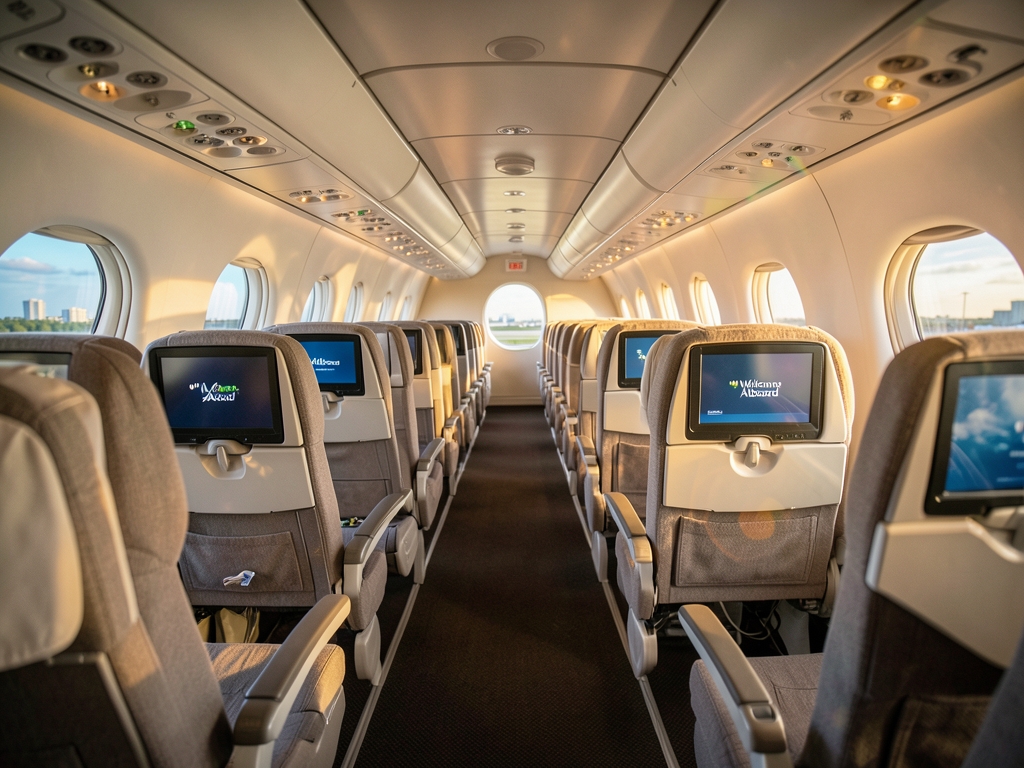
The seats are the core upgrade. JetBlue describes a wide recliner with up to 7 inches of additional legroom and up to 5 inches of recline. The cushions are crafted with Tuft & Needle’s T&N Flex foam, adding a defined comfort feature beyond the seat’s stated dimensions. For travelers comparing options, check the seat map before purchasing: confirm that BlueFirst provides the space and recline you need rather than paying for a product that merely carries the BlueFirst label.
BlueFirst also adds Bluetooth-enabled seatback screens, allowing eligible passengers to connect a personal device for entertainment. This feature is useful when judging the cabin against JetBlue’s other premium products, but it should remain secondary to the physical seat experience for anyone whose main priority is working, sleeping, or managing a long legroom-sensitive journey.
Food service depends partly on flight length. JetBlue says its bento-style FirstFare box—an entrée, side, and dessert, with choices rotating by time of day and travel direction—is offered on flights of 899 miles or longer. Use that mileage threshold as a menu check: on a qualifying flight, confirm the box is shown in the itinerary; on a shorter flight, do not assume the full meal is included. Once BlueFirst expands beyond the initial routes, the most important test remains whether the fare buys the specific seat, meal, and service experience you would otherwise purchase separately.
The evidence: launch facts by source
JetBlue’s investor-relations announcement is the primary-source starting point: it says BlueFirst is “now on sale,” introduces introductory fares, and identifies the initial service as daily between Boston and Fort Lauderdale. For booking purposes, the check is whether the desired flight appears in the BlueFirst search results and shows an introductory fare before payment. The announcement establishes that bookings are open, but its summary does not itself supply a route-by-route fare chart.
CNBC independently corroborates the scale and timing of the launch. Its report says BlueFirst is available for booking on more than 30 routes and that the cabin launches on December 8. That makes CNBC a useful second check on whether JetBlue’s booking inventory is wider than the initial Boston–Fort Lauderdale service. The practical test is to search the published routes rather than assume that every eligible aircraft rotation will offer the cabin on the launch day.
Points Capital Travel adds the clearest publication chronology: it dates the sale’s opening to October 15 and says the first flight is scheduled for December 8 from Boston to Fort Lauderdale. It also notes that select LaGuardia routes are included. The actionable check is therefore twofold: verify that the same flight in JetBlue’s booking engine exposes BlueFirst, and confirm that the quoted total can be reproduced on the outlet’s cited booking date. Pricing can change as the introductory inventory moves.
Taken together, the three outlets provide a consistent convergence on the launch evidence: JetBlue confirms that sales are open and the first service is Boston–Fort Lauderdale, CNBC confirms booking across more than 30 routes, and Points Capital Travel independently dates the on-sale opening and identifies the first flight. Readers should treat the route list as the screening tool, then price the exact itinerary inside JetBlue. A listing alone does not establish the best fare, so compare the displayed BlueFirst total with the same flight’s available upgrade path on that same booking date before deciding.

Launch fares vs. upgrade math: pick cheaper
The practical BlueFirst booking test is not whether the cabin looks cheaper than Mint; it is whether the introductory fare beats the actual cost of reaching the front of the same aircraft on the same date. Open JetBlue’s booking flow and price the Boston–Fort Lauderdale itinerary in round-trip mode only. Search the same travel dates and passenger count in BlueFirst, then repeat the search in Even More Space coach. For the coach result, price the same flight with a paid cabin upgrade through to the first-class cabin. Keep every itinerary identical so that differences in taxes, routing, and included services do not distort the comparison.
| Booking path | What to record | Decision use |
|---|---|---|
| Buy BlueFirst upfront | Final round-trip price, including taxes and fees | Cash baseline for the comparison |
| Even More Space plus paid upgrade | Coach fare plus the upgrade charge, reconciled to one final round-trip total | Tests the cost of constructing the same cabin booking indirectly |
| TrueBlue redemption | Live award price in points, including any cash copay and the associated taxes and fees | Tests whether the launch pricing also lowers the points cost |
Then check the TrueBlue award calendar for that exact itinerary. JetBlue prices award bookings in points tied to the applicable cash fare, so a temporary cash-fare reduction should also appear in the live points quote. The sources reviewed for BlueFirst do not publish the points required for this launch, so verify the number in the booking flow rather than estimating it from another route or date. If the points quote moves with the introductory cash fare, the launch benefit may be available to both cash and points customers; if it does not, the cash discount is the relevant advantage.
Apply one winner rule: whichever of the three paths has the lowest final labeled cost on your exact travel date wins, with the TrueBlue path compared in points and any required cash payment rather than against dollars alone. Book BlueFirst upfront only when its round-trip total is at or below the same-date Even More Space-plus-upgrade total. Otherwise, wait for a fare sale or for TrueBlue redemption pricing to become more attractive. Revisit the comparison before purchasing because introductory inventory and award availability can change while the rollout reaches additional flights.
Numbers that matter for launch week
Start launch-week comparisons with the route itself. BlueFirst is on sale across more than 30 routes, according to CNBC, but the practical first check is whether your city pairing appears on JetBlue’s BlueFirst flight finder. Do not assume that the first routes in the booking system are the only eligible markets, or that every nearby airport is included. If your itinerary is absent, the introductory offer cannot serve as a reason to build the trip around BlueFirst.
Then look for the two product checkpoints that can materially affect the value calculation. JetBlue’s BlueFirst page says the bento-inspired FirstFare box—an entrée, side, and dessert with rotating choices—is offered on flights of 899 miles or more. A shorter BlueFirst sector may therefore offer a different food-service package, so include that possibility in your assessment rather than assigning the full bento value automatically. The same page advertises up to 7 inches of extra legroom. Treat that as a comfort checkpoint when comparing itineraries, but not as a standalone reason to pay more; verify the actual cabin and fare options available on your flight.
JetBlue’s investor-relations announcement describes the introductory BlueFirst fares as “select.” That wording matters because a sale can have limited inventory, and the lowest visible fare may not appear for every date. For each candidate route, spot-check at least three dates before judging the offer. Test different weekday and nonweekday combinations where practical, and record the BlueFirst price shown for each exact itinerary rather than relying on the route’s cheapest result.
For every date checked, compare the BlueFirst fare with the cost of the same flight in coach plus the Even More Space cabin and a paid upgrade, using the same date, same itinerary, and same passenger count. Add the upgrade cost to the coach fare, then compare the resulting one-way total with the one-way BlueFirst fare. Do not compare a one-way BlueFirst price with a round-trip coach fare, or treat taxes included in one displayed total as though they were included in the other.
Book an introductory BlueFirst fare only when it is at or below that same-date coach-plus-upgrade total. If all three sampled dates price meaningfully above the alternative, the sale is thin on that route; waiting for a fare sale or a better TrueBlue redemption price is the stronger move. This method keeps the decision grounded in the exact booking options available rather than the headline promise of introductory pricing.

What the launch coverage does not tell you
The launch announcement is useful for establishing that BlueFirst inventory is open, but it is not a substitute for checking the actual fare at checkout. JetBlue’s investor-relations release says introductory BlueFirst fares are available through its booking channel, while the CNBC and Points Capital Travel coverage likewise describe the cabins as bookable. None of those sources publishes a dollar fare for the Boston–Fort Lauderdale launch-day flight. The explicit list of unpublished figures—dollar fare levels, Mint overlap, and change-fee rules—are all absent from the sources. Pull the live fare yourself for the exact date, itinerary, passenger count, and cabin rather than relying on a number quoted in launch coverage.
Your decision rule should remain a like-for-like comparison. Before selecting BlueFirst, price the identical itinerary in the same booking flow as Even More Space plus the required paid upgrade. Compare the total amount payable for the same flight and cabin request, including any taxes or mandatory carrier charges shown at checkout. A lower headline BlueFirst fare is useful only if it is at or below the same-date upgrade math; if it is higher, wait for a fare sale or compare the available TrueBlue redemption price. Do not treat an introductory fare on one route as evidence that the introductory price will carry to another.
Pay particular attention to routes that previously offered Mint. The launch materials do not state whether BlueFirst and Mint pricing interact on shared aircraft, whether the products can overlap on the same flight, or whether the existence of one premium product changes the price of the other. That question is not settled by the fact that BlueFirst is now on sale. In the booking flow, check the cabin and product options for the specific aircraft and operating flight. If Mint appears on the route, open the fare details for both products and confirm the actual upgrade cost rather than assuming the earlier Mint price remains intact.
The checkout fare rules are the final authority, but the cited JetBlue release, CNBC report, and other launch coverage do not spell out BlueFirst change and cancellation rules for the new fare classes. They also do not state how those classes earn TrueBlue points. Those details can vary by fare class, and a published announcement alone does not reveal them. Before payment, open the fare rules and look specifically for change fees, cancellation treatment, credit terms, and the applicable TrueBlue earning schedule.
Make the booking only after all three checks agree: the live BlueFirst price is no higher than the identical-flight upgrade calculation, the Mint interaction on that aircraft is clear from the booking flow, and the fare rules disclose the change, cancellation, and earning treatment you accept. If any one of those checks is missing, treat the fare as incomplete information rather than a confirmed value. That approach avoids mistaking launch availability for a fully specified bargain and keeps the comparison anchored to the terms JetBlue actually presents for your flight.

Booking BOS-FLL launch day
Use the December 8 Boston–Fort Lauderdale itinerary as a controlled booking checkpoint. On JetBlue’s booking page, search the route for that date and select a round trip. Open the BlueFirst option and note the fare class letter exactly as displayed. Then repeat the search for the same travel dates, passengers, and flights, but price the same itinerary in coach with Even More Space selected and the applicable paid upgrade added. Compare prices only after reaching the checkout or fare-breakdown screen.
The worksheet keeps the comparison from drifting to a different flight. Use the same travel dates, passenger count, connections, baggage assumptions, and fare conditions on every attempt. Record BlueFirst’s round-trip total, including taxes, and the round-trip coach-plus-upgrade total on the same basis. If the site displays a one-way points price, record each leg as one way and then add the two figures; do not treat that sum as a cash fare. If a cabin or fare bucket is unavailable, mark it unavailable rather than substituting another itinerary.
Apply the decision rule to the identical flight: book an introductory BlueFirst fare only when its round-trip total is at or below the same-date coach price with Even More Space plus the paid upgrade. If BlueFirst costs more, the upgrade path is cheaper on the checkpoint flight. TrueBlue pricing is a separate comparison, so use the points actually shown for the same BlueFirst itinerary and check the cash price or taxes presented with that redemption option.
Both errors carry a cost. Paying above the coach-plus-upgrade total for BlueFirst wastes the fare difference. On the other hand, delaying solely in expectation of a sale can leave the introductory fare unavailable, and a later price may be higher. The practical rule is not to wait reflexively: complete the checkpoint, select the cheapest qualifying option available on the identical flight, and revisit the booking if a later sale creates a better price.
Worked Example: Run the Numbers
This worked example is illustrative, not a quoted fare: one adult, one one-way Boston–Fort Lauderdale itinerary, departing December 8, 2026. The comparison uses the same flight, same passenger count, and same booking session for every option. JetBlue’s BlueFirst page is the source to check for the displayed cabin price, while the standard flight checkout supplies the economy and upgrade alternatives.
Start with the BlueFirst total. Let B be the final, taxes-and-fees-included one-way total for one passenger when BlueFirst is selected. The BlueFirst total is:
BlueFirst cost = B + T
Next, price the reader’s stated alternative: Even More Space plus the paid upgrade. Let E be the all-in economy fare for that exact flight and U the paid-upgrade charge. The comparison total is:
Even More Space + upgrade cost = E + U + F
For an apples-to-apples result, do not compare a BlueFirst fare containing taxes with an economy base fare that excludes them. Open both configurations in the same checkout session and record each final total. If a quoted “fare” differs from the final payable amount, use the latter. JetBlue’s public BlueFirst materials confirm that fares are being sold, but the launch coverage reviewed here does not include a stable dollar price, so inserting one would turn this example into an invented quote.
This example’s break-even trigger is exact: BlueFirst wins only when B is less than or equal to E + U. If that condition holds, book the introductory BlueFirst fare; if it fails, the Even More Space-plus-upgrade configuration is cheaper. The tie goes to BlueFirst under the reader rule because the rule permits booking at the threshold, not only below it. Recheck the same pair of totals immediately before purchase because fares and fees can change during checkout.
TrueBlue redemption is the wait option, not a third price guessed from a points figure. Before deciding to wait, open the same itinerary in TrueBlue and compare the redemption’s total cash charge with the cheaper of the two cash totals above. Because the launch coverage reviewed here provides no verified redemption cash amount, the responsible conclusion is conditional: BlueFirst is the winner at or below the upgrade-plus-space threshold; otherwise, wait for a sale or compare the live TrueBlue checkout before paying cash.
Decision rules for BlueFirst bookings
Rule 1: If your route appears on JetBlue’s 30-plus-route list at jetblue.com and BlueFirst is offered on your travel date, then price it now. Introductory BlueFirst fares are available only on select routes and dates, so checking the list is a necessary first step rather than proof that every nearby itinerary is on sale. Enter the exact dates and passenger count you intend to book, then compare the displayed BlueFirst round-trip fare with the coach-plus-upgrade total for the same itinerary. This check is especially important when a route appears in the list but your particular flight or fare class does not offer BlueFirst.
Rule 2: If the BlueFirst round-trip fare is within $100 of coach plus Even More Space round-trip pricing on the same date, then take BlueFirst. That comparison includes the full amounts shown at checkout for the identical flight and cabin combination, not a mix of one-way coach pricing with a round-trip BlueFirst fare. At that gap, the added experience provides a clearer case: up to 7 inches of extra legroom, a meal, and priority services, according to JetBlue’s BlueFirst page. A narrow difference is not necessarily a bargain if either itinerary requires separate tickets or connections, so compare only equivalent booking conditions.
Rule 3: If your flight is under 899 miles, then discount the BlueFirst premium. JetBlue says its FirstFare bento box is offered on flights of 899 miles or longer; on a shorter sector, that meal component is absent. Subtract the value you would place on a FirstFare box from the apparent BlueFirst benefit before deciding whether the fare gap is acceptable. If the box would have made a $100 difference decisive, the absence of that amenity on a shorter route may instead point toward coach with Even More Space or a future sale.
Rule 4: If the route is not on the current list, the selected date is not selling BlueFirst, or the same-date fare-gap test fails, then wait and recheck for a fare sale or TrueBlue redemption pricing. The timing matters because introductory inventory can disappear or expand as additional service becomes available. Set a price alert for the BlueFirst itinerary and separately monitor the coach-plus-upgrade combination. Revisit the comparison whenever either price changes, and do not lock in a premium fare simply because BlueFirst appears in search results.
The practical booking sequence is simple: verify route and date availability, calculate both round-trip totals, adjust the value of the premium for flight length, and buy only when the fare meets your limit. If it does not, preserve the flexibility to wait for a sale or a better redemption price rather than paying above the comparison threshold.
Also worth reading How to compare Delta New York–London Bali flights 2026: verify live fares How to secure rescue fares
What to do next
| Step | Action | Why it matters |
|---|---|---|
| 1 | Open the fare-comparison table for the same BOS-FLL flight and locate the introductory BlueFirst price. | BlueFirst begins service on BOS-FLL, so this route is the clearest place to establish the initial fare. |
| 2 | Check the same-date Even More Space price for that identical flight. | The cabin offering must be compared with the exact flight and date being considered, not a different itinerary. |
| 3 | Add the paid upgrade cost to the same-date Even More Space price. | That total is the benchmark for deciding whether BlueFirst offers a better introductory deal. |
| 4 | Book BlueFirst only if its introductory fare is at or below the Even More Space-plus-upgrade total; otherwise, skip it. | This is the canonical decision rule: a BlueFirst fare above the benchmark is not the better option. |
| 5 | If BlueFirst exceeds the benchmark, wait for a fare sale or a lower TrueBlue redemption price to load, then compare again. | Waiting preserves the threshold-based decision while allowing a better introductory or redemption price to appear. |
Frequently Asked Questions
When does BlueFirst begin service, and which route is first?
BlueFirst begins flying on December 8, 2026, with daily service between Boston and Fort Lauderdale.
When did JetBlue put BlueFirst fares on sale?
JetBlue put BlueFirst fares on sale on October 15, 2026, ahead of the launch and wider rollout.
How many routes are covered by the introductory BlueFirst fares?
Introductory BlueFirst fares cover more than 30 routes.
What pricing benchmark should I use before booking BlueFirst?
Use same-date Even More Space pricing as the booking threshold.
When should I choose BlueFirst instead of Even More Space with a paid upgrade?
Book BlueFirst only when its introductory fare is at or below the same-date Even More Space fare plus the paid upgrade.
What should I do if the introductory BlueFirst fare costs more than the comparison total?
Skip that fare and wait for a fare sale or a lower TrueBlue redemption price.
Quick answers
| When does BlueFirst begin service, and which route does it launch? | BlueFirst begins flying on December 8, 2026, with daily service between Boston and Fort Lauderdale. |
| What benchmark should travelers use when comparing BlueFirst fares? | Use same-date Even More Space pricing as the booking threshold, comparing it with Even More Space plus the paid upgrade on the identical flight. |
| When should a traveler book a BlueFirst fare? | Book BlueFirst only when its introductory fare is at or below the same-date Even More Space plus paid-upgrade total. |
| What should travelers do if a BlueFirst fare is above the comparison benchmark? | If the introductory price exceeds the same-date Even More Space plus upgrade total, wait for a fare sale or a lower TrueBlue redemption price. |
| What should travelers check on the Boston–Fort Lauderdale flight before deciding whether BlueFirst is worth paying for? | Check the same flight for BlueFirst availability, seat selection, meal service, and the fare required to book it. |
Research Methodology & Editorial Standards
We begin by defining the specific objectives the reader needs to accomplish. Primary product documentation and authoritative secondary sources inform every guide before drafting begins.
Figures and rules are checked against the sources available at the time of publication. Travel pricing changes constantly — always confirm current fares, rates, and terms with the provider before booking.