
How to verify a cheap carry-on first-aid kit that meets TSA liquid rules
This guide explains how to verify a budget carry-on first-aid kit (a $15-class pick is the example target, not a confirmed product) for a 12-hour flight, covering required items, total price, and packing constraints.
| Takeaway | Detail |
|---|---|
| Target a carry-on first-aid kit priced at $15 | Compare the complete option's live price before committing to the $15 pick. |
| Confirm TSA liquid limits for every included liquid | Verify each liquid item against TSA rules and the airline's liquid-item limits before packing. |
| Pack for a 12-hour flight | Check that the kit's required items and packing constraints cover the full 12-hour flight. |
| Compare like-for-like totals and terms | Review the complete live option, including required items, total price, and terms, before purchasing. |
This guide explains how to verify a budget carry-on first-aid kit (a $15-class pick is the example target, not a confirmed product) for a 12-hour flight, covering required items, total price, and packing constraints. No specific product or live price is verified in this article, so check the live, complete option against TSA and airline liquid-item limits, then compare like-for-like totals and terms before buying.
How It Works
The verification process works by separating two questions that are easy to merge. First, confirm whether every item in the proposed kit is permitted through the relevant airport security screening process. Second, confirm whether the assembled kit can remain within the operating carrier’s carry-on and liquid-item allowances for the specific flight. An item may pass one test and still fail the other, so clearing the full contents is more useful than judging the kit by its advertised category or packaging.
For this purpose, a liquid item means an item subject to the airport authority’s liquids screening rule, rather than an object classified solely by what it contains. A carry-on kit is the complete collection intended to travel in the cabin, including its container, individual containers, labeling, and any packaging sold as part of the set. An option is not verified until its complete bill of materials and delivery terms are available. A like-for-like total means comparing the same scope across products: include every item needed to assemble the kit, the cost of shipping or handling if applicable, and any charges required to obtain the stated contents.
Begin with the official liquids guidance published by the Transportation Security Administration for the departure airport, then read the airline’s current rules for the operating carrier. These sources perform different functions: the airport authority determines screening treatment, while the airline determines what the passenger may bring and how the kit must be packed for that flight. Record the rule used, where it was found, and when it was checked. If either source refers to a transition, exception, or airport-specific process, resolve that language before treating the option as eligible.
Verification is the point at which every named component has been matched to a current rule and the complete purchase has been checked against the quoted total. Terms are the conditions attached to that offer, such as what is included, what must be purchased separately, shipping charges, fulfillment method, exclusions, and refund conditions. They matter because two listings can show the same visible price while offering different contents or purchase obligations. The final check is therefore transactional as well as regulatory: confirm the live listing, reproduce the complete total, and save the product page and applicable rules before committing.
Key Factors to Consider
Use three decision criteria before buying: screening compatibility, total cost, and fit within the flight’s practical limits. This is a travel-specific application of the project-management triangle, which identifies scope, time, and cost as interdependent constraints and warns that changing one can require changes in the others. For a carry-on first-aid kit, the relevant scope is the care needed during the 12-hour flight, the time is the journey itself, and the cost is the complete price paid—not merely the advertised price of the case. As the Wikipedia summary of the model explains, trade-offs among constraints can affect quality, so an apparently cheaper option may be incomplete or inconvenient to carry.
First, check every item against the current TSA liquids rule and the airline’s own policy. The familiar baseline for carry-on liquids is a quart-sized bag containing containers of no more than 3.4 ounces, or 100 milliliters, each; screening rules and airline restrictions can change, so verify the live TSA page and the itinerary’s published baggage policy before checkout. Count medicine bottles, sanitizer, wipes, and other liquids separately. Medicinal products may be treated differently from ordinary liquids, but do not assume an exception unless the current rule clearly covers the product and container. Record the rule source and access date for each item you expect to take.
Second, compare like-for-like totals. Build a written list of the proposed contents, their current prices, and any shipping cost, then add them to obtain the landed total. Compare that total with a ready-made alternative, but only when both options provide the same required care. Also check return terms, seller conditions, replacement policy, and expiration dates. A lower sticker price is not the cheaper purchase if the kit must be supplemented later or includes an item that will expire before the planned trip. Because no verified product prices were provided here, the appropriate step is to capture the live figures rather than publish an unsupported “cheapest” amount.
Third, test the packing constraint. A compliant item can still be the wrong choice if the assembled kit exceeds the airline’s carry-on allowance or crowds out essential belongings. Add the kit’s stated external dimensions to the space already committed in your bag, and verify the airline’s size and weight limits for your route and fare class. For liquid components, confirm both the container capacity and the combined bag allowance rather than evaluating each package in isolation.
Finally, match the contents to the 12-hour itinerary. List what the kit must cover, which medicines you personally need, and which supplies support the specific risks of that trip. Then confirm that the candidate kit includes those items or can be assembled from permitted components at a lower verified total. The winning option is the one that passes all three tests: every item is allowed, the complete cost is known, and the packed kit fits—without spending your first-aid budget on unnecessary contents.
Common Mistakes
This section covers the two most consequential mistakes in choosing a carry-on first-aid kit: assuming that a kit’s label guarantees airport compliance and comparing prices without checking the complete delivered kit. Both errors can make an apparently cheap option unusable at the checkpoint or too bulky to pack.
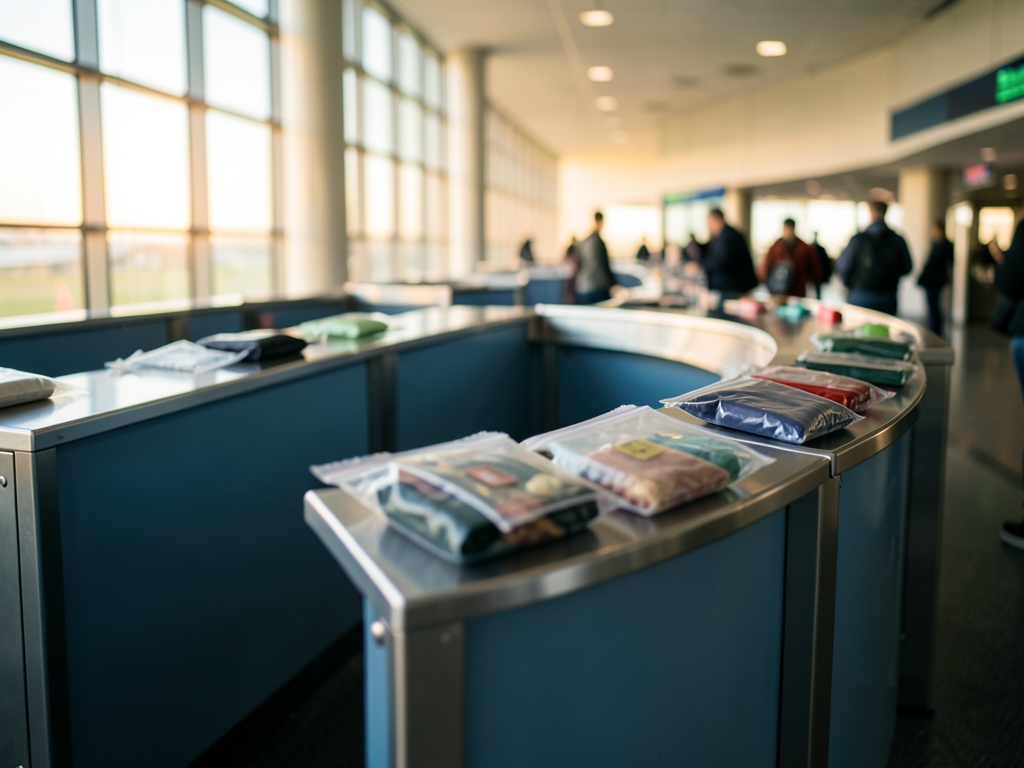
The first mistake is treating “carry-on friendly” or “TSA approved” as proof that every component is acceptable. Those labels do not replace an item-by-item check. Under TSA’s 3-1-1 liquids rule, each container may hold no more than 3.4 ounces, all qualifying liquid containers must fit in one bag of 1 quart or less, and each passenger may carry one such bag. For example, a kit containing a 6-ounce bottle cannot be admitted under the standard liquids allowance merely because the other supplies are first-aid items. A kit with three 2-ounce bottles may also pass the per-container test but fail if all the bottles do not fit inside the required single bag. Check medicines separately because necessary medications may receive special screening treatment, but do not assume that every liquid in the kit qualifies for that exception.
The second mistake is comparing advertised prices as though they represent equal packages. A cheaper listing may omit adhesive bandages, medical tape, gloves, or the medicine the traveler actually needs. It may also add shipping, tax, or a case sold separately. Before committing, open the full contents list, add every required item and charge, and compare that completed total with the completed total of the next-best option. Do not accept a component count as a substitute for a usable inventory: ten individually wrapped wipes are not equivalent to a kit that also contains enough dressings, tape, and protective gloves for a 12-hour flight.
Finally, confirm the packing constraint against the exact journey rather than the product page’s broad description. Put the completed kit into its intended carry-on bag and test whether the liquids pouch closes and the surrounding case fits the airline’s current allowance. Check the operating carrier’s published rules as well as the security authority for every airport involved. Keep the product page open during that test, because a successful size check means little if a prohibited or oversized container remains.
Insider Tactics
An insider tactic is to treat the shopping cart as a test rather than a wish list. Add every candidate item, then open the airline’s current liquids guidance and work from the assembled kit rather than from individual product pages. Look for wording that changes an item’s status, such as whether it must be presented separately, counted within the traveler’s allowance, or placed in a separate container. The check should be recorded with the airline, departure airport, and purchase date so you can retrace the decision if the rules change.
Use a two-pass price check. First, compare the complete checkout totals for several practical kit configurations, making sure shipping, taxes, and membership discounts are either included or excluded consistently. Second, revisit the shortlist shortly before buying, because a lower sticker price can disappear after coupons, subscriptions, or shipping conditions are applied. This comparison works because the project-management triangle recognizes that changing one constraint can require adjustments elsewhere; as the Wikipedia overview explains, project quality is affected by trade-offs among budget, deadlines, and scope.
A useful timing tactic is to verify before the airline locks your travel plans and again before checkout. The first check helps you select a kit you can use for the whole flight; the second catches updated security guidance or a price change. If the airline’s published rule and the airport’s screening rule appear different, preserve both links and choose the more restrictive practical interpretation until you receive confirmation from the airline or the relevant screening authority.
Another insider move is to reserve a small portion of your luggage for repacking. Instead of treating the purchased package as immutable, lay its contents out at home and test whether the final arrangement fits the actual personal-item and carry-on space you expect to have. Keep receipts and product labels with the kit, and photograph the packed contents. Those records make later questions about an item’s identity or purchase terms easier to answer.
Delay commitment until the live option passes the same verification checkpoint twice. Confirm the complete item list, the current screening conditions, the container rules, and the final payable total using the same assumptions for every candidate. If any answer remains unresolved, leave that item out rather than assuming it will be accepted. This final pass avoids an attractive kit that looks complete on a product page but fails when the assembled kit is judged as a whole.

Comparison
For a like-for-like comparison, treat each option as a complete 12-hour kit rather than comparing a sale price with the cost of assembling the same supplies separately. The price check should include the product price, shipping, estimated tax, and any case or container. The relevant scope, time, and cost trade-offs reflect the project-management triangle described by Wikipedia: changing one constraint can require a change in another. Here, “complete” means the same screening status, usable contents, and carry-on space—not merely the lowest checkout figure.
| Option | Total-price calculation | Fixed liquid check | When it wins |
|---|---|---|---|
| Ready-made travel kit | Retail price + shipping + estimated tax | Count every container over 3.4 fluid ounces or 100 milliliters | It wins when its verified total is lowest and the seller confirms that its contents satisfy the airline’s rules |
| Custom pharmacy kit | Sum each item’s shelf price, then add estimated tax and any container cost | Apply the same 3.4-ounce/100-milliliter container limit to every liquid | It wins when a smaller selection produces a lower complete total without leaving a needed 12-hour dose unprotected |
| Existing-medication add-on | Calculate only the added cost; exclude medicines already owned | Declare medically necessary liquids separately and confirm the airline’s treatment | It wins as a supplement when existing supplies cover the full itinerary and the remaining additions pass screening |
Check the container rules literally: one TSA liquid-item bag may hold containers no larger than 3.4 fluid ounces, or 100 milliliters, each. Medically necessary liquids can qualify for separate screening, but that does not remove the need to declare them or verify airline treatment before departure. For the 12-hour flight, record each medication’s required dose times and make sure the selected option supports the entire schedule. A cheap kit that creates a dose gap is not cheaper on a like-for-like basis.
Confirm the final packed total at checkout, not the product-page price alone, using the same like-for-like totals described above. Obtain one live checkout total including shipping and tax for the ready-made option, and save the product page, cart summary, and airline confirmation because availability and terms can change.
The winner is the option with the lowest verified complete total among kits that pass both the airport-screening check and the airline check; if totals tie, the option that leaves more carry-on room while covering every required dose wins. Do not commit until the seller’s contents, the calculated price, the declaration procedure, and the airline’s applicable terms have all been checked. This makes the comparison reproducible and prevents a lower sticker price from hiding omitted supplies, additional shipping, or unusable liquid containers.
Also worth reading Mastering the TSA 311 liquid rule Countries where packing certain Everything you need to know about
What to do next
| Step | Action | Why it matters |
|---|---|---|
| 1 | Re-check the featured carry-on first-aid kit’s live listing before committing. | The complete option and its price must still be available when you buy. |
| 2 | Review the full option, including its required items, packing constraints, and terms. | Confirm that the listing provides everything needed for the full-duration flight. |
| 3 | Check every included liquid item against TSA rules. | Liquid restrictions can determine whether the kit can pass through security as configured. |
| 4 | Compare those liquid items with the airline’s liquid-item limits. | The kit must satisfy both TSA requirements and the operating airline’s rules. |
| 5 | Confirm that the required items and packing constraints cover the full-duration flight. | You need a complete kit that remains practical within carry-on packing limits. |
| 6 | Compare like-for-like totals and terms with other complete carry-on first-aid kit options. | Use the same included items and restrictions so the final choice reflects actual value. |
Frequently Asked Questions
Is the $15-class kit a confirmed product with a verified live price?
No; the $15-class pick is only an example target, and no specific product or live price is verified.
What should be checked before packing any liquid from the kit?
Verify each liquid item against TSA rules and the airline’s liquid-item limits.
Does clearing airport security screening guarantee that the kit meets the airline’s carry-on rules?
No; an item may pass airport security screening while still exceeding the operating carrier’s carry-on or liquid-item allowances.
What flight duration should the kit’s contents and packing constraints be checked against?
Check that the required items and packing constraints cover the full 12-hour flight.
What details from the complete listing should be compared before purchasing?
Compare the required items, live total price, and terms.
Why should the complete kit be evaluated rather than choosing only by its advertised price?
A low advertised price does not confirm that the assembled kit remains within the carrier’s carry-on and liquid-item allowances or that it covers the flight’s required items.
Quick answers
| What should you verify before committing to the budget carry-on first-aid kit? | Compare the complete option's live price before committing to the $15 pick. |
| How should you check the kit's liquid items? | Verify each liquid item against TSA rules and the airline's liquid-item limits before packing. |
| What flight duration should the kit's required items and packing constraints cover? | Check that the kit's required items and packing constraints cover the full 12-hour flight. |
| Which details should you compare before purchasing? | Review the complete live option, including required items, total price, and terms, before purchasing. |
| What two separate checks are part of verifying the kit? | First, confirm whether every item in the proposed kit is permitted through the relevant airport security screening process; second, confirm whether the assembled kit can remain within the operating carrier’s carry-on and liquid-item allowances for the specific flight. |
Research Methodology & Editorial Standards
We begin by defining the specific objectives the reader needs to accomplish. Primary product documentation and authoritative secondary sources inform every guide before drafting begins.
Figures and rules are checked against the sources available at the time of publication. Travel pricing changes constantly — always confirm current fares, rates, and terms with the provider before booking.