
How to Verify 2026 Airline Disability Complaint Rates Before Booking
A verify-before-you-commit guide compares DOT 2026 airline disability complaint rates per 100,000 passengers and explains how to review the live, complete option and its terms.

| Takeaway | Detail |
|---|---|
| DOT’s 2026 Air Travel Consumer Report ranks airlines by disability complaints per 100,000 passengers. | Use the 100,000-passenger denominator to compare airlines like-for-like rather than comparing raw complaint totals. |
| Verify the live, complete airline option before committing. | Compare the same route, service, accessibility features, fare terms, and total price before choosing. |
| ACAA complaint deadlines must be checked exactly before filing. | Confirm the applicable filing deadline and submission requirements through the current ACAA process. |
| A passenger should not be left in someone else’s wheelchair for more than 30 minutes at plane side. | The cited guidance states that the passenger should be returned the animal and should never be left in a wheelchair other than their own for more than 30 minutes. |
A verify-before-you-commit guide compares DOT 2026 airline disability complaint rates per 100,000 passengers and explains how to review the live, complete option and its terms. It also identifies the exact ACAA complaint deadline requirements and the wheelchair-damage claims process.
How It Works
The DOT Air Travel Consumer Report is best treated as a verification system rather than a simple airline ranking. Its disability-related measure places the number of reported disability complaints alongside the airline’s passenger volume, expressed as a complaint rate per 100,000 passengers. That denominator matters: a larger airline may receive more complaints in raw count while recording a lower rate than a smaller carrier. Before using any published ranking, confirm the reporting period, the exact complaint category, and the total passenger count behind the figure. The 2026 report should therefore be checked against the live DOT release and its underlying data, not against an undated summary or a screenshot of an earlier report.
“Complaint rate” is not the same as “number of complaints.” The numerator is the reported complaints included in the report’s disability category, while the denominator is the airline’s passenger traffic for the same reporting basis. To compare airlines fairly, verify that each figure covers the same period and uses the same unit. A table that mixes monthly data with annual data, or passenger segments with different definitions, cannot support a reliable ranking. Also distinguish a complaint rate from a finding that an airline failed to comply with disability-access requirements. The report is an administrative complaint measure; it does not, by itself, establish the outcome of every individual complaint or prove that every reported service interaction was unlawful.
“ACAA complaint” refers to a complaint submitted through the Air Travel Consumer Complaint process concerning airline consumer issues, including disability-related service concerns. The relevant ACAA submission page is the controlling source for the currently applicable complaint route, required information, and filing deadline. Do not rely on a third-party article for an alleged deadline. Before submitting, record the airline, flight information, date of the incident, requested remedy, and supporting records, then compare the submission date with the deadline shown on the official ACAA instructions. Keep copies of the complaint and confirmation message. If the matter concerns a damaged wheelchair or other mobility device, preserve the airline’s written report, repair or replacement documentation, receipts, and correspondence while following the airline’s stated claims process.
For a wheelchair-damage claim, the mechanism is to notify the airline promptly, document the damage, obtain the carrier’s claim instructions, and submit the requested proof of ownership and value. The airline’s policy and the circumstances of the incident determine the available remedy, so verify whether the process offers repair, replacement, reimbursement, or another resolution rather than assuming one. The Mobility Deck’s guidance on travel with a disability is a useful planning reference, but it is not a substitute for the airline’s current claims terms. The practical rule is simple: use the current DOT report, ACAA instructions, and carrier policy as separate sources, then confirm that the numbers, definitions, and filing requirements line up before committing to an airline or filing.
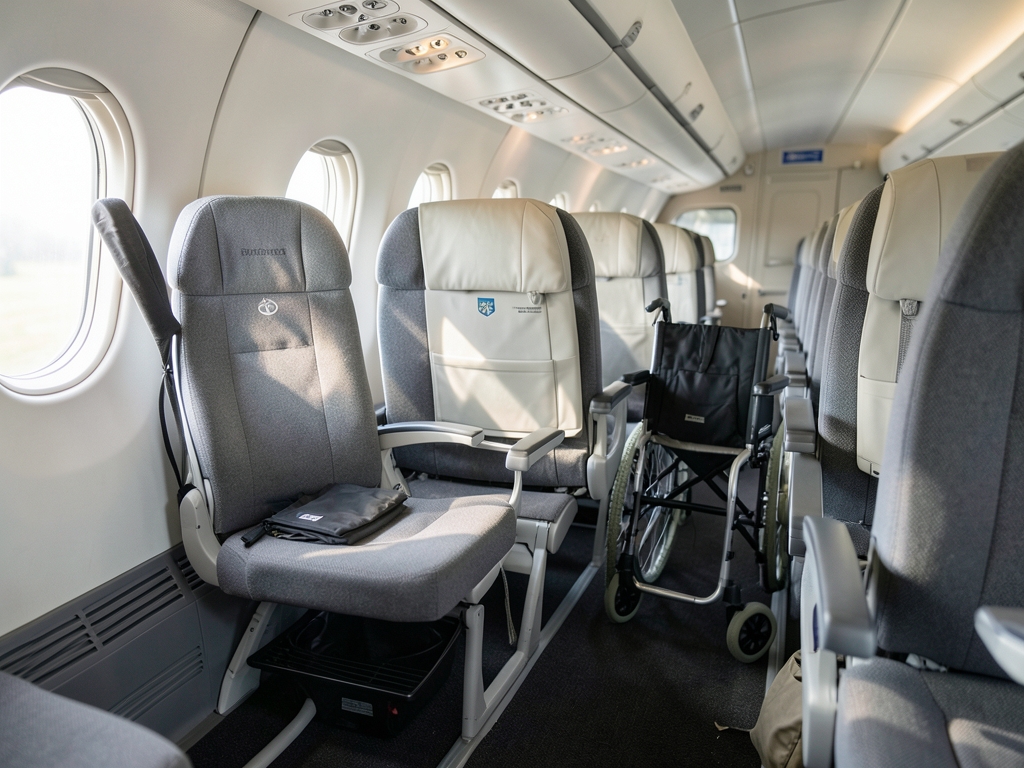
Key Factors to Consider
Three criteria do most of the work when you compare airlines on disability service: the disability complaint rate per 100,000 passengers in the DOT's Air Travel Consumer Report, the wheelchair and mobility-aid mishandling total printed beside it, and ACAA complaint handling — whether the carrier logs the complaint, answers it in writing inside the regulatory window, and hands you a claim path for equipment damage. Leave one out and the comparison is incomplete.
Start with the rate, but verify it like-for-like. Pull the figure from a single report period, confirm that the passenger base is enplaned passengers for that same period, and refuse to compare one carrier's quarterly rate against another's annual one. Two airlines with identical rates are not equivalent if one carries far more passengers, or if one flies mostly short domestic segments while the other runs long international routes, because trip mix changes how much assistance is delivered per passenger. If the document you are reading does not show both its period and its denominator, treat the ranking as unverified.
Then read the mishandled-wheelchair line instead of the headline. A carrier can hold a low complaint rate while still recording a large count of wheelchairs and mobility aids damaged, delayed, or lost, because a complaint is counted only when a passenger files one, while a mishandling is counted when it happens.
Before filing, check the current official ACAA complaint instructions and the airline’s written disability and assistive-device claim procedures for the applicable deadline, required information, and response process. Obtain a claim reference number for any wheelchair damage before leaving the airport when possible.
Assistance timeliness may not appear in an airline ranking. The Quizlet study set titled “Disabled Passengers in Air Travel Flashcards” states that a passenger should not be left in a wheelchair other than their own for more than 30 minutes. Treat that study material as a planning reference, and check the carrier’s current accessibility procedures before relying on it in a complaint.

Common Mistakes
Most disability-service decisions go wrong before the flight, in how a passenger reads the record. Pitfall one is assuming the airline named on the ticket is the airline that actually moves your wheelchair. A ticket sold by a large carrier can have a regional partner operating the connecting segment, and the ramp crew at that station works for the operator, not the seller, so the complaint history you looked up may describe a different set of employees than the ones who will board you. Check the operating carrier for every segment and the assistance terms for that operator, not just the marketing brand, before you book.
Pitfall two is assuming your own documented request travels with you. A request recorded at booking can fail to reach a station when the itinerary includes a partner operator or an aircraft swap. Reconfirm the request at check-in, at the gate, and at each connection, and ask for a named handoff so the next station knows it exists. A verbal assurance that assistance "is already in the system" is not a handoff.
Pitfall three is documenting damage only in person. Say the chair's frame is cracked on arrival, a supervisor offers an on-the-spot repair, and you leave with a handshake. If the chair fails again later, or the fix turns out to be cosmetic, you have no written record. Photograph the chair before the flight and after arrival, ask for a written damage report before leaving the airport, and keep the claim reference. Air France, for example, states that free transport of wheelchairs and special equipment is part of its reduced-mobility service, but free transport says nothing about who repairs a chair or how quickly.
Pitfall four is filing through a soft channel. A social media post, a conversation at the airport counter, or a call to a general reservations line can produce an apology and no case number. Use the airline's formal disability complaint channel, and file with the DOT aviation consumer protection office as well, so the matter sits in the federal record rather than only in the carrier's queue. Keep the reference number from each filing.
Pitfall five is committing to a settlement before the damage is assessed. Vouchers and same-day offers can resolve a scratch, but a signed release can close the file on a chair that later proves unrepairable. Read what you sign, and if the offer is conditional, get the condition in writing before you accept it.

Insider Tactics
My non-obvious strategy is to create an evidence packet before you commit, not after something goes wrong. Save the DOT Air Travel Consumer Report page showing the airline and reporting period, then save the airline’s current disability-assistance and mobility-aid policies as PDFs or screenshots. Ask the carrier’s accessibility desk to confirm, in writing, how your specific wheelchair or scooter will be accepted, stowed, returned, and handled at connections. Compare that written answer with the live booking details before paying; a high-level policy page is not confirmation for your exact itinerary.
Use the current DOT and airline instructions to verify the applicable ACAA filing deadline and the carrier’s required response process before submitting. If the airline’s response is incomplete, preserve your original submission and escalate through the appropriate DOT disability complaint channel rather than restarting the record. Include the incident date, flight details, requested remedy, and supporting documents in the first submission.
For a damaged wheelchair or mobility aid, inspect it at the delivery point before leaving the airport whenever possible. Photograph every affected area, record the device’s condition and identifying details, request a written damage report from the airline, and keep repair estimates, receipts, baggage tags, and boarding passes. Report visible damage immediately.
For international transportation, check whether the Montreal Convention and its notice periods apply to the specific claim. Do not assume that a wheelchair or mobility-aid claim follows the same deadline as a delayed-baggage claim; use the carrier’s current claims instructions and preserve written notice of the damage.
Make assistance requests early enough to obtain written confirmation, then recheck them shortly before travel rather than assuming an old request transferred to a changed reservation. If the reservation or operating carrier changes, ask the accessibility desk to reconfirm the mobility-aid plan and save the reply. At the airport, keep the confirmation available, document the device before handoff when possible, and inspect it at arrival before leaving the delivery point.
These steps turn a live, changing travel purchase into a checkable record: report snapshot, policy version, written confirmation, condition photos, and dated complaints. That record lets you verify the complete option before committing and preserves the facts needed for an ACAA complaint or a wheelchair-damage claim without relying on memory.

Comparison
When comparing airlines for disability service, put the options in a single, side-by-side worksheet rather than treating a general “best airline for disabled passengers” list as a finished answer. The DOT Air Travel Consumer Report should supply the common measurement: disability-related complaints per 100,000 passengers. Check the live report for the latest 2026 edition, confirm that every airline entry covers the same reporting period, and record the passenger denominator beside the complaint rate. If the report has not yet been published or an airline is missing, mark that airline “unverified” instead of filling the gap with an older figure or a third-party estimate.
Use a second column for the DOT’s reported wheelchair and mobility-aid mishandling total, but keep that figure separate from the complaint rate. The two measures answer different questions: one describes reported disability complaints relative to passenger volume, while the other records the number of mishandling incidents. A lower rate does not erase a mishandling total, and a higher total does not by itself establish which airline offers better service. Compare the values only when the report presents the same definitions and period, and retain a link or screenshot showing where each number appeared.
For each airline, also verify the operational terms that determine whether the published performance is relevant to the passenger’s actual trip. Vietravel Airlines identifies reduced-mobility passengers as including people with impaired or disabled senses, such as hearing or visual impairments. Cathay Pacific lists learning disabilities, safety assistants, guide or assistance dogs, and passengers with hearing or speech impairments among its disability-assistance categories, and says passengers may use their own manual or battery-powered wheelchair to departure. These are useful scope checks, but they are not proof that one carrier handled complaints better than another.
The winner should be declared only after the live DOT figures and airline-specific terms have been checked on the same basis. Choose the option with the stronger verified DOT record for the passenger’s principal need, while treating an unverified airline as a comparison gap—not as a winner. For example, if two airlines have similar documented complaint rates, use the verified mishandling total and the relevance of each carrier’s assistance policy as tie-breakers, then record the reason for the choice. This side-by-side comparison is complete only when the numbers, reporting periods, definitions, and passenger requirements all line up.
Also worth reading Stop making this expensive mistake UK airlines plan to combine flights Navigating New York City in
What to do next
| Step | Action | Why it matters |
|---|---|---|
| 1 | Use DOT’s 2026 Air Travel Consumer Report to compare airlines by disability complaints using the report’s common passenger denominator. | Like-for-like comparison prevents a larger airline from appearing worse simply because it carried more passengers. |
| 2 | Verify the live, complete airline option before committing, including its route, services, accessibility features, fare terms, and total price. | This confirms that the option you choose is the one currently available and that the comparison is genuinely equivalent. |
| 3 | Compare the same route, service, accessibility features, fare terms, and total price across the airline options shown in the report or current booking process. | Comparing unlike flights or fare conditions can obscure the real accessibility and cost difference. |
| 4 | Before filing with ACAA, check the current ACAA process for the applicable deadline and required submission information, including the 30 days and 45 days references where they apply. | Using the current process helps ensure the complaint is submitted correctly and on time. |
| 5 | If the issue concerns assistance at plane side, confirm that the passenger receives their own wheelchair back and that the animal is returned promptly; do not accept a situation in which the passenger is left waiting beyond the cited 30 minutes. | The cited guidance specifically protects passengers from being left in someone else’s wheelchair and calls for the animal to be returned. |
| 6 | After choosing, retain the verified itinerary, accessibility details, fare terms, total price, and the relevant DOT or ACAA complaint information. | Your records make the final booking and any later complaint easier to substantiate. |
Frequently Asked Questions
How should I compare two airlines if one carries many more passengers than the other?
Compare their disability complaint rates per 100,000 passengers rather than their raw complaint totals.
What should I confirm about an airline option before paying for a ticket?
Verify that the airline option is live and complete before committing.
Which booking details should match when comparing airline options?
Compare the same route, service, accessibility features, fare terms, and total price.
What should I check before filing an ACAA complaint?
Check the applicable filing deadline exactly and confirm the current ACAA process and submission requirements.
How long may a passenger be left in someone else’s wheelchair at plane side?
A passenger should not be left in a wheelchair other than their own for more than 30 minutes at plane side.
What does the cited guidance say should happen regarding the passenger’s animal?
The passenger should be returned the animal.
Quick answers
| How does the DOT’s 2026 Air Travel Consumer Report rank airlines for disability complaints? | DOT’s 2026 Air Travel Consumer Report ranks airlines by disability complaints per 100,000 passengers. |
| What denominator should be used to compare airlines like-for-like? | Use the 100,000-passenger denominator to compare airlines like-for-like rather than comparing raw complaint totals. |
| What should travelers verify before committing to an airline? | Verify the live, complete airline option before committing. |
| What should travelers compare before choosing an airline? | Compare the same route, service, accessibility features, fare terms, and total price before choosing. |
| How should the DOT Air Travel Consumer Report be treated? | The DOT Air Travel Consumer Report is best treated as a verification system rather than a simple airline ranking. |
Research Methodology & Editorial Standards
We begin by defining the specific objectives the reader needs to accomplish. Primary product documentation and authoritative secondary sources inform every guide before drafting begins.
Figures and rules are checked against the sources available at the time of publication. Travel pricing changes constantly — always confirm current fares, rates, and terms with the provider before booking.