
How to Check a 70,000-Mile Qatar Qsuite AAdvantage Award Before You Book
It covers the three checks to complete in one session: Qsuite-equipped aircraft, saver-level award inventory, and correct routing.
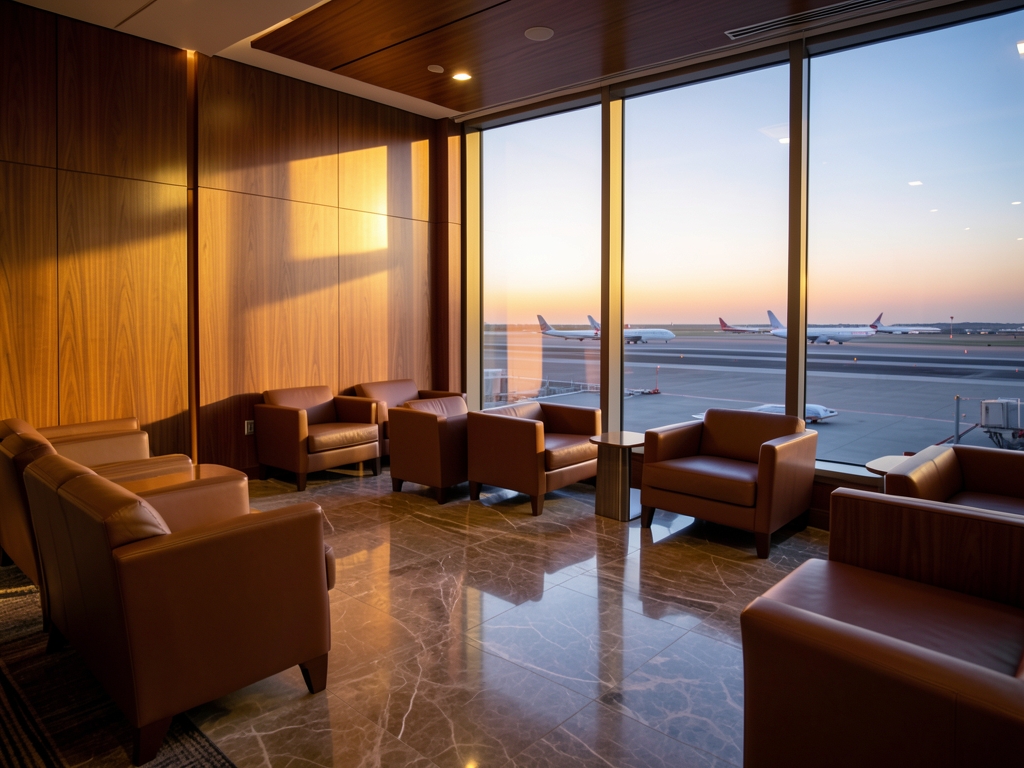
It covers the three checks to complete in one session: Qsuite-equipped aircraft, saver-level award inventory, and correct routing.
How the 70,000-mile Qsuite award works
The pricing mechanism is the reason this award is worth chasing. American AAdvantage prices partner business-class awards by region, not by carrier, and The Points Guy's AAdvantage business-class guide puts the business-class rate to Asia at 70,000 miles one-way, with Tokyo and Korea at 60,000 miles one-way. Because Qatar Airways is an AAdvantage partner, a Qatar-operated business-class seat on a qualifying Asia itinerary should price off that same partner level rather than off Qatar's own Avios chart. Confirm which region your specific itinerary prices into on the AAdvantage search screen rather than assuming every Asia destination lands at the same number.
The seat is the part that trips people up. Qsuite is installed on selected aircraft in Qatar's fleet, not on every jet that flies with a Qatar Airways flight number, and the airline schedules Qsuite-equipped planes on only some routes and some departures. An AAdvantage search will show you the cabin as business class; it will not promise you a suite with a closing door. In the booking flow, open the flight details and confirm the operating carrier is Qatar Airways and the aircraft type listed is one of the Qsuite-equipped variants — and be especially careful with codeshares, where the metal under your Qatar flight number can belong to a different airline entirely.
Taxes on a US-origin AAdvantage award to Doha should show as $5.60 one-way when departing the US, but treat that as a checkpoint rather than a quote. The taxes line is generated by your actual itinerary — origin airport, connection points, and destination — so read the itemized breakdown on the final review screen before you ticket. If the taxes line looks materially different from that figure, stop and figure out why before proceeding; it usually means a segment, a carrier, or a departure point is not what you assumed.
Run all three checks in a single session, in this order. First, confirm Qsuite-equipped aircraft on the exact flight and date. Second, confirm the AAdvantage price reads 70,000 miles one-way for that itinerary — if the calendar shows no award space at that level for your dates, the price is not available to you and no amount of searching elsewhere changes that. Third, confirm the taxes and the total miles on the review screen. Only after all three line up does it make sense to move miles into the account, and only then should you complete the booking in the same sitting, since award space and aircraft assignments can both shift.
Program rules and partner pricing are volatile, so re-verify the 70,000-mile level and the aircraft type at the moment you book in 2026 rather than relying on any guide, including this one, written earlier. The structure of the check stays the same even if the numbers move.
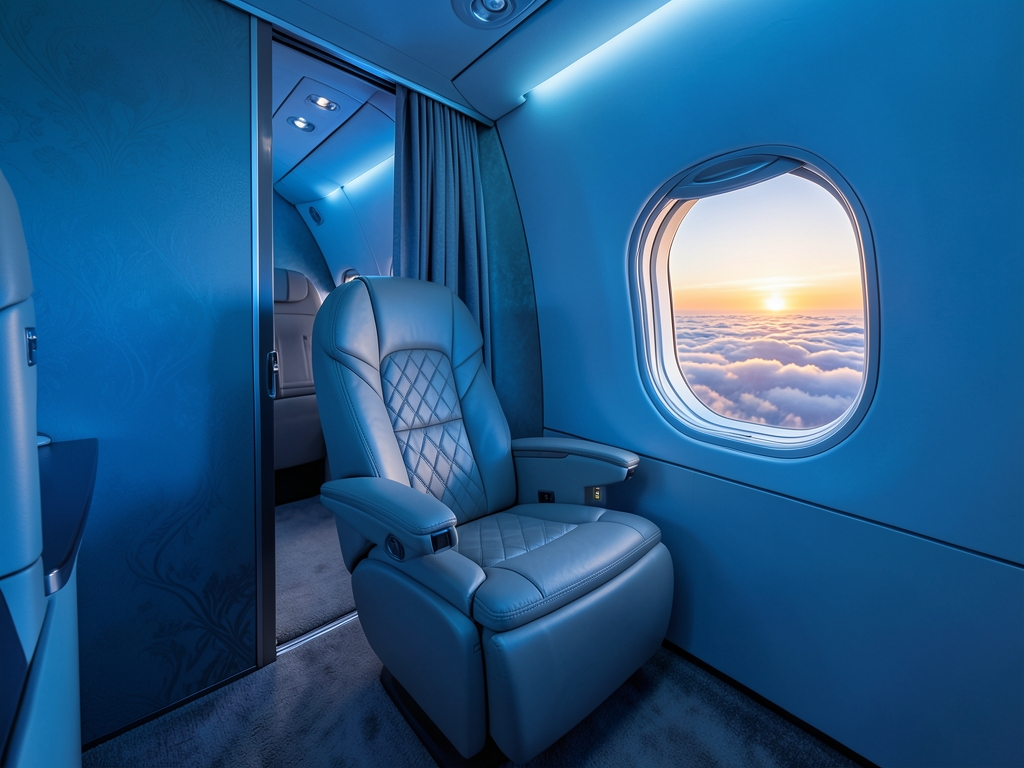
Evidence: what the numbers actually show
Two numbers anchor this entire comparison, and both can be verified in the same sitting as the award search: a roughly $4,500 one-way cash business-class fare on Qatar Airways, and a 1.7¢-per-mile purchase rate for American AAdvantage miles as listed by buyflightmiles.com. Everything else here is a check run against those two figures, because a redemption that looks strong against one anchor can look ordinary against the other. The point of the exercise is not to trust a headline value but to see whether the specific itinerary in front of you clears both.
Start with the award tier, since it determines which number should appear on the booking screen. The Points Guy's AAdvantage business-class guide splits Asia into two levels — 60,000 miles one-way to Tokyo and Korea, and 70,000 miles one-way to the rest of Asia. That makes destination a filter, not a footnote: pull up the award calendar for the exact city pair you want and confirm which tier the itinerary prices into. If the screen returns a number above the tier for that region, you are looking at non-saver inventory, and the comparison below stops applying.
Then establish the cash baseline yourself rather than borrowing one. Price the identical one-way itinerary in business class on Qatar Airways' own site — same route, same date — and check whether the quote lands near the $4,500 reference or well away from it. Direction matters: if your quote comes in far above that figure, the miles case strengthens; if it lands substantially below, a cash ticket may be the cleaner purchase even though the miles still look cheaper on paper. Never compare a one-way cash quote to a round-trip award, or the reverse; mismatched units will produce a flattering number that does not exist.
The second anchor converts the award into a purchase price. At the 1.7¢ per mile rate buyflightmiles.com publishes, 70,000 miles works out to roughly $1,190 — a little over a quarter of the $4,500 cash fare. That is the conversion that makes the decision concrete, and it comes with a timing caveat worth respecting: buyflightmiles.com states that miles arrive as a ready AAdvantage account within three business days and that the exact rate is confirmed before payment. Three business days is plenty of time for saver-level partner inventory to vanish, so confirm the seats first and treat the purchase as the last step, not the first.
The rule that follows: run both anchors in one session, in this order — confirm the itinerary prices into the correct regional tier, capture the matching one-way cash quote, then apply the 1.7¢ math to the mileage figure. A redemption that survives all three checks is evidence. One that skips any of them is a guess dressed up as a sweet spot, and the $1,190 outlay is not refundable if the seats were never there.
Options compared: miles vs cash vs buy-miles
Once you have confirmed that saver-level Qsuite inventory exists on a Qsuite-equipped aircraft, the only remaining decision is how to pay for it. Three paths are worth pricing side by side in the same session, because the spread between them is wide enough to change the trip.
| Option | What you pay (one-way) | When it wins |
|---|---|---|
| A — Redeem AAdvantage miles | 70,000 miles + $5.60 taxes | Saver-level Qsuite inventory is available and you already hold the miles |
| B — Pay cash | ~$4,500 fare | Only if you hold no miles and no transferable currency |
| C — Buy AAdvantage miles | ~$1,190 (70,000 miles at 1.7¢) + $5.60 taxes | Only if you cannot earn the miles another way |
Option A is the winner whenever saver inventory is live. You spend 70,000 AAdvantage miles and $5.60 in taxes for a one-way Qsuite seat, and the miles are the only meaningful cost. Before you commit, confirm the award price reads exactly 70,000 miles one-way in the AAdvantage search results — not a higher dynamic figure — and that the operating flight is the Qsuite-equipped aircraft you verified. If either check fails, Option A is no longer the comparison you think you are running.
Option B is the cash baseline: roughly $4,500 one-way for the same Qsuite seat. That is the number to beat, and it is the reason the miles path is worth the effort. Paying cash is rational in exactly one situation — you have no AAdvantage miles and no transferable currency that reaches the program. If you do hold either, run Option A first, because $4,500 buys a lot of positioning flights and hotel nights.
Option C sits between the two. Buying 70,000 AAdvantage miles at 1.7¢ per mile comes to about $1,190, plus the same $5.60 in taxes, for a one-way Qsuite seat. That is far cheaper than the cash fare, but it is still real money, and it only makes sense if you genuinely cannot earn the miles another way. NerdWallet catalogs 17 ways to earn AAdvantage miles, and AAdvantage Hotels lets members earn miles and Loyalty Points on hotel stays — so before you buy, check whether a card bonus, a hotel booking, or ordinary earning gets you to 70,000 without a cash outlay.
The rule that ties the three together: price all three in one sitting, confirm the 70,000-mile saver price and the Qsuite aircraft, and only then move. If saver inventory exists and you hold the miles, Option A wins outright. If it does not exist, none of these prices matter — you are comparing a seat you cannot book.

Costs and numbers that matter
The math starts with two anchors you can verify in the same sitting as the award search. A one-way cash business-class fare on Qatar Airways runs about $4,500, and American AAdvantage miles are sold at 1.7¢ per mile according to buyflightmiles.com. Against a 70,000-mile one-way award plus $5.60 in taxes, that $4,500 cash fare implies a redemption value of roughly 6.4¢ per mile. Run the division yourself: $4,500 minus $5.60 is $4,494.40, divided by 70,000 miles, which comes to about 6.42¢ per mile. That is well above the 1.7¢ buy rate, and it is the entire reason the award wins when saver inventory exists.
The buy-miles path is the fallback, not the headline. If you have no AAdvantage balance and purchase all 70,000 miles at the 1.7¢ rate from buyflightmiles.com, the outlay is about $1,190 one-way. That is still roughly a quarter of the $4,500 cash fare, so even the worst-case version of the award beats paying cash. The catch is that buying miles at 1.7¢ only makes sense when the award price is locked at exactly 70,000 miles one-way; if the only inventory you can find prices higher, the advantage shrinks fast.
Any cash co-pay above $5.60 erodes the edge, and this is where most bookings quietly go wrong. Extra carrier surcharges, phone-booking fees, or a partner award that prices above the standard rate all add dollars that never appear in the headline number. Before you ticket, add every cash component to the award and recompute the cents-per-mile value against the $4,500 baseline. If the total cash co-pay pushes the effective value below the 1.7¢ buy rate, the award has stopped being a sweet spot.
| Option | Cash outlay (one-way) | Miles used | Value vs. $4,500 fare |
|---|---|---|---|
| Award, existing miles | $5.60 taxes | 70,000 | ~6.4¢ per mile |
| Buy 70,000 miles at 1.7¢ | ~$1,190 | 70,000 | ~25% of cash fare |
| Cash fare | $4,500 | 0 | Baseline |
The rule that falls out of this section: confirm the award prices at exactly 70,000 miles one-way, confirm total cash co-pay stays at $5.60, and only then decide whether to transfer or buy. If either number moves, redo the cents-per-mile calculation before committing. The 6.4¢ figure is not a promise; it is the output of a specific set of inputs, and it only holds while those inputs hold.

What the evidence does NOT establish
Everything above describes a mechanism, not a guarantee. The available sources does not confirm that 70,000-mile saver business inventory exists on any specific 2026 date, and no source establishes a published 2026 AAdvantage award chart. Both gaps matter, because the gap between "this award prices at 70,000 miles" and "this award is bookable on your date" is where most failed redemptions live. Treat the 70,000 figure as a hypothesis you test at the moment of booking, not a rate you can plan around months in advance.
The first check is inventory, and it has to happen live. Log into aa.com, run the specific route and date, and filter for business class on the Qatar Airways-operated flight. If the calendar shows saver-level business availability, the 70,000-mile price should appear at checkout; if it shows only higher-tier pricing or no business availability at all, the sweet spot does not exist for that date regardless of what any guide says. Do this before transferring a single mile, because AAdvantage transfers from credit card programs are effectively irreversible once processed.
The second check is hardware. The available sources does not guarantee Qsuite on every Qatar Airways flight — the product is only on certain aircraft, and airlines swap equipment for operational reasons. A seat map showing a Qsuite configuration today is not proof of what flies in six months. Re-check the seat map close to departure, and again in the days immediately before the flight, because an aircraft substitution can quietly replace your suite with a standard business seat while the award price stays identical.
The third check is price. Because no 2026 award chart is published in the available sources, the 70,000-mile figure must be confirmed at the moment of booking rather than assumed. The same logic applies to the cash side of the comparison: the $4,500 one-way business fare and the 1.7¢-per-mile purchase rate cited earlier are anchors from the sources, not locked 2026 rates, so re-verify both before deciding whether redeeming or buying miles wins.
One session, three confirmations: saver inventory on aa.com, a Qsuite seat map, and the exact award price at checkout. If any one of the three fails, the 70,000-mile Qsuite redemption is not available to you on that date — and no amount of planning around it will change that.

Doha one-way in Qsuites
Checkpoint 1 is the aircraft, and it comes before pricing, not after. Pull up the seat map for the specific flight and confirm you are looking at Qsuite: a 1-2-1 reverse herringbone layout with closing doors. Qatar Airways does not fly Qsuite on every aircraft, so a business-class seat on a Qatar-operated flight is not automatically a Qsuite seat. If the map shows a different configuration, stop — the 70,000-mile price may still be real, but you are no longer buying the product this scenario is about.
Checkpoint 2 is the price itself. The award must show exactly 70,000 miles one-way in business class. If the screen shows a higher figure, you are almost certainly looking at a round-trip price or a different cabin, and if it shows a dynamic number that drifts as you re-search, you are not looking at saver-level inventory. The Points Guy's AAdvantage business-class guide puts the business-class rate to the rest of Asia at 70,000 miles one-way, which is the figure this routing should match. Anything else means the sweet spot is not available on that date.
Checkpoint 3 is the routing, and it is where most searches quietly fail. The itinerary has to be a valid AAdvantage partner award on Qatar Airways metal that actually terminates in Doha — not a mixed-carrier construction, not a connection that prices as two awards, and not a segment that pushes the total past the 70,000-mile band. Confirm the operating carrier and the full city pair in the same session as the seat map and the price, because inventory can change between searches.
The cost of being wrong is the point of doing all three checks in one sitting. If you transfer miles or pay cash before confirming the aircraft, the price, and the routing, you can end up holding a business-class seat that is not Qsuite, or a 140,000-mile price on the same date, against that $4,500 cash fare. Verify all three first; the 70,000-mile Qsuite award is real, but only when the search actually shows it.
Decision rules for booking Qsuites
Run the three checks in a single session, in this order, and let the results decide for you. First, confirm the operating aircraft is Qsuite-equipped — Qatar Airways only flies Qsuite on certain aircraft, so the seat map, not the route name, is your proof. Second, confirm the AAdvantage award price reads exactly 70,000 miles one-way for the Asia region (60,000 miles applies to Tokyo and Korea, per The Points Guy's AAdvantage business-class guide). Third, confirm the taxes and fees line reads $5.60. If all three pass, book immediately — that combination is the sweet spot, and saver-level partner inventory at that price does not sit.
If the award prices above 70,000 miles one-way, stop. Do not book. That number is the ceiling, not a suggestion, and paying more than the published saver rate means you are redeeming at a worse value than the anchors this decision rests on — the $4,500 one-way cash business-class fare baseline and the 1.7¢-per-mile purchase rate for AAdvantage miles. Above 70,000 miles, your options are to shift dates and search again for saver inventory, or to route through a different gateway where the partner award still prices at the standard rate. Waiting costs you nothing; overpaying costs you the entire point of the redemption.
If the aircraft is not Qsuite-equipped, do not redeem 70,000 miles. The product does not justify the price. A lie-flat business seat on a non-Qsuite Qatar Airways aircraft is still a good seat, but it is not the suite, and the 70,000-mile figure is calibrated to the suite. Before you transfer a single mile, pull the seat map and look for the Qsuite configuration — the enclosed suite with the sliding door. If you cannot see it, treat the itinerary as a different award and price it accordingly.
| Check | Result | Action |
|---|---|---|
| Qsuite-equipped aircraft | Yes | Proceed to price check |
| Award price | Exactly 70,000 miles one-way | Proceed to tax check |
| Taxes and fees | $5.60 | Book immediately |
| Award price | Above 70,000 miles one-way | Do not book; wait for saver inventory or change dates |
| Qsuite-equipped aircraft | No | Do not redeem 70,000 miles |
One more rule governs the order of operations: verify all three conditions before you transfer miles or pay cash. Transfers are the point of no return. If the seat map shows Qsuite, the price reads 70,000 miles one-way, and taxes read $5.60, you have a bookable sweet spot — take it. If any one of the three fails, walk away and search again. The rules are simple, and they are the whole decision.
Also worth reading Book Qatar Airways to Doha (2026) Book Qatar Airways Qsuites: 70,000 Book Qatar Airways Qsuites: 70,000
What to do next
| Step | Action | Why it matters |
|---|---|---|
| 1 | Open the AAdvantage award search on the official American Airlines site and pull up the one-way business itinerary you intend to fly to Asia. | This is the single session where all three checks must pass together — splitting them across days invites phantom availability and price drift. |
| 2 | On that itinerary, confirm the operating carrier is Qatar Airways and that the aircraft is a Qsuite-equipped jet, not a non-Qsuite frame on the same route. | A Qsuite seat is the entire point of the redemption; a non-Qsuite aircraft at the same mileage price destroys the value case against the cash fare. |
| 3 | Verify the AAdvantage award price reads exactly 70,000 miles one-way in business for your destination — and note that Tokyo and Korea price at 60,000 miles instead. | The 70,000-mile figure is the canonical threshold for the rest of Asia; if the screen shows anything else, the sweet spot has not been triggered. |
| 4 | Confirm the taxes and fees line shows $5.60 before you transfer a single mile or enter payment. | The $5.60 tax figure is the third leg of the decision rule — a different number means you are looking at a different award, not the one this guide is built around. |
| 5 | If all three checks match, transfer the miles and book immediately in that same session; if any one fails, abandon that itinerary and do not book it. | Book immediately because Qsuite award space at this price is the scarce asset; abandon on any failure because a partial match is not the deal being described. |
| 6 | Before finalizing, compare the award total against the roughly $4,500 cash price for the same Qsuite seat to confirm the redemption still clears your own value bar. | The whole thesis rests on the gap between the award and the cash fare — if that gap has narrowed on your dates, the booking no longer reflects the sweet spot. |
Frequently Asked Questions
What three checks should be completed in one session before booking?
The three checks are Qsuite-equipped aircraft, saver-level award inventory, and correct routing.
What business-class award rates does The Points Guy's AAdvantage guide list for Asia?
The Points Guy's AAdvantage business-class guide puts the business-class rate to Asia at 70,000 miles one-way, with Tokyo and Korea at 60,000 miles one-way.
Why should a Qatar-operated business-class seat on a qualifying Asia itinerary price off the partner level?
Because Qatar Airways is an AAdvantage partner, a Qatar-operated business-class seat on a qualifying Asia itinerary should price off that same partner level rather than off Qatar's own Avios chart.
What should you do instead of assuming every Asia destination prices the same?
Confirm which region your specific itinerary prices into on the AAdvantage search screen rather than assuming every Asia destination lands at the same number.
Does an AAdvantage search guarantee a Qsuite with a closing door?
An AAdvantage search will show you the cabin as business class, but it will not promise you a suite with a closing door.
How can you verify Qsuite equipment in the booking flow?
In the booking flow, open the flight details and confirm the operating carrier is Qatar Airways and the aircraft type listed is one of the Qsuite-equipped variants.
Quick answers
| What three checks does the article say to complete in one session? | It covers the three checks to complete in one session: Qsuite-equipped aircraft, saver-level award inventory, and correct routing. |
| Why is the 70,000-mile Qsuite award worth chasing? | The pricing mechanism is the reason this award is worth chasing. |
| How does American AAdvantage price partner business-class awards? | American AAdvantage prices partner business-class awards by region, not by carrier. |
| What business-class rates does The Points Guy's AAdvantage business-class guide put to Asia? | The Points Guy's AAdvantage business-class guide puts the business-class rate to Asia at 70,000 miles one-way, with Tokyo and Korea at 60,000 miles one-way. |
| What should you confirm in the booking flow about the aircraft? | In the booking flow, open the flight details and confirm the operating carrier is Qatar Airways and the aircraft type listed is one of the Qsuite-equipped variants. |
Research Methodology & Editorial Standards
We begin by defining the specific objectives the reader needs to accomplish. Primary product documentation and authoritative secondary sources inform every guide before drafting begins.
Figures and rules are checked against the sources available at the time of publication. Travel pricing changes constantly — always confirm current fares, rates, and terms with the provider before booking.