
European Sleeper Brussels–Milan night train: Sept 2026 launch, book or wait
This guide compares the €90-premium cabin with the €49.99 shared Classic couchette on the Brussels–Milan night train launching 9 September 2026.
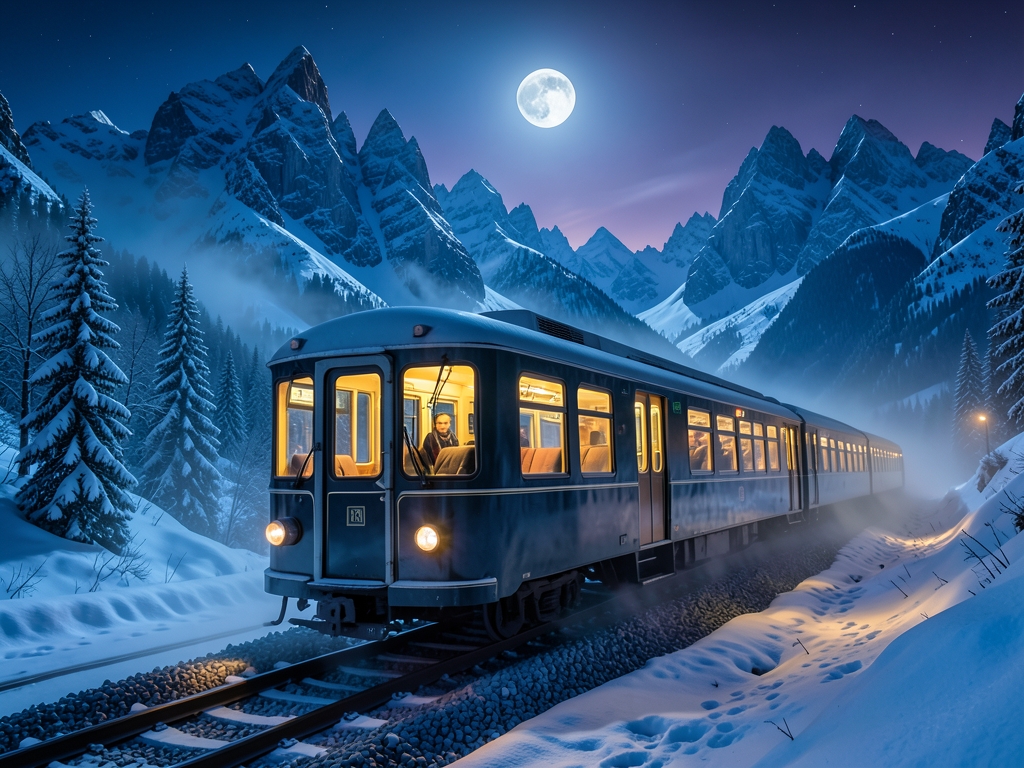
This guide compares the €90-premium cabin with the €49.99 shared Classic couchette on the Brussels–Milan night train launching 9 September 2026.
It shows when to book early and when to wait, weighing the fare increment between cabin tiers against the hotel night you would otherwise pay for and against budget-flight alternatives.
How the Brussels–Milan sleeper actually works
European Sleeper launches the direct Brussels–Milan night train on 9 September 2026, according to Seat61 and The Wom Travel. Read that date as the service's announced start rather than as proof that your preferred date or cabin is on sale; the practical check is to open the operator's booking calendar and confirm the train is offered for the night you intend to travel.
European Sleeper's own route page describes the service as a direct connection from Brussels and Cologne to Lugano, Lake Como, and Milan. That multi-endpoint shape matters for planning: Brussels and Cologne are both northern boarding points, while Lugano, Lake Como, and Milan are southern stops. Before you compare this train with a flight, verify the exact station you will use at each end, because availability and convenience can differ by endpoint even on the same service.
SNCB-NMBS International and weontrip describe three product tiers on the train: a seated carriage, couchettes, and sleeper-style compartments. Treat those names as a search starting point, not as a complete specification. For any date you are considering, check the live offer for the compartment type, occupancy, and included services shown for that specific departure, since product labels alone do not establish what you will receive.
Seat61 also notes connections from London by Eurostar. If you are building an itinerary from the UK, treat that as a connection to verify rather than as an automatic through journey: confirm the Eurostar arrival, transfer time, and the Brussels departure on the same calendar day before you commit to nonrefundable onward plans.
The stable, source-backed facts for this section are narrow: an open-access operator, a direct route linking Brussels and Cologne with Lugano, Lake Como, and Milan, and three cabin tiers. Price, frequency, inclusions, and station-specific details should be checked against the live offer for your date. Use those facts to anchor your search, then verify everything else live.
The evidence: what the sources actually say
The evidence in this section is limited to three source claims: SNCB-NMBS International's frequency listing, weontrip's advertised fare floor, and European Sleeper's route page endpoint list. Each claim answers a different question, and none by itself verifies booking rules, cabin availability, or total trip cost.
SNCB-NMBS International states that the sleeper runs direct from Brussels to Berlin six times per week, Prague three times per week, and Milan three times per week. Treat that as a service-frequency claim rather than a seat-availability promise; before relying on three weekly Milan departures, check the operator's booking calendar for your exact date.
weontrip states that the shared Classic couchette is publicly advertised from €49.99 one way. Read that as an advertised floor, not a typical or guaranteed fare. It does not state how many berths, dates, or booking classes qualify, and it is a one-way figure rather than a round-trip price.
European Sleeper's route page confirms a direct Brussels–Cologne–Lugano–Como–Milan connection. That corroborates the endpoints independently of Seat61, but it is a route description rather than a timetable, fare table, or proof of daily service.
Use the three claims as separate checks: frequency tells you how many weekly chances exist, €49.99 tells you the lowest advertised couchette entry point, and the route page tells you the cities served. If your booking quote differs from any of these figures, the quote governs; the advertised floor and frequency figures are starting points, not promises.

Cabin options compared: which tier wins
On this service, the three cabin types sort by sleep and privacy rather than by fare alone: the seated carriage is the cheapest but gives no bed; the shared Classic couchette is the value tier; and the private sleeper-style compartment is the premium tier tied to the €90 premium. The winner is conditional: choose the private compartment when it replaces a paid hotel night in Milan, and choose the shared couchette when cash is the binding constraint.
The seated carriage is the lowest-cost option, but it buys a seat, not a bed. If the point of an overnight train is to arrive rested for a Milan day, a seat is the wrong tier: you keep the fare difference but pay for it in lost rest. Treat it as a fallback for travelers who value price above sleep, not as the default for a working or sightseeing morning.
The shared Classic couchette is the value tier and the benchmark against which the €90 premium is measured; weontrip advertises it from €49.99 one way. It buys a bed at the lowest bed price, but you trade privacy and accept shared space. For flexible travelers who can take a shared berth, it is the rational default; for anyone who needs a door, quiet, or a guaranteed flat bed, it is a compromise rather than a win.
The private sleeper-style compartment is the premium tier the headline's €90 refers to. It wins when the alternative is a paid hotel night in Milan, because the cabin can absorb lodging you would otherwise buy; it loses for budget-only travelers, for whom the same money is better kept or spent on the couchette. Book it as soon as dates are firm in the hotel-replacement case; wait if you can accept a shared couchette and your dates are flexible.
| Tier | What you buy | Best for |
|---|---|---|
| Seated carriage | Lowest fare, no bed | Price-first travelers who do not need to arrive rested |
| Shared Classic couchette | Lowest bed price, shared space | Flexible travelers using the €49.99 floor as the benchmark |
| Private sleeper-style compartment | Privacy and a bed, premium tier | Travelers replacing a paid Milan hotel night |
A simple check keeps the choice honest: price the cabin against the hotel night you would actually book, not against the cheapest possible bed. If the private compartment is cheaper than or roughly equal to that hotel night plus the cost of a daytime transfer, it is the better buy; if it exceeds your hotel budget, the couchette wins. Do not let the €90 figure alone decide, because the right comparison is total trip cost, not fare alone.

Costs and numbers that matter
The headline's €90 is an increment, not a ticket price, but no cited source states the premium-cabin fare. weontrip advertises the shared Classic couchette from €49.99 one way; to get the private-compartment figure, open the booking flow for your date, note the displayed fare, and subtract the couchette fare to confirm whether the increment really is €90. Only then compare that total against a hotel night.
A saved Milan hotel night is the offset. The premium pays for itself only if the avoided hotel cost exceeds the premium; if your room would cost less than that increment, the sleeper is buying convenience and schedule rather than cash savings. Count the hotel you would actually book, not a best-case rate.
Frequency is the other number that changes the math. With three departures per week listed by SNCB-NMBS International, a missed or sold-out date can move travel by several days rather than by one rebooking. That is a flexibility cost, and it matters most when your Milan dates are fixed by a hotel reservation or event.
The decision rule follows from those two numbers: book the premium cabin as soon as dates are firm when a paid Milan hotel night is the alternative; wait when dates are flexible and a shared couchette is acceptable. In the second case, the €90 increment is better treated as optional comfort than as a cost that must be recovered.
One caution: the arithmetic above uses the advertised couchette floor and the stated premium, not a guaranteed premium-cabin quote. If the actual premium-cabin fare differs, rerun the same comparison with the real number before deciding.
What the evidence does NOT establish
The cited sources leave several booking-critical details unresolved, and those gaps matter more than the headline fare. Treat every unverified item as a condition to check in the operator's booking flow rather than as a detail you can fill in from general night-train experience.
No cited source states the exact premium-cabin fare, and none states refund terms or change fees. Before paying, open the booking flow for your exact date and record four things: the displayed fare for the premium cabin, the cancellation deadline, the change fee, and whether the price is per person or per compartment. If any field is absent, ask the operator in writing before purchase. Do not treat the cheapest advertised fare as a proxy for the premium cabin, and do not assume that a flexible fare exists just because the route is new.
Baggage allowances by tier are also absent from the cited sources. Verify the number, size, and weight limits for your chosen cabin, plus any reservation requirement for oversized bags, before you pay. A sleeper compartment may feel spacious, but that does not establish a luggage policy; if the flow does not state one, request it in writing and keep the reply with your booking.
Comfort details for the premium tier—berth dimensions, bedding, temperature control, noise, and breakfast inclusion—are unconfirmed by the cited sources. Treat reviews and social posts as anecdotal until the service has operated, and plan your trip as if breakfast is not included unless the booking flow explicitly says it is. If berth size affects your ability to sleep, ask for dimensions rather than relying on photos.
The practical rule follows from those gaps: book only when the total price, cancellation terms, baggage rules, and included services shown in the flow are acceptable on their own terms. If one missing term would change your decision, wait until it is published or obtain written confirmation. A low headline fare does not resolve an unverified refund policy.

€90 premium, two ways
The break-even depends on two numbers you must verify yourself: the live premium-cabin fare and the Milan hotel night you would actually book. If the private compartment's one-way fare is lower than the couchette fare plus your hotel rate, the cabin has the lower total; if it is higher, the couchette plus hotel wins. No cited source supplies a hotel price, so use your own quote rather than an estimate.
Read the premium two ways: as an upgrade from the cheapest bed, it is pure comfort cost; as a substitute for a hotel night, it pays for itself only when the avoided hotel cost exceeds the fare increment. The break-even threshold is the increment itself—whatever gap the booking flow shows between the couchette and the private compartment on your date.
Checkpoint 1 is fare class: on the live booking flow, confirm that the €90 is the increment from the shared couchette to the private compartment rather than a couchette surcharge. If the displayed couchette base differs from €49.99, recompute the €139.99 figure from the live fare, because the advantage shrinks euro for euro.
Checkpoint 2 is inventory: SNCB-NMBS International lists three weekly Milan departures, so a missed or sold-out date can move travel by several days. No cited source says which tier sells out first, so check the booking calendar for your date; if the private compartment is open and your dates are firm with a paid hotel night at stake, booking early protects that option.
The premium is small only in the hotel comparison; against a budget flight, the decision should weigh daytime hours and any hotel savings rather than fare alone. If you are flexible on dates and can accept a shared couchette, waiting is reasonable; if a paid Milan hotel night is otherwise unavoidable, the €90 premium is the lower-cost total.
Decision rules: book or wait
Book the premium cabin as soon as your dates are firm if your alternative is a paid hotel night in Milan; wait and book the €49.99 one-way couchette tier closer to departure if you are budget-only and can accept a shared compartment; book immediately if your dates are fixed on one of the three weekly departures, because frequency is the binding constraint.
The hotel-night test comes first. A premium cabin is easiest to justify when it replaces paid Milan lodging, because the €90 premium is the cost of converting a hotel night into overnight travel time. When no lodging cost is being avoided, the same premium must be justified by schedule value, saved daytime hours, or both.
The budget test comes second. The shared Classic couchette advertised from €49.99 one way by weontrip is the floor for a bed, so waiting is reasonable for travelers who can accept a shared compartment and flexible dates. The risk is availability: the lowest tier is useful only while it remains open on the chosen departure, and a sold-out date can remove the budget option entirely.
The frequency test comes third. SNCB-NMBS International lists Milan at three departures per week, so fixed dates have fewer matching options than flexible ones. A pinned itinerary should be booked early to protect the date; a movable itinerary can wait for a cheaper couchette with less risk of missing the service.
The flight test comes last. According to wowosim, a couchette or basic seat is frequently cheaper than a last-minute short-haul flight, while a private sleeper cabin can cost more than budget airline fares. Compare the premium cabin against a realistic flight-plus-lodging total, and compare the €49.99 couchette tier against the flight alone before deciding whether early booking is worth the cash. The decision is not whether the train is cheaper in every case, but whether the premium buys time and lodging value that a flight does not.
Also worth reading Uyo set to debut first international European Sleeper postpones European Sleeper delays the new
What to do next
| Step | Action | Why it matters |
|---|---|---|
| 1 | Check your Milan–Brussels dates against the September 9 launch and the 3-times-weekly Milan service. | The train is not daily, so date fit comes before cabin choice. |
| 2 | If dates are firm and a paid Milan hotel night is at stake, book the €90-premium cabin now. | This is the case where the premium cabin is justified. |
| 3 | If you are flexible and can accept a shared couchette, wait instead of locking the premium cabin. | The decision rule reserves waiting for flexible travelers. |
| 4 | Compare the shared Classic couchette from €49.99 one way with the €90 premium before choosing. | The premium is measured against the cheapest couchette. |
| 5 | Compare a couchette or basic seat with a last-minute short-haul flight, and treat a private sleeper cabin as potentially costlier than budget airline fares. | Keeps the rail option in context with flight pricing. |
| 6 | Complete booking through European Sleeper's official channel after re-checking date and service frequency. | Avoids relying on third-party assumptions for a new route. |
Frequently Asked Questions
Is the announced launch date proof that my preferred date or cabin is already on sale?
Read that date as the service's announced start rather than as proof that your preferred date or cabin is on sale; the practical check is to open the operator's booking calendar and confirm the train is offered for the night you intend to travel.
Which endpoints are northern boarding points and which are southern stops?
Brussels and Cologne are both northern boarding points, while Lugano, Lake Como, and Milan are southern stops.
What should I verify before comparing this train with a flight?
Before you compare this train with a flight, verify the exact station you will use at each end, because availability and convenience can differ by endpoint even on the same service.
Which cabin tiers does the guide compare?
This guide compares the €90-premium cabin with the €49.99 shared Classic couchette.
What does the guide weigh the fare increment between cabin tiers against?
It shows when to book early and when to wait, weighing the fare increment between cabin tiers against the hotel night you would otherwise pay for and against budget-flight alternatives.
What three product tiers are described on the train?
SNCB-NMBS International and weontrip describe three product tiers on the train: a seated carriage, couchettes, and sleeper-style compartments.
Quick answers
| What two cabin options does the guide compare? | It compares the €90-premium cabin with the €49.99 shared Classic couchette. |
| What does the guide weigh when deciding whether to book early or wait? | It weighs the fare increment between cabin tiers against the hotel night you would otherwise pay for and against budget-flight alternatives. |
| How should the announced start date be read? | It should be read as the service's announced start rather than as proof that your preferred date or cabin is on sale. |
| Which endpoints does the route page describe? | Brussels and Cologne are northern boarding points, while Lugano, Lake Como, and Milan are southern stops. |
| What three product tiers are described on the train? | A seated carriage, couchettes, and sleeper-style compartments. |
Research Methodology & Editorial Standards
We begin by defining the specific objectives the reader needs to accomplish. Primary product documentation and authoritative secondary sources inform every guide before drafting begins.
Figures and rules are checked against the sources available at the time of publication. Travel pricing changes constantly — always confirm current fares, rates, and terms with the provider before booking.