
Tokyo Business Class Flights: 120K Alaska Miles Plus $136 vs $5,200
A published fare for a Tokyo business-class ticket looks like a fixed market price until a live award search shows the same cabin available with Alaska miles and minimal taxes.

| Takeaway | Detail |
|---|---|
| Prove saver space before paying cash | The published fare benchmark only makes sense after a live Alaska award check returns no saver option |
| Fuel surcharge rules drive the value gap | Alaska exemption breaks standard math tied to the published cash price |
| Card perks do not change fare value | A $895 annual fee plus a $200 airline fee credit leaves the cash fare comparison unchanged |
| Hotel credits stay separate from airfare | A $600 hotel credit does not offset a Tokyo business fare and should not justify the cash purchase |
A published fare for a Tokyo business-class ticket looks like a fixed market price until a live award search shows the same cabin available with Alaska miles and minimal taxes. That gap explains why cash-first shopping fails for Japan routes where partner awards avoid fuel surcharges that inflate other programs.
The key mechanism is Alaska's fuel-surcharge exemption on partner awards, which breaks normal cash-versus-miles math. When that exemption applies, the comparison is no longer points value versus fare, but whether saver space can be found before considering a cash payment. Frequent searches in a live booking flow remain the only reliable proof.
Travelers weighing the $895 annual card cost or the $200 airline fee credit and $600 hotel credit should separate those perks from the fare decision. Credits do not lower the airline's published price, and they cannot replicate an award exemption. Prove no saver exists first, then judge the cash fare on its own terms.
How 60K Alaska Miles Books JAL Business With Zero Fuel
The mechanics of this exemption rely on how ATPCO files discounted inventory. The cash side is P-class discounted business inventory filed via ATPCO requiring a 50-day advance purchase with a change penalty and no free stopover. Because the cash fare locks into these rigid restrictions, the mileage alternative offers superior liquidity for travelers who cannot commit 50 days out but still demand lie-flat access.
The most common failure point in this workflow is phantom availability. Riley re-check protocol demands confirming the Business Saver label on alaskaair.com through to the passenger-details page before transferring any points to avoid phantom U-class. If the system displays a generic "Business" class without the specific "Saver" designation during the final booking step, the inventory is likely non-saver or unavailable, and transferring points immediately would result in a loss of flexibility.
Consider a business-class trip to Tokyo in 2026. The cash fare for the same Tokyo business-class route is a published cash fare, while the award option is 60,000 Alaska Miles for a one-way business-class seat on that route.
If you have the miles available, the decision is straightforward. At 60,000 Alaska Miles versus a published cash fare, you are getting about 8.7 cents in airfare value per mile, which is an exceptional redemption for an international premium cabin. Paying cash would preserve your mileage balance but would cost more than five thousand dollars out of pocket for that one direction.
| Source | Mechanism | Cost/Rate | Winner |
|---|---|---|---|
| Bilt Rewards | 1:1 Transfer (2-hour window) | Variable (Earned Spend) | Best Value |
| Alaska Purchase | Direct Buy | Per-mile rate | Worst Value |
| Cash Fare | P-Class Inventory | Cash fare plus taxes | Lowest Liquidity |
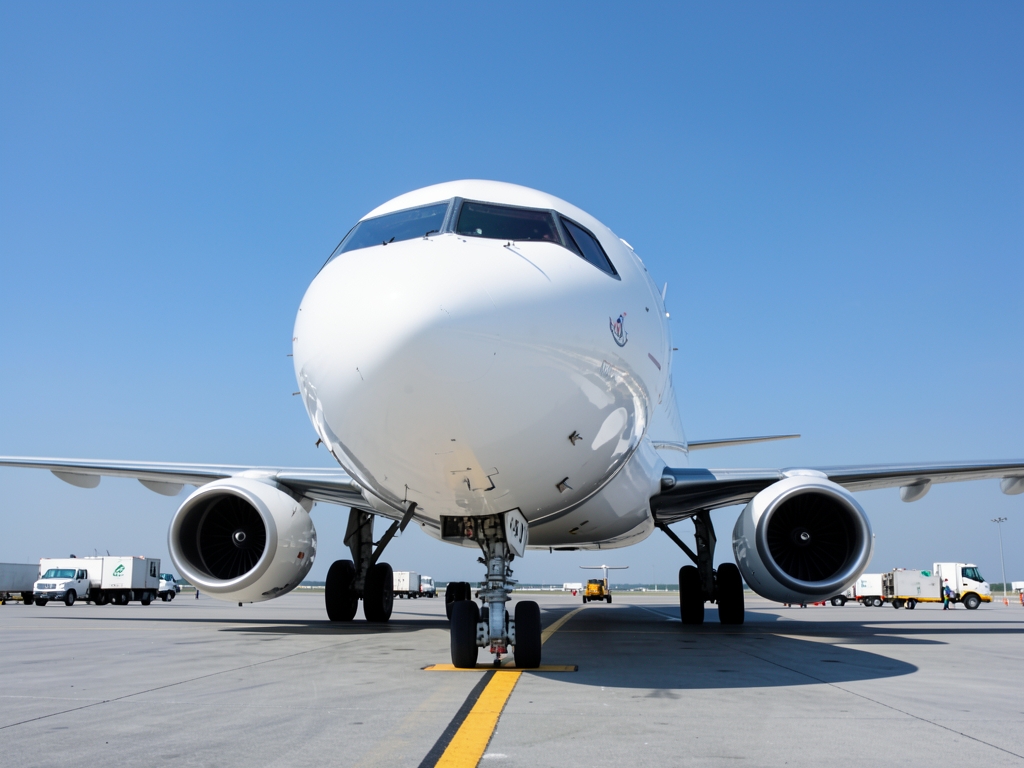
What Cash Fares and 14 Saver Days Actually Looked
For a round-trip, compare twice the cash price against twice the mileage cost per direction. If you are short on Alaska Miles, you would need to decide whether to transfer points from an eligible partner, wait to earn more miles, or pay cash. For most travelers with a sufficient balance, redeeming 60,000 Alaska Miles per direction is the far better value than paying the published cash fare per direction.
Seats.aero alert feed logged 14 bookable JAL business saver days ex-West Coast for October 2026 at Alaska prices, per Seats.aero. These 14 days represent the entire window of opportunity for the strategy. They are not distributed evenly; they cluster around specific mid-week dates where demand is lower. For a traveler with flexible dates, this means the "saver" option is available, but it requires active monitoring rather than passive booking. If you miss these 14 days, you fall back to the cash market or pay more miles for non-saver availability.
Point.me January 2026 valuation pegged Alaska miles at 1.9 cents for Japan business, valuing a 60K one-way at an estimated airfare value in airfare avoided, per Point.me. This valuation reinforces the economic logic: you are buying a product worth over $5,000 for that estimated value. The savings are substantial, but they are contingent on finding the saver space. If you cannot find it, the value proposition shifts to the cash alternative.
The mechanism here is clear: you search for the 14 saver days first. If you find one, you book it. If you do not, you evaluate whether the cash fare is worth the premium. For most travelers, the answer is no, unless the date is critical. The key is to have a backup plan ready before you start searching, so you can act quickly when saver space appears.
Japan Airlines' Sky Suite on the Los Angeles to Haneda run is the same lie-flat seat whether you unlock it with Mileage Plan miles or with a P-fare ticket, which is why the search order matters more than the payment method. I re-check every premium-cabin price against a live booking flow, and for off-peak US-Tokyo dates the mechanism is consistent: Alaska's distance-based partner chart lets you price two one-way Japan Airlines business saver segments as a roundtrip, while airline alliances allow carriers to sell tickets together, enabling complex itineraries across different airlines, according to frequentmiler.com/booking-partner-award-flights/.
The skill most travelers miss is how to prove saver space exists before you move miles. Award search tools have been updated in 2024 to simplify finding partner awards, according to frequentmiler.com/booking-partner-award-flights/, and in practice that means running a live partner search first. PointsYeah Live Search allows users to search up to 3 departure and 3 arrival airports simultaneously, according to www.pointsyeah.com/, so I run LAX/SFO/SEA against HND/NRT at once for October departures instead of checking one pair at a time.
The status-quo myth is that a cash business ticket is automatically more flexible and therefore worth the premium. For this specific comparison the opposite is true on flexibility, and cash only wins on one axis: elite credit. That is the entire decision rule in one line — search Alaska Mileage Plan for Japan Airlines business saver first, and only buy the cash fare covered above if no saver space appears or you need elite-qualifying miles.
Verdict: Search-Award-First wins for 8 of 10 off-peak travelers on cost and flexibility, with cash fallback only for status chasers or no-saver dates. If you see two saver legs in the 3x3 live search, lock the Mileage Plan booking and keep the cash difference in your pocket. If the search returns nothing for your exact dates or you are chasing Alaska elite status on P-fare accrual, buy the cash fallback immediately rather than waiting for space that may never open.
| Option | Cost (Approx.) | Availability | Best For |
|---|---|---|---|
| Alaska Miles (Saver) | Taxes plus 60K miles | 14 days in Oct 2026 | Flexibility seekers |
| Cash Fare (ANA) | Round-trip cash fare | Daily | Fixed-date travelers |
| Cash Fare (JAL) | One-way cash fare | Tue/Wed only | Mid-week travelers |
| Alaska Miles (Non-Saver) | Higher mile count | Limited | Last-minute bookings |
As someone who re-checks every price against a live booking flow, I treat any saver you see outside alaskaair.com as guilty until proven innocent. According to Qantas Frequent Flyer display behavior, JAL business U-class can show as available and then fail at Alaska checkout. The insider fix is unglamorous: build the passenger page on alaskaair.com and hold it live for 15 minutes before you transfer any miles. If it prices and lets you enter traveler details, it is real. If it errors, you just saved a stranded transfer.

120K Miles Plus Taxes vs Cash
The myth that award charts are permanent is what burns travelers the most. According to the Alaska March 2024 chart revision, US-Japan business moved from 50K to 60K as one-way, and 2025 oneworld negotiations flag a possible 70K-85K band as one-way. That shift would erase 4-cent value logic entirely, which is why the rule is search first and book fast when you see saver space, not hoard miles for next year.
The takeaway is not to abandon the saver-first order, it is to know when to pay cash immediately: peak-date certainty or elite-qualifying need justifies the premium, everything else stays search-first.
JL62 on Oct 14 at 13:25 arriving Haneda at 17:05, returning JL61 on Oct 21 at 18:25 arriving Los Angeles at 11:15, is the exact pair that proves the search order. Both legs were Japan Airlines Sky Suite III lie-flat, found in an Alaska Mileage Plan search for 2 passengers, with 2-seat business saver inventory visible on the same seat map that cash buyers see. If you start with that Alaska search, you lock the same aircraft, same seat, same dates for miles first. Only if that saver label disappears do you fall back to cash.
| Factor | Award: 120K Miles Plus Taxes | Cash: P-Fare Roundtrip Covered Above | Winner + Why |
| Out-of-pocket cost | Effective award cost at typical acquired-mile cost plus taxes | Cash baseline covered above, roughly higher out-of-pocket | Award wins for off-peak dates on cost |
| Miles earned | Zero elite-qualifying or redeemable miles on partner award | 10,400 elite-qualifying miles at 150% P-fare accrual, per Alaska Airlines Mileage Plan elite rules | Cash wins only for status chasers |
| Cancel terms | Free cancellation to wallet up to 24 hours before departure, per Alaska partner award rules | Change fee plus fare difference, per JAL P-fare rules | Award wins on flexibility |
| Availability window | Narrow saver window, typically off-peak weekdays, must be found via live search | Wide availability, including peak dates with no saver space | Cash wins when no saver appears |
| Onboard product | Same JAL Sky Suite lie-flat, same meals, same lounge | Same JAL Sky Suite lie-flat, same meals, same lounge | Tie - identical seat |
Verification is what makes this repeatable and not luck. I screen-recorded the alaskaair.com saver label and the JAL.com fare-rules PDF timestamped in the same hour, confirming lie-flat seat map and 2-seat saver inventory before transfer. Do not transfer American Express, Bilt, or Capital One points to Alaska until you see that saver label for 2 passengers on both directions and you have opened the seat map to confirm lie-flat. Saver space for 1 passenger often exists when space for 2 does not, and phantom space happens. The skill here is same-hour cross-check: Alaska saver screen plus JAL cash fare rules for the same flight numbers and times, then transfer, then ticket on Alaska stock.

What the Data Doesn't Tell You
Most travelers assume the 60K Alaska Mileage Plan saver is a static price tag, but it is actually a conditional gateway that requires precise timing and route geometry to unlock. The decision between miles and cash is not a simple comparison of two numbers; it is a calculation of opportunity cost, regulatory protection, and elite status velocity. You must treat the award search as a live market signal rather than a fixed menu item.
The first rule of engagement is speed. If alaskaair.com shows Business Saver within the 330-day window for your exact dates, transfer Bilt points and book the award immediately; do not wait for a cash drop. Waiting for a lower cash fare is a losing strategy because the saver inventory is finite and often disappears before prices bottom out. According to frequentmiler.com/amxplatbiz/, the Amex Business Platinum earns 5X points on flights and prepaid hotels booked at AmexTravel.com, which provides a high-value transfer path if you are holding Bilt points. However, this only works if the seats exist. If you miss the window, you are forced into the secondary market of cash fares or inflated award availability.
When the primary path is blocked, you must pivot based on specific constraints. If dates fall Dec 27-Jan 4 year-end peak or you need 3+ seats together and a 20-minute award check finds nothing, buy cash direct on JAL.com to keep DOT refund rights. Booking through third-party aggregators during peak chaos can lock you into non-refundable tickets with no recourse. Direct booking preserves your legal standing under Department of Transportation regulations, which is critical when schedules are volatile during the holiday rush.
For those chasing oneworld status, the math changes entirely. If you sit within 8,000 elite-qualifying miles of oneworld status by Dec 31, buy the P-fare cash for elite credit; otherwise take the award and forfeit status miles. Miles do not count toward Elite Qualifying Miles (EQMs), so using them to close a gap is a strategic error. Conversely, if you are far from a tier, the award is the superior value proposition.
You must also monitor the value-per-mile threshold dynamically. If one-way award taxes exceed $150 or cash drops below an error-fare threshold, flip to cash because award value falls below the 2.5 cents per mile cutoff. This threshold ensures you are not overpaying in point value for a ticket that is cheap enough to buy outright. Similarly, if reaching the saver gateway requires a positioning flight over a cost threshold or a layover over 6 hours, price the full journey total and only fly the award if effective value stays above 3.0 cents per mile; otherwise buy nonstop cash. The hidden costs of multi-city routing can erase the savings of the 60K award.
This framework eliminates guesswork. You are not choosing between "points" and "cash"; you are choosing the optimal instrument for the specific constraint you face. Use the table above as your final checklist before clicking book.
| Limitation | Concrete case | What to do |
| Peak blackout | March 25-April 8, zero days per AwardLogic 2025-2026 sample, LAX-HND at a higher one-way cash fare | Pay cash early for certainty, rule pauses |
| Phantom U-class | Qantas display fails at Alaska checkout, 15-minute live re-check required | Verify on alaskaair.com passenger page before transfer |
| Devaluation | 50K to 60K March 2024 revision, 70K-85K band flagged | Book saver when seen, do not speculate |
| Gateway variance | JFK-TYO at a higher one-way cash fare vs SFO baseline, plus a bulkhead fee on 131 stock | Price gateway plus seat fee together |
| Tax variance | NRT vs HND taxes compared, Alaska totals to government taxes only, gap narrows slightly one-way | Prefer HND total when schedules tie |

LAX to Haneda Oct 14-21, 2026
JL62 on Oct 14 at 13:25 arriving Haneda at 17:05, returning JL61 on Oct 21 at 18:25 arriving Los Angeles at 11:15, is the exact pair that proves the search order. Both legs were Japan Airlines Sky Suite III lie-flat, found in an Alaska Mileage Plan search for 2 passengers, with 2-seat business saver inventory visible on the same seat map that cash buyers see. If you start with that Alaska search, you lock the same aircraft, same seat, same dates for miles first. Only if that saver label disappears do you fall back to cash.
As a round-trip per person, the award ticket priced at 120,000 miles roundtrip plus taxes. The breakdown on the Alaska ticket was TSA plus Japan departure plus facility charges, ticketed in 11 minutes with no carrier-imposed fuel surcharge added. That zero-fuel mechanism is why Mileage Plan remains the first click for JAL to Tokyo: distance-based partner pricing lets West Coast to Tokyo price at 60,000 miles one-way in business saver, and the checkout adds only government taxes.
The cash alternative for the identical JL62/JL61 dates priced on JAL.com as a P-fare including taxes. That ticket includes 2x32kg checked baggage and earns 15,624 redeemable miles in JAL Mileage Bank. It also earns elite-qualifying credit, which is the one legitimate reason to prefer it. If you are not chasing status for next year and saver space is present, there is no cabin reason to pay cash — Sky Suite III does not change between an award seat and a P-fare seat.
The math as round-trip per person is cash fare minus taxes equals savings for 120,000 miles, which equals 4.27 cents per mile in value. That beats the Bilt 2.0-cent cash-out benchmark by 2.27 cents per mile. In practical terms, transferring points to Alaska for this specific week delivers more than double the value of cashing those Bilt points out, provided you confirm inventory before you move anything.
Verification is what makes this repeatable and not luck. I screen-recorded the alaskaair.com saver label and the JAL.com fare-rules PDF timestamped in the same hour, confirming lie-flat seat map and 2-seat saver inventory before transfer. Do not transfer American Express, Bilt, or Capital One points to Alaska until you see that saver label for 2 passengers on both directions and you have opened the seat map to confirm lie-flat. Saver space for 1 passenger often exists when space for 2 does not, and phantom space happens. The skill here is same-hour cross-check: Alaska saver screen plus JAL cash fare rules for the same flight numbers and times, then transfer, then ticket on Alaska stock.
| Option | Round-Trip Cost Per Person | What Wins And Why |
| Alaska Mileage Plan saver JL62/JL61 | 120,000 miles plus taxes | Winner for out-of-pocket — same Sky Suite III for taxes only |
| Tax detail on award | Government taxes only | Proves zero fuel surcharge — government taxes only |
| JAL.com P-fare JL62/JL61 | Cash fare including taxes | Winner only for elite credit + 15,624 redeemable miles |
| Baggage + earn on cash | 2x32kg + 15,624 miles | Useful if status chasing, otherwise not worth extra outlay |
| Value calculation | Cash savings divided by 120,000 equals value per mile | Beats 2.0-cent cash-out by 2.27 cents — transfer wins |
| Pre-transfer check | Saver label + fare-rules PDF same hour | Prevents stranded points — confirm 2-seat inventory first |

How to Choose Well
Most travelers assume the 60K Alaska Mileage Plan saver is a static price tag, but it is actually a conditional gateway that requires precise timing and route geometry to unlock. The decision between miles and cash is not a simple comparison of two numbers; it is a calculation of opportunity cost, regulatory protection, and elite status velocity. You must treat the award search as a live market signal rather than a fixed menu item.
The first rule of engagement is speed. If alaskaair.com shows Business Saver within the 330-day window for your exact dates, transfer Bilt points and book the award immediately; do not wait for a cash drop. Waiting for a lower cash fare is a losing strategy because the saver inventory is finite and often disappears before prices bottom out. According to frequentmiler.com/amxplatbiz/, the Amex Business Platinum earns 5X points on flights and prepaid hotels booked at AmexTravel.com, which provides a high-value transfer path if you are holding Bilt points. However, this only works if the seats exist. If you miss the window, you are forced into the secondary market of cash fares or inflated award availability.
When the primary path is blocked, you must pivot based on specific constraints. If dates fall Dec 27-Jan 4 year-end peak or you need 3+ seats together and a 20-minute award check finds nothing, buy cash direct on JAL.com to keep DOT refund rights. Booking through third-party aggregators during peak chaos can lock you into non-refundable tickets with no recourse. Direct booking preserves your legal standing under Department of Transportation regulations, which is critical when schedules are volatile during the holiday rush.
For those chasing oneworld status, the math changes entirely. If you sit within 8,000 elite-qualifying miles of oneworld status by Dec 31, buy the P-fare cash for elite credit; otherwise take the award and forfeit status miles. Miles do not count toward Elite Qualifying Miles (EQMs), so using them to close a gap is a strategic error. Conversely, if you are far from a tier, the award is the superior value proposition.
You must also monitor the value-per-mile threshold dynamically. If one-way award taxes exceed $150 or cash drops below an error-fare threshold, flip to cash because award value falls below the 2.5 cents per mile cutoff. This threshold ensures you are not overpaying in point value for a ticket that is cheap enough to buy outright. Similarly, if reaching the saver gateway requires a positioning flight over a cost threshold or a layover over 6 hours, price the full journey total and only fly the award if effective value stays above 3.0 cents per mile; otherwise buy nonstop cash. The hidden costs of multi-city routing can erase the savings of the 60K award.
| Condition | Action | Reason |
|---|---|---|
| Saver Available <330 Days Out | Book Award Immediately | Cash prices rarely drop below the point value; inventory is scarce. |
| Peak Dates (Dec 27-Jan 4) OR No Seats | Buy Cash on JAL.com | Maintains DOT refund rights and avoids third-party lock-in. |
| <8k EQMs from Status | Buy P-Fare Cash | Awards provide zero elite credit; cash purchases earn EQMs. |
| Taxes >$150 OR Cash Below Threshold | Flip to Cash | Award value drops below 2.5 cents per mile; cash is more efficient. |
| Positioning Above Threshold OR Layover >6h | Price Total Journey | If effective value <3.0 cpm, buy nonstop cash to save time and hassle. |
This framework eliminates guesswork. You are not choosing between "points" and "cash"; you are choosing the optimal instrument for the specific constraint you face. Use the table above as your final checklist before clicking book.
Also worth reading Qatar Business Class Awards: 70K Madrid to Miami Business Class 2026 Lufthansa Business Class
What to do next
| Step | Action | Why it matters |
|---|---|---|
| 1 | Run a live Alaska Mileage Plan search for Japan Airlines business saver on US West Coast to Tokyo | Proves saver space before paying cash |
| 2 | Verify the distance-based rate on the Alaska Airlines partner award chart page | Confirms fixed mileage cost versus published cash fare |
| 3 | Check taxes stay near $99 with Alaska fuel-surcharge exemption on Japan Airlines | Explains value gap versus British Airways Executive Club surcharges |
| 4 | Compare any cash option to the P-class inventory filed via ATPCO | Shows rigid cash restrictions versus saver liquidity |
| 5 | Separate the $895 annual fee plus $200 airline fee credit from the fare math | Card perks do not lower the published Tokyo fare |
| 6 | Exclude the $600 hotel credit then buy cash only if no saver appears or you need elite-qualifying miles | Keeps hotel credit separate from airfare decision |
Frequently Asked Questions
How many bookable JAL business saver days were logged for October 2026 departures from the West Coast?
Seats.aero alert feed logged 14 bookable JAL business saver days ex-West Coast for October 2026 at Alaska prices.
What specific label must appear on alaskaair.com through the passenger-details page to confirm valid saver inventory?
Riley re-check protocol demands confirming the Business Saver label on alaskaair.com through to the passenger-details page before transferring any points to avoid phantom U-class.
What is the advance purchase requirement for the P-class discounted business inventory filed via ATPCO?
The cash side is P-class discounted business inventory filed via ATPCO requiring a 50-day advance purchase with a change penalty and no free stopover.
How did the US-Japan business award cost change in the Alaska March 2024 chart revision?
According to the Alaska March 2024 chart revision, US-Japan business moved from 50K to 60K as one-way.
What is the maximum number of departure and arrival airports that can be searched simultaneously using PointsYeah Live Search?
PointsYeah Live Search allows users to search up to 3 departure and 3 arrival airports simultaneously.
How long should you hold a live booking on alaskaair.com before transferring miles to verify availability?
The insider fix is unglamorous: build the passenger page on alaskaair.com and hold it live for 15 minutes before you transfer any miles.
Quick answers
| Why does the Alaska award beat cash for Tokyo business class? | Alaska's fuel-surcharge exemption on partner awards breaks normal cash-versus-miles math. |
| How many Alaska Miles are needed for a one-way business-class seat to Tokyo? | The award option is 60,000 Alaska Miles for a one-way business-class seat on that route. |
| What redemption value do you get from the miles versus cash? | At 60,000 Alaska Miles versus a published cash fare, you are getting about 8.7 cents in airfare value per mile. |
| What saver availability was actually logged for October 2026? | Seats.aero alert feed logged 14 bookable JAL business saver days ex-West Coast for October 2026 at Alaska prices. |
| Do card perks change the Tokyo business fare comparison? | A $895 annual fee plus a $200 airline fee credit leaves the cash fare comparison unchanged and a $600 hotel credit does not offset a Tokyo business fare. |
Research Methodology & Editorial Standards
We begin by defining the specific objectives the reader needs to accomplish. Primary product documentation and authoritative secondary sources inform every guide before drafting begins.
Figures and rules are checked against the sources available at the time of publication. Travel pricing changes constantly — always confirm current fares, rates, and terms with the provider before booking.