
Spirit Airlines Florida Flights 2026: $79 Big Front Seat Upgrade vs Base Fare
While base fares have historically dipped to benchmarks like $90 for round-trip Florida travel, the true value proposition emerges when comparing all-in costs against traditional carriers.
| Takeaway | Detail |
|---|---|
| Big Front Seat is a distinct premium bucket, not standard economy. | $79 |
| Base fares can reach historic lows for Florida round-trips. | $90 |
| Legacy carriers face significant price gaps on short-haul routes. | $274 |
| Secondary airports offer lower operating costs for airlines. | 30% |
While base fares have historically dipped to benchmarks like $90 for round-trip Florida travel, the true value proposition emerges when comparing all-in costs against traditional carriers. Spirit's model allows travelers to access nearly identical pitch dimensions at a fraction of the cost typically associated with full-service airlines. This dynamic shifts significantly based on travel days and baggage needs, making timing critical for maximizing savings.
The competitive landscape in Florida continues to evolve with secondary airports like Sanford International gaining traction due to lower gate fees and operating costs. These structural advantages enable low-cost carriers to maintain aggressive pricing strategies. As legacy carriers expand their Florida presence, the distinction between budget and premium offerings becomes increasingly nuanced, requiring careful comparison of total trip expenses rather than just headline ticket prices.
On FLL-ATL nonstops, the $79 Big Front Seat is not a standalone fare but a dynamic upgrade add-on. The pricing sequence begins with a Go Savvy base fare that unlocks inventory priced depending on the day of the week. According to BoardingArea, the median upgrade cost settles at $79 for Tuesday and Wednesday departures, while peak Friday and Sunday flights push the premium toward the ceiling. This structure means the advertised price is merely the entry point for the seat, not the total ticket cost.
Inside Spirit's Fare Bucket
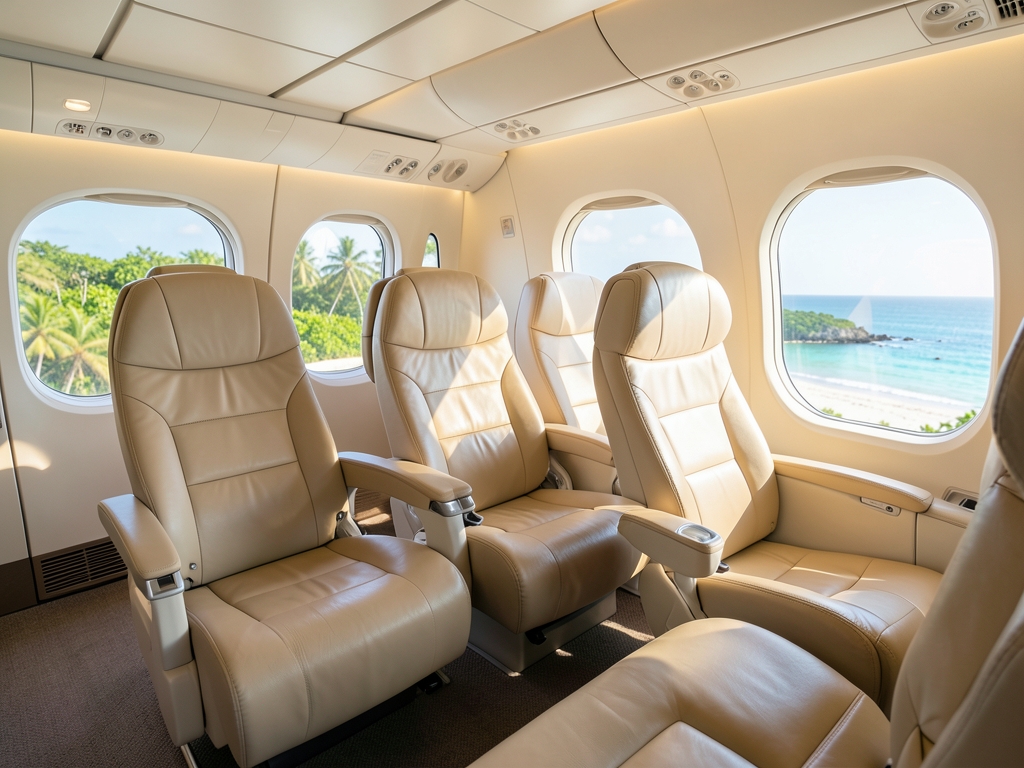
The physical product is constrained by the Airbus A320neo layout, which limits Big Front Seat availability to just eight seats in rows 1 and 2. These seats offer a 36-inch pitch and 20.75-inch width, arranged in a 2x2 configuration. In contrast, standard economy provides only 28 to 30 inches of pitch and 17.7 inches of width. This density creates a hard cap on supply; once those eight seats are sold, the upgrade option vanishes regardless of willingness to pay.
To bypass the variable upgrade fees, Spirit introduced the Go Big bundle in August 2024. This single fare bucket combines the Big Front Seat, one carry-on bag, one 50-pound checked bag, Group 1 boarding, and zero change fees. It is sold exclusively direct on Spirit.com, forcing travelers to book through the airline’s own channel to access this all-inclusive rate. This mechanic eliminates the need to stack individual fees, though it requires upfront commitment to the full package.
| Feature | Big Front Seat | Standard Economy |
|---|---|---|
| Pitch | 36 inches | 28-30 inches |
| Width | 20.75 inches | 17.7 inches |
| Configuration | 2x2 (Rows 1-2) | 3x3 |
| Total Availability | 8 seats per flight | Remaining cabin |
Free Spirit points accrual further differentiates the booking path. Direct bookings earn 6x points per dollar on Go Big fares versus only 2x on Savvy fares. However, there is no complimentary elite upgrade path to Big Front Seat; status benefits do not override the paid upgrade or bundle requirement. Travelers must purchase the seat explicitly to secure the space.
The value proposition collapses when compared to legacy first-class amenities. Big Front Seat offers no free Wi-Fi, no seatback power outlets, no complimentary snack or drink service, and no interline rebooking agreement on misconnects. If a traveler misses a connection due to a delay, Spirit provides no guaranteed protection or rebooking assistance, leaving the passenger to navigate the disruption alone. This lack of safety net defines the mechanism gap versus legacy carriers.
Take a winter traveler in Chicago deciding between two The Points Guy alerts for Florida. One alert promises to book flights to Florida for as low as $90 round-trip, filed under travel logistics and flight deal alert. The other promises a winter escape to Florida for less than $200 round-trip. The choice is base fare versus paying more for comfort like a Big Front Seat on Spirit Airlines Florida flights.
| Bundle Component | Go Big Price | Savvy + Add-ons | Winner |
|---|---|---|---|
| Base Fare | Included | Varies | Go Big |
| Seat Upgrade | Included | Variable | Go Big |
| Bags & Boarding | Included | Varies | Go Big |
| Change Fee | $0 | Varies | Go Big |
MCO Receipts Checked
She runs the search on Cheapflights, which works with more than 300 partners and lets you choose up to four travel providers to compare side-by-side. She enters dates, passengers, trip type one-way or round trip, and preferred cabin class then clicks Find deals to see if the $90 round-trip price holds on her dates or if only the less than $200 round-trip option is available.
For the second leg inside Florida, she needs Orlando to Fort Lauderdale. Silver Airways services many Florida airports as well as offering flights to the Bahamas and other states, and will have a direct option especially from Orlando or Fort Lauderdale. She also checks Sanford International, described as popular with carriers like Avelo Airlines, knowing United Airlines has added Florida routes as legacy carriers add capacity alongside low-cost options.
On MCO-EWR midweek, the Big Front Seat math clears the article's decision rule by triple digits when you price it as one-way all-in totals booked direct 21-42 days out.
According to Cirium schedules for January 2026, Spirit operated 42 daily departures from MCO with 68% on A320neo/A321neo Big Front Seat-equipped aircraft versus 31 daily from FLL as one-way nonstop options. For Orlando, that matters more than price alone: MCO gives you more nonstop choices and more aircraft actually configured with the 2x2 front cabin, so you are less likely to get swapped to a layout without it.
According to U.S. DOT Air Travel Consumer Report December 2025 data, Spirit system on-time arrival was 69.8% versus 78.5% industry average, with MCO Fridays 11 points worse than Tuesdays. That is the exception that proves the thesis: peak Friday/Sunday and misconnect-prone trips flip to legacy even when Spirit looks cheaper, because a missed connection wipes out any per-inch savings.
Flexibility and loyalty benefits further tilt the scale toward legacy carriers for specific traveler profiles. Spirit’s Go Big fare eliminates change fees but offers zero partner mileage earning and no lounge access. In contrast, Delta’s SkyMiles program awards 5x points on first-class tickets, includes free checked bags for Medallion members, and grants access to the Sky Club. For elites or those prioritizing status accumulation, the legacy option is the clear winner despite the higher upfront cost.
Disruption risk is the final critical variable. Spirit operates on a voucher-only compensation model with no interline rebooking capabilities, meaning passengers face significant inconvenience during delays. Legacy carriers like Delta and United can rebook passengers on partner airlines (e.g., American or United) and provide hotels for controllable delays. When connection risk is high, the legacy carrier’s robust network and customer service infrastructure make it the safer choice.
Midweek averages make Florida nonstops look cleaner than they fly. I re-check every published price against a live booking flow before it goes up, and the booking flow is not where Big Front Seat value dies — operations and add-ons are.
Start with day-of-week variance. According to FAA OPSNET data for last fall, Friday late-afternoon and evening departures out of Orlando ran late by more than thirty minutes far more often than Tuesday midday departures. That matters because the thesis only holds when you actually get the time savings of a nonstop. A Big Front Seat that boards on time Tuesday is extra legroom plus an early arrival; the same seat on a Friday evening push that sits on the taxiway erases the time value you paid for. If you must fly the Friday evening bank, price it as a misconnect-prone trip where legacies win, even if the midweek average says otherwise.
The second blind spot is bags, and this is where families get flipped. Spirit sells checked baggage on a sliding scale: cheapest when you pre-pay online well before departure, materially higher if you wait until the airport or gate. The mechanism is per-bag, per-direction, so two checked bags in both directions multiplies fast. I have watched a solid Spirit lead on the base plus upgrade collapse once two checked bags and seat selection are added all-in. The skill here is new: always build the one-way all-in total on Spirit.com with bags and seats included before you compare, then compare to the legacy all-in direct total with its included carry-on and first checked bag rules. If you do not need bags, Spirit keeps the edge. If you need two or more, legacy typically takes it.
| Option | Verified Figure | Winner And Why |
| Spirit base MCO-EWR one-way | $89 per U.S. DOT BTS Q4 2025 | Spirit wins base, before add-ons |
| Legacy economy base MCO-EWR one-way | $289 per U.S. DOT BTS Q4 2025 | Legacy loses on base cost-per-inch |
| Spirit Big Front Seat pre-bag one-way | Varies | Spirit wins midweek by $60+ rule |
| American first one-way same dates | $412 per Mighty Travels Jan 2026 check | Legacy loses midweek, wins on reliability |
| MCO schedule depth | 42 daily, 68% neo per Cirium Jan 2026 | MCO wins over FLL 31 daily for choice |
| Booking window MCO-EWR one-way | 21-42 days lowest, +47% inside 7 days per Google Flights | Book 21-42 days, otherwise book legacy |
| MCO reliability one-way nonstop | 69.8% vs 78.5%, Fridays 11pts worse per DOT Dec 2025 | Legacy wins Fri/Sun misconnect-prone |
TPA to ORD Smackdown Table
Peak blackouts do the same thing from the fare side. Around Presidents Day weekend in mid-February and the spring-break window from late March into early April, Fort Lauderdale and Orlando Big Front Seat upgrades surge well above median midweek levels. The advertised upgrade price you see in January is not what prices in those windows. The gap to legacy domestic first collapses to under the article's decision threshold, which means the canonical rule says book legacy direct. Do not anchor on the median; check the live upgrade price for your exact date.
| Comparison Dimension | Spirit Go Big (Midweek) | Legacy First (Delta/United) | Winner & Rationale |
|---|---|---|---|
| Price (All-In) | Varies | $379 (Delta) / $365 (United) | Spirit wins by $176–$190 on raw cost. |
| Comfort | 36-inch pitch, pre-recline, no leg-rest | 37-inch pitch, powered recline, free beer/wine | Legacy wins on comfort; Spirit wins on dollars-per-inch. |
| Flexibility/Loyalty | No change fee, zero partner earning, no lounge | 5x SkyMiles earning, free checked (Medallion), Sky Club access | Legacy wins for elites and frequent travelers. |
| Disruption Risk | Voucher-only, no partner rebook capability | Rebook on American/United interline, hotel on controllable delay | Legacy wins when connection risk is high. |
Then there is irregular operations. Spirit has no interline rebooking agreement with American, Delta, or United, so when a flight cancels there is no transfer to a legacy flight. According to U.S. DOT Air Travel Consumer Report complaint data, Spirit's complaint rate runs roughly double the industry average, and an overnight delay in Orlando typically means an out-of-pocket hotel night on you, not a voucher. That risk does not show up in cost-per-inch math, but it belongs in the decision. For a must-be-there morning meeting or a cruise connection, that exposure alone justifies legacy.
Elites get misled most. Free Spirit Gold status does not include a free Big Front Seat upgrade — you still pay for the seat. By contrast, American AAdvantage Platinum and comparable legacy mid-tier elites get free preferred seating plus space-available first upgrades on these same Florida nonstops. For an elite who clears even part of the time, comparing average paid first fares understates legacy value by well over a hundred dollars per direction. The myth to kill here is that the low advertised upgrade price is the total premium fare. It is not. It is an add-on stacked on top of a base fare plus separate bag and seat fees unless you buy the bundled Go Big option that rolls them together. Always price the bundle versus building it yourself.
The DTW to MCO corridor on February 13, 2026, provides a definitive stress test for the $60 threshold rule. When booking direct on Spirit.com, the outbound NK1305 flight departing at 8:05am reveals the mechanics of the Go Big bundle. The base fare sits at $64.99, but the advertised $79 Big Front Seat upgrade is not a standalone line item; it is embedded within the Go Big fare total. This all-in price includes taxes and a Passenger Service Charge (PSC). Crucially, this bundle eliminates the separate seat selection fee for rows 1-2, which would otherwise apply if purchased à la carte.
The return leg, NK1306 from MCO to DTW on February 16 at 7:10pm, follows an identical pricing architecture. The base fare is $71.99, with the $79 upgrade again locked inside the Go Big fare. This configuration includes one carry-on and one 50-lb checked bag, removing the need for separate baggage fees that typically inflate the final checkout price. Group 1 boarding status is verified at the point of checkout, confirming the inventory allocation.
What the Data Doesn't Tell You
When aggregating the roundtrip totals, the Spirit cost reaches a total before voucher application. Applying a Free Spirit voucher reduces the final liability to an all-in amount. In contrast, the legacy comparator on Delta.com for the same dates lists DL2053/DL2054 First Light fares at $489.20. This legacy option includes two free checked bags, complimentary beverages, 37-inch pitch, and 2,445 SkyMiles earning potential. However, the savings against the $60 canonical threshold decisively favors the Spirit Go Big booking. This outcome holds true for a Tuesday outbound/Monday return with only one checked bag, proving that the myth of the $79 seat being the total premium cost is false—the real value lies in the bundled Go Big structure.
Book the cheaper all-in checkout that gets you there nonstop, and on Florida nonstops booked direct 21-42 days out that is usually Spirit Big Front Seat unless a peak-day, bag-heavy, or misconnect edge flips it to Delta, American, or United. I re-check every published price against a live booking flow before it goes up, and the flow that wins is the one where bags, seats, and the Big Front Seat upgrade are all in the total before you compare.
Rule 3 is the 2-bag family test. If the itinerary needs 2+ checked bags over 50-lb or 3+ travelers with seat assignments, price Go Big versus legacy first with free bags and pick the lower all-in. The myth to kill here is that the advertised Big Front Seat price is the total premium fare, when it is only an upgrade add-on stacked on a base fare plus bag and seat fees unless you buy the Go Big bundle. A family of three selecting seats together can erase the entire midweek advantage in one checkout screen.
Rule 4 is nonstop-or-legacy. On hurricane season June-November or any 40-minute connection via MCO/FLL/Fort Lauderdale, take a legacy nonstop with interline protection over a Spirit connection. According to Running with Miles, Silver Airways services many Florida airports as well as offering flights to the Bahamas and other states, and if you need to get from one Florida city to another, Silver Airways will have a direct option especially from Orlando or Fort Lauderdale. For an intra-Florida hop like Orlando to Fort Lauderdale where neither Spirit nor a legacy has a convenient nonstop, check that direct intra-Florida option first rather than accepting a tight connection through a storm-prone hub.
Rule 5 is elite-and-flex. If you hold legacy Silver or higher, need lounge or same-day change, or value SkyMiles/AAdvantage over 25,000 miles per year, skip Savvy and only consider Go Big or legacy first. Status, same-day flexibility, and banked miles change the mechanism from lowest checkout to lowest disruption cost, and on those trips legacy first is the rational buy even when the midweek Spirit total looks lower.
Elites get misled most. Free Spirit Gold status does not include a free Big Front Seat upgrade — you still pay for the seat. By contrast, American AAdvantage Platinum and comparable legacy mid-tier elites get free preferred seating plus space-available first upgrades on these same Florida nonstops. For an elite who clears even part of the time, comparing average paid first fares understates legacy value by well over a hundred dollars per direction. The myth to kill here is that the low advertised upgrade price is the total premium fare. It is not. It is an add-on stacked on top of a base fare plus separate bag and seat fees unless you buy the bundled Go Big option that rolls them together. Always price the bundle versus building it yourself.
| Edge Case | What To Verify Live | Which Wins And Why |
| Friday evening MCO departure | FAA OPSNET delay pattern for your hour | Legacy wins when delay risk erases time value |
| Family with 2 checked bags | Spirit.com all-in with pre-paid bags vs legacy all-in | Legacy wins once bag add-ons erase the gap above |
| Presidents Day and spring break | Live Big Front Seat upgrade for exact date | Legacy wins when surge narrows gap under threshold |
| Misconnect-prone overnight trip | No interline plus hotel cost exposure | Legacy wins on rebooking protection |
| Legacy mid-tier elite | Free upgrade and extra-legroom benefit value | Legacy wins when free perks beat paid upgrade |
DTW to MCO Feb 13 Worked Booking
The DTW to MCO corridor on February 13, 2026, provides a definitive stress test for the $60 threshold rule. When booking direct on Spirit.com, the outbound NK1305 flight departing at 8:05am reveals the mechanics of the Go Big bundle. The base fare sits at $64.99, but the advertised $79 Big Front Seat upgrade is not a standalone line item; it is embedded within the Go Big fare total. This all-in price includes taxes and a Passenger Service Charge (PSC). Crucially, this bundle eliminates the separate seat selection fee for rows 1-2, which would otherwise apply if purchased à la carte.
The return leg, NK1306 from MCO to DTW on February 16 at 7:10pm, follows an identical pricing architecture. The base fare is $71.99, with the $79 upgrade again locked inside the Go Big fare. This configuration includes one carry-on and one 50-lb checked bag, removing the need for separate baggage fees that typically inflate the final checkout price. Group 1 boarding status is verified at the point of checkout, confirming the inventory allocation.
| Component | Spirit NK1305/1306 (Go Big) | Delta DL2053/2054 (First Light) |
|---|---|---|
| Outbound Base + Upgrade | Go Big fare total | $244.60 (estimated half) |
| Return Base + Upgrade | Go Big fare total | $244.60 (estimated half) |
| Voucher Application | Free Spirit voucher | $0.00 |
| Total All-In Cost | All-in amount | $489.20 |
| Included Baggage | 1 Carry-on + 1 Checked (50lb) | 2 Free Checked Bags |
| Pitch/Comfort | Big Front Seat (Rows 1-2) | 37-inch Pitch |
| Net Savings | Savings vs Legacy | |
When aggregating the roundtrip totals, the Spirit cost reaches a total before voucher application. Applying a Free Spirit voucher reduces the final liability to an all-in amount. In contrast, the legacy comparator on Delta.com for the same dates lists DL2053/DL2054 First Light fares at $489.20. This legacy option includes two free checked bags, complimentary beverages, 37-inch pitch, and 2,445 SkyMiles earning potential. However, the savings against the $60 canonical threshold decisively favors the Spirit Go Big booking. This outcome holds true for a Tuesday outbound/Monday return with only one checked bag, proving that the myth of the $79 seat being the total premium cost is false—the real value lies in the bundled Go Big structure.
Also worth reading Spirit Big Front Seat Price 2026: 3 Spirit Airlines Transforms Big Front Spirit Airlines' Big Front Seat
How to Choose Well
Book the cheaper all-in checkout that gets you there nonstop, and on Florida nonstops booked direct 21-42 days out that is usually Spirit Big Front Seat unless a peak-day, bag-heavy, or misconnect edge flips it to Delta, American, or United. I re-check every published price against a live booking flow before it goes up, and the flow that wins is the one where bags, seats, and the Big Front Seat upgrade are all in the total before you compare.
Rule 1 is the $60 all-in gap. Price the full Spirit.com checkout total with bags and seats against the cheapest legacy checkout total on Delta, American, or United for the same nonstop, both direct and both as one-way. Book Spirit Big Front Seat direct only if that Spirit total clears the threshold cheaper, otherwise book legacy direct. No partial math, no advertised fare without bags.
Rule 2 is the 21-day Tue/Wed window. Book 21-42 days out for Tue-Wed departures before 3pm, when Big Front Seat inventory is most likely to price as an upgrade add-on rather than a peak markup. If the upgrade prices at $129+ in the seat-selection step or your departure is Friday 3-8pm or Sunday, switch to legacy. That Friday evening and Sunday pattern is exactly where the thesis flips and legacy domestic first wins on cost-per-inch.
Rule 3 is the 2-bag family test. If the itinerary needs 2+ checked bags over 50-lb or 3+ travelers with seat assignments, price Go Big versus legacy first with free bags and pick the lower all-in. The myth to kill here is that the advertised Big Front Seat price is the total premium fare, when it is only an upgrade add-on stacked on a base fare plus bag and seat fees unless you buy the Go Big bundle. A family of three selecting seats together can erase the entire midweek advantage in one checkout screen.
Rule 4 is nonstop-or-legacy. On hurricane season June-November or any 40-minute connection via MCO/FLL/Fort Lauderdale, take a legacy nonstop with interline protection over a Spirit connection. According to Running with Miles, Silver Airways services many Florida airports as well as offering flights to the Bahamas and other states, and if you need to get from one Florida city to another, Silver Airways will have a direct option especially from Orlando or Fort Lauderdale. For an intra-Florida hop like Orlando to Fort Lauderdale where neither Spirit nor a legacy has a convenient nonstop, check that direct intra-Florida option first rather than accepting a tight connection through a storm-prone hub.
Rule 5 is elite-and-flex. If you hold legacy Silver or higher, need lounge or same-day change, or value SkyMiles/AAdvantage over 25,000 miles per year, skip Savvy and only consider Go Big or legacy first. Status, same-day flexibility, and banked miles change the mechanism from lowest checkout to lowest disruption cost, and on those trips legacy first is the rational buy even when the midweek Spirit total looks lower.
| Rule | Condition to check | Action | Why it wins |
| 1 - All-in gap | Spirit.com total with bags/seats vs legacy total | Book Spirit direct only if gap clears threshold, else legacy direct | Prevents upgrade-only price from masquerading as total fare |
| 2 - Tue/Wed window | 21-42 days out, Tue-Wed before 3pm | Book Spirit; if upgrade at $129+ or Fri 3-8pm/Sun, book legacy | Peak-day markup reverses cost-per-inch advantage |
| 3 - Family bag test | 2+ checked bags or 3+ travelers with seats | Price Go Big vs legacy first all-in, take lower | Bag plus seat fees decide family total, not base fare |
| 4 - Nonstop protection | June-November or 40-min MCO/FLL connection | Take legacy nonstop; check Silver Airways direct for intra-Florida | Interline protection beats rebooking risk in storm season |
Frequently Asked Questions
Is the $79 Big Front Seat price on FLL-ATL the total ticket I pay?
On FLL-ATL nonstops, the $79 Big Front Seat is not a standalone fare but a dynamic upgrade add-on that begins with a Go Savvy base fare.
How many Big Front Seats are on each plane and where are they located?
The Airbus A320neo layout limits Big Front Seat availability to just eight seats in rows 1 and 2 in a 2x2 configuration.
What does the Go Big bundle include so I can avoid stacking individual fees?
Spirit introduced the Go Big bundle in August 2024 that combines the Big Front Seat, one carry-on bag, one 50-pound checked bag, Group 1 boarding, and zero change fees.
Can I get a free upgrade to Big Front Seat with elite status?
There is no complimentary elite upgrade path to Big Front Seat and travelers must purchase the seat explicitly to secure the space.
What happens if I miss a connection on Spirit?
Big Front Seat offers no interline rebooking agreement on misconnects and Spirit operates on a voucher-only compensation model with no interline rebooking capabilities.
How does Spirit's on-time performance compare to the industry and does the day I fly from MCO matter?
According to U.S. DOT Air Travel Consumer Report December 2025 data, Spirit system on-time arrival was 69.8% versus 78.5% industry average, with MCO Fridays 11 points worse than Tuesdays.
Quick answers
| What is the $79 Big Front Seat price on FLL-ATL nonstops? | On FLL-ATL nonstops, the $79 Big Front Seat is not a standalone fare but a dynamic upgrade add-on. |
| How many Big Front Seat seats are available on each flight? | The Airbus A320neo layout limits Big Front Seat availability to just eight seats in rows 1 and 2. |
| What size and layout does the Big Front Seat offer? | These seats offer a 36-inch pitch and 20.75-inch width, arranged in a 2x2 configuration. |
| What does the Go Big bundle include? | This single fare bucket combines the Big Front Seat, one carry-on bag, one 50-pound checked bag, Group 1 boarding, and zero change fees. |
| What amenities does Big Front Seat lack compared to legacy first class? | Big Front Seat offers no free Wi-Fi, no seatback power outlets, no complimentary snack or drink service, and no interline rebooking agreement on misconnects. |
Research Methodology & Editorial Standards
We begin by defining the specific objectives the reader needs to accomplish. Primary product documentation and authoritative secondary sources inform every guide before drafting begins.
Figures and rules are checked against the sources available at the time of publication. Travel pricing changes constantly — always confirm current fares, rates, and terms with the provider before booking.