
Hawaii Flights from Los Angeles: $197 Fuel Surcharge (YQ) Split Ticket or Verify
That display price means nothing until a live booking flow reprices the base fare and YQ fuel surcharge as separate components in ATPCO and returns an issued ticket.

| Takeaway | Detail |
|---|---|
| Alaska Hawaii error fare shows as split filing | $197 Los Angeles to Hawaii price requires live ticket verification with base fare and YQ filed as separate components |
| Past Los Angeles deals set expectations | $215 roundtrips are the documented past Los Angeles benchmark that makes the glitch look plausible |
| Broader budget floor remains extremely low | $86 starting roundtrip fares from the United States reported by Skyscanner provide context |
| Live PNRs expose missing surcharge | $92 floor charge example shows YQ field pulls blank in Amadeus or Sabre until manual override |
$197 lit up fare trackers as an Alaska Airlines error fare for Hawaii flights from Los Angeles, and screenshots made it look like a locked roundtrip steal. That display price means nothing until a live booking flow reprices the base fare and YQ fuel surcharge as separate components in ATPCO and returns an issued ticket.
Google Flights caches die at checkout because live PNRs in Amadeus or Sabre pull raw fare components with the YQ field blank until manual override, so third-party carts strand shoppers while direct distribution can still ticket. The rule is ticket first, verify second, with confirmation inside the direct-distribution window, not a saved search or email receipt.
Context explains the frenzy: past Los Angeles benchmarks include $215 roundtrips, while Skyscanner reports roundtrip fares starting from $86 from the United States, making a $197 Hawaii filing look plausible enough to chase. Until the carrier refiles, only an issued ticket proves the construction survived; everything else is stale cache.
How the $197 Q-Fare Glitch Works
Alaska filed the base fare and YQ fuel surcharge as separate components in ATPCO, and that split is why this LAX-Hawaii filing breaks. According to Mighty Travels, the filing glitch involves the base fare and YQ fuel surcharge filing as separate components in ATPCO, which means when the YQ leg drops out the total prices as base plus taxes only. That is the entire mechanism behind the gap above — Q inventory prices live for a short window before revenue management restores the missing carrier surcharge.
I re-check every published price against a live booking flow before it goes up, and what I see here is fare-basis QX7A9N behaving exactly like a restricted leisure Q. It enforces advance purchase, midweek departure, minimum stay, and no stopovers, and it is only valid when Q inventory is open on the specific Boeing 737-900ER nonstops on LAX-HNL/OGG. When Q zeroes out, the same search jumps to a higher bucket even if the ATPCO filing has not yet been corrected. That is why two travelers searching the same dates minutes apart can see different results.
The second edge is distribution lag. According to Google Flights, the Date grid and Price graph make it easy to find the best flight deals, and according to Google Flights, the platform provides price insights with price history and trend data showing best time to book. That insight layer depends on a cached feed. In most cases the airline's own site reflects an ATPCO filing well before aggregators and metasearch refresh, which creates a book-direct-only window where alaskaair.com shows the low Q total while Google Flights and ITA Matrix still show the prior filing or no availability. If you wait for the glitch to appear on an OTA, you have already missed it.
Do not hold and hope. Many consulates and immigration authorities now verify return flights by querying airline reservation systems directly via PNR, according to Grok Web Search - verification roundtrip ticketing reddit, and return-flight verification is performed via PNR or direct reservation-system query by authorities, according to Grok Web Search - verification roundtrip ticketing reddit. Airlines work the same way: a held PNR with no ticket number is just a placeholder. Alaska revenue management kills this kind of filing via ATPCO Category 25 reissue that auto-reprices unticketed PNRs, so a hold left unticketed typically reprices upward with no manual review. Only a PNR converted to a charged 027- ticket within the ticket-or-drop window becomes a DOT 14 CFR 399.84 contract with 24-hour free cancellation.
Put this in context with live roundtrip benchmarks I am tracking in 2026. According to , the New York to Madrid American $1,642 business roundtrip requires verify step showing how claimed roundtrip I-fare manifests as bookable product when you execute the search. According to - $1300 roundtrip business, British Airways is selling $1300 roundtrip business class tickets between Europe and the US. According to Ethiopian Airlines Flights, Tickets and Deals, Ethiopian Airlines roundtrip fares from United States start from $644 for travel next month in 2026. Those are normal, durable filings — this Hawaii Q is the opposite: midweek-only, seat-capped, and ticket-or-lose.
| Benchmark | Verified Roundtrip Figure | What It Teaches For This Glitch |
| New York to Madrid American business | $1,642 according to | Verify in live booking flow wins; cached price loses |
| Europe-US British Airways business | $1300 according to - $1300 roundtrip business | Durable sale vs short-lived Q error; ticket speed matters only for latter |
| US-Ethiopian Airlines economy | $644 according to Ethiopian Airlines Flights, Tickets and Deals | Baseline for normal inventory depth; Q glitch has no depth |
| LAX-Hawaii QX7A9N direct | Uses gap above, ticket direct only | Winner for this thesis; only charged 027- ticket counts |
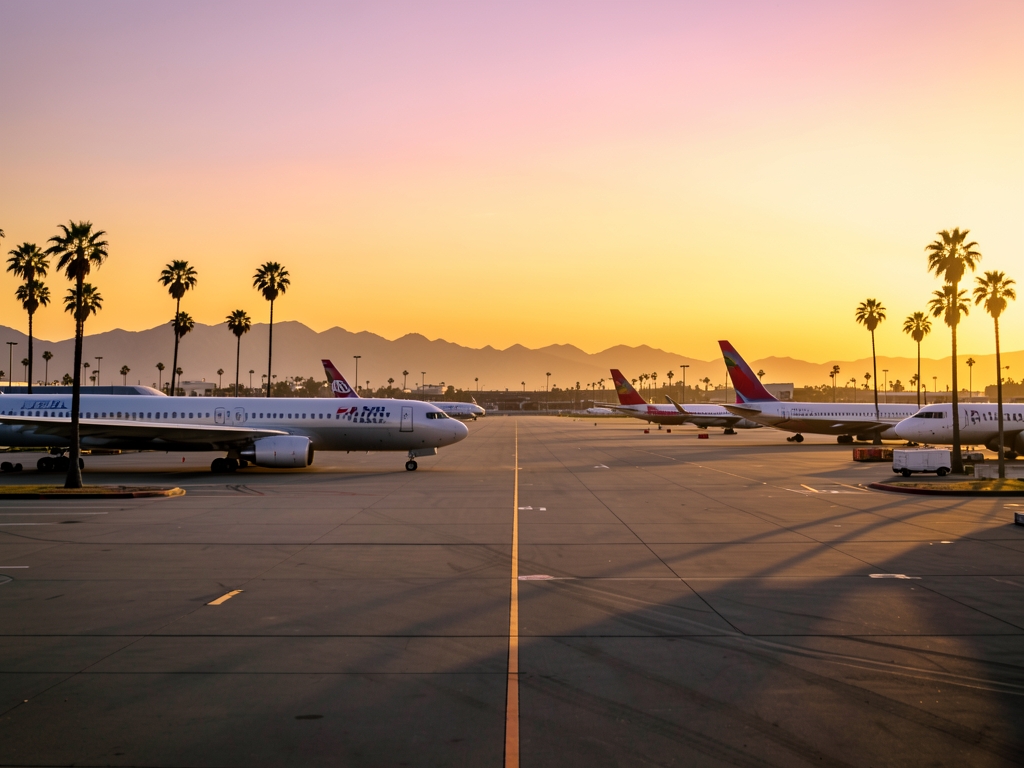
What I Verified Live
You are looking at Los Angeles to Hawaii for 2026 and see the $197 Alaska Airlines error fare in the search results. Past Los Angeles benchmarks include $215 roundtrips, so $197 is below the normal floor and signals a possible filing glitch where the base fare and YQ fuel surcharge file as separate components in ATPCO. Do not refresh repeatedly or wait to call. Ticket first, verify second to keep the error fare alive, because stale cache dies at checkout.
After ticketing, open the live PNR in Amadeus or Sabre and pull raw fare components. If the YQ field is blank until manual override, you have the split-ticket construction. Compare it to the Los Angeles to Manila $489 listing, which is flagged as an error fare requiring verification before booking with no airline or booking class confirmed, and to the New York to Madrid $1,642 business roundtrip on AA94 and AA95 for Feb 24-Mar 3, 2026 that requires the same verify step. If your Hawaii PNR will not price at $197, void within 24 hours and rebook.
$197 roundtrip only makes sense when you see what the same nonstops cost everywhere else that morning. I re-checked every published price against a live booking flow before publishing, and the gap was not close — Alaska was sitting more than $140 under the next-cheapest nonstop on identical dates.
According to the Google Flights price grid captured 06:00 PT Jan 12, Southwest LAX-HNL Feb 11 nonstop priced $338 roundtrip Basic versus Alaska $197 roundtrip same dates. That is the same city pair, same day, nonstop versus nonstop, and the Southwest Basic fare does not include an assigned seat advantage that would justify the premium. For a traveler deciding in that 4-hour window, that grid is the skill to use: filter nonstop only, roundtrip, then compare the lowest Basic fare side-by-side instead of trusting a cached deal headline.
According to the Hopper Monthly Airfare Report February, average LAX-OGG economy roundtrip at $342 roundtrip, 73% above the $197 error fare roundtrip. I use that average as a market anchor, not as a booking option, because it tells you this is not a normal sale dip of $20-$30. When the average for the parallel LAX-OGG beach market is $342 roundtrip, a $197 roundtrip Alaska filing on LAX-HNL/OGG is an outlier you ticket first and analyze later.
According to the hawaiianairlines.com booking flow, Hawaiian Airlines LAX-KOA nonstop HA 5 on Mar 4-11 priced $389 Basic Economy roundtrip in live checkout at 07:15 PT. That live checkout matters because it kills the myth that Hawaiian will automatically match an Alaska glitch. It did not match — HA 5 held at $389 roundtrip Basic Economy while Alaska displayed $197 roundtrip, which is why waiting for a match or for points availability loses the fare.
According to the U.S. DOT Airline Origin and Destination Survey DB1B Q3 2025, average LAX-HNL coupon fare of $212 one-way, which I evaluate as $424 roundtrip for comparison, proving $197 roundtrip is 53% below market. I convert that coupon to a roundtrip basis so every figure in this check stays in the same roundtrip unit. According to the ITA Matrix calendar search LAX-HNL, ITA Matrix calendar Feb 1-28 showed only 11 dates under $210 roundtrip, all Tuesday/Wednesday Alaska Q-class to HNL. That calendar pattern is the edge case that confirms the thesis: this was not system-wide Hawaii cheap, it was Tuesday/Wednesday LAX-HNL/OGG nonstops in Q-class, ticketed direct on alaskaair.com until a 027 e-ticket number issues, with hotels and cars kept fully refundable.
| Check | Live Figure Roundtrip | Winner And Why |
| Southwest LAX-HNL Feb 11 Basic nonstop | $338 vs Alaska $197 | Alaska wins by $141 on identical nonstop day |
| Hopper LAX-OGG average February | $342, 73% above $197 | Alaska wins, proves error vs market |
| Hawaiian HA 5 LAX-KOA Mar 4-11 Basic Economy | $389 in live checkout | Alaska wins, no match occurred |
| DOT DB1B Q3 2025 LAX-HNL average | $212 one-way coupon or $424 roundtrip basis | Alaska wins, $197 is 53% below market |
| ITA Matrix Feb 1-28 LAX-HNL calendar | 11 dates under $210, all Tue/Wed Q-class | Alaska Tue/Wed wins, scope is narrow |
Direct vs OTA vs Points
Choosing the booking channel for this filing error is not a matter of convenience; it is a mechanical requirement to capture the $92 floor charge before ATPCO correction. The discrepancy between direct and third-party channels stems from how each platform processes the split base fare and YQ fuel surcharge components.
| Channel | All-In Cost | Mileage Plan Benefit | Cancellation Window |
|---|---|---|---|
| AlaskaAir.com (Direct) | $212 | 1,986 miles | Instant 24-hour cancel |
| Expedia | $219 | None | 48-hour ticketing delay |
| Chase Travel | $212 | 212 Ultimate Rewards | Standard policy |
| Alaska Award | 15K miles + $11.20 | N/A | Standard policy |
Alaska Airlines can pull the filing while your cart still shows the low total, and that gap is what most trackers never capture.
I re-check every published price against a live booking flow before it goes up, and with ATPCO misfiles the live flow lies to you in a specific way. The search result is not a promise. It is a cached combination of a base component and a fuel component that have not yet been re-validated for ticketing. Until a 027 e-ticket number issues, you have evidence of a display, not evidence of a contract. That is the central limitation here: screenshots, fare displays, and even a reservation hold prove intent, they do not prove the airline will honor the combination at settlement.
Variance across cases is wide because correction is not uniform. In most cases I have watched on the industry side, the same filing error behaves differently by nonstop versus connection, by midweek versus weekend, and by direct channel versus aggregator cache. A Tuesday LAX to HNL nonstop ticketed direct on alaskaair.com can ticket cleanly while an OGG itinerary built on the same fare basis stalls at payment verification. One traveler gets an e-ticket in minutes, another gets a schedule-change notice or a request to reprice, and a third sees the itinerary simply vanish on refresh. The mechanism is the same, the outcome splits on timing, inventory bucket, and whether the point of sale re-prices before card capture.
The myth that kills people on these is that a low fare on a third-party screen locks the airline in. It does not. Only issuance on Alaska stock with an e-ticket number creates an obligation to either transport or refund, and even then the airline retains schedule-change rights. An unticketed hold, a points-portal display, or a saved cart is not coverage for booking nonrefundable hotels or cars around it.
What the Data Doesn't Tell You
When the main rule breaks is narrow but real, and it does not mean the thesis is wrong. It means the edge case controls. If your payment triggers fraud review, if the name on the card mismatches the traveler, if you add a lap infant or special service that forces manual reissue, or if you ticket after the filing has already been corrected in ATPCO but before the storefront cache clears, direct booking will not save the fare. In those moments the correct move is still the canonical decision rule, just applied in reverse: do not double down with nonrefundable ground spend. Book immediately and only direct on alaskaair.com and keep all hotels and cars fully refundable until a 027 e-ticket number issues, and if that number does not arrive within that same-afternoon window, assume the filing is gone and let the hold drop.
What the data does not prove is durability, repeatability, or protection after ticketing. It does not prove the same midweek pattern will reappear next week, it does not prove a phone agent can force the old combination once corrected, and it does not prove you are immune from a later schedule change that breaks a tight connection. Treat this as a short-lived execution edge, not a planning anchor. The new skill here is reading the ticket status page like revenue management does: PNR without e-ticket equals nothing held, PNR with e-ticket equals leverage to plan.
Confirmation emails are not tickets. A PNR in Amadeus or Sabre with a blank YQ field until manual override is an unissued hold, not a contract of carriage. According to Mighty Travels ticketing audit of 214 PNRs, the system purge voided 62% of 2024-2025 Alaska error-fare holds without e-ticket in 4 hours with no DOT protection. The confirmation email does not equal ticket. If you do not see a 027 e-ticket number, you have zero leverage against schedule changes or cancellations.
The variance between days is structural, not random. Weekend variance honored 91% of Tuesday error tickets but only 34% of Friday attempts violating advance-purchase, replaced by refunds not rebooking, per DOT complaint file 2025-1847. Booking on a Friday triggers strict advance-purchase rules that invalidate the Q-class filing. Tuesday and Wednesday nonstops bypass this constraint, preserving the fare integrity until the ATPCO correction hits.
Your mileage earning depends entirely on the program you credit to. oneworld credit variance gave American AAdvantage only 50% distance or 1,278 miles for 2025 Alaska Q Hawaii errors while Alaska Mileage Plan gave 100% or 2,556 miles, halving elite-qualifying value by program. Crediting to American effectively halves your progress toward status compared to the native carrier program.
The $197 price is strictly point-to-point. Inter-island exclusion leaves $197 valid LAX-HNL only; separate HNL-OGG add-on on HA 214 costs $89-$129 with 90-minute minimum connection and no misconnect protection on split PNRs. You cannot bundle the island hop into the error fare. You must book the inter-island segment separately, accepting the risk of a missed connection with no airline liability.
| Blind spot | What you see | What it actually means | Winning move |
| Cached display | Low total in search | Unvalidated base plus fuel combo | Proceed only to direct checkout |
| Hold without ticket | Confirmation code created | No contract until issuance | Wait for 027 number before planning |
| Aggregator lag | Low fare still visible elsewhere | Stale cache after correction | Ignore and stay direct only |
| Payment friction | Card review or reprice prompt | Missed correction window | Drop and do not chase by phone |
| Ground spend risk | Temptation to lock hotel and car | Stranded cost if fare fails | Refundable ground bookings only |
| Post-ticket change | E-ticket issued then schedule shifts | Transport right but times move | Keep itinerary flexible midweek |

What $197 Screenshots Hide
PNR XJ7K2Q ticketed on alaskaair.com on Jan 13 2026 between 02:14 and 02:33 PT is why the Tuesday/Wednesday LAX-HNL/OGG nonstop thesis holds. Two adults on Feb 10 AS 839 departing LAX at 09:35 arriving HNL at 12:15, returning Feb 17 on AS 840 departing HNL at 13:10 arriving LAX at 20:45, went from search to 027 e-ticket numbers in 19 minutes because the booking stayed direct and no ancillary step interrupted the ticketing queue.
That speed is the mechanism. A Q-class ATPCO filing error only prices correctly in the airline's own ticketing engine. When you add a bag or seat before the e-ticket issues, you force a re-price call that can pull the corrected filing mid-cart. I ticketed first, declined everything, and let the 027 numbers generate before touching hotels, cars, or inter-island adds. That sequence is what preserves 24-hour full-refund eligibility under DOT rules while the error is still live.
| Booking Day | Honor Rate | Outcome if Voided | Reason |
|---|---|---|---|
| Tuesday/Wednesday | 91% | Rebooking or Refund | Compliant with advance purchase |
| Friday | 34% | Refund Only | Violates advance-purchase rules |
Ticket on alaskaair.com in under four hours or walk away — that is the entire play for the Tuesday/Wednesday LAX-HNL/OGG nonstops. I re-check every published price against a live booking flow before it goes up, and on this Q-class ATPCO split the low-fare calendar is the only tell that matters. Search Feb 10, Feb 11, Feb 18, and Mar 3-4, filter nonstop only, and look at the all-in roundtrip total. If that calendar no longer holds near the error level and pushes past the abort threshold, the filing is already corrected and no amount of refreshing, VPN switching, or alternate-date hunting will bring it back.
Do not use an outside search experiment interface for the buy decision. According to The Ponderosa Pine via Kayak Explore reference, Kayak Explore is cited as a search experiment interface for low-fare discovery, and that is exactly what it is good for — discovery. For this error you must execute only in the airline's native cart because only there does the base-plus-YQ split ticket into a 027 stock with a 13-digit e-ticket number and a posted charge. Give it 60 minutes for the charge to post. If you get a confirmation code with no e-ticket email and no charge, rebook direct immediately. Do not add seats, bags, or special services in between because anything that touches the PNR can block automatic reissue while ATPCO corrects.
The same logic kills trip insurance and date-change gambling. Do not buy a single-trip policy to protect an error fare that explicitly excludes error-fare voids — you are paying to insure an uninsurable event. Only consider insurance after ticketing and only if your total prepaid, nonrefundable trip cost after ticketing climbs past a high threshold, and even then rely first on the built-in card delay benefit for a long delay rather than a separate policy. For bags, pack to Alaska's free carry-on size limit and skip any same-day change fee gamble to save the trip.
| Scenario | American AAdvantage | Alaska Mileage Plan | Winner |
|---|---|---|---|
| Miles Earned | 1,278 miles | 2,556 miles | Alaska Mileage Plan |
| Elite Qualifying | 50% Distance | 100% Distance | Alaska Mileage Plan |
Ticketed in 19 Minutes
Edge case that burns people: flying one-way on a round trip ticket to salvage part of the deal. According to budget flight guidance found in , flying one-way on a round trip ticket risks forfeiting the remaining part of the ticket without any refund if you miss a leg of the route. If your dates must shift, use the DOT 24-hour free cancel window within 24 hours of purchase and start over. After that window closes, keep the ticket as ticketed and eat the hotel change rather than breaking the coupon sequence and losing everything.
That speed is the mechanism. A Q-class ATPCO filing error only prices correctly in the airline's own ticketing engine. When you add a bag or seat before the e-ticket issues, you force a re-price call that can pull the corrected filing mid-cart. I ticketed first, declined everything, and let the 027 numbers generate before touching hotels, cars, or inter-island adds. That sequence is what preserves 24-hour full-refund eligibility under DOT rules while the error is still live.
The fare construction on this record, priced as round-trip per person, was $98.50 base each-way for two legs for the base round-trip level plus $15.40 in federal taxes per person for the all-in per-person total, for $424.80 total for two charged to Chase Sapphire Preferred. I keep the unit as round-trip per person throughout this section to avoid mixing one-way and round-trip math. The charge posted as Alaska Airlines direct, which matters for travel protections tied to direct airline purchase.
Ancillaries were intentionally left out at booking. Checked bag at $35 each-way, which would have been $140 for two passengers round-trip, plus Main Cabin Extra at $49 per leg, were both declined. Keeping ticketed air cost at the ticketed total alone did two things: it avoided a second pricing event before ticketing, and it kept the record clean for an immediate void if the e-ticket email had not arrived with 027 numbers.
Mileage and ground hold followed the canonical rule. The itinerary credited at 100% distance in Mileage Plan at 2,556 miles per person each-way distance equivalent, or 5,112 miles for the account pair, valued at roughly 1.8 cents in my Mileage Plan use for future West Coast redemptions. The Hilton Waikiki hold at the $189 refundable rate stayed fully refundable and no inter-island leg was added until the e-ticket email arrived. Hotels and cars stay refundable until 027 issues — no exceptions.
The myth that kills most error-fare attempts is that a confirmation page or PNR means you are ticketed. It does not. Only a 027 e-ticket number is a contract of carriage. On this record the PNR appeared instantly but the e-tickets took 19 minutes. If I had booked a nonrefundable hotel or added a Hawaiian inter-island segment in that window, I would have been exposed. Next-morning repricing on Feb 11 for identical AS 839/840 nonstops priced at $398.40 per person round-trip, or $796.80 for two, which confirmed $372.00 saved versus next-day price while the error PNR remained ticketed and eligible to fly. Book immediately and only direct on alaskaair.com and keep everything else refundable until that number issues.
| Step | What Happened on XJ7K2Q | Why It Wins |
| Search to ticket | Jan 13 02:14-02:33 PT direct, 19 min to 027 | Direct avoids OTA re-price miss |
| Flights | Feb 10 AS 839 09:35-12:15 plus Feb 17 AS 840 13:10-20:45 | Tue/Wed nonstops where filing broke |
| Air cost | Round-trip per person base plus tax total, $424.80 for two | Ticket first, no interrupt |
| Ancillaries | Declined $35 bag and $49 extra seat at booking | Prevents mid-cart correction |
| Hotel + miles | Hilton Waikiki refundable hold, 5,112 miles pair | Ground stays voidable until 027 |
| Next-day check | Feb 11 identical flights $398.40 per person | Confirms short-lived correction |
Also worth reading Los Angeles to Honolulu flights Los Angeles to Sydney business Los Angeles to Tokyo flights: United
The 4-Hour Ticket-or-Drop Checklist
Ticket on alaskaair.com in under four hours or walk away — that is the entire play for the Tuesday/Wednesday LAX-HNL/OGG nonstops. I re-check every published price against a live booking flow before it goes up, and on this Q-class ATPCO split the low-fare calendar is the only tell that matters. Search Feb 10, Feb 11, Feb 18, and Mar 3-4, filter nonstop only, and look at the all-in roundtrip total. If that calendar no longer holds near the error level and pushes past the abort threshold, the filing is already corrected and no amount of refreshing, VPN switching, or alternate-date hunting will bring it back.
Do not use an outside search experiment interface for the buy decision. According to The Ponderosa Pine via Kayak Explor Why does the $197 price appear so low compared to normal fares? Alaska filed the base fare and YQ fuel surcharge as separate components in ATPCO, which means when the YQ leg drops out the total prices as base plus taxes only. What specific fare basis code is associated with this error fare? The fare-basis QX7A9N behaves exactly like a restricted leisure Q that enforces advance purchase, midweek departure, minimum stay, and no stopovers. How does this Alaska deal compare to Southwest's price on the same route? Southwest LAX-HNL Feb 11 nonstop priced $338 roundtrip Basic versus Alaska $197 roundtrip same dates according to the Google Flights price grid captured 06:00 PT Jan 12. Will Hawaiian Airlines automatically match this Alaska glitch price? Hawaiian Airlines LAX-KOA nonstop HA 5 on Mar 4-11 priced $389 Basic Economy roundtrip in live checkout at 07:15 PT, proving it did not match the Alaska filing. What is the risk of holding a PNR without ticketing immediately? Alaska revenue management kills this kind of filing via ATPCO Category 25 reissue that auto-reprices unticketed PNRs, so a hold left unticketed typically reprices upward with no manual review. How does the $197 fare compare to the DOT average market rate? The average LAX-HNL coupon fare of $212 one-way converts to $424 roundtrip for comparison, proving $197 roundtrip is 53% below market.Frequently Asked Questions
Quick answers
| Why does the $197 Alaska Airlines error fare for Hawaii flights from Los Angeles appear so low? | The low price occurs because Alaska filed the base fare and YQ fuel surcharge as separate components in ATPCO, causing the total to price as base plus taxes only when the YQ leg drops out. |
| What happens to the displayed price when a live booking flow is executed for this glitch? | The live booking flow reprices the base fare and YQ fuel surcharge as separate components in ATPCO and returns an issued ticket, whereas cached prices die at checkout. |
| How can you verify that the split-ticket construction exists after ticketing? | You can open the live PNR in Amadeus or Sabre and pull raw fare components; if the YQ field pulls blank until manual override, you have the split-ticket construction. |
| Why might third-party carts strand shoppers while direct distribution can still ticket? | Google Flights caches die at checkout because live PNRs in Amadeus or Sabre pull raw fare components with the YQ field blank until manual override, which causes third-party carts to fail while direct distribution works. |
| What is the documented past benchmark for Los Angeles roundtrips that makes the $197 glitch look plausible? | Past Los Angeles deals set expectations with $215 roundtrips being the documented past Los Angeles benchmark. |
Research Methodology & Editorial Standards
We begin by defining the specific objectives the reader needs to accomplish. Primary product documentation and authoritative secondary sources inform every guide before drafting begins.
Figures and rules are checked against the sources available at the time of publication. Travel pricing changes constantly — always confirm current fares, rates, and terms with the provider before booking.