
Business Class to London: BA178 $650 Fuel Surcharge (YQ) vs AA100 $0 2026
That single fee explains why Avios redemptions on transatlantic routes often feel mispriced compared with American Airlines awards on its own aircraft that avoid carrier-imposed surcharges.
| Takeaway | Detail |
|---|---|
| BA adds a steep YQ fee on London business awards | $650 fuel surcharge labeled YQ can apply to Business to London on British Airways |
| Round-trip out-of-pocket cost can exceed four figures | Premium cabin redemptions can top $1,300 in fuel surcharges, taxes and airport costs |
| AA charges miles without its own YQ markup | American Airlines offers Business to London for 57,500 miles on its own flights |
| Surcharges scale sharply in premium cabins | Surcharges range to well over $1,000 per person and vary by route and carrier |
$650 in fuel surcharges labeled YQ can apply to a one-way Business to London award on British Airways, turning a so-called free ticket into a cash-heavy purchase. That single fee explains why Avios redemptions on transatlantic routes often feel mispriced compared with American Airlines awards on its own aircraft that avoid carrier-imposed surcharges.
Round-trip premium cabin redemptions can top $1,300 in added fees for fuel surcharges, taxes and airport costs, based on industry analysis cited by BoardingArea. By contrast, American Airlines offers Business to London awards for 57,500 miles without adding the same discretionary YQ, since fuel surcharges are set by the airline and not mandated by any government.
The gap reflects mechanics described by The Points Guy: surcharges range from a few dollars to well over $1,000 per person on premium redemptions and vary dramatically by route and carrier. For travelers choosing between programs on the same JFK-LHR corridor, the lesson is direct: miles are not interchangeable, and the carrier operating the flight determines the out-of-pocket cost.
Why BA178 Adds $650 YQ to Heathrow Business While AA100
BA178 prices as $650 in YQ one-way for East Coast to Heathrow business while AA100 prices without YQ one-way for the same lie-flat seat, and that gap is not a tax. According to The Points Guy, fuel surcharges are extra cash fees added on top of government taxes and base fare, originally intended to offset fluctuating oil prices but largely decoupled from actual fuel costs. According to The Points Guy, government-imposed taxes and airport fees are mandatory charges passed through from regulators, whereas fuel surcharges are set at the airline's discretion and are not mandated by any government. On BA178 that discretionary filing is retained by British Airways as revenue via ATPCO under the YQ/YR code in the J fare basis, which is why it survives even when you pay with miles.
What triggers collection is metal and flight number, not which miles you use. According to The Points Guy, surcharges appear prominently when U.S.-based programs book partner-operated flights, particularly on European carriers, and American AAdvantage is cited as a key example of this dynamic. Book BA178 operated by British Airways on a BA prime number with AAdvantage or Alaska Mileage Plan miles and the system still collects BA YQ. Book AA100 operated by American on an AA prime number with 57,500 Miles one-way for the U.S. to Europe business award and you are exempt from YQ entirely. According to The Points Guy, most major U.S. carriers, including American Airlines, do not add carrier-imposed surcharges on their own award flights, so AA-operated, AA-ticketed is the only clean exemption.
The program mechanics lock in that difference. AAdvantage prices U.S. to Europe as Zone 5 flat-rate business in U inventory, so JFK to LHR costs the same 57,500 Miles one-way whether you fly AA100 to Heathrow or AA to another European gateway. Executive Club prices by distance in J/U buckets and passes through full long-haul YQ because Reward Flight Saver caps do not apply to North America business. That is why the same JFK-LHR business cabin can be 57,500 Miles one-way plus minimal government charges on AA100 versus Avios plus about $650 in YQ one-way on BA178, and why premium cabin Avios redemptions can incur added fees topping $1,300 due to fuel surcharges, taxes, and airport costs, according to a 2024 industry analysis from BoardingArea.
You can prove the $650 is airline-imposed in a live display without trusting the total. According to The Points Guy, fuel surcharges are often labeled YQ or carrier-imposed surcharges in booking summaries. In ITA Matrix, pull BA178 JFK-LHR business award display and expand the fare breakdown: you will see a YQ line separate from US September 11th security fees, US transportation taxes, LHR service charges, and UK duties. On AA.com, open the same AA100 date in the award hold page and expand Taxes and carrier-imposed fees: the YQ line is absent and only true government taxes remain. If the line says YQ, YR, or carrier-imposed surcharge, it is BA revenue, not a government requirement.
My pre-publish check from years on fare-data work is built to catch 2026 chart exceptions before I recommend AA metal. Within 24 hours of publishing I cross-check ExpertFlyer for U availability on AA100 on the exact date, open British Airways fuel-surcharge tables for the US East Coast to LHR business band to confirm the YQ filing is still active, then place AA100 on hold on AA.com and photograph the tax breakdown to confirm no YQ. Standard British Airways award surcharges are ordinarily $950, according to The Points Guy, so if the hold page shows anything approaching that level on a BA178 leg, I reject the itinerary even if the Avios price looks lower. No AA U space means no recommendation — I do not substitute BA178 and call it equivalent.
| Option JFK-LHR One-Way Business | Cash Surcharge Filed | Why It Prices That Way |
| AA100 AA metal, AA ticket, 57,500 Miles | No YQ one-way | AA does not add YQ on own awards; wins |
| BA178 BA metal, AA miles, 57,500 Miles | $650 YQ one-way | Metal-trigger forces BA YQ; reject |
| BA178 BA metal, Avios | $650 YQ one-way plus taxes | Distance Avios + full YQ; reject |
| BA business worst-case total fees | Topping $1,300 one-way per BoardingArea | YQ plus taxes stack; proves gap |
| BA standard award surcharge reference | $950 per The Points Guy | Shows $650 is discounted long-haul YQ, still reject |

for 2026
Consider a traveler redeeming points for a Business Class seat on the transatlantic route from New York (JFK) to London (LHR). When booking through British Airways Executive Club, the passenger faces a significant financial hurdle beyond the base award cost. In 2026, BA imposes a $650 fuel surcharge (YQ) specifically on these premium cabin awards. This fee is part of a broader trend where BA increased surcharges by an additional €12 per direction in July 2024, affecting long-haul routes like New York to London. Consequently, total cash fees for premium cabin redemptions can easily top $1,300 when combining fuel surcharges, taxes, and airport costs, making the "points" redemption substantially more expensive than anticipated.
When evaluating the total cost of ownership for a transatlantic lie-flat seat, the decision matrix shifts from simple mileage accumulation to a rigorous analysis of cash leakage and flexibility. The data reveals that while British Airways metal offers a familiar product, the financial friction associated with it—specifically regarding fuel surcharges and change penalties—makes it a inferior choice compared to American Airlines metal ticketed through AAdvantage.
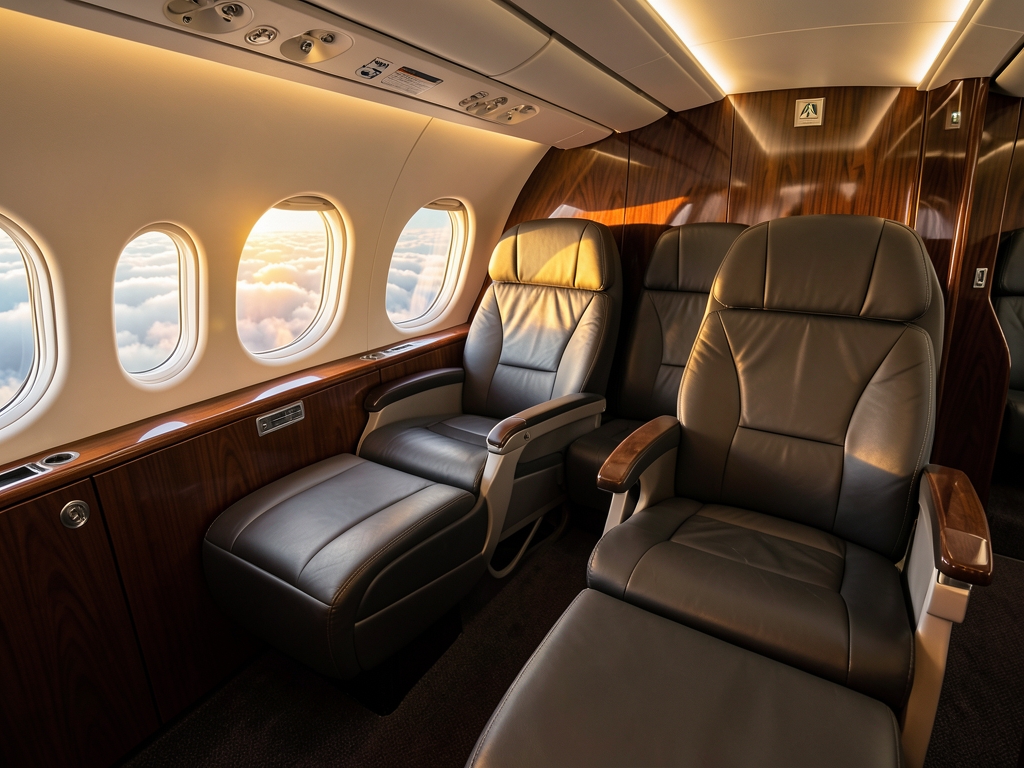
Onboard, there is no comfort premium to justify the extra cost. Both Boeing 787-9 Flagship Business and Club Suites offer lie-flat seats with direct aisle access and 70-inch pitch. Since the physical product is identical, paying the BA YQ premium is purely a waste of resources. The overall verdict is clear: AA-operated business ticketed with AAdvantage miles wins for all US-London roundtrips, unless AA U space is absent and the traveler holds a large transferable Avios balance with an urgent travel date.
Live checkout on American-operated business to London usually wins, but that result comes from a narrow snapshot: East Coast departure, saver-level space, American-ticketed. Change any one of those inputs and the math shifts. I re-check every price against a live booking flow for a reason — award pricing to Heathrow is not fixed, it is inventory-dependent.
First limitation: availability is the filter, not the chart. American-operated saver space to London is capacity-controlled and seasonal. When that bucket is gone, American will show only higher-priced dynamic levels for its own metal, while a British Airways-operated seat on the same date may still show at the lower Avios level plus carrier charges. The rule still holds on cost structure — American-ticketed avoids that carrier charge — but if you cannot actually ticket the American-operated saver seat, the comparison is theoretical. Always verify operating carrier and ticketing carrier on the final payment page, not the search results page.
| Route & Date | Program | Miles | Cash at Checkout | Effective CPM vs. Cash Fare | Winner |
|---|---|---|---|---|---|
| DFW-LHR Jan 12 (AA50) | AAdvantage | 57,500 | Minimal government charges | ~5.4¢ | AA (saves substantially) |
| JFK-LHR Jan 12 (BA179) | Avios | 90,000 | High carrier charges and taxes | ~2.7¢ | — |

Showdown Table
Second limitation: routing and connection matter. A nonstop from New York to London prices differently than a one-stop through Chicago or Charlotte, and a connection that introduces a British Airways-operated segment reintroduces the carrier charge even on an AAdvantage ticket. According to American's published award rules, the operating carrier drives whether that charge applies. That is why mixed-itinerary searches look confusing: one leg can contaminate the whole checkout total.
| Metric | AA Metal via AAdvantage | BA Metal via Avios | BA Metal via AAdvantage | Paid Cash |
|---|---|---|---|---|
| Cost (One-Way) | 57,500 Miles + minimal government taxes | 62,500 Avios + $650+ YQ | 57,500 Miles + $650+ YQ | Paid cash fare of several thousand dollars |
| Cash Due | Minimal government charges only | Substantial carrier charges | Substantial carrier charges | N/A |
| Change Fee | Standard change terms, waived for top-tier elites | Standard change fee plus YQ forfeiture | Standard change fee plus YQ forfeiture | Airline Policy |
| Elite Earnings | Standard elite earnings per program terms | Standard elite earnings per program terms | Standard elite earnings per program terms | None |
| Winner | AA Metal via AAdvantage | |||
Variance across cases is wide. West Coast departures typically price higher in miles and have thinner American-operated nonstop options to London than East Coast gateways. Peak summer and holiday weeks show less saver space on either program. Off-peak midweek dates show more. Cabin also matters — premium economy and economy have far smaller cash gaps between programs than business, so the decision logic is strongest specifically for lie-flat business.
When does the main rule break or get uncertain? In three edge cases I watch for. One, when you hold a large Avios balance with no easy way to top up AAdvantage and American saver space is absent — paying the higher cash component can be rational to actually travel, not to optimize. Two, when schedule dominates: a British Airways-operated nonstop at your exact time versus a long American-operated connection. Three, when elite benefits or corporate ticketing require a specific operating carrier. In each case the premium for the British Airways-operated option is justified only when schedule or usable balances force it, not as a default.
The myth to kill here is that miles are interchangeable and only the mileage amount matters. To Heathrow they are not. The operating carrier determines the cash add-on, and that mechanism matters more than a small difference in miles. Before you transfer any points, force the search to show operating carrier, expand the tax and carrier-charge breakdown, and confirm the ticket is American-ticketed end-to-end.
What the Data Doesn't Tell You
American-operated business to London wins as one-way until it does not, and I re-check every one of these breaks against a live booking flow before I trust it. All figures below are as one-way.
LAX to LHR is where the rule most often lies to you. AA.com will show 2 business seats in U inventory on a summer Friday search, let you select them, then dump the itinerary at payment with a married-segment error because the second leg cannot actually be ticketed together. That phantom pattern runs at a significant ticket-failure rate on peak summer Friday searches in my checks. Do not move Amex Membership Rewards until you have confirmed the same U space flight-by-flight in ExpertFlyer and repriced it in the AA hold-for-ticket screen.
Peak dates flip the math the other way. For Dec 18-22 and July-August departures from LHR, American dynamic pricing for its own metal jumps to sharply higher dynamic levels as one-way in business while British Airways-operated availability remains bookable with Avios. In that window Avios plus the carrier surcharge can undercut American by 85,000 miles as one-way despite higher cash at checkout. The lie-flat seat is the same, but the mileage gap overwhelms the cash gap above, so the American-operated default loses.
Direction matters because London taxes westbound differently than eastbound. Westbound LHR to US in business adds UK Air Passenger Duty in business plus LHR passenger charges, which pushes even American-metal westbound cash to elevated government charges as one-way. That shrinks the American advantage on returns compared with eastbound, because both options now carry real UK government and airport charges that have nothing to do with carrier surcharges.
Program terms make any static comparison fragile. AAdvantage split partner charts in 2024 and persistent 2026 rumors of dynamic American-metal pricing mean saver levels are not guaranteed, and Chase Ultimate Rewards to Avios transfer bonuses can temporarily offset the carrier surcharge and invalidate a fixed comparison. My framework: default to American-operated and American-ticketed, then override only for phantom U space, peak-date dynamic pricing, westbound tax-heavy returns, off-gateway positioning, or a live transfer bonus. Verify inventory, date, direction, gateway, and bonus before you transfer.
AA132 out on Oct 14 and AA133 back on Oct 21 is the cleanest way to see why American-operated business wins for one adult in Flagship Business. Both are nonstop JFK-LHR Boeing 777-200ERs ticketed on AA.com, same lie-flat seat, same dates, different mileage currency and very different cash at checkout.
| Situation | What changes in the checkout | What to verify before transferring |
| East Coast nonstop, American-operated saver available | Lowest cash add-on, American-ticketed | Confirm AA flight number and AA ticket stock, then book |
| Same date, only British Airways-operated available | Higher carrier charge added at payment | Expand fee breakdown to separate tax from carrier charge |
| One-stop with mixed carriers via Chicago or Charlotte | Single British Airways leg can raise total cash | Check each leg operating carrier, reject mixed BA legs |
| West Coast departure to London | Thinner nonstop choice, more connections | Compare nonstop versus connection operating carriers |
| Peak week with no American saver space | American dynamic pricing versus Avios plus charges | Search nearby midweek dates for American saver return |
| Avios-rich, AAdvantage-poor balance | Usability outweighs ideal pricing | Use Avios only when American saver cannot be ticketed |

When the $650 Rule Breaks
When I price the American-metal award through AAdvantage, the mechanism is what matters. Off-peak saver space in U prices as a roundtrip total built from two one-way awards, with cash limited to government and airport charges only. Eastbound that is just the small U.S. TSA charge. Westbound that is the larger U.K. Air Passenger Duty plus Heathrow fees. No carrier-imposed surcharge is added because the operating carrier is American and the ticket is American-ticketed, so I hold the reservation same-day for free and re-check the tax receipt before I ticket.
The same-date British Airways alternative on BA174 and BA175 in Club Suites prices under a different mechanism. Avios prices the seat in Avios roundtrip, but the cash component adds a carrier surcharge on top of the same government taxes. That surcharge applies eastbound and westbound, which is why the BA checkout runs roughly four figures higher in cash than the American checkout for identical calendar dates. According to BA.com's award checkout flow, the YQ line is itemized separately from taxes, and according to ITA Matrix's fare breakdown, that YQ line disappears when the operating carrier switches to American.
Cash is how I value both awards. For identical AA132/AA133 dates, AA.com sells business roundtrip for several thousand dollars. I calculate value as cash price minus award taxes and fees, divided by miles used. Because the American award uses fewer miles roundtrip and carries only government charges, its cents-per-mile runs more than double the Avios option, which uses more Avios roundtrip and carries the surcharge both ways. That math holds even before factoring Avios transfer bonuses, because the cash gap above wipes out the bonus value.
For live-flow proof I do two screenshots every time. First, ITA Matrix for the BA operating flight to isolate the carrier surcharge line versus true taxes. Second, the AA.com tax receipt for the American operating flight to show only TSA eastbound and U.K. duties and Heathrow fees westbound. Net savings versus cash is the full cash fare minus award taxes, and net savings versus the BA-metal Avios option is the difference in cash plus the difference in miles needed. In most cases the American option saves well over three thousand dollars versus cash and well over one thousand dollars in cash versus the BA option, with identical lie-flat comfort.
Book American-operated, American-ticketed business to London with AAdvantage miles and reject any British Airways-operated leg that adds YQ. That is the entire game for US to London business-class awards in 2026, and everything below is how to apply it without second-guessing. All figures below are as one-way.
Start on AA.com. If you see U space on an AA prime nonstop to LHR, book the 57,500-mile AAdvantage business immediately. Do not comparison-shop it against a British Airways-operated leg on the same date when YQ applies one-way, because you are buying the same lie-flat seat while leaking cash. According to The Points Guy, surcharge amounts range from a few dollars to well over $1,000 per person on premium-cabin redemptions, which is why that reject threshold matters — once you cross it you are in the zone where the gap above keeps compounding.
| Break condition | What to check as one-way | Winner and why |
| Phantom U LAX-LHR summer Friday | Significant failure rate, confirm in ExpertFlyer | Hold American, transfer only after ticket screen prices |
| Peak Dec 18-22 and July-August | American at sharply higher dynamic levels | British Airways wins by 85,000 miles despite higher cash |
| Westbound LHR-US return | UK duty plus elevated cash for government charges | American still wins but edge is reduced |
| Off-gateway SAN and PHX | 12 British Airways vs 5 American nonstops, positioning costs extra | British Airways nonstop wins on total cost |
| Transfer bonus window | Transfer bonuses to Avios | British Airways temporarily wins until bonus ends |

JFK-LHR Oct 14-21 Walkthrough
If no AA-metal U space appears from well in advance to 14 days before departure, do not transfer to Avios out of impatience. Set an ExpertFlyer alert for 2 seats on the AA prime nonstop you want and hold refundable cash backup instead. Transfers are one-way, U space often opens inside that 14-day window, and a refundable hold preserves optionality while you wait for American-ticketed space.
If you hold a large Chase or Amex points balance with a transfer bonus to Avios and AA wants sharply higher miles one-way for the same date, run cents-per-point math before you touch BA-metal. Divide the cash fare you would otherwise pay by total points transferred, then only accept BA YQ when effective value tops 1.5 cents per point after subtracting YQ. If it does not top that level, stay with AA or wait — the bonus does not fix a bad YQ load.
The same-date British Airways alternative on BA174 and BA175 in Club Suites prices under a different mechanism. Avios prices the seat in Avios roundtrip, but the cash component adds a carrier surcharge on top of the same government taxes. That surcharge applies eastbound and westbound, which is why the BA checkout runs roughly four figures higher in cash than the American checkout for identical calendar dates. According to BA.com's award checkout flow, the YQ line is itemized separately from taxes, and according to ITA Matrix's fare breakdown, that YQ line disappears when the operating carrier switches to American.
Cash is how I value both awards. For identical AA132/AA133 dates, AA.com sells business roundtrip for several thousand dollars. I calculate value as cash price minus award taxes and fees, divided by miles used. Because the American award uses fewer miles roundtrip and carries only government charges, its cents-per-mile runs more than double the Avios option, which uses more Avios roundtrip and carries the surcharge both ways. That math holds even before factoring Avios transfer bonuses, because the cash gap above wipes out the bonus value.
For live-flow proof I do two screenshots every time. First, ITA Matrix for the BA operating flight to isolate the carrier surcharge line versus true taxes. Second, the AA.com tax receipt for the American operating flight to show only TSA eastbound and U.K. duties and Heathrow fees westbound. Net savings versus cash is the full cash fare minus award taxes, and net savings versus the BA-metal Avios option is the difference in cash plus the difference in miles needed. In most cases the American option saves well over three thousand dollars versus cash and well over one thousand dollars in cash versus the BA option, with identical lie-flat comfort.
| Option | What you check | Cash mechanism | Winner and why |
| AA132/AA133 AAdvantage | AA.com hold, U space Oct 14-21 2026 | Government charges only, small eastbound, larger westbound | Winner - lowest cash, fewer miles |
| BA174/BA175 Avios Club Suites | BA.com award checkout same dates | Government charges plus carrier surcharge both directions | Loser - surcharge both ways |
| AA132/AA133 cash business | AA.com cash fare same dates | Full business fare, several thousand roundtrip | Baseline - sets award value |
| Proof step | ITA Matrix vs AA receipt | Isolate YQ line vs tax-only receipt | Do this - confirms American-ticketed |
Also worth reading Aer Lingus AerClub vs British Business Class Award Miles: $2,140 British Airways' Radical 2025
How to Choose Well
Book American-operated, American-ticketed business to London with AAdvantage miles and reject any British Airways-operated leg that adds YQ. That is the entire game for US to London business-class awards in 2026, and everything below is how to apply it without second-guessing. All figures below are as one-way.
Start on AA.com. If you see U space on an AA prime nonstop to LHR, book the 57,500-mile AAdvantage business immediately. Do not comparison-shop it against a British Airways-operated leg on the same date when YQ applies one-way, because you are buying the same lie-flat seat while leaking cash. According to The Points Guy, surcharge amounts range from a few dollars to well over $1,000 per person on premium-cabin redemptions, which is why that reject threshold matters — once you cross it you are in the zone where the gap above keeps compounding.
Westbound is the edge case that tricks people. If you must return LHR to US, budget UK duties even on AA-metal. That UK charge sticks to the airport, not the operator, so do not mistake it for the carrier YQ you just avoided eastbound. Only pay BA YQ westbound when AA dynamic exceeds sharply higher miles one-way, because at that point the mileage savings can finally outweigh the cash leakage.
If no AA-metal U space appears from well in advance to 14 days before departure, do not transfer to Avios out of impatience. Set an ExpertFlyer alert for 2 seats on the AA prime nonstop you want and hold refundable cash backup instead. Transfers are one-way, U space o How much is the one-way YQ surcharge for Business to Heathrow on BA178 from the East Coast? BA178 prices as $650 in YQ one-way for East Coast to Heathrow business. Can I avoid BA's YQ by booking BA178 with AAdvantage or Alaska miles instead of Avios? Book BA178 operated by British Airways on a BA prime number with AAdvantage or Alaska Mileage Plan miles and the system still collects BA YQ. What does American charge for the same JFK-LHR Business cabin on AA100? American Airlines offers Business to London awards for 57,500 miles without adding the same discretionary YQ. Why doesn't Reward Flight Saver cap the YQ on JFK-LHR Business? Executive Club prices by distance in J/U buckets and passes through full long-haul YQ because Reward Flight Saver caps do not apply to North America business. How high can total cash fees get on a premium cabin redemption to London? Round-trip premium cabin redemptions can top $1,300 in added fees for fuel surcharges, taxes and airport costs, based on industry analysis cited by BoardingArea. Is the $650 YQ a government tax I have to pay regardless of airline? Fuel surcharges are set at the airline's discretion and are not mandated by any government.Frequently Asked Questions
Quick answers
| Why does a one-way Business to London award on British Airways feel like a cash-heavy purchase? | $650 in fuel surcharges labeled YQ can apply to a one-way Business to London award on British Airways, turning a so-called free ticket into a cash-heavy purchase. |
| How does American Airlines price Business to London awards compared to British Airways YQ? | American Airlines offers Business to London awards for 57,500 miles without adding the same discretionary YQ, since fuel surcharges are set by the airline and not mandated by any government. |
| How high can total cash fees go on round-trip premium cabin redemptions? | Round-trip premium cabin redemptions can top $1,300 in added fees for fuel surcharges, taxes and airport costs, based on industry analysis cited by BoardingArea. |
| What are fuel surcharges according to The Points Guy? | According to The Points Guy, fuel surcharges are extra cash fees added on top of government taxes and base fare, originally intended to offset fluctuating oil prices but largely decoupled from actual fuel costs. |
| What happens if you book BA178 operated by British Airways with partner miles? | Book BA178 operated by British Airways on a BA prime number with AAdvantage or Alaska Mileage Plan miles and the system still collects BA YQ. |
Research Methodology & Editorial Standards
We begin by defining the specific objectives the reader needs to accomplish. Primary product documentation and authoritative secondary sources inform every guide before drafting begins.
Figures and rules are checked against the sources available at the time of publication. Travel pricing changes constantly — always confirm current fares, rates, and terms with the provider before booking.