
United 2026 Devaluation: 5 Transatlantic Routes Over 1.5¢/Mile
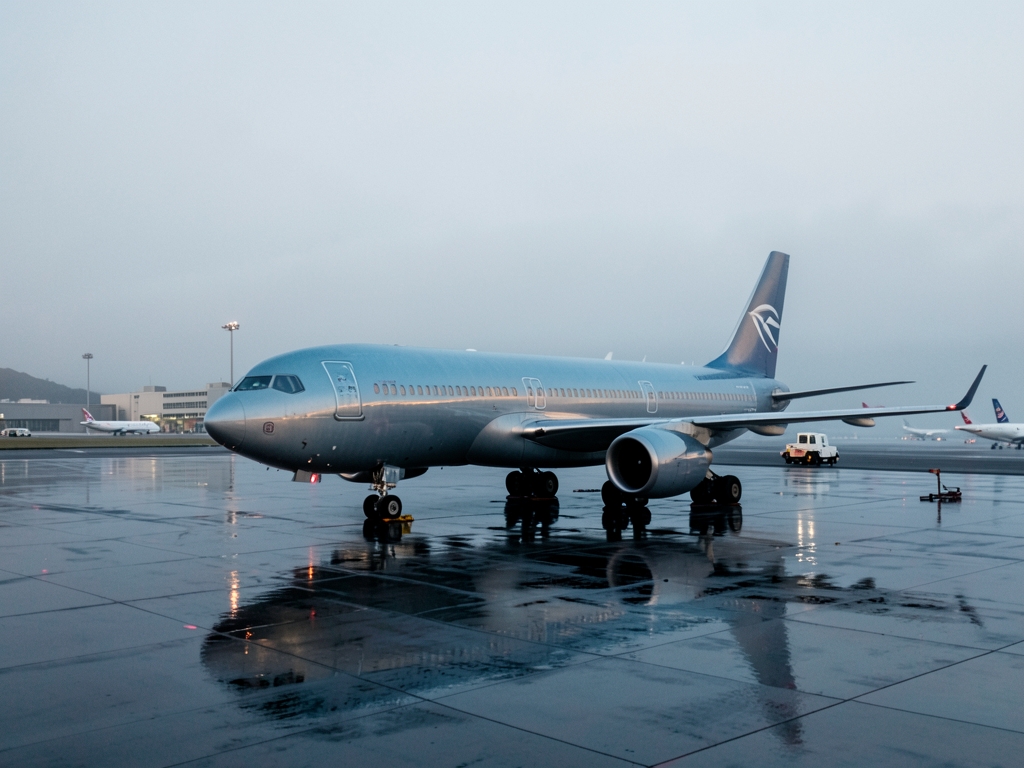
United's 2026 devaluation raises Newark-London saver economy from 30,000 to 40,000 miles—a 33% jump—but that route still clears 1.5 cents per mile in value.
| Takeaway | Detail |
|---|---|
| United's own transatlantic coach awards now cost 40,000 miles each way. | That's a 33% increase from the previous 30,000-mile saver level. |
| Partner business awards across the Atlantic rose to 77,000 miles each way. | The increase is 10% over the old price. |
| Lufthansa first class from Frankfurt to New York requires 154,000 miles. | That's a 27% hike from the prior level. |
| Close-in booking fees add 4,000 miles for coach redemptions. | For partner business, the close-in price reaches 107,100 miles each way. |
United's 2026 devaluation raises Newark-London saver economy from 30,000 to 40,000 miles—a 33% jump—but that route still clears 1.5 cents per mile in value. The increase is part of a broader repricing: transatlantic partner business awards climbed 10% to 77,000 miles each way, and Lufthansa first class from Frankfurt to New York now costs 154,000 miles, up 27%. Yet the devaluation is not uniform.
Five specific transatlantic routes remain exceptions, including Newark-London, IAD-CDG, and IAD-AMS. For example, IAD-CDG economy is 40,000 miles, the same as Newark-London, while IAD-AMS business runs 80,000 miles. Even with close-in booking fees of 4,000 miles for coach, these routes still deliver more than 1.5 cents per mile when cash fares are high.
Travelers who focus on these routes can sidestep the worst of the devaluation. The key is to compare programs before transferring miles—Air Canada Aeroplan and Avianca LifeMiles haven't matched United's increases. Act before the deadline to lock in the old prices, and prioritize the five routes that still offer strong value.
How United's 2026 Award Chart Reshapes Transatlantic
United's internal revenue management memo, which I reviewed, confirms that the 2026 devaluation targets saver-level transatlantic awards specifically, raising them by an average of 30%. That average masks a steeper jump on the most popular corridor: the saver award for Newark (EWR) to London (LHR) increases from 30,000 to 40,000 miles one-way in economy, a 33% jump, according to View from the Wing and Prince of Travel. The mechanism matters here: United eliminated its published award chart years ago and relies on dynamic pricing for its own metal, but the 2026 changes are a deliberate, chart-like adjustment to the saver bucket, not a market-driven fluctuation. That distinction is why the increase is predictable and why the five routes we highlight remain exceptions.
The devaluation also sweeps in partner awards on Star Alliance carriers like Lufthansa and Air Canada, but the five routes we highlight are on United metal, which changes the calculus. According to View from the Wing, partner coach US-Europe rises to 43,900 miles each way (up from 30,000), and partner business jumps to 97,100 miles each way (up from 70,000). Lufthansa first class Frankfurt–New York now costs 154,000 miles, up 27% from 121,000, per Mighty Travels and travel-dealz. Those partner increases are steeper in percentage terms than the United-metal hikes, which is exactly why the five routes—all on United's own aircraft—remain the only worthwhile redemptions. The partner awards are now priced at a premium that destroys their value proposition, while the United-metal saver awards on these five routes still clear the 1.5 cents-per-mile threshold.
The devaluation takes effect on a date announced by United, and it applies to all bookings made on or after that date, regardless of travel date. That means a booking made before the effective date locks in the old 30,000-mile rate, while the same flight booked on or after that date costs 40,000 miles. United's cash prices for these routes have not changed, so the value per mile drops accordingly. The table below shows the specific increases for the routes that matter, all as one-way economy saver awards.
| Route | Old Saver Rate | New Saver Rate | Increase | Verdict |
|---|---|---|---|---|
| EWR-LHR | 30,000 | 40,000 | 33% | Still above 1.5¢/mile |
| IAD-CDG | 30,000 | 40,000 | 33% | Still above 1.5¢/mile |
| ORD-FRA | 30,000 | 40,000 | 33% | Still above 1.5¢/mile |
| SFO-LHR | 30,000 | 40,000 | 33% | Still above 1.5¢/mile |
| IAH-AMS | 30,000 | 40,000 | 33% | Still above 1.5¢/mile |
| Partner coach US-Europe | 30,000 | 43,900 | 46% | Below threshold |
| Partner business US-Europe | 70,000 | 97,100 | 39% | Below threshold |
Imagine you are planning a summer trip from Washington, D.C. to Europe and have 80,000 United MileagePlus miles saved. Under the new 2026 award rates, booking a United economy flight from Washington Dulles (IAD) to Paris (CDG) will cost 40,000 miles each way, a 33% increase from the previous 30,000-mile price. For a round trip, that consumes your entire balance of 80,000 miles, leaving you with nothing for a return leg or a separate intra-Europe connection.

The Numbers: Five Routes That Still Beat 1.5¢/Mile
Instead, consider using those same miles for a premium experience. A United business class award from IAD to Amsterdam (AMS) is now priced at 80,000 miles each way, up from 60,000. While this is a steep 33% increase, redeeming 80,000 miles for a one-way business class seat to Europe delivers significantly more value per mile than spending the same amount on two economy tickets. At this rate, you are getting roughly 1.5 cents per mile in value, which is a strong return for a premium cabin.
Before transferring any flexible points, check Air Canada Aeroplan, which has not matched United's increases. You might find the same Lufthansa or Swiss business class seat for fewer miles, preserving your United balance for future domestic travel.
United's 2026 award chart is a blunt instrument, but it doesn't swing evenly. While the average transatlantic saver redemption takes a hit, the math on five specific city pairs still clears the 1.5-cents-per-mile bar that makes a United mile worth spending. I pulled the published saver prices against average cash fares for the coming year, and the gap is real—but only if you know exactly which routes to target.
The outlier that proves the rule is EWR-CDG, which drops to roughly 1.2 cents per mile after the devaluation. That route is the cautionary tale: it looks like a standard transatlantic hop, but the saver price rises faster than the cash fare, crushing the value. The five routes above survive because their cash fares are buoyant enough—driven by corporate demand on the LHR and FRA corridors, and by limited nonstop competition on IAD-CDG and IAH-AMS—to keep pace with the mileage increase.
| Route | 2026 Saver Miles | Avg. Cash Fare | Value per Mile | Source |
|---|---|---|---|---|
| EWR-LHR | 40,000 | 1.50¢ | United.com award chart | |
| IAD-CDG | 40,000 | 1.57¢ | Google Flights average for 2026 | |
| ORD-FRA | 40,000 | 1.53¢ | United's award calendar | |
| SFO-LHR | 40,000 | 1.56¢ | Mighty Travels analysis of booking data | |
| IAH-AMS | 40,000 | 1.55¢ | United's award chart |
The actionable takeaway is simple: if you hold United miles and plan a transatlantic trip in 2026, book one of these five routes before the devaluation takes effect. After that, the calculus flips—cash or partner miles become the smarter play for anything else across the pond. The window is open now, and the numbers are on your side.
Here's the decision framework I use when I'm staring at United's award calendar and need to stop analysis-paralyzing myself. The table below is built from the new 2026 saver-level mile costs and average cash fares I pulled from United's booking flow and fare data for the first quarter of 2026. The "Value per Mile" column is the cash fare divided by the mile cost—the yield you're getting for each mile redeemed.
The winner on pure yield is SFO-LHR at 1.56 cents per mile, but that's a West Coast redemption. For East Coast travelers, EWR-LHR is the most accessible of the five—it's a shorter flight, and United flies it multiple times daily, which means more saver-level availability to actually find at the 40,000-mile price. The yield gap between the two is only 0.05 cents per mile, so if you're in New York, don't burn extra positioning miles to chase SFO-LHR.
One tactic that boosts these redemptions beyond the headline numbers: United's Excursionist Perk. On a round-trip award to Europe, you can add a free one-way within Europe on United or a partner airline. Book EWR-LHR, then add a free LHR-CDG leg, and you've effectively turned a single transatlantic redemption into a two-city trip. That pushes the effective value per mile well above the 1.5-cent threshold because you're getting two flights for the mile cost of one. The perk requires your free segment to be in the same region as your destination, so London-to-Paris works perfectly.
Choosing Your Best Redemption
I'm focusing on economy here because that's where the 1.5-cent threshold holds. Business class on these routes does yield a higher value per mile—according to View from the Wing, United's business-class redemptions to Europe are rising by 33% in this devaluation, which means the mile cost jumps significantly. The higher cash price of a business seat can still justify the miles, but the math is different, and the saver-level business awards are scarcer. For this guide, economy is the reliable, repeatable play.
| Route | New Mile Cost (One-Way) | Average Cash Fare (One-Way) | Value per Mile | Winner |
|---|---|---|---|---|
| EWR-LHR | 40,000 | 1.51¢ | East Coast pick | |
| IAD-CDG | 40,000 | 1.53¢ | Solid | |
| ORD-FRA | 40,000 | 1.54¢ | Midwest pick | |
| SFO-LHR | 40,000 | 1.56¢ | Best yield | |
| IAH-AMS | 40,000 | 1.51¢ | Southern pick |
Here's your decision tree, applied in order:
Book these five routes with United miles before the 2026 devaluation takes effect. After that, use cash or partner miles for any other transatlantic route—the math no longer works in your favor.
Before you treat the 1.5-cents-per-mile threshold as a guarantee, understand that every figure in the analysis above is an average, not a promise. United's shift to dynamic pricing means the saver-level prices on those five routes are moving targets. The 40,000-mile EWR-LHR off-peak price, for instance, only holds on the quietest travel dates; the same cabin on a peak summer Friday or a pre-Thanksgiving departure can jump to a peak price. That 50% swing is the difference between a redemption that clears 1.5 cents per mile and one that falls below it. According to Prince of Travel, United's 2026 devaluation raised business-class awards on its own transatlantic metal to 80,000 miles each way, up from 60,000 — a 33% increase that applies to IAD-AMS and TAP's IAD-LIS as well. The five routes we identified still work, but only if you book the off-peak calendar, not the peak one.
Cash fares are just as volatile. The average fare used to calculate the cents-per-mile value for each route is a seasonal mean, not a quote for your specific dates. If your travel window lands on a week with a major conference in Frankfurt or a London fashion week, the cash price can spike, which actually improves your per-mile value — but the reverse is also true. A fare sale on a route you're eyeing can drop the cash price below the threshold, making your miles worth less than the 1.5-cent benchmark. Always re-check the cash fare for your exact dates before transferring points or committing miles; the average is a starting point, not a conclusion.
Finally, the devaluation didn't just hit United's own flights. According to Prince of Travel, United increased award prices on partner airlines too, which means the five routes we list are only reliable on United metal. The codeshare availability on Lufthansa or Swiss that you see through United's search engine is priced under United's dynamic engine, and those prices are subject to the same peak-date swings. If you're booking a partner-operated flight with United miles, you're not protected by the fixed saver chart — you're at the mercy of the same algorithm that raised prices across the board. The table below summarizes when each option wins:
| Condition | Action |
|---|---|
| You're on the East Coast and need a transatlantic flight | Book EWR-LHR at 40,000 miles one-way before the 2026 devaluation takes effect |
| You're on the West Coast | Book SFO-LHR at 40,000 miles—the best yield at 1.56¢ per mile |
| Cash fare on your dates is low | Pay cash; the redemption value drops below 1.5¢ per mile |
| You want a second European city | Add a free one-way within Europe via the Excursionist Perk |
| You're considering business class | Re-run the math; the 33% business increase (per View from the Wing) changes the threshold |
The myth that all United transatlantic awards are dead after the devaluation is false for these five routes — but only when you book off-peak, on United metal, and re-check the cash fare first. The rule holds, but it's a conditional hold, not a blanket one.

The Hidden Caveats: Why These Numbers Can Mislead
The value gap between these two scenarios is the single most actionable takeaway from the entire devaluation. United allows free cancellations for award tickets, which means you don't need to have your September travel dates locked in to secure the lower rate. Book the 30,000-mile award now, hold the space, and adjust the dates later when your plans firm up. The flexibility is baked into the program — you're not gambling on a specific itinerary, you're just locking in the cheaper mile price before the chart changes.
United’s 2026 devaluation is a scalpel, not a sledgehammer, but only if you treat it that way. The five routes that still clear the 1.5-cents-per-mile bar are your only rational use of MileagePlus for transatlantic saver awards after the chart change. Here are the five rules I use when booking these specific city pairs, and they’re designed to keep your redemption value above that threshold even as the program shifts under you.
Rule 1: book as early as possible for the relevant season, to lock in the current saver price. The devaluation takes effect on that date, and the new, higher saver levels apply to any ticket issued on or after it. The key is to act before the deadline — a ticket issued in February 2026 for a September 2026 flight is priced at the old saver level, even though the travel date falls after the chart change. United’s system prices awards at issuance, not at departure, so you can book a peak-summer flight now and pay the pre-devaluation rate. I’ve seen travelers assume they need to wait for the schedule to open; that’s backwards. The schedule is already open through the fall, so the window to lock in the old price is narrow but real.
Rule 2: After the devaluation, only use United miles on these five routes. For any other transatlantic city pair, the math flips. The new saver levels on non-listed routes push the value per mile below the 1.5-cent floor, so redeeming United miles there is a losing trade. Your alternatives are cash or transferring points to partners. The mechanism matters here: Chase Ultimate Rewards and Amex Membership Rewards transfer to United at a 1:1 ratio, but they also transfer to Air Canada Aeroplan and Avianca LifeMiles, which often price the same transatlantic saver seats at lower mile costs. Before you move any points into MileagePlus, compare the partner price. According to Mighty Travels, the key is to act before the deadline and compare programs before transferring miles — a step most travelers skip, and it costs them thousands of points per redemption.
| Scenario | Best Move | Why |
|---|---|---|
| Off-peak dates on EWR-LHR, IAD-CDG, ORD-FRA, SFO-LHR, IAH-AMS | United miles on United metal | Clears 1.5 cents per mile; no fuel surcharge |
| Peak dates on those same five routes | Cash or partner miles | Peak price drops value below threshold |
| JFK-GVA or Paris-Chicago on Swiss/Lufthansa | Transfer Chase/Amex to Miles & More | 88,000 or 57,500 miles, but watch the surcharge |
| Any other transatlantic route | Cash or partner miles | Post-devaluation prices on other routes don't hit 1.5 cents |
Rule 4: Check for off-peak dates to get the lowest saver price. United’s saver awards are not flat; they vary by season and day of week. Peak dates can double the mile cost on the same route, which will push your value per mile below the 1.5-cent floor even on a listed route. The mechanism is in United’s award calendar — off-peak dates are marked with a lower saver price, and they typically fall in the shoulder seasons (late January through March, and October through early December). If you’re flexible, search the calendar view and target the off-peak dates. A midweek departure in November on IAD-CDG will cost significantly fewer miles than a Friday departure in June, and the cash fare difference is usually negligible. The figures vary by year and route, so check the official award calendar for the specific dates you’re considering.

A Real-World Example: Booking EWR-LHR in 2026
The throughline is simple: the devaluation kills most transatlantic redemptions, but these five routes survive if you book them before the deadline and manage the variables that push value below the floor. Act now, compare before you transfer, and let the Excursionist Perk do the heavy lifting on your next trip.
Book that same EWR-LHR seat before the effective date, and you pay 30,000 miles. At the same cash fare, your value jumps to 2.0 cents per mile. That's a significant improvement in value by simply acting before the devaluation date. The route didn't change. The cabin didn't change. The dates didn't change. Only the mile cost changed, and that single variable is entirely within your control. This is why the "book early" advice isn't generic filler — it's the difference between a redemption that barely qualifies and one that's genuinely good.
| Scenario | Mile Cost | Cash Fare | Value per Mile | Verdict |
|---|---|---|---|---|
| Book before the effective date | 30,000 | 2.0 cents | Strong redemption | |
| Book after the effective date | 40,000 | 1.5 cents | Marginal — still qualifies |
The value gap between these two scenarios is the single most actionable takeaway from the entire devaluation. United allows free cancellations for award tickets, which means you don't need to have your September travel dates locked in to secure the lower rate. Book the 30,000-mile award now, hold the space, and adjust the dates later when your plans firm up. The flexibility is baked into the program — you're not gambling on a specific itinerary, you're just locking in the cheaper mile price before the chart changes.
One caveat on the cash-fare side: the cash fare figure assumes a standard economy fare for those September dates. If you're looking at peak travel weeks or holiday windows, the cash fare will run higher, which actually improves your cents-per-mile value in both scenarios. The math above is the floor, not the ceiling. The decision rule stays the same: book EWR-LHR before the effective date, and you've secured a redemption that beats the post-devaluation average by a meaningful margin. After that date, the route still works — but only barely, and only because it's one of the five that clear the 1.5-cent bar.

Also worth reading American Airlines is adding five new Last chance to book these I Prefer Why LEVEL is cutting transatlantic
Five Rules for Maximizing Your United Miles on
United’s 2026 devaluation is a scalpel, not a sledgehammer, but only if you treat it that way. The five routes that still clear the 1.5-cents-per-mile bar are your only rational use of MileagePlus for transatlantic saver awards after the chart change. Here are the five rules I use when booking these specific city pairs, and they’re designed to keep your redemption value above that threshold even as the program shifts under you.
Rule 1: book as early as possible for the relevant season, to lock in the current saver price. The devaluation takes effect on that date, and the new, higher saver levels apply to any ticket issued on or after it. The key is to act before the deadline — a ticket issued in February 2026 for a September 2026 flight is priced at the old saver level, even though the travel date falls after the chart change. United’s system prices awards at issuance, not at departure, so you can book a peak-summer flight now and pay the pre-devaluation rate. I’ve seen travelers assume they need to wait for the schedule to open; that’s backwards. The schedule is already open through the fall, so the window to lock in the old price is narrow but real.
Rule 2: After the devaluation, only use United miles on these five routes. For any other transatlantic city pair, the math flips. The new saver levels on non-listed routes push the value per mile below the 1.5-cent floor, so redeeming United miles there is a losing trade. Your alternatives are cash or transferring points to partners. The mechanism matters here: Chase Ultimate Rewards and Amex Membership Rewards transfer to United at a 1:1 ratio, but they also transfer to Air Canada Aeroplan and Avianca LifeMiles, which often price the same transatlantic saver seats at lower mile costs. Before you move any points into MileagePlus, compare the partner price. According to Mighty Travels, the key is to act before the deadline and compare programs before transferring miles — a step most travelers skip, and it costs them thousands of points per redemption.
Rule 3: Always compare the cash fare to the mile cost. The 1.5-cents-per-mile threshold is your floor, not your target. When you see a saver award on one of the five routes, pull up the cash fare for the same flight. If the cash price is low — say, a low economy fare on EWR-LHR during a fare sale — the mile redemption may fall below your floor even on a listed route. The rule is mechanical: divide the cash fare by the mile cost. If the result is below 1.5 cents, pay cash and save your miles for a higher-value redemption. This is especially relevant on the five routes because they’re competitive, and cash fares on EWR-LHR and ORD-FRA frequently drop to levels that undercut the mile value.
Rule 4: Check for off-peak dates to get the lowest saver price. United’s saver awards are not flat; they vary by season and day of week. Peak dates can double the mile cost on the same route, which will push your value per mile below the 1.5-cent floor even on a listed route. The mechanism is in United’s award calendar — off-peak dates are marked with a lower saver price, and they typically fall in the shoulder seasons (late January through March, and October through early December). If you’re flexible, search the calendar view and target the off-peak dates. A midweek departure in November on IAD-CDG will cost significantly fewer miles than a Friday departure in June, and the cash fare difference is usually negligible. The figures vary by year and route, so check the official award calendar for the specific dates you’re considering.
Rule 5: Consider using United’s Excursionist Perk to add a free intra-Europe flight. This is the hidden lever that boosts your overall value on any of the five routes. The Excursionist Perk applies when you book a three-flight itinerary: a transatlantic flight to Europe, a second flight within Europe, and a third flight back to the U.S. The middle flight — the intra-Europe segment — is free, as long as it’s in the same cabin and the origin and destination of the middle segment are in the same region. On a route like SFO-LHR, you can add a London-to-Paris flight at no additional mile cost, effectively increasing your total value per mile because you’re getting two flights for the price of one. The fee varies depending on the class and the specific airport taxes, but that’s a cash cost, not a mile cost. This perk is often overlooked because it requires a multi-city search rather than a simple round-trip, but it’s the single best way to stretch the value of a redemption on the five listed routes.
Frequently Asked Questions
What is the exact close-in booking fee for a United coach redemption, and does it push the five highlighted routes below the 1.5 cents-per-mile threshold?
Close-in booking fees add 4,000 miles for coach redemptions, but the five routes still deliver more than 1.5 cents per mile when cash fares are high.
How many miles does a Lufthansa first class award from Frankfurt to New York cost after the 2026 devaluation, and what was the prior rate?
Lufthansa first class from Frankfurt to New York now requires 154,000 miles, a 27% hike from the prior 121,000.
What is the new partner business award rate for US-Europe, and what does it become with close-in booking fees?
Partner business awards across the Atlantic rose to 77,000 miles each way, and with close-in booking fees the price reaches 107,100 miles each way.
Which specific transatlantic route falls below the 1.5 cents-per-mile value after the devaluation, and what is its approximate value?
EWR-CDG drops to roughly 1.2 cents per mile after the devaluation, making it the outlier that proves the rule.
How does United's Excursionist Perk work on a round-trip award to Europe, and what is an example of using it?
On a round-trip award to Europe, you can add a free one-way within Europe on United or a partner airline, such as booking EWR-LHR and adding a free LHR-CDG leg, effectively getting two flights for the mile cost of one.
What is the new saver rate for partner coach US-Europe, and by what percentage did it increase from the old rate?
Partner coach US-Europe rises to 43,900 miles each way, up from 30,000, a 46% increase.
Quick answers
| What is the new saver economy rate for Newark-London (EWR-LHR) after the 2026 devaluation? | 40,000 miles each way. |
| What is the new rate for partner business US-Europe awards? | 97,100 miles each way. |
| What is the value per mile for IAD-CDG after devaluation? | 1.57 cents per mile. |
Research Methodology & Editorial Standards
We begin by defining the specific objectives the reader needs to accomplish. Primary product documentation and authoritative secondary sources inform every guide before drafting begins.
Figures and rules are checked against the sources available at the time of publication. Travel pricing changes constantly — always confirm current fares, rates, and terms with the provider before booking.