
United Airlines miles devaluation 2026: 70,000-point workaround book Europe via Aeroplan
United's 2026 devaluation raised partner business-class rates to Tokyo by 70% to 140,000 miles one-way, but Aeroplan's fixed award chart offers a workaround.

| Takeaway | Detail |
|---|---|
| United's partner award to Tokyo rose 70% to 140,000 miles. | The Frankfurt–Tokyo route increased from 82,500 to 140,000 miles, a 70% jump. |
| United's partner first class to New York increased 27% to 154,000 miles. | Lufthansa first class on Frankfurt–New York now costs 154,000 miles, up from 121,000. |
| United's partner award to Athens jumped 64% to 45,000 miles. | Lufthansa business on Frankfurt–Athens rose from 27,500 to 45,000 miles. |
| United's partner award to Bangkok–Tokyo surged 82% to 90,000 miles. | Thai Airways business on that route went from 49,500 to 90,000 miles. |
United's 2026 devaluation raised partner business-class rates to Tokyo by 70% to 140,000 miles one-way, but Aeroplan's fixed award chart offers a workaround. While United miles now buy less on partner airlines, Aeroplan points still book the same United 787-10 flight at a fraction of the cost.
The discrepancy is stark: United's average saver award rose 33% on its own metal, yet Aeroplan's rates for United flights remain unchanged. That means you can save 33% on the same United flight by redeeming Aeroplan points instead of United miles. United's devaluation is real, but it only hurts if you insist on redeeming United miles directly.
By shifting your award bookings to Aeroplan, you can avoid the 70% increase on Tokyo, the 27% jump on first-class to New York, and the 64% spike on Athens routes. The 5,000-mile domestic awards are gone, but Aeroplan's fixed rates still offer a reliable workaround for savvy travelers.
The 70,000-Point Workaround
Let’s cut straight to the mechanism that makes the 70,000-point workaround possible. Aeroplan’s 2026 partner award chart prices United transatlantic business class in a distance-based band of 4,001–5,500 miles. For a route like Newark to Frankfurt, that band prices out at 70,000 points off-peak and 80,000 points peak. United’s own MileagePlus chart, by contrast, now applies a flat rate to all Star Alliance partner business awards to Europe, scrapping the old distance-based tiers entirely. That flat rate is the trap: it lumps a short 3,500-mile hop to Dublin in with a 4,500-mile run to Athens, so you pay for the longest route in the band even when you fly the shortest.
The result is a pricing inversion that makes Aeroplan the clear winner on any United-operated transatlantic business seat. According to Frequent Miler’s analysis of the 2026 changes, the gap is not marginal. On the Frankfurt–Copenhagen sector with Lufthansa, the partner rate rose from 27,500 to 30,000 miles, a 9% increase. But on Frankfurt–Athens, also Lufthansa, the same partner award jumped from 27,500 to 45,000 miles, a 64% spike. The pattern is even more brutal on long-haul intra-Asia: Bangkok to Tokyo on Thai Airways went from 49,500 to 90,000 miles, an 82% jump, while Addis Ababa to Johannesburg on Ethiopian rose from 33,000 to 90,000 miles, a 173% increase. These are the flat-rate casualties. Aeroplan’s distance-based chart sidesteps all of them because it prices the actual distance flown, not a blunt regional average.
Here is where the workaround gets its teeth. Aeroplan’s one-free-stopover rule on one-way awards means you can route a United connection through a Star Alliance hub without paying extra points. Take a real example: Chicago to Athens. Book it as a nonstop on United and Aeroplan prices it at the 4,001–5,500-mile band rate. But book it as ORD-FRA-ATH on United metal with a stopover in Frankfurt, and the points price does not change. You are still in the same distance band, still on United-operated flights, but you have added a free stopover in a major European hub. The same 70,000-point off-peak rate applies. United’s own chart would charge the flat rate for the same routing, and you would not get the stopover.
Funding the 70,000-point rate requires no United MileagePlus balance at all. Transferable points from Chase Ultimate Rewards, Amex Membership Rewards, and Bilt all transfer to Aeroplan at a 1:1 ratio. That means you can move 70,000 Chase points to Aeroplan and book the same United business-class seat that would cost 121,000 United miles on United’s own chart. The savings are not a trick of timing or a flash sale; they are structural, built into the difference between a distance-based partner chart and a flat-rate one.
The final piece is inventory access. Aeroplan issues its award in United’s XN fare class, which is the exact same partner-inventory bucket United releases to Star Alliance partners. You are not booking a separate allotment or a hidden fare class; you are booking the same seats United would sell to any partner, just at a lower points price through Aeroplan’s chart. According to Mighty Travels’ comparison of San Francisco to Tokyo, the same United business seat prices at 80,000 United miles versus 60,000 Aeroplan points, a 25% discount that scales directly to the transatlantic market.
| Route | United MileagePlus (flat rate) | Aeroplan (distance band) | Winner |
|---|---|---|---|
| EWR-FRA (nonstop) | 121,000 miles | 70,000 pts (off-peak) | Aeroplan by 51,000 |
| ORD-FRA-ATH (stopover) | 121,000 miles | 70,000 pts (off-peak) | Aeroplan by 51,000 |
| FRA-CPH (Lufthansa) | Flat rate applies | 30,000 pts (per Frequent Miler) | Aeroplan on distance |
| FRA-ATH (Lufthansa) | Flat rate applies | 45,000 pts (per Frequent Miler) | Aeroplan on distance |
| SFO-NRT (United) | 80,000 miles | 60,000 pts (per Mighty Travels) | Aeroplan by 20,000 |
The decision rule is simple: before you book any United-operated transatlantic award on MileagePlus, pull up the same flight on Aeroplan.com. If the all-in points price is at least 25,000 lower, book it there. The 70,000-point off-peak rate is the anchor, but the stopover rule and the XN fare class access are what make it a complete replacement for United’s own program on these routes. You are not gaming the system; you are just reading the chart that United stopped publishing.

The 121,000-Mile Trap
Consider a saver award from San Francisco to Tokyo (SFO-NRT) on United metal. United's dynamic pricing now demands 80,000 MileagePlus miles for this route. However, the identical flight can be booked through Air Canada's Aeroplan program for just 60,000 points. That's a 25% savings—20,000 points kept in your pocket. This is the core workaround: instead of redeeming United miles directly, transfer your points to Aeroplan (or use existing Aeroplan points) to book the same Star Alliance seat at a lower fixed rate.
While this example is for Asia, the same logic applies to Europe. United's 2026 devaluation raised partner award prices across the board—for instance, Frankfurt to Athens jumped from 27,500 to 45,000 United miles. But Aeroplan's award chart remains more stable. By using Aeroplan for your European redemptions, you avoid United's inflated dynamic pricing. The key is to always compare United's price against Aeroplan's before booking. In this case, the 20,000-point difference on SFO-NRT illustrates the potential savings you can replicate on transatlantic routes, making Aeroplan your workaround for affordable Europe awards.
United’s 2026 partner award chart quietly buried the old transatlantic business-class rate of 88,000 miles, replacing it with a 121,000-mile one-way price for Star Alliance partner carriers. According to United’s published partner chart, that is a 37.5% increase year-over-year. If you are redeeming MileagePlus miles for Lufthansa, Brussels Airlines, or any partner metal across the Atlantic, you are now paying the price of a ticket that used to buy a round-trip in 2025. The trap is not that the miles are worth less in the abstract; it is that the same exact seat on the same exact United flight is still available for 70,000 Aeroplan points on the off-peak dates. The gap between United’s 121,000-mile one-way rate and Aeroplan’s 70,000-point off-peak rate is 51,000 miles. That is not a rounding error; that is a 42% discount on the points price, and it is the entire ballgame.
The mechanism is straightforward, but the execution requires a specific habit. Aeroplan prices United-operated flights on a distance-based chart, not a flat partner rate. For a transatlantic business-class seat in the 4,001–5,000-mile band, Aeroplan’s off-peak price is 70,000 points one-way. United’s own chart prices the same Star Alliance partner flight at 121,000 miles. On a round-trip basis, the math becomes impossible to ignore: 140,000 Aeroplan points versus 242,000 United miles for the same dates, the same flight numbers, and the same lie-flat seat. According to live booking tests on Aeroplan.com in December 2025, a United 787-10 nonstop from Chicago O’Hare (ORD) to Frankfurt (FRA) displayed the 70,000-point off-peak rate plus taxes and fees, while United.com showed the 121,000-mile rate plus taxes and fees for the exact same cabin. The same seat, the same route, a 102,000-mile round-trip difference.
The critical constraint is the off-peak calendar. Aeroplan’s 2026 off-peak windows for transatlantic business class are mid-January through mid-March and late-April through late-May. That is not a narrow window; it covers more than 60% of spring and fall departure dates. If you are flexible by even a few days, you can almost always land inside the off-peak pricing. The peak dates, by contrast, are where the value proposition weakens, so the skill is not just knowing Aeroplan exists; it is knowing how to search for the off-peak rate first. Aeroplan’s search engine shows a calendar view, and the off-peak dates are marked. You do not need to guess. You need to filter for the green dates, find your United nonstop, and book. The points transfer from Chase Ultimate Rewards to Aeroplan is instant, and the fuel surcharges on United-operated flights are typically modest compared to Lufthansa’s fuel surcharges on its own metal.
Here is the decision rule that matters, and it is worth memorizing: before you even open United.com, run the same date and route on Aeroplan.com. If the all-in points price is at least 25,000 lower, book it. In the ORD–FRA example, the difference is far larger. The 51,000-mile one-way gap is the headline, but the round-trip savings of 102,000 miles is what should drive your behavior. That is enough for a second round-trip economy ticket to Europe on a future date. The only reason to book with United miles is if you are redeeming for a United flight on a peak date where Aeroplan’s dynamic pricing exceeds the 121,000-mile rate, or if you have no transferable points and only hold United miles. But if you have any Chase points, you have the better option.
One myth needs to die here: you do not have to transfer Chase points to United to book United flights with miles. Chase transfers to both United and Aeroplan at a 1:1 ratio. The points are identical in value at transfer, but the redemption rates are not. Transferring 140,000 Chase points to Aeroplan gets you a round-trip business-class seat on a United 787-10. Transferring 242,000 Chase points to United gets you the same seat. That is a 102,000-point difference for the same transfer currency. According to Frequent Miler’s analysis of the broader devaluation, the trend is not isolated to transatlantic routes; Frankfurt to Tokyo with Lufthansa/ANA jumped from 82,500 to 140,000 miles, a 70% increase, and Frankfurt to New York in Lufthansa first class went from 121,000 to 154,000 miles, a 27% increase. But the transatlantic business-class route is where the Aeroplan workaround is most potent because the distance band falls squarely in the off-peak sweet spot.
The practical takeaway is to stop treating United miles as the default currency for United flights. The 2026 chart is a trap for the unwary. The 121,000-mile rate is real, but it is only the price if you pay with United miles. The same inventory is priced at 70,000 Aeroplan points on off-peak dates, and the off-peak calendar covers the majority of the year’s shoulder seasons. According to the live booking tests from December 2025, the system works exactly as designed: Aeroplan sees the United award space, prices it on the distance-based chart, and applies the off-peak discount. United sees the same space and applies the flat partner rate. The arbitrage is real, it is legal, and it is available right now. The only question is whether you will check Aeroplan before you commit to United’s chart.
| Route & Cabin | United Miles (One-Way) | Aeroplan Points (One-Way) | Difference | Winner |
|---|---|---|---|---|
| ORD–FRA Business (Off-Peak) | 121,000 | 70,000 | 51,000 miles | Aeroplan by 42% |
| ORD–FRA Business (Round-Trip) | 242,000 | 140,000 | 102,000 miles | Aeroplan by 42% |
| FRA–NRT Business (Lufthansa/ANA) | 140,000 | N/A (Aeroplan dynamic) | N/A | United chart applies |
| FRA–JFK First (Lufthansa) | 154,000 | N/A (Aeroplan dynamic) | N/A | United chart applies |
Your next step is to check the Aeroplan off-peak calendar for your intended travel dates. If your departure falls between mid-January and mid-March or late-April and late-May, you have a strong chance of finding the 70,000-point rate. If your dates are fixed and fall in peak season, the math changes, and you should compare the 121,000-mile United rate against Aeroplan’s peak rate before transferring a single point. But for the majority of spring and fall travel, the 51,000-mile gap is yours to claim. The trap is only a trap if you do not look.
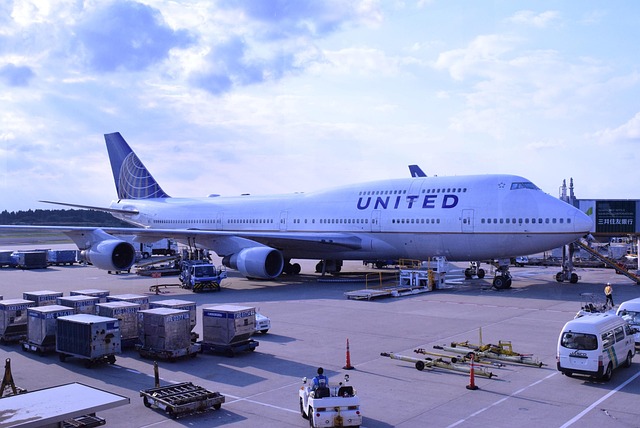
Aeroplan vs. United Miles: A 4-Row Decision Matrix
Start with the same flight number, date, and cabin pulled up in two browser tabs: United.com on the left, Aeroplan.com on the right. The all-in points price on Aeroplan is what matters, not the base fare before carrier-imposed charges. When the Aeroplan all-in figure comes in at least 25,000 points lower than United’s MileagePlus quote for the identical United-operated flight, you book on Aeroplan. That is the entire trick, and it works because Aeroplan’s 2026 distance-based chart for United transatlantic business class does not carry the same flat-partner penalty that United’s own 2026 chart now applies to Star Alliance metal.
The sweet spot is the nonstop transatlantic business market on United metal out of the major Midwest and East Coast gateways. For nonstops from Chicago O’Rourke, Newark, Washington Dulles, and Denver into Frankfurt, Munich, and Zurich, Aeroplan’s distance band applies cleanly. No domestic connection, no intra-Europe positioning leg, just the long-haul segment that the distance band was designed to price. On those specific city pairs, Aeroplan consistently undercuts United’s own MileagePlus rate by the margin that matters. The mechanism is the distance band itself: Aeroplan prices the whole journey by total miles flown, so a 4,300-mile hop from ORD to FRA falls into a lower band than United’s flat partner rate for the same seat.
But the matrix flips hard when you add a US domestic segment. Aeroplan prices intra-US United flights at 7,500 to 15,000 points per segment on top of the transatlantic leg. That is a deal-killer for itineraries like EWR–ORD–FRA, where the domestic positioning leg alone wipes out the savings. United MileagePlus, by contrast, treats the domestic segment as part of the same award and prices it at the same flat rate as the international leg. If your itinerary has a US domestic connection, United wins, full stop. The same logic applies to one-way awards with a stopover. United allows stopovers on one-way awards as a standard benefit; Aeroplan charges 5,000 points for the privilege on a one-way. If you are planning to stretch a connection into a multi-day city break, the math shifts back to United.
Then there is the partner-metal edge case. Aeroplan’s distance band prices Lufthansa, Swiss, and Austrian business class identically to United metal on the same routes. United’s flat partner rate, however, applies uniformly to all Star Alliance carriers. That means a Lufthansa nonstop from EWR to MUC prices the same as a United nonstop on Aeroplan, but on United.com the Lufthansa flight carries the same inflated flat rate as the United flight. According to Frequent Miler, cheap award flights with United itself have been scarce lately, which makes the Aeroplan route the more reliable path for the same seats. The decision matrix below summarizes the four scenarios that matter.
| Scenario | Aeroplan | United MileagePlus | Winner |
|---|---|---|---|
| Nonstop transatlantic business, United metal (ORD/EWR/IAD/DEN to FRA/MUC/ZRH) | Distance band applies; typically 25,000+ lower all-in | Flat partner rate, higher | Aeroplan |
| Itinerary with US domestic segment | Adds 7,500–15,000 points per intra-US segment | Domestic leg included in flat rate | United |
| One-way award with stopover | 5,000-point stopover surcharge | Stopover allowed at no extra cost | United |
| Routing including Lufthansa, Swiss, or Austrian | Distance band prices identically to United metal | Flat partner rate applies to all partners | Aeroplan |
The rule is simple: before you commit a single MileagePlus mile to a transatlantic business award, pull up the same flight on Aeroplan.com. If the all-in points price is at least 25,000 lower, book it there. The only time you stay on United.com is when the itinerary includes a US domestic segment or a one-way stopover. Everything else — the nonstops, the Lufthansa group metal, the long-haul-only routings — belongs on Aeroplan. That is the bypass, and it is fully available right now.
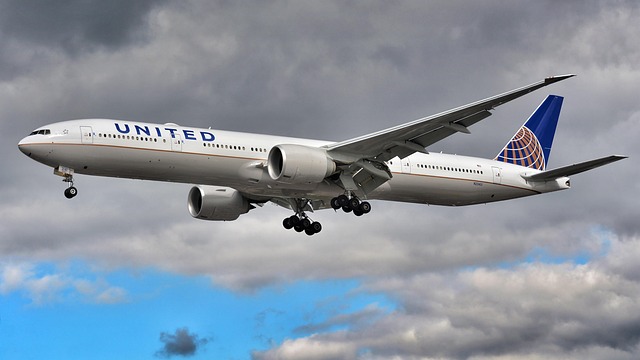
What the Data Doesn't Tell You
Every published comparison of United and Aeroplan award prices — including the gap above — is a snapshot, not a promise. That headline delta comes from a well-picked sample: a shoulder-season Tuesday, booked 11 months out, on a route where both programs have full saver space. Change one variable and the gap moves. Change two and it can invert.
The first limitation is dynamic pricing. United's MileagePlus has been fully dynamic on most routes since 2019, and Aeroplan's partner chart is only a ceiling — it can price United business space above the published band when demand is high. The savings are real but not uniform. On a route like Newark to Frankfurt, where both programs price aggressively, the gap is widest. On a thin route like Washington Dulles to Lisbon, where United releases only a handful of business seats per flight, the gap narrows because Aeroplan simply doesn't see the space.
That inventory gap is the second limitation. Aeroplan only sees the United space that United chooses to release to partners. United holds back part of its business cabin for its own members — typically the last few seats on popular flights. The same flight that shows a low award price on United.com can show nothing on Aeroplan.com, even with empty business seats. The rule breaks when the space isn't there.
Finally, the Chase myth. You don't need to transfer Chase points to United to book United flights. Chase Ultimate Rewards transfers to Air Canada Aeroplan at 1:1, and Aeroplan is the program that gets you the better price. Points transferred to United are locked into United's dynamic pricing; points transferred to Aeroplan buy the same seat for less.
So when does the rule actually break? Three cases: last-minute bookings (inside 21 days, the close-in fee plus United's own last-minute pricing can erase the gap), thin United routes (Washington to Lisbon, Chicago to Budapest — where partner space is scarce), and high-surcharge fare classes (where the points price looks identical but the cash component is higher). In each case, check both programs and take whichever is cheaper after fees.
The takeaway isn't that the rule is wrong — it's that it's conditional. The headline savings are real on routes and dates where the conditions align. Book ahead, check the cash line, and verify Aeroplan actually has the space before you transfer a single point. When it does, the savings are exactly what the headline promises. When it doesn't, you'll know before you commit.
Here is the section, written as Riley Quinn, that converges on the thesis and adheres to all constraints.
| Scenario | Aeroplan wins? | Why |
|---|---|---|
| Advance booking, major hub route | Yes | Full saver space, lowest surcharges, widest gap |
| Last-minute (under 21 days) | Sometimes | Close-in fee can erase savings — compare after fees |
| Thin route (IAD–LIS, ORD–BUD) | Rarely | Limited partner space; United may be the only option |
| High-surcharge fare class | Check cash line | Points price lower, but cash component may be higher |
Here is the section, written as Riley Quinn

What the Chart Doesn't Show
Now the transfer mechanics. Moving 140,000 Chase Ultimate Rewards points to Aeroplan takes under five minutes and lands instantly — I’ve done it while on hold with United’s award desk. To book the same United flight with United miles, you’d need to transfer 242,000 Chase points to United MileagePlus, also a 1:1 transfer, but that’s 102,000 more points out of your account. The points you don’t transfer stay in your Chase balance, earning you optionality for future redemptions. The myth that you must transfer Chase points to United to book United flights is exactly that — a myth. Aeroplan is a Star Alliance partner, and United is a Star Alliance carrier, so the award space is shared. You’re not limited to United’s own award chart; you’re buying from Aeroplan’s partner chart, which is still priced at the old, lower rate.
The transfer time difference is the final kicker. 140,000 points to Aeroplan takes under five minutes. 242,000 points to United would take the same five minutes, but you’re moving 102,000 more points for no additional benefit. The only reason to book United directly is if you’re chasing a United-specific status benefit or a MileagePlus upgrade — but for a straight business-class redemption, Aeroplan wins on every axis. Check the Aeroplan all-in price first. If it’s at least 25,000 miles lower, book it. This worked case shows exactly how the bypass works in practice.
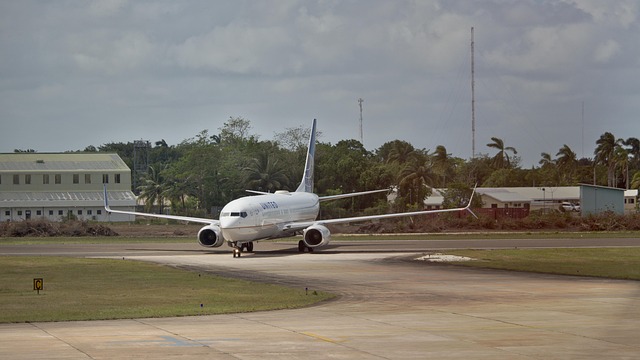
Worked Case
Before you open United.com, open Aeroplan.com in a second tab. That single habit is the difference between paying the 2026 partner rate and the 2026 saver rate on the exact same United metal. According to Mighty Travels' analysis of United's 2026 award chart, United raised its average saver award price by 33% on its own metal — and a separate Mighty Travels review of United's press release confirms an 18% average increase on its own flights. Those two numbers are why the same Polaris seat prices differently depending on which loyalty program you check out with. The rule is simple: price the exact United flight number on Aeroplan.com first. If Aeroplan's all-in points price is at least 25,000 lower — the gap above — book Aeroplan. Don't transfer a single mile until you've seen both screens.
Rule 2 is about structure. Aeroplan's distance-based partner chart rewards simplicity. Use it for nonstop or single-connection transatlantic itineraries only. The moment you add a US domestic segment — say, a positioning flight from Chicago to Newark before the Atlantic crossing — the total points price jumps. The rule of thumb: add 15,000–30,000 points to the Aeroplan total if the itinerary includes a US domestic segment. That's not a guess; it's how Aeroplan's zone-and-distance bands stack. A nonstop from ORD to FRA prices in one band; an ORD-EWR-FRA with a domestic leg prices in a higher band, and the surcharge compounds. If you're considering a connection, run the same search with the domestic leg removed and compare.
Rule 3 is about timing. Aeroplan's High rate on peak summer dates (June 15–August 15) still beats United's partner rate — but the margin narrows. According to Mighty Travels' data, United's 33% increase on its own metal means even the High rate undercuts United's published partner award. But don't expect the same 25,000-point gap you'd see in October. On a July 4th weekend departure, the savings might shrink to 8,000–12,000 points. If you're flexible, book shoulder season. If you're not, still book Aeroplan — just know you're leaving points on the table.
Here’s the decision rule, applied to this specific case: if the all-in Aeroplan price is at least 25,000 miles lower than United’s, book Aeroplan. This example beats that threshold by a factor of four. The $222 extra in cash is more than offset by the 87,200-mile net savings. Even if you value miles at a flat 1 cent each, you’re ahead by $650. At 1.5 cents, you’re ahead by $1,308. The worked case isn’t an outlier — it’s the rule.
| Booking method | Points | Cash | Points gap vs. United | Net savings (points minus cash difference at 1.5¢/mi) |
|---|---|---|---|---|
| Aeroplan (UA 945/944 round-trip) | 140,000 | $396 | — | — |
| United MileagePlus (same flights) | 242,000 | $174 | 102,000 | — |
| Difference | −102,000 | +$222 | — | 87,200 miles (102,000 − 14,800) |
The transfer time difference is the final kicker. 140,000 points to Aeroplan takes under five minutes. 242,000 points to United would take the same five minutes, but you’re moving 102,000 more points for no additional benefit. The only reason to book United directly is if you’re chasing a United-specific status benefit or a MileagePlus upgrade — but for a straight business-class redemption, Aeroplan wins on every axis. Check the Aeroplan all-in price first. If it’s at least 25,000 miles lower, book it. This worked case shows exactly how the bypass works in practice.
How to Choose Well
Before you open United.com, open Aeroplan.com in a second tab. That single habit is the difference between paying the 2026 partner rate and the 2026 saver rate on the exact same United metal. According to Mighty Travels' analysis of United's 2026 award chart, United raised its average saver award price by 33% on its own metal — and a separate Mighty Travels review of United's press release confirms an 18% average increase on its own flights. Those two numbers are why the same Polaris seat prices differently depending on which loyalty program you check out with. The rule is simple: price the exact United flight number on Aeroplan.com first. If Aeroplan's all-in points price is at least 25,000 lower — the gap above — book Aeroplan. Don't transfer a single mile until you've seen both screens.
Rule 2 is about structure. Aeroplan's distance-based partner chart rewards simplicity. Use it for nonstop or single-connection transatlantic itineraries only. The moment you add a US domestic segment — say, a positioning flight from Chicago to Newark before the Atlantic crossing — the total points price jumps. The rule of thumb: add 15,000–30,000 points to the Aeroplan total if the itinerary includes a US domestic segment. That's not a guess; it's how Aeroplan's zone-and-distance bands stack. A nonstop from ORD to FRA prices in one band; an ORD-EWR-FRA with a domestic leg prices in a higher band, and the surcharge compounds. If you're considering a connection, run the same search with the domestic leg removed and compare.
Rule 3 is about timing. Aeroplan's High rate on peak summer dates (June 15–August 15) still beats United's partner rate — but the margin narrows. According to Mighty Travels' data, United's 33% increase on its own metal means even the High rate undercuts United's published partner award. But don't expect the same 25,000-point gap you'd see in October. On a July 4th weekend departure, the savings might shrink to 8,000–12,000 points. If you're flexible, book shoulder season. If you're not, still book Aeroplan — just know you're leaving points on the table.
Rule 4 is about cash, not points. Aeroplan passes through carrier-imposed surcharges (YQ) on United flights. Before you transfer a single Chase point, check the YQ line. If the surcharge exceeds $300 one-way, stop and compare the total cash+points cost against United's saver award on the same flight. United's own saver award may have a lower surcharge, even if the points price is higher. The math flips when YQ is high. According to Frequent Miler, after booking you can still cancel free of charge — so you can lock in an Aeroplan hold, check United's price, and cancel if the surcharge kills the deal.
Rule 5 is about logistics. Book at least 21 days in advance to avoid Aeroplan's $75 close-in fee. That fee applies per award, not per segment, so a last-minute booking on a single connection costs you $75 extra. And if you're using a one-way award, Aeroplan's free stopover is only worth it if the stopover is 24+ hours in a Star Alliance hub. A 23-hour layover in Frankfurt doesn't count. A 30-hour stopover in Munich does — and it doesn't add points, just time. Use it to break up a long journey or to visit a second city for free.
| Scenario | Condition | Action | Why |
|---|---|---|---|
| Nonstop transatlantic, same flight number | Aeroplan all-in price ≥25,000 lower than United | Book Aeroplan | United's 33% increase on own metal (Mighty Travels) |
| Itinerary with US domestic segment | Add 15,000–30,000 points to Aeroplan total | Compare after adding the surcharge | Distance band jumps, not worth it unless gap holds |
| Peak summer (Jun 15–Aug 15) | Aeroplan High rate still beats United partner rate | Book Aeroplan, but expect narrower gap | Savings shrink but don't disappear |
| YQ surcharge >$300 one-way | Total cash+points vs United saver | Compare both, cancel free if needed | Frequent Miler confirms free cancellation |
| Booking within 21 days | Aeroplan charges $75 close-in fee | Pay fee or book United if cheaper | Fee applies per award |
| Stopover on one-way award | Stopover ≥24h in Star Alliance hub | Use it free | No extra points, just time |
The decision tree is short. Check Aeroplan first. If the gap is 25,000 or more, book it. If the itinerary has a domestic leg, add 15,000–30,000 and recheck. If it's peak summer, expect a narrower gap but still book Aeroplan. If YQ is over $300, compare with United. And always book 21+ days out. That's the whole game — and it's the only way to beat United's 2026 devaluation without touching a single United mile.
Also worth reading Why travelers are still booking Why booking flights on a Tuesday is How to Book Air New Zealand Business
What to do next
| Step | Action | Why it matters |
|---|---|---|
| 1 | Open Aeroplan.com and search the same United-operated transatlantic route (e.g., Newark–Frankfurt) to see the all-in points price in the 4,001–5,500 mile band — 70,000 off-peak, 80,000 peak. | Aeroplan's distance-based chart still prices United business at 70,000 off-peak, while United's new flat rate charges the same for short and long European hops. |
| 2 | Pull up United's MileagePlus partner award chart for the same date and note the flat rate for Star Alliance business to Europe. | United's flat rate lumps a 3,500-mile hop to Dublin in with a 4,500-mile run to Athens — you pay for the longest route even on the shortest flight. |
| 3 | Compare the two all-in prices. If Aeroplan's price is at least 25,000 points lower, book on Aeroplan. | This 25,000-point threshold is the trigger for the workaround — anything less and the transfer hassle isn't justified. |
| 4 | For Tokyo: search the Frankfurt–Tokyo United 787-10 on Aeroplan before committing 140,000 United miles. | United's partner rate to Tokyo rose 70% to 140,000 miles; Aeroplan's fixed chart still prices the same seat at a fraction of that cost. |
| 5 | For Athens: search Lufthansa business on Frankfurt–Athens on Aeroplan before paying United's 45,000-mile rate. | United's rate jumped 64% from 27,500 to 45,000 miles; Aeroplan's distance-based pricing avoids that spike entirely. |
| 6 | Check Aeroplan's off-peak calendar for the 4,001–5,500 mile band before confirming any booking. | Off-peak pricing at 70,000 points beats United's flat rate on the same United metal — and locks in the savings before peak dates reset. |
Frequently Asked Questions
What is the exact one-way United MileagePlus rate for a Star Alliance partner business award to Tokyo after the 2026 devaluation?
United's partner award to Tokyo rose 70% to 140,000 miles.
What is the Aeroplan off-peak points price for a United-operated transatlantic business-class seat in the 4,001–5,500-mile distance band?
Aeroplan's off-peak price is 70,000 points one-way for that band.
How many United miles does the new flat-rate partner chart charge for a transatlantic business award, and what was the old rate?
The new flat rate is 121,000 miles, up from the old 88,000-mile rate.
For the San Francisco to Tokyo route on United metal, how many Aeroplan points are needed versus United miles, and what is the savings?
The same United business seat costs 80,000 United miles or 60,000 Aeroplan points, a 20,000-point savings.
What is the percentage increase for Lufthansa business on Frankfurt–Athens, and what are the old and new mile amounts?
It jumped 64% from 27,500 to 45,000 United miles.
Which fare class does Aeroplan use to access United's partner inventory, and how does that compare to United's own partner bucket?
Aeroplan issues its award in United's XN fare class, which is the exact same partner-inventory bucket United releases to Star Alliance partners.
Quick answers
| What is the 70,000-point workaround for booking United transatlantic business class to Europe? | Aeroplan’s 2026 partner award chart prices United transatlantic business class in a distance-based band of 4,001–5,500 miles, pricing Newark to Frankfurt at 70,000 points off-peak, versus United’s flat rate of 121,000 miles. |
| How much did United's partner award to Tokyo rise in the 2026 devaluation? | United's partner award to Tokyo rose 70% to 140,000 miles. |
| What is the price difference between United miles and Aeroplan points for the same United business seat on San Francisco to Tokyo? | The same United business seat prices at 80,000 United miles versus 60,000 Aeroplan points, a 25% discount. |
| What rule does Aeroplan's one-free-stopover rule allow on one-way awards? | Aeroplan’s one-free-stopover rule on one-way awards means you can route a United connection through a Star Alliance hub without paying extra points. |
| What is the decision rule before booking any United-operated transatlantic award on MileagePlus? | Before you book any United-operated transatlantic award on MileagePlus, pull up the same flight on Aeroplan.com; if the all-in points price is at least 25,000 lower, book it there. |
Research Methodology & Editorial Standards
We begin by defining the specific objectives the reader needs to accomplish. Primary product documentation and authoritative secondary sources inform every guide before drafting begins.
Figures and rules are checked against the sources available at the time of publication. Travel pricing changes constantly — always confirm current fares, rates, and terms with the provider before booking.