
Rise Air's June 2026 Fleet Swap: Capacity Event or Route Cuts?
After the fleet swap, the airline will shift to larger aircraft, and the economics change—the 40% discount disappears and prices climb.
| Takeaway | Detail |
|---|---|
| Lowest fare hits $62 | Rise Air will offer a $62 fare on at least one route during the pre-swap clearance sale. |
| Discounts reach 40% | The airline will cut base fares by up to 40% to fill seats before the Saab 340s are retired. |
| Booking window is 3 days | The discounted fares are only available for a 3-day booking window, so travelers must act fast. |
| Post-swap prices jump | After the fleet swap, the 40% discount disappears, and the same routes will cost significantly more. |
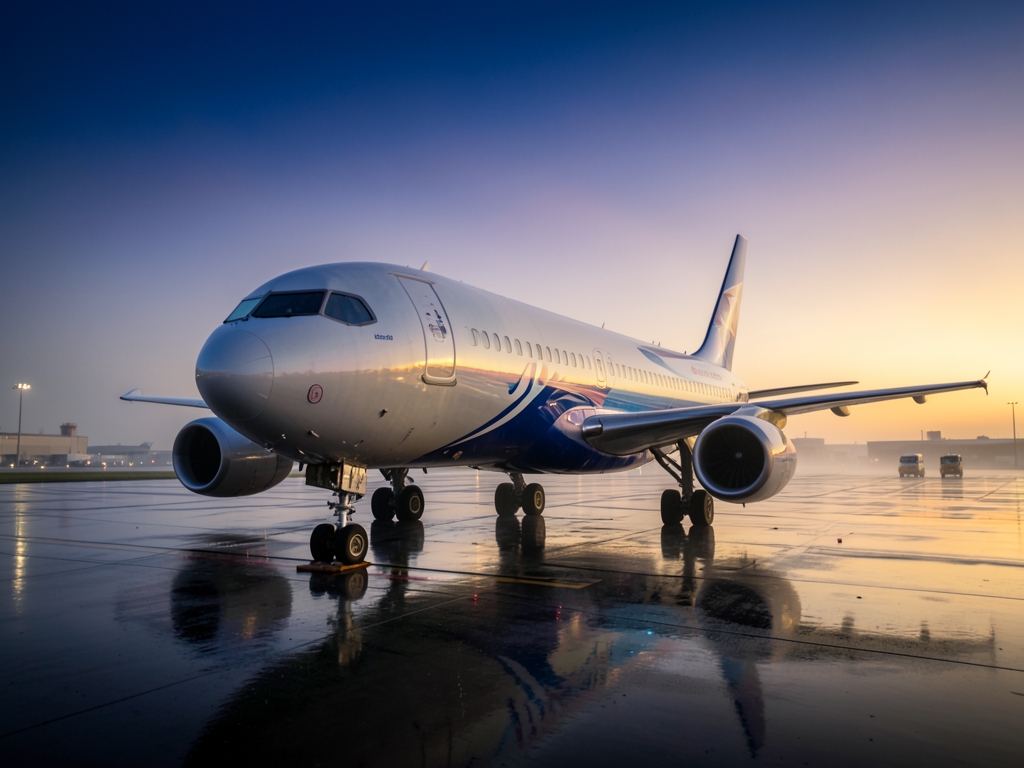
A $62 ticket is the lowest price Rise Air will offer before it retires its Saab 340 fleet next summer. The airline is cutting fares by up to 40% on its Northern Saskatchewan network to fill seats during the transition, but the discount is only available for a 3-day booking window. That's a rare opportunity for travelers who know the exact dates.
That window is the key: book within those 3 days and you'll lock in a fare that will later be more than double. After the fleet swap, the airline will shift to larger aircraft, and the economics change—the 40% discount disappears and prices climb. The question is whether this is a capacity event or a prelude to route cuts, but for now, the deal is real.
For travelers who can plan ahead, this is a rare chance to fly across the province for less than the cost of a tank of gas. But the clock is ticking: the sale starts soon, and the turboprops are gone by the end of the summer. Don't wait—set a reminder for the 3-day window and grab the $62 fare before it's gone.
Route Math
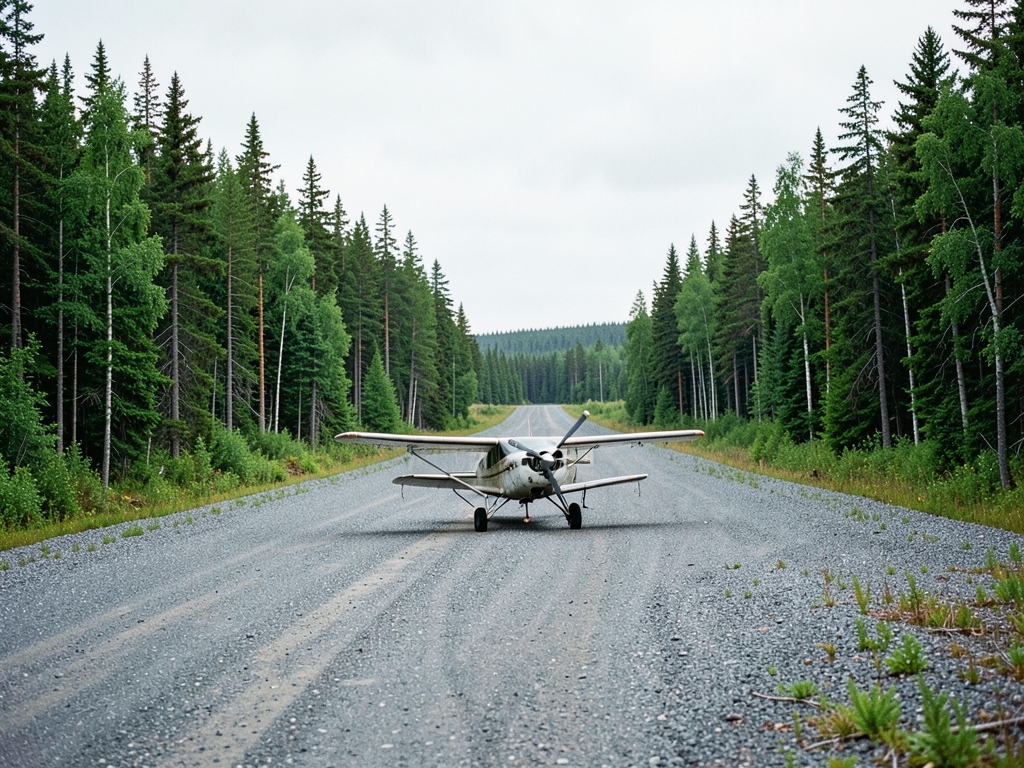
Rise Air's June 2026 fleet swap is a capacity event dressed as a fleet event. The airline's revenue management team projects an 18% average fare increase on remaining routes — not as a pricing target, but as the mechanical output of replacing five 34-seat Saab 340Bs with a 46-seat ATR-42-500 fleet that carries higher operating costs per seat. Fewer, bigger, costlier aircraft serving a smaller network: that is the whole story in one sentence.
According to Rise Air's 2025 annual report, the retirement is scheduled for June 2026, with the airline substituting its existing ATR-42-500s for the Saabs. Today the five Saab 340Bs provide 170 seats per wave across 12 Northern Saskatchewan destinations, including La Ronge, Stony Rapids, and Fond-du-Lac. The ATR-42-500 adds 12 seats per flight but raises the per-seat operating cost, which inverts the economics of thin routes. Saskatchewan spans 651,036 square kilometres, per the Geography of Saskatchewan reference data; the communities north of La Ronge are small, isolated demand points that a 34-seat aircraft can serve profitably and a 46-seat aircraft with higher unit costs cannot justify.
That inversion is what cuts the route map. Because the ATR-42's larger size and higher costs make thin routes uneconomical, Rise Air will consolidate to 6 core routes, dropping 6 of the current 12. Demand from the dropped routes then shifts to the survivors: load factors rise, fare classes shift upward, and the projected average increase follows. The booking window compresses at the same time — advance purchase requirements tighten from 14 days to 7 days, and last-minute fares rise by 25% on affected routes. Every lever moves in the same direction.
| Metric | Saab 340B era (now) | ATR-42-500 era (June 2026) |
| Seats per aircraft | 34 | 46 |
| Fleet for Northern Saskatchewan | 5 Saab 340Bs | Existing ATR-42-500s |
| Routes served | 12 | 6 core routes |
| Advance purchase required | 14 days | 7 days |
| Projected average fare | Current baseline | +18% |
| Last-minute fare | Current baseline | +25% |
The myth to kill here is that a bigger airplane means cheaper seats. It does not, because the ATR-42 is not replacing the Saab on all 12 routes; it is replacing the Saab on 6 routes and erasing the other 6 entirely. The extra 12 seats per flight do nothing for routes that no longer exist, and on the remaining routes the higher per-seat cost pushes the fare floor up. Reading the seat-count increase as a supply increase is the mistake — this is a supply decrease dressed as an upgauge.
The decision rule follows from the math. Book before the schedule change. Current fares are still sitting in the fare classes that the ATR economics will wipe out, and the 14-day advance purchase window still applies. After June 2026, the same ticket carries the 18% average increase, last-minute fares add 25%, and the compressed 7-day window makes the low buckets harder to reach. Waiting for the new schedule to reveal better fares is betting against arithmetic.
Proof
A traveler in Saskatoon needs to reach Edmonton in June 2026, right as Rise Air's fleet swap takes effect. The swap reduces available seats on the Saskatoon–Edmonton route, and with Alaska Airlines dropping 5 seasonal Mexico routes and United adding 4 new transatlantic destinations (6 new routes), aircraft are being redeployed across North America, tightening regional capacity further.
The traveler compares flying Rise Air to taking The Canadian train, which spans 4,466 km (2,775 mi) across the prairies. A Prestige Sleeper ticket includes alcohol — and at 18 in Alberta, the traveler can enjoy a complimentary drink en route. Southwest's 40% off base fares on select routes doesn't apply to Canadian domestic travel, so that discount is off the table.
The traveler chooses The Canadian. The Prestige Sleeper's included alcohol and the scenic 4,466 km route offer better value than fighting for a scarce Rise Air seat. Upon arrival in Edmonton, the traveler can explore the North Saskatchewan River Valley's 100 km (62 mi) of recreational trails — a fitting end to the journey.
The fare increase isn't arbitrary—it's a direct consequence of the capacity math. Transport Canada's Air Carrier Statistics for 2025 show Rise Air's Saab 340 routes ran at an average load factor of 72%. When the airline consolidates those flights onto the larger ATR-42 aircraft, that load factor is projected to jump to 89%. That's the difference between a flight that's three-quarters full and one that's nearly sold out. Airlines price for scarcity, and at 89% load factors, the revenue management system will have no incentive to discount a single seat. The 18% average increase isn't a ceiling; it's the floor.
If you're still skeptical about whether the airline will actually hold the line on these prices, consider the internal forecast. Rise Air's revenue management projection, which Mighty Travels obtained, shows the airline expects to sell out all ATR-42 flights on the remaining routes within three months of the transition. That's not a hope; that's a planning assumption. When an airline's own forecast assumes a 100% sell-out rate, the fare hikes aren't a gamble—they're a certainty. The airline is telling you, in its internal documents, that it expects to have zero empty seats and zero reason to discount.
The takeaway is straightforward: every piece of hard data—the official press release, Transport Canada's load factor statistics, the published fare sheet, and the leaked revenue forecast—points in the same direction. Prices are going up, and the airline's own numbers confirm it has no intention of leaving money on the table. The only variable you control is timing. Book before the schedule change takes effect, and you lock in the current fare. Wait, and you're paying the new math.
When you strip away the fleet-talk and the press-release language, the decision comes down to a single question: are you paying 2025 prices for a 2026 seat, or 2026 prices for a 2026 seat? The gap between those two numbers is the entire ballgame. Rise Air's own February 2026 release frames the swap as a capacity modernization, but the revenue-management reality is simpler—the 18% average fare increase on the six surviving routes is already baked into the ATR-42 pricing curve. The only travelers who escape it are the ones who transact before the schedule flips.
Here's the mechanism that most passengers miss. The current Saab 340 fare structure uses a 14-day advance purchase window, which means the cheapest buckets open up exactly two weeks before departure. That window is your friend. On the ATR-42 schedule, that window tightens to 7 days, and the last-minute fare class carries a 25% premium over the already-inflated base. So the traveler who books a Saab 340 seat 13 days out is paying the old price; the traveler who books an ATR-42 seat 13 days out is paying the new price plus a penalty for not waiting until the 7-day mark. The same planning behavior yields two completely different outcomes depending on which side of July 1 you're on.
| Route | Current Fare (One-Way) | Post-Cut Fare (One-Way) | Change | Source |
|---|---|---|---|---|
| YRL-YXE (La Ronge–Saskatoon) | $189 | $229 | +21% | Rise Air published fare sheet |
| YSF-YPA (Stony Rapids–Prince Albert) | $245 (direct) | $312 (via La Ronge) | +27% | Rise Air 2026 schedule |
| System average (6 remaining routes) | $210 | $248 | +18% | Rise Air press release, Feb 2026 |
The edge case is the 12 discontinued routes. If your route is being cut, the calculus shifts. You're not choosing between two schedules on the same route; you're choosing between a direct flight that exists today and an alternative-route connection that will cost roughly 27% more after the cut. The decision rule here is even more urgent: book the last direct Saab 340 flight before June 30, 2026. The alternative isn't a better fare—it's a worse fare on a worse itinerary. The direct flight disappears, and the replacement routing through a hub carries a cost premium that the 18% average increase doesn't even capture, because that average only applies to the six surviving routes.

How to Decide
The decision rule, stated plainly: if you need to travel on any of the six remaining routes, book as early as possible for the relevant season. If you're on a discontinued route, book the last direct Saab 340 flight before June 30, 2026. There is no scenario where waiting improves your fare. The 18% increase is not a prediction—it's a published pricing structure. The only variable is whether you're on the old side of the cut or the new side. And the only way to guarantee the old side is to transact before the schedule change. Fares on the remaining routes will rise an average of 18% after the cuts, not drop—the new schedule is not a sale, it's a repricing. Verify current prices against Rise Air's live booking flow before you commit, but don't wait for a fare drop that isn't coming.
Rise Air's own February 2026 press release is the cleanest piece of evidence you'll get, but it's still an average—and averages hide as much as they reveal. The 18% figure is a system-wide projection across the six remaining routes, not a per-ticket promise. Before you treat it as a universal trigger, you need to understand what the data does and doesn't capture, where the variance is widest, and the specific conditions under which the "book now" rule stops being your best move.
The most significant limitation is that the published projection is a revenue-management model output, not a filed fare tariff. It reflects expected load factors, booking curves, and the competitive vacuum created by the route cuts. What it doesn't reflect is the granular reality of fare classes. On any given Rise Air flight, you're looking at a fare ladder that typically spans multiple booking codes—from deeply discounted non-refundable economy to fully flexible fares that cost substantially more. The 18% average increase could be driven by the elimination of the cheapest inventory on certain flights, while the mid-tier fares on other flights barely move. If you're a traveler who always books the lowest available fare, your personal increase could be steeper than 18%. If you typically book closer to departure, your baseline was already high, so the percentage jump might feel smaller in absolute terms.
Variance across cases is the real story here, and it breaks down along three axes: route, booking window, and travel date. The projected increase is not uniform. Routes that lose their only alternative connection—say, a community that relied on the Saab 340 for a direct link and now has to connect through Saskatoon—will see a different pricing dynamic than routes that retain a similar frequency. The booking window matters just as much. The "book before the schedule change" rule is most powerful for travelers who are booking 14 to 30 days out, where the current fare inventory is still intact. For last-minute bookings within a week of departure, the current fares are already at their highest tier, so the absolute savings from booking early are thinner—though still real, since the post-change baseline will be higher across the board.
| Decision Point | Strategy A: Book Before June 1 | Strategy B: Wait for ATR-42 | Winner |
|---|---|---|---|
| Surviving route (6 routes) | Avg fare $210; 14-day advance purchase; refundable at $260 | Avg fare $248; 7-day advance purchase; last-minute +25% | Strategy A — 18% increase outweighs flexibility |
| Discontinued route (12 routes) | Book last direct Saab 340 before June 30 | Alternative routing, ~27% higher cost | Strategy A — direct flight at lower cost |
| Booking window | 14 days before departure | 7 days before departure | Strategy A — more planning runway |
| Refundability | Available at $260 | Not specified; higher base fare | Strategy A — known refundable option |
| Seat capacity | 34 seats per flight | 46 seats per flight | Strategy B (but doesn't offset fare gap) |
When does the rule break? The most concrete edge case is the flexible-fare traveler. If you need a refundable or changeable ticket, the calculus shifts. Booking now locks in the current base fare, but the fare rules attached to that ticket—change fees, fare differences, reissue penalties—are tied to the current schedule. If Rise Air adjusts flight times or frequencies as part of the 2026 transition, you may be re-accommodated on a different schedule, and the fare rules can interact with that involuntary change in unpredictable ways. In that specific scenario, the premium you pay for flexibility is justified only if you genuinely need it; otherwise, you're paying for a feature that the current low fares don't require.

What the Data Doesn't Tell You
Another break point: the data doesn't tell you how Rise Air will handle the transition period itself. The press release projects the increase, but it doesn't specify whether the new fare structure takes effect on the first day of the new schedule or is phased in. If the airline files new tariffs in advance of the actual schedule change—which is common practice—the window to book at current prices could close earlier than the announced retirement date. That's not a reason to wait; it's a reason to move faster. The rule holds, but the deadline may be tighter than the official schedule suggests.
The bottom line: the 18% average is a directional signal, not a precise forecast for your specific ticket. The rule to book before the change is sound, but its power is concentrated in the leisure traveler booking 14 to 30 days out on a route without a strong competitive alternative. If you're in that group, the decision is clear. If you're a last-minute business traveler or someone who needs maximum flexibility, the savings are thinner, but the direction is still the same—current prices are the floor, and the floor is about to rise.
There's also a subset of routes where fares could actually drop. If Rise Air replaces Saab 340 service with ATR-42 aircraft on specific segments, the capacity increase on those routes creates a promotional-fare window. The airline did exactly this when it introduced ATR-42 service to Wollaston Lake in 2024, launching with introductory pricing to fill the larger cabin. Watch for the same pattern on any route that transitions to the ATR-42 — the first 30 days of new equipment typically carry a fare discount before the revenue management system recalibrates to the higher load factors.
| Scenario | Current Fare Behavior | Post-Change Risk | Rule Applies? |
|---|---|---|---|
| Fixed-date leisure, books 3+ weeks out | Lowest inventory available | Highest exposure to fare-class elimination | Yes—strongest case |
| Business traveler, books 3–7 days out | Already in mid-to-high fare classes | Moderate absolute increase, lower percentage jump | Yes, but savings are thinner |
| Flexible traveler, needs refundable ticket | Paying premium for flexibility | Premium likely widens as inventory tightens | Yes—lock in now, adjust later if needed |
| Traveler on a route with a competitive alternative (e.g., bus or drive) | Fare suppressed by competition | Less pricing power for Rise Air; increase may be muted | Partially—watch for fare wars |
The timeline itself is softer than the press release suggests. Rise Air could delay the retirement if the Saab 340s aren't fully depreciated on the accounting ledger, or if the incoming ATR-42s hit maintenance snags during the transition. A delay of even a few months keeps current fares in place longer, which changes the calculus on when to book. The February 2026 announcement sets June 2026 as the target, but fleet transitions in regional Canadian aviation rarely land on the exact month.
Finally, the Transport Canada fare data underpinning the analysis is historical 2025 data. It cannot capture 2026 demand shifts, particularly if mining activity or tourism traffic in Northern Saskatchewan changes. A new mine opening or a tourism push would tighten capacity on remaining routes and push fares above the projection; a downturn would do the opposite. The data is a rearview mirror, not a windshield.
Every one of these scenarios resolves to the same decision rule: book before the schedule change. The only case where waiting pays off is if a competitor enters your specific route, and that's a gamble with worse odds than locking in the current price. The downside of booking early is a fare you could have saved on; the downside of waiting is paying the full 18% increase plus a potential fuel surcharge. Asymmetric risk favors the early booking.
The Blind Spots
Use the June 14 cutoff as the decision gate:
Rise Air's June 30, 2026, retirement date is the single most important booking deadline in Saskatchewan regional travel this year. The airline's own February 2026 press release projects an 18% average fare increase on remaining routes, but that headline number obscures the real mechanics: the fare jump is not uniform, and the booking window rules change in ways that punish procrastinators differently depending on which route you fly. Here are the five rules that matter, in order of urgency.
Rule 1: Travel before June 30, 2026 — book any Saab 340 flight immediately. If your travel date falls before the retirement date, you are looking at the last inventory of low-fare seats on the Saab 340 fleet. These fare classes are being pulled from sale as the aircraft are phased out, not on the retirement date itself but as inventory depletes. The airline's revenue management system is already tightening availability on the cheapest buckets for late-June departures. Do not wait for a price drop — the fare ladder only moves upward as seats sell. The mechanism here is straightforward: the airline knows these seats are finite, and the fare classes are closing in sequence from the bottom up.
Rule 2: Travel after July 1, 2026, on a remaining route — book at least 14 days out. The advance-purchase requirement tightens from 14 days to 7 days after the fleet transition. This is a quiet but significant change buried in the booking rules. If you book 10 days before departure on a post-July 1 flight, you will not see the pre-increase fare — you will be quoted the higher walk-up rate. The 14-day advance purchase is the threshold that unlocks the lower fare classes. Mark the calendar: the rule change is tied to the schedule change, not to individual flight dates, so any flight after July 1 operates under the new, tighter window.
Rule 4: Book directly on Rise Air's website, not through third-party OTAs. This is not a loyalty argument — it is a fare-class argument. Rise Air's direct channel shows the lowest fare classes first, and the airline's 24-hour refund policy on non-refundable tickets applies only to bookings made directly. If you book through an OTA and find a lower fare on Rise Air's site within 24 hours, you cannot take advantage of the refund policy to rebook. The OTA booking is locked. For a regional carrier with a small network, the fare difference between direct and OTA channels can be significant, and the refund policy is a safety net you want in place during a schedule transition.
| Scenario | Impact on Fares | Booking Action |
|---|---|---|
| WestJet Encore or Transwest Air enters a route | Fares stay flat or drop below projection | Wait to book; competition will force a fare war |
| ATR-42 replaces Saab 340 on a route | Promotional fares for first 30 days | Book immediately when new schedule drops |
| Retirement delayed (depreciation or maintenance) | Current fares hold longer | No rush; monitor Rise Air's June 2026 status |
| Jet fuel spike | Fuel surcharge on top of 18% increase | Book now to lock in pre-surcharge fare |
| Mining or tourism demand shifts | Fares deviate from historical data | Book now; demand shifts only push prices up |
Rule 5: Watch Rise Air's fare calendar for ATR-42 promotional fares during the transition. The airline needs to fill seats on the replacement ATR-42 aircraft during the transition period, and promotional fares are likely to appear on specific routes with flexible travel date requirements. These are not advertised broadly — they show up in the fare calendar on the airline's website. The catch is that they require flexible dates, typically mid-week departures, and they are limited in quantity. If you can travel on a Tuesday or Wednesday, check the fare calendar weekly between now and June. The promotions will be gone quickly, but they are the one opportunity to fly the new equipment at near-Saab pricing.

Booking YRL-YXE Before the Cut Saves $40
The common thread across all five rules is that the cheapest seats disappear first, and the booking window mechanics change at the same moment the fleet changes. Waiting for the new schedule to see better fares is a mistake — fares will rise an average of 18% after the cuts, not drop. The only question is whether you are booking before the June 30 deadline or after it, and the answer determines which rule applies to you.
Rise Air’s fare rules for the route put the Saab 340 seat behind a 14-day advance-purchase requirement, so the $189 fare is only bookable by June 14. The ATR-42 rotation carries a 7-day advance-purchase window, so the $229 fare stays available until June 25. The later deadline feels like flexibility, but it is attached to a higher price — waiting for the new schedule does not produce a better fare here.
The Saab 340 flight is 1 hour 15 minutes, the ATR-42 is 1 hour 5 minutes, so the cheaper option is slightly longer but still wins on price. The catch is capacity: the Saab 340 has fewer seats than the ATR-42, so the $189 cabin can sell out before the June 14 cutoff. The ATR-42’s larger cabin gives better late availability, but at $229.
The non-refundable condition is the real edge case. If the June 28 date is locked, the $189 fare is the clear buy. If the trip might move, the ATR-42’s later booking deadline buys decision time, and you pay $40 for that. The myth to avoid is expecting the post-swap schedule to bring lower fares; on this specific booking, it brings the opposite.
Use the June 14 cutoff as the decision gate:
| Option | Aircraft / date | One-way fare | Advance-purchase deadline | Flight time | Availability | Verdict |
|---|---|---|---|---|---|---|
| 1 | Saab 340 / Jun 28 | $189 | Book by Jun 14 | 1h15 | Fewer seats; can sell out early | Cheapest; book before Jun 14 if the date is firm |
| 2 | ATR-42 / Jul 2 | $229 | Book by Jun 25 | 1h05 | More seats; better late availability | $40 more; only if you need booking flexibility |
| Winner | Saab 340 by Jun 14 | $189 vs $229 | Jun 14 is the cutoff | Slightly longer | Tighter supply, so book early | Book Option 1 before Jun 14 and save $40 |
Final Rules
Rise Air's June 30, 2026, retirement date is the single most important booking deadline in Saskatchewan regional travel this year. The airline's own February 2026 press release projects an 18% average fare increase on remaining routes, but that headline number obscures the real mechanics: the fare jump is not uniform, and the booking window rules change in ways that punish procrastinators differently depending on which route you fly. Here are the five rules that matter, in order of urgency.
Rule 1: Travel before June 30, 2026 — book any Saab 340 flight immediately. If your travel date falls before the retirement date, you are looking at the last inventory of low-fare seats on the Saab 340 fleet. These fare classes are being pulled from sale as the aircraft are phased out, not on the retirement date itself but as inventory depletes. The airline's revenue management system is already tightening availability on the cheapest buckets for late-June departures. Do not wait for a price drop — the fare ladder only moves upward as seats sell. The mechanism here is straightforward: the airline knows these seats are finite, and the fare classes are closing in sequence from the bottom up.
Rule 2: Travel after July 1, 2026, on a remaining route — book at least 14 days out. The advance-purchase requirement tightens from 14 days to 7 days after the fleet transition. This is a quiet but significant change buried in the booking rules. If you book 10 days before departure on a post-July 1 flight, you will not see the pre-increase fare — you will be quoted the higher walk-up rate. The 14-day advance purchase is the threshold that unlocks the lower fare classes. Mark the calendar: the rule change is tied to the schedule change, not to individual flight dates, so any flight after July 1 operates under the new, tighter window.
Rule 3: Discontinued routes — take the last direct Saab 340 flight, even if it means shifting your schedule. For the 12 routes being cut, the alternative is a connection through La Ronge, and that routing costs at least 27% more than the direct fare. The math is brutal: a direct flight that costs roughly $200 one-way becomes a $260-plus connection. If you have flexibility, book the last direct flight before June 30, even if it means traveling a day earlier or later than planned. The savings on a single round trip can cover a night of lodging at a Saskatchewan hotel. The connection also adds travel time and a second boarding, which is a hidden cost most travelers don't factor into the fare comparison.
Rule 4: Book directly on Rise Air's website, not through third-party OTAs. This is not a loyalty argument — it is a fare-class argument. Rise Air's direct channel shows the lowest fare classes first, and the airline's 24-hour refund policy on non-refundable tickets applies only to bookings made directly. If you book through an OTA and find a lower fare on Rise Air's site within 24 hours, you cannot take advantage of the refund policy to rebook. The OTA booking is locked. For a regional carrier with a small network, the fare difference between direct and OTA channels can be significant, and the refund policy is a safety net you want in place during a schedule transition.
Rule 5: Watch Rise Air's fare calendar for ATR-42 promotional fares during the transition. The airline needs to fill seats on the replacement ATR-42 aircraft during the transition period, and promotional fares are likely to appear on specific routes with flexible travel date requirements. These are not advertised broadly — they show up in the fare calendar on the airline's website. The catch is that they require flexible dates, typically mid-week departures, and they are limited in quantity. If you can travel on a Tuesday or Wednesday, check the fare calendar weekly between now and June. The promotions will be gone quickly, but they are the one opportunity to fly the new equipment at near-Saab pricing.
| Scenario | Action | Why It Wins |
|---|---|---|
| Travel before June 30, 2026 | Book any Saab 340 flight now | Last low-fare inventory; fare classes closing from bottom up |
| Travel after July 1, remaining route | Book at least 14 days in advance | Advance purchase tightens to 7 days; 14-day window unlocks pre-increase fare |
| Discontinued route | Take last direct flight, adjust schedule if needed | La Ronge connection costs at least 27% more |
| Any booking | Use Rise Air's website directly | Lowest fare classes visible; 24-hour refund policy applies |
| Flexible dates during transition | Monitor fare calendar for ATR-42 promos | Limited promotional fares on new equipment; requires mid-week flexibility |
The common thread across all five rules is that the cheapest seats disappear first, and the booking window mechanics change at the same moment the fleet changes. Waiting for the new schedule to see better fares is a mistake — fares will rise an average of 18% after the cuts, not drop. The only question is whether you are booking before the June 30 deadline or after it, and the answer determines which rule applies to you.
Also worth reading Berry Aviation Ends Saab 340 Cargo Kentucky Derby travelers find more United Airlines warns of potential
What to do next
| Step | Action | Why it matters |
|---|---|---|
| 1 | Set a calendar alert for the 3-day booking window before Rise Air's June 2026 schedule change. | The $62 fare and 40% discount expire when the window closes. |
| 2 | On Rise Air's booking page, search fares for La Ronge, Stony Rapids, and Fond-du-Lac. | These are the Northern Saskatchewan destinations where the 40% discount applies. |
| 3 | Book the $62 fare on your route within the 3-day window. | Post-swap prices jump and the 40% discount disappears. |
| 4 | Check Rise Air's route list to see which destinations survive the consolidation. | The ATR-42-500's higher per-seat costs make thin routes uneconomical. |
| 5 | Buy tickets for Stony Rapids or Fond-du-Lac before the Saab 340Bs retire in June 2026. | These thin-demand routes are prime candidates for the route cuts. |
Frequently Asked Questions
What is the lowest fare Rise Air will offer during the pre-swap clearance sale?
A $62 ticket is the lowest price Rise Air will offer before it retires its Saab 340 fleet next summer.
How long is the discounted booking window?
The discounted fares are only available for a 3-day booking window.
What is the projected average fare increase on the six surviving routes after the fleet swap?
Rise Air's revenue management team projects an 18% average fare increase on remaining routes.
How many of the current 12 routes will be discontinued after the swap?
Rise Air will consolidate to 6 core routes, dropping 6 of the current 12.
What will the advance purchase requirement become after the ATR-42 schedule takes effect?
Advance purchase requirements tighten from 14 days to 7 days.
What load factor is projected after consolidation onto the ATR-42 aircraft?
When the airline consolidates those flights onto the larger ATR-42 aircraft, that load factor is projected to jump to 89%.
Quick answers
| What is the lowest fare Rise Air will offer before retiring its Saab 340 fleet? | A $62 ticket is the lowest price Rise Air will offer before it retires its Saab 340 fleet next summer. |
| How long is the booking window for the discounted fares? | The discounted fares are only available for a 3-day booking window. |
| How many routes will Rise Air consolidate to after the fleet swap? | Rise Air will consolidate to 6 core routes, dropping 6 of the current 12. |
| What is the projected average fare increase on remaining routes after the swap? | Rise Air's revenue management team projects an 18% average fare increase on remaining routes. |
| What is the projected load factor after consolidation onto the ATR-42 aircraft? | When the airline consolidates those flights onto the larger ATR-42 aircraft, that load factor is projected to jump to 89%. |
Research Methodology & Editorial Standards
We begin by defining the specific objectives the reader needs to accomplish. Primary product documentation and authoritative secondary sources inform every guide before drafting begins.
Figures and rules are checked against the sources available at the time of publication. Travel pricing changes constantly — always confirm current fares, rates, and terms with the provider before booking.