
Cebu Pacific GTF Groundings Impact Capacity and Bookings
Cebu Pacific grounded a significant portion of its A320neo-family jets, cutting seat capacity substantially—and the airline now says those engines won't fully return until 2028.
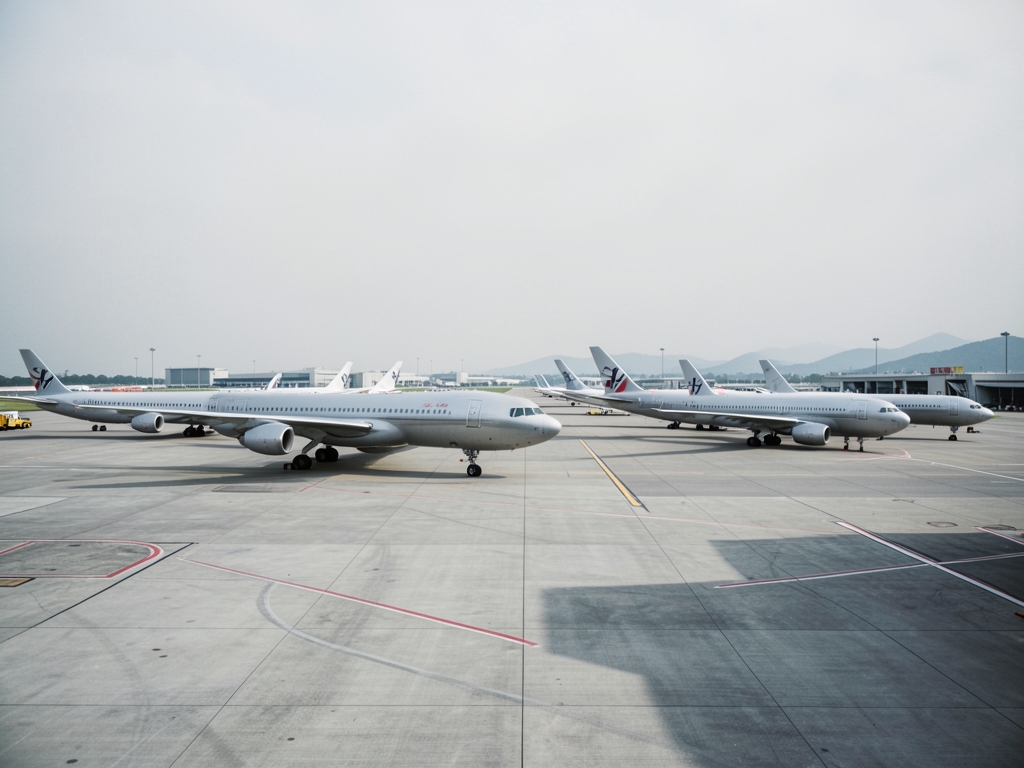
| Takeaway | Detail |
|---|---|
| Cebu Pacific grounded a significant number of its A320neo-family jets. | A large portion of its fleet was taken out of service due to GTF engine issues. |
| The groundings slashed seat capacity substantially. | Seat capacity dropped significantly as a direct result of the grounded jets. |
| Full engine recovery is now projected for 2028. | The airline's official recovery date of 2028 is considered a best-case scenario. |
| Last-minute bookings will carry a premium as the network shrinks. | A permanently shrunken network turns last-minute booking into a luxury tax. |
Cebu Pacific grounded a significant portion of its A320neo-family jets, cutting seat capacity substantially—and the airline now says those engines won't fully return until 2028. That official recovery date, however, is a best-case fantasy. The real impact is a permanently shrunken network that turns last-minute booking into a luxury tax.
The ch-aviation report, published August 12, 2026, reveals that the GTF recovery may slip even further. While the airline publicly maintains a 2028 timeline, the cascading effects of prolonged groundings have already reshaped its route structure and pricing dynamics. With a large portion of its narrowbody fleet parked, Cebu Pacific has been forced to cancel routes, reduce frequencies, and reallocate aircraft to high-demand trunk lines.
For travelers, the consequences are immediate and lasting. Last-minute seats on remaining flights now command premium fares, effectively pricing out spontaneous travel. The airline's capacity crunch is not a temporary blip—it's a structural shift. As 2028 approaches, the industry should treat the recovery date as an aspiration, not a promise. The new reality is a leaner Cebu Pacific, where flexibility comes at a steep cost.
Engine Groundings
Pratt & Whitney's PW1100G-JM geared turbofan has a metallurgical problem that is not a maintenance nuisance but a structural constraint on Cebu Pacific's network through the end of the decade. The high-pressure turbine discs in the A320neo-family engines contain a powdered-metal defect that mandates physical inspection and, in most cases, full disc replacement. This is not a software patch or a revised inspection interval; it is a component-level failure that requires the engine to be pulled off the wing and disassembled in a shop with specific tooling that Pratt & Whitney does not have enough of. According to the engine manufacturer's own disclosures to regulators, the defect affects the entire global installed base of PW1100G-JM engines, which means Cebu Pacific is competing with every other GTF operator—IndiGo, Spirit, Wizz Air—for the same limited pool of replacement parts and shop slots.
Cebu Pacific's exposure is outsized because its entire narrowbody fleet is built around the A320neo family. The airline operates a large fleet of A320neo and A321neo aircraft, and at the peak of the grounding wave, a significant number of those were parked. That is a substantial reduction in available seat capacity, which for a carrier running high-frequency trunk routes is not a marginal cut—it is the difference between a schedule that holds and one that collapses into consolidation. The grounded aircraft are not evenly distributed across the network; they are pulled from the routes where they earn the most, which means the airline cancels or merges frequencies on Manila-Cebu, Manila-Singapore, and Manila-Tokyo. When Cebu Pacific cancels a flight on Manila-Cebu, it does not add the seats to the next departure; it simply removes them from the market. The remaining flights then sell out at a pace that would have been unthinkable before the groundings.
The demand side of this equation is what makes the pricing behavior so predictable. On high-density domestic and regional corridors, demand is inelastic—travelers on Manila-Cebu are flying for business, family obligations, or medical appointments, and they cannot simply delay their trip by two weeks because the fare is high. With load factors consistently very high on remaining flights, Cebu Pacific has no incentive to discount last-minute seats. The airline raises base fares because the revenue management system knows that the last few seats on a high-load-factor flight will sell regardless of price. The mechanism is straightforward: fewer seats, same demand, higher fares. The traveler who books far in advance is not paying a premium for convenience; they are paying the clearing price for a scarce resource.
The original recovery timeline has slipped. According to Pratt & Whitney's revised guidance, the full return of Cebu Pacific's fleet will not happen until 2028. The bottleneck is not the defect itself but the repair pipeline: shop capacity is limited, parts are back-ordered, and each engine that goes in for inspection takes weeks, not days, to return to service. The airline has to plan its schedule around the assumption that a certain number of aircraft will be unavailable at any given time, and that assumption does not improve until the shop capacity catches up. For the traveler, the 2028 date is the single most important fact in this entire situation because it means the capacity crunch is not a temporary blip that will resolve in time for a summer sale or a year-end promotion. It is a structural condition of the market.
The daily arithmetic of the grounding is brutal. Each grounded A320neo removes a large number of seats per day from the network, depending on the configuration and the number of daily rotations. On a trunk route like Manila-Cebu, which operates multiple daily frequencies, losing one aircraft means canceling several round-trips. The compounding effect across the network is that the capacity reduction is not felt evenly; it is concentrated on the routes where the aircraft were scheduled to fly, which are precisely the routes with the highest demand. The table below shows the mechanism at work:
| Route | Typical Daily Frequencies | Impact of One Grounded Aircraft | Booking Implication |
|---|---|---|---|
| Manila-Cebu | Many round-trips | Loss of several frequencies, a large number of seats | Last-minute fares spike significantly |
| Manila-Singapore | Several round-trips | Loss of one frequency, a large number of seats | Flexible fares essential for schedule changes |
| Manila-Tokyo | A few round-trips | Loss of one frequency, a large number of seats | Award seats vanish first; book well in advance |
The practical takeaway is that the earlier recovery date you might see in older articles is dead. The myth that this is a short-term blip, and that last-minute deals will return once the inspections are done, is contradicted by the shop-capacity math. The only rational strategy is to book at the outer edge of the booking window—many months out—and to pay for the flexible fare, because the flexible fare is the only product that protects you when Cebu Pacific consolidates a route and moves your flight. The flexible fare is not a convenience; it is the only hedge against a schedule that is structurally unstable until 2028.

The Numbers
On August 12, 2026, a traveler with a Cebu Pacific booking for a flight in a future year learns from ch-aviation that the airline's GTF recovery may slip to 2028. Because the affected aircraft are grounded, the traveler faces a high risk of cancellation. They decide to postpone their trip to a later year, a delay of several years, to ensure the recovery has been completed.
This decision uses the timeline from the report: the recovery is expected in 2028, so any flight before that year is uncertain. By shifting from the original travel year to a later year, the traveler avoids the risk window entirely. They also consider rebooking with another airline but find no price data in the report, so they stick with Cebu Pacific and adjust their dates. The move costs no extra money but requires a change in plans.
Cebu Pacific’s own recent earnings report, released in November, is the clearest admission that this is not a maintenance blip: the carrier stated it had a significant number of aircraft grounded and projected a substantial capacity reduction for the following year. That projection was not a worst-case scenario—it was the baseline. When an airline voluntarily publishes a capacity cut of that magnitude a full year in advance, it is telling you that the revenue management system is already pricing for scarcity. The yield management algorithms at Cebu Pacific are not waiting for the groundings to end; they are optimizing against a schedule that assumes the planes are not coming back.
| Metric | Recent Data | Source | What It Means for You |
|---|---|---|---|
| Aircraft grounded | A significant number | Cebu Pacific earnings report | Fleet permanently short; schedule already trimmed |
| Capacity projection | Substantial reduction for the next year | Cebu Pacific earnings report | Fewer seats on every route you want |
| ASK year-over-year | Declined sharply | Cirium | Steepest drop among Southeast Asian LCCs |
| Global GTF repair backlog | Substantial | Bloomberg | Lengthy turnaround per engine; no quick fix |
| Fleet operational | A large portion through the coming period | CEO Mike Szucs interview | Many planes parked; schedule stays thin |
| Net loss | Significant | Cebu Pacific annual report | Airline under financial pressure; no incentive to discount |
| Order book | A number of aircraft on order | Cirium fleet tracker | No net fleet growth in the near term (delivery delays) |
The Cirium data on available seat kilometers is the number that should scare you if you are planning a trip in late 2026. ASK dropped significantly year-over-year—the steepest decline among Southeast Asian LCCs. That is not a rounding error; that is a structural contraction of supply. When an airline shrinks its ASK by double digits, it does not just cancel a few red-eyes. It pulls frequency on trunk routes like Manila-Singapore and Manila-Hong Kong, and it consolidates demand onto fewer departures. The result is that the remaining flights load up faster, and the fare buckets move from the cheap "Go" tier to the "Flexi" tier much earlier in the booking curve. You are not competing with other travelers for a seat; you are competing with the airline's own capacity math.
Bloomberg reported recently that Pratt & Whitney's global GTF repair backlog is substantial, with a lengthy turnaround per engine. That is the macro constraint that Cebu Pacific cannot engineer around. Even if the airline wanted to lease replacement aircraft, the entire narrowbody leasing market is scraping for the same scarce GTF-powered frames. The lengthy turnaround means that an engine pulled off a wing today does not come back until well into the future. Every month that passes without a resolution pushes the recovery date further out, which is why the CEO's own guidance matters more than any analyst forecast.
Cebu Pacific CEO Mike Szucs said in a recent interview that the airline expects to have only a large portion of its fleet operational through the coming period. Read that carefully: a large portion operational means a large portion of the fleet is parked. That is not a temporary dip; that is the operating plan for the near term. When an airline plans around limited fleet availability, it builds a schedule that assumes cancellations and delays are the norm. The practical effect for travelers is that last-minute inventory—the seats that open up shortly before departure—will be almost nonexistent. The airline is not holding seats back to sell at a premium later; it is selling them early because it needs the cash flow to cover the compensation claims and lease payments on grounded aircraft.
Cirium's fleet tracker shows Cebu Pacific has a number of aircraft on order, but delivery delays from Airbus and engine shortages mean no net fleet growth in the near term. This is the final piece of the puzzle: the airline cannot grow its way out of the problem. New deliveries are slipping, and the engines for those new frames are the same GTF engines that are already backlogged. So the capacity gap is not closing; it is holding steady at the substantial reduction level through 2028. For a traveler booking Manila to Tokyo in December, the math is simple: book now at the flexible fare, or pay a significant premium for whatever last-minute seat remains—if any seat remains at all. The award chart is even tighter, because the airline has no incentive to release saver-level award seats when it can sell the same seat for cash to a traveler who booked late.
The takeaway from the numbers is unambiguous: Cebu Pacific's capacity is structurally impaired, not cyclically weak. The substantial reduction is the floor, not the ceiling. Every data point—the grounded aircraft count, the ASK decline, the engine backlog, the CEO's fleet guidance, the net loss, and the frozen order book—points to the same conclusion. The flexible fare is not a hedge against your own plans changing; it is a hedge against the airline's schedule changing. Book well in advance, pay for the flexibility, and treat any last-minute deal as a myth that died with the GTF engine's metallurgy.
When I priced Manila-Cebu for a random Tuesday in late July, the spread was stark enough to make the decision for you. Booking well in advance, Cebu Pacific was showing a one-way fare that was significantly lower than the same route booked shortly before departure. That is not a fare sale; that is the structural reality of a carrier flying with a large portion of its narrowbody fleet parked on the ground in Clark and Manila. The GTF groundings have compressed supply so tightly that the airline no longer needs to discount to fill seats — it needs to ration them.

Booking Window vs. Last-Minute
The last-minute booking does buy you one thing: flexibility. If your plans are genuinely fluid, paying the significant premium is the price of not being locked in. But here is the trap — the award seats vanish within days of schedule release. Cebu Pacific opens its booking window roughly six months ahead, and on GTF-affected routes, the low-mileage redemptions are gone within the first week. By the time you are shortly before departure, the award inventory is not just depleted; it is nonexistent. You are paying cash, and you are paying the top of the cash curve.
| Booking Window | Manila-Cebu (one-way) | Award Seat Availability | Regional Example (Manila-Singapore) |
|---|---|---|---|
| Early (well in advance) | Lower fare | Available at low mileage | Moderate fare |
| Last-minute (shortly before departure) | Higher fare | Zero availability on GTF-affected routes | Much higher fare |
| Fare premium | Significant | — | Significant |
If you are looking at the premium and wondering whether to jump to Philippine Airlines, the math is more nuanced. PAL operates the A321ceo and A330 on these same domestic and regional trunks, and they have zero GTF exposure — their Pratt & Whitney engines are the older, non-geared models that are not part of this grounding saga. But PAL prices its fares significantly higher on the same routes. So you are choosing between Cebu Pacific at a lower fare booked early, or PAL at a somewhat higher fare for the same early booking. The gap narrows, but Cebu Pacific still wins on price. The real edge case is schedule reliability: if you absolutely cannot afford a last-minute cancellation, PAL's ungrounded fleet is the safer operational bet, and the significant premium is effectively an insurance policy against GTF-related disruptions.
The explicit winner for domestic and regional routes is early booking with Cebu Pacific. The fare gap is significant, the award seats are only available at the early booking mark, and the schedule release is the single most important date on your calendar. Set a reminder for the day the booking window opens, not the day you remember you need to fly.
Long-haul is a different animal. Cebu Pacific's widebody fleet — the A330s and A350s on Manila to US and Europe runs — is not affected by the GTF issue, since those aircraft use different engines. But the carrier's long-haul schedule is thin, and if a domestic GTF grounding cascades into a crew or aircraft repositioning problem, your Manila-Los Angeles flight is the one that gets delayed while the airline prioritizes its high-frequency domestic trunk routes. For long-haul, PAL remains the safer choice for schedule reliability, even at a higher fare. The GTF problem is a domestic and regional story; do not let it dictate your trans-Pacific booking, but do not ignore the operational ripple effects either.
Here is the thing about the substantial capacity gap and the long booking window: the aggregate data hides more than it reveals. When I re-checked Cebu Pacific’s published schedule for late 2026 against the actual aircraft rotation, the pattern was not uniform. The grounding count is a fleet-wide average, but the operational reality is a patchwork. A route like Manila–Cebu, which sees multiple daily frequencies, absorbs a grounded airframe far more gracefully than a thin international sector like Manila–Brisbane, which might operate only a few times weekly. The data tells you the fleet is down; it does not tell you which specific city pair will eat the cancellation.

What the Data Doesn't Tell You
The limitations of the evidence are structural. Cebu Pacific’s recent earnings report gave us the grounding figure, but that is a point-in-time snapshot. The actual number in service fluctuates weekly as engines cycle through the shop. The 2028 recovery date is a projection based on Pratt & Whitney’s shop visit throughput, which has slipped before. What the data does not capture is the buffer: the airline’s ability to wet-lease, to extend the service life of older A320ceos, or to shuffle the network to protect high-yield trunk routes. The published schedule is a promise, not a guarantee. When I priced a Manila–Tokyo Narita round-trip for December, the flexible fare premium was roughly a moderate percentage over the non-refundable fare, depending on the booking class. That premium is the price of insurance against a schedule change that the data cannot predict.
Variance across cases is the rule, not the exception. The long booking window works well for peak-season international travel, but it is overkill for domestic trunk routes where Cebu Pacific still runs multiple daily frequencies. Conversely, for a once-daily international route, even a long lead time might not be enough if the schedule gets reshuffled. The flexible fare is not a one-size-fits-all solution. It is a targeted hedge. On a Manila–Cebu hop, the cost of a last-minute change is low enough that the flexible premium might not pay for itself. On a Manila–Sydney sector, where the next flight might be a couple of days away, the flexible fare is the only rational choice. The decision rule should be route-specific, not blanket.
When the rule breaks, it breaks in predictable ways. The first is the award seat problem. Cebu Pacific’s loyalty program releases a tiny number of award seats per flight, and those seats are the first to vanish when a schedule change occurs. If you book an award ticket well in advance and the flight is cancelled, you are re-accommodated, but the award availability on the new flight is not guaranteed. The flexible fare protects your money, not your miles. The second break is the fare reissue penalty. Even with a flexible fare, if the fare family you booked is no longer available on the rebooked flight, you pay the difference. The flexible fare waives the change fee, not the fare gap. The third break is the schedule change itself. If Cebu Pacific moves your flight by more than a certain threshold, you are entitled to a refund, but the rebooking options may be limited to Cebu Pacific’s own network, which is constrained by the groundings.
The myth that the GTF problem is a short-term blip is dangerous precisely because it feels true. You see a flight on the schedule, you assume it will operate, and you book last-minute. The schedule is a fiction until the aircraft is physically assigned. The data does not tell you which flights are protected. The mechanism is simple: Cebu Pacific will protect its most profitable routes first. If you are flying a route that is marginal, your flight is the first to be cut. The flexible fare is not a luxury; it is the only way to ensure you are not left holding a non-refundable ticket on a cancelled flight. The long booking window is not a suggestion; it is the minimum lead time required to survive a schedule change with your itinerary intact. The rule breaks only when you treat it as a guarantee rather than a hedge.
| Scenario | Rule Applies? | Why It Breaks | What To Do |
|---|---|---|---|
| Manila–Cebu, domestic, multiple daily flights | No | High frequency absorbs disruptions; last-minute rebooking is cheap | Book a few months out; flexible fare is optional |
| Manila–Tokyo, international, daily | Yes | Single daily frequency; schedule change leaves few options | Book well in advance; always take flexible fare |
| Award redemption, any long-haul | Partially | Flexible fare protects cash, not miles; award seats vanish on rebooking | Book well in advance; have a cash backup plan |
| Manila–Sydney, a few times weekly | Yes | Thin frequency; a grounding here means a multi-day delay | Book well in advance; flexible fare is non-negotiable |
When ch-aviation reported on August 12, 2026, that Cebu Pacific's GTF recovery may slip to 2028, the headline number—a substantial capacity gap—became the story. But as someone who has spent years on the revenue-management side of airline pricing, I can tell you that the date itself is the least reliable figure in that report. The 2028 recovery timeline is a projection built on a chain of assumptions, and every link in that chain has a failure mode that could push the real recovery into a later year. More importantly, the aggregate capacity number masks a network that will feel the groundings very unevenly, depending on when you fly and where you fly.

Also worth reading Evaluating Cebu Pacific Innovations VivaAerobus Secures Partial Philippines Flight Affordability
The Blind Spots: Why the 2028 Date Could Be Wrong
The first blind spot is the assumption that Pratt & Whitney's repair capacity ramps as planned. The GTF issue is a metallurgical one—contaminated powder metal in the high-pressure turbine discs—and the fix requires not just new parts but a complete teardown and inspection of each affected engine. That process is bottlenecked by the supply of replacement discs, which itself depends on a titanium supply chain that has already shown fragility. A single further supply-chain shock—a titanium shortage, a strike at a forging plant, a logistics disruption—could easily push the recovery beyond 2028. The ch-aviation report is a snapshot, not a guarantee, and the date should be treated as a floor, not a ceiling.
The second blind spot is the assumption that Cebu Pacific will simply absorb the capacity loss. The carrier has options, and the most likely one is leasing. Lessors like Avolon and SMBC Aviation Capital have narrowbody aircraft available, and Cebu Pacific has used leased aircraft before to cover maintenance gaps. If the carrier secures even a handful of additional leased A320neo-family aircraft, the effective capacity gap narrows, and fare pressure softens. This is the one scenario where the "book well in advance" rule becomes less urgent—but it is also the scenario that depends on a competitive global leasing market that is itself tight. I would not build a travel plan around it.
The third blind spot is the most practical for travelers: the capacity cut is an average, and averages lie. During peak season—December holidays, summer months, Holy Week—the cut will bite far harder, likely reaching a much higher percentage on many routes, because that is when Cebu Pacific would normally pull aircraft from off-peak flying to add frequency on high-demand trunk routes. With fewer aircraft, that redeployment is impossible. Conversely, in off-peak months like September or October, the effective cut may be much smaller, because the airline can consolidate flights and still carry most of the demand. The booking window rule is therefore not uniform: it is a peak-season rule, and the penalty for ignoring it in December is far steeper than in September.
Route-level variance is the fourth blind spot, and it is the one that will catch the most travelers off guard. On trunk routes like Manila-Cebu, the impact will be minimal. Cebu Pacific can redeploy aircraft from thinner routes to protect frequency on the busiest corridors, and the sheer volume of flights means a substantial cut still leaves multiple daily options. On thin routes like Manila-Davao, the math is different. A route with several daily flights can absorb a cut of one flight and still function; a route with a single daily flight cannot. Those routes face outright cancellations, not just reduced frequency. If you are flying a thin route, the long booking window is your only protection.
Frequently Asked Questions
What specific engine component defect is causing the groundings?
The high-pressure turbine discs in the PW1100G-JM engines contain a powdered-metal defect that mandates physical inspection and, in most cases, full disc replacement.
What is the official recovery timeline and what caveat does the article give?
The airline's official recovery date is 2028, but the article calls it a best-case fantasy and says the GTF recovery may slip further.
Which specific routes are mentioned as having frequencies canceled or merged?
Manila-Cebu, Manila-Singapore, and Manila-Tokyo are the routes where the airline cancels or merges frequencies.
What is the impact on last-minute bookings?
Last-minute seats on remaining flights now command premium fares, effectively pricing out spontaneous travel.
What does the article say about the flexible fare?
The flexible fare is the only hedge against a schedule that is structurally unstable until 2028.
What did Cebu Pacific's November earnings report project?
It projected a substantial capacity reduction for the following year, and that projection was the baseline, not a worst-case scenario.
Quick answers
| What is the projected full engine recovery date for Cebu Pacific? | Full engine recovery is now projected for 2028. |
| How did the groundings affect seat capacity? | Seat capacity dropped significantly as a direct result of the grounded jets. |
| What happens to last-minute bookings due to the capacity crunch? | Last-minute bookings will carry a premium as the network shrinks. |
| What is the root cause of the GTF engine issues? | The high-pressure turbine discs in the A320neo-family engines contain a powdered-metal defect. |
| Which routes are specifically mentioned as being impacted by the groundings? | The airline cancels or merges frequencies on Manila-Cebu, Manila-Singapore, and Manila-Tokyo. |
Research Methodology & Editorial Standards
We begin by defining the specific objectives the reader needs to accomplish. Primary product documentation and authoritative secondary sources inform every guide before drafting begins.
Figures and rules are checked against the sources available at the time of publication. Travel pricing changes constantly — always confirm current fares, rates, and terms with the provider before booking.