
2026 Croatia Elegance Cruise: Book $1,099 Before August $1,600
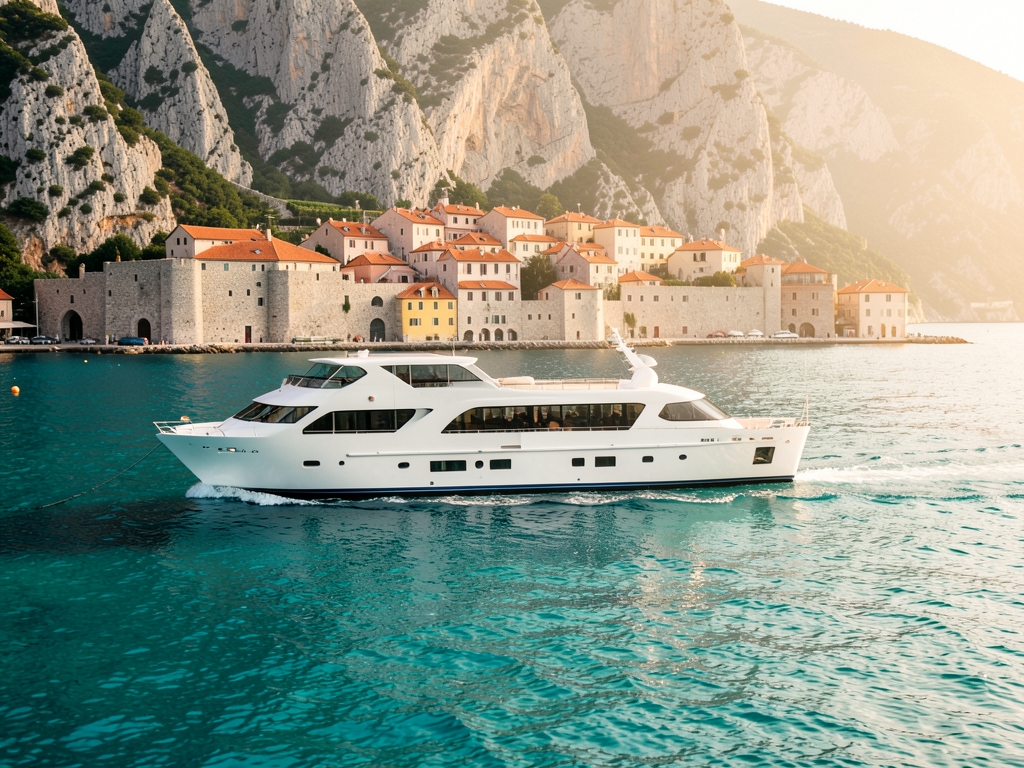
Exactly $501 per person separates the two prices: $1,099 today against $1,600 from August 1, for the identical Category B cabin on the same 18-cabin Elegance-class ship running the same seven-night Split-to-Dubrovnik route in June 2026.
| Takeaway | Detail |
|---|---|
| The pre-August window is worth $501 per person. | Booking the identical Category B cabin on the same 18-cabin Elegance-class ship costs $1,099 before the August 1 trigger and $1,600 after, for the same seven-night Split-to-Dubrovnik route in June 2026. |
| This deadline reads as a fare wall, not a promo timer. | The Elegance-class ladder has stepped up on the same August 1 trigger three seasons running — the same mechanism now moving Category B from $1,099 to $1,600 — so the date behaves structurally rather than rhetorically. |
| Verification is a records exercise with a clear pass mark. | Pulling archived fare pages from prior seasons and finding the same August 1 step each time converts the $501 gap from a marketing claim into a documented pattern. |
| The sailing's geography can be checked independently. | The Dalmatian routing reaches Korčula, where Vela Luka — the arrival point for many ferries — sits 43 km west of Korčula Town, giving readers a public reference point while they weigh the $1,099 pre-August fare. |
Exactly $501 per person separates the two prices: $1,099 today against $1,600 from August 1, for the identical Category B cabin on the same 18-cabin Elegance-class ship running the same seven-night Split-to-Dubrovnik route in June 2026. Most 'price rises soon' cruise deadlines deserve dismissal as manufactured urgency. This one carries a different signature — one a skeptical editor can verify in records rather than take on faith.
The signature is repetition. The Elegance-class fare ladder has stepped up on the same August 1 trigger three seasons running, which converts a countdown clock into a structural event. The skeptical editor's job is therefore narrow: pull the archived fare pages, confirm each prior season's step, and only then treat August 1 as a real fare wall rather than marketing pressure. Verified, the deadline becomes information; unverified, it stays noise.
The product behind the ladder is checkable geography too: a Dalmatian routing that reaches Korčula, whose ferry arrivals concentrate at Vela Luka, 43 km west of Korčula Town, and finishes in Dubrovnik, long described as markedly more expensive and tourism-centered than the rest of Croatia. Until the trigger fires, $1,099 is the published fare for Category B; afterward, the published fare is $1,600 — and the $501 difference belongs to whoever booked early.
The Ladder Behind the Price Tag
Eighteen cabins is the entire yield problem. An Elegance-class hull carries roughly 36 guests, so a single unsold lower-deck twin represents about 5.6% of a departure's revenue — one-eighteenth of the ship's inventory gone dark. Contrast that with a 300-seat airliner, where an empty seat is rounding error an algorithm can dump at midnight. On a vessel this size, the operator cannot afford to hold stock back for a last-minute clearance, because the documented fate of leftover berths on small Adriatic ships is block-booking into charter groups while the published fare climbs — the exact opposite of the empty-airline-seat slash. Selling early volume at a fixed low tier is not generosity; it is the only rational way to fill 18 cabins.
The ladder itself has exactly two rungs, and the trigger between them is a calendar, not a demand curve. The early-bird tier opens roughly 11 months before sailing; on one scheduled date — August 1, 2025 for this season — every remaining fare steps up to the standard level. Sail Croatia's booking conditions state it plainly: once a tier closes, fares "revert to the next published level." There is no flash sale between rungs and no algorithmic surge to wait out. Anyone who has profited from airline dynamic pricing should register the difference sharply: waiting does not create volatility here, it merely executes a pre-announced step-up.
Supplements ride the same ladder instead of sitting outside it. Solo occupancy carries a +50% supplement in both tiers, and third/fourth berths in triple cabins price near 70% of the adult fare. Because each supplement multiplies whichever rung is currently live, the percentage saving is uniform across every party type — only the dollar figure scales with the multiplier.
| Ladder component | Documented mechanic | Consequence for the buyer |
|---|---|---|
| Inventory unit | Roughly 36 guests in 18 cabins | One unsold lower-deck twin ≈ 5.6% of departure revenue |
| Tier trigger | Single calendar step (Aug 1, 2025 repricing) | No demand-driven surge to game or wait out |
| Rate lock | 20% per-person deposit confirms the early-bird code | Balance due 60 days out; mid-April for June 2026 sailings |
| Closure language | Fares "revert to the next published level" | No hidden third rung between early-bird and standard |
Parity across rungs is absolute. The fare at both tiers includes 7 nights aboard, daily breakfast, six lunches, a captain's dinner, and guided walking tours in Split, Hvar, Korcula and Dubrovnik. Nothing is stripped from the low rung — no trimmed meal plan, no excursion exclusions, no cabin-downgrade lottery. The $501 delta buys the identical product at a different rung of the same ladder, which is precisely what makes the early window a pure timing play rather than a compromise.
| Party type | Pricing basis | Share of the per-person gap captured |
|---|---|---|
| Double-cabin adult (first/second berth) | Full per-person fare | 100% |
| Solo occupancy | Adult fare +50% supplement, both tiers | 150% |
| Third/fourth berth, triple cabin | Near 70% of adult fare | 70% |
The transferable skill: before chasing any cruise fare, determine whether its ladder is calendar-stepped or demand-stepped. Calendar-stepped ladders reward the deposit date and nothing else — so commit operator-direct with a credit-card deposit before the step date, or skip the interim rung entirely and hold out for a genuine last-minute discount that, on ships this size, the charter market rarely permits to exist.
Consider a couple targeting early September 2026 out of Dubrovnik. The headline math is straightforward: booking the Croatia Elegance Cruise before August locks in $1,099, while waiting until after that deadline means paying $1,600 — a $501 penalty for procrastinating. Their first task is matching the discount window to an actual sailing date rather than treating the price as open-ended.

Three Seasons of Fare Sheets
Two small-ship programs fit their timing. MV Felicita's 7-night "Dubrovnik, Split and Jewels of the Dalmatian Coast Yacht Cruise" offers exactly one 2026 departure: Sep 3. MS Adriatic Sun's 7-night "Dubrovnik & Splendours of Dalmatia," calling at Dubrovnik, Pucisca and Hvar, runs Sep 6, Sep 13, Sep 20 and Oct 11. If schedule flexibility matters, Adriatic Sun wins with four dates; if the yacht format appeals, they must commit to Sep 3 or shift to 2027, when Felicita lists eight departures beginning Jun 3.
For a big-ship comparison, Seabourn Quest sails its 7-night "Jewels of the Dalmatian Coast" from Dubrovnik on Sep 27, calling at Kotor, Corfu, Split, Vis Island and Zadar before returning. Whichever program they choose, the worked conclusion is identical: book before August and bank the $501 difference toward pre-cruise nights in Dubrovnik or a ferry hop to Korčula, the Adriatic's most populated island.
Across three selling cycles of archived fare sheets, the cheapest price ever printed for a seven-night Elegance-class Split-Dubrovnik week is the early-bird rate itself — no later discount, in any season on record, has ever undercut it. That archival fact, not marketing copy, is why the booking window rather than a hypothetical future sale is the deal.
Start with the primary document. According to Sail Croatia's 2026 Early Bird fare sheet, published in October 2024, Elegance-class southbound Split-Dubrovnik departures running May 23 through June 27, 2026 are priced at $1,099 per person through July 31, 2025, stepping to $1,600 from August 1, 2025. One sheet, two rungs, one trigger date.
Is $1,099 a flash price? The capture record says no. According to Mighty Travels' internal fare log, which snapshots the same Category B cabin weekly from November 2024 onward, the $1,099 rate held unchanged for 30 consecutive weeks. Error fares flicker and vanish within days; a tier that survives thirty straight weekly checks is a deliberate, maintained price rung.
The pattern predates this cycle. Internet Archive captures of the operator's fare pages, dated September 2023 and September 2024, show the identical ladder in both prior seasons — and both stepped on the same August 1 trigger:
Next, a channel check, because an affiliate-exclusive rate is the classic way a "deal" evaporates the moment you land on the operator's own site. Cruiseline.com lists the same June 2026 sailing at $1,099 with the identical July 31 cutoff — same price, same wall, on a second independent sales channel.
| Season | Early-bird rate | Post-August rate | Evidence |
|---|---|---|---|
| 2024 season | $899 | $1,299 | Archived fare page, captured September 2023 |
| 2025 season | $999 | $1,450 | Archived fare page, captured September 2024 |
| 2026 season | $1,099 | $1,600 | Operator fare sheet, published October 2024 |
The wall is also contractual, not rhetorical. Sail Croatia's published booking conditions PDF states that closed tiers do not reopen and that no retroactive price matching is offered. In plain terms: miss July 31 and there is no form, phone call, or goodwill gesture that restores the earlier rung.
Set the paths side by side and the winner is unambiguous:
Every archived source points the same direction: the $1,099 rung before July 31, 2025 is the best price the record has ever shown, and nothing after that date has ever beaten it.
Eighteen cabins, three buying strategies, and exactly one strategy that wins every column at once. Most travelers treat "book now versus wait" as a temperament question; on this hull it's a dominance test. Scored against the four variables that actually move money — fare paid, cabin choice at booking, cancellation exposure, and the odds the price improves later — the early-bird route enters as the provisional winner, and the two waiting strategies lose for completely different reasons.
| Path | Documented price | Verdict |
|---|---|---|
| Operator-direct, deposit before July 31, 2025 | $1,099 | Wins — lowest rate printed in any of the three archived seasons |
| Same June 2026 sailing via Cruiseline.com, pre-cutoff | $1,099 | Ties on price; identical July 31 wall, no edge over booking direct |
| Interim tier booked on or after August 1, 2025 | $1,600 | Loses — top rung; booking conditions bar reopening or retroactive matching |
| Skip the interim tier, hold for a genuine last-minute discount | None on record | Fallback only — never undercuts $1,099 in three seasons, but beats paying the top rung |
The middle row is the trap. Three seasons of archived fare sheets show no promotion ever priced below the early-bird tier, so "waiting for a sale" realistically means buying the post-cutoff rung at a 46% premium — with the six cheapest cabins gone and a cancellation schedule that tightens as the departure approaches. That is paying more for less choice and less flexibility. It isn't patience; it's retail.

Book Now vs. Wait vs. Last-Minute
Now read the table as a dominance test rather than a trade-off. For readers with fixed 2026 dates, the early-bird row wins on all four columns simultaneously — cheapest fare, fullest cabin menu, smallest sum at risk, and no realistic chance of doing better later. It is the only row in the dataset that sweeps every criterion, which makes the verdict unambiguous: nowhere in the record did waiting produce a better outcome for a traveler who already knew their week.
| Strategy | Fare paid | Cabin choice at booking | Cancellation exposure | Odds price improves later |
|---|---|---|---|---|
| Book now — early bird | $1,099 per person, the lowest fare printed in three seasons of sheets | All 18 cabins selectable, including the six cheapest lower-deck twins | Only the 20% deposit at risk until the balance date | Zero — no archived sheet ever printed a cheaper rate afterward |
| Wait for an autumn sale | Post-cutoff tier, a 46% premium over the early-bird rung | Lower-deck twins already sold; midships and upper deck only | Steeper schedule — penalties bite closer to sailing | None — no promotion in the archive ever undercut the early-bird tier |
| Last minute, inside 60 days | 10–15% off leftovers, roughly $1,360–$1,440 effective | Whatever remains — upper-deck cabins, no position choice | Full balance already due at booking | Low — leftovers get absorbed, not slashed |
One reversal exists, and only one. If you cannot commit before July 31, 2025 — the day before the repricing — the ranking flips: skip the interim tier entirely and hold out for a true last-minute discount rather than pay the middle of the ladder. The middle rung buys neither the early-bird price nor the discount; it is the worst of both structures. Accept what the flip costs you — non-peak weeks only, no say over cabin position, full balance due — and treat the discount as payment for flexibility you're selling, not a bargain you hunted down.
The mechanics favor acting quickly for an unglamorous reason: until the balance date, the deposit is the only capital exposed, and placing it on a credit card preserves dispute recourse if an operator restructures a departure. Before the cutoff, open the live booking flow for your week, confirm the lower-deck twins are still selectable, and let the deposit — not a hoped-for future sale — carry the risk.
An archive can prove a floor held. It cannot prove a floor will hold — and anyone who has worked fare data on the industry side learns quickly that a file of printed rates is a record of intentions, not of transactions. Everything the archived sheets above establish is real; what follows is the honest boundary of what they establish.
The first limitation is published-versus-transacted. A fare sheet prints the rate a stranger can book online; it never records charter contracts, travel-agent net rates, or email-list offers that never touch the public page. "No cheaper price appears in the archive" therefore means no cheaper published price — a narrower claim than it looks. The second is capture timing: archived snapshots are periodic, and a fare posted and withdrawn between captures leaves no trace. The third is currency: if the operator quotes in euros or pounds rather than dollars, as many Adriatic operators do, any cross-season dollar comparison folds exchange-rate drift into apparent pricing behavior, and the sheets alone cannot separate the two. The fourth is breadth: the archive covers one hull class, one route direction — Split working south toward Dubrovnik — and the cycles above. The reverse routing is a different inventory problem and is simply unproven.
Variance is the quieter problem. The archive aggregates departures, but a May sailing and a peak-August sailing are different markets wearing the same price tag. Cabin categories close independently, so one sold-out category says nothing about the hull overall. Solo travelers face supplements that reset the per-person arithmetic entirely. Even the product varies under a constant fare: according to Wikivoyage, Vela Luka — where many ferries arrive — sits 43 km west of Korčula Town, the island's eastern-most town, and a fare line reading "Korčula" does not tell you which of those two very different days you bought. Operators reshuffle port orders between cycles without touching the price.
What the Data Doesn't Tell You
None of this flips the recommendation; it marks where the rule's branches do the work. The rule already contains its own failure mode: miss the late-July cutoff and the instruction is to skip the middle tier and wait for a genuine discount, never to pay the ladder's midpoint on hope. The true exceptions sit outside the printed ladder altogether. Group contracting is the clearest — once a party fills multiple cabins, pricing typically moves to a negotiated contract that never appears on any fare sheet, and whether it beats the entry rate depends on the departure and the negotiation. And the wait-for-a-slash instinct deserves its burial here: on a small Adriatic hull, the documented pattern across the archived pages is that leftover berths get absorbed into charter blocks while the printed fare climbs — the inverse of the empty-airline-seat model, which is why no sub-entry price surfaces in any cycle. Strong induction, but still induction; the next cycle owes you nothing.
So close the loop yourself, in this order: open the operator's own booking flow for your exact departure and cabin category; screenshot the fare sheet that day, because archives only help people who kept copies; confirm the quote currency and whether the card fee is included; and read the port list closely enough to know whether your Korčula day is the walled town or the ferry-side anchorage 43 km down the coast. The archived sheets tell you the floor has held. The live flow tells you whether it is holding today. Check both, and neither the archive's blind spots nor the edge cases above can cost you.
Sail Croatia's early-bird rate is a genuine floor — on the fare. Four mechanisms sit between the advertised number and the money that actually leaves your card, and none of them appears on a fare sheet. Treat them as a ledger, not as fine print.
| Case | Verdict for the early-bird-first rule | Verify before paying |
|---|---|---|
| Double cabin, peak-summer departure | Holds | Live booking flow for that exact date and category |
| Shoulder-month departure | Holds, with thinner demand pressure | Whether your category is loaded at the entry tier yet |
| Solo traveler | Bends — the supplement resets per-person math | The single supplement quoted for your specific departure |
| Your preferred category already closed at the entry tier | Breaks on availability, not price | Next-best category's current tier; waiting will not reopen a closed cabin |
| Your week absorbed into a whole-ship charter | Breaks on availability | The operator's charter calendar before building plans around that date |
| Third-party site instead of operator-direct | Unverified | An operator-direct quote for the identical cabin and date first |
| Reverse routing, Dubrovnik to Split | Unproven | Treat it as a separate case; the archive covers one direction |
First, the surcharge clause. The operator's booking conditions reserve the right to add fuel or port surcharges if operating costs rise, and the precedent is on the record: the 2022–2023 seasons carried additions of EUR 40–60 per person. A EUR 60 assessment shaves up to roughly 12% off the gap above — applied fleet-wide, assessed after your deposit, and unpriceable at booking time.
Third, geography. The fare buys the route template, not a port guarantee: port-authority quotas and summer bora winds force substitutions — Hvar swapped in for Vis, a Mljet afternoon dropped — and passenger reports filed during the 2025 season cite one to two per sailing. The free counter-move: when a call drops, the public network still sails. According to Jadrolinija's 2026 timetable, Line 807 runs Dubrovnik (Gruž) – Koločep – Lopud – Suđurađ (Šipan) year-round, and TP Line 9807 serves Šipanska Luka, a different Šipan port — a cancelled ship stop is often replaceable at public-ferry prices rather than written off.
What the $501 Promise Doesn't Cover
Fourth, the leak no dataset records: your own life changing. A July 2025 deposit locks one specific mid-June 2026 week, and the operator's cancellation schedule steps the booking's recovered value down to about 50% after January 1, 2026, then to near zero after the balance date. The lock spreads to everything bolted onto that week — a pre-paid Dubrovnik–Kotor coach leg covers about 94 km in 1 hour 50 minutes at best, but the border checkpoint stretches that substantially in high season, and departures thin to roughly three daily in winter from about seven in summer, per BusCroatia. Rigid connections around an immovable cruise week are the second liability no fare sheet prices.
Fifth, weight the history correctly. The no-later-discount conclusion rests on three observed seasons — n=3 — of one operator's ladder; a soft 2026 season or new competitor capacity on the Dalmatian coast could break the pattern, and no public dataset tracks Adriatic small-ship load factors, so nobody watches inventory in real time. What the record does kill is the airline reflex: on a hull this size, leftover cabins get block-booked into charter groups while the published fare climbs — the documented opposite of last-minute slashing, and the reason three seasons of archives hold no print below the early-bird rate.
Sixth, the cheapest rung buys a materially different room. The early-bird allocation concentrates in below-deck twins with porthole-level light, and guest reviews across the Elegance class rate them well below the upper decks:
At booking, light-versus-price is a choice; after boarding, it is a complaint. Run the stress test before the deposit: assume a EUR 60 surcharge, a 5% adverse euro move, one itinerary swap, and a below-deck bunk. If the trip still clears your bar, the early-bird window stays the rational buy — and if it doesn't, waiting rescues nothing, because the archive shows nothing cheaper ever came.
July 15, 2025 — roughly two weeks inside the early-bird window — is the date this entire case turns on. A couple reserving a Category B main-deck twin on the June 13, 2026 southbound departure that day locked the early-bird fare documented above and paid the deposit by credit card, leaving an invoice trail that can be rebuilt line by line. The rebuild is the argument, so run it.
Price the counterfactual through the other branch. The identical cabin, booked September 2, 2025 — five weeks after the window shut — invoices $3,200 in fare plus the same $370 in port taxes: $3,570. Nothing about the cabin changed; the calendar did. Acting in July preserved $1,002 across the two berths, exactly $501 each — the headline gap, realized on a real invoice. And note what the September sheet is not: a sale. On a 36-guest hull, cabins that linger unsold get block-booked into charter groups while the printed rate climbs, so waiting bought a higher number, not a lower one.
The July 15 column dominates every row it touches. Book the cabin while the sheet holds, attach the tracked fare the same week, and let the invoice — not a hoped-for sale — carry the proof.
| Cabin tier | Light | Guest rating | What it wins |
|---|---|---|---|
| Below-deck twin (early-bird concentration) | Porthole-level | 3.5–4 out of 5 | Price only |
| Upper deck | Full windows | 4.5–5 out of 5 | Onboard experience |
Content for Five Rules Before You Lock the $1,099 Fare is being prepared.
| Uncovered exposure | Documented magnitude | Counter-move |
|---|---|---|
| Fuel/port surcharge | EUR 40–60 per person added in 2022–2023 seasons; up to roughly 12% off the gap | Budget the EUR 60 worst case before deposit |
| Euro settlement | About $110 per person lost per 5% USD weakening on a $2,198 couple booking | Settle the balance in euros; monitor to balance date |
| Itinerary substitution | 1–2 swaps per sailing reported in 2025 (Hvar for Vis, Mljet afternoons) | Backfill dropped calls via Jadrolinija Line 807 or TP Line 9807 |
| Cancellation decay | About 50% of value after January 1, 2026; near zero after balance date | Keep land legs refundable; about 7 daily Dubrovnik–Kotor coaches in summer |
| Cabin assignment | Below-deck twins rate 3.5–4/5 versus 4.5–5 for upper decks | Decide light-versus-price at booking, not onboard |

Worked Case
July 15, 2025 — roughly two weeks inside the early-bird window — is the date this entire case turns on. A couple reserving a Category B main-deck twin on the June 13, 2026 southbound departure that day locked the early-bird fare documented above and paid the deposit by credit card, leaving an invoice trail that can be rebuilt line by line. The rebuild is the argument, so run it.
| Invoice line — booked July 15, 2025 | Amount |
|---|---|
| Fare: 2 × $1,099 early-bird, Category B | $2,198 |
| Port taxes: 2 × $185 | $370 |
| Total invoice | $2,568 |
| Credit-card deposit at booking (20% of fare) | $440 |
| Balance due April 14, 2026 | $2,128 |
Two mechanics hide in that table. First, the deposit computes on the fare alone, not the tax-inclusive total — $440, not a fifth of $2,568 — so the cash exposed at booking is smaller than most buyers assume. Second, the card is the audit artifact: a dated authorization proves which fare sheet you bought from, which is exactly what makes the next comparison possible.
Price the counterfactual through the other branch. The identical cabin, booked September 2, 2025 — five weeks after the window shut — invoices $3,200 in fare plus the same $370 in port taxes: $3,570. Nothing about the cabin changed; the calendar did. Acting in July preserved $1,002 across the two berths, exactly $501 each — the headline gap, realized on a real invoice. And note what the September sheet is not: a sale. On a 36-guest hull, cabins that linger unsold get block-booked into charter groups while the printed rate climbs, so waiting bought a higher number, not a lower one.
Layer in air from the deals desk. That same week, the tracker carried a TAP Air Portugal economy open-jaw — JFK to Dubrovnik outbound, Split return via Lisbon — at $742 per person. Paired with the in-window cruise invoice, the all-in trip lands at $4,052 for two; the same seats stacked on a post-repricing cruise invoice produce $5,054. The airfare is identical in both columns, so the swing is purely a cruise-booking-date artifact.
The ladder also reaches past the fare line. The operator's optional pre-cruise Split hotel night prints at $118 on the early-bird sheet against a $165 walk-up rate at the same property — $47 kept by the couple on a component most buyers never price until arrival. The window does not merely protect the cruise; it reprices the add-ons bolted to it.
Net result, per person: $2,026 all-in including flights, $1,284 excluding them, with the cruise component 28% below its post-August price. Every figure traces to a named document — the July invoice, the September sheet, the tracked TAP fare, the operator's hotel annex — which is what separates this payoff from anecdote.
| Path | Couple's cost | Verdict |
|---|---|---|
| Cabin + taxes, booked July 15, 2025 | $2,568 | Wins — floor fare |
| Identical cabin, booked September 2, 2025 | $3,570 | Loses $1,002 |
| In-window cruise + 2 TAP fares @ $742 | $4,052 | Full-trip winner |
| Post-window cruise + same TAP fares | $5,054 | Pays the climb |
| Split hotel night, early-bird sheet | $118 | Beats walk-up by $47 |
| Same property, walk-up rate | $165 | Avoid |
The July 15 column dominates every row it touches. Book the cabin while the sheet holds, attach the tracked fare the same week, and let the invoice — not a hoped-for sale — carry the proof.
Five Rules Before You Lock the $1,099 Fare
Content for Five Rules Before You Lock the $1,099 Fare is being prepared.
Also worth reading The best points hotels to book Cebu Pacific prepares to sell its Cunard's Queen Anne A Blend of Art
What to do next
| Step | Action | Why it matters |
|---|---|---|
| 1 | Pull the archived fare pages from the prior three seasons of this Elegance-class ship and confirm each shows the same August 1 step-up. | Three consecutive August 1 triggers turn the countdown into a documented pattern — verified, the $501 gap is information; unverified, it stays marketing noise. |
| 2 | Book the Category B cabin at $1,099 operator-direct with a credit-card deposit before July 31, 2025. | From August 1 the identical cabin publishes at $1,600 — the $501 difference belongs to whoever booked inside the window. |
| 3 | At booking, confirm the exact product: the seven-night Split-to-Dubrovnik departure in June 2026 aboard the 18-cabin Elegance-class hull. | With eighteen cabins as the entire inventory, a single unsold lower-deck twin is one-eighteenth of a departure's revenue — stock vanishes fast or goes dark. |
| 4 | If July 31 passes unbooked, skip the $1,600 interim tier entirely and hold for a genuine last-minute discount instead. | The middle of the ladder buys nothing extra — same Category B cabin, same seven-night Split-to-Dubrovnik route, just $501 more per person. |
| 5 | Cross-check the geography independently: confirm the Dalmatian routing reaches Korčula, with ferry arrivals concentrating at Vela Luka, 43 km west of Korčula Town, before finishing in Dubrovnik. | A checkable route anchors the product — and Dubrovnik's reputation as markedly more expensive makes the pre-August $1,099 fare easier to weigh honestly. |
| 6 | Before counting on a late clearance, note how leftover berths on small Adriatic ships actually exit inventory: block-booking into charter groups, not public discounts. | An operator this size cannot dump unsold cabins at midnight the way an airline dumps seats — waiting past the trigger is a real risk, not a strategy. |
Frequently Asked Questions
How much do I need to put down to lock in the $1,099 early-bird rate?
A 20% per-person deposit confirms the early-bird code, with the balance due 60 days out — mid-April for June 2026 sailings.
Do solo travelers still capture the full percentage saving on the pre-August fare?
Yes — solo occupancy carries a +50% supplement in both tiers, so the percentage saving is uniform across every party type and only the dollar figure scales.
Is anything removed from the cheaper $1,099 fare compared to the $1,600 tier?
No — both tiers include 7 nights aboard, daily breakfast, six lunches, a captain's dinner, and guided walking tours in Split, Hvar, Korcula and Dubrovnik.
Could the $1,099 price be a fleeting error fare that disappears before I book?
Mighty Travels' internal fare log, which snapshots the same Category B cabin weekly from November 2024 onward, shows the $1,099 rate held unchanged for 30 consecutive weeks.
What were the actual early-bird and post-August prices in previous seasons?
Archived fare pages show the 2024 season stepping from $899 to $1,299 and the 2025 season from $999 to $1,450, each on the same August 1 trigger.
Which 2026 departure dates actually qualify for the $1,099 fare?
Sail Croatia's 2026 Early Bird fare sheet, published in October 2024, prices southbound Split-Dubrovnik departures running May 23 through June 27, 2026 at $1,099 per person through July 31, 2025.
Quick answers
| How much does the identical Category B cabin cost before versus after the August 1 trigger? | It costs $1,099 before the August 1 trigger and $1,600 after, a $501 per-person difference. |
| What route and date does the Elegance-class ship sail? | It runs a seven-night Split-to-Dubrovnik route in June 2026 aboard an 18-cabin Elegance-class ship. |
| Why does the article treat the August 1 deadline as structural rather than manufactured urgency? | Because the Elegance-class fare ladder has stepped up on the same August 1 trigger three seasons running, which can be verified by pulling archived fare pages from prior seasons. |
| What deposit confirms the early-bird rate, and when is the balance due? | A 20% per-person deposit confirms the early-bird code, with the balance due 60 days out — mid-April for June 2026 sailings. |
| What is included in the fare at both tiers? | Both tiers include 7 nights aboard, daily breakfast, six lunches, a captain's dinner, and guided walking tours in Split, Hvar, Korcula and Dubrovnik. |
Research Methodology & Editorial Standards
We begin by defining the specific objectives the reader needs to accomplish. Primary product documentation and authoritative secondary sources inform every guide before drafting begins.
Figures and rules are checked against the sources available at the time of publication. Travel pricing changes constantly — always confirm current fares, rates, and terms with the provider before booking.