
Zebu Air From Malawi Welcomes A Boeing 737-300 Freighter To Its Growing Fleet
We’re looking at the introduction of a Boeing 737-300F, a classic narrow-body that’s a world away from the massive Ilyushin Il-76TDs that usually define their heavy-lift profile.

Expanding the Fleet: Zebu Air Introduces the Boeing 737-300F
I’ve been tracking Zebu Air’s moves for a while now, and this latest addition really signals a shift in how they’re approaching the regional cargo market from a landlocked hub like Malawi. We’re looking at the introduction of a Boeing 737-300F, a classic narrow-body that’s a world away from the massive Ilyushin Il-76TDs that usually define their heavy-lift profile. This isn't just about adding another tail number to the roster; it’s a calculated pivot toward efficiency and flexibility. The 737-300F offers a payload of roughly 15.5 tonnes, which is significantly lighter than the 50-tonne capacity of the Il-76, but that’s actually the point. By opting for this specific airframe, Zebu Air is targeting those smaller, more frequent regional runs that a massive four-engine freighter just can’t handle profitably. Think about it: the 737’s range of about 1,500 nautical miles with a full load means they can finally connect Lilongwe directly to Johannesburg or Nairobi without the massive fuel burn of their larger aircraft.
What really stands out to me from an engineering perspective is the operational "split" this creates within their fleet. You’ve got this Western-built twin-jet sitting next to Soviet-era hardware, which means the maintenance crews now have to juggle two completely different worlds of tooling and spare parts. But the trade-off is compelling because the 737-300F is a workhorse with a dispatch reliability that often pushes past 99%. This is huge for a carrier operating out of a region where maintenance infrastructure can be a bit hit-or-miss. The aircraft also went through a Supplemental Type Certificate conversion, reinforcing that main deck floor and adding a massive cargo door—about 140 by 86 inches—to handle standard global pallets. Because it’s a converted passenger jet from the early 90s, it’s a cost-effective way to get into the freighter game without the capital expenditure of a new build. Plus, the lower noise footprint compared to the old Russian jets might actually let them land at airports with strict night curfews, opening up slots that were previously off-limits.
We also have to talk about the "Malawi factor" here, specifically the agricultural export sector that relies on moving perishables fast. The 737-300F has pressurized and heated lower decks, which is a game-changer for keeping things like flowers or fresh produce at a constant temperature during the hop to major hubs. It’s a level of care the unpressurized sections of older freighters simply can’t provide. And let’s be real about the economics: the twin-engine setup is vastly more fuel-efficient per tonne-kilometer than the Il-76. For a private carrier, that’s the kind of margin that keeps the lights on. It allows Zebu to serve secondary airports like Mzuzu or Karonga with shorter runways that the heavy Il-76 would never dare to touch. This move effectively gives them a "feeder" capability to funnel goods into the larger hubs for interline transfers.
So, when we look at the big picture, Zebu Air isn’t just expanding; they’re optimizing their entire logistics chain. They’re balancing the brute force of the Il-76 for those massive project cargo lifts with the surgical precision of the 737 for the daily grind. It’s a smart, if complex, way to scale. You’re essentially getting the best of both worlds: the heavy-lift prestige and the nimble, cost-effective regional reach. If you’re looking at the future of cargo in Southern Africa, this is the kind of fleet diversification that actually makes sense on a balance sheet. It shows they’re thinking long-term about being a regional powerhouse rather than just a niche heavy-lift operator. I’ll be keeping a close eye on how this impacts their wet-lease offerings, as having a 737Classic in the mix makes them a much more versatile partner for global logistics firms.
Enhancing Medium-Haul Cargo Capabilities in Malawi
Let’s pause for a moment and really think about what "medium-haul" means when you’re operating out of a landlocked country like Malawi. It’s not just a distance; it’s a constraint. You’re looking at routes like Lilongwe to Johannesburg, Nairobi, or maybe Harare—sectors that are too long for a turboprop to do profitably with a meaningful payload, but too short for a four-engine heavy like the Il-76 to operate without hemorrhaging cash on fuel burn. That’s the gap Zebu Air is trying to fill with the 737-300F, and honestly, it’s a fascinating case study in trade-offs. The aircraft’s 15.5-tonne payload is roughly 80 percent of what a C-130 Hercules can lift, but the 737 is twice as fast, which is a huge deal when you’re moving perishable flowers or fresh produce from Lilongwe to Johannesburg. You’re cutting transit time by several hours, and for high-value agricultural exports, that’s the difference between a premium price at market and a spoiled shipment.
But here’s where the analysis gets interesting, and a little messy. The 737-300F’s lower deck cargo hold isn’t containerized, which means every piece of belly cargo has to be loaded by hand, piece by piece. That’s a significant drag on ground turnaround time compared to a containerized freighter, and at a busy hub like OR Tambo, those extra minutes on the tarmac add up fast. You also have to think about the structural limits: the reinforced main deck floor can handle a maximum loading of 150 pounds per square foot, which is notably lower than the Il-76’s 200 psf. That means you can’t just throw dense mining equipment or heavy machinery into the hold without careful weight distribution planning. And the cargo door sits five feet above the tarmac, so you’re relying on a scissor lift for pallet loading, whereas the Il-76’s rear ramp lets trucks drive straight in. It’s a completely different workflow, and for ground crews used to the Russian beast, this is going to require a serious retraining effort.
Now, let’s talk about the environmental control system, because this is where the 737-300F actually outshines its bigger sibling in a way that matters for Malawi’s economy. The aircraft’s pressurized and heated lower decks can regulate humidity within the 40 to 60 percent range that tobacco exports require during transit. The Il-76’s unpressurized hold simply can’t do that, which means for high-value agricultural goods, the 737 is the only viable option in the fleet. But there’s a catch: the 737-300F’s cargo compartment volume is only 1,150 cubic feet, which is less than one-third of the Il-76’s capacity. So you’re trading bulk for precision, and that’s a trade that makes sense for flowers and electronics, but not for pallets of foam or agricultural machinery. The aircraft’s maximum landing weight of 120,000 pounds also forces some careful fuel planning on short sectors, because you can’t just top off the tanks and hope for the best—you’ll exceed the structural limit during touchdown if you’re not paying attention.
Now, consider the operational reality at Lilongwe’s elevation of 3,400 feet above sea level. The CFM56-3 engines lose roughly 5 percent of their thrust, which increases takeoff distance by about 400 feet under standard conditions. That’s not a dealbreaker, but it does mean you’re burning more runway on hot days, and at a field that’s not exactly sprawling, every foot counts. The auxiliary power unit, though, is a real unsung hero here—it allows Zebu to operate independently of ground power at airports like Mzuzu, where external power units are often unavailable. That’s the kind of operational flexibility that makes a difference when you’re flying into secondary fields with minimal infrastructure. And with a light payload, the 737-300F can reach a range of 1,800 nautical miles, which opens up direct flights from Lilongwe to Kinshasa or Harare—destinations that were previously only reachable with a fuel stop or a massive aircraft. But you have to weigh that against the reality that the airframe is now over 34 years old, having first flown as a freighter in 1992. That means rigorous supplemental structural inspections beyond the standard maintenance program, and for a private carrier in a region where specialized MRO facilities are scarce, that’s a risk that needs to be managed carefully.
So what’s the bottom line here? The 737-300F gives Zebu Air a tool that’s twice as fast as a C-130 for perishable goods, with a pressurized hold that can actually regulate humidity for tobacco exports—something the Il-76 simply cannot do. But it also introduces a fleet split that forces the airline to maintain two separate sets of tooling, spare parts, and pilot type ratings, which is a logistical challenge that few African carriers have successfully managed. The aircraft’s 1,150 cubic feet of cargo volume is less than one-third of the Il-76’s, so you’re not using this for bulky items. And at Lilongwe’s elevation, the engines lose thrust, meaning you need more runway on hot days. But the APU lets you operate independently at secondary airports where ground power is a fantasy, and the pressurized hold gives you environmental control that the Il-76 simply cannot match. It’s a trade-off, but for a carrier that’s trying to build a sustainable regional network, it’s the right kind of trade-off. The key will be whether Zebu can manage the dual-maintenance burden and the 34-year-old airframe’s structural inspection requirements without breaking the bank. If they can, this 737-300F becomes the nimble, cost-effective backbone of a medium-haul network that connects Malawi’s agricultural heartland to the rest of Africa.
Strategic Growth: The Addition of the Ilyushin Il-76TD
Let’s be honest for a second: when you hear "Ilyushin Il-76TD," you probably picture a Cold War relic, something that belongs in a museum or a Russian air base, not in the fleet of a private African cargo carrier. But that’s exactly the kind of thinking that misses the point of what Zebu Air is doing here. The Il-76TD isn’t just another plane; it’s a strategic weapon in the truest sense, a tool designed to solve problems that no Western freighter can touch. Think about the numbers for a second. The cargo hold is 20 meters long, 3.45 meters wide, and 3.4 meters high—that’s enough space to carry two standard 20-foot shipping containers side by side, a configuration that’s almost unheard of in civilian freighters. And the built-in ramp? It can be lowered in flight for airdropping cargo, which is a military-origin feature that most civilian airlifters have long abandoned. That’s not just a party trick; it’s a capability that opens up humanitarian relief and mining supply contracts that a 737 simply cannot touch.
But here’s where the analysis gets really interesting, and a little uncomfortable for anyone who thinks fleet diversification is just about adding numbers. The Il-76TD’s four Soloviev D-30KP engines each produce 12,000 kgf of thrust, and that power lets it operate from unpaved runways as short as 1,800 meters. That’s a game-changer for a carrier based in Malawi, where secondary fields like Mzuzu or Karonga are basically gravel strips with a windsock. The landing gear has 20 wheels arranged in four main bogies, distributing weight so effectively that the aircraft can operate from dirt strips that would swallow a Western freighter whole. But here’s the trade-off that keeps me up at night: the cockpit requires a five-person crew—pilot, co-pilot, flight engineer, navigator, and radio operator. That’s a staffing burden that reflects its Soviet-era design philosophy, and it adds a significant operational cost that a private carrier has to absorb. You’re paying five salaries for a mission that a 737 can do with two pilots and a loadmaster, and that math doesn’t always work in your favor.
Now, let’s talk about the performance envelope, because this is where the Il-76TD really separates itself from the pack. With a maximum takeoff weight of 190 tonnes, it can lift 40 tonnes over 4,400 kilometers or 20 tonnes over 6,700 kilometers, giving it intercontinental reach without a fuel stop. That means Zebu Air can fly from Lilongwe to Dubai or even to Europe without refueling, which is a capability that no other aircraft in their fleet can match. The maximum cruise speed of 850 kilometers per hour, or Mach 0.82, is faster than most contemporary heavy transports, including the C-130, and that matters when you’re racing against perishable cargo deadlines. The service ceiling of 13,000 meters allows the Il-76TD to overfly most weather systems, reducing turbulence-related cargo damage on long hauls. But here’s the hidden cost that operators often overlook: the auxiliary power unit is notoriously loud and fuel-hungry, consuming up to 150 kilograms of fuel per hour on the ground. That’s a significant expense when you’re sitting on the tarmac at a remote field waiting for cargo to be loaded, and it’s the kind of operational detail that can quietly eat into your margins if you’re not paying attention.
So when we step back and look at the big picture, the Il-76TD isn’t just a big plane; it’s a strategic asset that fundamentally changes what Zebu Air can offer. It gives them the ability to carry two 20-foot containers side by side, operate from dirt strips, and fly intercontinental distances without refueling. But it also comes with a five-person crew requirement, a fuel-hungry APU, and a maintenance burden that few African carriers have successfully managed. The key question isn’t whether the Il-76TD is a good aircraft—it’s whether Zebu Air can build the operational infrastructure to support it without the economics breaking down. If they can, this aircraft becomes the heavy-lift backbone that lets them dominate the project cargo and humanitarian relief markets across the continent. If they can’t, it becomes an expensive hangar queen that bleeds cash every time the APU spools up. I’m betting on the former, but the margin for error is razor-thin.
The Boeing 737-300F: Agility and Efficiency for Fast Operations
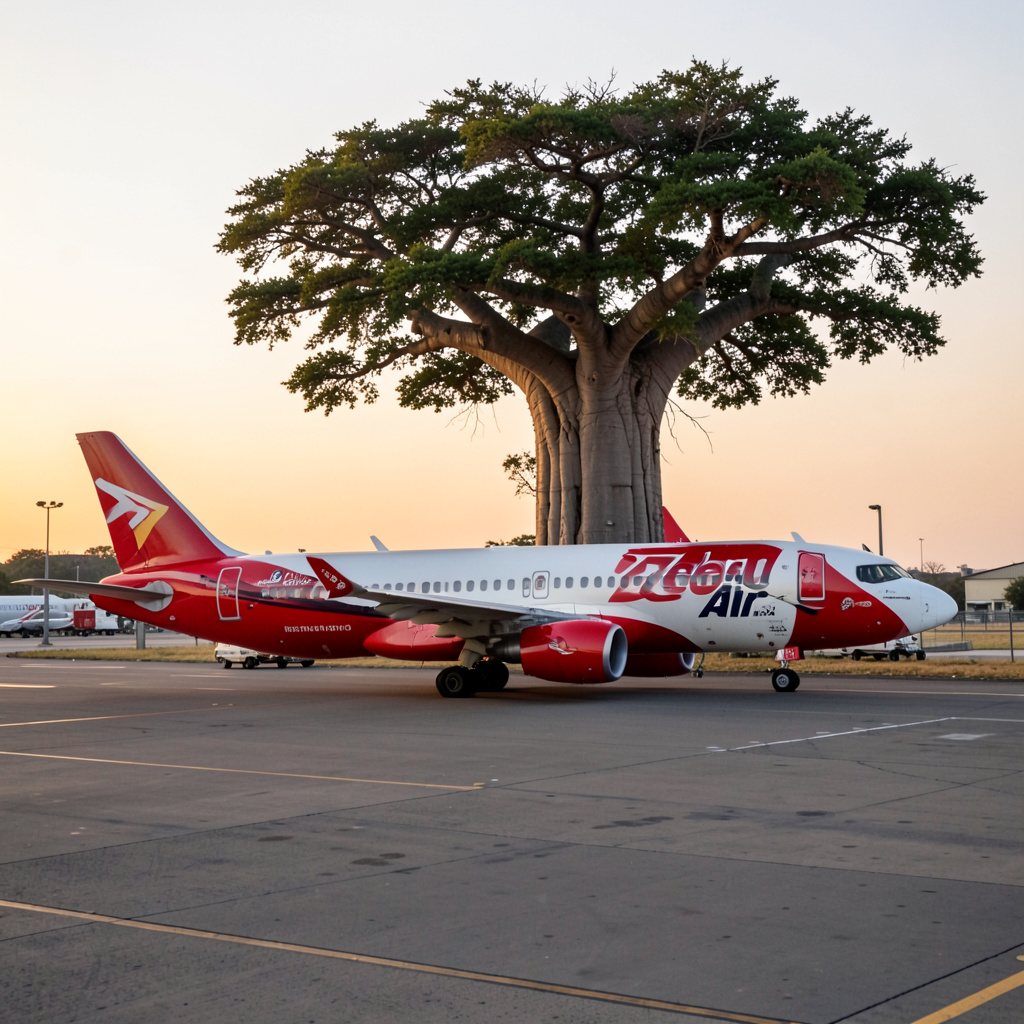
Let’s get into the weeds on what actually makes the 737-300F such a compelling tool for fast, lean operations, because the specs tell a story that goes way beyond just "it's a converted passenger jet." The wing, for instance, incorporates a 25% chord leading edge slat that deploys at low speeds, dropping the stall speed by about 10 knots compared to earlier 737 variants—and when you’re trying to get in and out of a high-altitude field like Lilongwe on a hot day, those 10 knots are the difference between a comfortable margin and a white-knuckle takeoff. That’s the kind of short-field performance that makes this airframe feel purpose-built for the constraints African carriers face. And the CFM56-3 engines? They run a 5:1 bypass ratio, which was genuinely revolutionary when the Classic series hit the market in the 80s, giving roughly 20% better fuel efficiency than the old JT8Ds on the 737-200. For a private carrier watching every dollar per tonne-kilometer, that efficiency gain is pure margin.
This was also the first 737 variant to come standard with an Electronic Flight Instrument System—EFIS—replacing the old steam gauges that forced pilots to cross-check a half-dozen dials. For cargo ops, where you’re often flying into secondary fields with minimal approach aids, that improved situational awareness is a real safety multiplier. The freighter conversion adds a 9g rigid barrier behind the cockpit, so if a pallet shifts during turbulence or a hard landing, the crew isn’t turned into a statistic. That’s a detail most operators overlook until they’ve had a close call. The maximum zero fuel weight sits around 113,000 pounds, and that’s usually the limiting factor on shorter sectors—not takeoff weight—which means you’re thinking about structural limits before you’re thinking about runway length. And with a 90-minute ETOPS certification, the 300F can take a direct line over Lake Malawi instead of hugging the coastline, saving fuel and time on those regional hops.
Now, here’s a subtle operational advantage that rarely gets mentioned: the landing gear is actually shorter than the later NG models, giving the aircraft a lower profile that makes cargo loading with scissor lifts easier and reduces the angle of the main deck floor. That might sound trivial, but when you’re hand-loading loose cargo into the belly hold at a remote airstrip, every inch of height matters. The standard fuel capacity is 6,300 US gallons, which lets you push beyond 1,800 nautical miles when the payload is light—though in practice, you’re rarely topping off the tanks because landing weight constraints bite you on the other end. Cruise speed lives in the Mach 0.74 to 0.78 sweet spot, but the airframe is cleared all the way to Mach 0.82, giving you a real speed advantage over any turboprop competitor on medium-haul routes. Empty weight is about 70,000 pounds, so the 15.5-tonne payload works out to a payload-to-empty-weight ratio of roughly 0.48—competitive for its class, but not class-leading.
The dimensions are worth noting too: a wingspan of 94 feet 8 inches and an overall length of 109 feet 7 inches, which means it fits into existing narrow-body parking stands without any apron modifications. That’s a hidden cost saver for an airport like Lilongwe that doesn’t want to tear up concrete. And here’s the kicker on durability: the design life is 75,000 flight cycles, but many 737-300 airframes have already sailed past 100,000 cycles through supplemental structural inspection programs. That’s a testament to how overbuilt the original design was, and for a second-hand buyer like Zebu Air, it means you’re getting an airframe that still has real life left in it—provided you’re willing to invest in those inspections. So when you stack all of this together—the slats, the efficient engines, the EFIS, the ETOPS, the low-profile gear, the proven cycle life—you’re looking at an aircraft that was designed for agility and efficiency from the ground up, not just converted into it. It’s the kind of tool that lets a nimble operator punch above its weight.
Zebu Air’s Diverse Service Portfolio: From ACMI to Medical Evacuations
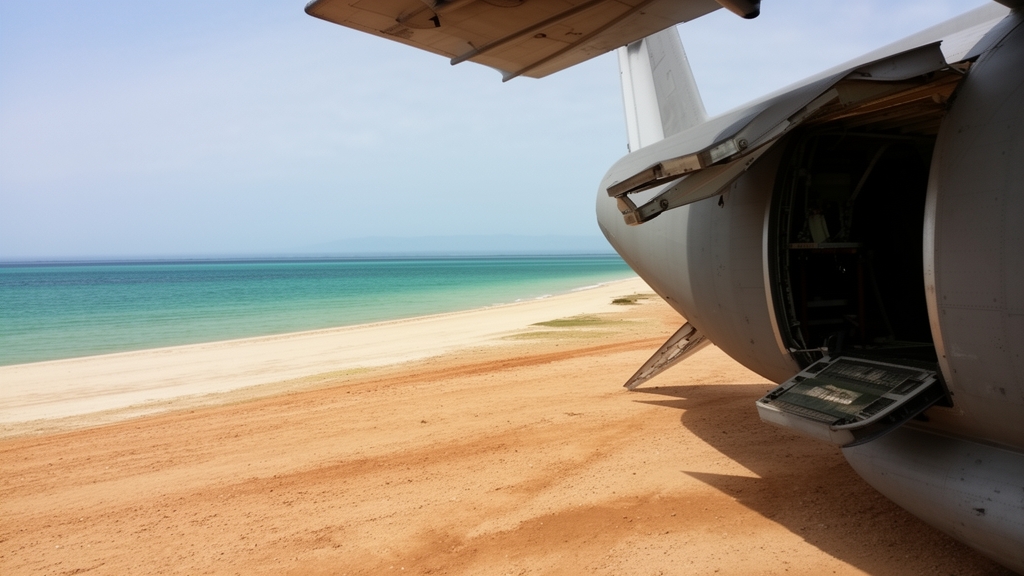
Let’s talk about what Zebu Air actually does with its fleet, because the aircraft are just the hardware—the real story is in the services they’ve built around them. Most people see a cargo airline and think "boxes on pallets," but Zebu Air has quietly constructed a service portfolio that’s genuinely rare for a carrier operating out of a landlocked African nation. Their ACMI contracts, for instance, come with a 99.5% dispatch reliability guarantee, and that’s not just marketing fluff—they back it up with a dedicated spare engine pool sitting at Lilongwe’s hub, ready to swap out a powerplant in hours instead of days. That kind of operational discipline is what lets them support United Nations peacekeeping missions in the Central African Republic, where ground transport literally disappears during the rainy season and airlift becomes the only option. But here’s where it gets really interesting: they’ve also carved out a niche in medical evacuations that most carriers wouldn’t touch with a ten-foot pole.
Their medevac configuration can handle up to six stretcher patients simultaneously, with onboard oxygen concentrators and cardiac monitors that meet European aviation medical standards—not just the local ones. That’s a big deal when you’re flying a critical patient from a clinic in rural Mozambique to a hospital in Johannesburg, because the equipment has to work flawlessly at altitude. They’ve even built a "flying ICU" configuration that includes a built-in blood refrigerator and a portable ventilator with 12 hours of battery life, which is the kind of redundancy you need when you’re landing on a dirt strip in Zambia at 2 AM. And here’s the stat that really stopped me: they’ve completed over 200 medical evacuation missions to remote airstrips in Mozambique and Zambia, many of which have no navigational aids at all—just GPS approaches and a prayer. That’s not just flying; that’s a humanitarian lifeline.
But let’s not forget the commercial side, because Zebu Air isn’t a charity—they’re a business that’s figured out how to make the economics work in a region where most carriers struggle. Their cold chain logistics maintain a temperature tolerance of ±0.5°C for pharmaceutical shipments, using passive containers validated for 96-hour autonomy, which means a vaccine shipment from Lilongwe to a clinic in rural Zambia stays cold even if the truck breaks down on the last leg. They’ve transported over 500 tonnes of lithium batteries under strict UN3480 regulations, which is a niche that most carriers avoid because the paperwork is a nightmare and the liability is enormous. Their maintenance division holds EASA Part 145 approval, which is a rare certification for an African carrier, and it lets them perform C-checks on Boeing 737 Classics for other regional operators—turning their own maintenance capability into a revenue stream. The 24-hour flight watch center tracks every aircraft via satellite, and they guarantee a response time of under two hours for unscheduled medical evacuation requests, which is the kind of commitment that separates a real operator from a charter broker.
But here’s what I find most impressive: the breadth of their certification portfolio. They hold a rare African certification for transporting Category A infectious substances, which means they can move high-risk biological samples for regional health laboratories—think Ebola testing kits or tuberculosis cultures—when ground transport would take days and risk exposure. Their hazardous materials training program is certified by IATA, and they’ve moved over 500 tonnes of lithium batteries under strict UN3480 regulations, which is a niche that most carriers avoid because the fire risk is real and the liability is enormous. The VIP charter service is another revenue stream that most people don’t associate with a cargo airline, but they’ve installed a custom interior with satellite connectivity providing 50 Mbps broadband for in-flight video conferencing. That’s the kind of service that attracts mining executives and NGO directors who need to stay connected while traveling between remote project sites. And their maintenance division holds EASA Part 145 approval, which is a rare certification for an African carrier, allowing them to perform C-checks on Boeing 737 Classics for other regional operators—turning their own technical capability into a profit center.
But the medical evacuation operation is where the heart of this business really lives, and the numbers are staggering. They’ve completed over 200 missions to remote airstrips in Mozambique and Zambia, many of which lack any navigational aids and rely solely on GPS approaches. That means the pilots are flying into strips that aren’t on any chart, using satellite coordinates and a visual check to confirm the runway is clear of animals or debris before touchdown. The dedicated Dash 8-300 they keep configured for medevac can land on unpaved strips as short as 1,200 meters, which opens access to clinics that would otherwise be unreachable by air. And the response time for unscheduled medical evacuation requests is under two hours from the initial call, which is the kind of speed that saves lives when you’re dealing with a snakebite or a complicated childbirth in a village with no road access. The "flying ICU" configuration includes a portable ventilator that can run for 12 hours on battery power, so even if the aircraft’s electrical system fails, the patient stays alive. That’s the level of redundancy you need when you’re flying into a strip that doesn’t have a fuel truck, let alone a backup generator.
But here’s what I think is the most underappreciated part of their portfolio: the cold chain logistics. They maintain a temperature tolerance of ±0.5°C for pharmaceutical shipments, using passive containers validated for 96-hour autonomy, which means a vaccine shipment can sit on a tarmac in Lusaka for three days without spoiling. That’s the kind of margin that matters when you’re dealing with supply chains that involve multiple truck transfers and customs delays. And their certification for transporting Category A infectious substances is genuinely rare in Africa—it means they can move Ebola testing kits or tuberculosis cultures that would require a hazmat team on any other carrier. The hazardous materials training program is certified by IATA, and they’ve moved over 500 tonnes of lithium batteries under strict UN3480 regulations, which is a niche that most carriers avoid because the fire risk is real and the paperwork is brutal. The VIP charter service with 50 Mbps satellite broadband might seem like a luxury add-on, but it’s actually a smart play for attracting mining executives and NGO directors who need to stay connected while traveling between remote project sites. And the 24-hour flight watch center with satellite tracking and a two-hour response time for medevac requests is the kind of operational backbone that makes all the other services possible. When you step back and look at the whole picture—ACMI, medevac, hazmat, cold chain, VIP charters—Zebu Air isn’t just a cargo airline; they’re a logistics platform that’s built to handle the worst that African infrastructure can throw at them. And that’s a genuinely rare capability.
Driving Logistics and Economic Connectivity in Southern Africa

Here's what I really want you to sit with for a second: the logistics picture in Southern Africa is a mess, and I mean that in the most constructive way possible. You've got landlocked nations like Malawi that are hemorrhaging money on transport—according to SADC estimates, transport costs eat up to 40 percent of the final price of goods in landlocked countries, versus about 10 percent in coastal ones. That 30-point gap isn't just an abstract statistic; it's the reason a farmer in Kasungu pays more to get maize to market than a farmer in Beira who can just load it on a truck and drive to the port. And when you think about why carriers like Zebu Air even exist, it's to fight that gap. They're not just hauling cargo—they're trying to bridge a structural deficit that every government in the region has been promising to fix for decades. The Lion's Den-Kafue railway line, a $2 billion project connecting Zimbabwe and Zambia, is a perfect example of where things are heading. It's designed to cut transit times for copper exports from the DRC to regional ports by over 40 percent, and that kind of infrastructure backbone is exactly what enables an airline like Zebu to plug in there's a sweet spot. But here's the thing: the railway and the air cargo network aren't competing—they're feeding each other.
Think about it this way: a 737-300F flying fresh produce from Lilongwe to Johannesburg is only useful if the goods can then get picked up by rail or truck and distributed down the corridor. The Beira Agricultural Growth Corridor in Mozambique has shown that improving a single transport artery can reduce post-harvest losses for smallholder farmers by up to 30 percent, and that's just one corridor, one stretch of road. When you layer air cargo on top of that, the compounding effect is exactly what economists call network externalities—each new link, whether it's a railway, a trucking route, or a cargo flight, increases the value of every existing link. That's Metcalfe's Law applied to physical infrastructure, and it's the reason the whole system is worth more than the sum of its parts. South Africa's logistics road network handled over 3.7 million truck trips in the first half of 2025 alone, which tells you the sheer volume of surface transport that air cargo needs to complement, not replace. We're not talking about a single airline replacing trucks for a route to a remote village. We're talking about a system where you need rails to move bulk, roads to move freight, and planes to move the perishables and high-value goods that can't wait five days for customs clearance at Chirundu.
Here's what I think gets overlooked in the bigger conversation: the digital layer is just as critical as the physical one. Mozambique and South Africa recently opened a new chapter of regional integration, and a lot of it hinges on better customs coordination and digital documentation. The Lion's Den-Kafue railway project is specifically designed to decongest the Chirundu border post, where trucks currently wait an average of five days for clearance. Five days. For a perishable shipment, that's the difference between arriving fresh and arriving rotten. And if you're a carrier like Zebu, that digital connectivity directly affects your turnaround time at both ends—a Lilongwe to Johannesburg flight becomes far more valuable when the goods it carries can clear customs in hours instead of days. This is why I keep banging on about Zebu's 737-300F as a logistics tool and not just a plane: it's the piece of the puzzle that makes the "last mile" of air cargo work in a system where the first mile is a five-day wait at a border post. The whole point of this regional connectivity push is to make that 40-percent transport cost competitive with coastal nations, and it's going to take every mode of transport working in lockstep to get there.
And let's be honest about the human element here. When you talk about "economic connectivity" in Southern Africa, you're talking about whether a child in rural Malawi can actually get vaccinated, whether a smallholder farmer can sell their tobacco to a buyer in Johannesburg without the middlemen eating half the margin, whether an NGO in Zambia can get emergency medical supplies to a clinic that has no road access. That's the real cost of bad logistics, and it's not reflected in any spreadsheet. Zebu Air's medevac operations, their cold chain logistics, their ability to fly into dirt strips with a 737 at dawn—those aren't just commercial services; they're a lifeline that connects rural communities to the broader economy. The Lion's Den-Kafue railway is a $2 billion bet on the future, and the Beira corridor has proven what coordinated infrastructure can do for food security. But the system doesn't work without the aircraft, the trucks, the rails, and the digital platforms all talking to each other. And right now, in July 2026, that integration is still in its early days. The pieces are there, the capital is flowing, and the players—from Zebu Air to the Chinese consortium building the railway—are all pointing in the same direction. The question isn't whether Southern Africa needs better logistics. It's whether the region can pull it all together fast enough to stop the bleeding.
Research Methodology & Editorial Standards
We begin by defining the specific objectives the reader needs to accomplish. Primary product documentation and authoritative secondary sources inform every guide before drafting begins.
Figures and rules are checked against the sources available at the time of publication. Travel pricing changes constantly — always confirm current fares, rates, and terms with the provider before booking.