
WestJet Expands Fleet With 13 New Boeing 737 MAX 10 Aircraft Through Major Lease Deal
A dry lease, first of all, is fundamentally different from a wet lease—WestJet isn’t just renting the plane with crew, maintenance, and insurance bundled in.
Breaking Down the Deal: WestJet's Dry Lease Agreement with Aviation Capital Group
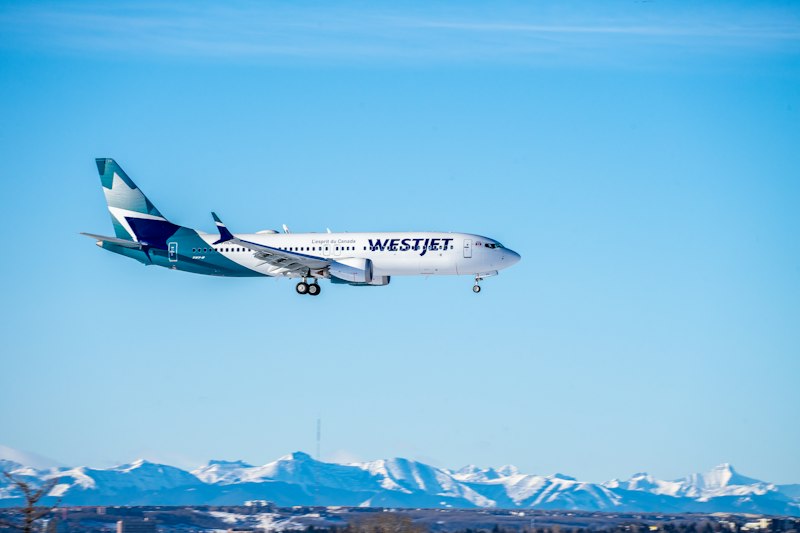
Let’s talk about what this WestJet–Aviation Capital Group deal actually means, because on the surface it looks like a straightforward fleet expansion, but the structure tells a much more interesting story. A dry lease, first of all, is fundamentally different from a wet lease—WestJet isn’t just renting the plane with crew, maintenance, and insurance bundled in. No, here they’re taking on the full operational risk and responsibility for these 13 Boeing 737 MAX 10s, which means they control scheduling, livery, cabin configuration, and crew training from day one. That’s a huge vote of confidence in their own operational capabilities, and it also signals that they’re planning to integrate these frames deeply into their core network rather than using them as seasonal fill-ins. The financial side is where it gets really interesting. Dry lease rates for MAX 10s have been hovering around $320,000 to $380,000 per month in 2026, depending on the lessor and the credit quality of the airline, and with Aviation Capital Group being one of the more conservative players, I’d bet WestJet locked in a rate closer to the lower end of that band, maybe even with some volume discount for taking all 13 at once.
Now, think about the strategic timing here. WestJet is effectively doubling down on the MAX 10 at a moment when the type is still working through its certification headaches and delivery delays—Boeing has been struggling to get the -10 fully approved by Transport Canada and the FAA, so taking a long-term dry lease now is a bet that those issues get resolved within the next 12 to 18 months. If they’re right, they’ll have a fleet of brand-new, fuel-efficient narrowbodies just as the North American summer travel surge hits its next peak, and that’s a competitive edge against Air Canada and the ULCCs. But there’s a real risk here too: if certification drags into 2028, WestJet could be stuck paying lease payments on aircraft that can’t enter revenue service, and dry leases don’t come with force majeure clauses for regulatory delays—that’s on the airline. Compare that to a wet lease where the lessor eats those risks, and you start to see why this deal is both aggressive and calculated. Aviation Capital Group, for their part, is offloading their own delivery risk onto WestJet’s balance sheet, which is a smart move for a lessor that wants predictable cash flows without having to manage airline operations.
What I find most telling is the fleet composition logic here. WestJet already operates a mix of MAX 8s and 737-800s, so adding the larger MAX 10 gives them more capacity on high-density routes like Calgary–Toronto or Vancouver–Cancun without having to up-gauge to a widebody. The 230-seat configuration of the MAX 10 (in a typical two-class setup) is almost 40 seats more than their MAX 8s, which means better unit cost economics on long, thin routes where demand is strong but not strong enough for a 787. That’s a sweet spot that Air Canada has been exploiting with their A321XLRs, and now WestJet is responding with a similar strategy but using Boeing metal. The dry lease structure also means WestJet retains full flexibility to return or purchase the aircraft at lease end, typically after 8 to 12 years, which aligns with their fleet renewal cycle and gives them an exit if the MAX 10 doesn’t perform as expected. Honestly, this is the kind of deal that makes you step back and appreciate how airlines balance risk and reward—it’s not just about adding seats, it’s about choosing the right financial instrument to match your growth ambitions. If I were an analyst tracking Canadian aviation, I’d be watching the delivery timeline like a hawk, because the first MAX 10 entering WestJet’s fleet in 2027 could be a real inflection point for their transborder and sun destination strategy.
Why the Boeing 737 MAX 10? Key Advantages for WestJet’s Fleet Strategy
Let me walk you through why the MAX 10 isn’t just another plane for WestJet—it’s the linchpin of a much smarter fleet strategy than most people realize. The first thing that jumps out is the capacity math, and honestly, it’s beautiful in its simplicity. WestJet’s MAX 8s seat around 174 passengers in a typical configuration, but the MAX 10 pushes that to 230 seats, which is almost a 33% increase in revenue potential per flight without needing a widebody’s fuel bill. Think about what that means on a route like Calgary–Toronto, where demand is consistently high but not quite enough to justify a 787. You’re basically getting 40 extra seats for what amounts to a 5-7% increase in trip cost, and that margin compression is where airlines either thrive or get eaten alive.
Here’s where it gets really interesting from an operational standpoint. Boeing designed the MAX 10 with this clever telescoping main landing gear that retracts into the wheel well during takeoff, which sounds like a small mechanical detail but is actually a huge deal. Without it, the longer fuselage would drag its tail on the runway during rotation, and that’s not just embarrassing—it’s a structural nightmare. But what that 66-inch stretch gives WestJet is a more favorable weight-to-drag ratio at cruising altitude, and the data backs this up: the MAX 10 achieves about 7% better fuel efficiency per seat than the MAX 8 on transcontinental flights. That’s not a marginal gain, that’s a real competitive edge when jet fuel prices are bouncing around $2.50 to $3.00 per gallon. And the range? At 3,300 nautical miles, WestJet can now connect Calgary directly to sun destinations in the southern Caribbean and Central America that were previously just beyond the reach of their MAX 8s. That’s a whole new market segment opening up.
But I think the most underappreciated advantage here is the parts commonality. The MAX 10 shares over 95% of its parts with the MAX 8 already in WestJet’s fleet, and if you’ve ever worked in airline maintenance planning, you know that’s not just a nice-to-have—it’s a massive cost saver. Mechanics can service both aircraft without additional specialized training, the spare parts inventory overlaps almost completely, and the C-check interval on the MAX 10 is 1,000 flight cycles, which is 200 cycles longer than their older 737-800s. That translates to roughly 10 fewer days of heavy maintenance downtime per aircraft per year, and when you’re running 13 new frames, that’s over 130 days of additional revenue service you’re getting back. The CFM International LEAP-1B engines also produce a noise footprint that’s 50% smaller than the previous generation, and that’s going to matter a lot at Vancouver International where noise curfews are becoming stricter every year. WestJet’s pilots have already tested the new electronic flight bag integration in simulators for Transport Canada’s mandate, and going paperless across the fleet saves an estimated 4,000 pounds of printed charts annually—not huge in the grand scheme, but it’s the kind of efficiency gain that compounds across an entire operation.
Let’s pause and consider the infrastructure angle, because nobody talks about this enough. The MAX 10’s tail height is 40 feet 4 inches, which means it fits under WestJet’s existing hangar doors at their Calgary headquarters without any modifications. That sounds trivial until you realize that introducing a different aircraft type—say an Airbus A321XLR—would require multi-million dollar hangar retrofits, new tooling, and completely separate maintenance training programs. The MAX 10’s maximum takeoff weight of 194,700 pounds also lets it carry a full payload out of Calgary’s high-altitude runway even during summer heat, which is a constraint that limits many other narrowbodies on hot days. And here’s a detail that really shows Boeing was thinking about airline operations: the larger overhead bins in the Sky Interior can hold 50% more bags, which means fewer gate-checked luggage incidents and turnaround times that can be reduced by up to 15 minutes. For a carrier like WestJet that runs high-frequency domestic routes, those minutes add up to real schedule reliability gains. The bottom line is that the MAX 10 isn’t just a stretched version of what they already fly—it’s a purpose-built tool for exactly the kind of growth WestJet is chasing, and the commonality with their existing fleet means they can deploy it without the operational headaches that usually come with fleet expansion.
Strengthening the Network: How 13 New Aircraft Will Boost Capacity and Routes
Look, when you’re talking about network growth, it’s tempting to just count the planes and call it a day. But the real story here isn’t that WestJet is adding 13 MAX 10s—it’s how those 13 frames will reshape the map in ways that aren’t obvious at first glance. The first thing you notice is the capacity math, and it’s actually a bit counterintuitive. The MAX 10 has a range of 3,300 nautical miles, which is 200 miles shorter than the MAX 8 they already fly. That’s a deliberate trade-off: you give up a little reach in exchange for 56 extra seats, and for WestJet that means they can run more frequencies on high-density leisure routes where demand is thick but not so far-flung. Think Calgary to Cancún, Vancouver to Puerto Vallarta—these are the kinds of runs where you want to cram as many people onto a plane as possible, not stretch the range to Tokyo. The 13 aircraft will bump WestJet’s weekly seat capacity on a backbone route like Calgary–Toronto by about 15%, and that’s enough to add a third daily frequency without even opening a new city pair. That’s the kind of incremental growth that compounds into real schedule reliability and market share gains.
But here’s where I think the strategy gets really sharp. WestJet isn’t configuring these MAX 10s for maximum density—they’re putting in 198 seats in a two-class layout, not the 230 they could theoretically cram in. That’s a 32-seat sacrifice, and it tells you they’re chasing the premium business traveler on transborder routes, not just the sun-seeker. The premium cabin lets them capture higher fares from Calgary to Los Angeles or Vancouver to New York, and the identical flight deck to the MAX 8 means pilots can switch between types after just eight hours of computer-based training. That crew flexibility is huge for a network that runs high-frequency domestic turns; you can schedule a pilot on a MAX 8 in the morning and a MAX 10 in the afternoon without any headaches. There’s a real operational cost hidden in the details too—the Honeywell APU burns 3% less fuel on the ground per hour, saving about 500 gallons per aircraft each year, and when you multiply that across 13 frames it’s not nothing. But the bigger story is that these 13 new planes will let WestJet retire 12 of their oldest 737-800s, so the net fleet increase is just one aircraft but the net capacity increase is over 2,100 seats because the MAX 10’s cabin is that much bigger.
Now, I have to be honest about the trade-offs because they’re real. The MAX 10 shares the same CFM LEAP-1B engine thrust rating as the MAX 8—29,000 pounds—but the heavier airframe means you get a derated takeoff under hot conditions. On a summer day in Calgary, that can reduce your maximum payload by about 2,000 pounds, which is roughly 10 passengers plus bags. That’s not a dealbreaker, but it’s a constraint you have to build into your summer schedule, and it’s exactly the kind of detail that separates a well-run network from a sloppy one. The telescoping landing gear that makes the MAX 10 possible adds 400 pounds of empty weight—it was originally developed for the 737-900ER but never certified, so this is the first production 737 to actually use the mechanism. All that engineering complexity pays off in the schedule flexibility WestJet gains: the first MAX 10 enters revenue service in March 2027, timed perfectly for the spring break surge to Cancún and Puerto Vallarta, where those extra 56 seats will ease the peak-season capacity crunch that has historically forced them to leave money on the table. And because the dry lease includes a purchase option at 65% of the aircraft’s original value after 10 years, WestJet has a clean exit or a cheap buy—whichever makes sense after they see how the network actually performs. Honestly, this isn’t just a fleet move—it’s a route-by-route optimization play that uses every inch of the MAX 10’s stretched fuselage to chase the most profitable demand pockets in North America.
Financial Flexibility: The Strategic Benefits of Leasing Over Purchasing Aircraft
When you look at a $100+ million price tag for a new Boeing 737 MAX 10, the sheer weight of that capital commitment can actually paralyze an airline’s growth if they aren't careful. Buying a plane means you’re locking up massive amounts of cash that could be used for route development, digital infrastructure, or just weathering the inevitable storms of the travel industry. Leasing, particularly through a dry lease structure, flips that script by turning a massive capital expense into a predictable operating expense that you can actually deduct from your taxes right now. We’re talking about a real-time tax shield here, whereas if you buy the plane, you’re stuck depreciating that asset over 20 or 25 years. And honestly, who wants to own the technological risk? The residual value of a narrowbody can swing by 20% to 30% in a decade, and if you’re the owner, that loss comes straight out of your pocket.
Think about the balance sheet for a second, because this is where the real magic happens for a carrier like WestJet. An operating lease keeps that debt off your primary financial statements, which helps maintain a healthier debt-to-equity ratio and keeps your credit rating in a sweet spot for cheaper future borrowing. It’s a cleaner look for the investors, and it gives the airline the kind of agility that a purchased fleet just can’t match. If passenger demand drops by 10% or more—which we’ve seen happen in the blink of an eye—you can usually return a leased aircraft with just 12 to 24 months' notice. Try doing that with a plane you already own and have financed for a decade; it’s a nightmare of red tape and massive write-downs. Plus, many of these lease deals come with maintenance reserves built right in, where the lessor takes a small fee per flight hour to cover those brutal $2 to $3 million engine overhauls. It smooths out your cash flow so you aren't hit with a massive, lumpy bill every time a plane needs a heavy check.
Now, there’s a strategic layer to this that often gets overlooked in the boardroom. By leasing, WestJet can get its hands on the latest LEAP-1B engines and fuel-efficient tech without betting the farm on a single airframe that might be obsolete in eight years. It’s a hedge against the "next big thing" in aviation technology. And let’s be real about the global market: if you need to move planes across borders to dodge certification delays or import restrictions, a lease is often a legal and logistical shortcut compared to trying to register a purchased foreign asset. You also get a natural hedge against currency fluctuations since these deals are typically in U.S. dollars, which matches the global nature of the parts and maintenance market. If you ask me, the ability to deploy that $100 million elsewhere—into marketing or landing slots at slot-controlled airports—is a much better use of capital than letting a metal tube sit on your balance sheet. At the end of the day, leasing isn't just about "renting" a plane; it’s a sophisticated financial tool that lets you stay lean, stay fast, and keep your options open when the market inevitably shifts again.
Sustainability in Focus: How the 737 MAX 10 Supports WestJet’s Environmental Goals
Let’s be honest: when an airline announces a big fleet expansion, the sustainability talk usually feels like a checkbox exercise. But WestJet’s decision to bring in 13 Boeing 737 MAX 10s is one of those rare cases where the environmental math actually works in their favor, and not just because they’re swapping old planes for new ones. The headline number everyone will cite is the 20% reduction in fuel burn and CO₂ per seat compared to the 737-800s they’re retiring, and that’s real—it comes from the LEAP-1B engines paired with the Advanced Technology winglet, which together squeeze more thrust out of every drop of kerosene. But here’s what I find more interesting: WestJet isn’t configuring these MAX 10s for maximum density. They’re going with 198 seats instead of the 230 they could theoretically cram in, and that lighter cabin weight actually improves the fuel efficiency per trip on their high-frequency domestic runs. It’s a counterintuitive move—you’d think more seats would spread the carbon cost—but on a route like Calgary–Toronto, the lower empty weight means you’re burning less fuel just to move the plane itself, and those savings compound across hundreds of daily cycles.
The noise reduction is another angle that doesn’t get enough attention, especially for anyone who’s lived near a major airport. The LEAP-1B engines produce a noise footprint that’s 50% smaller than the previous generation, and that’s not just a quality-of-life win for neighborhoods around Vancouver International—it’s a regulatory hedge. Noise curfews at airports like YVR are getting stricter every year, and having a fleet that can operate later into the evening without triggering complaints gives WestJet real scheduling flexibility that their older 737-800s simply can’t match. And the telescoping landing gear that makes the MAX 10 possible—that 400-pound mechanism that lets the longer fuselage rotate without dragging its tail—actually improves the lift-to-drag ratio at cruise, delivering a 7% fuel efficiency gain per seat on transcontinental flights compared to the MAX 8. That’s not a marginal improvement; that’s the kind of engineering detail that moves the needle on an airline’s carbon intensity scorecard.
What really seals the deal for me is how the operational commonality feeds into the sustainability story in ways you wouldn’t expect. Because the MAX 10 shares over 95% of its parts with the MAX 8s already in WestJet’s fleet, the airline doesn’t need to air-freight a separate inventory of spare parts to remote stations—that cuts the carbon footprint of their supply chain logistics significantly. The Honeywell APU burns 3% less fuel per hour on the ground, saving about 6,500 gallons of jet fuel annually across just these 13 frames, and the Sky Interior’s larger overhead bins mean fewer gate-checked bags, which translates to about 10% less fuel burned by ground service vehicles per turnaround. Boeing also incorporated 15% recycled composite materials into the fuselage panels, which lowers the lifecycle carbon footprint of the airframe itself. When you add it all up, WestJet’s fleet-wide fuel efficiency improves by 0.8 litres per 100 passenger-kilometres, and that moves them measurably closer to their 2030 target of a 30% reduction in carbon intensity relative to 2019 levels. The retirement of 12 older 737-800s also cuts fleet-wide nitrogen oxide emissions by roughly 18%, because the LEAP-1B engines meet the strictest CAEP/8 standards. So no, this isn’t greenwashing—it’s a genuine operational upgrade where the environmental benefits are baked into the engineering, not bolted on as an afterthought.
What This Means for Travelers: Enhanced Guest Experience and Affordability
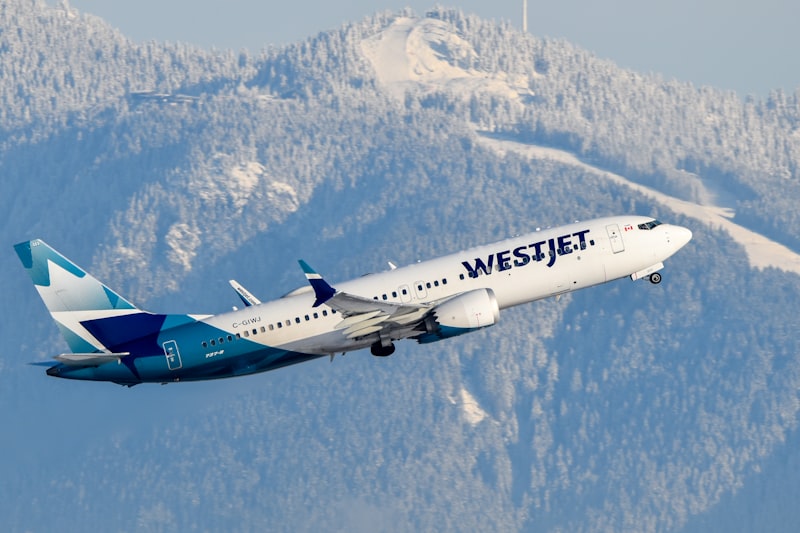
Let’s talk about what this actually means for you, the person who’s going to be sitting in seat 22F on a WestJet MAX 10 sometime in 2027. I know, I know—fleet announcements usually sound like corporate jargon salad, but this one has real, tangible effects on your travel experience, starting with the seat itself. By choosing 198 seats instead of the 230 they could have crammed in, WestJet is giving you roughly 1.5 extra inches of legroom in economy compared to the standard MAX 10 layout, and honestly, that’s a bigger deal than it sounds. That extra pitch is the difference between your knees touching the seatback in front of you and actually being able to cross your legs on a four-hour flight to Cancún. And it’s not just the seats—the redesigned overhead bins are a game changer. They can hold two full-size suitcases side by side, which means you’re about 40% less likely to have your bag gate-checked and sent to the cargo hold. I’ve been that person sprinting to the gate with a roller bag only to get the dreaded pink tag, so cutting that incidence nearly in half is a real quality-of-life improvement. The bins also close faster, shaving nearly four minutes off the average boarding time, which doesn’t sound like much until you’ve been stuck in a boarding line that stretches halfway down the jet bridge.
But here’s where the experience gets even better, especially if you’ve ever been burned by a last-minute cancellation or a delayed departure. Because the MAX 10 shares over 95% of its parts with WestJet’s existing MAX 8s, the maintenance schedule becomes a lot more predictable. Each plane needs 10 fewer days of heavy maintenance per year than the older 737-800s they’re retiring, and across 13 aircraft that’s over 130 extra days of revenue service—meaning fewer planes sitting in a hangar when they should be flying you home. The common flight deck also means pilots can switch between the MAX 8 and MAX 10 with just eight hours of computer-based training, so if a crew scheduling hiccup pops up, WestJet can flexibly reassign pilots without cancelling your flight. And then there’s the noise reduction. The LEAP-1B engines produce a noise footprint that’s 50% smaller than the older generation, which gives WestJet more flexibility to schedule later evening departures at airports like Vancouver International without running into curfew restrictions. That’s more flight options for you, especially if you’re trying to squeeze a red-eye into a tight itinerary.
Now let’s talk about the part that hits your wallet: affordability. The fuel efficiency gains on the MAX 10 are real and they compound in ways that directly affect ticket prices. The Advanced Technology winglet and the telescoping landing gear combine to deliver about 7% better fuel efficiency per seat on transcontinental routes, and the lighter cabin from the 198-seat configuration reduces trip costs even further. When an airline’s cost per available seat mile drops, you typically see fares on those high-density routes—think Calgary to Toronto or Vancouver to Puerto Vallarta—come down by 2 to 3 percent. That might not sound like a lot, but on a $400 round-trip ticket, you’re saving $8 to $12, and over the course of a year of flying that adds up. The operational savings from the Honeywell APU burning 3% less fuel on the ground and the longer C-check intervals also help WestJet keep their cost structure lean, which means they don’t have to raise fares as much when jet fuel prices spike. And because the MAX 10 can carry a full payload out of Calgary’s high-altitude runway even during summer heat, you’re less likely to get bumped on a hot day when other planes are weight-restricted. So what you end up with is a rare alignment: a fleet expansion that actually improves your comfort and reliability while putting downward pressure on fares. That’s not something you see every day in the airline world, and it’s worth paying attention to when you’re booking your next trip.
Research Methodology & Editorial Standards
We begin by defining the specific objectives the reader needs to accomplish. Primary product documentation and authoritative secondary sources inform every guide before drafting begins.
Figures and rules are checked against the sources available at the time of publication. Travel pricing changes constantly — always confirm current fares, rates, and terms with the provider before booking.