
Visit the Revolutionary Landmarks That Shaped Washington Adams and Jefferson America
For this article, we’re focusing on how these Boston sites shaped the early ideas of Washington, Adams, and Jefferson, so keep an eye out for how the events here fed into their later political work.
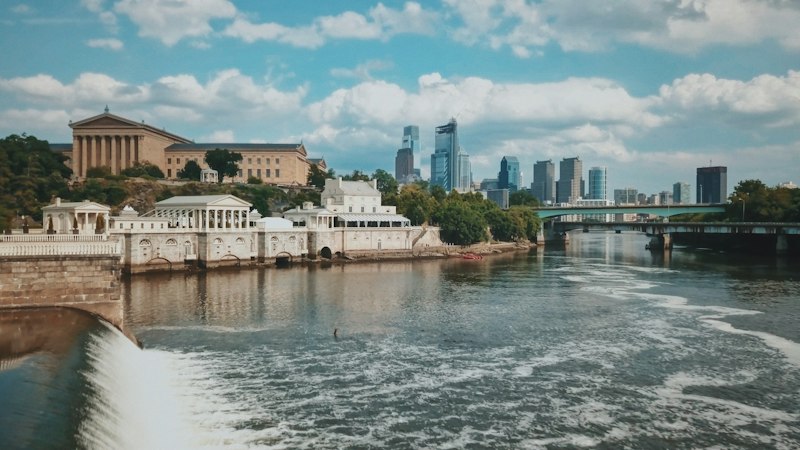
Walking the Freedom Trail: Boston’s Crucible of Revolution
Let me level with you: I used to think the Freedom Trail was some 18th-century path worn down by Revolutionary War soldiers’ boots, but that’s not even close to the truth. It’s actually a modern invention, first conceived in 1951 by journalist Bill Schofield to draw visitors to Boston’s fading historic landmarks, and the iconic red brick or painted line we all follow didn’t get added until 1964. Most of the 16 official sites aren’t original structures either, which surprised me when I first dug into the archives. Take the Old North Church’s steeple: the current version is a 1954 replacement after Hurricane Carol took out the 1806 iteration, and the original 1723 tower collapsed way back in 1804. I think a lot of travelers assume every stop on the trail is untouched by time, but that’s a big misconception I want to clear up right away.
The Granary Burying Ground is a good example of this: it has 2,345 grave markers, but roughly 5,000 bodies are buried there, including Paul Revere and the five Boston Massacre victims whose remains were moved to a common crypt. Speaking of the Boston Massacre, the marker you see now is a cobblestone circle under the Old State House balcony, but it’s not even on the original 1770 ground level. Archaeologists found the 1770 surface is about two feet below today’s pavement, which means you’re standing higher than the people who witnessed the shooting were. If you wander over to Blackstone Block near the trail, you’ll still walk on 17th-century rough-hewn granite cobblestones laid in the 1600s, classified as glacial erratic. And the USS Constitution’s hull is sheathed in copper from Paul Revere’s foundry, which is why it got the nickname “Old Ironsides” when British cannonballs bounced off its live oak sides, though later tests showed the wood’s density, not metal, made it resilient.
Faneuil Hall’s grasshopper weathervane is another weird detail I love: it’s a 1742 copper alloy piece by Shem Drowne, with a time capsule inside that has a 1900 newspaper and coins, and its gilded iron pivot has only been replaced three times in nearly 300 years. Park Street Church’s 217-foot steeple was Boston’s tallest building when it opened in 1810, and its crypt was used to store gunpowder during the War of 1812, turning the church into an accidental arsenal. King’s Chapel Burying Ground has the oldest known cemetery marker in Boston, a 1653 slate stone for Mary Chilton, a Mayflower passenger who was one of the first European women to step ashore in Plymouth. Now, if you’re worried about getting enough exercise while you walk the trail, the three-mile route takes 90 minutes if you rush, but the official audio tour runs 2.5 hours, and most visitors hit 8,500 steps on average. That’s just above the daily step threshold that 2025 medical research linked to way lower cardiovascular risk, which is a nice bonus on top of the history.
The red line itself has a weird history too: it was originally painted with regular traffic paint, but in 2005 they switched to a durable polymer that holds up to 3 million annual footsteps and New England winters, and city workers repaint it every two years. The Paul Revere House is the oldest standing building in downtown Boston, built around 1680, with a wooden frame made of hand-hewn oak timbers fastened with wooden pegs, no iron nails, which was standard before the Industrial Revolution. I walked this trail twice last fall, and I’ll be honest, I didn’t expect to care about 17th-century nail choices, but it’s those small details that make the history feel real, not like a textbook. For this article, we’re focusing on how these Boston sites shaped the early ideas of Washington, Adams, and Jefferson, so keep an eye out for how the events here fed into their later political work. Don’t rush through the 16 sites just to say you did it, because you’ll miss the little stuff, like the time capsule in the Faneuil Hall weathervane or the two-foot elevation shift at the Boston Massacre site.
Independence Hall & The Liberty Bell: The Birthplace of a Nation
Let’s be honest for a second: when you hear "birthplace of a nation," you probably picture a pristine, museum-like room where everything is exactly as it was in 1776. But the reality of Independence Hall and the Liberty Bell is far messier, and honestly, far more interesting. Independence Hall wasn’t even called that when the Declaration was signed; it was just the Pennsylvania State House, a working government building with a budget of only £1,600 back in 1732. That’s about $300,000 today, which is laughably small for a building that would house the Continental Congress. And the Liberty Bell? It’s a story of failure more than triumph. It first cracked in 1752 during a simple test ring after arriving from London, then was recast twice by local founders John Pass and John Stow, who accidentally added too much copper, giving it that distinctive tone and, ironically, its golden hue when X-ray fluorescence testing in 2010 revealed trace amounts of gold in the alloy. Think about that: the most famous symbol of American freedom is essentially a botched repair job.
Here’s what really gets me, though. The Liberty Bell wasn’t always this revered icon. It sat exposed to the elements for nearly 50 years after its steeple was removed in 1781 due to decay, and it wasn't until the 1840s that it developed the hairline crack we all recognize today, likely from ringing for George Washington’s birthday. The bell’s famous inscription from Leviticus 25:10, “Proclaim Liberty Throughout All the Land,” was chosen by Isaac Norris, the speaker of the Assembly, who ordered it from London’s Whitechapel Bell Foundry. But here’s a wild detail: when the British occupied Philadelphia in 1777, the bell was secretly loaded onto a wagon, hidden under floorboards, and driven to Allentown over three days to prevent it from being melted down for ammunition. That journey, not the signing, is what cemented its status as a freedom symbol. And the building itself? It almost became a parking lot. In 1816, the city of Philadelphia had to buy it for $70,000 to save it from demolition after the state government moved to Lancaster. That’s about $1.5 million today, which is a steal for the birthplace of a superpower.
Now, let’s talk about the Assembly Room, because it’s not what you think. The floor you walk on? It’s not original. That pine flooring was installed in 1790 during renovations for the federal government’s temporary occupancy, meaning the Founding Fathers signed the Declaration on a different surface entirely. The clock on the building? It was Philadelphia’s first public clock, installed in 1753, but its face was painted black, not white, until the 1830s. And the steeple that once held the bell wasn’t rebuilt until 1828, nearly 50 years after it was taken down. I think we romanticize these places too much, but the real story is more compelling. The Liberty Bell weighed 2,080 pounds with a 44-pound clapper, and it was rung by pulling a rope attached to that clapper, not by swinging the entire bell. That’s a detail most people miss, but it changes how you imagine that famous first ring on July 8, 1776, calling citizens to hear the Declaration read aloud.
So when you visit, don’t just snap a photo and move on. Stand in the Assembly Room and think about the fact that the original wooden truss roof was replaced with an early iron fireproof frame in 1830, one of the first in America. Notice that the Liberty Bell sits across the street now, in its own center, but it originally lived in the State House steeple. And consider this: during the 1915 women’s suffrage tour, that bell traveled 10,000 miles by rail and was seen by 3 million people. It became a moving symbol, not just a static artifact. The birthplace of a nation isn’t a pristine time capsule; it’s a building that was almost torn down, a bell that broke twice, and a story that keeps evolving. That’s what makes it worth your time.
George Washington’s Mount Vernon: The General’s Home and Final Rest
Let me be straight with you: when most people picture Mount Vernon, they imagine a pristine white marble mansion sitting on a hill, but the reality is far more interesting and honestly, far more impressive. The iconic white exterior isn't stone at all—it's a clever pine siding technique called "rustication" that Washington himself directed, where beveled wood planks were painted and sprinkled with sand to imitate stone, and as of July 2026, the estate has fully restored that exterior using a paint formula recreated from original 18th-century recipes found in Washington's own correspondence. That's the kind of obsessive historical accuracy I can get behind, and it tells you everything about how seriously this place takes its preservation. But here's what really gets me: Washington wasn't just a general and president; he was a relentless innovator who treated Mount Vernon like a living laboratory. He designed a revolutionary 16-sided horse-powered treading barn for wheat processing, where horses walked across a second floor slotted with gaps to thresh grain by hoof action, dramatically increasing efficiency compared to hand-flailing. The estate's ice house stored up to 100 tons of ice harvested from the Potomac River each winter, packed in sawdust to preserve meat and produce through the brutal Virginia summer, and his whiskey distillery was one of the largest in early America, producing nearly 11,000 gallons of rye whiskey in 1799 alone, the year of his death.
Now, let's talk about the mansion itself, because it's not what you'd expect from the father of the country. The iconic white exterior isn't stone at all but a clever pine siding technique called "rustication," where beveled wood planks were painted and sprinkled with sand to imitate stone, a cost-saving innovation personally directed by Washington that saved him a fortune compared to importing actual stone. The mansion's cupola was added not just for its commanding view of the Potomac but to create a natural convection vent that pulled hot air out of the attic in summer, a passive cooling system that's honestly impressive for the 18th century. And the greenhouse? It was among the first in the United States and featured a forced-air heating system with underground brick ducts from a basement furnace to grow exotic plants year-round, which tells you Washington was thinking about luxury and self-sufficiency at the same time. But here's the detail that stopped me cold: a 1790s sewage system beneath the mansion's "necessary" privy used underground brick tunnels to direct waste directly into the Potomac River, a surprisingly advanced engineering solution for its time that most people walk right past without noticing.
Let's pause on the distillery for a second, because it's a window into Washington's business mind that most history books skip. His whiskey distillery was one of the largest in early America, producing nearly 11,000 gallons of rye whiskey in 1799 alone, the year of his death, and it made him one of the wealthiest men in Virginia through a product he personally oversaw. But the darker side of that wealth is impossible to ignore: at the time of his death, Washington owned 318 enslaved people, and his will freed the 123 he owned outright, but only after his wife Martha's death, a condition that led to internal family discord and meant most of those people waited years for their freedom. His false teeth weren't made of wood, as the myth goes, but from a combination of hippopotamus ivory, human teeth likely purchased from dentists or taken from enslaved individuals, and metal springs, which is a grim reminder of the human cost behind the polished image. The key to the Bastille, a gift from the Marquis de Lafayette, hangs in Mount Vernon's foyer as a symbol of the alliance between the American and French revolutions, and it's one of those artifacts that makes you stop and think about how interconnected these revolutionary moments really were.
Let's talk about the final resting place, because it's more complicated than you'd think. Since his death at the end of the 18th century, Washington has been interred in two places at Mount Vernon, and the "New Tomb" where he and Martha are entombed today wasn't completed until 1831, more than three decades after his death. His remains were moved from the old family vault twice before reaching the marble sarcophagus seen today, which overlooks the Potomac River alongside 20 other family members. The old vault was the original burial plot for POTUS 1, his wife, and those family members, and it's still there on the grounds, a quiet reminder that even the most famous American's final resting place wasn't settled quickly. Washington loved Mount Vernon and requested to be buried there, and Martha followed him in death less than three years later, but the journey to their current tomb was anything but straightforward. I think that's the real takeaway here: Mount Vernon isn't a static monument to a perfect man. It's a working estate where Washington tested agricultural innovations, ran a massive distillery, designed passive cooling systems, and built a sewage system that was decades ahead of its time, all while grappling with the moral contradictions of slavery that he couldn't fully resolve. The mansion's exterior rustication has been fully restored as of July 2026 using a paint formula recreated from original 18th-century recipes found in Washington's own correspondence, which means you're seeing the house closer to how he actually saw it than any visitor in the last century. So when you walk those grounds, don't just look at the Potomac view. Look at the wood pretending to be stone, the barn where horses did the threshing, the distillery that made him rich, and the tomb that took 31 years to finish. That's where the real story lives.
John Adams’ Quincy: The Old House and the Spirit of 1776
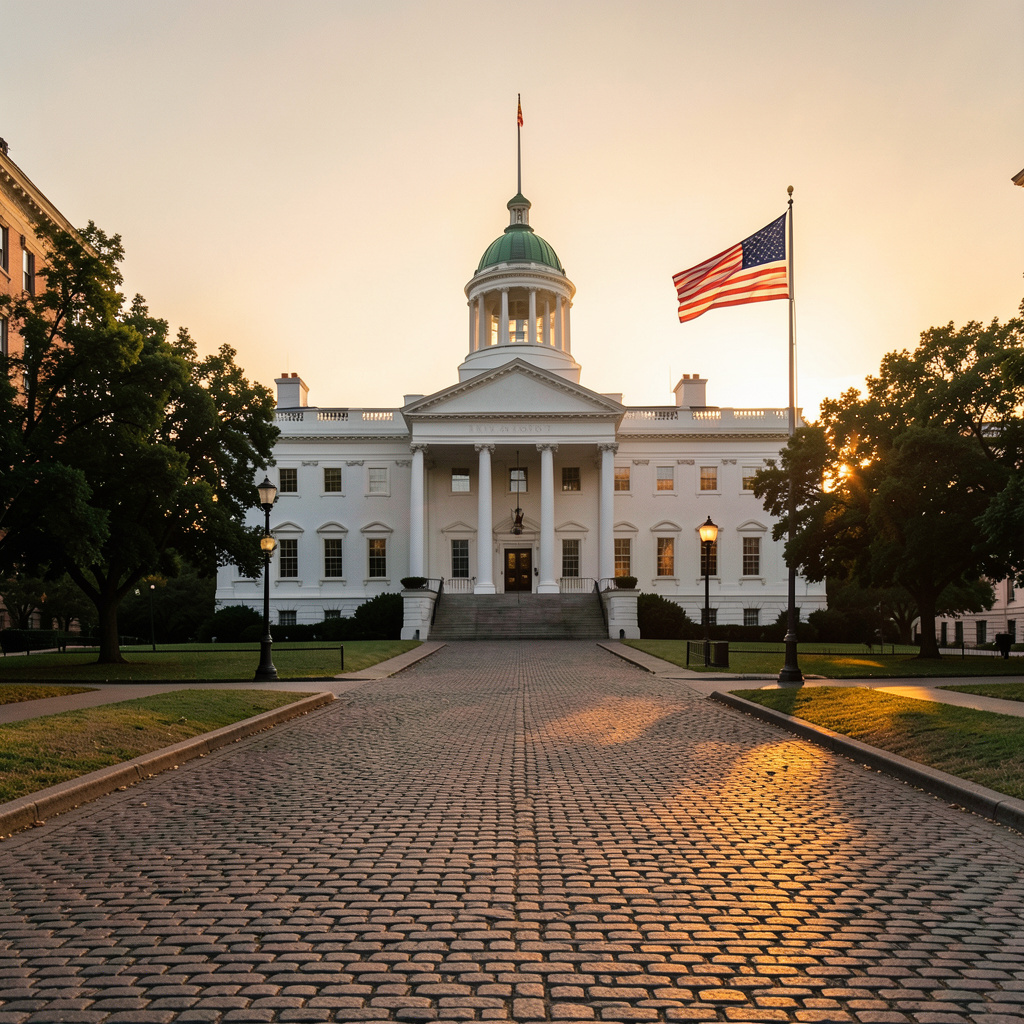
Let me be honest: when I first started digging into John Adams’ later life, I assumed his retirement in Quincy was a quiet fade into the background, a tired old man watching the country he helped build move on without him. But Peacefield, the house he called the Old House, tells a completely different story, and it’s one that redefines how we think about the revolutionary generation. Adams bought the 40-acre farm in 1787 for just £600, a fraction of its pre-war value, because the original owner was a Loyalist who fled to England, and that land-grab dynamic alone tells you everything about how the Revolution reshaped property and power. The house itself was originally built in 1731 as a modest Georgian cottage, but Adams didn’t just retire there; he fundamentally remade it, adding a two-story stone wing in 1800 that housed his 12,000-volume library, one of the largest private collections in early America. That library wasn’t just for show either; it was a working intellectual arsenal where Adams corresponded with Jefferson, debated the French Revolution, and wrote some of his most important letters on the nature of democracy.
Here’s the detail that really got me, though. The main house still has a hidden staircase behind a false bookcase in the library, a feature Adams used for private family access without passing through public rooms, and it’s the kind of architectural secret that makes you feel like you’re stepping into a spy novel. The ceiling of the Long Room is painted with a trompe-l’œil sky effect that Adams admired during his ambassadorship in France, a rare example of French decorative influence in a New England home, and it tells you he was never quite the provincial Yankee we imagine. In the basement, a vaulted brick wine cellar still holds bottles of Madeira, Adams’ preferred drink, and maintains a stable 55-degree temperature through passive design, which is honestly impressive for an 18th-century structure. The estate’s garden includes a pear tree propagated from a cutting given to Adams by Paul Revere, and that tree continued to bear fruit into the late 20th century, a living link to the revolutionary generation that most historic sites can only dream of.
But here’s what I think is the most powerful part of the story, and it’s the reason this house matters so much. John Adams died in the same bed at Peacefield on July 4, 1826, exactly 50 years after the Declaration of Independence, and his son John Quincy Adams died in the same house on February 23, 1848, collapsing at his desk in the Speaker’s Room. That’s not just a coincidence; it’s a throughline connecting the founding generation to the next, a physical space where two presidents lived, worked, and died while shaping American foreign policy and constitutional law. John Quincy Adams used a portable writing desk that had belonged to his father to draft his argument before the Supreme Court in the 1841 Amistad case, and that desk is still on display in the study, a tangible link between the Declaration and the fight to end slavery. The house is preserved as part of Adams National Historical Park, but as of July 2026, only about 20 percent of the original wallpaper from the 1820s remains in the parlor, depicting allegorical scenes of the American Revolution, and that fragility is a reminder that preservation is always a race against time. Peacefield’s property once included a separate stone barn with a cupola designed by John Quincy Adams to create natural ventilation for hay storage, a practical innovation that prevented spontaneous combustion, and it’s the kind of detail that shows the Adams family wasn’t just about high-minded ideals; they were solving real problems on the ground. The house sits on land originally owned by the Vassall family, Loyalists who fled to England during the Revolution, and Adams purchased the 40-acre farm for £600 in 1787, a fraction of its pre-war value, which is a stark reminder that the Revolution wasn’t just about ideas; it was about property changing hands. So when you visit Peacefield, don’t just look at the furniture. Look at the hidden staircase, the wine cellar, the trompe-l’œil ceiling, and the desk that argued for freedom in the Amistad case. That’s where the spirit of 1776 actually lived, not in some abstract ideal, but in the daily choices of a family that refused to stop fighting for what they believed.
Monticello: Thomas Jefferson’s Architectural Testament to Liberty
The first time I stood on the lawn at Monticello, I remember thinking it looked almost too perfect, like someone had Photoshopped a Roman temple onto a Virginia hilltop. And that's kind of the point, honestly, because Jefferson spent over 40 years redesigning this house, starting in 1768 and continuing through a massive expansion in 1796 that doubled its footprint and turned a basic two-story brick box into something that genuinely didn't exist in America before, a neoclassical villa that blended Palladian symmetry with his own peculiar obsession with gadgets and natural light. He didn't hire an architect because he was the architect, and he didn't follow a single plan because he kept changing his mind, which is why the house is less a finished product and more an evolving argument about what a free citizen's home should look like. And here's a fact that stopped me: Monticello is the only private residence in the United States designated a UNESCO World Heritage Site, inscribed in 1987 alongside the University of Virginia's Rotunda, which Jefferson also designed. That's not just a plaque on a wall; it means the international community considers this house one of the most significant built environments on the planet, alongside places like the Acropolis.
\n\n
Now, let me walk you through the engineering, because this is where Monticello goes from "pretty old house" to "this guy was genuinely ahead of his time." The Great Clock in the entrance hall uses cannonball weights that descend through holes cut into the floor, and you can see the time through a vertical slit in the pediment above the portico from outside, which means the building itself was telling time to anyone approaching. He also rigged a dumbwaiter into the dining room fireplace mantel that carried wine bottles from the cellar below, so guests never saw a servant retrieve them, which is a level of theatrical efficiency I think we can all respect. And he built a polygraph, not the lie-detector kind but a copying machine that used two pens connected by a pantograph to produce a duplicate of every letter he wrote, multiple working versions of which still exist at Monticello today. The 100-foot Long Gallery on the second floor was intended as a skylit museum space for his art collection and natural history specimens, including a mastodon jawbone, and it's one of the most ambitious residential interior designs in 18th-century America, full stop.
\n\n
But here's what I think really matters, and it's the part that gets buried under the architectural admiration. The dome room, which Jefferson envisioned as a grand salon, was never finished to his original plan; it served as a storage attic for most of his lifetime, accessed by a narrow, steep staircase, most people don't even go up there. The bed alcove design is another detail worth pausing on: it opened on one side to his cabinet study and on the other to his bedroom, so he could literally rise from bed into his workspace without crossing a separate room, which is honestly a productivity hack that Silicon Valley would post about on Instagram if they could. And then there's the exterior symmetry that drove the whole aesthetic, the east and west porticos use "blind" windows, some are false and built solely to balance the facades while hiding chimneys and closets on the inside. That's an illusion, and Jefferson absolutely knew it, which tells you he cared about visual harmony even when practicality demanded otherwise, that tension between ideal and function is basically his entire life story.
\n\n
And I'd be lying if I didn't get to the uncomfortable part, because Monticello's beauty was built on a foundation of forced labor that Jefferson never fully confronted. The Mulberry Row slave quarters and workshops still exist, and the surviving foundation of the nailery is there too, a small factory where enslaved boys produced thousands of nails per day, generating a significant chunk of the income that paid for the very house we're standing in. That irony isn't subtle, and more recent tours have shifted to honestly confront this rather than gloss over it with polite language, which is long overdue if you ask me. The Jefferson nickel has featured Monticello on its reverse since 1938, except for a two-year gap in 2004-05 for the Westward Journey series, making it the longest-running building on a U.S. coin, and from the letter proposing the Lewis and Clark Expedition on January 18, 1803, to the blind windows and the dumbwaiter, this place was the launchpad for both grand ideas and daily ingenuity. So when you visit Monticello, don't just glance at the dome and snap a photo. Look at the canonball clock weights descending through the floor, the polygraph that copied letters by the dozen, the blind window hiding a chimney, and the nailery where enslaved children worked to fund the whole thing. That's the real story, and it's one worth sitting with for a while.
The Museum of the American Revolution: Bringing the Founding Era to Life
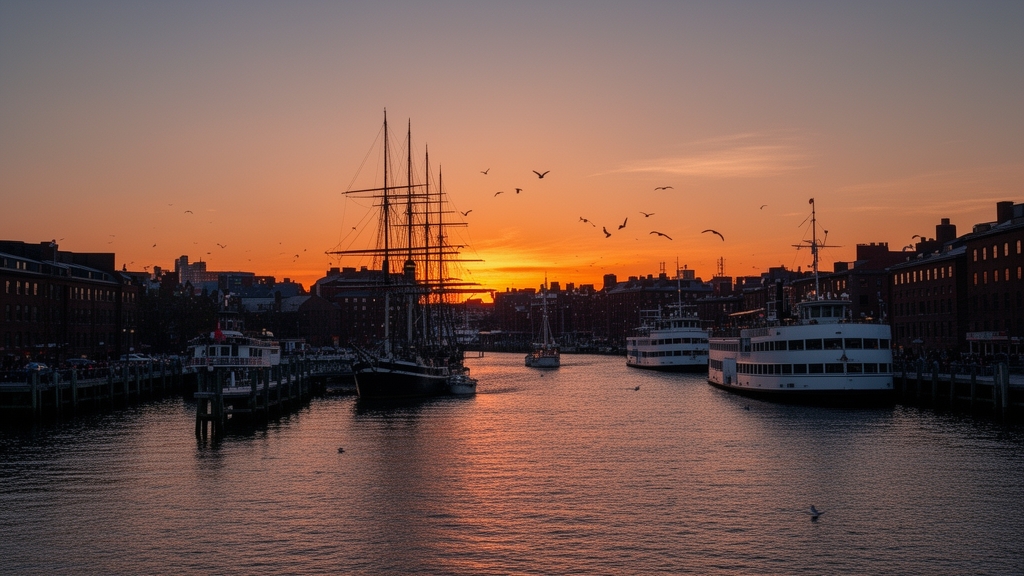
Let’s be honest: when you think about the American Revolution, your brain probably jumps to the big names and the famous buildings—Independence Hall, Mount Vernon, the Freedom Trail. And those places matter, don’t get me wrong. But there’s a quiet problem with that approach: you end up with a fragmented story, a collection of static sites that feel like they’re shouting across two centuries without ever connecting. That’s exactly why the Museum of the American Revolution in Philadelphia exists, and I think it does something smarter than most people give it credit for. It doesn’t just display artifacts; it builds a narrative framework that forces you to see the revolution as a live, messy, mechanical system instead of a tidy series of events. And the proof is in the details they chose to preserve and present.
Take George Washington’s war tent, for example. It’s not just a piece of canvas in a glass case. The museum keeps it under precise climate control because organic textiles degrade faster than most people realize—a single humidity spike can start the rot. But here’s what I found genuinely impressive: the tent is paired with exhibit logic that explains how it functioned as a mobile command post, not just a sleeping shelter. That same analytical thread runs through their handling of a 1776 printing of the Declaration of Independence, displayed under low-UV lighting calibrated to slow the fading of iron-gall ink by decades. They could have just hung it on a wall and called it a day, but instead they’re treating these objects like live data points that need constant monitoring, which is exactly the kind of engineering-minded curatorial approach I wish more institutions would adopt.
Now, let’s talk about the less glamorous stuff, because that’s where this museum really sets itself apart from the landmark circuit. You’ll see a fragment of a soldier’s uniform made from coarse, home-spun linen, and the cataloging includes specific supply-chain notes about why homespun mattered—Britain had blockaded imported wool, so the Continental Army literally had to weave its own cloth while fighting. That’s the kind of logistical data that never makes it into the tour guide scripts at Mount Vernon or the Freedom Trail, and it’s genuinely valuable for understanding how the war was actually won. They also display a set of original correspondence, and the museum’s digital companion app uses optical character recognition to let you read the cursive alongside a transcript, so you’re not just staring at a polite letter—you’re seeing diplomatic prose under a microscope. And the musket collection? They’ve got specific .69 caliber models with augmented reality overlays that show the firing mechanism’s inner movements in real time, which is a clever way to teach mechanical principles without needing a working reproduction on the floor.
Here’s the thing that ties it all together, though: the museum’s architects designed the space for non-linear navigation, meaning you can skip between the political causes and the military consequences without retracing your steps or feeling like you’re missing a chapter. That’s a small architectural choice with big implications, because it acknowledges that history doesn’t unfold in a straight line. The HVAC system is calibrated to maintain 50 percent relative humidity across the entire main gallery, which is a brutal technical requirement for a building that also needs to handle 300,000 visitors a year, but it’s necessary to protect items like the Philadelphia campaign maps that use actual topographical data to explain why the Continental Army chose certain high-ground positions. And quietly, perhaps most importantly, the museum devotes a dedicated space to oral histories from women and enslaved people—not as a box to check, but as an integrated part of the war’s logistical and social machinery. I walked through it twice last year, and what stays with me isn’t the tent or the muskets; it’s the realization that this place treats the founding era like a complex system worth studying in detail, not a rosy story worth repeating. If you’ve already visited the houses and the trails, this is where you go to understand how it all actually worked.
Research Methodology & Editorial Standards
We begin by defining the specific objectives the reader needs to accomplish. Primary product documentation and authoritative secondary sources inform every guide before drafting begins.
Figures and rules are checked against the sources available at the time of publication. Travel pricing changes constantly — always confirm current fares, rates, and terms with the provider before booking.