
Unforgettable Family Vacation Destinations Around the World for Your Next Big Trip
When we start dreaming about that next family beach getaway, it’s easy to just look at a glossy photo and hit book.
Sun-Drenched Shores: Top Global Beach Escapes for Families
When we start dreaming about that next family beach getaway, it’s easy to just look at a glossy photo and hit book. But if you’re like me, you probably want to know a bit more about what’s actually happening under your feet and why some spots just feel better for a trip with the kids. Think about Florida’s Gulf Coast, where that soft, white sand is actually pure quartz washed down from the Appalachian Mountains over millions of years; it’s not just pretty, it’s a geological marvel that’s been refining itself for eons. Meanwhile, if you’re heading toward the Mediterranean, you’ll find that many of the best-rated spots operate under the Blue Flag program, which is a massive win for parents because it guarantees rigorous, ongoing testing for water safety and environmental health. It’s comforting to know that, beyond just the view, there’s a real standard keeping the water clean for our kids.
But let’s be real, the beach environment is a constantly shifting system that we need to be smart about. For instance, if you’re scouting spots in Mexico, you’ve likely seen reports about sargassum seaweed, which is driven by rising ocean temperatures and nutrient runoff. It’s a natural, if sometimes frustrating, phenomenon that scientists now track via satellite, so checking those updates before you fly can save you a world of disappointment. And if you’re looking at places like Portugal, the surf isn't just random; it’s shaped by deep submarine canyons that dictate how those waves roll in, which is great for watching, but worth keeping in mind if you have younger children who need calmer shallows. It’s all about matching the specific coastal geography to what your family actually needs to stay happy and safe.
One thing I always tell friends is that the sand itself plays a part in your day—literally. Did you know that white quartz sand reflects UV radiation, potentially increasing your exposure by up to 15 percent compared to hanging out on grass? It sounds minor, but it’s a good reminder to be extra diligent with the sunscreen. On the flip side, some volcanic beaches have dark, magnetic sand that holds heat much longer, which feels incredible in the late afternoon but can be a bit much for little feet at high noon. We’re also seeing high-end resorts getting really creative with coral gardening, where they’re manually restoring reefs that you can actually swim through, turning a vacation into a pretty cool science lesson. At the end of the day, picking the right spot is a bit of a balancing act between local ecology and your own comfort, but that’s what makes the planning process part of the adventure.
Cultural Immersion: Exploring Iconic Cities from Italy to Japan
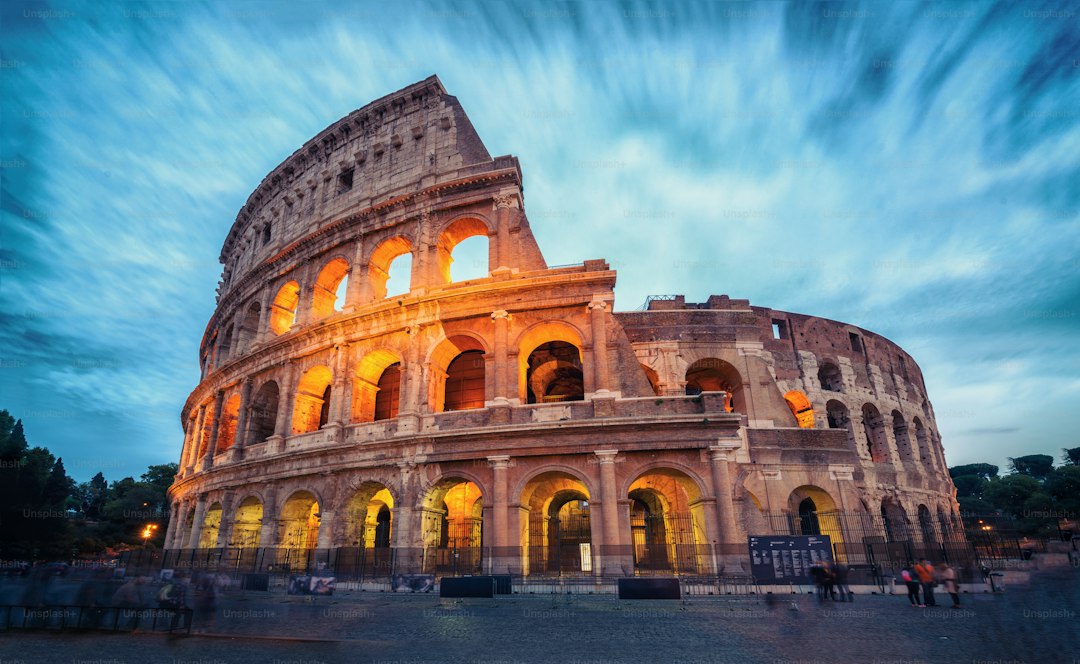
When you’re planning a trip that balances deep history with modern efficiency, it’s easy to feel torn between the sheer architectural weight of Italy and the precise, disciplined urbanism of Japan. I’ve found that the real magic isn’t just in the sights themselves, but in how these cultures have spent centuries engineering their environments to survive. Think about Rome, where the Pantheon remains the world’s largest unreinforced concrete dome, standing firm for nearly two millennia through seismic shifts that would crumble modern buildings. It’s a fascinating contrast to Tokyo, where the Metropolitan Area Outer Underground Discharge Channel functions as a massive, subterranean flood-control system, keeping the city dry against the increasing unpredictability of global climate patterns.
But the differences go way deeper than just how they handle water or stone. If you head to Florence, you can walk the Vasari Corridor, a secret elevated passage from 1565 that the Medici used to bypass the public streets entirely, showcasing a level of private urban planning we rarely see today. Meanwhile, Kyoto takes the opposite approach by strictly limiting building heights to protect the visual dominance of its historic shrines, ensuring the skyline remains anchored in the past. Even the way these cities manage their day-to-day movement is a study in priorities. Tokyo’s Yamanote Line moves millions of people with a delay margin measured in mere seconds per year, while Venice literally floats on millions of petrified wooden piles that have stayed stable for centuries because the oxygen-poor sediment prevents decay.
Honestly, the best way to approach this is to look at how these cities treat their own heritage as a living, breathing part of the infrastructure. In Siena, the annual Palio horse race takes place in a piazza that was a Roman forum, keeping a medieval urban rhythm alive in a way that feels completely natural. Then you look at Nara, where urban planning has to account for free-roaming deer that are protected as national treasures, directly shaping how visitors move through park architecture. Whether it’s the climate-controlled galleries in the Uffizi or the merchant-built canals of Osaka that still dictate commerce, you’re not just sightseeing. You’re witnessing how humanity has constantly adapted to its geography, and honestly, seeing that up close is what makes a trip genuinely transformative for any traveler.
Adventure in the Great Outdoors: Nature Escapes and Wilderness Trips
When we talk about escaping into the wilderness, I think we often focus on the mental reset, but there’s an entire layer of ecological complexity happening under our boots that makes these trips so much more than just a change of scenery. Think about those high-altitude treks where you hit the timberline, that distinct elevation where the cold and thin air forces trees into stunted, shrub-like krummholz formations. It’s a stark, physical reminder of how aggressive nature can be when you’re pushing into its extremes. And if you’re navigating snowfields, you’ve likely encountered sun cups—those concave depressions carved by uneven solar radiation—which honestly make a simple hike feel like a much more grueling tactical exercise. It’s these specific, raw environmental mechanics that turn a standard vacation into something you actually remember for the rest of your life.
But if you’re looking to balance that raw adventure with a bit of comfort, we’re seeing a massive shift in how the hospitality industry approaches these remote locations. High-end eco-lodges are now popping up in spots that were previously impossible to access without camping, effectively letting you trade a tent for a mattress without losing that connection to the ecosystem. I find it fascinating how these sites are being designed to act as carbon sinks, with some mature forests sequestering hundreds of tons of carbon per hectare, making your visit feel a bit more grounded in the reality of climate mitigation. It’s not just about staying in a fancy cabin; it’s about choosing a basecamp that respects the local permafrost or the delicate drainage patterns that define the terrain. When you’re choosing where to go, look for these markers of intentionality because they almost always signal a better, more authentic experience.
Honestly, the real beauty is in the details you might miss if you’re rushing through the landscape. Take the Great Basin, where bristlecone pines have been surviving for over 5,000 years in nutrient-poor soil by simply growing at a pace that makes human history look like a blink. Or think about the sky islands in remote alpine meadows, which are basically isolated evolutionary laboratories hosting species you won’t find anywhere else on the planet. Whether you’re chasing the stability of a mountain wave lenticular cloud or watching for the bioluminescent glow of fungi in a temperate rainforest, you’re witnessing complex atmospheric and biological dynamics that are millions of years in the making. My advice? Don’t just check the boxes on a travel guide; find a spot where the geography forces you to slow down and pay attention to those quiet, ancient systems.
Seasonal Splendor: Planning the Perfect Family Winter Getaway
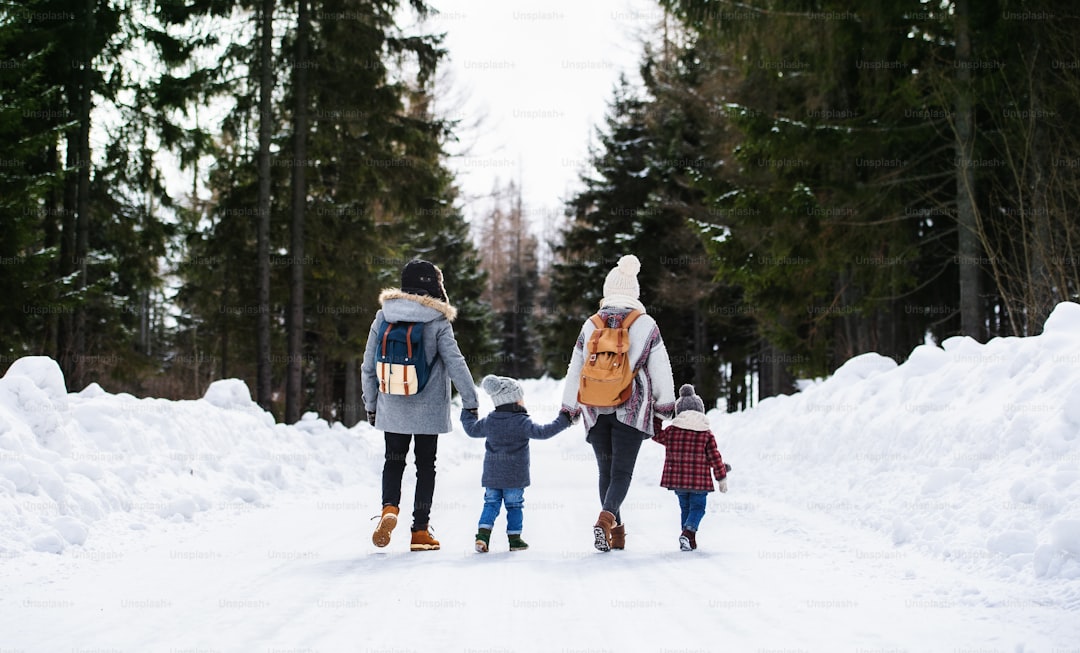
When you start mapping out a winter trip, it is easy to get caught up in the festive light displays of cities like New York or the holiday events scattered across Atlanta, but I think the real magic happens when you look at the physics of the environment you are visiting. If you are heading to higher latitudes, you will run into the blue hour, that fleeting window where the sun sits just below the horizon and scatters light in a way that feels almost ethereal, making it the absolute best time for family photos. You have to consider that winter air is notoriously dry; in fact, indoor heating often drops the relative humidity lower than what you would find in the Sahara, which is exactly why you and the kids need to be drinking way more water than you think. It is one of those small, easily overlooked details that can make or break how everyone feels by day three.
But let’s talk about the snow itself, because it behaves so differently depending on where you land. Fresh powder can be up to 90 percent air, which is why it feels so soft, while wind-packed snow is dense enough to be cut into blocks, which is just fascinating when you see it in action. If you are hitting the slopes, those perfect corduroy lines created by grooming machines aren't just for show; they actually increase the surface area to help with compaction and drainage, giving you much better control. Just remember that if you are at high altitude, your body is working double-time to keep your core temperature stable while dealing with lower oxygen levels. It is a lot of physiological stress for a "relaxing" vacation, so pace yourselves accordingly.
Honestly, the most interesting parts of a winter trip are the ones you usually don't see on a brochure. If you are exploring a forest, notice how the lack of leaves lets way more light reach the ground, which totally changes the behavior of the birds and small mammals you might spot on a walk. And if you are near geothermal spots, you will often see snow melting in perfect circles around hot springs thanks to convective heat transfer—it is like watching the ground breathe. Also, keep an eye out for the extreme silence of a snowy woods; the porous structure of those fresh ice crystals actually traps sound waves and turns them into heat, which is why everything feels so quiet and still. It is a weirdly cool bit of science that makes the wilderness feel like a totally different planet.
Finally, if you are looking at natural ice for skating, please be the person who checks the local data; you need at least four inches of clear, hard ice to safely support a group, and that structural integrity is not something to guess at. And please, do not forget the polarized sunglasses for the kids. Because snow has such a high albedo effect, it reflects up to 90 percent of the sun’s rays, and you really want to avoid the risk of photokeratitis, or sunburned eyes, while you are out there having fun. It sounds like a lot to track, but once you understand these little environmental markers, the whole trip starts to make so much more sense. You are not just visiting a cold place; you are stepping into a complex, shifting system that is beautiful precisely because it is so wild.
Regional Gems: Rediscovering Hidden Treasures Closer to Home
When you start looking at your own backyard with a fresh set of eyes, you quickly realize that staying closer to home isn't just about saving on airfare; it’s about accessing a level of environmental detail you’d almost certainly miss on a whirlwind international tour. Think about those microclimates just a short drive away, where valleys can experience temperature swings of five degrees Celsius compared to surrounding hilltops simply due to cold air drainage. It’s wild to consider that a local nature preserve might be serving as a living lab for phenology, where citizen scientists track how plant and animal life cycles are shifting in real-time. If you’re a fan of heirloom varieties, many rural corridors are hiding legacy orchards that hold genetic traits for drought resistance you’ll never see in a standard supermarket produce aisle.
The physical ground beneath you is often just as interesting as the history books in these hidden spots. If you pay attention, you’ll notice soil composition shifting dramatically over just a few hundred meters in botanical gardens, often signaling ancient tectonic boundaries or the specific paths of prehistoric glaciers that carved our current topography. Many of these regional parks are actually designated dark sky zones, and if you’re lucky enough to visit on a clear night, you can spot the zodiacal light, a faint, triangular glow caused by sunlight reflecting off interplanetary dust. I’ve found that even our local river systems are more complex than they look, as they often maintain stable thermal refugia—pockets of water that stay cool enough during heatwaves to sustain sensitive species like brook trout that would otherwise vanish.
There’s also something to be said for how historical architecture in small towns punches well above its weight when it comes to efficiency. I’m talking about old-school stone masonry that provides enough natural thermal mass to keep interiors comfortable without relying on modern, synthetic materials. If you head into the wetlands, you’re looking at some of the most efficient carbon sequesters on the planet, capable of storing organic matter ten times faster than mature tropical rainforests. You might even stumble upon vernal pools, those temporary, fish-free habitats that serve as vital nurseries for amphibians like spotted salamanders. It’s pretty incredible to think that many of our local trail networks follow the same ridgeline routes used by indigenous populations for millennia, essentially following a path that was naturally selected to avoid the toughest terrain.
Ultimately, shifting your focus to these regional treasures forces you to slow down and notice the mechanics of the land, from the limestone karts creating complex groundwater filtration systems to local vineyards experimenting with deep-rooted cover crops to aerate their soil. It’s not just about finding a new park; it’s about recognizing that you’re surrounded by a complex, functioning ecosystem that’s been evolving right under your nose. I really think the best way to approach this is to stop viewing the local area as a filler between big trips and start treating it as a legitimate, high-value destination. Trust me, once you start digging into the specific geography of your own region, you’ll find that the "hidden" stuff is actually the most rewarding to track down.
Tips for Multi-Generational Travel: Making Memories Across All Ages

When we talk about bringing the whole family together, it is easy to focus on the logistics of flights and bookings, but the real secret to a successful trip is understanding how different age groups actually function in a new environment. Chronobiological studies show that the afternoon circadian slump often hits grandparents hardest, making that the perfect window for low-energy museum visits while the kids are still burning off steam. I have learned that the key isn’t to force everyone into a single, rigid itinerary, but to embrace asynchronous scheduling where family members break off for their own interests for a few hours each day. Data from recent travel trends shows that groups who bake this flexibility into their plans report significantly higher satisfaction levels than those who try to stay glued at the hip.
Think about the physical space you are booking, too, because it is more than just having enough beds. If you are staying in a large villa, watch out for high-ceilinged, open-plan layouts; the resulting ambient noise can easily climb above 70 decibels, which is a fast track to irritability for both toddlers and seniors. Instead, look for properties that prioritize accessibility, like zero-step showers or clear pathways, which aren't just about safety but about keeping the trip sustainable for your aging relatives. And let’s be honest, food is usually where the biggest tensions boil over. Pre-booking meal plans that specifically account for everyone’s nutritional needs can cut down on group friction by nearly 40 percent.
Beyond the logistics, I find that the most meaningful moments happen when we lean into what researchers call soft fascination—activities like birdwatching or a quiet botanical walk. These environments are naturally effective at synchronizing the mood of diverse age groups, and biometric monitoring actually suggests they lower cortisol levels in both kids and the elderly much better than high-stimulation theme parks. When you are on the road, try to carve out time for non-tech interaction like storytelling or card games, as these activities are proven to strengthen empathy in children while simultaneously slowing cognitive decline in older adults. It is all about finding that middle ground where the generations can connect without burning out, and honestly, seeing that dynamic unfold is what makes these trips worth all the effort.
Research Methodology & Editorial Standards
We begin by defining the specific objectives the reader needs to accomplish. Primary product documentation and authoritative secondary sources inform every guide before drafting begins.
Figures and rules are checked against the sources available at the time of publication. Travel pricing changes constantly — always confirm current fares, rates, and terms with the provider before booking.