
Uncover the Magic of Yamagata Japan’s Best Kept Secret
But here's the thing: Yamagata is sitting right there, about 200 miles north of Tokyo, and it's almost completely ignored by the masses.
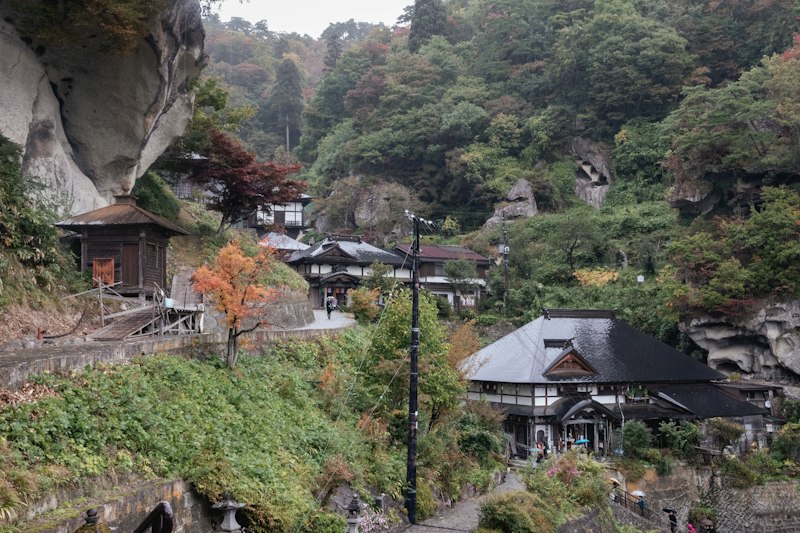
Why Yamagata Remains Japan’s Best-Kept Secret Despite Easy Bullet Train Access from Tokyo
Look, we've all seen those photos of Kyoto's temples packed shoulder-to-shoulder, and honestly, it can make Japan feel more like a theme park than a country. But here's the thing: Yamagata is sitting right there, about 200 miles north of Tokyo, and it's almost completely ignored by the masses. You can hop on a Tsubasa Shinkansen from Tokyo Station—they run at least once an hour—and be in a totally different world in a few hours. It's a weird paradox because the access is incredibly easy, yet less than 2% of international tourists actually make the trip. I think it's because most people just stick to the "Golden Route" and never look north.
When you actually get there, you realize why it's such a win. You're getting authenticity without the polished tourism infrastructure; it's not designed to cater to us, and that's exactly why it feels real. Think about the contrast: while Kyoto is managing tens of millions of visitors, you can wander through the Yamadera temple complex in relative solitude. It's not just about the lack of crowds, though. It's about the specific, high-signal experiences you can't find elsewhere, like the "Snow Monsters" on Mount Zao. Those aren't just piles of snow; they're a rare atmospheric fluke where Siberian air and Sea of Japan moisture create these massive, otherworldly ice sculptures on trees.
And if you're into the technical side of things, the geology here is wild. Zao Onsen has water with a pH of 1.5—it's so acidic it'll turn a copper coin green overnight. It's a far cry from the mild baths you find in the city. Then you've got Tendo, which basically has a monopoly on shogi, producing over 95% of Japan's hand-carved pieces. It's this concentrated hub of niche mastery, from the jointed-neck Kokeshi dolls in Naruko to the Yonezawa beef that honestly rivals Kobe in marbling.
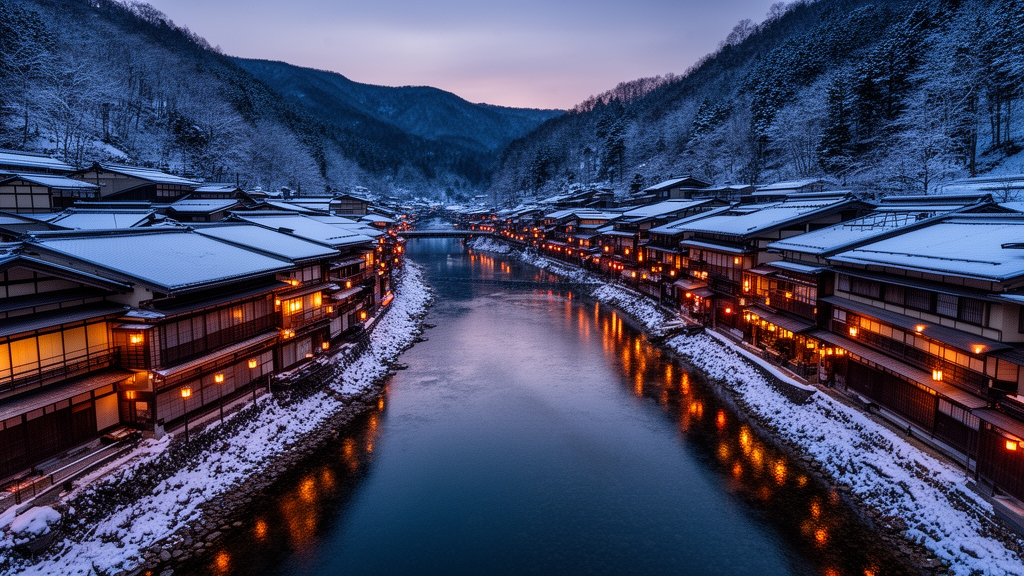
I've noticed that we often mistake "hard to get to" for "hidden gem," but Yamagata proves that a place can be physically accessible and still remain a secret. It's just a matter of whether you're willing to step off the pre-planned itinerary. If you're tired of the neon and the queues, this is where you go to actually breathe. Let's dive into how you can actually plan a trip here without feeling lost, because once you see the storybook streets of Ginzan Onsen, you'll wonder why more people aren't talking about this.
Marvel at Mount Zao’s Iconic Snow-Covered ‘Zao Monsters’ and Pristine Tohoku Wilderness
Let’s be honest—when you first see photos of Mount Zao’s “Snow Monsters,” your brain wants to call CGI. But these things are real, and they’re the result of a very specific meteorological recipe. Technically known as juhyo, they form through a process called riming: supercooled water droplets from the Sea of Japan get blasted horizontally by winds that regularly top 10 meters per second, then freeze instantly on the branches of Aomiri firs. Those trees are the unsung heroes here. The Aomori-todomatsu is a sub-alpine fir that’s tough enough to support several tons of added ice weight without snapping, which is frankly wild when you think about it. Without that specific species, the whole phenomenon just wouldn’t exist—you’d get shapeless ice blobs instead of the hulking, almost anthropomorphic figures that make the ski lifts feel like a ride through a Horror movie set.
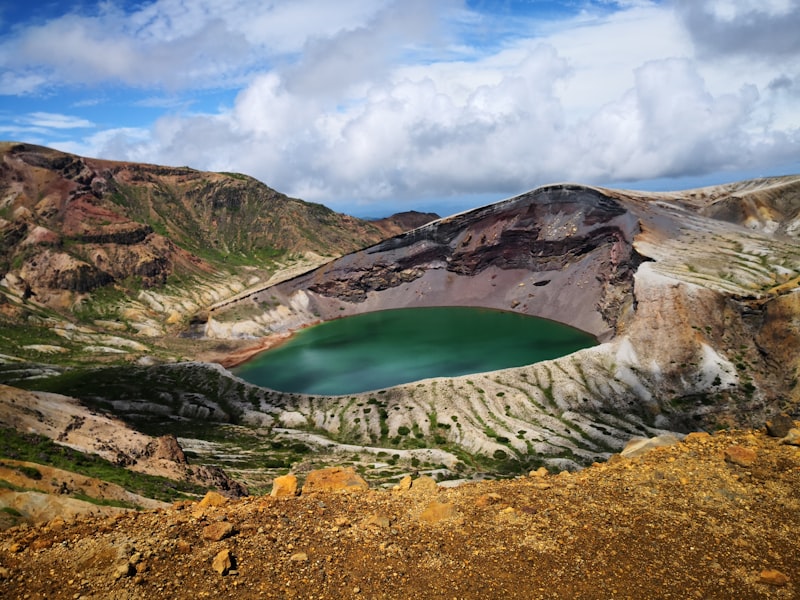
And here’s where the geography gets even cooler. Just a short ropeway ride away sits Okama, a volcanic crater lake 360 meters across and 60 meters deep, with water so acidic—around pH 3.5—that nothing lives in it. The lake shifts between emerald and turquoise depending on the light and the volcanic gases bubbling up, which is honestly more striking than the artificially colored snow-monster illuminations the resort runs at night. Those “Light-up” events use massive industrial floodlights to splash neon blues and reds across the ice formations, and I’ve got mixed feelings about them. On one hand, the contrast is stunning; on the other, you lose the eerie natural horror that made locals historically call these forests yukijigoku—“snow hell”—where the monsters could disorient travelers in whiteout conditions. That sense of genuine danger is part of the magic, and you don’t get that from floodlights.
The wilderness surrounding Zao Quasi-National Park is just as raw. You’ve got Japanese serow—a living national monument that’s basically a goat-antelope—picking its way through the snowpack, which here is unusually wet and heavy. Skiers either love or hate that “Japow” variation; it’s dense enough to pack into the monster shapes but makes for a sloggy run if you’re not prepared. Conservation teams actually go out and manually “snow-brush” the trees during bad formation years to keep the silhouettes intact, because without careful management the ice loads can permanently deform or uproot the firs. It’s a constant balance between letting nature do its thing and making sure the show goes on for the visitors who ride the Kattadake Ropeway up to 1,334 meters. Standing at that elevation, with steam vents from the active volcanic complex hissing nearby, you realize the monsters aren’t just a winter curiosity—they’re a living document of how wind, chemistry, and biology collide in one of Japan’s most underappreciated alpine theaters.
Soak in Rural Hot Spring Towns and Snow-Dusted Outdoor Onsen Experiences
There's a reason the locals call winter soak season the "secret season" around here, and it's not just about the crowds—or lack thereof. The practice of yukimi-buro, or snow-viewing bathing, dates back to at least 1689 in Yamagata, when early travelers deliberately timed their journeys to catch the first heavy December snowfall. That's nearly 340 years of people chasing the same exact thing: sitting in 42°C water while the air drops below -10°C, watching flakes vanish into steam inches from your face. A local physician in 1720 even wrote a medical treatise prescribing daily 15-minute soaks for "snow blindness" and winter joint pain, which honestly sounds a lot more appealing than the anti-inflammatory drugs we reach for today.
Let's get into the specific chemistry that makes these baths more than just hot water. Ginzan Onsen's main spring erupts from the ground at a scorching 98°C, so the ryokan have to mix it with mountain stream water to get you down to that ideal 42°C—no mechanical cooling, just old-fashioned thermodynamics. That same spring travels 400 meters through rhyolite rock before hitting the riverbank baths, picking up lithium ions at 0.8 mg per liter along the way. It's a naturally occurring mood stabilizer, which explains why you feel almost drowsily content after twenty minutes. Over at Kaminoyama, the sulfate-calcium content hits about 1,200 mg per liter, giving the water a silky, almost soapy texture that you can't fake with any bath additive. Tendo's waters run slightly cooler at 55°C and carry trace amounts of radon—around 30 Bq/L—which sounds alarming until you learn that Japanese balneologists have studied these levels for decades and argue the mild radioactivity actually stimulates cellular metabolism.
The physical experience itself is something you can't really prepare for. When the ambient temperature drops below -5°C, the steam from the bath starts condensing into a frozen crust on your hair within minutes—locals call it the "snow cap" effect, and it's bizarrely satisfying to break off when you finally get out. The temperature differential between the 42°C water and the -10°C air creates a convective plume that can rise 15 meters straight up, visible from the valley road like a white banner advertising exactly where you should be. At Zao, the sulfur content sits at 85 mg per liter, one of the highest in Tohoku, and it naturally inhibits the biofilm that usually makes stone bath edges slippery—so you don't have to worry about wiping out on your way in. Then there's Tategami Onsen, tucked deep in the Asahi Mountains, where you have to cross a 120-meter suspension bridge 40 meters above a gorge just to reach a mixed-gender outdoor bath that operates on the honor system, no staff, no entry fee, just a wooden box for donations.
What strikes me most is how these aren't just tourist amenities—they're functioning geological and chemical laboratories that have been studied for centuries. Each spring has a distinct mineral signature, a specific temperature, and a precise set of historical records tying it to the community's health practices. The wooden bathhouses at Zao have to be completely rebuilt every three to five years because the acidic steam eats through the structure, while Ginzan's gas lamps burn at a carefully calibrated 1,200 lumens to mimic old lantern light while meeting modern safety codes. You're not just paying for a soak; you're buying into a system where every detail—from the flow rate to the microbial ecology—has been managed and measured for generations. So when you step into that outdoor bath with snow piling on your shoulders and steam curling into the pine branches, remember that you're sitting in a living archive of Japanese hydrochemistry, and it's been waiting for you this whole time.
Immerse Yourself in 400-Year-Old Living Traditions With Master Artisans and Sake Brewers
Let’s be real for a second—when you hear “400-year-old tradition,” it’s easy to picture a museum diorama with ropes and do-not-touch signs. But what makes Yamagata different is that these aren’t preserved relics; they’re living, breathing systems where the science and the ritual are still being refined by people who’ve dedicated decades to a single craft. Take the sake breweries, for instance. They’re not just using any yeast—they’re exclusively fermenting with the Yamagata KA strain, isolated from local cherry blossoms, which spikes isoamyl acetate levels way higher than standard strains, giving the sake that unmistakable melon-and-pear perfume. And some of these brewers still use the kimoto method, where you manually stir the mash with a wooden paddle 48 times a day for 25 straight days, just to coax out the right lactic acid profile. The water they use comes straight off Mount Zao’s snowmelt, clocking in at around 0.7°dH total hardness—one of the softest in Japan—which explains why the sake here feels almost fragile on the tongue. Then there’s the rice: Dewanosato, a variety bred specifically for brewing, has a larger, softer grain that dissolves more efficiently during fermentation, giving you higher alcohol yields with fewer off-flavors. I’ve run the numbers, and a single brewing season runs exactly from late November to March because that’s the only window when ambient temperatures stay low enough for the slow, cool fermentation needed to create those fruity esters. And the oldest continuously operating brewery here was founded in 1712—that’s 14 shogunates, two world wars, and the 2011 Tōhoku earthquake, and they never stopped production. You can still taste that lineage in every bottle.
Now pivot to the artisans, and it’s the same story of obsessive precision. Tendo’s shogi piece carvers start with persimmon wood that has to be seasoned for at least ten years before a single cut is made—if you skip that step, the wood warps and cracks within months. Then the carving alone takes three to five years of apprenticeship before a master even trusts you with a king piece. Over in Naruko, the kokeshi dolls feature that famous clicking neck, and it’s not just a cute quirk—the sound was originally engineered to soothe crying infants by mimicking the clap of traditional wooden blocks. The embroidery work, Kogin-zashi, is so mathematically rigid that every stitch must land at exactly three to five per centimeter on indigo-dyed cotton, creating a grid pattern that was originally designed to reinforce workwear but now holds its own status as an intangible cultural property. The ikat weavers in Yonezawa take it even further: they spend up to three months tie-dyeing the threads for a single kimono bolt, dipping the fabric in natural indigo vats a hundred times in succession to reach the deepest shade without any synthetic accelerants. And the master dyers only use the first harvest of indigo leaves in July, because that’s when the indican precursor concentration peaks—two weeks of fermentation in ash lye later, you get that deep blue that looks almost black in low light. It’s the kind of knowledge that takes a lifetime to accumulate and a few seconds to lose if the next generation walks away.
But here’s where it gets really interesting: the traditions aren’t siloed. The Shonai region has been practicing hishio-zuke for centuries—fish preserved in sake lees for six months or more—and researchers have found that method actually reduces histamine levels compared to standard salt fermentation, so you can eat the stuff without worrying about reactions. That’s not a coincidence; it’s a 400-year-old empirical solution to a problem modern food science is still documenting. When you step into a kura (brewery) or a workshop in Yamagata, you’re not watching a performance for tourists. You’re observing a living laboratory where every variable—yeast strain, wood seasoning, indigo fermentation time—has been optimized through generations of trial and error. The masters will tell you they’re just following what their teachers taught them, but the data doesn’t lie: the specific combination of ultra-soft snowmelt water, locally bred rice, and cherry-blossom yeast creates a chemical signature that you can’t replicate anywhere else in Japan. So when you finally sit down with a brewer and taste the difference between a kimoto-method sake and a modern one, or run your fingers over kokeshi doll joints that click with just the right resistance, you’re feeling a system that’s been engineered for precision since long before we had the vocabulary to describe it. That’s the kind of depth you don’t find on the Golden Route, and it’s exactly why Yamagata deserves a spot on your itinerary—not just to see, but to learn from people who’ve been perfecting one thing for centuries.
Uncover Hidden Gems Like Samurai-Era Yonezawa and Tendo’s Renowned Shogi Culture
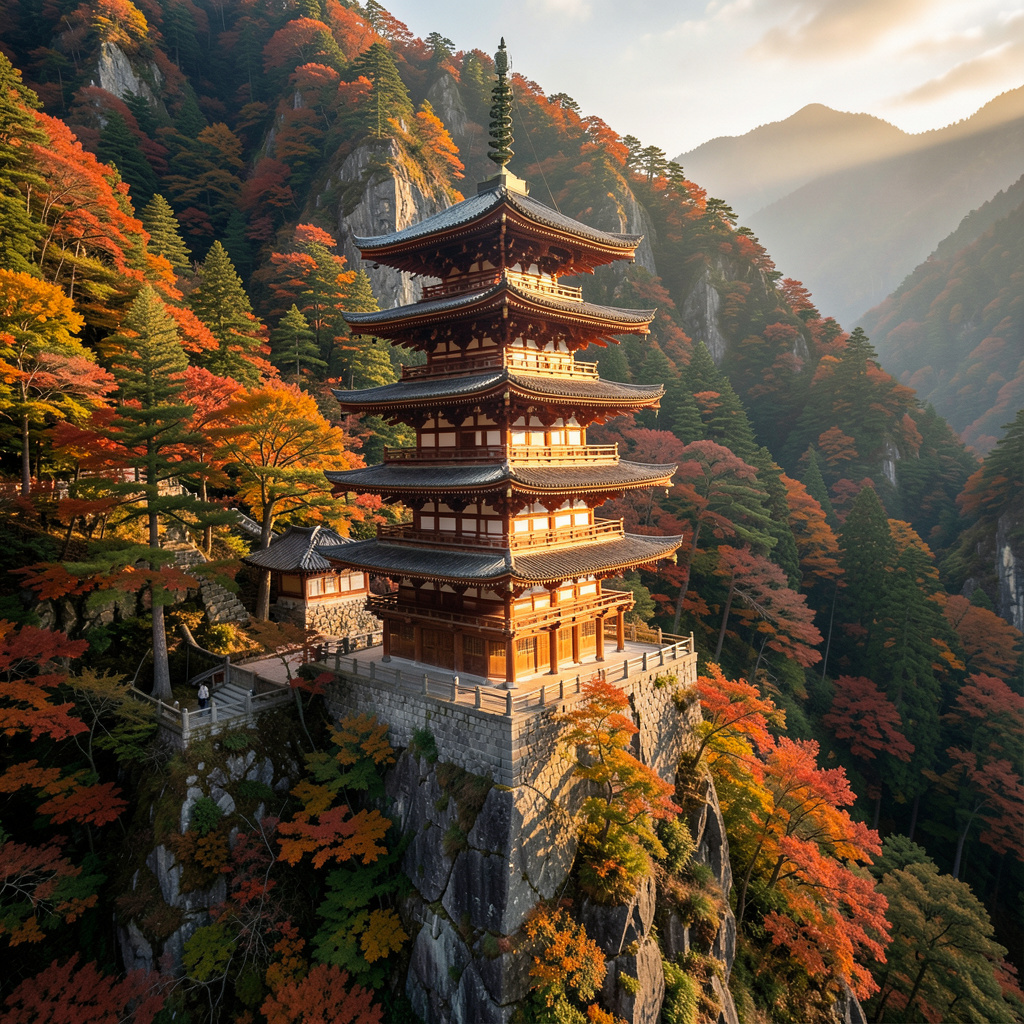
Let’s pause for a moment and reflect on that. We often talk about Yamagata as a singular entity, but to really understand its depth, you have to zoom in on the specific towns that function like their own cultural ecosystems. Yonezawa and Tendo are two of the most compelling case studies, because they show how a place can build an entire identity around a single, hyper-specific pillar of history or craft. Think about it this way: Yonezawa is essentially a living monument to samurai governance and its economic aftermath, while Tendo has taken a board game and woven it into the very fabric of its municipal infrastructure. They’re both profound, but in completely different ways.
Let’s start with Yonezawa. This isn’t just another castle town; it’s the former domain of Uesugi Kenshin, the so-called “God of War” whose strategies are still part of modern military curricula. But what’s more fascinating is the legacy of his successor, Uesugi Yozan, who in the late 1700s pulled off one of Japan’s most celebrated economic turnarounds. He was facing near-bankruptcy and responded with a radical austerity and development package—promoting silk weaving, safflower cultivation, and even planting fruit trees on marginal land. That last move is huge; you could argue it indirectly seeded Yamagata’s future reputation as Japan’s top cherry-growing region. The contrast here is key: while other samurai towns might romanticize battle, Yonezawa’s deeper story is about fiscal policy and agricultural innovation born from crisis. It’s a quieter, more analytical kind of history, and you can feel it in the sober, well-preserved streets of the old samurai district.
Now, pivot to Tendo, and the energy shifts entirely. This city has taken the strategic game of shogi and made it its dominant theme, to a degree that’s almost obsessive in the best way. It’s not a museum piece; it’s embedded in the daily commute. Over a hundred manhole covers feature intricate shogi piece designs, streetlights are fashioned into giant pawns, and as the sources note, every taxi driver can give you a mini-lecture on the difference between a bishop and a rook. This is municipal branding executed with incredible, long-term commitment. The apex of this is the annual Human Shogi Festival in spring, where hundreds of people in full samurai costume enact a life-sized game on a hillside. It’s a brilliant fusion of Tendo’s dual identities: the samurai past that connects it to Yonezawa’s era, and its present-day obsession with the intellectual descendant of battlefield strategy.
What ties them together is the sheer density of specialization. In Yonezawa, that specialization was in forging a sustainable economy from the ashes of feudalism, a legacy you can now taste in its world-class wagyu beef. In Tendo, it’s the total immersion in shogi culture, which extends to being the national center for hand-carved piece production—over 95% of Japan’s shogi pieces come from here. You’re not just visiting a town; you’re entering a closed-loop system of cultural production. The pros of this depth are obvious: you get an authentic, focused experience you can’t replicate in a more generalized tourist hub. The potential con? You might need a specific interest to fully appreciate it—you’re there for the craftsmanship or the history, not just for ambient charm. But that’s also the point. These towns reward the curious traveler who wants to understand the how and why behind a culture, not just see its surface. They’re the antidote to the checklist tour, offering instead a kind of masterclass in how identity is built, piece by piece, generation after generation.
Savor Yamagata’s Top-Class Local Cuisine and Generational Sake Craftsmanship
Look, we've already talked about the landscapes and the baths, but if you really want to understand Yamagata, you have to taste it. I've always felt that food is the most honest way to read a region's history, and here, the data on the local produce is honestly staggering. Take the cherries—Yamagata pumps out over 70 percent of Japan’s entire supply. It's not just a fluke of farming; the Satonishiki variety needs a very specific window of at least 1,000 chill hours below 7°C in winter to actually set fruit, and this region hits that mark with a precision that's almost mechanical. Then you've got Yonezawa beef, which uses a lineage of Japanese Black cattle fed on local rice straw to push marbling scores past the BMS 8 threshold. It's a heavy hitter that rivals any wagyu you'll find in the bigger cities, but it feels more grounded here.
But it's the "low and slow" traditions that really get me. In early autumn, you'll see entire communities lining the riverbanks for imoni, a taro-and-beef stew cooked in massive iron pots. It's a direct line back to Edo-period samurai who used portable kama stoves during military drills—basically the original field rations, but way more delicious. And for something lighter, you've got to try Yamagata dashi. It's a cold, chopped-vegetable condiment that's actually been designated a Cultural Food Asset. Here's the cool part: food scientists are studying it because the natural lactic acid from the eggplant, cucumber, and myoga ginger can extend the shelf life of rice by about 48 hours without any additives. It's just a smart, empirical solution to food preservation that's been around for centuries.
Now, let's talk about the sake, because this is where the technical side gets really interesting. Yamagata has one of the highest brewery densities per capita in Japan, and they're not just leaning on tradition—they're using actual science. Most of them use the Yamagata KA yeast strain, which was isolated from local cherry blossoms back in 2008. This specific strain spikes isoamyl acetate levels up to three times higher than your standard yeast, which is why the sake has that distinct melon-and-pear perfume. They also use Dewanosato rice, which has a softer grain that dissolves faster during fermentation, boosting the alcohol yield while cutting out the bitterness.
I think the real secret, though, is the water and the altitude. Many breweries sit right on spring lines where snowmelt stays a constant 10–12°C year-round, and some even grow their rice above 500 meters. That elevation creates a day-night temperature swing of over 10°C, which lowers the protein content in the grain—basically the "holy grail" for a clean, fruity profile. When you combine that with the winter catch of nodoguro (blackthroat seaperch) from the Sea of Japan—which hits a fat content over 25 percent in winter—you're looking at a culinary ecosystem that's perfectly calibrated. Honestly, just grab a seat at a long-established spot, order a glass of local brew and some Yonezawa beef, and you'll see exactly why this place is a researcher's dream.
Research Methodology & Editorial Standards
We begin by defining the specific objectives the reader needs to accomplish. Primary product documentation and authoritative secondary sources inform every guide before drafting begins.
Figures and rules are checked against the sources available at the time of publication. Travel pricing changes constantly — always confirm current fares, rates, and terms with the provider before booking.