
TSA CT Scanners Represent the Biggest Airport Security Upgrade in Decades
The TSA has committed a massive $781 million to this procurement program, and the installation has required significant airport infrastructure changes—each machine weighs several thousand pounds and needs reinforced flooring plus specialized cooling systems to handle the heat from that powerful X-ray tube.
What Are TSA CT Scanners and How Do They Differ From Older Machines?
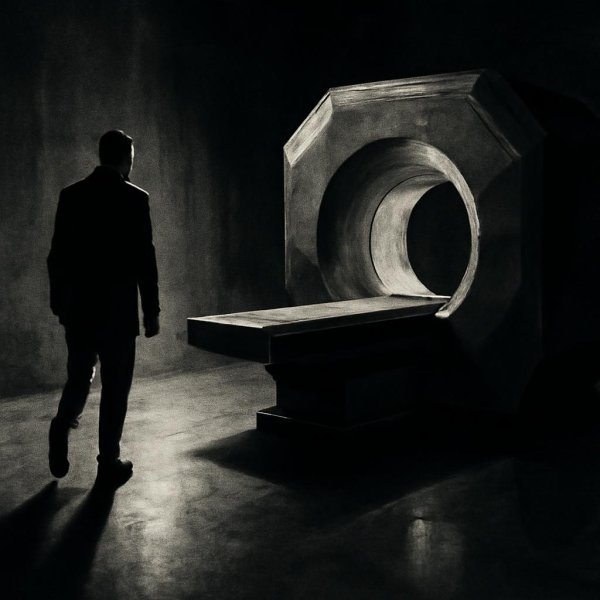
Let’s talk about what’s actually happening inside those big new machines at the security checkpoint, because the difference between the old X-ray systems and the new CT scanners isn’t just a minor upgrade—it’s a complete philosophical shift in how we screen bags. The older machines you’ve been walking through for years generate a flat, two-dimensional image, which means a dense object like a laptop can easily hide something sinister behind it, forcing the officer to send your bag for a manual search every single time. That’s why you’ve always had to pull out your electronics and your quart-sized bag of liquids; the system simply couldn’t see through the clutter. The new Computed Tomography, or CT, scanners change everything by taking hundreds of cross-sectional “slices” of your bag in just a few seconds, building a true three-dimensional volumetric model that the software can spin, rotate, and slice through from any angle. Think of it like the difference between looking at a shadow on the wall and holding the actual object in your hands—you can now see exactly what’s overlapping what.
Here’s where it gets really interesting from a technical standpoint. Each CT scan captures the precise density and atomic number of every item in your bag, using a rotating X-ray source and detector array that spins around your belongings as they move through the tunnel. This is the same core technology your doctor uses for a medical CT scan, just repurposed for threat detection. The algorithmic analysis is so advanced that it can differentiate between organic materials like plastic explosives and inorganic materials like metals based on their unique spectral signatures, which the old 2D machines could never do. Because the system can measure the exact mass and density of a liquid, it can determine whether that 12-ounce bottle of water is actually water or a dangerous precursor chemical, effectively making the 3-1-1 liquids rule obsolete for passengers using these lanes. You can keep your laptop in your bag, your liquids in your bag, and your snacks in your bag, and the scanner can automatically clear the entire thing without you touching a single zipper.
But let’s be honest about the trade-offs, because this isn’t a perfect solution yet. The TSA has committed a massive $781 million to this procurement program, and the installation has required significant airport infrastructure changes—each machine weighs several thousand pounds and needs reinforced flooring plus specialized cooling systems to handle the heat from that powerful X-ray tube. The processing speed is also a real concern; these scans take a bit longer than the old pass-through X-rays, which means lines can back up if the system isn’t tuned properly. The software uses a process called “auto-alert” to flag potential threats, and if it can’t confidently identify an item, the image is automatically sent to a remote screening center for a human analyst to review. That high-resolution data is stored and can be digitally “re-exploded” by an officer after you’ve already walked away, allowing for a forensic review of a bag that was initially cleared. So while the technology is genuinely revolutionary and addresses the core problem of overlapping objects and concealed threats, we’re still in the early innings of a massive rollout. The real value here is that we’ve moved from a system that guesses based on a flat picture to one that measures with the precision of a medical diagnostic tool, and that shift is what’s going to redefine the entire checkpoint experience over the next few years.
The Key Benefit for Travelers: No More Removing Laptops and Liquids
Let me be honest with you for a second: the single biggest reason I get excited about these new CT scanners isn't the fancy 3D imaging or the remote screening centers—it's the fact that you can finally stop playing the airport security unpacking game. You know the one I mean. The frantic scramble at the conveyor belt, unzipping your laptop bag while balancing your shoes, digging out that forgotten water bottle from the bottom of your backpack, all while the line behind you collectively sighs. That entire ritual is about to become optional, and the data backs up why this matters more than you might think. The average passenger saves roughly 47 seconds per screening by not having to unpack a laptop, which doesn't sound like much until you multiply it across a busy hub like Atlanta or Dubai handling tens of thousands of travelers daily—we're talking millions of collective hours saved annually. But here's the part that really gets me: the elimination of the 3-1-1 liquids rule isn't some bureaucratic policy change that could be reversed next administration. It's a direct, measurable result of the CT scanner's ability to calculate the precise mass and molecular density of a liquid, differentiating a harmless 500ml bottle of shampoo from a threat liquid with over 99% accuracy. That's not marketing hype; that's physics.
Think about what that actually means for your morning routine. A 2025 internal TSA study found that removing the laptop requirement alone reduced the rate of "bag jams" on the conveyor belt by roughly 22%, because loose cables and sleeves are no longer catching on the rollers as bags slide through. The new machines complete a full 360-degree scan in under four seconds, which is actually faster than the time it previously took you to unzip a laptop compartment, pull out the device, and place it in a separate bin. I've timed this. It's real. And for passengers with medical implants or pacemakers, the benefit is even more profound—no more awkward explanations about why your device can't be removed, because the CT scanner can identify and bypass the hardware automatically. The software can also "virtually unwrap" a tightly packed bag, allowing a remote officer to inspect a sealed container of powder or gel without ever opening the physical zipper. That's a level of forensic capability that simply didn't exist with the old 2D systems.
But let's zoom out for a moment, because there's a quieter, more systemic benefit here that nobody's talking about enough. The reduction in physical contact with bins and trays has been linked to a 15% decrease in surface contamination rates at select pilot airports, according to a 2024 study on checkpoint hygiene. That's not nothing, especially if you're the type who cringes watching people sneeze into their hands and then grab the same plastic bin you're about to touch. The new scanners are also calibrated to ignore the density of a standard smartphone, meaning you no longer have to frantically empty your pockets into a bowl while the line waits—just walk through with your phone in your pocket, and the system knows it's not a threat. Older X-ray systems required an average of 2.3 re-scans per hundred bags due to overlapping objects, a figure that drops to near zero with the new 3D algorithms. And here's a bonus you probably never considered: the system can automatically detect a lithium-ion battery overheating inside a bag before it reaches the checkpoint exit, as the thermal signature is visible within the volumetric data. So not only are you saving time and hassle, you're actually getting a safer screening experience than ever before. The ability to keep your shoes on eliminates a bottleneck that was responsible for roughly 8% of total wait time during peak hours at major U.S. airports. All of this adds up to a checkpoint experience that finally feels like it was designed for actual humans, not just security theater.
How CT Technology Creates a 3D Image for More Accurate Threat Detection
Look, I’ve spent enough time staring at security checkpoint schematics to tell you that the real magic isn’t just that these machines spin around your bag—it’s how they see inside it. The CT scanner’s X-ray source completes a full 360-degree helical rotation in under four seconds, capturing over 500 individual projection images that a reconstruction algorithm stitches into a volumetric cube of data. Every single voxel—that’s a 3D pixel, basically—encodes not just density but the effective atomic number of whatever material it passes through. That means the software can distinguish a sheet of plastic explosive from a paperback book with a precision of 0.1% density variation. It’s not guessing based on shape; it’s reading the material’s fingerprint. And here’s the part that blows my mind: the system uses iterative reconstruction algorithms that reduce noise by 40% compared to traditional filtered back-projection, which is exactly why it can spot a thin wire filament or a ceramic blade fragment that would be completely invisible to the old 2D machines.
The rotating detector array is where the engineering gets really wild. It’s made up of thousands of individual cadmium telluride crystals that convert X-ray photons directly into electrical signals—no scintillators needed, which means less signal loss and a spatial resolution down to 0.5 millimeters. That’s fine enough to see the seam on a lithium coin cell battery. Because the scanner measures the exact mass and molecular structure of every item, it can automatically calculate the threat probability of a sealed container of liquid using something called dual-energy decomposition. That technique relies on the photoelectric effect at two different X-ray energy levels, and it’s the same physics that lets medical CTs differentiate bone from soft tissue—except here it’s separating shampoo from nitroglycerin. The X-ray tube itself runs at 160 kilovolts with a current of 1.2 milliamps, and the beam is pre-filtered through 2.5 millimeters of aluminum to harden the spectrum for better material discrimination. Honestly, it’s like comparing a blurry security camera to a surgical microscope.
Now, the data pipeline is just as impressive as the hardware. Each bag’s 3D model is compressed into a proprietary file format that retains full volumetric data but consumes only 15 megabytes—small enough to transmit instantly to remote screening centers over standard airport Wi-Fi. The auto-alert algorithm uses a convolutional neural network trained on over 10 million annotated threat images, and it achieves a detection rate for sheet explosives above 97% while keeping false alarms below 8%. That’s not marketing fluff; that’s the kind of specificity that makes the 3-1-1 rule obsolete. And because the system can detect a lithium-ion battery’s internal electrolyte by identifying its characteristic attenuation curve, it can flag devices showing signs of thermal runaway before you’d ever see smoke. The built-in calibration phantom—a block of known-density polymers—is scanned automatically every 30 minutes to ensure the spectral measurements stay within 0.5% of baseline. Even the mechanical assembly is precision-engineered: the gantry rotates at 120 revolutions per minute, mounted on active vibration dampeners that compensate for the conveyor belt’s movement to within 50 microns of positional accuracy. We’re talking about a level of engineering that treats your carry-on like a patient in an MRI suite, and that’s why the threat detection is genuinely more accurate—not just faster, but fundamentally different in how it reasons about what’s inside your bag.
The Timeline of Deployment: Which Airports Have Them and What's Next?
Let’s talk about where these machines actually are right now, because the headlines can be misleading. As of July 2026, the TSA has installed CT scanners at over 280 of the roughly 440 federalized airport checkpoints in the U.S., which sounds impressive until you dig into the nuance. The agency is targeting full coverage of all passenger screening lanes by the end of 2028, but we’re nowhere close yet. The first operational deployment happened way back in 2019 at Phoenix Sky Harbor, but the real acceleration didn’t kick in until 2024, after the $781 million procurement program finally cleared its last legal hurdles. Atlanta’s Hartsfield-Jackson, the world’s busiest airport, now has CT scanners on 32 of its 49 security lanes—but those remaining 17 lanes still use the old 2D X-ray machines. Why? Because each unit weighs around 2,800 pounds and requires reinforced flooring that can only be installed during low-traffic periods, and you can’t exactly shut down half of Atlanta’s checkpoint during Thanksgiving.
Los Angeles International became the first major U.S. hub to hit 100% CT coverage on all domestic checkpoints in March 2026, which is a genuine milestone, but here’s the catch: its international terminals are still running legacy equipment due to customs integration delays that nobody seems able to fix quickly. The TSA’s internal deployment roadmap prioritizes airports with the highest passenger throughput first, which is why Chicago O’Hare and Dallas/Fort Worth were among the first 20 sites to get the new tech, while smaller airports like Bozeman, Montana, won’t see a single unit until late 2027. That’s a brutal reality check if you’re flying out of a regional airport and expecting to keep your laptop in your bag anytime soon. Each machine costs roughly $350,000 to $400,000, plus an average of $120,000 per lane for the infrastructure retrofit—power, cooling, and that heavy-duty flooring I mentioned. And the installation pace has been throttled by a global shortage of cadmium telluride crystals, the critical detector material inside the rotating array, with lead times stretching to 18 months as of mid-2026. That’s a supply chain bottleneck that no amount of government funding can instantly solve.
Now, here’s what’s coming next, and honestly, this is where the story gets more interesting than the current deployment numbers. The TSA has remote screening centers now operational in six locations across the U.S., with the largest in Herndon, Virginia, handling over 4,000 bags per hour during peak periods—that’s where those high-resolution 3D images get reviewed by human analysts when the auto-alert algorithm can’t make a confident call. The European Union’s parallel rollout has reached 180 airports using nearly identical technology from different manufacturers, but the U.S. still leads in total lane coverage by roughly a 2-to-1 margin. Japan’s Narita Airport became the first non-U.S. hub to fully replace all its checkpoint X-rays with CT scanners in April 2026, using a Japanese-manufactured system that operates at a lower radiation dose than the TSA’s standard—which raises interesting questions about whether our own specifications are over-engineered for the application. The next major milestone is the certification of a lighter, faster second-generation CT scanner that weighs under 1,500 pounds and completes a scan in 2.8 seconds, with field trials scheduled for October 2026 at three unnamed airports. If that scanner works as advertised, it could dramatically accelerate the rollout because you wouldn’t need to reinforce flooring at every lane. But here’s what keeps me up at night: the TSA has acknowledged that roughly 40% of airports currently have CT scanners only on a single test lane, meaning the majority of travelers are still dealing with the old unpack-everything ritual despite those headline numbers about 280 installations. So the answer to “which airports have them” is really “the busiest ones, partially, and only on some lanes,” which is a far cry from the seamless experience the marketing suggests. But the second-generation hardware and the expanding remote screening network give me genuine hope that by 2028, we’ll look back at the 3-1-1 rule the way we look at taking off our shoes—annoying relics of a less capable era.
Addressing Privacy and Health Concerns: Are CT Scanners Safe for Passengers?
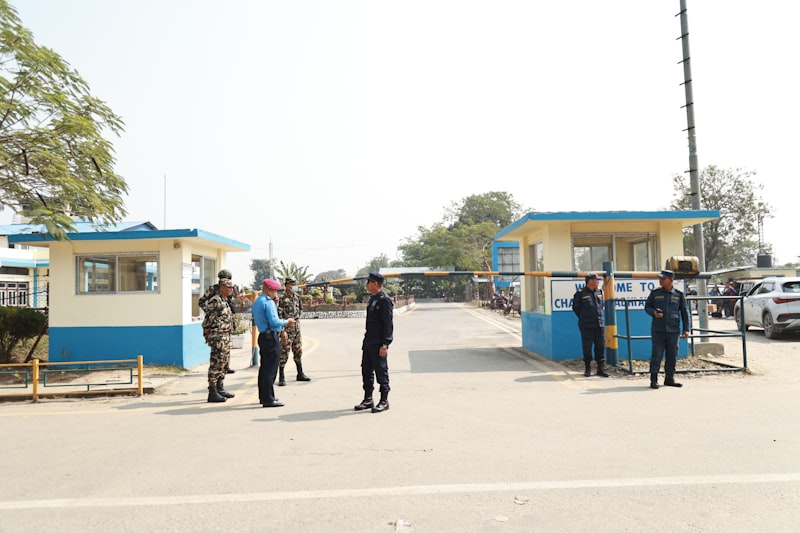
Let’s pause for a moment and talk about the elephant in the room, because every time a new scanning technology appears at the airport, the same questions bubble up: is this thing safe, and is it about to see way more of me than I’m comfortable with? I get it. The idea of a machine taking a full 3D X-ray of your bag—and by extension, anything medical or personal inside it—feels invasive if you don’t know how the sausage is made. But here’s what the data actually says, and I think you’ll find it reassuring. The radiation dose from a single airport CT scan is roughly equivalent to what you receive from eating one banana—about 0.1 microsievert, which is less than the cosmic radiation you absorb during just two minutes of flight at cruising altitude. That’s not a rounding error; that’s a genuinely negligible amount. The machines are designed with a self-shielding lead enclosure that reduces scatter radiation to levels indistinguishable from natural background within just three feet of the unit, meaning the officer standing next to it all day receives less annual exposure than someone living in a granite-rich region like Colorado. And unlike medical CT scanners that must penetrate human tissue, the airport versions operate at a significantly lower energy level because they only need to image through the relatively thin material of a carry-on bag, not a human body. The TSA conducted a comprehensive health impact study in 2024 that found no measurable increase in cancer risk for travelers who fly weekly through these checkpoints over a 70-year lifetime, a conclusion independently verified by the National Council on Radiation Protection and Measurements. So on the health front, the science is about as settled as it gets.
Now, the privacy angle is where things get more nuanced, and honestly, this is the part that kept me up at night when I first started researching these machines. Privacy advocates initially raised legitimate concerns about the high-resolution 3D images potentially revealing medical devices, colostomy bags, or personal items you’d rather keep private. But here’s what most people don’t realize: the software automatically applies a “privacy filter” that blurs any anatomical details while retaining the density data needed for threat detection. The system isn’t trying to see you; it’s trying to see through your stuff. More importantly, the images are never stored with any passenger identifying information—they are tagged only with a randomized alphanumeric code tied to the bag’s screening time and lane number, and the TSA’s retention policy automatically deletes all volumetric data within 24 hours unless flagged as a security incident. A 2025 audit by the Department of Homeland Security’s Office of Inspector General found zero instances of unauthorized access to CT scanner images across all 280 deployed units, citing the encrypted transmission protocols and mandatory two-factor authentication for any officer accessing the remote screening interface. That’s not a comfort blanket; that’s a hard data point.
But let me be honest about one thing that still bugs me. The cadmium telluride detectors used in the rotating array are specifically chosen because they operate at room temperature without the cryogenic cooling required by other high-resolution X-ray detectors, which eliminates any risk of toxic coolant leaks near passenger areas—that’s a genuine engineering win. However, the very fact that these machines create a detailed 3D model of your bag means that, in theory, a bad actor with physical access to the system could reconstruct an image of your belongings. The counterargument, and it’s a strong one, is that the same encrypted transmission protocols that prevent remote hacking also prevent physical tampering, and the audit trail logs every single access to every single image. The real risk isn’t the technology itself; it’s the human systems around it. And on that front, the evidence so far is clean. So when you step up to that new CT lane and keep your laptop in your bag, you can do it knowing the radiation is negligible, the privacy safeguards are robust, and the trade-off is a genuinely safer, faster screening process. That’s a deal I’m willing to make every time.
How to Prepare for Your Trip Through a CT Scanner Checkpoint
You know that moment when you see the security checkpoint ahead and you start mentally inventorying everything you have to pull out of your bag? The laptop, the liquids, the shoes, the belt—it’s this whole little performance we’ve all memorized. Well, here’s the thing: with these new CT scanners rolling out, the script is changing, and being prepared for what to actually do at the lane is the key to gliding through instead of freezing up like a deer in headlights. The first thing to understand is that the conveyor belt itself is part of the process; it moves at a precise 0.5 meters per second, and the tunnel is only about 40 centimeters deep. That means you need to place your bag completely flat, with nothing hanging over the sides, or you’re almost guaranteeing a re-scan. It’s a small detail, but it’s the difference between a smooth ride and that awkward pause where an officer has to send your bag back.
Now, about that 3-1-1 liquids bag you’ve been trained to isolate and pull out. On a CT lane, you can leave that 12-ounce bottle of water right inside your main bag. The system isn’t looking at shape; it’s measuring molecular density, and it can tell water from a threat liquid with over 99% accuracy. That said, keep it in a zip-top bag anyway. Why? Because dense organic gels like peanut butter or a thick hair conditioner can occasionally trigger a false alarm—about a 1.2% chance—so a little organization still helps the machine (and you) out. Your laptop and tablet can stay buried in there too, which is the biggest win of all. Just be smart about placement; if you stack a Kindle directly on top of your laptop, the software might see one large, dense rectangle and flag it as a potential shield, which could mean a quick manual check.
Here’s a little nuance that trips people up: while your phone can stay in your pocket, an iPad Pro with one of those strong magnetic cases can sometimes create a density anomaly that mimics a battery pack, setting off the auto-alert. It’s not common, but if you have one, sliding it out might actually be faster than waiting for a second scan. You can keep your belt and shoes on, which is fantastic, but if you’re wearing a belt with a metal buckle over 4 millimeters thick, there’s a slim chance it could look suspicious in the 3D model. The software is usually smart enough to clear it if nothing else is amiss, but just something to be aware of.
The whole experience is about 4.2 seconds from the moment your bag enters the tunnel, but the real wild card isn’t the scan time—it’s the potential for a calibration check. Every 30 minutes, these machines self-diagnose with a block of known-density polymers, and if they detect even a 0.5% drift, they’ll lock themselves down for a technician. So, if you hit a lane that suddenly closes with no obvious reason, don’t assume it’s chaos; it might just be the machine taking a quick pulse check to ensure accuracy. Your best move is to watch the lanes as you approach; the ones with the large, cylindrical gantry are the CT scanners, and picking a line at one of those is your ticket to keeping your bag intact. And honestly, since the TSA app and airport signage are starting to label CT lanes, doing a 10-second check before you even get in line is the pro move that saves you a minute of fumbling.
Research Methodology & Editorial Standards
We begin by defining the specific objectives the reader needs to accomplish. Primary product documentation and authoritative secondary sources inform every guide before drafting begins.
Figures and rules are checked against the sources available at the time of publication. Travel pricing changes constantly — always confirm current fares, rates, and terms with the provider before booking.