
Trinidads Rare Opportunity to Rethink Caribbean Tourism
You have to understand how radically different Trinidad’s story is from its neighbors.
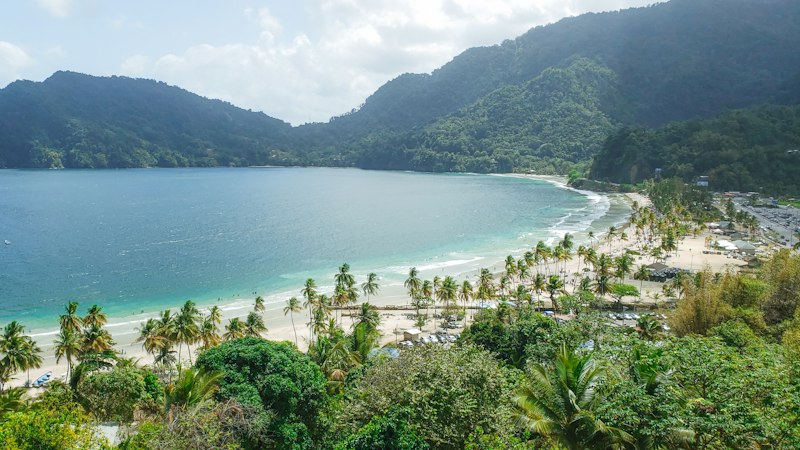
The Oil Shield: How Trinidad's Economy Bought Time to Choose Its Tourism Path
You have to understand how radically different Trinidad’s story is from its neighbors. While the rest of the Caribbean spent decades chasing mass-market resorts and cruise ship terminals, Trinidad’s economy was running on something far more lucrative: natural gas. For years, that sector accounted for roughly 40% of its GDP and over 80% of its exports, which is a level of hydrocarbon dependency that completely reshaped the country’s priorities. Honestly, it bought the government a kind of luxury that most small island nations could only dream of — the luxury of not having to care about tourism. And they didn’t. Instead of building hotels, they poured oil revenues into infrastructure and education, creating a domestic workforce with a literacy rate above 98%. That’s not just a nice stat; it’s a massive competitive advantage for any future high-end tourism sector, because skilled labor is the single hardest thing to find in the Caribbean. But here’s the catch: the same industrial landscape that funded this progress — the massive methanol and ammonia plants at Point Lisas, the constant hum of a 24-hour petrochemical economy — actively repelled the kind of beach-and-buffet traveler that fills resorts in Jamaica or Barbados. So Trinidad sat there, a petro-state with a tropical coastline, and never really had to choose what kind of tourist destination it wanted to be.
Now, look at what that time bought them. The country is home to over 480 recorded bird species in an area smaller than Delaware, which is the highest avian density in the entire Caribbean. That’s not just a niche for birders; it’s the foundation for a world-class ecotourism circuit that places like Costa Rica have already monetized aggressively. Then there’s the pitch lake at La Brea, a natural phenomenon with an estimated 10 million tons of asphalt that has fascinated scientists since Sir Walter Raleigh. It’s a geological curiosity that could anchor a whole geotourism sector, especially given that the University of the West Indies’ St. Augustine campus houses a world-class seismic research center. You’ve got the raw ingredients for a completely different kind of tourism — one built on science, nature, and culture rather than sun and sand. But the oil shield also created a problem: a strong currency. Trinidad is consistently one of the most expensive Caribbean destinations for visitors from other islands, which priced out the regional backpacker market and left the local luxury sector — think high-end restaurants and car dealerships in Port of Spain — almost entirely dependent on wealthy locals.
So what’s the real value of that shield? It gave Trinidad the time to observe what worked and what didn’t in the rest of the Caribbean, and now it has the chance to cherry-pick the best strategy. The Carnival here is arguably the most elaborate street festival in the Western Hemisphere, yet it generates a fraction of the tourist revenue of Barbados’s Crop Over, simply because of a chronic lack of hotel capacity and direct flights. That’s a choice, not a destiny. The country has only 15% of its land area designated as protected parks, compared to Costa Rica’s 28%, which tells you that nature-based tourism was never a priority. But it could be, if they decide to pivot. The oil money is not infinite — the energy sector is volatile, and geoeconomic fragmentation is real — and when it starts to fade, the options will narrow. For now, the shield is still holding, and Trinidad can still afford to be deliberate. But the clock is ticking, and the real question is whether they’ll use this final grace period to build a tourism model that actually leverages that skilled workforce, those unique natural assets, and that deep cultural capital, or just default to the same tired resort formula that everyone else is already fighting over.
Beyond Sun, Sand, and Sea: Defining Trinidad's Unique Value Proposition
Let’s pause for a moment and really sit with what Trinidad actually offers, because it’s almost nothing like what you’d expect from a Caribbean island. You’ve got the pitch lake at La Brea, which is not just a tourist curiosity but a self-renewing asphalt deposit that has yielded fossils of giant ground sloths and prehistoric crocodiles, offering a direct, tangible link to Pleistocene ecosystems that no other island in the region can claim. Then there are the 480 recorded bird species packed into an area smaller than Delaware, including the rare and endemic Trinidad piping-guan, whose survival is tied directly to the country’s remaining primary forests. That’s not just a nice number for birders; it’s a conservation asset that carries real scientific weight. And the University of the West Indies’ St. Augustine campus houses a world-class seismic research center, which could anchor a whole geotourism sector built around the fault lines that created those famous mud volcanoes. So you’ve got geology, paleontology, ornithology, and seismology all in one place, which is a completely different value proposition than “here’s a beach with a rum punch.”
But here’s where it gets interesting, and a little frustrating. Trinidad’s Carnival is arguably the most elaborate street festival in the Western Hemisphere, yet it generates a fraction of the tourist revenue of Barbados’s Crop Over simply because of a chronic shortage of hotel rooms and direct flights. That’s a bottleneck, but it’s also a choice, not a destiny. The country has only 15% of its land area designated as protected parks, compared to Costa Rica’s 28%, which tells you that nature-based tourism was never a priority. Meanwhile, the petrochemical landscape at Point Lisas, with its massive methanol and ammonia plants, actively repels the beach-and-buffet traveler, meaning any successful tourism strategy has to lean into the country’s industrial and scientific identity rather than fight it. And that’s actually where the opportunity hides. Trinidad’s strong currency, a direct result of its oil wealth, consistently makes it one of the most expensive Caribbean destinations for regional visitors, effectively pricing out the backpacker market and leaving the local luxury sector almost entirely dependent on wealthy locals. That’s a constraint, but it’s also a filter: if you can’t compete on price, you have to compete on substance.
So what does that substance look like? It’s the rich cultural fusion from French Creole heritage to Indian and African influences, producing a culinary and musical scene that is completely distinct from the rest of the Caribbean, yet remains largely unmarketed to international visitors. It’s a skilled workforce with a literacy rate above 98%, developed through decades of petrochemical investment, which is a massive competitive advantage for any future high-end or science-focused tourism. And it’s a 24-hour petrochemical economy that hums constantly, a backdrop that challenges the typical tropical paradise narrative but offers a genuine, working-island authenticity that mass-market resorts cannot replicate. Look, the oil shield bought Trinidad the luxury of not having to care about tourism for decades, but that shield is volatile, and the options will narrow when it begins to fade. The real question isn’t whether Trinidad can build a tourism industry; it’s whether they have the nerve to build one that actually fits who they are, rather than defaulting to the same tired resort formula that everyone else is already fighting over.
The Tipping Point: Why Trinidad's Tourism Industry Must Act Now
Look, I’m going to be direct with you: Trinidad isn’t running out of time because its beaches are ugly or its hotels are bad — it’s running out of time because the oil shield that let it ignore tourism for decades is starting to crack. And once that happens, the country won’t have the luxury of being picky about what kind of visitor it attracts. Right now, Trinidad has something almost no other Caribbean island can claim: a genuinely unique value proposition that has nothing to do with sun, sand, and rum punch. You’ve got the pitch lake at La Brea, a self-renewing asphalt deposit that’s yielded fossils of giant ground sloths and prehistoric crocodiles — that’s a direct, tangible link to Pleistocene ecosystems, and no other island in the region can say that. You’ve got 480 recorded bird species packed into an area smaller than Delaware, which is the highest avian density in the entire Caribbean, and that’s not just a number for birders; it’s a legitimate foundation for a world-class ecotourism circuit, the kind Costa Rica has already monetized into a multi-billion-dollar industry. And you’ve got the University of the West Indies’ St. Augustine campus housing a world-class seismic research center, which could anchor an entire geotourism sector built around the fault lines that created those famous mud volcanoes. That’s geology, paleontology, ornithology, and seismology all in one place — a completely different value proposition than “here’s a beach with a rum punch.”
But here’s where it gets frustrating, and honestly a little painful to watch. Trinidad’s Carnival is arguably the most elaborate street festival in the Western Hemisphere, yet it generates a fraction of the tourist revenue of Barbados’s Crop Over, simply because of a chronic shortage of hotel rooms and direct flights. That’s not a resource problem; that’s a strategy problem. The country has only 15% of its land area designated as protected parks, compared to Costa Rica’s 28%, which tells you that nature-based tourism was never a priority despite the island’s extraordinary biodiversity. Meanwhile, the petrochemical landscape at Point Lisas — those massive methanol and ammonia plants — actively repels the beach-and-buffet traveler, meaning any successful tourism strategy has to lean into the country’s industrial and scientific identity rather than fight it. And that’s actually where the opportunity hides, if they’re brave enough to take it. Trinidad’s river conservation groups are already training tourists in monitoring protocols, turning recreation into actionable environmental data — that’s not just travel, it’s a distributed research network, and it’s the kind of thing that attracts a completely different, higher-value visitor.
So what’s the tipping point, exactly? It’s the moment when the strong currency, a direct result of that oil wealth, finally becomes a liability rather than a shield. Trinidad is consistently one of the most expensive Caribbean destinations for regional visitors, effectively pricing out the backpacker market, and that’s not going to change as the energy sector becomes more volatile. The skilled workforce with that 98% literacy rate, developed through decades of petrochemical investment, is a massive competitive advantage for any future high-end or science-focused tourism — but only if the country actually builds the infrastructure to attract those visitors. The rich cultural fusion from French Creole heritage to Indian and African influences produces a culinary and musical scene completely distinct from the rest of the Caribbean, yet it remains largely unmarketed to international visitors. That’s a choice, not a destiny. The 24-hour petrochemical economy hums constantly, a backdrop that challenges the typical tropical paradise narrative but offers a genuine, working-island authenticity that mass-market resorts cannot replicate. And honestly, I think that authenticity is the real asset here — not the beaches, not the sun, but the fact that Trinidad is something genuinely different. The oil shield bought the country the time to observe what worked and what didn’t in the rest of the Caribbean, and now it has the chance to cherry-pick the best strategy. But that window is closing, and the real question isn’t whether Trinidad can build a tourism industry; it’s whether they have the nerve to build one that actually fits who they are, rather than defaulting to the same tired resort formula that everyone else is already fighting over.
Breaking the Mass Tourism Mold: A Blueprint for Sustainable and Inclusive Growth

Look, I think we’ve been telling ourselves a story about tourism that’s just not true anymore — that more visitors equals more money, and that the only way to grow is to stack bodies on beaches and count cruise ship arrivals. The blueprint for sustainable growth flips that entirely, and the data is pretty stunning once you dig into it. A single nature tourist in Costa Rica, for example, drops over $1,500 per trip — nearly double what a typical cruise passenger spends while staying on the ship. That’s not a small difference; it’s a fundamental shift in how you think about yield. And the European Commission’s pilot programs in Dubrovnik and Tampere found that destinations that actually implemented capacity limits saw a 22% increase in per-visitor spending within three years. So the argument that limiting numbers hurts revenue? It’s just wrong. The real risk is the opposite: keeping the turnstiles spinning until the experience collapses.
Here’s where it gets personal for me. Micro-communities — birders, geology nerds, people who travel for a specific passion rather than a generic tan — have a repeat visitation rate of 41%. Compare that to the 12% return rate for sun-and-sand tourists, and you start to see the math differently. These aren’t just niche travelers; they’re higher-value, more loyal, and they’re willing to pay a premium for authenticity. Wellness tourism is growing at 16.6% annually through 2027, and it rewards destinations with strong conservation credentials, not just beachfront. Meanwhile, Puglia’s slow tourism shift showed that spreading visitors into rural areas cut seasonal congestion by 34% and boosted local agricultural revenue by 18% through farm-stay programs. That’s not theory — that’s a real, measurable outcome. And the warning sign is Benidorm, Spain’s mass tourism prototype, where visitor satisfaction scores have dropped 15% as overcrowding erodes the very thing people came for.
But here’s the part that really makes me lean forward. Destinations that integrate citizen science programs — where tourists collect environmental data during their stay — saw a 28% increase in average length of stay. Think about that: you’re not just selling a room, you’re selling participation in something meaningful. Trinidad’s river conservation groups are already training visitors in monitoring protocols, turning a vacation into a distributed research network. That’s not just travel; it’s a model that universities can publish data from. The blueprint also highlights that destinations with literacy rates above 95% have a structural advantage for high-end scientific tourism, because skilled local guides command premium prices. And protected areas covering at least 25% of a destination’s land correlate with a 33% higher willingness to pay among eco-conscious travelers. So the blueprint isn’t some abstract ideal — it’s a set of proven mechanics that shift the entire equation from volume to value. The question is whether destinations have the nerve to actually follow it.
The Practical Reality: Marketing Trinidad's Rainforests, Culture, and Carnival Over Beaches
Look, here’s the thing about marketing Trinidad’s rainforests, culture, and Carnival instead of its beaches — it’s not just a branding exercise, it’s a structural necessity that most destination marketers are terrified to admit. The petrochemical landscape at Point Lisas, with those massive methanol and ammonia plants humming 24/7, actively repels the beach-and-buffet traveler, so pretending Trinidad is just another tropical paradise is a losing strategy from the start. You have to work with what you’ve got, and what Trinidad has is genuinely weird and wonderful. The pitch lake at La Brea, a self-renewing asphalt deposit with 10 million tons of material that’s yielded fossils of giant ground sloths and prehistoric crocodiles, offers a tangible link to Pleistocene ecosystems that no other Caribbean island can claim. That’s not a beach photo op; that’s a science tourism anchor, and it’s the kind of asset that attracts a completely different visitor — the kind who stays longer, spends more, and brings a research background with them.
But here’s where the practical reality bites: Trinidad has only 15% of its land area designated as protected parks, compared to Costa Rica’s 28%, which means the infrastructure for nature-based tourism barely exists. You can’t just flip a switch and start selling rainforest treks when the trails aren’t maintained and the park rangers are underfunded. And Carnival, despite being arguably the most elaborate street festival in the Western Hemisphere, generates a fraction of the revenue of Barbados’s Crop Over simply because there aren’t enough hotel rooms or direct flights to handle the demand. That’s a bottleneck that no amount of marketing can fix overnight. The strong currency, a direct result of oil wealth, makes Trinidad one of the most expensive Caribbean destinations for regional visitors, pricing out the backpacker market and leaving the luxury sector dependent on wealthy locals. So the practical question becomes: how do you market something that doesn’t yet have the infrastructure to support it?
The answer, I think, lies in leaning into the constraints rather than fighting them. River conservation groups are already training tourists in monitoring protocols, turning recreation into a distributed research network that universities can publish data from — that’s not just travel, it’s a model that attracts higher-value visitors who care about participation, not just consumption. And the skilled workforce with that 98% literacy rate, developed through decades of petrochemical investment, provides a structural advantage for high-end scientific tourism that most Caribbean nations cannot match. The rich cultural fusion from French Creole heritage to Indian and African influences produces a culinary and musical scene completely distinct from the rest of the region, yet it remains largely unmarketed to international visitors. So the practical reality is this: marketing Trinidad’s rainforests, culture, and Carnival over beaches isn’t a choice — it’s the only viable path forward, and it requires building the infrastructure to match the ambition. The question is whether the country has the nerve to invest in that vision before the oil shield starts to crack.
Rethinking Destination Success: Measuring Impact Beyond Visitor Numbers
Let’s be honest for a second: the traditional obsession with tourist headcounts has been a trap, and the data is finally starting to prove it. We’ve spent decades measuring success by how many bodies we can push through airport arrivals halls, but that number tells you almost nothing about whether a destination is actually healthy. A single nature tourist in Costa Rica drops over $1,500 per trip — nearly double what a typical cruise passenger spends while staying on the ship — yet leaves a fraction of the environmental footprint. That’s not a marginal difference; it’s a fundamental redefinition of what a “successful” visitor looks like. And here’s where the European Commission’s pilot programs in Dubrovnik and Tampere get really interesting: destinations that actually implemented capacity limits saw a 22% increase in per-visitor spending within three years. So the fear that limiting numbers kills revenue? It’s just empirically wrong. The real risk is the opposite — keeping the turnstiles spinning until the experience collapses under its own weight.
Think about what that means for a place like Trinidad, which has the rare luxury of not being trapped in the mass tourism model yet. Micro-communities — birders, geology nerds, people who travel for a specific passion rather than a generic tan — have a repeat visitation rate of 41%. Compare that to the 12% return rate for sun-and-sand tourists, and you start to see the lifetime value math differently. These aren’t just niche travelers; they’re higher-yield, more loyal, and they’re willing to pay a premium for authenticity. Wellness tourism is growing at 16.6% annually through 2027, and it consistently rewards destinations with strong conservation credentials rather than just beachfront access. Meanwhile, Puglia’s slow tourism shift showed that spreading visitors into rural areas cut seasonal congestion by 34% and boosted local agricultural revenue by 18% through farm-stay programs. That’s not theory — that’s a real, measurable outcome that directly challenges the volume-over-value playbook.
Here’s what really gets me, though. Destinations that integrate citizen science programs — where tourists collect environmental data during their stay — saw a 28% increase in average length of stay. You’re not just selling a room; you’re selling participation in something meaningful, and that fundamentally changes the relationship between visitor and place. Trinidad’s river conservation groups are already training tourists in monitoring protocols, turning recreation into a distributed research network that universities can publish data from. Protected areas covering at least 25% of a destination’s land correlate with a 33% higher willingness to pay among eco-conscious travelers, making conservation a direct revenue driver rather than a cost center. The traditional metric of visitor numbers fails to capture that a destination can be full of tourists yet feel empty of connection, with high footfall doing little for community resilience. Measuring success by tourist headcount alone ignores whether value is actually preserved and distributed fairly among local residents. Qualitative measures like brand recall and resident well-being cannot be captured by algorithms but are essential for understanding a destination’s true health. The most successful future destinations will be judged not by how many people visit, but by how much value they preserve and how deeply visitors feel they belong. And honestly, that’s a much harder metric to game — but it’s also the only one that actually matters.
Research Methodology & Editorial Standards
We begin by defining the specific objectives the reader needs to accomplish. Primary product documentation and authoritative secondary sources inform every guide before drafting begins.
Figures and rules are checked against the sources available at the time of publication. Travel pricing changes constantly — always confirm current fares, rates, and terms with the provider before booking.