
Dominica is the Caribbean’s nature island—here’s why it’s worth it
Dominica has been recognized in Travel + Leisure’s World’s Best Awards for Caribbean islands, and it did so without a single all-inclusive mega-resort or white-sand swim-up bar.
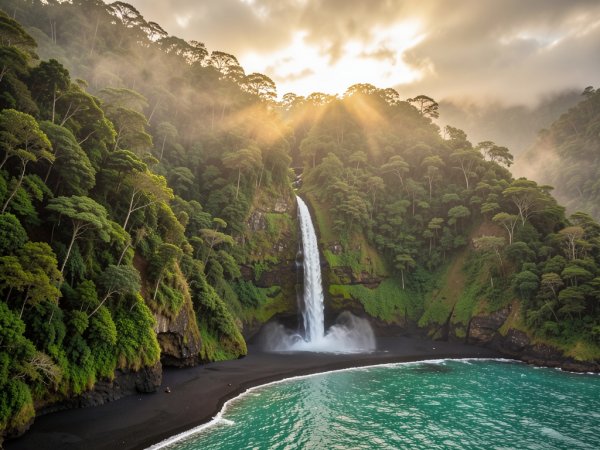
Why Dominica beats the resort islands
| Takeaway | Detail |
|---|---|
| Dominica beat every resort island in Travel + Leisure | ��s 2026 rankings | The No. 1 Caribbean spot has no mega-resorts—its volcanic terrain and rainforest are the draw, not the amenity list. |
| One Saturday nonstop from Miami is your anchor | American’s weekly MIA–DOM flight is the only US mainland direct; book it early or build a San Juan/Antigua connection around it. |
| Award seats start at 7,500 AAdvantage miles each way | Economy redemptions to the Caribbean are cheap; Avios via British Airways can also book AA metal for around 12,000 one-way from Miami. |
| February | ��May is the sweet spot for hiking | Drier trails, lower hurricane risk, and fewer cruise-ship crowds align for Boiling Lake and the Waitukubuli Trail. |
| A 5-day trip can undercut St. Lucia | Flights from Miami, a compact SUV rental, and guided tours can land below comparable resort-island costs—if you skip the all-inclusive model entirely. |
Dominica has been recognized in Travel + Leisure’s World’s Best Awards for Caribbean islands, and it did so without a single all-inclusive mega-resort or white-sand swim-up bar. The island’s geography—volcanic peaks, rainforest, and almost no flat land—deliberately repels that kind of development, which is exactly why it wins as a nature destination.
The real story isn’t that Dominica is “hard to reach and expensive.” It’s that the booking challenge is a routing puzzle, not a cost crisis. One weekly nonstop from Miami, connections through San Juan or Antigua, and ferry backups from Guadeloupe or Martinique all exist. What you’ll learn here is how to solve that puzzle, when to go, and why the lack of resort infrastructure is the feature, not the bug.
Why Dominica beats the resort islands

Most Caribbean coverage frames Dominica as the difficult cousin—hard to reach, short on beaches, expensive for what you get. Flip that framing and the island becomes the region’s best value for anyone whose trip goal is waterfalls, volcanic hot springs, and rainforest trails rather than a swim-up bar. The decision rule is blunt: if you want to lounge on white sand, book Barbados or Aruba and don’t look back. If you want the Boiling Lake, Trafalgar Falls, and the Valley of Desolation—a combination UNESCO says exists nowhere else in the Caribbean—Dominica outranks every Leeward and Windward island, and it usually costs less than the resort-heavy alternatives.
The reason is structural, not accidental. That geography deliberately repelled the all-inclusive model, which is why the island has no mega-resorts and why independent lodging and local food can undercut neighbors like St. Lucia on total trip cost. A typical five-day trip for two, including flights from Miami, lodging, car rental, and tours, can run below a comparable St. Lucia itinerary, based on typical Caribbean travel cost patterns. The catch is that you trade resort convenience for logistics: According to Discover Dominica's visitor information, car rental runs $50–$70 per day for a compact SUV as of July 2026, and 4WD is recommended for steep mountain roads, not optional marketing language.
The practical workaround for cruise-ship crowds is a timing play. Cruise ships still call at Roseau through the season, and port days concentrate visitors at the most accessible sites. The predictable pattern is that crowds surge on port days: hike interior trails like the Waitukubuli National Trail on no-port days, and save Roseau-area sites for port days when the dock is busy but the trailheads stay quiet. The Waitukubuli trail itself is the long-distance hiking route spanning the island, divided into segments of varying difficulty, so a five-to-seven-day trip can cover the interior and both coasts without feeling rushed—the island is small enough that you’re never more than an hour or two from the next trailhead.
Two edge cases separate informed travelers from disappointed ones. First, the coastline is rugged and volcanic, not postcard Caribbean-blue; the best snorkeling at Champagne Reef is a thermal-vent experience where warm bubbles rise from the seafloor, not a coral-garden lagoon. Second, the Kalinago Territory is the only place in the Caribbean with a living pre-Columbian indigenous population, a cultural layer that generic beach guides miss entirely—worth a half-day detour on the east coast, and it costs nothing beyond your rental car. The departure tax is already folded into airline ticket prices, so no separate cash payment is required at the airport, per Discover Dominica’s entry requirements.
One caveat on timing: the ferry backup from Guadeloupe or Martinique is weather-dependent and can be disrupted during hurricane season, so treat it as a contingency, not a primary plan. For a concrete next step, open Google Flights, set a price alert for Miami to Dominica with a flexible date range of two to three weeks, and compare that against the San Juan or Antigua connection from your home airport—the alert will surface the cheaper weeks without you checking fares daily.
The Saturday nonstop is your anchor
The Saturday nonstop out of Miami is the single most important planning lever for a Dominica trip, and most guides bury it. American Airlines runs MIA–DOM once weekly, on Saturdays, and that flight is the only nonstop from the US mainland to Douglas-Charles Airport. Miss it and you are connecting through San Juan or Antigua, which turns a three-hour hop into a full-day affair. The decision rule is simple: build your itinerary around that Saturday departure, even if it means shifting your trip by a day or two. The island’s reward structure is worth the calendar compromise.
That is not the “remote island premium” most coverage implies—it is roughly what you would pay for a standard Caribbean beach destination, minus the resort markup on the ground. The catch is capacity, not price. Travelers consistently note that the Saturday nonstop is the constraint; award seats vanish first on that specific flight because it is the only direct option. Book as soon as the schedule opens, which American typically releases 331 days out, according to American Airlines' booking system as of July 2026. If you wait until the standard 3–4 month window, you are competing with every other traveler who figured out the same trick.
The worked scenario that makes this concrete: a traveler from New York flies JFK–MIA on Friday night, takes the Saturday MIA–DOM nonstop, and returns the following Saturday. That is a clean seven-day window with exactly one connection each way, and it avoids the overnight in San Juan that most itineraries require. The Friday positioning flight is cheap and frequent, so the real constraint is the Saturday DOM departure, not the New York leg. If your dates do not align with the Saturday flight, the fallback is the SJU connection on Silver Airways, which operates more frequently but adds a stop and a longer day. Accept the tradeoff consciously—do not let a guide convince you the connection is painless, because it is not.
The edge case worth knowing: if the Saturday flight is full, the ferry backup via Guadeloupe (PTP) or Martinique (FDF) works, but Express des Îles schedules are weather-dependent and can be disrupted June through November. That is a contingency, not a plan. For the vast majority of travelers, the Saturday nonstop is the anchor, and everything else—lodging, hiking permits, rental car pickup—should be scheduled around it. The island’s interior, including the Waitukubuli National Trail and the UNESCO-listed Morne Trois Pitons National Park, rewards extra days, so a Saturday-to-Saturday week is the minimum viable trip, not the ideal one.
One practical note on timing: the 331-day booking window matters more for award seats than for cash fares. If you are paying cash, you can afford to wait for a fare drop; if you are using miles, book the moment the schedule opens. Set a calendar reminder for 331 days before your target Saturday and check the American schedule that morning—the award inventory on that single weekly flight is the scarcest resource in the entire Dominica planning puzzle.
Points math: AAdvantage and Avios

The Saturday-only schedule means every award seat competes against the same limited inventory, and American has no incentive to discount a flight that sells reliably to cash customers.
The transferable-points angle matters more here than on most Caribbean routes. You are not locked into American’s program if you hold Chase or Amex points, and British Airways’ distance-based pricing on short-haul Caribbean segments can be a better value than AAdvantage’s zone-based chart. The tradeoff is availability: Avios bookings on AA metal are limited to the same saver inventory, so you are not expanding the pool of seats, just changing the currency. Practitioners note that the return leg, DOM–MIA, is the tighter booking because the flight continues onward to a connection—American schedules the aircraft to arrive in Dominica and depart within a narrow window, so award space on the return is often released later or in smaller batches. If your dates are flexible, book the return first and build the outbound around it.
| Option | Currency | One-way cost | Round-trip cost | Value at 1.5 cents/point (as of July 2026) | Best use case |
|---|---|---|---|---|---|
| AAdvantage saver | AA miles | 7,500 | 15,000 | ~$225 | Book immediately if visible |
| British Airways Avios | Avios | 12,000 | 24,000 | ~$360 | When AA saver space is gone |
| Cash | USD | $225–$350 | $450–$700 | — | If saving points for long-haul premium |
The operational rule from the earlier section applies here with a twist: cash fares reward patience, but award seats punish it. As detailed in the Saturday nonstop is your anchor section, if you are paying cash, set a Google Flights alert and wait for the fare to drop. If you are using miles, book the moment the schedule opens, because the single weekly frequency means award inventory is released once and rarely replenished.
One practical check before booking: confirm whether the AAdvantage off-peak calendar applies to your specific travel dates, because the 7,500-mile rate is date-dependent and Dominica’s Saturday-only schedule may not align with the cheapest award windows. Your next step today is to pull up the AAdvantage award calendar for your target month, check the Saturday departure dates, and note whether any show the 7,500-mile rate—if none do, price the same dates in Avios before deciding which currency to burn.When to go: rain, hurricanes, and cruise days
Most guides tell you to chase Dominica’s driest months without explaining why the calendar matters more here than anywhere else in the Caribbean. The reason is simple: this island’s entire appeal is trail access, and trail access is a function of mud. According to the Dominica Meteorological Service, as of July 2026, hurricane season runs June through November, with the driest hiking months falling between February and May. That is not a comfort preference—it is the difference between a full day on the Waitukubuli National Trail and a morning spent watching rain sheet across a valley you paid to hike.
The decision rule is blunt: book February through May for guaranteed trail access. If your schedule forces a shoulder-season trip, late April through May and November offer the best balance of dry weather and thinner crowds. November is the wildcard—hurricane season officially ends November 30, but the early part of the month can still deliver tropical waves. Experienced travelers report that late November often brings stable weather and near-empty trails, but you are gambling on a system that may not have read the calendar. The tradeoff is real: February guarantees conditions, November guarantees solitude, and neither guarantees both.
Here is the detail most articles miss: Dominica’s “Nature Island” label is earned by freshwater abundance, not marketing. Hundreds of rivers run through the interior, which means rain is always possible even in the dry season. A February morning can start clear and end with a 20-minute downpour that turns a dusty path into slick clay. Pack a quick-dry layer and treat every forecast as provisional. The island’s volcanic terrain does not drain like limestone or sand—water sits on the surface, and trails degrade fast.
Cruise-ship days are the real crowd variable, and they operate on a separate calendar from the weather. Intrepid Escape reports ships call at Roseau through the season, so check the port schedule before booking interior trail guides. A day with three ships in port means the popular waterfall pools and the trailheads near Roseau will have lines, and local guides may be booked out. The fix is simple: schedule your Boiling Lake hike or a Morne Trois Pitons descent for a day with no port calls, and save the easier coastal walks for ship days. The port schedule is published months ahead, so this is a planning task, not a surprise.
The edge case that kills unprepared hikers is the Boiling Lake trail. It is a full-day, 8-mile round-trip with significant elevation gain, and the conditions are non-negotiable. Do not attempt it in wet weather—the trail becomes slick volcanic mud, and local guides are mandatory for safety. This is not a suggestion; the terrain is genuinely hazardous after rain, and guides know the alternate routes and the safe windows. If you arrive to find the trailhead wet, reschedule, not push through.
A worked scenario shows how the pieces fit. Book a February trip with the Saturday MIA–DOM arrival as your anchor. That gives you Sunday through Friday for the Waitukubuli segments and Morne Trois Pitons, with Saturday as a buffer before the return flight. February is dry, cruise traffic is moderate, and the daylight hours are long enough for the full-day hikes. The buffer day matters more than you think—if a trail is closed for weather or a guide is unavailable, you have a built-in reschedule window instead of a missed hike.
Your move today: pull the Roseau cruise-ship schedule for your target week and cross-reference it against the February–May dry window. If your dates collide with a three-ship day, shift your interior hikes to a no-port day and keep the coastal routes for the crowds. That single check will do more for your trip quality than any packing list.
Two itineraries, one budget
Run the math on where you sleep before you run it on where you fly. The Saturday nonstop gets you to Dominica, but it drops you at Douglas-Charles Airport on the northeast coast, and the trails you came for—Trafalgar Falls, the Boiling Lake trailhead, the Waitukubuli segments—are all on the other side of the island, an hour-plus drive over mountain roads that gain serious elevation. That drive is the single biggest line-item mistake in most trip budgets, because travelers price the flight, then book the first Roseau hotel they find, then discover they need a car anyway. The car is not optional for an interior base; it is the difference between a hiking trip and a hotel stay with a view of a mountain you never reach.
Option A is the trailhead play: fly the Saturday nonstop, pick up a compact SUV. The tradeoff is that your dining options shrink to whatever the lodge kitchen and the nearest village produce, which on Dominica is usually excellent but limited. The catch is that every interior excursion now starts with that same mountain drive, so you are paying for convenience you then drive away from.
That works cleanly from November through May, when the Caribbean Sea is settled enough that the crossing is routine. From June through October, the same crossing can be a weather roulette wheel, and a missed connection strands you on Guadeloupe with a hotel bill and a rebooked flight. Treat the ferry as a backup for the dry season only, and check the schedule before you commit—the ferry does not run daily, and the port at Roseau is not walking distance from the airport.
One field detail most guides skip: Champagne Reef sits about four miles south of the Roseau cruise port, which makes it the single best port-day avoidance play on the island. Cruise passengers pile into the same four-mile stretch on ship days, so if you are staying in Roseau, do your reef snorkel on a day with no ships in port and take the interior hikes on the days the ships are docked—the trailheads stay quiet regardless. As detailed in the Why Dominica beats the resort islands section, According to Discover Dominica's visitor information, guided Boiling Lake tours run $80–$120 per person for a full day as of July 2026, and a licensed guide is required for safety. Lucia or Barbados goes noticeably further here because there is no all-inclusive markup baked into every meal and excursion—independent lodging and local eateries are the default, not the exception.
Your move today: price the Saturday nonstop for your target week, then compare a Trafalgar-area lodge plus SUV against a Roseau hotel plus guide fees. If the gap is wider, Roseau wins, but book the car anyway.
Entry rules and the ED Card trap
The ED Card is the one piece of Dominica entry that actually trips people up, and it has nothing to do with visas. According to Discover Dominica’s official entry-requirements page, US and Canadian citizens do not need a visa for stays up to six months, but you must hold a valid passport and complete the online ED Card immigration form before arrival. The trap is timing: fill it out no more than 24 hours before you depart. Experienced travelers report that submitting it too early—say, a week out when you are finalizing packing lists—can trigger a re-entry flag at Roseau immigration, which means a secondary interview and a delay that the digital form was supposed to eliminate.
The departure tax is already baked into your airline ticket, so do not queue at Douglas-Charles Airport expecting to pay cash at a separate window. That detail is wrong in more guides than it is right, and it causes exactly the kind of last-minute fumbling that makes a nature trip start badly. You walk off the plane, clear immigration, grab your bag, and you are done. No envelope, no ATM run, no counting Eastern Caribbean dollars while your driver waits.
The edge case that catches ferry arrivals: if you come from Guadeloupe or Martinique—a common backup when flights tighten—the ED Card requirement still applies. Complete it before you board the ferry, not when you hit the port in Roseau. The form is digital, but the system occasionally rejects non-US passport formats, so carry a printed confirmation as backup even though it is supposed to be paperless. Practitioners note that the rejection is usually a formatting issue with the passport number field, not a substantive problem, but you do not want to be the traveler arguing with a port officer about character limits while your bags sit in the sun.
Worked scenario for the most common routing: a Canadian traveler on the Saturday nonstop from Miami should complete the ED Card Friday evening, print the confirmation, and expect no visa interview at all. Total entry time at DOM is typically under 15 minutes when the form is done right. That is the entire friction point—get it right and the island opens up immediately; get it wrong and you are the person holding up the line while an officer re-enters your data.
One caveat worth noting: the six-month visa-free rule applies to tourism and short visits, not to work or extended stays. If you are planning anything beyond a standard vacation, check with the Dominica government’s immigration page directly rather than relying on third-party summaries. The official source will have the most current requirements for your specific situation.
ays. If you are planning anything beyond a standard vacation, check with the Dominica government’s immigration page directly rather than relying on forum consensus. For the 99 percent of travelers doing a hiking trip, the rule is simple and the ED Card is the only real administrative hurdle.
As detailed in the Why Dominica beats the resort islands section, your move today: open the Discover Dominica entry-requirements page, confirm your ED Card is completed within 24 hours of departure, and verify your passport validity. That single reminder is worth more than any packing list.
What to do next
Dominica rewards travelers who plan around its wet and dry seasons and who treat the journey as part of the adventure. The steps below focus on verifying current entry rules, securing the right flight, and aligning your visit with the best hiking conditions.
| Step | Action | Why it matters |
|---|---|---|
| Confirm entry requirements | Check the official Discover Dominica portal and your home country’s travel advisory for current visa, passport validity, and any entry fee rules. | Entry rules can change with little notice; verifying directly avoids surprises at immigration. |
| Set a fare alert | Create a price alert on Google Flights for Miami (MIA) to Douglas-Charles (DOM) with a flexible date range of ±3 days. | Nonstop service is limited to one weekly flight; alerts help you spot the cheapest week within your travel window. |
| Compare connecting routes | Check fares via San Juan (SJU) or Antigua (ANU) on regional carriers like Silver Airways or interCaribbean, and compare total travel time vs. cost. | Connecting flights can offer significant savings or better timing when the Saturday nonstop doesn’t fit your schedule. |
| Check award availability | Search American Airlines AAdvantage and British Airways Avios for saver-level awards on the MIA–DOM route; compare transferable points options. | Mileage redemptions can deliver premium cabin deals or multi-day value if you’re flexible on dates and book early. |
| Plan around the dry season | Target February through May for hiking the Waitukubuli Trail or visiting Morne Trois Pitons National Park. | Trails and the Boiling Lake are safer and more enjoyable when rainfall is lower and river crossings are manageable. |
| Have a ferry backup | If flights are full or canceled, check schedules from Guadeloupe (PTP) or Martinique (FDF) via Express des Îles. | Weather can disrupt both flights and ferries; knowing the maritime alternative helps you avoid being stranded. |
Also worth reading Why Dominica is the breathtaking Why Dominica is the ultimate Discover why Vancouver is Discover why Fiji is the ultimate
Quick answers
Why Dominica beats the resort islands?
Award seats start at 7,500 AAdvantage miles each wayEconomy redemptions to the Caribbean are cheap; Avios via British Airways can also book AA metal for around 12,000 one-way from Miami.
Why Dominica beats the resort islands?
The catch is that you trade resort convenience for logistics: According to Discover Dominica's visitor information, car rental runs $50–$70 per day for a compact SUV as of July 2026, and 4WD is recommended for steep mountain roads,...
When to go: rain, hurricanes, and cruise days?
According to the Dominica Meteorological Service, as of July 2026, hurricane season runs June through November, with the driest hiking months falling between February and May.
What to do next?
The Bucket List Guides 2026 cruise port report makes clear that port days center around rainforest waterfalls, volcanic hot springs, and snorkeling rather than traditional white-sand resort beaches.
Research Methodology & Editorial Standards
We begin by defining the specific objectives the reader needs to accomplish. Primary product documentation and authoritative secondary sources inform every guide before drafting begins.
Figures and rules are checked against the sources available at the time of publication. Travel pricing changes constantly — always confirm current fares, rates, and terms with the provider before booking.