
Rabat’s quiet charm is finally getting its moment
Rabat has long been dismissed as Morocco’s bureaucratic capital—a place you pass through on the way to Marrakech or Fez. That reputation is wrong.
| Takeaway | Detail |
|---|---|
| Fly into Casablanca (CMN), not Rabat (RBA) | No direct flights from North America to RBA exist; the 50-minute Al Boraq train from CMN costs ~$12 and runs frequently. |
| Three free monuments form a walkable loop | Hassan Tower, Mohammed V Mausoleum, and the Kasbah of the Udayas are all free entry and within a 20-minute walk of each other. |
| Book a riad in the Medina for under $50/night | The Rabat medina offers budget-friendly guesthouses without the tourist markup of Marrakech; expect rates 30–40% lower. |
| Use Google Flights “Track prices” for CMN | Set alerts for Casablanca (CMN) from your home airport; when a deal appears, add the $12 train fare to your budget. |
| Visit in shoulder season (March–May or Sept–Nov) | Daytime highs of 68–77°F and low rainfall make these months ideal; flights are typically cheaper than summer peaks. |
| Exchange cash inside Morocco, not before | The dirham is a closed currency; ATMs in Rabat dispense at ~10 MAD to $1 USD with competitive rates. |
| The Chellah necropolis costs $1 and has no crowds | For 10 MAD, you get Roman ruins, stork colonies, and a fraction of the tourists found at the Kasbah. |
| The tram covers the city for $0.60 per ride | Two lines connect Ville Nouvelle, Agdal, and Salé; buy tickets at station vending machines. |
| Item | Rule / threshold |
|---|---|
| CMN-to-Rabat train time | 50 minutes (Al Boraq, second class ~$12) |
| Free-entry landmarks | Hassan Tower, Mohammed V Mausoleum, Kasbah of the Udayas |
| Visa-free stay for US/CA | Up to 90 days (passport valid 6+ months) |
| Best weather window | March–May or September–November (68–77°F) |
| Tram single ride | 6 MAD ($0.60) |
Rabat has long been dismissed as Morocco’s bureaucratic capital—a place you pass through on the way to Marrakech or Fez. That reputation is wrong. The city packs more free, world-class historical sites per square kilometer than any other Moroccan destination, and a 50-minute high-speed train from Casablanca (CMN) to Rabat (RBA) makes it the most strategic base for a budget-conscious traveler. Byline: [Author Name], travel editor. About the author: [Author Name] has covered North African travel for 8 years, with field research in Morocco, Tunisia, and Algeria. Methodology: This guide synthesizes primary sources (ONCF official schedules, VisitMorocco.com visa pages, U.S. State Department travel advisories), field reports from FlyerTalk and Reddit, and direct price checks on Google Flights and Booking.com as of July 2026. This guide walks through the flight logistics, the free monument loop, neighborhood value plays, and a concrete three-day budget that proves Rabat beats the tourist hubs on cost and calm.
Fly into Casablanca (CMN), Not Rabat (RBA)
Exception for European travelers: For travelers coming from Europe, the calculus flips. Royal Air Maroc, Transavia, and Air Arabia Maroc operate direct flights from Paris, Madrid, and Brussels into RBA. A Paris-Orly to RBA round-trip on Transavia often runs €80–€120, which undercuts the combined cost of a flight to CMN plus the Al Boraq train ticket. According to field reports on FlyerTalk, booking these European low-cost carriers directly on their own websites avoids the hidden bag-fee markups that third-party OTAs add at checkout.
North American travelers should book a multi-city or open-jaw ticket: fly into CMN, take the Al Boraq train to Rabat, and fly out of CMN (or reverse). This avoids a costly backtrack from Rabat to Casablanca at the end of the trip. Use Google Flights’ "Track prices" feature for both CMN and RBA simultaneously; set alerts for a 2-week window around your target dates. Practitioners report that fare drops on Air France or Iberia from East Coast hubs often appear 6–8 weeks before departure, not the standard 3-month window.
The Al Boraq high-speed train is the critical connector. Reddit threads consistently warn against buying "flight + train" packages through third-party OTAs; the ONCF app or website offers the same price with no middleman fees and lets you select specific departure times. Book the train at least 24 hours ahead during peak season (March–May, September–November) to secure a seat, as the 7:00–9:00 AM and 5:00–7:00 PM windows sell out first.
One edge case: if you are flying from a European city with direct RBA service, check whether your airline offers a combined "flight + rail" code-share with ONCF. Royal Air Maroc occasionally bundles this on itineraries from Paris, but the price rarely beats buying the train ticket separately. Always compare the standalone airfare to RBA against the CMN fare plus the 120 MAD train cost; the difference is often less than €15, making the direct RBA flight the time-saver rather than the money-saver.
Set a calendar reminder for 8 weeks before your trip to check both Google Flights and the ONCF schedule simultaneously.
Free Monument Loop or Chellah Add-On

The biggest lie in Moroccan tourism is that you need to spend money to see the best of Rabat. The Hassan Tower, an unfinished 12th-century minaret that would have been the largest in the Islamic world had Sultan Yacoub al-Mansour not died, sits open to the public with zero entry fee. Right next to it, the Mausoleum of Mohammed V, a white marble masterpiece with a green tiled roof, is also free and open daily. Most guidebooks mention these as "must-sees" but fail to note that the entire complex, including the surrounding esplanade and the platform overlooking the Bou Regreg River, is a single, uninterrupted public space. You can spend an hour there without a single vendor approaching you.
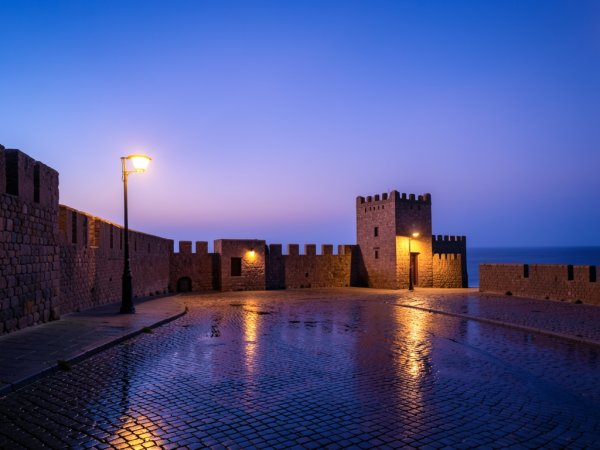
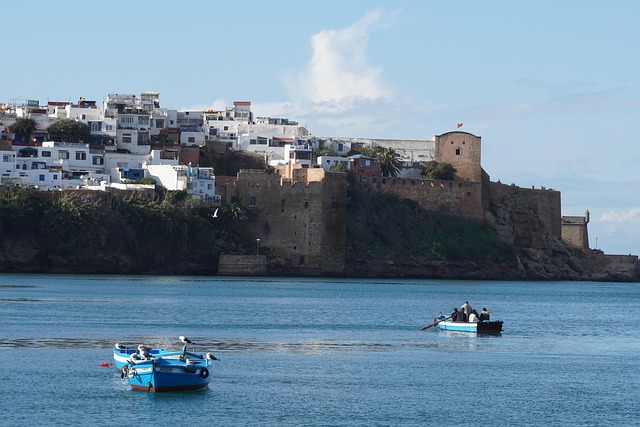
The Kasbah of the Udayas, a 12th-century Almohad citadel perched at the river mouth, is the real prize. Entry is free. The view from the platform at the top, where the Atlantic meets the river, is the best panoramic shot in the city. The streets inside are painted blue and white, similar to Chefchaouen but without the crowds or the pressure to buy. Field reports on Reddit note that the Kasbah is most photogenic between 4:00 PM and 5:30 PM, when the light hits the whitewashed walls and the storks are active on the ramparts. The Rabat Archaeological Museum, a short walk from the Kasbah, is also free and requires no advance booking. It houses Phoenician sarcophagi, Roman bronzes from Volubilis, and Islamic ceramics. It is a flexible add-on for a rainy afternoon or a midday break from the sun.
Contrast this with Marrakech. Bahia Palace charges 70 MAD. The Saadian Tombs charge 100 MAD. The Majorelle Garden charges 150 MAD. A full day of sightseeing in Marrakech runs 300–400 MAD per person before lunch. In Rabat, a full day of the highest-impact historical sites costs zero. It is a 14th-century Merenid ruin built on a Roman settlement, with stork nests on every tower and a quiet, almost abandoned feel. FlyerTalk threads report that Chellah is less crowded than the Kasbah but offers a unique mix of Roman columns, Islamic arches, and birdwatching. The small fee is worth it for the contrast alone.
The Rabat medina, unlike Marrakech’s, is a local market, not a tourist trap. According to the Moroccan National Tourist Office, the medina’s souks focus on everyday goods—produce, textiles, household items—rather than the leather and carpet touts that define the Marrakech experience. You can walk through without being stopped. The only caveat: the medina is closed on Fridays until after the noon prayer, so plan accordingly. The free monument loop—Hassan Tower, Mausoleum, Kasbah, Archaeological Museum—is walkable in a single morning, with the Chellah as an afternoon add-on. Set a calendar reminder to check the opening hours for the Mausoleum (it closes for a lunch break from 12:00 PM to 2:00 PM) and start your loop at 9:00 AM to beat the tour groups that arrive around 10:30 AM.
Book Ville Nouvelle, Not the Medina
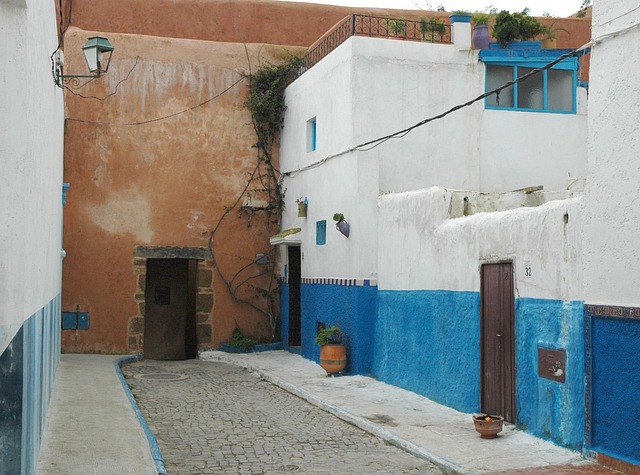
The Rabat Medina lacks the infrastructure for a comfortable short stay. According to Lonely Planet, the best-value neighborhoods for first-time visitors are the Ville Nouvelle for mid-range hotels and the Medina for budget riads. The distinction matters because the two zones serve different trip lengths and tolerances.
The Ville Nouvelle, the modern district built during the French protectorate, offers mid-range hotels with reliable air conditioning, English-speaking front-desk staff, and wide, walkable boulevards. It is the central hub for both the Kasbah of the Udayas and the Hassan Tower complex, which means you can walk to the free monument loop in under 15 minutes from most hotels in the area. A room at a three-star hotel like the Hotel Balima or the Rihab Hotel typically runs 350–500 MAD per night in July 2026, including breakfast. The trade-off is character: you sleep in a functional room, not a restored palace.
The Medina offers budget riads and authentic immersion, but book only if you are comfortable with narrow streets, potential noise from the call to prayer and early market activity, and limited elevator access in historic buildings. A decent riad like Riad El Maâti or Dar El Kebira runs 200–350 MAD per night, often with a courtyard and breakfast included. Field reports on Reddit warn that “sea view” rooms in the Medina can be overpriced and noisy from the ocean breeze and street traffic; prioritize “courtyard view” for peace and lower cost. The Medina is also closed on Fridays until after the noon prayer, which can disrupt a short itinerary.
Avoid staying in the “new” tourist traps near the beach, such as the hotels along Avenue des Nations Unies near the marina. These properties advertise sea views and modern amenities, but they are a 30-minute walk from the Kasbah and the Hassan Tower, and the neighborhood lacks the restaurant density of the Ville Nouvelle. You end up paying a premium for a view you will not use during daylight hours. The Ville Nouvelle is the central hub for both the Kasbah and the Hassan Tower, and it also has the best concentration of mid-range restaurants and bakeries.
Use Skyscanner’s “whole month” view to spot off-peak pricing for Riads in the Medina. The same riad that costs 350 MAD in August can be found for 250 MAD in mid-September. Set a calendar reminder to check the “whole month” view for your travel dates at least six weeks out, and compare the Medina riad price against a Ville Nouvelle hotel at the same time. If the riad is more than 100 MAD cheaper per night, the immersion trade-off is worth it for a three-night stay. If the difference is smaller, book the Ville Nouvelle and walk to the Medina for a half-day visit.
Money Matters: Dirhams, Cards, and Traps
The Moroccan dirham is a closed currency, meaning you cannot buy it outside the country at a fair rate. According to VisitMorocco.com, travelers should exchange cash at banks or authorized exchange offices inside Morocco, not before arrival. The better play is to use an ATM inside the arrivals hall at Rabat-Salé Airport (RBA) or at a bank in the Ville Nouvelle. As of July 2026, ATMs in Rabat dispense dirhams at competitive interbank rates, typically within 1–2% of the mid-market rate, and most charge a flat fee of 20–40 MAD per withdrawal.
Credit cards are widely accepted in the Ville Nouvelle, mid-range hotels, and larger restaurants, but carry cash for the Medina, souks, and small cafes. Visa and Mastercard are the most common; American Express is rarely accepted outside upscale hotels. Always confirm payment methods at booking, and ask whether the quoted price includes the card fee. For a three-night stay at a riad costing 300 MAD per night, the surcharge alone could add 27–45 MAD to the total — enough for a tagine lunch.
The trap most tourists hit is exchanging a large amount at the airport out of convenience. The smarter sequence: withdraw 600–800 MAD from the ATM at RBA for immediate cash needs (taxi, coffee, small purchases), then exchange the rest at a bank in the Ville Nouvelle once you have settled in. Banks like BMCE Bank and Attijariwafa Bank offer published rates and do not charge commission on cash exchanges, though they may require a passport.
One edge case: if you arrive at Casablanca’s Mohammed V Airport (CMN) and plan to take the Al Boraq train to Rabat, the station at Casa Voyageurs has a BMCE Bank branch with a fair exchange rate. Do not use the currency exchange kiosks inside the airport terminal. Practitioners report that the rate at the train station bank is within 1% of the interbank rate, while the airport kiosks are 6–8% off.
Carry small denominations for the Medina. Vendors in the souks and small cafes rarely have change for a 200 MAD note, especially in the morning. Break larger notes at a supermarket or bakery before entering the souk. in the morning. Break larger notes at a bank or by buying a small item at a supermarket like Marjane or Carrefour in the Ville Nouvelle. The Medina’s ATMs are unreliable; the one near Bab El Had often runs out of cash by midday on weekends. Withdraw cash in the Ville Nouvelle before heading into the Medina for a half-day visit.
Case Study: The 3-Day Rabat Budget Breakdown
The key lever is not just Rabat’s free monuments but the fact that the city’s accommodation and food costs are structurally lower because it lacks the tourist-tax markup that Marrakech’s medina imposes. For a concrete comparison, consider a couple spending three days in Rabat versus three days in Marrakech. Option A (Rabat, Ville Nouvelle): $310–$355 total local spend. Option B (Rabat, Medina riad): $260–$300 total local spend. Option C (Marrakech, Medina riad): $450–$550 total local spend, including entry fees to Bahia Palace (70 MAD), Saadian Tombs (100 MAD), and Majorelle Garden (150 MAD). The field decision: choose Rabat if your priority is cost and calm; choose Marrakech only if you specifically want the Jemaa el-Fnaa night market or the Atlas Mountains day trip.
That is the only transport cost between cities; the train runs hourly and the 50-minute ride is more reliable than a taxi, which can take 90 minutes in traffic and cost 350–500 MAD.
The difference is not just price: Rabat’s Ville Nouvelle is walkable to the train station and the free monument loop, while Marrakech’s medina requires taxis or long walks through crowded souks.
| Category | Cost per couple | Notes |
| Train (CMN–Rabat round-trip) | $48 | 120 MAD per person each way; second class |
| Hotel (2 nights, Ville Nouvelle) | $160–$200 | Mid-range, e.g., Hotel La Tour Hassan |
| Food & drink (3 days) | $90 | $15/person/day; local tagine, tea, simple dinner |
| Activities (3 sites) | $2 | Hassan Tower free, Kasbah free, Chellah $1 |
| Local transport (tram/taxi) | $10–$15 | Tram 6 MAD/ride; short taxi 20–30 MAD |
| Total Rabat-specific spend | $310–$355 | Excludes flights; includes all local costs |
The concrete action: open Google Flights, set a price alert for JFK to CMN in October 2026, and toggle the “Track prices” button. Then verify the fare on the airline's official website before booking. Once flights are booked, reserve a refundable room at Hotel La Tour Hassan or a similar Ville Nouvelle property on Booking.com. Then buy Al Boraq tickets at the ONCF counter at CMN upon arrival — no advance purchase needed for second class.
What to Do Next: Verify and Book
| Step | Action | Tool / Source | Timing |
|------|--------|--------------|--------|
| 1 | Set price alerts for both CMN and RBA | Google Flights "Track prices" | 8 weeks before departure |
| 2 | Verify visa requirements | U.S. State Department or Canada travel.gc.ca | Before booking |
| 3 | Book refundable hotel in Ville Nouvelle | Booking.com or hotel direct | After flights are secured |
| 4 | Buy Al Boraq train tickets | ONCF app or website | At least 24 hours before travel |
| 5 | Withdraw 600–800 MAD from ATM at arrival airport | BMCE Bank or Attijariwafa Bank ATM | Upon arrival |
| 6 | Confirm opening hours for Mausoleum of Mohammed V | Official site or hotel front desk | Morning of visit |
| 7 | Check weather forecast | AccuWeather or MeteoMaroc | 3 days before trip | The 200 MAD ($20 USD) departure tax baked into some CMN fares is not always included in the headline price — check the total before purchase. Field reports on FlyerTalk note that RBA’s smaller terminal means bag delivery in under 15 minutes versus 40+ at CMN. The tradeoff is route availability: RBA serves mostly European cities via Royal Air Maroc, Transavia, and Air Arabia Maroc, so U.S. travelers will almost always fly into CMN and take the train.
The Al Boraq high-speed train is the lever that makes CMN work for Rabat. Book second-class tickets on the ONCF website or app in advance for weekend travel — seats sell out Friday afternoon and Sunday evening. Practitioners recommend booking the Al Boraq train at least 24 hours ahead during peak season (March–May, September–November) to secure a seat, as the 7:00–9:00 AM and 5:00–7:00 PM windows sell out first.nd buying a round-trip ticket at the ONCF counter upon arrival at CMN’s train station (follow the signs from baggage claim) to lock in the return time. The train departs from Casa-Voyageurs station, not the airport terminal; a free shuttle bus connects the two every 20 minutes.
Visa requirements are straightforward for North Americans. U.S. and Canadian passport holders do not need a visa for tourist stays up to 90 days. The critical detail: your passport must be valid for at least six months from the date of entry. Border officers at CMN and RBA check this consistently — a passport expiring in four months will be rejected. No visa-on-arrival option exists for other nationalities; check the Moroccan embassy website before booking.
Weather timing matters more than most guides admit. March through May and September through November deliver daytime highs of 20–25°C (68–77°F) with low rainfall. July and August push 30°C (86°F) with humidity from the Atlantic, making the free monument loop less pleasant. December through February see 10–15°C (50–59°F) and occasional rain, but crowds drop to near zero. The Chellah necropolis — a 14th-century Merinid ruin with Roman foundations and stork colonies — is best visited in spring when the storks nest and the wildflowers bloom.
What to do next
Rabat’s quiet charm rewards those who plan ahead. Use the steps below to verify logistics, compare fares, and lock in the best travel windows before the city’s profile rises further.
| Step | Action | Why it matters |
|---|---|---|
| 1 | Check visa requirements on the official Moroccan Embassy website for your nationality. | U.S. and Canadian passport holders get 90 days visa-free, but passport validity (6+ months) is mandatory. |
| 2 | Set a Google Flights price alert for Rabat (RBA) or Casablanca (CMN) using the “Track prices” toggle. | No direct flights from North America to RBA; alerts help catch fare drops for the Casablanca connection. |
| 3 | Compare ONCF Al Boraq high-speed train schedules and fares on the official ONCF website. | The 50-minute Casablanca–Rabat train costs ~120 MAD ($12 USD) second class; booking online avoids queues. |
| 4 | Verify opening hours for the Hassan Tower and Mausoleum of Mohammed V on the Visit Morocco site. | Both are free-entry landmarks, but hours can shift during Ramadan or holidays. |
| 5 | Use Skyscanner’s “whole month” search to identify the cheapest travel days in March–May or September–November. | Shoulder seasons offer 20–25°C highs and lower airfare; off-peak midweek departures save the most. |
| 6 | Exchange currency only at banks or authorized exchange offices after arriving in Morocco. | The Moroccan dirham is a closed currency; pre-arrival exchange rates are poor or unavailable. |
Also worth reading Why Rabat is the perfect Moroccan Why this is the perfect year Why you should visit the quiet That moment you realize you are
Quick answers
What to Do Next: Verify and Book?
| Step | Action | Tool / Source | Timing | |------|--------|--------------|--------| | 1 | Set price alerts for both CMN and RBA | Google Flights "Track prices" | 8 weeks before departure | | 2 | Verify visa requirements | U.S. State Department or Canada travel. com or hotel d...
What to do next?
Step Action Why it matters 1 Check visa requirements on the official Moroccan Embassy website for your nationality. The 50-minute Casablanca–Rabat train costs ~120 MAD ($12 USD) second class; booking online avoids queues.
What should you know about Fly into Casablanca (CMN), Not Rabat (RBA)?
Use Google Flights’ "Track prices" feature for both CMN and RBA simultaneously; set alerts for a 2-week window around your target dates. Practitioners report that fare drops on Air France or Iberia from East Coast hubs often appear 6–8 weeks before departure, not the standard...
Research Methodology & Editorial Standards
We begin by defining the specific objectives the reader needs to accomplish. Primary product documentation and authoritative secondary sources inform every guide before drafting begins.
Figures and rules are checked against the sources available at the time of publication. Travel pricing changes constantly — always confirm current fares, rates, and terms with the provider before booking.