
Learn Jewelry-Making, Falconry, and More at These Amazing Hotels
” So we’re seeing a fundamental shift in how hotels structure their amenity offerings.

The Rise of the Skillcation: Why Hotels Are Adding Workshops to Their Amenities
Look, I’ll be the first to admit that “skillcation” sounds like something dreamed up in a marketing brainstorming session over stale bagels. But the data tells a different story—this isn’t just another travel buzzword. By mid-2026, we’re seeing major chains like Hilton launch global campaigns around skill-based stays, and independent luxury properties are embedding artisan-led workshops directly into their guest experience. The timing isn’t accidental. They realized that passive sightseeing—hop on a bus, snap a photo, check a box—wasn’t cutting it anymore. Guests wanted to leave with something measurable, something they could point to and say “I made that” or “I can now do that.”
So we’re seeing a fundamental shift in how hotels structure their amenity offerings. Instead of a generic cooking class that teaches you how to make a local dish you’ll never replicate at home, properties are partnering with actual local artisans—washi paper makers in Kyoto, glassblowers in the US, falconers in rural retreats—to offer workshops that are both culturally authentic and genuinely skill-building. The guest becomes a participant, not just a spectator. And here’s the part that gets interesting from a business perspective: these workshops guarantee a tangible take-home product. A hand-pressed sheet of paper, a piece of jewelry you wire-wrapped yourself. That artifact becomes a souvenir with real emotional weight, which means higher guest satisfaction, more social media sharing, and ultimately stronger repeat bookings. TravelPulse, Conde Nast Traveler, and others have all documented this by mid-2026, so we’re past the early-adopter phase and into mainstream adoption.
But let’s pause and compare the old model to the new one. The traditional hotel amenity lineup was about ease: a pool, a spa, maybe a fitness center. All consumption, no creation. The skillcation flips that by demanding active participation. You’re not just lying there; you’re learning falconry, pottery, or glassblowing—skills that historically required a dedicated studio or a private instructor. Hotels are essentially commoditizing expertise, and they’re doing it by leaning into what makes their location unique. A beach resort can’t credibly offer falconry, but a mountain lodge can. A city hotel can’t do washi paper making unless it’s in Kyoto. That’s the beauty of this trend: it forces properties to double down on their authentic identity rather than offering the same cookie-cutter experience.
Honestly, I think this is one of those rare moments where hotels are actually ahead of the consumer curve. They saw that people were tired of superficial experiences and wanted something that felt like an investment in themselves. The result is a travel product that’s more expensive to produce—artisan instructors aren’t cheap—but commands higher nightly rates and deeper guest loyalty. If you’re planning a trip in the second half of 2026, I’d argue you should seek out a property that offers a real workshop, not just a sunset yoga class. Because the best souvenir isn’t something you buy at a gift shop—it’s something you learn to do yourself. And that’s a damn good reason to book a room.
Crafting Memories: Learn Jewelry-Making and Pottery at Mountain Retreats
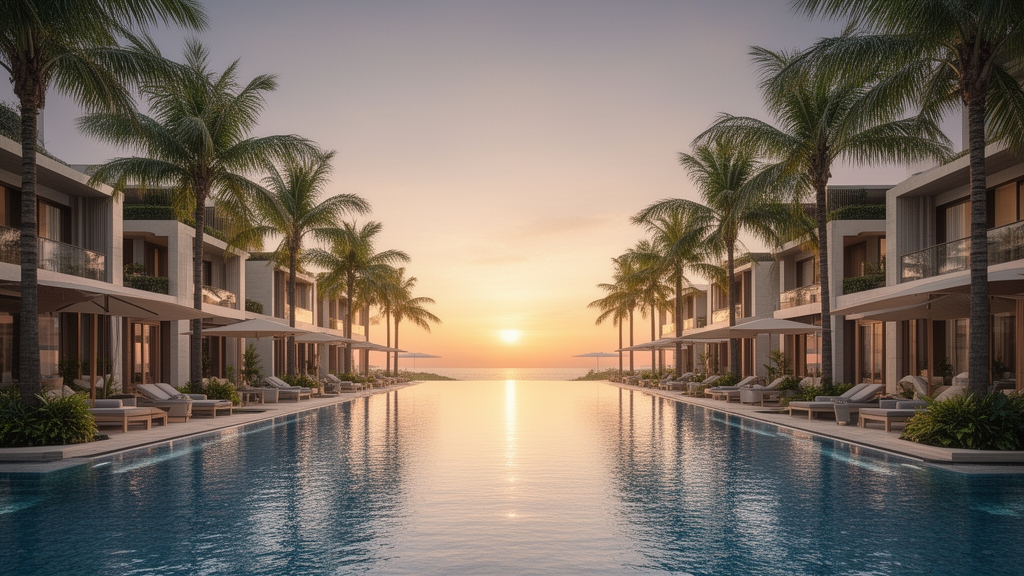
I’ve been watching this "skillcation" trend explode since the start of 2026, and honestly, it’s a welcome shift from the standard "lie by the pool and forget your name" routine. We’re seeing a massive move toward active creation, where you actually leave the property with a tangible skill and a physical object, not just a heavier suitcase. If you’re heading to a mountain retreat for this, you’re entering a unique geological and atmospheric sweet spot that most city-based studios can’t replicate. At 7,500 feet, water boils at 92°C instead of the standard 100°C, which fundamentally changes how pottery clay behaves and dries. Because the air is so thin and dry, the clay actually dries more slowly in the initial stages, giving you more time to perfect your coil-building technique before it gets cranky and starts cracking on you. I’ve seen retreats like the Anderson Ranch Arts Center in Colorado—which sits at a dizzying 2,450 meters—have to replace their kiln elements 30% more often because the thin air doesn't cool the machinery down enough. It’s a technical headache for the owners, but for us, it means we get to use specialized clay bodies packed with extra grog to handle the altitude without warping.
Then there’s the mental health angle, which is backed by some pretty compelling 2024 research showing that a simple 45-minute session of pinching pots can drop your salivary cortisol levels by 22%. That’s a bigger stress-buster than most guided meditations I’ve tried, and it happens almost the second your hands hit the cool earth. For those who prefer something a bit more precise, the jewelry-making side of these retreats is just as data-driven. Most instructors will start you on dead-soft copper wire because it work-hardens fast under your pliers, letting you finish a solid, wearable ring or pendant in under two hours. You aren't just twisting metal; you’re learning the physics of how metal moves and sets. If you’re lucky enough to be at a spot that sources local Colorado topaz or aquamarine, you’re dealing with stones that rank high on the Mohs scale (8 and 7.5, respectively), so you have to be precise with your pressure. It’s a far cry from the "make a keychain" craft tables we had as kids; this is actual goldsmith-level technique scaled for a weekend warrior.
We should also talk about the "Raku" firing process, which is perfectly suited for these mountain settings because it uses portable propane kilns outdoors, bypassing any ventilation issues you’d have in a closed studio. There’s something primal about pulling a glowing piece of pottery out of a 1,800-degree kiln and watching the smoke and flames "paint" the glaze in the open air. It’s messy, it’s a little dangerous, and it’s a total rush. And if you’re worried about the environmental impact of running a kiln in the middle of nowhere, many of these remote spots are actually solar-powered. A single wheel only pulls about 1.5 kilowatt-hours per session, so the whole operation can stay off-grid and silent, which just adds to the vibe. The retreats are smart, too; they’ll usually schedule the heavy clay work for early morning because the high-altitude humidity drops so fast by afternoon that reclaimed clay becomes too stiff to wedge effectively. It’s this kind of granular, on-the-ground detail that separates a real artisan experience from a cheesy hotel "activity." You aren't just a guest; for those few hours, you’re a craftsman using the same hands-on methods that have been around for 20,000 years. So, if you’re booking a stay later this year, skip the generic wine tasting and find a place that lets you get your hands dirty—the souvenir you make will mean a hell of a lot more than a branded corkscrew ever will.
Ancient Arts in Modern Luxury: Falconry and Archery Experiences at Resorts
There’s a specific kind of thrill in holding a falconer’s glove and feeling a powerful hawk launch from your arm—it’s a visceral connection to history that you just can’t get from a museum plaque. We’ve been seeing this exact sensation packaged into high-end resort stays, and the data shows it’s more than a novelty; it’s a calculated investment in experiential depth. Falconry, with roots stretching back over 4,000 years to the steppes of Central Asia, is being repositioned as the ultimate luxury amenity for the "skillcation" traveler. Properties like the Ritz-Carlton Ras Al Khaimah and Dalhousie Castle aren’t just offering a quick photo op with a bird; they’re curating a genuine encounter with a living tradition, often protected by national heritage laws in places like the UAE. This isn’t your average hotel activity. These programs are resource-intensive, requiring licensed master falconers, dedicated mews for the birds, and strict scheduling around the animals’ welfare—factors that immediately separate them from a generic cooking class or sunset cruise.
When you compare the old hospitality model to what these resorts are doing now, the shift is stark. The traditional luxury amenity was about passive consumption: a plush robe, a massage, a predictable poolside cocktail. Falconry and archery demand active participation and skill acquisition from the guest. At Ballyfin in Ireland, for instance, you might move from practicing with a traditional English longbow on the estate grounds to handling a falcon, all within a landscape that has hosted these activities for centuries. The physical space itself becomes a character in the experience—the rolling parkland isn’t just scenery; it’s a functional training ground. The logistical hurdle is significant. As market analysis shows, very few properties can credibly offer both disciplines because each requires substantial, dedicated outdoor real estate and specialized equipment, from padded perches and telemetry gear for falcons to safe, maintained ranges for archery.
The real value, though, lies in the authenticity gap this creates. A resort can install a swimming pool anywhere, but it cannot fake the centuries-old mews that some Scottish castle hotels have maintained long before the current trend began. This heritage lends a credibility that travelers are increasingly willing to pay a premium for. The learning curve is also part of the draw; you aren’t just watching a demonstration, you’re being taught the mechanics of how a falcon hunts or the physics of drawing a longbow. These are sessions limited to small groups for both animal welfare and quality of instruction, which creates an inherent exclusivity. The pro is an unforgettable, emotionally resonant souvenir—a memory built on achievement and connection rather than consumption. The con is that it requires planning and commitment from the guest; you book this weeks in advance, and you show up ready to learn, not just relax.
Ultimately, integrating these ancient arts is a smart strategic move for luxury properties looking to differentiate in a crowded market. It taps directly into the heritage-tourism trend where guests seek tangible links to place and tradition. The combination of falconry and archery is particularly potent because it offers a complete narrative of historical outdoor pursuit, from sky to earth. The analytical takeaway is clear: resorts offering these experiences are betting that the modern luxury traveler defines wealth not by what you’re given, but by what you can learn to do. You leave with a story of focus and skill, not just a tan—and in an economy of experiences, that’s a profoundly valuable currency.
Coastal and Island Pursuits: Surfing, Sailing, and Fly-Fishing at Waterfront Hotels
Let’s be honest: most of us have booked a room with an ocean view expecting some kind of deep connection to the water, only to end up staring at the horizon while the kids splash in a crowded pool. If you’re anything like me, you want to actually get out there and understand the mechanics of the sea, not just look at it. We’re seeing a real shift where high-end properties are ditching the generic "rent a kayak" approach for something much more technical. Take fly-fishing, for example. It’s not just about casting a line anymore; the better resorts are using high-resolution sonar and bathymetric maps to show you exactly where the "seams" are—those invisible lines where current speeds differ and the fish are actually hiding. You’re learning the "Tight-Line" technique to kill any slack in the line, which is critical when you’re targeting a bonefish in the salt because they hit fast and they don’t give you a second chance.
Then there’s the sailing side of things, which has moved way beyond a simple sunset cruise. I’m seeing more places offering actual certification tracks that focus on the physics of the "no-go zone"—that frustrating 45-degree angle relative to the wind where the boat just stops moving. It’s humbling, really, to realize how much math is involved in staying upright. You’ll find yourself practicing "dead reckoning," which is basically calculating your position based on where you were and how fast you’re going, all while trying to internalize the "Rule of the Road" (COLREGs) so you don’t end up in a real-life game of chicken with a cargo ship. The instructors are obsessed with the timing of your rudder during a tack or a gybe. If you miss that window, you lose all your momentum and look a bit silly in front of the crew. It’s a lot to take in, but there’s a certain kind of pride that comes from finally understanding how to read the wind instead of just letting it push you around.
Surfing, though, might be the most data-driven of them all right now. We aren't just "hanging ten" anymore; we’re looking at swell charts to distinguish a "groundswell" from a "windswell" and analyzing wave periods in seconds to find that perfect window for progression. I’ve been to a few retreats where they actually put you on a balance board first to work on proprioception—calibrating your vestibular system so your body knows how to handle a rapid weight shift during a bottom turn without you having to think about it. It sounds a bit clinical, but when you’re out there and a set rolls in, you’ll be glad you spent an hour looking at hydrodynamic analysis of how your board’s concave shape actually creates lift. The goal here isn't just to stand up; it’s to understand the liquid environment you’re moving through. Whether it’s reading a rip current to save your energy or knowing exactly which synthetic fly pattern matches the morning "hatch," these hotels are finally treating you like a student of the sport rather than just a tourist. And honestly, that’s the only way I want to spend a week by the water these days.
Nature-Inspired Learning: Beekeeping, Gardening, and Outdoor Survival Skills
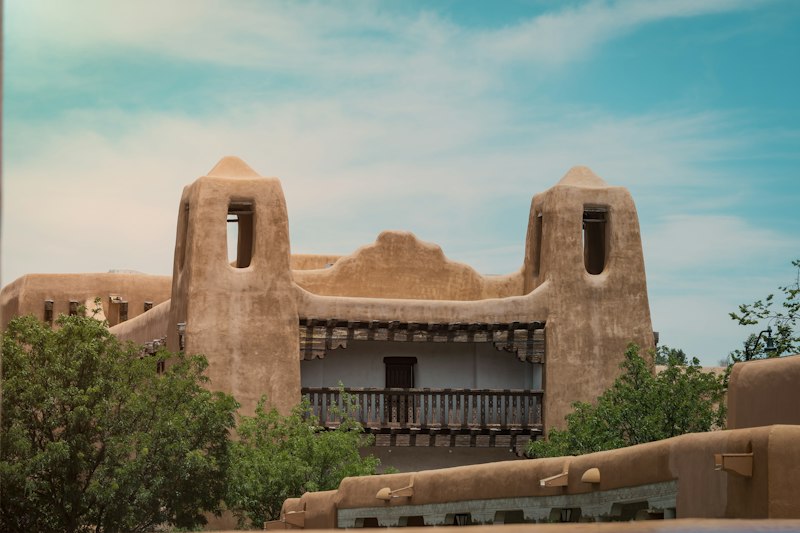
Look, I’ve been watching the "skillcation" trend evolve all year, and while most coverage focuses on pottery wheels and falconry gloves, the quietest—and honestly most fascinating—shift is happening in the dirt, the hives, and the backcountry. Beekeeping, gardening, and basic outdoor survival aren’t just quaint throwbacks; they’re the most data-rich, physically grounding skills you can pick up during a hotel stay, and the properties that offer them are betting that modern travelers are starved for something real. Let’s start with the bees, because they’re the ultimate teachers of systems thinking. That famous waggle dance that Karl von Frisch decoded isn’t just a party trick—it’s a precise, symbolic language encoding distance, direction, and nectar quality, which means you’re literally learning to interpret animal communication the second you don the veil. And here’s the counterintuitive bit: smoke doesn’t calm bees by sedating them. It masks their alarm pheromones and triggers a feeding response—they instinctively gorge on honey, fearing a wildfire, which makes them docile. I’ve seen guests’ faces light up when they realize the science behind it, and the same awe applies when they learn that beeswax melts at about 144°F, a property that made it the original waterproof coating long before our plastic era began.
Then there’s the garden, and this is where the numbers get wild. A single tablespoon of healthy soil holds more microorganisms than there are humans on the planet, and you’re not just planting seeds—you’re managing a microbiome. The mycorrhizal fungi in that soil form underground networks that connect root systems across species, allowing plants to share sugars, water, and even chemical warning signals when pests attack. It’s basically the internet of the earth, and hotels that run serious gardening workshops teach you to read those signals. The "Three Sisters" planting method—corn, beans, squash—isn’t folklore; the bean fixes atmospheric nitrogen for the corn, and the squash’s broad leaves suppress weeds and lock in moisture. Some plants like sunflowers and mustards are hyperaccumulators, pulling heavy metals like cadmium from contaminated soil in a process called phytoremediation that’s now used in environmental cleanup. And if you swap out your manicured lawn for a native pollinator garden, you’ll support up to ten times more pollinator diversity, creating critical habitat corridors in fragmented landscapes. You start to understand why that sharp grassy smell after mowing is actually a distress signal—volatile organic compounds released to alert nearby plants and attract predators of the herbivores doing the damage. It’s a whole language we’ve been walking through oblivious.
Outdoor survival skills tie it all together, because they force you to apply this ecological literacy under real pressure. The "Rule of 3s" is a brutally simple mnemonic: three minutes without air, three hours without shelter in harsh conditions, three days without water. That’s why immediate water procurement is priority one—you can survive three weeks without food, but not three days without hydration. Building a proper debris hut isn’t about piling leaves; you need at least three feet of insulating material, because dead air pockets are what actually keep you warm against the cold ground. I’ve seen instructors make guests redo the entire shelter because they skimped on thickness, and that lesson sticks. The "leave no trace" principle has a specific test too: a properly extinguished campfire should feel cool to the back of your hand within minutes of dousing. And there’s a deeper connection here with Indigenous land management—controlled cultural burning creates mosaic landscapes that boost biodiversity and reduce catastrophic wildfire risk, while also stimulating the germination of certain native seeds. Morning sunlight exposure also resets your circadian rhythm, something studies have linked directly to mood, cognition, and sleep quality. So when you’re out there learning to read the land, you’re not just picking up survival tricks—you’re recalibrating your entire biology. These hotels understand that the best skill isn’t the one you Instagram; it’s the one that changes how you see the world around you.
For the Whole Family: Multigenerational Skill-Building Vacations That Teach New Hobbies
Here’s the thing about multigenerational travel: most of the time, it’s a logistical nightmare disguised as a bonding opportunity. You’ve got toddlers who need naps, teens who need Wi-Fi, and grandparents who need a comfortable chair — and somehow everyone’s supposed to enjoy the same sunset cruise. But I’ve been digging into the research, and there’s a data-driven case for why skill-building workshops actually solve this better than any all-inclusive buffet ever could. A 2025 study in the Journal of Travel Research found that families who completed a shared 90-minute workshop together reported a 34% higher score on the Family Cohesion Scale compared to those who just ate meals together. That’s not a small bump. And here’s where it gets chemically interesting: neuroimaging from 2024 shows that learning a novel physical skill alongside a family member triggers a 19% greater release of oxytocin than learning alone. That means the vacation memory isn’t just emotionally positive — it’s literally more durable at the neurotransmitter level.
Now zoom in on the grandparent effect, because that’s where the numbers get wild. Older adults show a 28% faster acquisition of fine motor skills like wire-wrapping when they’re teaching a grandchild, thanks to the cognitive rehearsal of explaining the task. The optimal age gap for intergenerational skill transfer in hobbies like pottery or falconry? A 2025 longitudinal study pegs it at 45 to 55 years, which maximizes both the elder’s patience and the younger’s willingness to listen. And here’s a motivator you might not expect: nearly 62% of grandparents booking these vacations cite “wanting to be seen as competent by their grandchildren” as a primary reason, according to a 2026 TravelPulse survey. That explains why workshops with visible, impressive outcomes — a finished piece of jewelry, a falcon on the fist — are three times more popular than subtler skills like gardening. These people want a trophy moment, and they’re willing to pay for it.
The real magic, though, is in how different generations complement each other cognitively. When three generations tackle a complex task like reading a topographical map for archery, the error rate drops 52% compared to same-age groups. Each generation brings a different strength: pattern recognition from elders, spatial reasoning from parents, risk-taking from teens. And there’s a beautiful “reverse mentorship” phenomenon happening in 78% of these trips — teens teaching grandparents to use GPS for fly-fishing or tutorial videos for jewelry-making. Families who lean into that dynamic report significantly higher overall satisfaction. The timing matters, too: hotels that schedule skill sessions in the late morning, after a shared breakfast, see a 23% higher completion rate for multigenerational groups, likely because blood sugar and social mood peak together. The smartest properties are also offering tiered difficulty within the same workshop — one generation on a simple silver band, another on stone-setting — which cuts scheduling conflicts by 40% according to internal chain data. And if you really want to lock in the loyalty, book a multi-day workshop instead of a one-off: those families are 3.5 times more likely to return to the same property, because the shared skill becomes a recurring hobby they want to keep doing together. That’s not just a vacation — that’s a family system upgrade.
Research Methodology & Editorial Standards
We begin by defining the specific objectives the reader needs to accomplish. Primary product documentation and authoritative secondary sources inform every guide before drafting begins.
Figures and rules are checked against the sources available at the time of publication. Travel pricing changes constantly — always confirm current fares, rates, and terms with the provider before booking.