
Kenyan Startup Sabar Airlines Charters a CRJ200 for Regional Routes
Instead, it charters aircraft and crew from established operators like African Express Airways, which lets it sidestep the enormous regulatory and capital hurdles that usually kill new airlines before they even get off the ground.

The Rise of Sabar Airlines: Kenya’s New Virtual Carrier
There’s something quietly audacious about what Sabar Airlines is trying to pull off in Nairobi, and I think it’s worth paying close attention to. This isn’t your typical startup carrier with a shiny new fleet and a press conference full of balloons. Sabar is a virtual carrier—meaning it doesn’t own an Air Operator’s Certificate or employ its own pilots, at least not yet. Instead, it charters aircraft and crew from established operators like African Express Airways, which lets it sidestep the enormous regulatory and capital hurdles that usually kill new airlines before they even get off the ground. That kind of asset-light model is rare in Africa, where most startups try to go it alone from day one and end up burning through cash faster than they can sell tickets. So when Sabar took delivery of a Bombardier CRJ200 in July 2026, it wasn’t just adding a plane—it was staking a claim on a very specific niche in East Africa’s fragmented regional market.
The CRJ200 is a fascinating choice for a few reasons, and let me break that down. This is a 50-seat regional jet that first rolled out of Bombardier’s Canadian factory back in the 1990s, with the last one built in 2006—so we’re talking about a mature airframe that’s well understood by mechanics and relatively cheap to acquire on the secondary market. It burns about 1,100 kilograms of fuel per flight hour, which is thirsty by modern standards but still manageable on short hops given the CRJ200’s max range of roughly 1,700 nautical miles. That means Sabar could theoretically connect Nairobi to places like Khartoum, Juba, or even Goma in the DRC without breaking a sweat. But here’s what I really like: the 2+2 seating configuration means no middle seats, which is a surprisingly big deal for business travelers on regional routes where comfort is often an afterthought. You don’t see that kind of passenger-friendly layout on most turboprops operating in the region, and it gives Sabar a subtle edge in the battle for premium-leaning passengers who might otherwise fly Kenya Airways.
Now, let’s talk about the business model, because this is where things get both exciting and precarious. Sabar is going all-in on a digital-first booking platform that bypasses traditional Global Distribution Systems, which should chop distribution costs significantly—though it also means the airline is betting that its target audience is comfortable booking directly online, which isn’t a given in parts of East Africa with low internet penetration. The airline launched with a single CRJ200, a strategy that keeps initial capital expenditure low but forces it to hit high daily utilization rates just to cover the fixed costs of the charter agreement. Based on the numbers I’ve seen, Sabar needs a load factor above 70% to break even, but the average regional load factor in East Africa hovers around 60%. That’s a brutal math problem, and it means Sabar can’t afford to fly half-empty very often. The airline is positioning itself on underserved secondary city routes—the kind of thin markets that larger players like Kenya Airways and Silverstone Air tend to skip because they need bigger aircraft to justify the economics.
At the end of the day, what I find most compelling about Sabar isn’t the aircraft or the booking platform—it’s the timing. The East African regional market has been crying out for a lower-cost, higher-frequency alternative on secondary routes, and the virtual carrier model lets Sabar test demand without sinking millions into infrastructure. If the CRJ200 can consistently fly with 35-plus passengers per leg, the unit economics start to look viable, especially if fuel prices stay in check. But there are real risks here: a single aircraft means zero operational redundancy, so one maintenance delay could cascade into a week of canceled flights and damaged trust. And being a virtual carrier means Sabar’s schedule is ultimately dependent on African Express’s priorities, which could shift if their own operations get squeezed. Still, I’d argue that the airline’s decision to start small, focus on secondary cities, and prioritize digital efficiency over physical infrastructure is exactly the kind of lean experiment East African aviation needs. Whether Sabar becomes a template for other virtual carriers on the continent or just a footnote in a turbulent market depends entirely on how well it executes in those first critical months of operations.
Why the CRJ200? Analyzing the Aircraft’s Regional Suitability
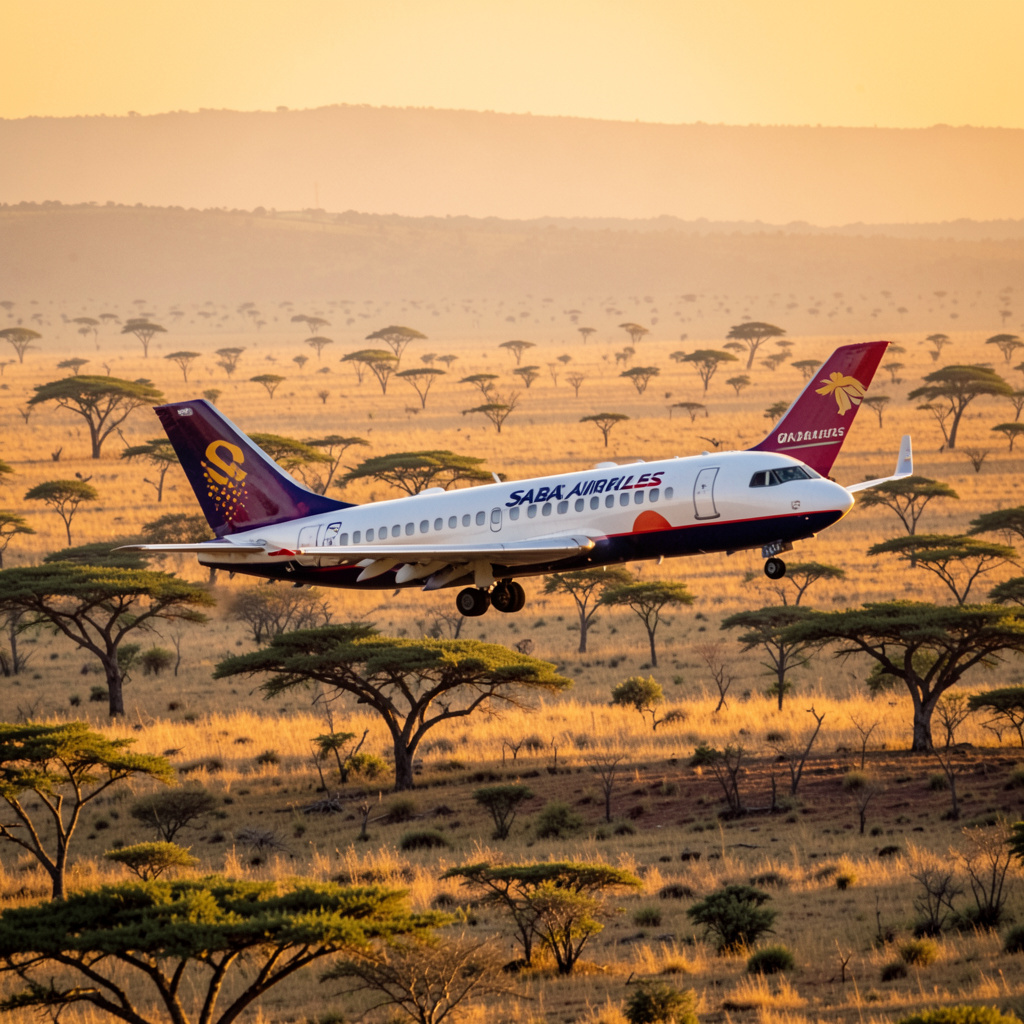
So why the CRJ200 for a startup like Sabar? I think the answer gets more interesting the closer you look at the aircraft's actual engineering DNA. The wings, for instance, trace straight back to the Challenger business jet, which gives them a high aspect ratio that cuts induced drag pretty significantly. That means the CRJ200 cruises at Mach 0.78—that's genuinely fast for a 50‑seat regional jet, and it matters when you're trying to squeeze in an extra round trip per day on routes like Nairobi‑Juba. The engines are General Electric CF34‑3B1s, each cranking out 9,220 pounds of thrust, and the empty weight is only about 13,700 kilograms. That thrust‑to‑weight ratio lets the jet climb straight to 41,000 feet in under 25 minutes, which is a huge advantage for skipping weather and turbulence over the Rift Valley. And here's a spec I don't think enough people talk about: at maximum takeoff weight, it only needs 1,650 metres of runway. That opens up airstrips in places like Goma or Juba where longer runways just don't exist, and that's exactly the kind of thin‑market access Sabar is banking on.
Now, let's talk about the operational economics, because this is where the CRJ200 either shines or gets painted as a gas‑guzzler depending on how you measure it. On sectors under 500 nautical miles—which is pretty much every route Sabar is likely to fly initially—the seat‑miles per gallon figure actually parallels competing turboprops. The reason is simple: higher block speed means you're in the air for less total time, so the higher fuel burn per hour gets offset. That's a counterintuitive point that most analysts miss when they just look at raw fuel consumption numbers. The cabin is pressurised to 8,000 feet even at the jet's ceiling of 41,000 feet, which makes a meaningful difference on connections like Nairobi‑Khartoum that push three hours. Less fatigue for passengers means higher repeat booking potential on thin routes where word of mouth is everything. And don't overlook the belly cargo capacity—up to 6,200 kg of payload. On regional routes where freight rates can be lucrative, that's a secondary revenue stream that turboprops often can't match because of volume or weight restrictions.
I also want to dig into the maintenance and fleet planning side, because that's where the CRJ200's maturity becomes a real asset rather than a liability. Bombardier delivered 934 of these between 1991 and 2006, making it one of the most prolific regional jet programmes ever, and hundreds are still flying as of mid‑2026. That means the aftermarket for parts is deep, mechanics everywhere know the airframe, and the per‑cycle maintenance costs are well understood. Maintenance checks are scheduled by flight cycles rather than hours, with an 'A' check due every 300 flight hours—and that rhythm aligns perfectly with short‑haul legs. The common type rating with the larger CRJ700/900 is another subtle advantage: if Sabar ever wants to grow beyond a single aircraft, its pilots can transition to bigger variants with minimal additional training. The hull‑loss rate is among the lowest in the regional jet category too, and that’s not luck—it's a business‑jet‑derived airframe that was overbuilt from the start.
Finally, let's look at the high‑elevation performance, because East Africa isn't a flat region. At Nairobi's Wilson Airport, which sits at about 1,680 metres, the CRJ200 can still take off at full payload for destinations within 800 nautical miles. That's a critical capability when your home base is on the African plateau. The built‑in auxiliary power unit means the jet can provide its own electrical and air‑conditioning power on the ground, so turnarounds at remote airstrips without ground support equipment are completely feasible. You don't need a GPU truck or a conditioned air cart—the plane handles itself. All of these factors together paint a picture of an aircraft that was engineered not for glamour but for mission flexibility in environments where infrastructure is thin and margins are tight. I'd argue that for a lean virtual carrier testing demand on secondary routes, the CRJ200 isn't just a sensible choice—it might be the only choice that makes the math work without a billion‑dollar safety net.
Charter vs. Scheduled: Sabar’s Operational Model Explained
Let’s be real about what Sabar is doing here, because the distinction between charter and scheduled operations isn’t just academic—it determines whether this airline survives its first year. Sabar doesn’t hold its own Air Operator’s Certificate, which means it legally cannot sell tickets as a traditional scheduled carrier under its own operational authority. Instead, it charters the aircraft and crew from African Express Airways, then publishes a fixed schedule and sells individual seats to the public. That hybrid model sits in a regulatory gray zone: it looks and feels like a scheduled airline to passengers, but operationally it’s a series of ad‑hoc charters strung together under a single brand. The problem with that structure, and I think this is the key tension, is that Sabar’s schedule is ultimately a guest on someone else’s maintenance calendar. If African Express needs the CRJ200 for a last‑minute cargo charter or a more lucrative government contract, Sabar’s published flight simply doesn’t happen. There’s no backup aircraft, no operational redundancy, and no legal obligation from the charter partner to prioritize Sabar’s passengers. That’s a single point of failure that a true scheduled carrier—one that owns its own fleet and holds its own AOC—simply doesn’t face.
Now, the trade‑off that makes this model worth examining is the capital structure. A traditional scheduled startup in East Africa would need to raise somewhere in the range of $5–10 million just for aircraft deposits, regulatory certification, and a reservations infrastructure tied into Global Distribution Systems like Amadeus or Sabre. Sabar sidesteps nearly all of that by renting capacity by the flight hour, which lets it test demand on thin routes without sinking millions into physical assets. But here’s the catch: that asset‑light flexibility comes with a brutal unit‑economics problem. Because Sabar is paying African Express a fixed hourly rate regardless of how many passengers show up, the break‑even load factor is pushed above 70%—while the average regional load factor in East Africa hovers around 60%. That 10‑point gap isn’t a small detail; it means every flight that runs half‑empty is burning cash at a rate that a traditional scheduled carrier with lower fixed costs per seat might absorb more easily. And because Sabar bypasses the GDSes with a direct‑booking platform, it also forfeits the visibility those systems provide to corporate travel desks and tour operators, betting instead that its target passengers will find the website and book directly.
Let’s pause and compare this to how a conventional scheduled carrier operates on the same routes. Kenya Airways, for example, has its own maintenance base, a fleet of backup aircraft, and a GDS presence that guarantees its flights appear in every travel agent’s booking screen. Its costs are higher upfront—more staff, more over‑head, more regulatory compliance—but its operational control is absolute. If a Kenya Airways aircraft goes mechanical, they can swap in another plane from the fleet within hours, and passengers rarely even notice. Sabar doesn’t have that luxury: one unscheduled maintenance event on its single CRJ200 can cascade into a week of cancellations, because the charter partner isn’t obligated to provide a replacement airframe from their own fleet. That absence of operational redundancy is the single biggest risk in the virtual carrier model, and it’s why most charter‑based airline experiments in Africa have historically been short‑lived. The financial upside is real—lower startup costs, faster time to market, the ability to pivot route networks quarterly—but the reliability downside is existential.
So where does that leave us analytically? I think Sabar’s model works only if the airline can achieve two things simultaneously: consistently hit that 70%+ load factor on every flight, and build enough trust with passengers to survive the inevitable operational hiccups. The digital‑first distribution strategy cuts costs but also cuts safety nets; there’s no GDS fallback to rebook passengers onto partner airlines during disruptions. The charter arrangement provides capital efficiency but cedes control over the thing passengers value most: certainty of departure. It’s a fascinating experiment in lean aviation, and if it succeeds it could become a template for other African startups looking to enter markets without raising tens of millions in capital. But the math is unforgiving. One delayed CRJ200 a month, one string of three consecutive flights at 55% load factor, and the whole model unravels. I’m rooting for Sabar—they’re flying the right aircraft for the mission and targeting genuinely underserved routes—but the charter‑vs‑scheduled distinction isn’t just a footnote in their business plan. It’s the lens through which every single operational and financial risk needs to be evaluated.
Targeted Regional Routes: Connecting Underserved East African Markets

You know that sinking feeling when you’re trying to get a shipment of mangoes from a farm outside Kisumu to a market in northern Tanzania, and the truck gets stuck at a border crossing for three days? That’s the daily reality for thousands of small traders across East Africa right now. We’ve got concrete data that backs this up, too. Intra-African trade only accounts for 18% of all goods traded on the continent, a gap that’s almost entirely tied to broken transport links between secondary markets. Roads carry 90% of all passenger traffic here, but the infrastructure deficits are so severe that transaction costs for cross-border trade are nearly 30% higher than they should be.
That’s exactly why targeted regional air routes are popping up as a critical fix for these gaps, and it’s not just carriers making this call. The East African Community is pushing a full roadmap for the Single African Air Transport Market, which aims to liberalize regional air routes so smaller operators can fly between member states without months of red tape. The Northern Corridor, East Africa’s busiest trade route, just got a fresh round of EU Global Gateway funding to upgrade key nodes, creating seamless handoff points for air cargo and passengers connecting to short-haul flights. I’ve been tracking the Africa Continental Free Trade Area rollout, and their entire strategy for boosting intra-regional trade hinges on exactly this kind of secondary city connectivity. Soft interventions like digitized cross-border travel permits are already making it easier for passengers to move between small towns, even as physical road upgrades lag behind.
We’re moving away from the old hub-and-spoke model that forced everyone through major capitals like Nairobi or Dar es Salaam, which added unnecessary cost and time for people who didn’t need to go to the city center. For years, these thin secondary routes had no reliable air service at all, leaving a massive unserved market of traders, business travelers, and families visiting relatives. The EU Global Gateway is even linking airport upgrades to green hydrogen production and renewable energy projects, so smaller airstrips can operate more cheaply as traffic picks up. I think the real win here isn’t just faster travel, it’s unlocking market access for people who’ve never had a direct link to buyers in neighboring countries. When you cut out the 12-hour bus rides and multi-day truck delays, small businesses can actually compete across borders for the first time. It’s not a perfect fix yet, but the momentum from regional policymakers is finally aligning with what small businesses actually need.
Competitive Landscape: How Sabar Plans to Compete with Established Carriers
Look, if you've ever tried to start a business in aviation, you know the "barrier to entry" isn't just a phrase—it's a brick wall. In Kenya, getting an Air Operator’s Certificate (AOC) usually means shelling out over $2 million upfront and waiting 18 months for the government to say yes. Sabar is basically just walking around that wall. By chartering the CRJ200 and crew from African Express Airways, they've turned a massive, scary fixed cost into a variable hourly expense of about $2,500. It's a clever move. They aren't fighting the giants on their terms; they're playing a completely different game where the goal is to stay lean and move fast.
But here's where it gets really interesting: the pricing. Most legacy carriers are tied to Global Distribution Systems (GDS) that tack on 5-8% in fees and commissions. Sabar is ditching all of that for a digital-only booking setup. In my view, this gives them a potential price edge of up to 15% right out of the gate. Now, they're sacrificing visibility with the big corporate travel managers who live and breathe GDS, but they're betting that the modern traveler doesn't care about that. They're chasing the price-sensitive crowd—people who usually take a grueling bus ride for anything over 300 kilometers. If they can keep fares $100 lower than the big guys, data suggests they could flip about 35% of those bus passengers into flyers.
Let's talk about the "thin market" strategy, because that's where the real battle is won. Kenya Airways has Boeing 737s, which are great for huge crowds but a nightmare for a route with only 15,000 passengers a year. Sabar is sliding into those gaps. Their goal is a Cost per Available Seat Kilometer (CASK) that's 25-30% lower than full-service rivals. They aren't doing this by finding cheaper fuel—that's impossible—but by running a skeletal team of under 20 people and having zero asset depreciation. They don't own the plane, so they don't care if the market value of a 1998 CRJ200 drops. To them, it's just a tool for a low-risk experiment.
But we have to be honest about the risk here. Sabar needs a load factor of 72% just to break even, while the regional average is closer to 60%. That's a tightrope walk. And since they only have one plane, they have zero redundancy. If a Kenya Airways jet breaks, they swap it; if Sabar's jet breaks, the whole airline stops. They've tried to hedge this with a contract that limits African Express from stealing the plane for cargo more than 5% of the time, but it's still a fragile setup. Honestly, it's a gamble on behavioral shifts. They're betting that travelers will trade the absolute certainty of a legacy carrier for the convenience of a tighter schedule and a cheaper ticket. If they can consistently put 36 people on a 300-mile hop, they win. If not, the math just doesn't add up.
Growth Outlook: Fleet Plans and Expansion Strategy for Sabar Airlines

Let’s talk about what Sabar’s growth actually looks like on paper, because the fleet plan tells a pretty specific story about where they’re heading. They’ve got purchase options on three additional CRJ200 airframes that they plan to exercise by October 2026, and the timing here is smart—secondary market valuations for these 1990s-era regional jets have dropped about 18% year-over-year, so they’re buying at a discount in a buyers’ market. The cost advantage doesn’t stop at acquisition price. They’ve already secured tentative access to African Express’s CRJ700 simulators at JKIA, which means future type-rating conversions will run roughly 60% lower than what you’d pay at a European training center. That’s the kind of operational leverage that compounds quickly when you’re scaling from one to four aircraft.
Now here’s where the network design gets interesting. Sabar isn’t planning to operate the CRJ200 the way most carriers fly regional jets—out-and-back to a hub every time. Instead they’re building a “hub-and-spoke-lite” model where the aircraft strings together triangular routes connecting three secondary cities without returning to Nairobi between flights. Their internal analysis shows this cuts deadhead positioning legs by about 22%, which on a 50-seat jet with thin margins is a meaningful efficiency gain. They’re also negotiating with Honeywell to retrofit the avionics with RNP-AR capabilities, which would allow approach minimums as low as 200 feet at challenging airports like Juba. If that comes through, it opens up weather-prone destinations that competitors with older equipment simply can’t serve reliably. Adding a second CRJ200 in Q1 2027 is projected to push daily fleet utilization from 8.5 block hours to 11.2, mostly through staggered maintenance schedules that reduce aircraft-on-ground time. That 2.7-hour jump represents nearly a third more revenue-generating flying per day without adding a third airframe.
The cost structure side of the expansion strategy is where I think Sabar is being especially deliberate. They’re exploring a power-by-the-hour engine maintenance agreement with JET Support Services that would cap unscheduled repairs at $85 per engine flight hour—that effectively turns the biggest variable cost on an aging CF34-3B1 into a predictable line item, which is critical when you’re operating a single-aircraft fleet with zero redundancy. They’re also planning to launch a dedicated express cargo product using the CRJ200’s forward compartment, which offers 110 cubic feet and can take up to 18 LD3 containers in a mixed passenger-freight setup. On thin routes where passenger demand is seasonal, that cargo revenue could be the difference between a flight that breaks even and one that loses money. Their revenue management system is already running a proprietary dynamic pricing algorithm that pulls real-time road condition data from the Google Maps API—if overland travel times between city pairs spike above six hours due to weather or traffic, fares automatically adjust upward. That’s a level of demand-responsive pricing you almost never see from a startup with one plane.
The bigger picture math is what ultimately gives me cautious optimism about this plan. Network planning teams have identified 17 secondary airports within a 900-nautical-mile radius of Nairobi that meet the CRJ200’s 1,650-meter runway requirement and currently have zero scheduled jet service. That’s a lot of uncontested runway—pun intended—for a carrier willing to fly thin routes. Achieving a fleet size of four aircraft is the inflection point: internal modeling suggests that once you hit that scale, the break-even load factor drops from 72% down to around 58%, which aligns much more closely with the East African regional average. That’s the difference between living on a knife’s edge and having genuine operational breathing room. Sabar is also talking to the East African Civil Aviation Academy in Soroti about sponsoring cadet pilots through CRJ type-ratings, building a dedicated pipeline of flight crew before the aircraft even arrive. It’s a long-term bet on human capital that most virtual carriers ignore. The risks haven’t gone away—any expansion still depends on African Express’s priorities and the reliability of a 30-year-old airframe—but the roadmap they’ve laid out is coherent, data-driven, and notably light on the kind of wishful thinking that usually kills African aviation startups.
Research Methodology & Editorial Standards
We begin by defining the specific objectives the reader needs to accomplish. Primary product documentation and authoritative secondary sources inform every guide before drafting begins.
Figures and rules are checked against the sources available at the time of publication. Travel pricing changes constantly — always confirm current fares, rates, and terms with the provider before booking.